4 759 résultats
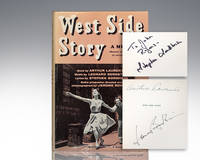
1958148050New York: Random House 1958. First edition of this classic musical. Octavo original half cloth. Boldly signed by Arthur Laurents Leonard Bernstein on the half-title page and inscribed by Stephen Sondheim on the front free endpaper. Review copy with the slip laid in fine in a very good dust jacket. Housed in a custom half morocco clamshell box by the Harcourt Bindery. Rare and desirable signed by these three contributors. In 1947 Jerome Robbins approached Leonard Bernstein and Arthur Laurents about collaborating on a contemporary musical adaptation of Romeo and Juliet. He proposed that the plot focus on the conflict between an Irish Catholic family and a Jewish family living on the Lower East Side of Manhattan during the Easter–Passover season. The girl has survived the Holocaust and emigrated from Israel; the conflict was to be centered around anti-Semitism of the Catholic "Jets" towards the Jewish "Emeralds" a name that made its way into the script as a reference. Eager to write his first musical Laurents immediately agreed. Bernstein wanted to present the material in operatic form but Robbins and Laurents resisted the suggestion. They described the project as "lyric theater" and Laurents wrote a first draft he called East Side Story. Only after he completed it did the group realize it was little more than a musicalization of themes that had already been covered in plays like Abie's Irish Rose. When he opted to drop out the three men went their separate ways and the piece was shelved for almost five years. In 1955 theatrical producer Martin Gabel was working on a stage adaptation of the James M. Cain novel Serenade about an opera singer who comes to the realization he is homosexual and he invited Laurents to write the book. Laurents accepted and suggested Bernstein and Robbins join the creative team. Robbins felt if the three were going to join forces they should return to East Side Story and Bernstein agreed. Laurents however was committed to Gabel who introduced him to the young composer/lyricist Stephen Sondheim. Sondheim auditioned by playing the score for Saturday Night his musical that was scheduled to open in the fall. Laurents liked the lyrics but was not impressed with the music. Sondheim did not care for Laurents' opinion. Serenade ultimately was shelved. Laurents was soon hired to write the screenplay for a remake of the 1934 Greta Garbo film The Painted Veil for Ava Gardner. While in Hollywood he contacted Bernstein who was in town conducting at the Hollywood Bowl. The two met at The Beverly Hills Hotel and the conversation turned to juvenile delinquent gangs a fairly recent social phenomenon that had received major coverage on the front pages of the morning newspapers due to a Chicano turf war. Bernstein suggested they rework East Side Story and set it in Los Angeles but Laurents felt he was more familiar with Puerto Rican immigrants and Harlem than he was with Mexican Americans and Olvera Street. The two contacted Robbins who was enthusiastic about a musical with a Latin beat. He arrived in Hollywood to choreograph the dance sequences for The King and I and he and Laurents began developing the musical while working on their respective projects keeping in touch with Bernstein who had returned to New York. When the producer of The Painted Veil replaced Gardner with Eleanor Parker and asked Laurents to revise his script with her in mind he backed out of the film freeing him to devote all his time to the stage musical. West Side Story is set in the Upper West Side neighborhood in New York City in the mid 1950s an ethnic blue-collar neighborhood in the early 1960s much of the neighborhood was cleared in an urban renewal project for the Lincoln Center which changed the neighborhood's character. The musical explores the rivalry between the Jets and the Sharks two teenage street gangs of different ethnic backgrounds. The members of the Sharks from Puerto Rico are taunted by the Jets a white gang. The young protagonist Tony a former member of the Jets and best friend of the gang's leader Riff falls in love with Maria the sister of Bernardo the leader of the Sharks. The dark theme sophisticated music extended dance scenes and focus on social problems marked a turning point in American musical theatre. Bernstein's score for the musical includes "Something's Coming" "Maria" "America" "Somewhere" "Tonight" "Jet Song" "I Feel Pretty" "A Boy Like That" "One Hand One Heart" "Gee Officer Krupke" and "Cool". The original 1957 Broadway production directed and choreographed by Jerome Robbins and produced by Robert E. Griffith and Harold Prince marked Sondheim's Broadway debut. It ran for 732 performances before going on tour. The production was nominated for six Tony Awards including Best Musical in 1957 but the award for Best Musical went to Meredith Willson's The Music Man. Robbins won the Tony Award for his choreography and Oliver Smith won for his scenic designs. The show had an even longer-running London production a number of revivals and international productions. A 1961 musical film of the same name directed by Robert Wise and Robbins starred Natalie Wood Richard Beymer Rita Moreno George Chakiris and Russ Tamblyn. The film was nominated for eleven Academy Awards and won ten including George Chakiris for Supporting Actor Rita Moreno for Supporting Actress and Best Picture. Random House hardcover
1922121509-SHollywood Cal .: James Abbe 1922. Photographic Image. Illus. by James Abbe. Fine. No Binding. Autographed. 1924c. This vintage black & white photo by the Hollywood photographer James Abbe 1883 - 1973 is of Rudolph Valentino 1895 - 1926 . This personalized vintage photo of Valentino sitting on a couch with a book on his lap is a scarce image of this Silent Movie Star in relaxed full view shot scarce in pose and signed. The photo is now matted and framed . The autograph is to a friend to one of the sweetest girls I know Rudy . Signed photos of Valentino are extremely rare and photos by this photographer are also scarce to the market . Over all framed size : 17.5" x 15.5" . Size: 8 x 10 Photo Matted. James Abbe unknown
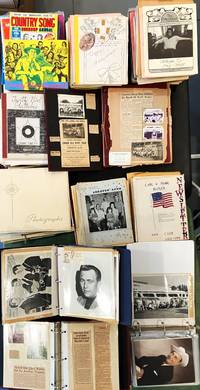
1960010285Nashville Tennessee: Various 1960. Scrapbook. Very Good. Pictorial Printed Wrappers. An important and substantial archive of material consisting of the Country Music Fan Club collection of Opal May Hardyman superfan and President of the Carl Butler and Pearl Fan Club which provides a comprehensive view of the dawn of the Country Music Fan Club era. While the Loretta Lynn Fan Club organized in 1963 by the Johnson sisters Loudilla Loretta and Kay Johnson is widely recognized as the first CM Fan Club the Carl Butler and Pearl club was organized in November of 1962 and with the publication of the Butler Bulletin in February of 1963 it may actually hold that distinction. Female fans have been a driving force behind the popularity of country music since its inception.Their unwavering devotion and loyalty have played a crucial role in shaping the genre's cultural significance. The 1960s witnessed a surge in the formation of country music fan clubs often spearheaded by women who were passionate about their favorite artists. These clubs provided a platform for fans to connect with one another share their love of music and support their idols.Beyond simply admiring their favorite artists female fans actively engaged with the country music industry. They wrote letters to their favorite stars attended concerts and purchased merchandise. Their enthusiasm helped to drive record sales and generate publicity for artists contributing to their success.This archive includes over 1500 items mostly photographs celebrity and candid with many that are signed and inscribed. Also 150 Fan Club Newsletters including 40 Carl and Pearl 20 Loretta Lynn 20 Bill Anderson 20 James O'Gwynn and 50 from some 40 other country stars. It was not uncommon for fans to belong to more than one fan club and in 1967 the Johnson sisters started the International Fan Club Organization IFCO to help many other country performers and fans organize. In 1968 IFCO held its first dinner and concert with 75 fan clubs in attendance. Also included are 7 scrapbooks and photo albums the most notable a 1960 Tour Bus Trip taken by Opal and her friends to the Grand Ole Opry in Nashville guided by Jim Reeves. Another scrapbook compiled by Opal is devoted entirely to Carl and Pearl. Another features many clippings and vernacular photos of the tragic deaths of C & W stars. Other items include: Broadsides Concert Programs and tickets Newspaper clippings Holiday and greeting cards post cards and multiple Country Music publications and assorted ephemera. A richly diverse and fascinating collection filling three bankers boxes from an important period and turning point in the history of Country Music. . Various Paperback
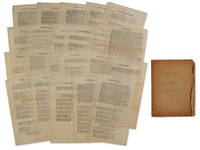
1940List2441New York 1940. Eighty-five pages including sixty loose pages and a partial draft of Guthrie’s Hard Hitting Songs for Hard Hit People totaling twenty-five pages. With one handwritten page. One page - a typewritten copy of “The Ballad of Harry Bridges†- with a handwritten note by Guthrie to Ambellan. With photocopies of several letters from Guthrie to Ambellan included. Also with a broadside of the Carol Tree Carol by Alan and Elizabeth Lomax 1940 and a notecard with the lyrics to “Hawl Away Joe†written Inscription states “Here you are Harold hope it aint late. Well if it is will be singing about old Harry for a many a day to come. Pour it on em Boy. Woody G.â€. A fascinating collection of material from the collection of Harold Ambellan Woodie Guthrie’s friend collaborator and landlord during an important creative period for Guthrie in the 1940s. The group contains a partial draft of Guthrie’s Hard Hitting Songs for Hard Hit People which was written while Guthrie was living in Ambellan’s loft as well as a collection of over sixty loose songsheets not included in the book. Of these over thirty are not listed in Tulsa’s Woody Guthrie Center finding aid. The sixty pages include variant titles and verses to recorded and published versions with some items attributed to Ledbelly and overall the group should shed light on scholar’s efforts to map out the landscape of the American folk song at the time of Guthrie’s work. The typescript draft generally matches the published version with the occasional typo. <br /> <br /> Nora Guthrie writes in her introduction to Hard Hitting Songs of the influence of Ambellan on Guthrie’s creative process. Ambellan was an artist and sculptor and part time musician and Guthrie lived in Ambellan’s loft on 21st Street. “The loft was mostly filled with Ambellan’s sculptures which were abstract and very large. However the couple managed to throw a cot up in the back of the loft for Woody to crash on… Evenings at the loft often included impromptu hootenannies where Woody and Pete’s Seeger musician friends would gather to raise some money to help pay the Ambellans’ rent… There was a lot of singing and a lot of songwriting and it was in the 21st Street loft that Hard Hitting Songs came into existence.†Guthrie wrote “Vigilante Man†and “Hard Travellin†while staying at the Ambellans’ loft. <br /> <br /> Nora Guthrie continues: “ Alan Lomax’s father John Lomax had collected a group of songs that dealt with migrant workers’ share crop farmers’ and industrial workers’ issues many of the lyrics protesting workers’ conditions and advocating for their rights. At the time the material was considered ‘too hot to handle’ by government employees so Alan handed it over to Pete Seeger and Woody to browse through. They loved the material and together with Alan they decided to create a new songbook they would embellish with their own writings and commentary as well as some additional original songs. Working fourteen hours a day they completed the songbook in about five months. … The manuscript which they had titled Hard Hitting Songs for Hard-Hit People was left behind in the loft literally saved by Elisabeth Higgens until its existence became known in the 1960s when it was first published in 1967.â€<br /> <br /> Overall a very scarce relic of an important period in Guthrie’s career with a fantastic association. Guthrie ephemera and archival pieces are notoriously scarce on the market with single letters occasionally surfacing. unknown
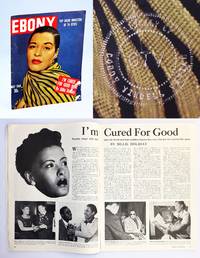
1949417j1549Chicago Illinois: Ebony. Good. 1949. First Edition. Single Issue Magazine. Iconic Billie Holiday cover issue with seven-page photo-illustrated article documenting her struggle to return to normal life after her incarceration for possession of narcotics in 1947. "Billie Holiday 1915-1959 was inducted into the Grammy Hall of Fame and the National Rhythm & Blues Hall of Fame. In 2000 she was also inducted into the Rock & Roll Hall of Fame their website stating that 'Billie Holiday changed jazz forever'. She was named one of the 50 Great Voices by NPR and was ranked fourth on the Rolling Stone list of '200 Greatest Singers of All Time' 2023. Several films about her life have been released." - Wikipedia. "With few exceptions every major pop singer in the US during her generation has been touched in some way by her genius. It is Billie Holiday who was and still remains the greatest single musical influence on me. Lady Day is unquestionably the most important influence on American popular singing in the last twenty years." - Frank Sinatra in Ebony 1958. From the personal collection of Presidential Medal of Freedom recipient C.T. Vivian whose blind stamp appears at bottom of front cover. "Vivian 1924-2020 was an American minister author and close friend and lieutenant of Martin Luther King Jr. during the civil rights movement. On the March 2007 anniversary of the 1965 Selma to Montgomery marches Barack Obama refered to him in the words of MLK Jr. as 'the greatest preacher to ever live.'" - Wikipedia. Bits of peeling from lower right corner of front cover otherwise complete unmarked and intact with average wear. A truly extraordinary Billie Holiday memento.; Cover Photo; Folio . Ebony unknown
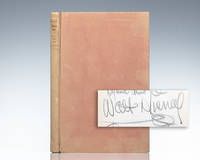
1936146500San Francisco: Bohemian Club 1936. First edition of this Grove Play produced and performed by and for Bohemian Club members. Octavo original orange boards. Signed by Walt Disney opposite the dedication page. Additionally signed and inscribed by nearly 70 individuals. In his book 'Walt Disney: An American Original' Bob Thomas recounts the story of Walt Disney's visit to the Bohemian Club in 1936 the year in which his signature appears in this volume -- apparently the snoring from the following evening inspired the snoring scene in the Dwarfs' cottage in Snow White. In very good condition ownership inscription to the front pastedown "For Orrville Taylor. Bohemia Aug 1 1936 from H. P." with a large sketch of the mountainside. American entrepreneur animator and film producer Walt Disney is arguably the most important figure in the history of animation. A national cultural icon his innovative spirit and vision revolutionized the genre of animated cartoons making them a major part of mainstream popular entertainment. Founded as the Disney Brothers Cartoon Studio in 1923 and incorporated as Walt Disney Productions in 1929 Walt Disney Animation Studios has produced 57 feature films. For much of its existence the studio was recognized as the premier American animation studio; it developed many of the techniques concepts and principles that became standard practices of traditional animation. Bohemian Club hardcover
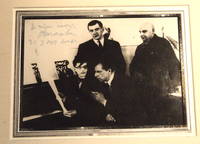
196925411Moscow 1969. 1969. Very good. INSCRIBED AND SIGNED BY SHOSTAKOVICH - sc A 6-1/2 inch high by 9-1/4 inch wide black & white gelatin silver photograph distributed by the photographic agency of H. Roger Viollet with their stamp on the verso. This famous image from September 19 1929 depicts the young bespectacled Shostakovich seated at the piano holding up a sheet of the music for the Bedbug so that Meyerhold the director of the play who is seated next to the composer with a cigarette in hand can look at the page. Standing behind the two a cigarette dangling from his mouth is the poet and author of the play Vladimir Mayakovsky with the great painter and photographer Alexander Rodchenko who designed the sets for the production standing at the viewer's right. Shostakovich has inscribed the photograph at the top left in Russian with words equivalent to "Best Wishes". The inscription and signature penned in blue ink is signed "D. Shostakovich" and dated "25 I 1969 Mokba". The photographic agent's credits stamped on the verso state "H.Roger Viollet / 6 Rue de Seine Paris - 6e / Tel. ODE. 81-10 / Attention Obligatoire / Collection Viollet". This particular signed photograph is from the collection of the autograph collector and scholar Ray Rawlins who wrote numerous books on the subject with his discreet oval collector's mark stamped at the bottom right of the verso illustrated with a device of an arm holding an arrow and the words "Rawlins Collection: Historical Docs and ALS". The photo is further annotated in pencil on the verso: "RV 40877 / Theatre Meyerhold / le compositeur Chostakovitch / qui a compose la musique de la Punaise / assis a ses cote Meyerhold / debout de gauche a droite: / le poete Maiakisky auteur de la Punaise / et l'artiste Rodchenko qui s'occupe des decors pour 'la Punaise'." There are light brownish diagonal stains to the lower left of the verso with some minor creasing. The photograph is mounted into a mat with document tape from the top corners of the verso. The image itself has but some light spotting to the image and minor soiling to the left edge likely due to the overlap of the mat. There is some very minor fading and some very few spots most likely the result of the developing process. A rare and very significant signed photograph.<p>Provenance: From the collection of Ray Rawlins author of "The Stein and Day Book of World Autographs". <p>Along with Meyerhold Mayakovsky and Rodchenko Shostakovich embraced the Soviet Revolution which by its nature seemed to promise to liberate the arts from the constraints of staid conservative tradition. And though the promise seemed to hold true at first allowing great creativity and experimentation the artists were to find themselves criticized by those in power with little tolerance for those whose work even hinted at opposition. Shostakovich found himself alternately being hailed as a hero of Soviet music denounced as a formalist and attacked by Pravda. Such denunciation in Stalinist Russia could well lead to arrest. Indeed many of Shostakovich's friends and family were arrested or executed during the years of terror. In the early period from 1921 to 1927 the Bolshevik's experimentation with a New Economic Policy allowing some limited private enterprise resulted in considerable freedom and the arts flourished. Even criticism of the NEP and government policy was tolerated to some degree. But the line was always a fine one and by 1927 Stalin tightened his grip on the economy and the arts. It was in the period following 1928 the year Stalin buried the NEP that the futurist poet Mayakovsky wrote his play "Klop" The Bedbug for Meyerhold. It was an ambiguous satire of Soviet society. Shostakovich composed the incidental music for the play his Opus 19. Moscow, 1969. unknown
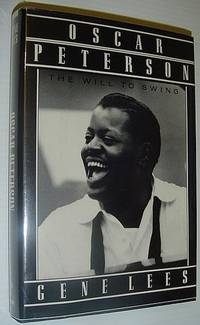
1990815a2005Riverside New Jersey U.S.A.: Prima Publishing. Very Good in Very Good dust jacket. 1990. First Printing. Hardcover. 1559580372 . Signed and inscribed by Oscar Peterson upon front free endpaper. "For the millions who know and love the music of Oscar Peterson here's the definitive biography by his friend and former Down Beat editor Gene Lees." - dust jacket. "Oscar Peterson 1925-2007 was a Canadian jazz pianist and composer. As a virtuoso who is considered to be one of the greatest jazz pianists of all time Peterson released more than 200 recordings won eight Grammy Awards as well as a lifetime achievement award from the Recording Academy" - Wikipedia. 294 p. Black and white photographic plates. Clean and bright with negligible wear. Occasional underlining in blue ink. Dust jacket now in glossy new archival-grade protection. A lovely signed example.; 8vo - over 7¾" - 9¾" tall; MUSICIANS PIANISTS BIOGRAPHY AUTOBIOGRAPHY COMPOSERS Signed and Inscribed By Oscar Peterson Jazz Pianists Canada Canadian Performers; Signed by Authors . Prima Publishing hardcover
190886499New York: Boosey & Co. Fine; With an Essay By John Foord. 1908. First Edition. Leather. TRULY ONE OF A KIND PARTICULARLY SINCE IT HAS A HAD WRITTEN AND SIGNED POEM BY JOHN FOORD "TOOUR OWN DEAR NELL". PROFESSIONALLY REBOUND IN GORGEOUS LEATHER WITH RAISED BANDS AND GILT LETTERING AND DECORATION. ALL EDGES GILT!!; 259 pages . Boosey & Co hardcover
1925RMILKIN00TWMethuen 1925. Very Good. Milne A. A. The King's Breakfast. Music by H. Fraser-Simson; Decorations by E. H. Shepard. London: Methuen 1925. #18 of 100 signed copies. 17pp. Small folio. Signed by author. Book condition: Very good with lightly bumped corners a few scratches and label discolored by its own adhesive. Signed by Milne Fraser-Simson and Shepard. Rare. Methuen unknown
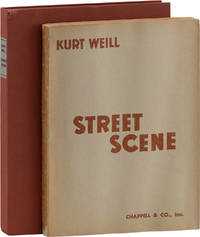
194880631New York: Chappell & Co. Inc 1948. First Edition. First printing. Inscribed on title page: "For Joe Littau a merry Christmas and thanks for a beautiful job!" signed "Kurt Weill" undated but annotated in pencil presumably by Littau: "Xmas 1948." Quarto 30cm. Original buff wrappers printed in red on front cover; 274pp. Professional paper repairs at spine ends; expected tanning to exterior and text; still a superlative copy overall and quite uncommon. Housed in a custom-made cloth clamshell box. <br /> <br /> A terrific association copy of this acclaimed late work by Weill for which he won the inaugural Tony Award for Best Original Score in 1947. Street Scene is perhaps the apotheosis of Weill's socially-engaged musical theater a blend of operatic and theatrical elements with which he first experimented in his collaborations with Bertolt Brecht of the Thirties including Three Penny Opera and The Rise and Fall of the City of Mahagonny. Street Scene based on Elmer Rice's naturalistic working-class drama of the same name was especially noteworthy for including lyrics by the African-American poet Langston Hughes whom Weill sought out specifically to "lift the everyday language of the people into a simple unsophisticated poetry" quoted by Jane Vial Jaffe in her program notes to a 2008 production. This was Hughes' first experience writing for musical theater.<br /> <br /> Street Scene premiered at the Adelphi Theater in New York in January 1947 and met with critical success though its high production costs forced the production to close in April. The show has never been revived on Broadway but it has been staged regularly by operatic companies including revivals by the New York City Opera in 1959 1979 and 1990. <br /> <br /> Inscriptions by Weill are uncommon; it's an honor he appears to have bestowed only on very close friends and collaborators. In this case the presentation is to Joe Littau the well-known pit conductor who was at this time the Musical Director for Weill's 1948 musical "Love Life" which ran on Broadway from October 1948 to May 1949. Chappell & Co., Inc unknown
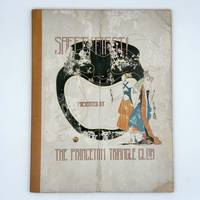
1916369594Cincinnati / New York / London: John Church Company 1916. First edition. 99 pp. Large 4to. Illustrated color card covers orange cloth spine as issued. Rubbed wear to corners; front and back covers folded cracked and repaired. Numerous autograph emendations in blue pencil and ink; autograph essay in ink on verso of cast listing. In custom quarter morocco slipcase and chemise. First edition. 99 pp. Large 4to. The third consecutive and final Triangle Club production Fitzgerald participated in writing the lyrics for all 18 songs in this 1916 comedy as he had for the two prior shows Fie! Fie! Fi-Fi! 1914-1915 and The Evil Eye 1915-1916.<br /> <br /> This particular staging featured two people with the surname Harris: the first E. Harris was one of the composers and besides the title page this is futher noted by the multiple autograph additions of the letter "E" in blue pencil on the song list page. The second was W. Irving Harris who appeared as "Detective No. 1" a role which was originally printed as being played by E. Harris; this error is corrected in ink.<br /> It was this latter Harris who in 1975 penned the warm unpublished remembrance of Fitzgerald at Princeton on blank page 4 which begins "Scott Fitzgerald of course was in a class by himself." He continues "The lyrics of 'One-Lump Percy' the parlor-snake spoofed the antics of contemporary collegians and for 'Charlotte Corday' Scott should have been given an extra high mark in his course in French history/literature! 'Where Did Bridget Kelly Get Her Persian Temperament' was another song that brought down the house."<br /> <br /> Harris closes with "I remember Scott as exceedingly unassuming and modest and as a member of the Triangle Club a true enthusiast. As far as I know everyone liked him and no one would have thought of competing with his skill as a lyricist. The work was all his - and as you will see speaks for itself." Bruccoli A4 John Church Company unknown
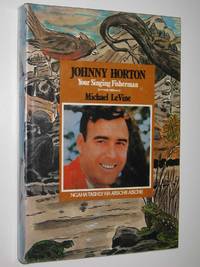
198216070389Vantage Press USA 1982. First Edition. Hardcover. Very Good/Fine. Hardcover. 220 pages. PUBLISHING DETAILS: Vantage Press USA 1982. First Edition. CONDITION: The book itself is in very good condition and comes in fine dust jacket. More specifically: Edges of boards have superficial wear. Dust jacket is in excellent condtion. Dust jacket is unclipped. Dust jacket is protected in clear plastic sleeve. Edges of pages are lightly browned. Quantity Available: 1. Category: Biography & Autobiography; Music. ISBN: 0533048028. ISBN/EAN: 9780533048021. Inventory No: 16070389. 9780533048021 Vantage Press hardcover
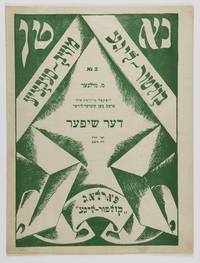
192051339Warsaw: Kultur Lige 1920. First edition. Softcover. vg to near fine. Quarto. Unpaginated. 6 pages. Original wrappers in white and green with 4 different modernist type-fonts as well as designs by acclaimed artist and illustrator Issachar Ber Ryback 1897-1935. Middle leaf loose. Sheet music for the song Der Shifer The Sailor composer by Russian-Jewish pianist Mikhail 'Moses' Milner 1886-1956 with lyrics by seminal Yiddish-language writer I.L. Peretz 1852-1915. The lyrics in Yiddish are printed together with the musical notation as well as separately on the back wrapper. This is the second installment in the Kultur-Lige's series of Yiddish children's songs for vocal and piano. Wrappers with very minor smudges and stains. back cover repaired at the bottom left corner with no loss of text or image. Interior clean. Wrappers in very good interior in near fine condition overall. Wrappers protected in modern mylar. Quite scarce. Yiddish title: No.2 × ×טן קולטור-ליגע מוזיק-סעקציע <br /> Subtitle: וו×ק×ל־סיו×יטע: ×ויף פרצס צען ×§×™× ×“×¢×¨Ö¾×œ×™×“×¢×¨: דער שיפער פ×ר ×©×˜×™× ×ž×™×˜ פי×× ×<br /> Authors: מ. ×ž×™×œ× ×¢×¨ ×™.ל. פּרץ יששכר בר ריבק <br /> Publication: פ×רל××’ קולטור-ליגע וו×רשע<br /> <br /> Bibliographic resource: Kazovsky 'The Artists of the Kultur-Lige' p.22 please note the image shown is not the same volume as this one.<br /> <br /> It should be noted that all published songs in the series were issued in wrappers utilizing the same Ryback layout and design but were printed in various colors. Kultur Lige unknown
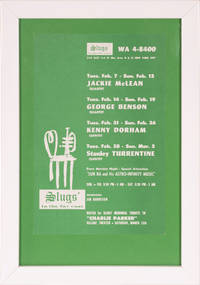
1967158550New York: Slugs' in the Far East 1967. Vintage flyer for several nights of performances held at the historic East Village jazz club. Flyer advertises performances held between February 7 through March 5 1967 with performers including Jackie McLean George Benson Kenny Dorham Stanley Turrentine and Sun Ra and His Astro-Infinity Music.<br /> <br /> Robert Schoenholt and Jerry Schultz opened Slugs' Saloon named after G.I. Gurdjieff's "terrestrial three-brained beings" from his "All and Everything" trilogy in Manhattan's East Village in 1964. New York regulations forbade the use of "saloon" and the venue name was soon changed to Slugs' in the Far East due to its East Village location. By the mid-1960s the bar was hosting regular jazz performances and soon became closely associated with Sun Ra whose Arkestra would play regular gigs every Monday as noted on the flyer on offer as "Sun Ra and His Astro-Infinity Music." By the late 1960s Slugs' hosted a number of prominent jazz musicians. including Sonny Rollins Albert Ayler and Ornette Coleman among many others. The club shut down in late 1972 several months after regular performer Lee Morgan was shot to death at the bar by his common-law wife Helen Moore.<br /> <br /> 5.5 x 8.5 inches framed to 8.5 x 11 inches. Near Fine. Slugs' in the Far East unknown
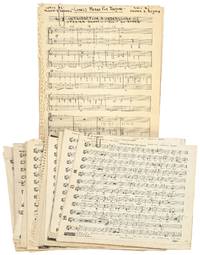
1952612527No place: unpublished 1952. Unbound. Near Fine. An archive of unpublished sheet music by the song writing duo Robert A. Bernstein and Warren B. Meyers. Consisting of 23 pieces most finished and submitted for copyright but none published. All approximately 9" x 12" some a bit larger most hand printed one piece with a negative photostat copy and one with both a negative and positive photostat copy included many of the hand notated sheets have typewritten text some with handwritten corrections and notes and some sheets are printed on both sides. The pieces only feature a vocal melody and lyrics as that’s the part eligible for copyright only one piece features piano the beginning of a draft for a musical titled Lonely Means for Anyone. Most of the pieces have a paperclip mark at the top some bumping to the corners as to be expected but overall a near fine archive.<br /> <br /> Robert A. Bernstein and Warren B. Meyers appear to have primarily worked together during the 1950s putting on revues and one act musicals within New York City and its environs; shows such as No Bed of Roses 1952 A la Carte 1952 La Donna Della Evening 1952 Improper Channels 1957 and 2x4 1959 all of which seem to have slipped so fully into obscurity that only a few miniscule newspaper clippings remain to confirm that they ever existed. While Bernstein never stumbled upon a hit his biggest recorded credit listing him as a writer for the show Almost Crazy 1955 which ended up suffering from middling to poor reviews Meyers produced an unexpected success in 1967 with his first and seemingly only foray into the book world Who Is That: The Late Late Viewers Guide to the Old Old Movie Players. A heavily illustrated guide to what the preface describes as showcasing "the most frequently seen players categorized by their most frequently played roles." The book was a big hit even getting a write-up in The New York Times who flatteringly wrote that readers would find the book "Near the check-out counter— the place of honor—at your paperback store these days."<br /> <br /> Collected here are 21 titles that have been registered with the Copyright Office two have not but are reported by said office to have not been published. Whether they were never published but performed in one of Bernstein’s and Meyers' shows or whether they simply never graced the ears of an audience in any form we do not know. What we do know is that it makes perfect sense that some of these would not have been published in the 1950s if ever – From the vague but nonetheless present socialism of the song "Capital in Labor" "Harken to the teacher love your fellow creature/never bring him ruin or rue/listen honey tell me who wants money/when the sky is sunny big and blue." To the masochistic internalized sexism of "Bane of My Existence" "He beats me and he hurts me/he cheats me and deserts me/oh he treats me like a slave but he’s my man.†To the off-the-wall problematic lyrics of "If You Incest" which begins with a female patient singing "I used to be aggressive but now I'm just depressive/I used to be inspired but now I'm just tired . Oh doctor get rid of this hex! Is it related to sex" To which the male doctor replies "You mustn't have a fit so it's fun to be a schizo! . It makes you cute and coy-a this charming paranoia" and it only gets worse from there.<br /> <br /> While most of the material is rather standard fare for the trade at the time such as "The Kiss Song" "I'm a dunce for being hooked I kissed you once and I was cooked" a handful of the songs standout as rather outrageous in their lyrical content; including one song that says all you need to know and more with its title alone "When Fanny Fans Her Fanny With A Fancy Spanish Fan." Not only do these songs speak about the blatant sexism that was so prevalent in America at the time but they also speak to both the taboos and trends of the 1950s through lyrics that attempt to break them and mock them. The best example of this being "If You Incest" which can be partially read as a reaction to the contemporary popularity around Freudianism and psychoanalysis; yet also however unwittingly highlights the callous manner in which male doctors treated female psychiatric patients.<br /> <br /> Then there are the more subtle but no less interesting aspects such as a lethargic gender swapping edit to the song "The Only Girl for Me" replacing one pronoun for the other but changing practically nothing else; a song featuring a rebellious Mona Lisa who sings “I want to fight with a knight and be quite a bit unpleasant/want to spit in a fit on some pitiful old peasant/want to mumble and rumble and grumble for a while/but I don’t want to smile my smileâ€; and perhaps the most amusing or saddest moment a song of love and longing titled “Dream of Me†filed for copyright in 1951 revised and filed again in 1952 with the same melody but newly titled “Hopelessly†the lyrics now expressing bitter heartbreak and loneliness.<br /> <br /> We were unable to find any published music by Bernstein and Meyers and very little has been written about them. Whether these songs were performed at the time or not there is one thing for certain they have not been heard for a long time. A fascinating archive of unpublished songs by a little known though somewhat successful song writing duo from the 1950s. A list of each title is available upon request. unpublished unknown
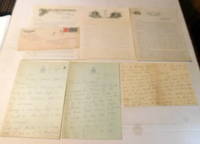
1922100473<p>1922-1935. 1922-1935. Very good. - The collection consists of: 18 Autograph letters signed 20 Typed letters signed an unsigned Autograph letter an unsigned Typed letter and a contract signed by Stella de Mette and 4 Typed letters from Francesco Liazza together with autograph drafts of letters by Brown on 3 of the de Mette pieces.</p><p>1. St. Louis MO March 10 1922. Autograph Letter Signed on both sides of a 3-3/8 X 5-1/4 inch card addressed to Mr. Brown expressing her boredom. "All I've been doing is attending social affairs & living a most monotonous life - as society does not in the least appeal to me." Signed "Stella de Mette-Liazza".</p><p>2. New York City April 21 1922. Autograph Letter Signed on 2 sides of a folded 6-1/2 X 5 inch folded sheet of note paper addressed to Mr. Brown suggesting a meeting with him. Signed "Stella de M. Liazza".</p><p>3. Hotel Schuyler Arms NYC June 8 1922. Autograph Letter Signed on both sides of her personal 10-1/2 X 6-1/2 inch monogramed letterhead addressed to Mr. Brown requesting that he make an appointment with her friend Anna Lorraine a "dramatic artist". "Anticipated hearing from you three or four weeks ago - but no doubt things didn't materialize." Signed "Stella de Mette-Liazza".</p><p>4. Alvin Theatre-San Carlo Opera Co. Pittsburgh PA. December 8 1922. Autograph Letter Signed on 3 of 4 sides of 6-1/4 X 5-1/8 inch "The Washington Washington D.C." note paper. She addresses Mr. Brown introducing "Miss Stasia Ledowa - you no doubt have admired her splendid work with the San Carlo at the Century - just recently. She is a REAL artist." Stasia Ledowa was premiere danseuse with the Chicago Opera Company. Signed "Stella de Mette".</p><p>5. Draft of a letter from Chamberlain Brown to Stella de Mette 9 lines written over the top of a typed letter from Stella de Mette in which she informs Brown that she is "hard at work - studying Carmen - the first time in my career that I have taken this opera seriously.Want to thank you again & again for the big interest you take in me & hope at some future date we can do something really worth while." Signed "Mrs. Francesco Liazza" on "San Carlo Opera Co. Orchestra / Francesco Liazza Manager" letterhead. In his draft Brown writes that he heard Frances "Peralta as 'Carmen' the other night and she was really excellent. She gave a rare intelligent performance with several new ideas that pulled a Jeritza on the audience. At the end of the third act instead of standing still she lit the cigarette and did a complete fall on the ground and started the card scene over again. By the time Don Jose arrives at her she yells 'La Mort' and tears the cards to pieces giving Jose a look - realizing he is the man to kill her and then with great emotion pulled a second act 'Tosca'". Accompanied by the carbon of Brown's typed letter dated June 27 1924.</p><p>6. July 19 1924. Autograph Letter Signed on both sides of a sheet of 11 X 8-1/2 inch letterhead from "The Kemper Lane / Cincinnati" Addressing Brown as "My dear friend" asking him to "please hold your thumbs for me on Mon. night. They are putting on Carmen just for me & am opening in this.P.S. Francesco will wire you after perf. & I would be very grateful if you could get this in some of the N.Y. papers". Signed "Stella de Mette".</p><p>7. March 15 1925. Autograph Letter Signed on 3 sides of 2 sheets of 8-1/2 X 5-3/8 "The Newhouse Hotel / Salt Lake City Utah" letterhead. Addressing Brown as "Dear friend" de Mette encloses "the splendid notices I rec'd this season". Not here present. Signed "Stella de Mette".</p><p>8. Philadelphia PA. October 23 1925. One-page Typed Letter Signed on 11 X 8-1/2 inch "San Carlo Opera Co. Orchestra / Francesco Liazza Manager" letterhead. Addressing Brown as "Dear 'Manager": de Mette writes that she was "furious on Tues. night. That Dumb-bell Franco Tafuro simply ruined my Carmen. The notices are good but were better last year when Manuel Salazar was my Don Jose. He simply stood like a wooden man all evening & I might as well have been playing to the chair.Francesco thinks some one is working against me here & I hope that you can get me away from here next season.I am heartily sick & tired of this D--- company." Signed "Stella". The right edge of the letter is chipped.</p><p>9. Detroit Mich. November 14 1925. Typed Letter Signed on 2 sides of 11 X 8-1/2 inch "Fort Pitt Hotel / Pittsburgh Pa" letterhead. A long chatty letter: "Last week was a hard one - viz: Mon.night - Carmen Tues. Amneris Wed. matinee - Hansel & Gretel & Sat. matinee Lohengrin also Forza on Sunday night.The next Carmen will be sung by Alice Gentle - she has Tafuro for Don Jose the opening night in New Orleans - I wish her luck. He certainly queered my Carmen in Phila. & the first one here.How I'd have love to have been at the opening of the Met. dear Matzenauer I know she was glorious. I adore her. long may she reign Queen of Mezzos". Signed "Stella". There are scattered ink jottings at the end of the letter perhaps notes by Brown.</p><p>10. New Orleans La. December 3 1925. Typed letter unsigned on both sides of 11 X 8-1/2 inch "The Brown Hotel / Louisville Ky" letterhead. Addressing Brown as "Dear Manager" de Mette writes that "We are rehearsing several hours each day - Fra Diavolo.Maestro wants me to learn a new role - the countess in Andrea Chenier we give it the last week & the blind woman also which I have sung many times Francesco doesn't want me to do any more favors to the management so I don't know what shall happen. I certainly am getting an awful deal this season at the hands of the management. I told you that would happen as it's because I wouldn't sign that contract with Fortune Gallo.This must positively be my last year in this Co. I am thoroughly disgusted & discouraged. Suppose I will have all the Carmens on the coast being Gentle is not with us anymore. Feel like giving my notice as I know I shall be roasted to a cinder under the circumstances." The letter is lacking a second sheet with de Mette's signature. The last line reads "With many good wishes from Francesco & I also to Lyman & hope to hear from.".</p><p>11. New Orleans La. December 20 1925. Typed Letter Signed on both sides of 11 X 8-1/2 inch "San Carlo Grand Opera Company / Fortune Gallo Impresario" letterhead. de Mette addresses Brown as "Dear Manager". "Mr. Fortune Gallo came here a few days ago & yesterday had a long session with Francesco regarding me. At first he was very indifferent - saying if I didn't like things I could give him my two weeks notice - just calling a bluff but when he realized my husband accepted same & would permit me to remain in Co. no longer he changed his attitude and begged Francesco to let me stay & F. said 'No it's too late. You see he told him some one else was coming to sing Carmen on the coast & I shall not be humiliated any more in this Co. by giving up my best role to some one else far inferior to me." She then speculates as to who the new Carmen might be- "could it be Marguerite Sylva.that Mexican Consuelo Escobar.Perhaps this Rhea Toniolo" "I sang the countess in Andrea Chenier.also did the blind woman in third act & had the house in tears - even the chorus were weeping." Signed "Your disappointed Carmen. Stella de M.L." The original envelope stamped "Special Delivery" is included.</p><p>12. Waco Texas. January 4 1926. Typed Letter Signed on both sides of 11 X 8-1/2 inch "The Raleigh Waco Texas / The Blackstone Tyler Texas" letterhead. Addressing Brown as "Dear Sir Chamberlain" de Mette writes of her disappointment in not hearing from him after writing to him of her resignation with the San Carlo Company. "The real truth that G. Fortune Gallo has been so horrid to me this year is that I did not sign the five year contract with him & told a friend of our's that he didn't want anything more to do with de Mette that I was most ungrateful after he had made me & also said 'We shall see what this Chamberlain Brown can do for her'.It certainly infuriated him when he discovered that you had taken me under your wing." Signed "Stella de M.L."</p><p>13. Los Angeles CA. January 20 1926. Typed Letter Signed on 1 & 1/2 sides of 11 X 8-1/2 inch "The Gunter / San Antonio Texas" letterhead. "Dear Manager: Was so relieved in receiving your nice letter.We were certainly pleased that you were of the same opinion regarding my leaving the San Carlo.You know they advertised me all over Texas & the last week in Texas from El Paso to Arizona Phoenix the Co. played on guarantee a certain Mr. Johnston who engaged Co. has not yet paid Gallo - because I did not appear & he was so disgusted with Toniolo that he had them play another performance Rigoletto instead of Carmen." Signed "Stella".</p><p>14. Los Angeles CA. January 27 1926. Autograph Letter Signed written on both sides of 10-1/2 X 7-1/4 inch "The Huntington Pasadena California" letterhead. "Hello there! Enclosed clippings speak for themselves. I am certainly getting a lot of revenge & the Western Mgt is very much displeased with both my successors. Signed "Stella".</p><p>15. Los Angeles CA. January 31 1926. Als written 1 & 1/2 sides of 10-1/2 X 7-1/4 inch "The Huntington Pasadena California" letterhead. "Dear Sir Chamberlain: Just heard Alice Gentle is engaged for Ravinia Park this next summer to replace Florence Easton - so that means that she is going there to do soprano roles this time. I wonder if he has his mezzo - you know last season he promised to engage me this next season." Signed "Stella".</p><p>16. San Francisco CA February 26 1926. Typed Letter Signed on 1 & 1/2 sides of 11 X 8-1/2 inch "The Gunter / San Antonio Texas" letterhead. "Dear Manager: Just now rec'd telegram & I am so happy over good news.Please do write & tell me all about this Shubert engagement.If it should be a production or anything new to me I want to get busy & study same as I am always ready with my work." Signed "Stella de Mette-Liazza".</p><p>17. Los Angeles CA. March 16 1926. Autograph Letter Signed written on 4 sides of 6-3/8 X 5 inch notepaper. de Mette writes for details regarding the Shubert engagement. She has been enjoying her recitals with the Los Angeles Symphony Orchestra under the direction of Walter Henry Rothwell. "Mr. Piazza the Western Orpheum agent is trying to persuade me to try vaudeville - but I fear you may not approve." Signed "Stella de M.L."</p><p>18. St. Louis MO. March 29 1926. Autograph Letter Signed written on 4 sides of 6-3/8 X 5 inch notepaper. "Dear Sir Chamberlain - Well -What has happened". de Mette writes of her depression as a result of her dealings with Fortune Gallo. She makes a snide remark concerning Lorna Doone Jaxon "the WONDERFUL NEW Carmen! Discovered by Gallo." Signed "Stella de M.L."</p><p>19. St. Louis MO. April 25 1926. Autograph Letter Signed written on 3 of 4 sides of 6-3/8 X 5 inch notepaper. de Mette disappointed that the Shubert engagement fell through writes that she is "horribly discouraged & don't feel like returning to N.Y. at all". Signed "Stella de M.L.".</p><p>20. St. Louis MO. May22 1926. Tls on 2 sides of 11 X 8-1/2 inch "Hotel Empire / New York City" letterhead. The letter follows a meeting between Brown and Francesco Liazza. "Your ideas are really splendid. However I haven't the slightest idea of returning with Gallo - much sooner will never sing again in public. Gallo as you know pays very little - he is never on the level & his contracts are always pro Gallo. Naturally I left the Company & would never go to Gallo & ask to be re-engaged.I really think I have gotten all out of that Co. that I can ever expect." Signed "Stella de Mette-Liazza".</p><p>21. St. Louis MO. June 19 1926. Typed Letter Signed on one side of 11 X 8-1/2 inch "San Carlo Opera Co. Orchestra" letterhead. "Dear Friend: Have been awaiting news from you for many moons.My idea is to commercializ next season & then go to Italy for a season or two & then something BIG should develop." Signed "Stella de Mette". On the verso of the letter Brown has written a draft reply: "I am starting to produce my own play this week. I hope I shall star you --- soon".</p><p>22. St. Louis MO. June 27 1926. Autograph Letter Signed on 1 & 1/2 sides of 11 X 8-1/2 "Lutheran Hospital / St. Louis MO." letterhead. The letter mainly concerns her husbands' recent operation. Signed "Devotedly Stella".</p><p>23. St. Louis. July 20 1926. Typed Letter Signed on 1 & 1/2 sides of "San Carlo Opera Co. Orchestra" letterhead. ".a queer telegram came - signed by Aurelio Gallo of course I do not believe Aurelio ever sent it offering me Asheville engagement to sing the following roles: Forza del Destino Juliette in Tales of Hoffman & Aida. I answered telegram if Carmen were in repertoire I insisted on doing same or I should not consider engagement. After that Gallo wrote Fortune Gallo to Francesco in fact sent two letters being very desirous of engaging me but it was plain to see that some one else was to sing Carmen this season. "Signed "Stella de Mette-Liazza".</p><p>24. Detroit Mich. September 28 1926. Autograph Letter Signed on one side of 10-1/2 X 7-1/4 inch "Savoy" Detroit letterhead. A complaint about Brown's silence. Signed "Stella de Mette".</p><p>25. Philadelphia PA. November 2 1926. Typed Letter Signed from Francesco Liazza on 1 & 1/4 inch sides of his personal "San Carlo Opera Co. Orchestra" letterhead. Liazza writes Brown concerning the undermining of his wife in New Orleans. ".there is something peculiar & some one is against Stella - of course I know G. is at the bottom of this plot.We play at the Tulane Theatre. The Manager of the house Mr. Campbell very friendly with Mr. G.The New Orleans Picayune deliberately knocks her no matter what she sings - gives her credit for nothing & some one is influencing this critic." Signed "Francesco Liazza".</p><p>26. Pittsburgh PA. November 9 1926. Typed Letter Signed on one side of 11 X 8-1/2 inch "Firt Pitt Hotel / Pittsburgh PA" letterhead. de Mette reminds Brown to look into the "New Orleans business". Signed "Stella de Mette-Liazza".</p><p>27. New Orleans LA. November 26 1926. Typed Letter Signed on both sides of 11 X 8-1/2 inch "San Carlo Opera Co. Orchestra" letterhead. "Dear friend: Just to tell you that the 'Hunch' Francesco had about me & the New Orleans engagement is correct. The committee did not want me to appear in any of the subscription performances. I am sure Gallo is not to blame but all this emanates from Mrs. G. S four years ago she waged war against me to the various society dames.Francesco & I are racking our brains & are going to get even some way.Did the Blind Woman in Chenier last night & rec'd storms of applause in fact stopped the show." Signed "Stella de M. Liazza / San Carlo Opera Co./ Tulane Theatre / New Orleans La."</p><p>28. Los Angeles CA. January 28 1927. Typed Letter Signed written on 1 & 1/2 pages of 2 9-1/2 X 6 inch sheets of "Engstrum Arms Apartment Hotel" letterhead. "Dear Greatest of Managers: Your letter pleased me immensely and think the letter written to Mayfield in New Orleans was splendid. I notice he roasts big celebrities too so I should care - poor old Schuman-Heink got her's from this person too very recently." de Mette goes on to describe the roles she is singing in California. Signed "Stella de Mette-Liazza".</p><p>29. Pennsylvania. March 10 1927. Als scrawled over 3 half pages of 9-1/4 X 6 inch yellow hotel letterhead from Hutchinson Kansas. A heads up that de Mette and her husband are booked for passage to Europe on April 2. Signed "Stella de Mette-Liazza". Brown has written a draft on the verso of the third sheet inviting the Liazzas to dinner and "Aida" when passing through New York.</p><p>30. Milan Italy. May 26 1927. Als written on 4 sides of 8-1/4 X 5-1/4 inch "Hotel Agnello & Duomo / Milano" notepaper. de Mette writes that she has a good contract for the San Carlo of Naples. "However everything in the theatrical line operatic is in a very critical condition - all theatres closed etc. A number of artists have started a movement to oust all theatrical agents & it is in the hands of the government & we are patiently awaiting to see what happens." Signed "Stella de Mette-Liazza".</p><p>31. New Orleans La. November 2 1927. Typed Letter Signed from Francesco Liazza on 11 X 8-1/2 inch "Claridge Hotels Memphis Tenn" letterhead. He appreciates that Brown will continue managing his wife's engagements and gives her travel itinerary in Europe. Signed "Francesco Liazza". There is a draft of Brown's reply on the verso.</p><p>32. Milan Italy December 6 1927. Autograph Letter Signed written on 4 sides of 7-1/4 X 7 inch notepaper. de Mette has 2 contracts for Cremona. She will be singing in "Gioconda - debut the 26th - and the slave in Francesca da Rimini & the blind woman in Chenier". She "signed a contract for four operas at a very good salary.Aida of course Trovatore Rigoletto & Ballo in Maschera Ulrica for Copenhagen Denmark". She then writes of other singers and her future hopes. Signed "Stella de Mette-Liazza". Together with the original envelope on which Brown has written the draft of a letter to her.</p><p>33. New Orleans. December 22 1927. A brief typed letter on 11 X 8-1/2 inch "The Roosevelt / New Orleans" letterhead from Francesco Liazza informing Brown of his wife's debut in Cremona. "It will be in Gioconda. That is the town where Ponchielli was born. It is one of the most severe for criticism." Signed "F. Liazza".</p><p>34. Boston MA. March 15 1928. A Typed Letter Signed from Francesco Liazza on 10-1/2 X 7-1/4 inch "The Elks / Boaton Massachusetts" letterhead. He thanks Brown for an encouraging letter that Brown had sent de Mette. He says that when he returns to New York later in March "we may resume our plans for the orchestra for your Sunday concerts to be given at the Cosmopolitan Theatre." Signed "Francesco Liazza".</p><p>35. An unsigned and undated note from de Mette on "Hotel Phonix / Kobenhawn" letterhead. She is happy with the response of the Danes to her performances. She was in Copenhagen in January and March & April 1928.</p><p>36. Astoria NY. October 29 1929. Tls on one side of 11 X 8-1/2 inch "San Carlo Opera Co. Orchestra" letterhead. de Mette writes of her need for work and her frustration with Brown's lack of communication. Signed "Stella de Mette".</p><p>37. Astoria NY. November 24 1929. Typed Letter Signed on one side of 11 X 8-1/2 inch "San Carlo Opera Co. Orchestra" letterhead. More frustration with Brown. "Have you abandoned your latest project - Carmen etc. in Greenwich.Was told you placed this German contralto in vaudeville Hupple I believe is the name. I always thot I was in the first row of the contralto dept in the C.B. offices." Signed "Stella de M."</p><p>38. A 20 inch high by 8-1/2 inch wide "Actors' Equity Association.Minimum Contract for Stock". The contract dated November 15 1929 is between Chamberlain Brown Manager and Stella De Mette Actor. "It is agreed that the Actor is to play CARMEN GIOCONDA AND OTHER OPERAS in the Manager's stock company at GREENWICH CONN.The Manager hereby agrees to pay the Actor the sum of THREE HUNDRED Dollars each week during the term of the engagement." Signed "Stella de Mette".</p><p>39. Clayton MO. June 18 1933. Typed Letter Signed on one side of 11 X 8-1/2 inch "Hotel Saint Louis / Quebec" letterhead. "Alfredo Salmaggi offered me all or any performance I'd care to accept but I promptly refused as I am well acquainted with his companies. I hear they are doing very well however. Is this true I was also called for the German Co. but it would have required too much capital for coaching brushing up on German roles." Signed "Stella de M. Liazza".</p><p>40. Chicago IL. October 4 1933. Typed Letter Signed written on 1 & 1/2 sides of 9-1/2 X 6 inch "Hotel Stephen Girard / Philadelphia" letterhead. "What happened to the proposed Co. opera of Canada Is Wagner still in charge Gallo's salaries are so ridiculous that Francesco wouldn't let me waste my energy for such a paltry sum. However business has been great & it looks as if they'd have a good season." Signed "Stella de M. Liazza".</p><p>41. Detroit MI. November 5 1933. Typed Letter Signed on one side of 8-1/2 X 5-1/2 inch notepaper. de Mette writes of enjoying her time off from singing. Signed "Stella". Brown has drafted a reply on the verso.</p><p>42. Chicago IL. October 8 1934. Typed Letter Signed with a handwritten P.S. on 10-1/4 X 7-1/4 inch "The Croydon Hotel / Chicago" letterhead. ".we are three leading contraltos. Ina Bourskaya one of the nicest women I have ever known & Dreda Aves. We are all one happy family & oh it's so good to be in dear old grand opera again.While in Montreal I met & sang for the pres. of the Canada Starch Co. & he has a very fine radio programme every Monday night - an orchestra of 30 symphony orchestra so Gallo has given me permission to be guest artist at the Broadcasting concert.next Monday". In her footnote she writes that she will sing Mon coeur s'ouvre ta voix from Samson and Dalila on the radio. Signed "Stella".</p><p>43. Winnipeg Canada. November 16 1934. Typed Letter Signed on both sides of 8-1/4 X 6 inch "The Marlborough / Winnipeg Canada" letterhead. de Mette writes of her successes on tour. "In Toronto & Detroit also was I demanded for the next season. Co. has been re-engaged for two weeks in Toronto". She mentions in passing her wish to join the Metropolitan Opera. "Mr. Gatti Giulio Gatti-Casazza is soon to vacate I see - maybe I shall have a chance then" Signed "Stella de Mette Liazza".</p><p>44. New Orleans La. January 14 1935. Autograph Letter Signed on both sides of 9-1/2 X 6 inch "Hotel New Orleans" letterhead. de Mette writes of "big success in Carmen. Am studying Lohengrin in German as here-to-fore did it in Italian & English. Shall sing it in Dallas next week.My voice is in fine condition." Signed "Stella".</p><p>45. Detroit MI. October 10 1935. Autograph Letter Signed written on the rectos of 2 sheets of 9-1/4 X 6 inch "Clifford Apartment Hotel / Detroit Michigan" letterhead. "Up to date there have been 9 mezzos - among them Casteloth i perf only Van Gilder 3 perfs Aves 2 perfs Hottinger 2 perfs Lorna Doone Jackson sang Carmen here & it was deplorable poor timing - the papers were all brutal.". Signed "Stella de M."</p><p>With the encouragement of Enrico Caruso Stella de Mette 1891-1989 sailed to Italy in 1908 to study opera in Milan. She made her debut in Genoa at the age of nineteen as a mezzo-soprano in "Cavalleria Rusticana". She sang in opera houses across Europe and the United States giving five hundred performances in "Carmen" and more than seven hundred in "Aida". She also acted in fourteen productions on Broadway. In 1932 she sang Carmen in the musical revue "Chamberlain Brown's Scrap Book". She met her husband Francesco Liazza while singing at the Metropolitan Opera in New York. Mr. Liazza was the manager of the San Carlo Opera Co. Mrs. Liazza sang in her husband's company which performed frequently in St. Louis until his death in 1942 when she retired and moved to Glendale.</p><p>Francesco Liazza 1888-1942 orchestra manager of the San Carlo Opera Company His age was 54. Mr. Liazza was orchestra manager for thirty years of Fortune Gallo's enterprise including Summer operetta seasons at Jones Beach and on tour and with Anna Pavlowa and the Original Ballet Russe. He had been a trombone player in the Metropolitan Opera and radio orchestras. Born in Naples Italy Mr. Liazza came to the United States in 1907.</p><p>Fortune Gallo 1878-1970 was an Italian-born opera impresario. Gallo was owner and General Manager of the traveling San Carlo Opera Company from 1913 until its disbandment in the late 1950s. Gallo was married to Sofia Charlebois an American lyric soprano in the San Carlo company.</p><p>Chamberlain Brown 1892-1955 was a theater impresario in the United States. He acted produced Broadway plays represented actors as a casting agent published theatrical publications and hosted radio shows about the theater with guest stars in each episode. His brother Lyman joined him in the business. He is said to have discovered Valentino Clark Gable Leslie Howard Tallulah Bankhead among others.</p> 1922-1935.
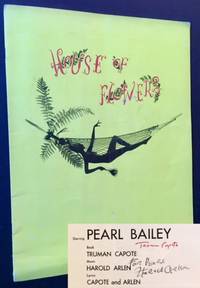
195515414New York: Passantino 1955. Original wraps. Near Fine. A wonderful piece of theatre history the original 1955 program for Truman Capote's "House of Flowers". THIS COPY IS NOT ONLY SIGNED BY TRUMAN CAPOTE on the title page next to his printed name BUT IS ALSO INSCRIBED BY HAROLD ARLEN WHO WROTE THE MUSIC FOR THE PLAY TO PEARL BAILEY THE PLAY'S LEAD. This inscription appears next to Arlen's printed name on the title page as well. The program itself is clean and Near Fine in its stapled yelow wrappers with very faint creasing along the panels. Tall thin quarto crisp black-and-white photos thruout of the principals involved in the production and performance of the play. Passantino unknown
199961130Sala BBK. New. 1999. Paperback. 8489476772 . FREE UPGRADE to Courier/Priority Shipping Upon Request IN STOCK AND IMMEDIATELY AVAILABLE FOR SHIPMENT - Flawless copy brand new pristine never opened -- Text in Spanish and Catalan. 124 pp. With 47 ills. 32 col. . 30 x 28 cm. -- with a bonus offer-- . Sala BBK paperback
197764557Mathildenhohe; Et Al. As New. 1977. Paperback. FREE UPGRADE to Courier/Priority Shipping Upon Request IN STOCK AND IMMEDIATELY AVAILABLE FOR SHIPMENT - AS NEW THE TEXT BLOCK IS PRISTINE CLEAN UNMARKED AND IN EXCELLENT CONDITION - - Text in German. 154 pp. With 32 text ills. And 101 ills. On 79 pls. 20 col. . 22 x 22 cm. -- with a bonus offer-- . Mathildenhohe; Et Al paperback
200061588Paris-Musees. New. 2000. Paperback. 2879004721 . FREE UPGRADE to Courier/Priority Shipping Upon Request IN STOCK AND IMMEDIATELY AVAILABLE FOR SHIPMENT - Flawless copy brand new pristine never opened -- 112 pp. With 88 ills. 63 col. . 27 x 21 cm. -- with a bonus offer-- . Paris-Musees paperback
200071503S. C. V. A. New. 2000. Paperback. 0946009341 . FREE UPGRADE to Courier/Priority Shipping Upon Request - IN STOCK AND IMMEDIATELY AVAILABLE FOR SHIPMENT - Flawless copy brand new pristine never opened -- 68 pp. With 51 ills. 38 col. . 26 x 21 cm. -- with a bonus offer-- . S. C. V. A. paperback
199268005Mondadori Electa. New. 1992. Paperback. 8843538152 . FREE UPGRADE to Courier/Priority Shipping Upon Request - IN STOCK AND IMMEDIATELY AVAILABLE FOR SHIPMENT - Flawless copy brand new pristine never opened -- Text in Italian and French. 232 pp. With 215 ills. 158 col. . 28 x 25 cm. Description: "Documenting a major retrospective of the expressive oeuvre of Italian artist Music b. 1909 this catalogue features color reproductions of some 120 paintings and 35 pastels drawings and watercolors executed since 1946 ranging from lyrical landscape studies to somber self-portraits and images of human suffering based on the painter's experiences in Dachau. Includes a substantial anthology of critical texts a detailed biographical chronology and two introductory essays discussing the aesthetic and thematic concerns reflected in Music's landscapes and late portraits." -- with a bonus offer-- . Mondadori Electa paperback
1960157870New York: Edward Padula 1960. Draft script for the 1960 musical noted as "Acting Version" on the front wrapper. The play opened at the Martin Beck Theatre on April 14 1960 transferring to the 54th Street Theatre and then the Shubert Theatre and closed on October 7 1961 after a run of 607 performances. Winner of the 1961 Tony Award for Best Musical.<br /> <br /> An unsuccessful pop songwriter is convinced he can make his fortune if he can get recently drafted rock and roll star Conrad Birdie on the Ed Sullivan show to kiss his high school girlfriend goodbye. Basis for the 1963 film version starring Janet Leigh Dick Van Dyke Maureen Stapleton and Ann-Margaret.<br /> <br /> Red titled Studio Duplicating Service wrappers noted as Acting Version on the front wrapper. Title page present with credits for Book by Mike Stewart Music by Charles Strause Lyrics by Lee Adams and Directed and Choreographed by Gower Champion. 107 leaves with last page of text numbered 2-8-42. Mimeograph duplication rectos only. Pages Near Fine wrapper Very Good with chipping and closed tears at the extremities bound with two gold screw brads. Edward Padula unknown
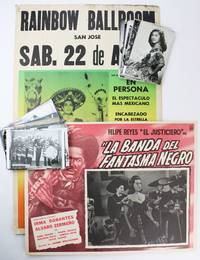
19602410Various places in California New York & Mexico 1960. Very good. Sixty items total including fifty-five photograps and five posters. Generally light wear. An attractive archive of visual materials including posters broadsides original photographs and real photo postcards that promote leading mariachi singers and musicians of the mid-20th century including Salvador López La Prieta Linda José Alfredo Jiménez Lucero Aguilar Miguel Angel Montes Francisco Avitia Ignacio Jaime Jorge de Crespo and Alfredo “El Mayoral†Gonzalez. Notably many of the larger pieces feature singer and actress Irma Dorantes b.1934 one of the last surviving stars from the Golden Age of Mexican cinema. The widow of legendary Mexican ranchero singer and actor Pedro Infante Dorantes enjoyed a string of hit songs in the 1950s and ‘60s including her recording of “Recuerdos de Ipacarai†with El Mariachi Mexico de Pepe Villa.<br /> <br /> “Mariachi music has origins deep in Mexican history. The sound of its string instruments and its oldest rhythms are rooted in Mexico’s colonial times 1519-1810; people from Spain and African slaves and their descendants mingled with hundreds of American Indian cultures to create a new Mexican culture marked by many regions each with its own signature musical tradition. The music that was called ‘mariachi’ as early as the 1850s emerged from the ranches and small towns of western Mexico particularly in the states of Jalisco Michoacán Nayarit Colima and Aguacalientes. When big-city radio stations movies studios and record companies took mariachi music to new audiences throughout and abroad in the 1930s mariachi music was transformed into one of Latin America’s favorite musics. By the 1950s its standard sound of two trumpets three or more violins vihuela small guitar and guitarrón big bass guitar was set. Since then its repertoire of fast-paced songs expressive canciones rancheras ‘country’ songs polkas syncopated huapangos romantic boleros and more has been heard throughout the Americas and around the world†Smithsonian Folkways.<br /> <br /> The present collection includes:<br /> <br /> 1 An original photograph 6 ½†x 7†of José Alfredo Jiménez in performance. Jiménez 1926-73 was by far the most important prolific and popular composer of música ranchero in Mexico during the 20th century. His extraordinary repertoire of more than 1000 songs encapsulated the sentiment ideals and concerns of the common man in a folksy yet poetic way.<br /> <br /> 2 Six black-and-white photographs 7†x 5†of various musicians. Four are identified with holographic annotations on the verso while another is accompanied by a typed press caption indicating that the image captures Las Hermanas Huerta performing “Cantando Bajo el Recuerdoâ€.<br /> <br /> 3 Forty-one black-and-white real photo postcards 3 ½†x 5 3/8†of various musicians all identified in the negative or on the verso. The photographs of Alfredo “El Mayoral†Gonzalez and La Prieta Linda are autographed.<br /> <br /> 4 Six press photographs 8†x 10†of both solo performers and bands including two images of Lorenzo Elisea y Sus Piratas and a shot of singer Amalia “La Tariácuri†Mendoza 1923-2001 on stage.<br /> <br /> 5 Original photograph 13 ¾†x 11†on Irma Dorantes on horseback during a performance in New York. The undated image is signed by photographer F. Camacho on the recto. Dorantes was known for her equestrian shows and in 1964 she and her horses Gatillo de Oro and Justiciero headlined a residency at the Million Dollar Theater in Los Angeles.<br /> <br /> 6 Lobby card 16 3/8†x 12 ½†for “La Banda del Fantasma Negro†1964 the Jaime Salvador film starring Irma Dorantes and Alvaro Zermeño.<br /> <br /> 7 Black-and-white poster 18 ¾†x 13 ¾†of Irma Dorantes reproducing a portrait of the singer by Mexican photographer Carlos Ysunza Nieto.<br /> <br /> 8 Large poster 17 ½†x 22 ½†promoting a benefit performance of “Feria de la Cancion†featuring Irma Dorantes Cuarteto Ruffino and Trio Hermanos Martinez-Gil. Circa 1961 no place noted. Printed in blue on yellow cardstock with a later horizontal crease.<br /> <br /> 9 Large poster 14†x 22†for an August 22 1964 performance by Irma Dorantes at the Rainbow Ballroom in San Jose California with opening acts by comic Rudy Frudy and Mariachi San Miguel. Printed by Woolever Press in Los Angeles on white cardstock with a rainbow gradient.<br /> <br /> 10 Oblong broadside ca. 1958 18 ¾†x 13 ¾†advertising a coronation ball headlined by bandleader Paco Armenta and “el sensacional†Conjunto Tropical Santaneros†at Salon del Cllub de Leones in Calpulalpan a municipality in Tlaxcala in southeastern Mexico. Printed in color on a thin sheet of white stock with some loss to the upper corners.<br /> <br /> Most of the material is unrecorded with no listings in OCLC or elsewhere. In addition to highlighting many leading Mexican musicians of postwar era this archive captures the fashion and aesthetics of mariachi at a formative moment in its evolution. unknown