8 829 résultats
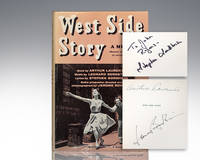
1958148050New York: Random House 1958. First edition of this classic musical. Octavo original half cloth. Boldly signed by Arthur Laurents Leonard Bernstein on the half-title page and inscribed by Stephen Sondheim on the front free endpaper. Review copy with the slip laid in fine in a very good dust jacket. Housed in a custom half morocco clamshell box by the Harcourt Bindery. Rare and desirable signed by these three contributors. In 1947 Jerome Robbins approached Leonard Bernstein and Arthur Laurents about collaborating on a contemporary musical adaptation of Romeo and Juliet. He proposed that the plot focus on the conflict between an Irish Catholic family and a Jewish family living on the Lower East Side of Manhattan during the Easter–Passover season. The girl has survived the Holocaust and emigrated from Israel; the conflict was to be centered around anti-Semitism of the Catholic "Jets" towards the Jewish "Emeralds" a name that made its way into the script as a reference. Eager to write his first musical Laurents immediately agreed. Bernstein wanted to present the material in operatic form but Robbins and Laurents resisted the suggestion. They described the project as "lyric theater" and Laurents wrote a first draft he called East Side Story. Only after he completed it did the group realize it was little more than a musicalization of themes that had already been covered in plays like Abie's Irish Rose. When he opted to drop out the three men went their separate ways and the piece was shelved for almost five years. In 1955 theatrical producer Martin Gabel was working on a stage adaptation of the James M. Cain novel Serenade about an opera singer who comes to the realization he is homosexual and he invited Laurents to write the book. Laurents accepted and suggested Bernstein and Robbins join the creative team. Robbins felt if the three were going to join forces they should return to East Side Story and Bernstein agreed. Laurents however was committed to Gabel who introduced him to the young composer/lyricist Stephen Sondheim. Sondheim auditioned by playing the score for Saturday Night his musical that was scheduled to open in the fall. Laurents liked the lyrics but was not impressed with the music. Sondheim did not care for Laurents' opinion. Serenade ultimately was shelved. Laurents was soon hired to write the screenplay for a remake of the 1934 Greta Garbo film The Painted Veil for Ava Gardner. While in Hollywood he contacted Bernstein who was in town conducting at the Hollywood Bowl. The two met at The Beverly Hills Hotel and the conversation turned to juvenile delinquent gangs a fairly recent social phenomenon that had received major coverage on the front pages of the morning newspapers due to a Chicano turf war. Bernstein suggested they rework East Side Story and set it in Los Angeles but Laurents felt he was more familiar with Puerto Rican immigrants and Harlem than he was with Mexican Americans and Olvera Street. The two contacted Robbins who was enthusiastic about a musical with a Latin beat. He arrived in Hollywood to choreograph the dance sequences for The King and I and he and Laurents began developing the musical while working on their respective projects keeping in touch with Bernstein who had returned to New York. When the producer of The Painted Veil replaced Gardner with Eleanor Parker and asked Laurents to revise his script with her in mind he backed out of the film freeing him to devote all his time to the stage musical. West Side Story is set in the Upper West Side neighborhood in New York City in the mid 1950s an ethnic blue-collar neighborhood in the early 1960s much of the neighborhood was cleared in an urban renewal project for the Lincoln Center which changed the neighborhood's character. The musical explores the rivalry between the Jets and the Sharks two teenage street gangs of different ethnic backgrounds. The members of the Sharks from Puerto Rico are taunted by the Jets a white gang. The young protagonist Tony a former member of the Jets and best friend of the gang's leader Riff falls in love with Maria the sister of Bernardo the leader of the Sharks. The dark theme sophisticated music extended dance scenes and focus on social problems marked a turning point in American musical theatre. Bernstein's score for the musical includes "Something's Coming" "Maria" "America" "Somewhere" "Tonight" "Jet Song" "I Feel Pretty" "A Boy Like That" "One Hand One Heart" "Gee Officer Krupke" and "Cool". The original 1957 Broadway production directed and choreographed by Jerome Robbins and produced by Robert E. Griffith and Harold Prince marked Sondheim's Broadway debut. It ran for 732 performances before going on tour. The production was nominated for six Tony Awards including Best Musical in 1957 but the award for Best Musical went to Meredith Willson's The Music Man. Robbins won the Tony Award for his choreography and Oliver Smith won for his scenic designs. The show had an even longer-running London production a number of revivals and international productions. A 1961 musical film of the same name directed by Robert Wise and Robbins starred Natalie Wood Richard Beymer Rita Moreno George Chakiris and Russ Tamblyn. The film was nominated for eleven Academy Awards and won ten including George Chakiris for Supporting Actor Rita Moreno for Supporting Actress and Best Picture. Random House hardcover
1922121509-SHollywood Cal .: James Abbe 1922. Photographic Image. Illus. by James Abbe. Fine. No Binding. Autographed. 1924c. This vintage black & white photo by the Hollywood photographer James Abbe 1883 - 1973 is of Rudolph Valentino 1895 - 1926 . This personalized vintage photo of Valentino sitting on a couch with a book on his lap is a scarce image of this Silent Movie Star in relaxed full view shot scarce in pose and signed. The photo is now matted and framed . The autograph is to a friend to one of the sweetest girls I know Rudy . Signed photos of Valentino are extremely rare and photos by this photographer are also scarce to the market . Over all framed size : 17.5" x 15.5" . Size: 8 x 10 Photo Matted. James Abbe unknown
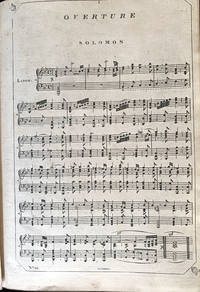
18191811018th and 19th century. The compositions include pieces for the voice piano violin and cello and range from sonatas to airs to operas. The majority of the works many with fine engravings were printed in Britain from notable music publishers. The publication dates vary from the late eighteenth to the mid-nineteenth century. The collection contains works by classical composers like Mozart Handel and Beethoven as well as poets like Felicia Hemans Lord Byron and Robert Burns. Overall the books offer an interesting survey in the history of British music publishing the printing of classical compositions and the collecting of music. A complete list of all compositions is available upon request.<br /> <br /> I. Countess of Lonsdale Music Collection<br /> Two volumes bound for the library of Grace Cecile Lowther née Gordon Countess of Lonsdale 1854-1941 wife of 5th Earl of Lonsdale and daughter of 10th Marquess of Huntly. The first volume contains eight violin compositions for sonatas and the second volume has the corresponding parts for the piano. The volumes contain the earliest imprints mostly from the 1790s and has works by Mozart Haydn and Pleyel among others. <br /> <br /> II. STEVENSON Sir John & Thomas MOORE<br /> A selection of Irish melodies with symphonies and accompaniments by Sir John Stevenson Mus. Doc. And characteristic words by Thomas Moore Esq.r. London: Published & sold at W. Powers c. 1808-1810.<br /> Two bound volumes of issues of Stevenson’s and Moore’s Irish Melodies c. 1808-1834. The first book includes issues 1-4 issue 1 is lacking the title-page. The second book includes issues 4-6 issue 4 is a duplicate. There were 10 total issues printed. Stevenson 1761–1833 was an Irish composer and Moore 1779–1852 was an Irish poet singer and songwriter. Irish Melodies is Stevenson’s best known work and he collaborated with Moore on several other projects.<br /> <br /> III. Original Scottish and Welsh Airs<br /> Three bound volumes that consist of Original Scottish airs and Orignal Welsh airs from the music publisher George Thomson with his signature. Between the three books there are early editions of four volumes of Original Scottish airs four volumes of the rare violin parts for Scottish airs and one volume of the Original Welsh airs and a volume of its optional violin part. Thomson employed composers like Pleyel and Haydn and the poet Robert Burns to produce his series of national airs. These volumes also contain many copperplate engravings in addition to the sheet music. Signature of John Carnegie Glasgow 1810 on all volumes.<br /> <br /> IV. HANDEL George Frederic<br /> Solomon composed by G.F. Handel arranged for the organ or piano-forte by Dr. John Clarke Cambridge. London: Printed by Clementi Collard & Collard c. 1825. Folio. iii 193 1 pp. Engraved title with border design and vignette by Isaac Taylor; inscription in brown ink of Charles Severn.<br /> Arrangement of the vocal score for Handel’s 1685–1759 oratorio Solomon HWV 67. Until recently the librettist of Solomon was unknown. However it is likely that the English/Jewish financier-poet Moses Mendes c. 1690–1758 provided the lyrics to Handel’s oratorio according to a new documentary source. The previous owner of this volume was Charles Severn 1806–1894 a musician and member of the Royal Society of Musicians in Great Britain.<br /> <br /> V. ROSSINI Gioachino Antonio<br /> Mosè in Egitto oratorio in tre atti musica di Rossini nuova edizione. Paris: Ou Magazin de Musique de Pacini c. 1825. Folio. ii 1 ii 203 pp.<br /> Rossini 1792–1868 was an Italian composer known for his comic operas including William Tell 1829. He composed Mosè in Egitto with the librettist Andrea Leone Tottola around 1818. Rossini later revised the opera adding a fourth act and a ballet in 1827 and renamed it Moïse et Pharaon. Both versions were highly successful and remain Rossini’s best known works.<br /> <br /> VI. Voice and piano-forte<br /> This volume contains 23 engraved pieces of music. The majority of works are romantic songs with lyrics for solos or duets. There are also works for the piano-forte. All entries except four are from British composers and/or poets. The exceptions are two songs from Italian composers based in England a duet from Mozart’s The Marriage of Figaro printed by a British music firm and a book of eight anonymous Italian duets. Highlights include three songs from Lord Bryon’s and Isaac Nathan’s Hebrew Melodies title-pages with lithographs from Maxim Gauci’s firm and many works by women composers and poets like Felicia Hermans.<br /> <br /> VII. Trios<br /> Three volumes of trios for the piano violin and cello. There are six compositions in total with each volume containing the parts for each instrument. The sheet music comes from a variety of publishing firms with a date range of the early to mid-nineteenth century and consists of works by Classical composers including Mendelssohn Mozart and Beethoven. unknown
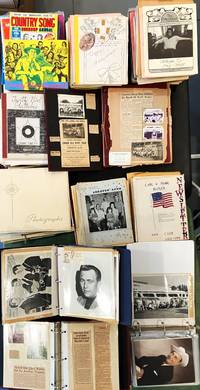
1960010285Nashville Tennessee: Various 1960. Scrapbook. Very Good. Pictorial Printed Wrappers. An important and substantial archive of material consisting of the Country Music Fan Club collection of Opal May Hardyman superfan and President of the Carl Butler and Pearl Fan Club which provides a comprehensive view of the dawn of the Country Music Fan Club era. While the Loretta Lynn Fan Club organized in 1963 by the Johnson sisters Loudilla Loretta and Kay Johnson is widely recognized as the first CM Fan Club the Carl Butler and Pearl club was organized in November of 1962 and with the publication of the Butler Bulletin in February of 1963 it may actually hold that distinction. Female fans have been a driving force behind the popularity of country music since its inception.Their unwavering devotion and loyalty have played a crucial role in shaping the genre's cultural significance. The 1960s witnessed a surge in the formation of country music fan clubs often spearheaded by women who were passionate about their favorite artists. These clubs provided a platform for fans to connect with one another share their love of music and support their idols.Beyond simply admiring their favorite artists female fans actively engaged with the country music industry. They wrote letters to their favorite stars attended concerts and purchased merchandise. Their enthusiasm helped to drive record sales and generate publicity for artists contributing to their success.This archive includes over 1500 items mostly photographs celebrity and candid with many that are signed and inscribed. Also 150 Fan Club Newsletters including 40 Carl and Pearl 20 Loretta Lynn 20 Bill Anderson 20 James O'Gwynn and 50 from some 40 other country stars. It was not uncommon for fans to belong to more than one fan club and in 1967 the Johnson sisters started the International Fan Club Organization IFCO to help many other country performers and fans organize. In 1968 IFCO held its first dinner and concert with 75 fan clubs in attendance. Also included are 7 scrapbooks and photo albums the most notable a 1960 Tour Bus Trip taken by Opal and her friends to the Grand Ole Opry in Nashville guided by Jim Reeves. Another scrapbook compiled by Opal is devoted entirely to Carl and Pearl. Another features many clippings and vernacular photos of the tragic deaths of C & W stars. Other items include: Broadsides Concert Programs and tickets Newspaper clippings Holiday and greeting cards post cards and multiple Country Music publications and assorted ephemera. A richly diverse and fascinating collection filling three bankers boxes from an important period and turning point in the history of Country Music. . Various Paperback
241j1550Toronto: The Cumberland Press. Good. 1988. Privately Published Limited Edition. Paperback. Signed and numbered 74/100 by Neil Peart inside back cover. "And now it was all over. I didn't want to replay it all or relive it again but man- will someone hurry up and figure out a way to slow the good times down But no- even African Time can't make a day last one minute longer." -p 201. Describes his African travel experiences during September of 1987. Neil Peart 1952-2020 was the renowned drummer and main lyricist of the internationally acclaimed Canadian rock band Rush which he joined in 1974. He dedicated this book to his then wife Jacqueline and daughter Selena both of whom left the world prematurely and tragically in the 1990s causing Peart to take a prolonged timeout from his musical career. Rush tribute website Cygnus-X1 suggests this to be one of several books/travelogues authored and privately published by Peart during the 1980's a full decade before he released his first novel. Apparently these books were all produced in very limited quantities and only gifted to friends and family thus rarely found. 205 5 pp. Bibliography. Occasional black and white illustrations by David Bygott. 11" x 8.5". Tight and unmarked with average wear. A sound and precious memento of the the iconic drummer known to his fans as "The Professor". ; Illustrations; 4to; Signed by Author . The Cumberland Press paperback
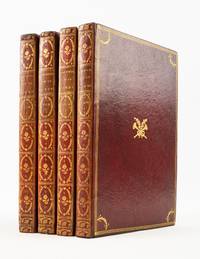
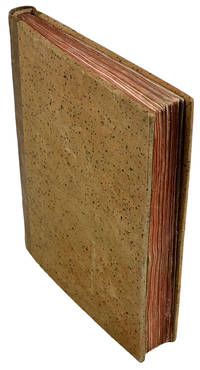
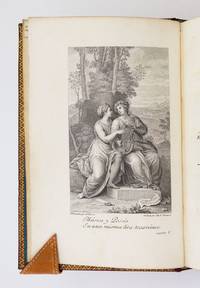
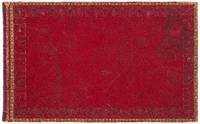
1773ST20891Paris: Chez de Lormel Imprimeur de l'Academie Royale de Musique 1773. FIRST EDITION First Issue with pencilled correction of "affreux Serpent" on p. 54 of Vol. II. 237 x 160 mm. 9 1/4 x 6 1/4". Engraved throughout. Four volumes. <br/> Tasteful contemporary crimson morocco gilt covers with triple fillet border floral garland at corners crossed trumpets with laurel branches at center smooth spines in gilt compartments with floral sprig within an oval catkin wreath two tan morocco labels gilt turn-ins marbled endpapers all edges gilt restorations to head of two spines. ENGRAVED THROUGHOUT: Engraved decorative title page and dedication page in volume I three engraved frontispieces by Le Bouteux and Le Barbier in volumes II-IV one of these a portrait of the dedicatee La Dauphine Marie Antoinette and 100 FULL-PAGE PLATES the 25 in volume I designed and engraved by Moreau le jeune all with tissue guards those in volumes II-IV engraved by Masquelier and Née after designs by Le Barbier Le Bouteux and Saint-Quentin about one-third of the plates with original tissue guards. Without the separately printed portrait of Laborde issued in 1774 and found in some copies. Cohen-de Ricci pp. 534-38; Ray 49 pp. 90-91 p. 76; Lewine pp. 266-68. Spines slightly and evenly sunned a hint of wear at corners but the bindings otherwise beautifully preserved with only the most trivial imperfections; internally with isolated inconsequential foxing or small stains. A VERY FINE CONTEMPORARY SET the lovely bindings scarcely worn the margins extremely ample the contents clean and fresh and THE ENGRAVINGS RICHLY IMPRESSED.<br/> <br/> Dedicated to the crown princess Marie Antoinette this opulent production--offered here in fine contemporary morocco--beautifully displays the music fashion and aristocratic antics of Louis XV's court perfectly encapsulating the French Rococo. According to Cohen-de Ricci "This book—one of the most beautiful of the 18th century—is perhaps along with 'Contes de La Fontaine' the most delightful by virtue of the grace of its subjects and the variety of the costumes depicted therein." It contains some of the most elegant and memorable engravings to be seen in any French work of the period and they transform a book of perhaps more than occasionally vapid songs into a profoundly pleasurable visual experience. The author Benjamin de Laborde or Jean-Benjamin de La Borde 1734-94 was the hunchbacked valet of King Louis XV. In consequence of the monarch's indulgence of his favorite de Laborde's songs were given a presentation described by Ray as being of "the utmost sumptuousness" the entire work having been produced by engraving. The first volume which Cohen-de Ricci Ray and Lemire unanimously proclaim a "masterpiece" is graced by plates that were both designed and cut by Jean-Michel Moreau called Moreau le jeune 1741-1814. Ray says that the work done by Moreau le jeune during the 1760s "showed him to be the equal of the established rococo masters Boucher Eisen and Gravelot" and that in his work during the 1770s "he carried all before him." So Moreau was in his prime then when he executed these charming scenes often of courtship set in pastures pleasure parks and elegant interiors; they represent the culmination of the Rococo style delicate and lush without being cloying. Because of a quarrel between the artist and the author the final three volumes were illustrated by Le Bouteux and by Jean-Jacques-François Le Barbier 1738-1826. Le Barbier was one of the first great French neoclassical illustrators and Ray declares the engravings here his "most sustained and accomplished series of illustrations apart from that for Gessner's 'Oeuvres'" and laments that the present work "has not received the attention it deserves." Le Barbier's compositions are characterized by charm grace and elaborate and convincing detail. This first printing presents the engravings at the height of their richness and power which has been undimmed by the intervening centuries. With any copy of this work the engravings will always take center stage but here the tasteful contemporary red morocco bindings deserve a prolonged bow: they are perfectly elegant and elegantly perfect. Chez de Lormel, Imprimeur de l'Academie Royale de Musique unknown
1940List2441New York 1940. Eighty-five pages including sixty loose pages and a partial draft of Guthrie’s Hard Hitting Songs for Hard Hit People totaling twenty-five pages. With one handwritten page. One page - a typewritten copy of “The Ballad of Harry Bridges†- with a handwritten note by Guthrie to Ambellan. With photocopies of several letters from Guthrie to Ambellan included. Also with a broadside of the Carol Tree Carol by Alan and Elizabeth Lomax 1940 and a notecard with the lyrics to “Hawl Away Joe†written Inscription states “Here you are Harold hope it aint late. Well if it is will be singing about old Harry for a many a day to come. Pour it on em Boy. Woody G.â€. A fascinating collection of material from the collection of Harold Ambellan Woodie Guthrie’s friend collaborator and landlord during an important creative period for Guthrie in the 1940s. The group contains a partial draft of Guthrie’s Hard Hitting Songs for Hard Hit People which was written while Guthrie was living in Ambellan’s loft as well as a collection of over sixty loose songsheets not included in the book. Of these over thirty are not listed in Tulsa’s Woody Guthrie Center finding aid. The sixty pages include variant titles and verses to recorded and published versions with some items attributed to Ledbelly and overall the group should shed light on scholar’s efforts to map out the landscape of the American folk song at the time of Guthrie’s work. The typescript draft generally matches the published version with the occasional typo. <br /> <br /> Nora Guthrie writes in her introduction to Hard Hitting Songs of the influence of Ambellan on Guthrie’s creative process. Ambellan was an artist and sculptor and part time musician and Guthrie lived in Ambellan’s loft on 21st Street. “The loft was mostly filled with Ambellan’s sculptures which were abstract and very large. However the couple managed to throw a cot up in the back of the loft for Woody to crash on… Evenings at the loft often included impromptu hootenannies where Woody and Pete’s Seeger musician friends would gather to raise some money to help pay the Ambellans’ rent… There was a lot of singing and a lot of songwriting and it was in the 21st Street loft that Hard Hitting Songs came into existence.†Guthrie wrote “Vigilante Man†and “Hard Travellin†while staying at the Ambellans’ loft. <br /> <br /> Nora Guthrie continues: “ Alan Lomax’s father John Lomax had collected a group of songs that dealt with migrant workers’ share crop farmers’ and industrial workers’ issues many of the lyrics protesting workers’ conditions and advocating for their rights. At the time the material was considered ‘too hot to handle’ by government employees so Alan handed it over to Pete Seeger and Woody to browse through. They loved the material and together with Alan they decided to create a new songbook they would embellish with their own writings and commentary as well as some additional original songs. Working fourteen hours a day they completed the songbook in about five months. … The manuscript which they had titled Hard Hitting Songs for Hard-Hit People was left behind in the loft literally saved by Elisabeth Higgens until its existence became known in the 1960s when it was first published in 1967.â€<br /> <br /> Overall a very scarce relic of an important period in Guthrie’s career with a fantastic association. Guthrie ephemera and archival pieces are notoriously scarce on the market with single letters occasionally surfacing. unknown
1635132<p>Exceedingly rare first edition</p><p>of Doni renowned landmark of music theory</p><p>The innovation of the "<em>Lyra Barberina</em>"</p><p>Only one copy sold at auction in the last 50 years</p><p>Doni Giovanni Battista.<em> Compendio del trattato de'generi e de'modi della musica. Di Gio. Battista Doni. Con un discorso sopra la perfettione de' concenti. Et un saggio a due voci di mutationi di genere e di tuono in tre maniere d'intauolatura: e d' vn principio di madrigale de principe ridotto nella medesima intauolatura. All'eminentiss. e reuerendiss. sig. il sig. cardinal Barberino. </em>In Roma : per Andrea Fei 1635.</p><p>4to 20 x 15 cm half vellum binding boards enriched with hand-colored paper pp. 40 171 1 signature †ⴠa-dⴠA-VⴠXⶠleaf b1 incorrectly numbered c1 xylographic decorations and headpieces on title page the coat of arms of Cardinal Francesco Barberini text in Latin and Greek.</p><p>At leaf Q3v: <em>Aggiunta con descrizione e rappresentazione in spartito dei cinque Modi o Tuoni generali denominati Dorio Frigio Lidio Iastio Eolio</em>; at leaf V1r: <em>Il principio d'un madrigale del Principe.</em></p><p>5 folding plates with musical notations</p><p>In his <em>Compendio</em> Doni is the first to theorise the introduction of elements of the ancient tonal system into contemporary musical practice and the need to return to the <em>Greek tonal system</em> an ancient music theory characterized by its use of tetrachords four-note scale segments various modes named after Greek regions like Dorian Phrygian and Lydian and the concept of octave species which describes different arrangements of whole and half steps within an octave.</p><p>His theories took up the themes that Vincenzo Galilei had expressed in his <em>Dialogo della musica antica e moderna</em>. He compared the moderns to the ancients concluding that apart from very few examples Monteverdi in particular true chromatic compositions do not exist. Very important in these works is the clear distinction that the author places between the madrigal genre and the recitative style following the reform of the <em>Camerata Fiorentina</em>.</p><p>Doni recognized the advancements made by his predecessors such as Mei 1573 and Salinas 1577 in understanding the Greek tonal system though he disagreed with some of their interpretations. He was critical of others like Glareanus whom he accused of falsely claiming to have revived Greek modes without properly engaging with the ancient Greek musical sources. Doni also dismissed Nicola Vicentino's attempts to revive the ancient chromatic and enharmonic genera as mistaken and useless.</p><p>A significant aspect of Doni's work was his interpretation of the <em>tonoi</em> and octave species based on close readings of the original Greek treatises. His analysis provided a basis for our contemporary understanding of these concepts.</p><p>Doni differentiated between tonos and mode drawing insights from Ptolemy's discussions on the modulation of tonos compared to melody. He highlighted how modulation in tonos involves altering the pitch of the voice throughout the melody while keeping the intervals suitable as opposed to changing only a part of the melody.</p><p>Additionally Doni credited Ptolemy with establishing the distances between the <em>tonoi</em> describing the specific intervals that separate various <em>tonoi</em> such as Dorian Phrygian Lydian and Mixolydian.</p><p>This understanding of the relationships between different <em>tonoi </em>was crucial in the historical study and interpretation of ancient Greek music theory.</p><p>One of Doni's significant innovations was his modification of the lyre an instrument he renamed the <em>Lyra Barberina</em> in honor of his patron Cardinal Francesco Barberini.</p><p>This instrument was intended to revive the ancient <em>Greek</em> <em>lyre</em> reflecting Doni's passion for connecting past and present musical traditions.</p><p>In the Appendix we find the Pedro de Heredia's madrigal <em>Passa la vita</em> on a text by Pope Urbanus VIII</p><p>One of the woodcuts in the book shows a violin fingerboard with a layout for the ancient Doric mode. Other woodcuts illustrate Greek tonalities and chromatic musical progressions.</p><p>Conditions: wormholes restored at last 40 leaves sometimes touching few letters some marks of use and light waterstains along the text.</p><p>References: Claude V. Palisca 1997. <em>Giovanni Battista Doni's Interpretation of the Greek Modal System</em>. The Journal of Musicology 151 3–18; RISM B VI.1 p. 272; Gregory p. 76; Gamba 1912; Damschroder & Williams p. 74.</p><p>Wider description and more images:</p><p>https://tinyurl.com/1635DONI-PDF</p> Andrea Fei
1779ST19371Madrid: Imprenta Real 1779. FIRST EDITION. 235 x 150 mm. 9 1/4 x 6". 10 p.l. 126 XL pp. 1 leaf errata. <br/> EXCELLENT CONTEMPORARY CRIMSON MOROCCO BY DEROME LE JEUNE his ticket with address of Rue St. Jacques on verso of front free endpaper covers framed with thick and thin gilt rules raised bands spine compartments with central floral sprig surrounded by a lozenge of small tools volute cornerpieces gilt titling gilt-rolled turn-ins gilt edges cobalt blue paste-paper endpapers. WITH SIX CHARMING ENGRAVED ALLEGORICAL PLATES after G. Ferre. Front pastedown with morocco bookplate of Mortimer L. Schiff and small book label with a gilt cipher on a red peach. A Large Paper Copy. Palau y Dulcet IV 107; RSIM B VI 429; MGG VI 1403 f.; Gregory-Bartlett I 129. Three minute dents to front board a hint of wear to bands and corners isolated faint foxing blank recto of frontispiece leaf and blank verso of final leaf with faint blue shadown from endpapers but all of these quite trivial and otherwise A BEAUTIFUL COPY--fresh clean and bright internally with very wide margins and strong impressions of the plates and in a lustrous binding showing with few signs of use.<br/> <br/> This is surely one of the handsomest poetical treatises on music ever produced and it is offered here in a binding done by one of the finest craftsmen working in Europe during the period of the book's publication. The work is written in the "silva" form of poetry used by persons of high rank illustrated with fine engravings and put into elegant morocco by the finest hands among the large Derome family of binders. According to Palau our first edition is "beautiful and printed on fine paper." He says further that although the strongly expressed opinions of the youthful author on contemporary composers caused the work to be "unfairly attacked" it was "appreciated by professors of music and collectors of literature in that genre" especially in Italy and America. A child of the Enlightenment Iriate 1750-91 gained entry to intellectual and artistic circles in Madrid through his uncle who was librarian to the king of Spain. He translated works by Horace and Virgil into Spanish by royal request and wrote criticism poetry and dramas. He is best known for his satirical fables on the contemporary literary scene "Fábulas literarias." There were no fewer than 18 members of the Derome family who made their livings as binders in Paris from the middle of the 17th century until the first quarter of the 19th but by far the most distinguished family member was Nicolas-Denis called "le jeune" 1731-88. Known for the gracefulness of his bindings and for being capable of "amazing delicacy" in Hobson's words Derome le jeune was simply the leading binder of the day and his work was much in demand. Because he refused to turn away customers Derome was forced to hire a number of assistants whose work he could not always supervise closely. However Thoinan says that the binder's best work is indicated by the presence of his ticket as here. The volume's provenance adds to its luster: it was in the distinguished library of American bibliophile Mortimer Schiff 1877-1931. In Dickinson's words Schiff a financier and philanthropist Schiff "brought together an unrivaled collection of decorative bindings." His library included works by great printers important illustrated books and works printed on vellum but chiefly fine and historic bindings. The "Reliures" database of the Bibliothèque Nationale de France commends Schiff for assembling "one of the most important inter-war libraries" noting that his collection was "renowned for its collection of French bindings.". Imprenta Real unknown
1949417j1549Chicago Illinois: Ebony. Good. 1949. First Edition. Single Issue Magazine. Iconic Billie Holiday cover issue with seven-page photo-illustrated article documenting her struggle to return to normal life after her incarceration for possession of narcotics in 1947. "Billie Holiday 1915-1959 was inducted into the Grammy Hall of Fame and the National Rhythm & Blues Hall of Fame. In 2000 she was also inducted into the Rock & Roll Hall of Fame their website stating that 'Billie Holiday changed jazz forever'. She was named one of the 50 Great Voices by NPR and was ranked fourth on the Rolling Stone list of '200 Greatest Singers of All Time' 2023. Several films about her life have been released." - Wikipedia. "With few exceptions every major pop singer in the US during her generation has been touched in some way by her genius. It is Billie Holiday who was and still remains the greatest single musical influence on me. Lady Day is unquestionably the most important influence on American popular singing in the last twenty years." - Frank Sinatra in Ebony 1958. From the personal collection of Presidential Medal of Freedom recipient C.T. Vivian whose blind stamp appears at bottom of front cover. "Vivian 1924-2020 was an American minister author and close friend and lieutenant of Martin Luther King Jr. during the civil rights movement. On the March 2007 anniversary of the 1965 Selma to Montgomery marches Barack Obama refered to him in the words of MLK Jr. as 'the greatest preacher to ever live.'" - Wikipedia. Bits of peeling from lower right corner of front cover otherwise complete unmarked and intact with average wear. A truly extraordinary Billie Holiday memento.; Cover Photo; Folio . Ebony unknown
047901Kempten: Rudolhum Dreherr. First Edition. Hardcover Full Leather. Very Good Condition. Rebound in modern calf in an antique style endpapers refreshed lacking original final blank and half title otherwise complete with engraved title with a tear and loss in the margin repaired with paper portrait and two plates. Some browning and degradation to bottom edge of title and following leaf apparently from the removal from previous ownership marks largish stain running from 205-212 but nor really affecting legibility generally light and scattered staining elsewhere. 44 229 17 pp. Ferguson 371 Graesse K22 Brunet III 668<br /> <br /> Famous for being the first book entirely devoted to the science of acoustics and for first mentioning the aeolian harp Phonurgia Nova was spurred into publication by a rival's Samuel Morland claim to having invented the speaking trumpet which Kircher had been using for decades. <br /> Size: Folio. Quantity Available: 1. Shipped Weight: 2-3 kilos. Category: Music; Inventory No: 047901. Rudolhum Dreherr hardcover
18322092902141600340Not Available 1832. Soft Cover. Fine. Size: 114 x 56 cm Number of books: 1 Not Available paperback
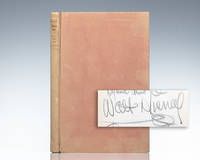
1936146500San Francisco: Bohemian Club 1936. First edition of this Grove Play produced and performed by and for Bohemian Club members. Octavo original orange boards. Signed by Walt Disney opposite the dedication page. Additionally signed and inscribed by nearly 70 individuals. In his book 'Walt Disney: An American Original' Bob Thomas recounts the story of Walt Disney's visit to the Bohemian Club in 1936 the year in which his signature appears in this volume -- apparently the snoring from the following evening inspired the snoring scene in the Dwarfs' cottage in Snow White. In very good condition ownership inscription to the front pastedown "For Orrville Taylor. Bohemia Aug 1 1936 from H. P." with a large sketch of the mountainside. American entrepreneur animator and film producer Walt Disney is arguably the most important figure in the history of animation. A national cultural icon his innovative spirit and vision revolutionized the genre of animated cartoons making them a major part of mainstream popular entertainment. Founded as the Disney Brothers Cartoon Studio in 1923 and incorporated as Walt Disney Productions in 1929 Walt Disney Animation Studios has produced 57 feature films. For much of its existence the studio was recognized as the premier American animation studio; it developed many of the techniques concepts and principles that became standard practices of traditional animation. Bohemian Club hardcover
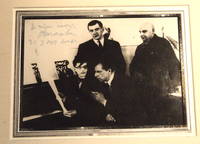
196925411Moscow 1969. 1969. Very good. INSCRIBED AND SIGNED BY SHOSTAKOVICH - sc A 6-1/2 inch high by 9-1/4 inch wide black & white gelatin silver photograph distributed by the photographic agency of H. Roger Viollet with their stamp on the verso. This famous image from September 19 1929 depicts the young bespectacled Shostakovich seated at the piano holding up a sheet of the music for the Bedbug so that Meyerhold the director of the play who is seated next to the composer with a cigarette in hand can look at the page. Standing behind the two a cigarette dangling from his mouth is the poet and author of the play Vladimir Mayakovsky with the great painter and photographer Alexander Rodchenko who designed the sets for the production standing at the viewer's right. Shostakovich has inscribed the photograph at the top left in Russian with words equivalent to "Best Wishes". The inscription and signature penned in blue ink is signed "D. Shostakovich" and dated "25 I 1969 Mokba". The photographic agent's credits stamped on the verso state "H.Roger Viollet / 6 Rue de Seine Paris - 6e / Tel. ODE. 81-10 / Attention Obligatoire / Collection Viollet". This particular signed photograph is from the collection of the autograph collector and scholar Ray Rawlins who wrote numerous books on the subject with his discreet oval collector's mark stamped at the bottom right of the verso illustrated with a device of an arm holding an arrow and the words "Rawlins Collection: Historical Docs and ALS". The photo is further annotated in pencil on the verso: "RV 40877 / Theatre Meyerhold / le compositeur Chostakovitch / qui a compose la musique de la Punaise / assis a ses cote Meyerhold / debout de gauche a droite: / le poete Maiakisky auteur de la Punaise / et l'artiste Rodchenko qui s'occupe des decors pour 'la Punaise'." There are light brownish diagonal stains to the lower left of the verso with some minor creasing. The photograph is mounted into a mat with document tape from the top corners of the verso. The image itself has but some light spotting to the image and minor soiling to the left edge likely due to the overlap of the mat. There is some very minor fading and some very few spots most likely the result of the developing process. A rare and very significant signed photograph.<p>Provenance: From the collection of Ray Rawlins author of "The Stein and Day Book of World Autographs". <p>Along with Meyerhold Mayakovsky and Rodchenko Shostakovich embraced the Soviet Revolution which by its nature seemed to promise to liberate the arts from the constraints of staid conservative tradition. And though the promise seemed to hold true at first allowing great creativity and experimentation the artists were to find themselves criticized by those in power with little tolerance for those whose work even hinted at opposition. Shostakovich found himself alternately being hailed as a hero of Soviet music denounced as a formalist and attacked by Pravda. Such denunciation in Stalinist Russia could well lead to arrest. Indeed many of Shostakovich's friends and family were arrested or executed during the years of terror. In the early period from 1921 to 1927 the Bolshevik's experimentation with a New Economic Policy allowing some limited private enterprise resulted in considerable freedom and the arts flourished. Even criticism of the NEP and government policy was tolerated to some degree. But the line was always a fine one and by 1927 Stalin tightened his grip on the economy and the arts. It was in the period following 1928 the year Stalin buried the NEP that the futurist poet Mayakovsky wrote his play "Klop" The Bedbug for Meyerhold. It was an ambiguous satire of Soviet society. Shostakovich composed the incidental music for the play his Opus 19. Moscow, 1969. unknown
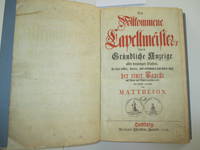
173916570AB1739. Ham burg Herold 1739. 345 : 225 cm. 28 pages 2 leaves 484 pages 8 leaves register with engraved vignette on title-page type-set musical examples within the text woodcut head and tailpieces 1 full-page engraved plate. Contemorary half vellum decorated papers on boards. First print of the first edition "Neues Verzeichnis bisheriger Matthensonischer Werke" which is only missing in the first print. The rare original edition of the most important work of Matteson an encyclopedia of knowledge of the music-practice of its time. An undispensable source for music-academics. He brings together a vast array of facts as well as his most complete statement of several major theoretical concepts. These include the systematizing of the doctrines of rhetoric as they become the basic of compositio.A lengthy discussion of emotion in music leads to.the only attempt found in baroque literature to arrive at a true "Doctrine" of the Affections. New Grove 11 p. 835. - Mattheson's most important and extensive theoretical work "an encyclopedia of the entire musical practice of his time" in the extremely rare original edition. The important matters from music theory and aesthetics which are often dealt with quite briefly in the 3 "Orchestras" in the "Critica musica" in the two "Schools for basso continuo" as well as in the "Core of melodic science" are treated in such detail that this work must almost be called a fundamental one Schmidt. Mattheson's works have become an indispensable source for musicology because without them it is difficult to understand the great music-historical turn that took place in his time. Joseph Haydn owned a copy of it; Goethe knew it as is evident from his letter to Zelter of Jan. 1 1819. - Cannon No. 138; Wolffheim I 819; Hirsch I 378. - With a small inscribtion at the inner front board. Boards coverd with a special marbled paper. hardcover
1513047490Venice: Luc'Antonio Giunta 1513. First Edition. Hardcover. Very Good Condition. Old plain boards added endpapers with modern owner signature title penned to spine. Binding worn text block split in a number of places and nearly loose in the binding. Signature B detached. With a dampstain on the lower right through much of the volume clean in the center marginal browning last few leaves with loss to upper right just touching the text on the final leaf. Contemporary marginal notes on two leaves. Complete with 184 numbered leaves and still very good overall pervasive minor flaws notwithstanding. Mortimer Italian Books 401. Not in Adams. 10 copies in OCLC 4 in the US.<br /> <br /> A lovely and finely printed processional with a number of woodcuts two reused from Giunta's 1494 Dominican processional the procession on A4 verso and the entry into Jerusalem on B1 recto. Mortimer notes that it is for Augustinian use rather than Roman. <br /> <br /> Size: Octavo 8vo. Quantity Available: 1. Shipped Weight: Under 1 kilo. Category: Religion & Theology; Music. Inventory No: 047490. Luc'Antonio Giunta hardcover
18204410341820. Hardcover. Very Good. Oblong octavo 9 ½†x 6â€. Over 230 pages of music and lyrics handwritten on sheets lined with eight staves. Bound in contemporary red straight-grain morocco with gold and blind tooling on both boards spine edges and turn-ins marbled endpapers all edges gilt. Owner’s name “George Houstoun†stamped in gold on front pastedown and written in manuscript on the front free endpaper verso dated March 20 1834. Some darkening and modest wear to the edges of the boards front board bowing slightly very good.<br /> <br /> An unusual manuscript collection of early 19th century Spanish romantic and bolero songs. Though not titled the first work in the volume is La Suplica the sixth in a cycle of six songs composed by Manuel Rücker first published in Madrid in 1820. Also included is a song from the opera Ricardo Corazón de León and various “Bolerosâ€. The undated manuscript was written out on early wove paper that could predate the binding by as much as ten or more years. <br /> <br /> Bound in a handsome morocco binding for George Houstoun who very likely was related to the famous 18th century Georgia planter and statesman William Houstoun delegate to the Continental Congress from the Province of Georgia.<br /> <br /> A unique music manuscript with an intriguing provenance warranting full scholarly research. hardcover
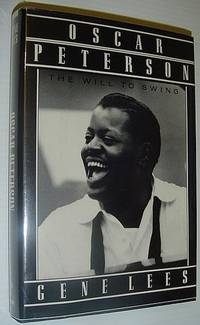
1990815a2005Riverside New Jersey U.S.A.: Prima Publishing. Very Good in Very Good dust jacket. 1990. First Printing. Hardcover. 1559580372 . Signed and inscribed by Oscar Peterson upon front free endpaper. "For the millions who know and love the music of Oscar Peterson here's the definitive biography by his friend and former Down Beat editor Gene Lees." - dust jacket. "Oscar Peterson 1925-2007 was a Canadian jazz pianist and composer. As a virtuoso who is considered to be one of the greatest jazz pianists of all time Peterson released more than 200 recordings won eight Grammy Awards as well as a lifetime achievement award from the Recording Academy" - Wikipedia. 294 p. Black and white photographic plates. Clean and bright with negligible wear. Occasional underlining in blue ink. Dust jacket now in glossy new archival-grade protection. A lovely signed example.; 8vo - over 7¾" - 9¾" tall; MUSICIANS PIANISTS BIOGRAPHY AUTOBIOGRAPHY COMPOSERS Signed and Inscribed By Oscar Peterson Jazz Pianists Canada Canadian Performers; Signed by Authors . Prima Publishing hardcover
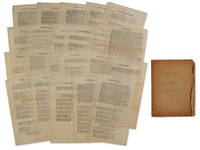
155193N.p.: N.p. 1983. Vintage setlist from an unidentified X show circa 1983 featuring 24 tracks on two leaves each a Xerographic duplication in vocalist-bassist John Doe's hand and bound in the center with a piece of black gaffer tape. <br /> <br /> Represented on the setlist are tracks from the band's first four albums the last of which "More Fun in the New World" was released in 1983.<br /> <br /> One of the most influential and longest running bands to come out of the Los Angeles punk scene of the late 1970s. Formed in 1977 X's sound traversed not only punk but rockabilly country blues rock folk and funk. After two hiatuses and a couple of lineup changes in the 1980s and 1990s the core members of the band reunited in 2008 and continue to tour today.<br /> <br /> X was the subject of the documentary "X: The Unheard Music" 1986 and also appeared in two seminal 1980s music documentaries-Penelope Spheeris' "The Decline of Western Civilization" 1981 and Derek Burbridge's "Urgh! A Music War" 1982.<br /> <br /> 8.5 x 20.5 inches. Very Good plus with some creasing and wear archivally framed. Frame 10.75 x 22.5 inches. N.p. unknown
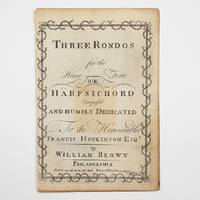
1787373365Philadelphia: Printed and sold by the Author . John. Aitken Sculp 1787. Engraved title letterpress 1p. List of Subscribers 6 engraved sheets. 4to. Loose sheets trimmed close at the gutter margin. Engraved title letterpress 1p. List of Subscribers 6 engraved sheets. 4to. "By one of those strange coincidences which delight the historian and at the same time provide the essayist with convenient points of departure the year 1787 which saw the writing of the Constitution of the United States saw also the solid beginnings of music publishing in this country as a separate and independent enterprise. The scene of these beginnings was Philadelphia the publisher and composer a certain William Brown the engraver John Aitken; the publication itself bore a dedication to no less a person than Francis Hopkinson signer of the Declaration of Independence and our first native composer. Three Rondos for the Piano Forte or Harpsichord. Composed and Humbly Dedicated to the Honourable Francis Hopkinson Esq. by William Brown. Philadelphia. Printed and Sold by the Author. Price Two Dollars. J. Aitken Sculp - so runs the full title of this musical landmark which the composer-publisher himself in inviting subscribers had called 'the first attempt of the kind in America'" Oliver Strunk "Early Music Publishing in the United States" The Papers of the Bibliographical Society of America vol. 31 no. 2 1937 pp. 176-79.<br /> <br /> Dunlap & Claypoole's Daily American Advertiser of 23 January through 10 February 1787 announced that subscriptions were being gathered for William Brown's Three Favorite Rondos Adapted to the Harpsichord. Subscriptions were being gathered both by Mr. Brown and Mr. Reinagle for the work. Among the notables on the subscriber list here are Alexander Reinagle four members of the Penn family and the dedicatee Francis Hopkinson. <br /> <br /> Very scarce with only four examples in OCLC. Evans 20246; Sonneck p. 361 Printed and sold by the Author ... J[ohn]. Aitken Sculp unknown
190886499New York: Boosey & Co. Fine; With an Essay By John Foord. 1908. First Edition. Leather. TRULY ONE OF A KIND PARTICULARLY SINCE IT HAS A HAD WRITTEN AND SIGNED POEM BY JOHN FOORD "TOOUR OWN DEAR NELL". PROFESSIONALLY REBOUND IN GORGEOUS LEATHER WITH RAISED BANDS AND GILT LETTERING AND DECORATION. ALL EDGES GILT!!; 259 pages . Boosey & Co hardcover
1925RMILKIN00TWMethuen 1925. Very Good. Milne A. A. The King's Breakfast. Music by H. Fraser-Simson; Decorations by E. H. Shepard. London: Methuen 1925. #18 of 100 signed copies. 17pp. Small folio. Signed by author. Book condition: Very good with lightly bumped corners a few scratches and label discolored by its own adhesive. Signed by Milne Fraser-Simson and Shepard. Rare. Methuen unknown
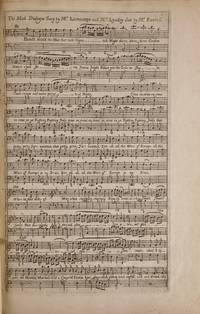
41185Folio. Contemporary dark brown leather-backed blue/gray boards. Titled "A collection of Songs by several eminent Masters" in contemporary manuscript on recto of first page of music. Engraved throughout.<br /> <br /> Provenance<br /> With "Lucy Gregory July the 6th 1756" and "Prince Gregory" in contemporary manuscript to front pastedown. Manuscript titling and annotation "Ex dono Revd. Dr. Dawson For use of Musical Society Windsor Castle to be returned to Dr. Dawson When ye club ceases viz when it is reduced to three persons" to blank recto of first song along with title and index to blank verso of final song.<br /> <br /> Contains 33 songs including works by Barrett Blow Eccles Galliard Handel 8 Leveridge Orlandini Pepusch Daniel Purcell Henry Purcell 2 Weldon and others. Scored mainly for voice most for one voice and few for two and figured basso continuo with single-line flute arrangements for some songs.<br /> <br /> 1. Handel. "A Favorite song in the Opera of Theseus" "See see your faithfull lover pineing". London ca. 1720. i blank 2 i blank pp. BUC p. 1001.<br /> <br /> 2. Purcell H. "Sing all ye muses. A song set by Mr. Henr. Purcell The Words by Mr Durfey." London ca. 1700. From Part I of The Comical History of Don Quixote. 4 pp. BUC p. 861 another edition. Scored for two voices and figured basso continuo.<br /> <br /> 3. Handel. "Mi brilla in English and Italian" "Be Kind and Love" / "Mi brilla nel seno". London ca. 1720. i blank 2 i blank pp. HWV 10 Silla.BUC p. 93. <br /> <br /> 4. Purcell H. "The Mad Dialogue Sung by Mr. Leveridge and Mrs. Lynsey" "Behold the man with gigantick might". From The Richmond Heiress. London ca. 1700. 3 i blank pp. BUC p. 862.<br /> <br /> 5. Handel. "Vieni torna in English & Italian" "Turn o turn thee dearest Creature / Vieni torna Idolo mio". London ca. 1715. i blank 2 i blank pp. HWV 9 Teseo. BUC p. 1041.<br /> <br /> 6. Handel. "A Favourite Song by an Eminent Master Within the Compass of the Flute" Recitativo: "Lo here my Love" / Aria: "Love in her eyes sits playing". London ca. 1725. i blank 2 i blank pp. BUC p. 624.<br /> <br /> 7. Handel. "A Song with a Symphony for an Octave Flute & Violins" Recitativo: "Ye verdant Plains" / Aria: "Hush ye pretty warbling Quire". London ca. 1722. i 3 paginated 4-6 i blank pp. HWV 49 Acis and Galatea. BUC p. 432 date incorrect; JISC two copies at Oxford and the British Library. In score for piccolo violin voice and unfigured basso continuo. <br /> <br /> 8. Handel. "A song by an Eminent Master" "Would you gain the tender Creature". London ca. 1750. HWV 49 Acis and Galatea. BUC pp. 432 1091.<br /> <br /> 9. Eccles. "Air in the Opera Semele. The words by Mr Congreve" "Come Zephrys". London ca. 1730. i blank 2 i blank pp. BUC p. 309. <br /> <br /> 10. Orlandini. "A favourite Song in the Opera of Arsaces Sung by Sigr. Senesino" "Se sol la mia morte" / "Cœlestial Corinna". London ca. 1721. i blank 2 i blank pp. BUC p. 56. "Lucy Gregory" in contemporary manuscript to upper outer corner of final blank page. <br /> <br /> 11. Anon. "The Ladys Repulse or Favourite Minuet in Hercules" a pasticcio. London ca. 1715. 2 pp. BUC p. 478. <br /> <br /> 12. Barrett. "A Song sett by Mr. Iohn Barrett Sung by Mrs. Lindsey" "Mistake not Nymph". London ca. 1705. 1f. recto music verso blank pp. BUC p. 86.<br /> <br /> 13. Barrett. "Liberia A Song Set to Musick" "Liberia's all my Thought". London ca. 1715. 1f. recto music verso blank pp. BUC p. 86.<br /> <br /> 14. Purcell D. "Lovely Charmer. A song in the Island Princess." London ca. 1700. 1f. recto music verso blank pp. BUC p. 856.<br /> <br /> 15. Leveridge. "A Favorite Song in the new Opera The words by Mr. Leveridge." London ca. 1720. 1f. recto music verso blank pp. BUC p. 339.<br /> <br /> 16. Anon. "Tom a Bedlam" "Forth from my dark and Dismall cell". London ca. 1720. 1f. recto music verso blank pp. BUC p. 345. <br /> <br /> 17. Leveridge. "A Scotch Song Sung by Mr. Leveridge the words by Mr Durfey" "Farewell my Bonny". London ca. 1710. 1f. recto music paginated "10" verso blank pp. BUC p. 325.<br /> <br /> 18. Blow. "Go Perjur'd Man. A Song for two Voices." London ca. 1710. 1f. recto music verso blank pp. BUC p. 115.<br /> <br /> 19. Anon. "A song by a Gentleman" "How charming". London ca. 1730. 1f. recto music verso blank pp. BUC p. 370.<br /> <br /> 20. Weldon. "Orpheus Song to the Waves Sett by Mr. Iohn Weldon Sung by Mrs. Linsey." "Stop O ye Waves". London ca. 1710. 1f. recto song verso version for flute pp. BUC p. 1065.<br /> <br /> 21. Anon. "A Song by a Great Master" "Beauteous Idol charming Creature". London ca. 1720. 1f. recto music verso blank pp. BUC p. 93. <br /> <br /> 22. Turner. "A Song On Mira's Singing and Beauty" "Singing charms The Bless'd above". London ca. 1710. 1f. recto music verso blank pp. BUC p. 1024.<br /> <br /> 23. M. F. "A song in the Italian style by F M" "Ah Crudel prenesto". London ca. 1720. 1f. recto music verso blank pp. BUC p. 638. A humorous song satirizing Italian opera with text in nonsense-Italian.<br /> <br /> 24. Galliard. "Sung by Mr. Pack in The Opera of Circe" "Fairest if thou can'st be King". London ca. 1720. 1f. recto music verso blank pp. BUC p. 358.<br /> <br /> 25. Vanbrughe. "Apollo to Daphne by Mr. Vanbrughe" "My Dearest Daphne". London ca. 1735. Not in BUC but may be from Vanbrughe's collection Mirth & Harmony; see BUC p. 1034.<br /> <br /> 26. Anon. "The Address with The Lady's Answer" "Ah lovely Nymph". London ca. 1725. 1f. recto music paginated "7" verso blank pp. BUC p. 11. <br /> <br /> 27. Handel. "A Song the words by Mr. Kirkland set to a Trumpet Minuet of Mr. Hendell's" "Phillis the Lovely". London ca. 1725. 1f. recto music verso blank pp. HWV 349 Watermusic. BUC p. 781. <br /> <br /> 28. Young and Leveridge. "The Reproach" "Send back my long stray'd Eyes" and "Mr. Leveridge's Tune." London ca. 1720. 1f. recto music verso blank. BUC p. 1098. The instrumental tune appears to be unrelated to the song; here may however be some association as the song incorporates imagery related to the eyes and the tune's name not given here is "Black-eyed Susan." <br /> <br /> 29. Anon. "A Song after the Italian Manner by an Eminent Master" "Lovely cruel charming fair". London ca. 1715. 1f. recto music verso blank pp. BUC p. 632 another edition. <br /> <br /> 30. Handel. "Di godere in English & Italian by Mr. Hendell" "Di godere" / "Oh my dearest". London ca. 1720. 1f. recto music verso blank. HWV 228. Not in BUC; possibly related to an edition in Foundling Museum. JISC "This song appeared in two editions in 1719: the first was in The Yearly Subscriptions a volume of twenty songs advertised on 5 December the second in the Monthly Mask of Vocal Music issued on 24 December".<br /> <br /> 31. Pepusch. "A Song in the Mask of Martillo" "Tender Hearts to ev'ry Passion". London ca. 1716. 1f. recto music verso blank pp. BUC p. 722. <br /> <br /> 32. Carey. "The Midsummer Wish Taken from the Journal" "Waft me some soft and cooling Breeze". London ca. 1725. 1f. recto music verso blank pp. BUC p. 165. <br /> <br /> 33. Leveridge. "A Song in the Beau Demolish'd Sung by Mr. Leveridge" "Whilst I'm carrouzing". London ca. 1730. 1f. recto music verso index in contemporary manuscript pp. BUC p. 615. <br /> <br /> Binding worn rubbed and bumped; spine partially lacking; lower board nearly detached. Minor dampstaining and worming; occasional small stains. John Barrett ca. 1674-ca. 1745 was an English composer and organist pupil of John Blow. "Like many of his contemporaries such as Jeremiah Clarke John Eccles and Daniel Purcell Barrett composed mainly for the theatre and his many songs mostly of the double-barrelled art song variety are both tuneful and attractive." Christopher Powell revised by H. Diack Johnstone in Grove Music Online<br /> <br /> John Blow 1649-1708 was an English composer organist and teacher. "By his mid-20s he had become the foremost musician in England and in later years he was the elder statesman of the Restoration school whose chief luminary was Henry Purcell." Bruce Wood in Grove Music Online <br /> <br /> John Eccles ca. 1668-1735 was an English composer. "Eccles's greatest talent is revealed in his many songs. Remarkable for their beautifully contoured melodies and impeccable prosody they quickly capture the mood and subtleties of the poetry and are eminently singable. His large works are notable for their dramatic pacing and their carefully planned tonal architecture. In the latter respect he surpassed even Purcell and was far in advance of his day. Eccles brought the Restoration tradition to its close. After Purcell's death in 1695 he was undoubtedly the greatest of the Restoration theatre composers." Stoddard Lincoln in Grove Music Online<br /> <br /> John Ernest Galliard ca. 1687-1749 German composer and oboist "certainly played a significant role in London's musical life in the first half of the 18th century." Roger Fiske revised by Richard G. King in Grove Music Online<br /> <br /> George Frideric Handel 1685-1759 English composer of German birth was "one of the greatest composers of his age." Anthony Hicks in Grove Music Online<br /> <br /> Richard Leveridge 1670-1758 English bass and composer was "a leading singer on the London stage and a popular composer of songs." Olive Baldwin revised by Thelma Wilson in Grove Music Online. <br /> <br /> Giuseppe Maria Orlandini 1676-1760 was an Italian composer. "The large number and wide spread of performances of his operas confirm the opinions of Burney La Borde Martini and Quadrio that Orlandini was highly celebrated as a composer of dramatic music. He was best known for his comic intermezzos in which genre his importance almost certainly outweighs that of Pergolesi. Indeed Orlandini's Bacocco e Serpilla under various titles and with added music by various composers appears to have been the most frequently performed piece of musical drama in the entire 18th century." John Walter Hill and Francesco Giuntini in Grove Music Online<br /> <br /> Johann Christoph Pepusch 1667-1752 a German-born composer and theorist active in England is best known for his arrangement of music for The Beggar's Opera to John Gay's libretto; he composed works in all genres including vocal music.<br /> <br /> Daniel Purcell ca. 1664-1717 brother or cousin of Henry Purcell was an English composer and organist. "Although he was a victim of invidious comparison with Henry Daniel was a talented composer whose style while perhaps too ornate is never dull or incompetent." Mark Humphreys revised by Robert Thompson in Grove Music Online<br /> <br /> Henry Purcell 1659-1695 composer and organist "was one of the most important 17th century composers and one of the greatest of all English composers." Peter Holman and Robert Thompson in Grove Music Online<br /> <br /> John Weldon 1676-1736 an English organist and composer "of considerable talent" was a pupil of Henry Purcell. Margaret Laurie revised by Stephen Bullamore in Grove Music Online. unknown
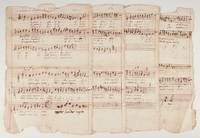
39441Folio ca. 335 x 235 mm. 8 pp. in total with each of the four parts notated in ink on both sides of a single leaf. Text in Latin.<br /> <br /> Includes settings of "In lumen tu splendor" "Ibant Maji quam indesant" "Hic nempe mundi gaudia" and "Qui pius puidens." <br /> <br /> With several corrections; a short passage added to the end of the first page of the Canto part in another hand.<br /> <br /> Somewhat worn; slightly browned; creased at central folds with several small holes; frayed at edges with small chips; some show-through; portions of both upper and lower blank margins lacking affecting titling but not notation. We have not located any other sources of the present works either manuscript or printed. unknown
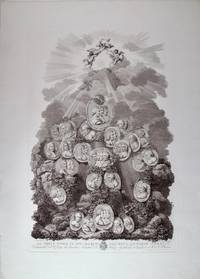
180740691Firenze: La Societa Rainaldi 1807. Each print features small circular engraved portraits and includes mythological elements at the upper portion amongst clouds and rays of sunlight with a background of a rocky outcrop including elements including vegetation and a running stream. The scenes evoke the celestial qualities of music and a reverence for the musicians depicted. <br /> <br /> On good quality laid paper sheet size 695 x 505 mm; plate impression 650 x 365 mm.<br /> <br /> Plate 1<br /> With printed dedication "Al Nobil uomo il Sig: March: Cav: Gius: Antonio Corsi Comandante del R. Corpo dei Cacciatori di Firenze e Gentlehome di Camera di S. M. il Re d'Etruria." <br /> <br /> Subjects include:<br /> Abel d'Arezzo Bach Bertoni Caffaro Campioni Cimarosa Clari Corelli Durante Fux Galilei Galuppi Gluck Handel Jomelli Ligneville Manna Leo Marcello Martini Miers Morales Palestrina Pena Perez Pergolesi Piccinni Poli Porpora Rameau Redi Rousseau Sacchini Sala San Martino Scarlatti Schuster Stefani Traetta Valotti and Zarlino.<br /> <br /> Plate 2<br /> With printed dedication "Al Nobil Uomo il Sig: Giovanni di Poggio Baldovinetti Patrizo Fiorentino. La Societa Rainaldi D.D.D." <br /> <br /> Subjects include:<br /> Albinoni Anfossi Arrighi Asoli Basili Bianchi Borghi Bornei Brunetti Buonvicini Caruso Cherubini Cicchi Colla ERgizio Domenico Gizzi Gazzaniga Gretry Guglielmi Hasse Haydn Lully Manfredini Mariani Mayer Méhul Mozart Paër Paisiello Paolucci Pleyel Porta Prati Puccini Righini Sabbatini Salieri Saratelli Sarti Schüster Tarchi Tozzi Trillo Vinci and Zingarelli.<br /> <br /> Plate 3<br /> With printed dedication "Al nobil uomo il sig: Conte Priore Ant: Colombani Verzeri Amatore delle Belle Arti e Professore dilettante della Musica."<br /> <br /> Subjects include:<br /> Capuzzi Cervetto Chabrand Clememnti Cramer Sr. Cramer Jr. Creuzer Kreutzer Dragonetti Dussek Ferrari Galeotti Geminiani Giardini Janevitz Janovich Krunpholtz Krumpholtz Mad. Krumpholtz La Motte Locatelli Lully Manfredi Mastrino Nardini Piantanida Pugnani Rodhe Roda Rolla Salomon Somis Steibelt Tartini Veracini and Viotti <br /> <br /> Several small marginal tears professionally repaired. Light horizontal crease to each plate hardly visible. <br /> <br /> A highly attractive set of important figures in the musical pantheon. Arrigoni & Bertarelli 2053 2097 and 3264. Rare. La Societa Rainaldi unknown