Hiram Collins HaydnBiblio.com
1 019 résultats
0656230681.Ghardcover. Good. Access codes and supplements are not guaranteed with used items. May be an ex-library book. hardcover
B9781164564461New. unknown
0428988784.Ghardcover. Good. Access codes and supplements are not guaranteed with used items. May be an ex-library book. hardcover
1588106357.Glibrary. Good. Access codes and supplements are not guaranteed with used items. May be an ex-library book. unknown
1588106373.Glibrary. Good. Access codes and supplements are not guaranteed with used items. May be an ex-library book. unknown
0431145482.Gpaperback. Good. Access codes and supplements are not guaranteed with used items. May be an ex-library book. paperback
1575724502.Glibrary. Good. Access codes and supplements are not guaranteed with used items. May be an ex-library book. unknown
2000Q-0739007955Alfred Music 2000-01-01. Paperback. New. New. In shrink wrap. Looks like an interesting title! Alfred Music paperback
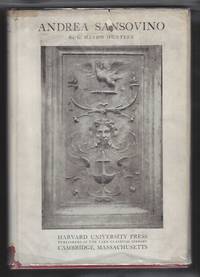
193596258Cambridge: Harvard University Press 1935. First Edition. Hardcover. Good/Good. Hardcover in dust jacket. Ex-library copy in very decent condition. Price-clipped jacket has a one-inch piece missing from bottom of spine and some closed tears. Interior pages are clean and unmarked and binding is solid. Typical library markings. Small 4to. 155 pp. including appendices notes and index plus an unnumbered section of black-and-white plates at the rear. <br/><br/> Harvard University Press hardcover
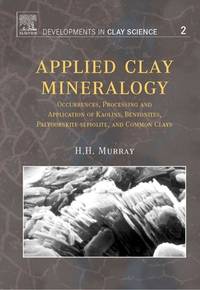
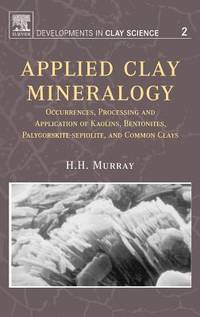
ria9780444517012_inpHardcover. New. New Book; Fast Shipping from UK; Not signed; Not First Edition; N/A hardcover
20122-0444547339Elsevier Science 2012. Paperback. New. 188 pages. 9.45x6.50x0.45 inches. Elsevier Science paperback
4908475-nnew. unknown
4908475like new. unknown
2007SONG0444517014Elsevier 2007-02-21. 1. hardcover. Used: Good. 6.14x0.50x9.21. Buy with confidence. Excellent Customer Service & Return policy. Elsevier hardcover
2007DADAX0444517014Elsevier 2007-02-21. 1. hardcover. New. 6.14x0.50x9.21. Buy with confidence. Excellent Customer Service & Return policy. Elsevier hardcover
0428990576.Ghardcover. Good. Access codes and supplements are not guaranteed with used items. May be an ex-library book. hardcover
0428990290.Gpaperback. Good. Access codes and supplements are not guaranteed with used items. May be an ex-library book. paperback
CROSOVV00568NEW. NEW. Enviamos a todo el mundo por USPS. UPS o DHL. 100% garantia en su compra. We ship worldwide. unknown
33732005like new. unknown
1922144061.Gpaperback. Good. Access codes and supplements are not guaranteed with used items. May be an ex-library book. paperback
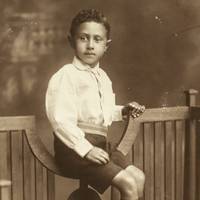
36835Carbon print photograph 134 x 84 mm printed on postcard stock; verso inscribed in ink 'Haydn J. Britton 6 years & 3 months'; no photographer's imprint; a superb print with beautiful soft tones; the verso has some staining. A magnificent study of a Melbourne jazz legend in early childhood. The following is Ralph Powell's tribute to Haydn Britton The Man with the Golden Sax published in VJAZZ Quarterly Magazine of The Australian Jazz Museum number 63 August 2014: 'HAYDN John Britton — Clarinet and sax player — was heavily involved in the nascent Melbourne jazz scene of the 1930s and 1940s playing with such jazz luminaries as Ade Monsbourgh The Bells Jack Varney and Cy Watts before apparently fading from the jazz world into which his peers grew. When the redoubtable Roger Beilby suggested discovering what happened to Haydn Britton I thought it would be a straightforward task little realising how far from the truth that would prove to be. To begin with the public record lists him as Haydn Hayden Hadyn or Haydon. Put these together with Britton and/or Britten and we had the recipe for a researcher’s nightmare! Quite a bit exists on his early years but there is then a complete dearth of information until he reappears in retirement on the Mornington Peninsula. Haydn John Britton was born on the 18th of December 1914 the only son of John and Beatrice and grew up in Port Melbourne. By the time he befriended Cy Watts in about 1931 he was playing a home-made ukulele and the kazoo. Together the two of them “used to study a lot of coloured musicâ€1 and spent Sunday afternoons listening to jazz on the amateur radio station 3CB owned by Bill Sievers. In 1934 Melbourne the centres of Sunday jazz were Fawkner Park Kiosk during the day and the Richmond Baths at night. It was at the latter that Haydn introduced Jack Varney to the sounds of pianist Barney Marsh and sax player Harry James. By 1938 Haydn had purchased an alto sax and together he and Cy teamed up with Johnny Parker and Tommy Crowe sending the “jazz along in first class style.â€2 Jack Varney describes Haydn as a childhood friend whose grandfather was West Indian. According to Varney Haydn was “an amazing character one of those people who didn’t know a note of music at first but who would sit at the piano — you could sing him any tune and it was impossible for him to play a wrong chord.â€3 Consequently they soon formed a trio with sax drums and piano doing their “best to play the sort of material that was coming in. Eddie Lang . Fats Waller and Louis Armstrong . Bix Beiderbeck Joe Venuti and Frank Trumbauer.â€4 Haydn and Jack Varney performed at ‘The 431’ from 8.30 pm Saturday nights finishing at 2.00 am the next morning. It was here they met Ade Monsbourgh and Bill ‘Spadge’ Davies. Graeme Bell describes how in the Christmas of 1939 he and Roger were on the PS Weroona for a picnic cruise down Port Phillip Bay to Sorrento. Together with Russ Murphy on drums Haydn Britton on clarinet and alto sax and Bill May on bass Graeme remembered “great excitement and hilarity throughout the day.â€5 On another occasion Haydn played baritone sax in Graeme Bell's Dixieland Band with a line-up which included Roger on trumpet; Pixie Roberts on tenor and clarinet; Graeme on piano; Stan Chisholm bass; Bud Baker guitar; Laurie Howells drums; and Benny Featherstone trombone. 6 Haydn and Jack also had a regular Saturday night gig at the Sandringham RSL hall with Jack Dockerty on trumpet. When the two Jacks entered the armed forces Graeme and Roger Bell continued playing with Haydn. In 1943 Ade Monsbourgh arranged for The Eastside Ramblers to record You Must Have been a Beautiful Baby. The line-up included George Fong George Tack Brooks Jackson débuting on drums together with “the grand alto of Haydn Britton.â€7 By 1949 Haydn had moved to Springvale and was running a general engineering business and sports goods retail store in Springvale Road Springvale in partnership with Robert Oliver Luxford. He undertook several recording sessions in the 1940s before seemingly disappearing from the jazz scene thereafter. East Side Ramblers 4th July 1943; Jack Varney's Varmints 5th November 1944; Jack Varney & His Varmints; Lazy Ade's Late Hour Boys 15th August 1944; Father Ade's Backroom Boys 3rd November 1944; Denis Farrington 12th August 1946; 19th January 1949. Shirley McConechy recalls that during most of the 50s Haydn played at the then popular New Alexandra reception and function Centre in East St Kilda run by Ray Bolwell Snr and later by Ray Jnr. Her father Bert Gardiner was on piano Tom Buckingham on drums Lin Challen or Fred Buckland on bass with vocalists including Joy Grandin Irene Hewitt and Diana Trask. He moved to Rye with his wife son and daughter where much later he used to provide entertainment in local retirement homes. He also played with the Tommy Carter Band and Mavis Campbell remembers him as a regular at the Jazz Parties that she and husband Don put on at their Blairgowrie property for up to 83 people at a time. In latter years he worked part-time for life-long friend Bill May of Maton guitars and he played sax at a gathering celebrating Bill and Vera’s 50th wedding anniversary. His collection of instruments including a clarinet tenor saxophone gold-plated French saxophone and bugle used until he stopped playing in 2006 were auctioned in November 2009. Haydn died on March 10th 2013 aged 99. Endnotes: 1. C. Ian Turner Collection – Handwritten Jazz Notes article by Cyril Watts 2. Ibid. 3. Frank Athena - The Melbourne Jazz Scene. 1978 4. Ibid. 5. Bell Graeme – Australian Jazzman: His Autobiography. p. 34. 1988 5. Birkenbell Antionette - From Bourbon Street to Bennett’s Lane p. 49. Unpublished. 2011 6. Bell Graeme – Op Cit. p.42 7. C. Ian Turner Collection.'  unknown
1241352682.Gpaperback. Good. Access codes and supplements are not guaranteed with used items. May be an ex-library book. paperback
1241352658.Gpaperback. Good. Access codes and supplements are not guaranteed with used items. May be an ex-library book. paperback
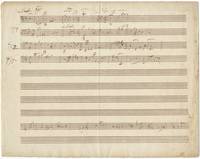
39430Large oblong quarto 241 x 309 mm. Notated in dark brown ink on the verso of the second leaf of a bifolium i.e. page 4 on 10-stave rastrum-ruled paper of British manufacture. Watermark dated 1794.<br /> <br /> Late spring or early summer 1795 see H.C. Robbins Landon: Haydn Chronicle and Works Volume III p. 495.<br /> <br /> With pencilled note in another hand to first page: "Haydn autograph notes of the 12 English Symphonies. Haydn misquotes the 2nd." <br /> <br /> Very slightly worn browned and soiled; minor foxing and very short splits to central fold; vertical crease to center of bifolium; lower edge with several miniscule tears.<br /> <br /> In addition to noting the musical incipits which comprise 25 measures spread out over 4 staves Haydn identifies the key time signature and year in which each symphony was first performed in noting the performance date of Symphony 97 however Haydn makes an error and cites 1791 instead of 1792. <br /> <br /> The sketch for the piano trio Hob. XV:25 is notated 5 staves below the symphonic incipits and consists of 9 measures of melodic material for the famous third movement. <br /> <br /> Provenance<br /> Leo Liepmannssohn auction catalogue Berlin 1907 lot 91. The Westley Manning Collection Sotheby's London 12 October 1954 lot 207. The London Symphonies were commissioned by the London impresario and violinist Johann Peter Salomon 1745-1815 and composed over the period 1791-95. Salomon was responsible for bringing Haydn to London where he became immensely popular largely through performances of his music at Salomon's concerts.<br /> <br /> "Haydn's London symphonies nos. 93-104 crown his career as a symphonic composer. Not only do they outdo the Paris symphonies stylistically but he produced them in person for rapturous audiences; this interaction stimulated him to ever bolder and more original conceptions. . The last six London symphonies are even more brilliant than the first six. . Haydn's determination to conquer new territory with each work is palpable." James Webster in Grove Music Online<br /> <br /> "The finale of Hob. XV:25 is the famous rondo "in the Gypsies Style." It seems that a composer's most popular works if not spurious are at least unusual manifestations of his style and this rondo fits this characterization. . Even though this finale was best known during the eighteenth century as a separate piece in many different settings its impact is best appreciated within the context of this keyboard trio cycle for the Andante and Poco Adagio the first and second movements hardly prepare one for its burst of energy." A. Peter Brown: Joseph Haydn's Keyboard Music Sources and Styles p. 377.<br /> <br /> ". the G major Trio 39 turned out to be Haydn's most popular piano piece because of the 'Gypsy Rondo' Finale. . It became an enormous favourite first in England and immediately afterwards on the Continent." Robbins Landon III pp. 431-432. <br /> <br /> A unique and interesting manuscript being a virtual catalogue of all the London Symphonies and including music from the famous Gypsy Rondo some of Haydn's best music from his important London period. unknown