Rowles, Jan HaydnBiblio.com

1 600 résultats
1840029900.Gpaperback. Good. Access codes and supplements are not guaranteed with used items. May be an ex-library book. paperback
1350267708.Gpaperback. Good. Access codes and supplements are not guaranteed with used items. May be an ex-library book. paperback
199037250RCA Gold Seal, 1990. GD60641 1 CD CD
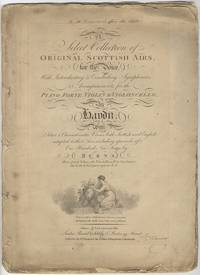
180540142London: Printed & Sold by T. Preston 97 Strand. Sold also by G. Thomson the Editor & Proprietor Edinburgh 1805. Large folio. Sewn. 1f. recto portrait of Burns verso blank i title with engraved vignette 98 pp. numbered 151-200 with each page number duplicated and music and poetry alternating on engraved and typeset pages respectively i blank. <br /> <br /> Oval stipple engraved portrait of Robert Burns by Paton Thomson after Nasmyth and engraved vignette to title by Thomson after Stothard depicting an urn with Burns's portrait in relief floral motifs and a kneeling maiden in Classical garb with verse "Now see where Caledonias Genius mourns / And plants the holly round the tomb of Burns."<br /> <br /> Manuscript inscription to upper margin of title "To Ms. Richardson from the Editor" and signature of the editor "G Thomson" to right of imprint.<br /> <br /> Some wear browning foxing and soiling; portrait of Burns detached soiled and torn at edges with paper loss; losses and tears to margins. Lacking 2-page index and 5-page glossary. First Edition. Hopkinson & Oldman p. 19. RISM H2737.<br /> <br /> Hoboken XXX1a: 226 4bis 227 228 8bis 61bis 229 122bis 230. 231 149bis 232 233 89bis 234 221bis 235 236 76bis 237 238 60bis 239 240 241 81bis 242 145bis 243 244 245 148bis 246 24bis 247 115bis 20bis 22bis 248 249 46bis 52bis 250 69bis 70bis 31bis 251 252 253A 253B 254. RISM 2737. Printed & Sold by T. Preston, 97, Strand. Sold also by G. Thomson the Editor & Proprietor Edinburgh unknown
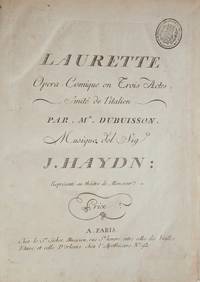
179140111Paris: Sr. Sieber Musicien rue St honoré entre celles des Vielles Etuve et celle D'orleans chez l'Apothiciare No. 92 PN 1171 1791. Folio. Ivory vellum-backed marbled boards dark red leather label to spine with titling gilt. 1f. recto title verso blank 254 pp. with "Personnages" to lower portion of p. 12 following overture. Engraved throughout.<br /> <br /> Overture and arias with spoken dialogue provided as text; "Laurette" was performed without recitatives. <br /> <br /> Handstamp of "Cercle des amateurs de musique Strasbourg" incorporating lyre and floral motif to upper outer corner of title and first page of music.<br /> <br /> Binding worn rubbed and bumped. Light uniform browning; occasional small stains and foxing; abrasion to p. 101 affecting several bars of music; price erased from title. First Edition. Hoboken Collection Vol. 9 1615. Lesure p. 299. RISM H2563<br /> <br /> Laurette to a libretto by Francesco Puttini was first performed on 25 April 1779. <br /> <br /> "Contrary to claims made by Haydn's early biographers insufficent evidence supports the hypothesis that Haydn wrote this opera to fulfill an imperial commission for Vienna. The libretto represents a considerably shortened version of Puttini's text for Anfossi 1776 Rome already somewhat condensed especially in Act 3 for performances later that year in Venice as La pescatrice fedele and in Vienna 1777. Andrea Totti who sang Count Errico in Venice also performed in Haydn's opera at Eszterháza. . The opera was subsequently performed as Der flatterhafte Liebhaber oder Der Sieg der or Die wahre Beständigkeit in Pressburg Bratislava 1786-7 Budapest 1789 Vienna 1790 and Brno 1792 and with numerous changes as Laurette in Paris 1791." Caryl Clark in Grove Music Online<br /> <br /> "La vera costanza 1778-9 is the subject of implausible and conflicting anecdotes in Griesinger and Dies according to which it was originally commissioned for the Burgtheater in Vienna but scuttled by intrigue neither Joseph II nor his musicians were well-disposed towards Haydn; in fact it had its première at Eszterháza on April 25 1779. It was lost in the fire that largely destroyed the Eszterháza opera theatre on November 18 1779; the surviving version represents Haydn's reconstruction of the work from 1785." Georg Feder and James Webster in Grove Music Online. Sr. Sieber, Musicien, rue St honoré entre celles des Vielles Etuve et celle D'orleans chez l'Apothiciare, No. 92 [PN 1171] unknown
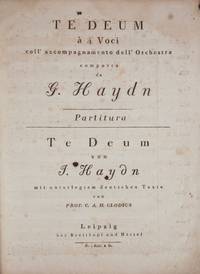
180240447Leipzig: Breitkopf und Härtel 1802. Folio. Modern half mid-brown calf with ivory linen boards with leather title label gilt to upper spine with titling gilt. 1 title 2-42 music ii text pp. Typeset throughout. With text in Latin and German. <br /> <br /> With occasional early accidentals added in early manuscript.<br /> <br /> Some browning and foxing; minor staining. First Edition. Hoboken Collection Vol. 9 1478. RISM H2517. <br /> <br /> "The late Te Deum 'for the empress' . for chorus and very large orchestra is an ABA construction of great power and terseness; it whirls through the very long text in little more than eight minutes while still finding time for a double fugue and an immense climax at the end." Georg Feder and James Webster in Grove Music Online<br /> <br /> The autograph of the present work has been lost. Breitkopf und Härtel unknown
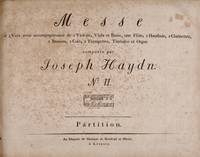
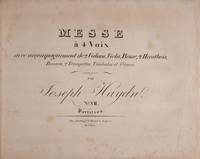
180240095Leipsic: Breitkopf et Härtel 1802. Oblong folio. Nineteenth-century marbled boards rebacked and recornered in dark olive half calf spine in gilt-ruled compartments with dark red title label gilt. i title 2-114 pp. Typeset throughout. <br /> <br /> Dark red leather title label to front pastedown removed but with lettering "W. Russell 1806" visible in impression to free front endpaper.<br /> <br /> "Charles Beevor 41 Upper Harley St." in nineteenth century black into to upper outer corner of free front endpaper; additional bibliographical notes in blue ink. <br /> <br /> Binding worn and rubbed. Intermittent moderate foxing and browning. First Edition of the "Missa in tempore belli" one of six masses written by order of Prince Esterházy between 1796 and 1802. Hoboken Collection Vol. 9 1433. RISM H2498. <br /> <br /> "Vocal music constitutes fully half of Haydn's output. Both his first and last completed compositions were mass settings and he cultivated sacred vocal music extensively throughout his career except during the later 1780s when elaborate church music was inhibited by the Josephinian reforms and the first half of the 1790s in London ." <br /> <br /> "Notwithstanding their semi-private function for the Esterházy court Haydn's six late masses are consummate masterworks that exhibit no trace of provinciality or the 'occasional'. He exploits the complementary functions of soloists and chorus with inexhaustible freedom and telling effect; owing to his London experience the orchestra plays a newly prominent role. Four are in B perhaps because Bb was Haydn's usual highest pitch for choral sopranos he employed the same key for the final choruses of Parts 2-3 of The Creation and Part 1 of The Seasons. The other two are the only ones for which he provided descriptive titles: the Missa in tempore belli 'Mass in Time of War' 1796 in C features the bright trumpet-dominated sound typical of masses in this key; the Missa in angustiis 'Mass in times of Distress' later nicknamed 'Nelson Mass' 1798 in D minor and major is scored for a dark orchestra comprising only trumpets and timpani strings and organ. Both invoke the travails of the Napoleonic wars. The Agnus Dei of the former includes threatening timpani motifs and harsh trumpet fanfares while the Benedictus of the latter culminates in another harsh fanfare passage 'out of context'; both influenced the Agnus Dei in Beethoven's Missa solemnis. On the other hand except for the sombre Kyrie and Benedictus of the 'Nelson Mass' both are otherwise firmly optimistic; the ending of the latter is downright jaunty." James Webster in Grove Music Online. Breitkopf et Härtel unknown
182340446Leipsic: Breitkopf et Härtel PN 3454 1823. Oblong folio. Newly bound in quarter dark blue morocco with marbled boards title label gilt to spine. 1f. recto lithographic title verso blank 96 pp. Typeset throughout.<br /> <br /> Some minor foxing. <br /> <br /> An attractive copy. First Edition of the Mariazeller Messe. Hoboken Collection Vol. 9 1432 plate 9. RISM H2503<br /> <br /> "Vocal music constitutes fully half of Haydn's output. Both his first and last completed compositions were mass settings and he cultivated sacred vocal music extensively throughout his career except during the later 1780s when elaborate church music was inhibited by the Josephinian reforms and the first half of the 1790s in London .<br /> <br /> "The 'Mariazellermesse' in C 1782 resembles the Missa Cellensis in key scoring and purpose although it is more compact and more closely allied with sonata style." James Webster and Georg Feder in Grove Music Online. Breitkopf et Härtel [PN 3454] unknown
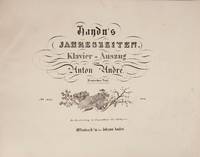
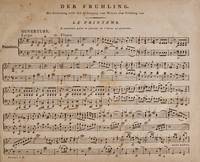
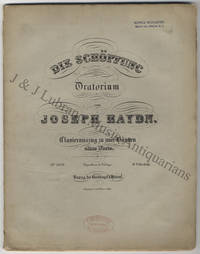
182040449Offenbach a/m: Johann André PN 1640 1820. Andre Johann Anton 1775-1842. Oblong folio. 19th century light purple cloth with titling gilt to upper within gilt-ruled borders with decorative cornerpieces gilt decorative blindstamping to lower. 1f. recto title incorporating a horticultural vignette; verso "Personen" 3-166 pp. Lithographed.<br /> <br /> Binding slightly worn rubbed and bumped; slightly shaken; upper hinge slightly split. Occasional browning. HWV II p. 59.<br /> <br /> One of Haydn's two masterful oratorios this secular work was written shortly after The Creation 1798 to a libretto by Baron Gottfried von Swieten 1733-1803 after the eponymous poem by James Thomson 1700-1748 published in 1730. The work was first performed on 24 April 1801 in a private première at the Schwarzenberg Palace in Vienna; the first public production took place on 29 May 1801. <br /> <br /> "Although the initial reception of The Seasons was favourable - Haydn wrote to Clementi that it had enjoyed 'unanimous approval' and that 'many prefer it to The Creation because of its greater variety' - critical opinion soon became mixed owing in part to its perceived 'lower' subject in part to a growing aesthetic resistance to its many pictorialisms. Haydn himself contributed to both strands of criticism: he supposedly said to Francis II 'In The Creation angels speak and tell of God but in The Seasons only Simon speaks' Dies; and he indiscreetly criticized Swieten's croaking frogs 'Frenchified trash' and the absurdity of a choral hymn to toil Fleiss. Nonetheless he maintained that it would join The Creation in assuring his lasting fame. For the publication he took the path of lesser resistance selling the rights to Breitkopf & Härtel. . <br /> <br /> Notwithstanding its less exalted subject The Seasons is compositionally more virtuoso than The Creation and offers greater variety of tone: Haydn's pastoral is one of the final glories of a tradition that is more than 'high' enough." Georg Feder and James Webster in Grove Music Online <br /> <br /> The music is "of wonderful freshness and unfailing originality." TNG Vol. 8 p. 347. Johann André [PN 1640] unknown
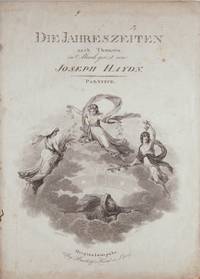
180240133Leipzig: Breitkopf & Haertel 1802. Folio. Contemporary full dark brown suede with tooling in black to outer edges of boards. <br /> <br /> 1f. recto title with elaborate vignette engraved by W. Böhm after G.V. Kiminger incorporating allegories of the seasons floating on a bed of clouds with lyre and six-pointed stars verso blank 1f. recto secondary title "Erste Abtheilung" verso "Personen" 251 i blank. Typeset throughout.<br /> <br /> With occasional indications of instrumentation in pencil.<br /> <br /> R. Cocks & Co. handstamp to foot of secondary title. <br /> <br /> Binding worn rubbed and bumped with minor loss to lower outer corner of upper board and spine; upper partially detached. Some wear soiling staining foxing and browning; occasional minor loss to blank lower margins; worming to blank inner margin of first five leaves. First Edition issue with parallel text in German and English. Hoboken Katalog Vol. 9 1411. Hirsch IV 796. RISM H2542.<br /> <br /> One of Haydn's two masterful oratorios this secular work was written shortly after The Creation 1798 to a libretto by Baron Gottfried von Swieten 1733-1803 after the eponymous poem by James Thomson 1700-1748 published in 1730. The work was first performed on 24 April 1801 in a private première at the Schwarzenberg Palace in Vienna; the first public production took place on 29 May 1801. <br /> <br /> "Although the initial reception of The Seasons was favourable - Haydn wrote to Clementi that it had enjoyed 'unanimous approval' and that 'many prefer it to The Creation because of its greater variety' - critical opinion soon became mixed owing in part to its perceived 'lower' subject in part to a growing aesthetic resistance to its many pictorialisms. Haydn himself contributed to both strands of criticism: he supposedly said to Francis II 'In The Creation angels speak and tell of God but in The Seasons only Simon speaks' Dies; and he indiscreetly criticized Swieten's croaking frogs 'Frenchified trash' and the absurdity of a choral hymn to toil Fleiss. Nonetheless he maintained that it would join The Creation in assuring his lasting fame. For the publication he took the path of lesser resistance selling the rights to Breitkopf & Härtel. . <br /> <br /> Notwithstanding its less exalted subject The Seasons is compositionally more virtuoso than The Creation and offers greater variety of tone: Haydn's pastoral is one of the final glories of a tradition that is more than 'high' enough." Georg Feder and James Webster in Grove Music Online <br /> <br /> The music is "of wonderful freshness and unfailing originality." TNG Vol. 8 p. 347. Breitkopf & Haertel unknown
180240453Leipzig: Breitkopf & Härtel 1802. Oblong quarto. Half green cloth with modern marbled boards decorative cut paper label with manuscript titling to upper. 174 pp. Typeset. Text in German and French. With first part of publisher's catalogue to foot of final page of music. <br /> <br /> With "Haydn's J.Z." printed to lower margin of some pages. <br /> <br /> Light uniform browning heavier to some leaves; some minor foxing and staining; very slightly trimmed at upper and lower margins not affecting text or notation but very occasionally just touching or cropping pagination. Somewhat tightly bound occasionally just slightly affecting ease of legibility at extreme inner margins. Lacking title leaf and one leaf containing continuation of publisher's catalogue at conclusion. HWV II p. 59. Hoboken Collection 9 1419. RISM H4691. <br /> <br /> One of Haydn's two masterful oratorios this secular work was written shortly after The Creation 1798 to a libretto by Baron Gottfried von Swieten 1733-1803 after the eponymous poem by James Thomson 1700-1748 published in 1730. The work was first performed on 24 April 1801 in a private première at the Schwarzenberg Palace in Vienna; the first public production took place on 29 May 1801. <br /> <br /> "Although the initial reception of The Seasons was favourable - Haydn wrote to Clementi that it had enjoyed 'unanimous approval' and that 'many prefer it to The Creation because of its greater variety' - critical opinion soon became mixed owing in part to its perceived 'lower' subject in part to a growing aesthetic resistance to its many pictorialisms. Haydn himself contributed to both strands of criticism: he supposedly said to Francis II 'In The Creation angels speak and tell of God but in The Seasons only Simon speaks' Dies; and he indiscreetly criticized Swieten's croaking frogs 'Frenchified trash' and the absurdity of a choral hymn to toil Fleiss. Nonetheless he maintained that it would join The Creation in assuring his lasting fame. For the publication he took the path of lesser resistance selling the rights to Breitkopf & Härtel. . <br /> <br /> Notwithstanding its less exalted subject The Seasons is compositionally more virtuoso than The Creation and offers greater variety of tone: Haydn's pastoral is one of the final glories of a tradition that is more than 'high' enough." Georg Feder and James Webster in Grove Music Online The music is "of wonderful freshness and unfailing originality." TNG Vol. 8 p. 347. [Breitkopf & Härtel] unknown
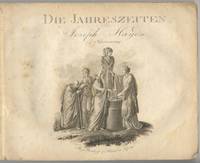
180240481Leipzig: Breitkopf & Hartel 1802. Oblong folio. Original publisher's orange decorative printed wrappers with "Les Saisons par J. Haydn double rule Die Jahreszeiten von J. Haydn" within thick decorative rule to upper. 1f. recto title with engraved vignette by F. W. Nettling after Schubert verso blank 176 pp. with publisher's catalogue to lower portion of p. 174 and pp. 175-176. Text in German and French. Typeset throughout.<br /> <br /> The title-page vignette depicts an allegory of the seasons with two women decorating a statue with flowers and another supporting a hunched old man who carrying a walking stick.<br /> <br /> Contemporary signature to corner of upper wrapper.<br /> <br /> Wrappers somewhat worn and rubbed; small tears to upper and spine with minor loss. Light to moderate foxing; several leaves soiled at edges. First Edition later issue. HWV II p. 59. Hoboken Catalogue Vol. 9 1419 variant. RISM H4690.<br /> <br /> One of Haydn's two masterful oratorios this secular work was written shortly after The Creation 1798 to a libretto by Baron Gottfried von Swieten 1733-1803 after the eponymous poem by James Thomson 1700-1748 published in 1730. The work was first performed on 24 April 1801 in a private première at the Schwarzenberg Palace in Vienna; the first public production took place on 29 May 1801. <br /> <br /> "Although the initial reception of The Seasons was favourable - Haydn wrote to Clementi that it had enjoyed 'unanimous approval' and that 'many prefer it to The Creation because of its greater variety' - critical opinion soon became mixed owing in part to its perceived 'lower' subject in part to a growing aesthetic resistance to its many pictorialisms. Haydn himself contributed to both strands of criticism: he supposedly said to Francis II 'In The Creation angels speak and tell of God but in The Seasons only Simon speaks' Dies; and he indiscreetly criticized Swieten's croaking frogs 'Frenchified trash' and the absurdity of a choral hymn to toil Fleiss. Nonetheless he maintained that it would join The Creation in assuring his lasting fame. For the publication he took the path of lesser resistance selling the rights to Breitkopf & Härtel. . <br /> <br /> Notwithstanding its less exalted subject The Seasons is compositionally more virtuoso than The Creation and offers greater variety of tone: Haydn's pastoral is one of the final glories of a tradition that is more than 'high' enough." Georg Feder and James Webster in Grove Music Online <br /> <br /> The music is "of wonderful freshness and unfailing originality." TNG Vol. 8 p. 347. Breitkopf & Hartel unknown
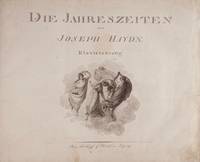
180140448Leipzig: Breitkopf & Hartel 1801. Oblong folio. Orange paper boards with original publisher's printed wrappers with title within decorative borders laid down small early vellum label with "118" to spine. 1f. recto title with engraved vignette by F.W. Nettling after Schubert depicting an allegory of the seasons verso blank 176 pp. with publisher's catalogue to lower portion of p. 174 and pp. 175-176. Text in German and French. Typeset throughout.<br /> <br /> Numbering and occasional markings in pencil.<br /> <br /> Wrappers worn and abraded part of lower lacking; small early manuscript annotations to lower outer corner of upper with portion cancelled. Minor to moderate foxing; minor staining. First Edition. HWV II p. 59. Hoboken Catalogue Vol. 9 1419. RISM H4690.<br /> <br /> One of Haydn's two masterful oratorios this secular work was written shortly after The Creation 1798 to a libretto by Baron Gottfried von Swieten 1733-1803 after the eponymous poem by James Thomson 1700-1748 published in 1730. The work was first performed on 24 April 1801 in a private première at the Schwarzenberg Palace in Vienna; the first public production took place on 29 May 1801. <br /> <br /> "Although the initial reception of The Seasons was favourable - Haydn wrote to Clementi that it had enjoyed 'unanimous approval' and that 'many prefer it to The Creation because of its greater variety' - critical opinion soon became mixed owing in part to its perceived 'lower' subject in part to a growing aesthetic resistance to its many pictorialisms. Haydn himself contributed to both strands of criticism: he supposedly said to Francis II 'In The Creation angels speak and tell of God but in The Seasons only Simon speaks' Dies; and he indiscreetly criticized Swieten's croaking frogs 'Frenchified trash' and the absurdity of a choral hymn to toil Fleiss. Nonetheless he maintained that it would join The Creation in assuring his lasting fame. For the publication he took the path of lesser resistance selling the rights to Breitkopf & Härtel. . <br /> <br /> Notwithstanding its less exalted subject The Seasons is compositionally more virtuoso than The Creation and offers greater variety of tone: Haydn's pastoral is one of the final glories of a tradition that is more than 'high' enough." Georg Feder and James Webster in Grove Music Online <br /> <br /> The music is "of wonderful freshness and unfailing originality." TNG Vol. 8 p. 347. Breitkopf & Hartel unknown
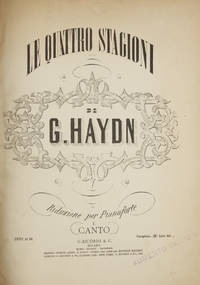
193431315Milano: G. Ricordi & C. PNs 28731-54 1934. Folio. Blue cloth-backed patterned paper boards titling gilt to spine. 1f. recto title verso blank 1f. recto table of contents verso blank 5-300 pp. <br /> <br /> From the collection of Italian conductor vocal coach and close associate of Puccini and Mascagni Luigi Ricci 1893-1981.<br /> <br /> Binding slightly rubbed and bumped. Slightly worn; light uniform browning; very occasional markings in lead and red pencil; pp. 17/18 with small tear to blank lower margin. First Italian edition 1856 later issue based on publisher's blindstamp. <br /> <br /> This second collaboration between Haydn and librettist Gottfried von Swieten was based on the poem by James Thomson 1700-1748 published in 1730. The work was first performed on April 24 1801 in a private première at the Schwarzenberg Palace in Vienna; its first public production took place on May 19 1801. <br /> <br /> "Although the initial reception of The Seasons was favourable - Haydn wrote to Clementi that it had enjoyed 'unanimous approval' and that 'many prefer it to The Creation because of its greater variety' - critical opinion soon became mixed owing in part to its perceived 'lower' subject in part to a growing aesthetic resistance to its many pictorialisms. Haydn himself contributed to both strands of criticism: he supposedly said to Francis II 'In The Creation angels speak and tell of God but in The Seasons only Simon speaks' Dies; and he indiscreetly criticized Swieten's croaking frogs 'Frenchified trash' and the absurdity of a choral hymn to toil Fleiss. Nonetheless he maintained that it would join The Creation in assuring his lasting fame. For the publication he took the path of lesser resistance selling the rights to Breitkopf & Härtel." James Webster and Georg Feder in Grove Music Online. G. Ricordi & C. [PNs 28731-54] unknown
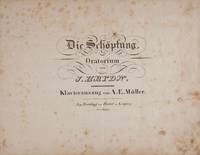
181940452Leipzig: Breitkopf und Härtel PN 2916 1819. Oblong quarto. Contemporary mid-blue paper boards with original publisher's printed wrappers with titling within decorative border laid down. 1f. recto title verso blank 3-120 pp. Lithographed. <br /> <br /> Markings and annotations in lead and red pencil including instrumental indications<br /> <br /> Binding quite worn rubbed bumped and abraded with minor paper loss; endpapers worn and foxed. Light uniform browning; occasional creasing and staining; scattered foxing and occasional heavier browning primarily to margins; lower outer corners of a number of leaves creased and torn with minor loss to blank areas. Lacking pp. 73-80. Not in Hoboken Collection. RISM H4649 and HH4649 one copy only in the U.S. <br /> <br /> "There is hardly any doubt in the mind of the average music-lover that Haydn's oratorio The Creation is tutto sommato Haydn's greatest single accomplishment and certainly ranks as one of the greatest products of any eighteenth-century mind. It occupies a central position in choral literature and its composition and first performances were the dominant features of Haydn's life in the late 1790s." Robbins Landon: Haydn Chronicle and Works Vol. IV: Haydn: The Years of 'The Creation' 1796-1800 p. 12. Breitkopf und Härtel [PN 2916] unknown
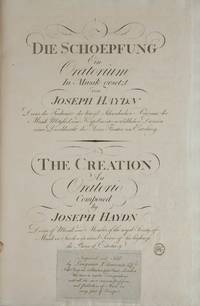
180040127Vienna: The Composer 1800. Folio. Contemporary quarter dark tan mottled calf with ivory vellum-edged marbled boards titling gilt to spine. 1f. recto title verso blank 4ff. subscribers list 303 i blank pp. Text in German and English. Title and music engraved list of subscribers typeset.<br /> <br /> With Haydn's small circular monogrammatic handstamp "JH" to foot of title. <br /> <br /> Binding worn rubbed and bumped; minor loss to head and tail of spine. Occasional small stains and moderate browning; some signatures partially split at lower portion. In very good internal condition overall. First Edition. HWV Vol. II p. 36. Hirsch IV 799. Leipzig catalogue p. 19. Vecsey 303. Eitner V p. 66. BUC p. 456. RISM H2521. <br /> <br /> The Creation to a libretto by Gottfried von Swieten was first performed at the Palais Schwarzenberg in Vienna on 29 and 30 April 1798; its first public performance took place on 19 March of the following year at the Burghteater in Vienna. <br /> <br /> "There is hardly any doubt in the mind of the average music-lover that Haydn's Oratorio The Creation is tutto sommato his greatest single accomplishment and certainly ranks as one of the greatest products of any eighteenth-century mind. It occupies a central position in choral literature and its composition and first performances were the dominant features of Haydn's life in the late 1790s." Robbins Landon: Haydn Chronicle and Works Vol. IV: Haydn The Years of 'The Creation' 1796-1800 p. 12.<br /> <br /> Copies of the first edition of this monumental work containing the subscribers list are very scarce to the market. [The Composer] unknown
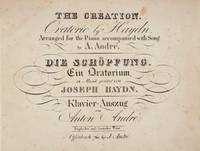
182440450Offenbach: J. André PN 4768 1824. Oblong folio. Maroon leather-backed cloth boards with decorative cut paper label titled in manuscript in German to upper. <br /> <br /> 1f. recto title verso blank 1f. "Notice for the Singers" verso blank 3-115 i blank pp. Text in English and German. Lithographed. <br /> <br /> Slightly browned and foxed slightly heavier to first and last leaves; title and final leaf reinforced at inner margin with archival tape final leaf with additional tape to upper margin of recto and outer margin of verso. Constapel p. 270. Not in Hoboken Collection. RISM H4645.<br /> <br /> "There is hardly any doubt in the mind of the average music-lover that Haydn's oratorio The Creation is tutto sommato Haydn's greatest single accomplishment and certainly ranks as one of the greatest products of any eighteenth-century mind. It occupies a central position in choral literature and its composition and first performances were the dominant features of Haydn's life in the late 1790s." Robbins Landon: Haydn Chronicle and Works Vol. IV: Haydn: The Years of 'The Creation' 1796-1800 p. 12. J. André [PN 4768] unknown
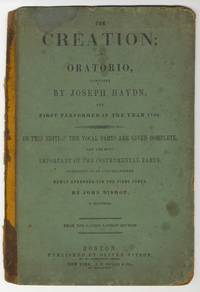
184238922Boston New York: Oliver Diston No. 115 Washington Street; J.E. Gould & Co 1842. Folio. Mid-green printed boards. 1f. recto title verso preface with printed date "Nov. 1842" 7-180 pp. <br /> <br /> Boards quite worn rubbed bumped and stained; detached; manuscript notes in pencil to front pastedown. Some wear soiling and foxing; some edges slightly dusty and frayed. Early American Haydn imprint. <br /> <br /> "There is hardly any doubt in the mind of the average music-lover that Haydn's Oratorio The Creation is tutto sommato his greatest single accomplishment and certainly ranks as one of the greatest products of any eighteenth-century mind. It occupies a central position in choral literature and its composition and first performances were the dominant features of Haydn's life in the late 1790s." Robbins Landon: Haydn Chronicle and Works Vol. IV: Haydn: The Years of 'The Creation' 1796-1800 p. 12. Oliver Diston, No. 115 Washington Street; J.E. Gould & Co unknown
184925485Leipzig: Breitkopf & Härtel PN 7682 1849. Folio. Original publisher's gray printed wrappers. 1 title 2-67 i blank pp. Engraved. Text incipits in German as captions; text underlay in the initial recitative. Small publisher's handstamp to foot of title. Publisher's catalogue to verso of lower wrapper: "Friedrich Kalkbrenner's Pianoforte-Werke" listing works up to op. 190 1849.<br /> <br /> With handstamps of "C. Breusing New York 701 Broadway" and "Horace Middleton South Millbrook N.Y." to upper wrapper and title. <br /> <br /> Wrappers slightly stained and partially detached; minor loss to head of spine. Title detached. A later arrangement. Not in HWV WorldCat or RISM. <br /> <br /> The company of Charles Breusing New York was active from 1854 to 1861.<br /> <br /> Horace Middleton 1879-1961 a British-born musician who served on the faculty of Bennett College from 1919 to the mid-1930s was best known for the music he composed for the Greek plays performed at the college. Obituary Millbrook Round Table 23 November 1961. Breitkopf & Härtel [PN 7682] unknown
40271Italy Early 19th century. Oblong folio 222 x 288 mm. Unbound. i title 26 vi blank pp. Notated in black ink on 10-stave rastrum-ruled paper. <br /> <br /> Occasional small stains and light showthrough. An incomplete manuscript copy of the piano arrangement of the work published by Artaria in 1787 terminating near the end of Sonata VI. <br /> <br /> The Seven Last Words were commissioned for a Lenten service in a church in Cadiz Spain; the original work was scored for orchestra and the parts issued in 1787; the arrangements for string quartet and for piano both overseen by Haydn were published shortly thereafter. The choral version was first performed in 1796 and published in 1801. <br /> <br /> The unusual form of the work was dictated by the structure of the religious service: an introduction then adagios lasting approximately ten minutes each following the recitation of each of the seven "last words" and the whole ending with a depiction of the earthquake at the death of Christ. It produced a great impression; Robbins Landon quotes the following contemporary review: "The idea of expressing these thoughts by purely instrumental music is curious and daring and only a genius like Haydn would take such a risk . but every movement even without the Latin superscriptions is most interesting and entirely worthy of a Haydn." Haydn: Chronicle and Works II p. 618. unknown
180540150Offenbach s/M: Jean André PN 2187 1805. Folio. Disbound. i title 2-5 i blank pp. Lithographed throughout. <br /> <br /> Moderate wear browning soiling and foxing; small tear extending through blank lower inner margin of all leaves not affecting music; small tear to blank outer margin of title with small dampstain to lower outer corner. HWV I p. 789. OCLC 930999647. Worldcat one copy only at the Staatsbibliothek zu Berlin <br /> <br /> An imaginative variation set incorporating rapid florid runs syncopations paired thirds and a distinctive theme with six-bar phrases a departure from the usual four-bar phrases most common at the time. Jean André [PN 2187] unknown
178840118London: Longman & Broderip 1788. Folio. Disbound. 1f. recto title verso blank i blank 2-23 i blank pp. Engraved throughout. <br /> <br /> With contemporary London instrument dealer's overpaste to foot of title: "Sold at Gough's Harp and Piano-Forte Musical Instrument Warehouse No. 4 Sackville Street near the New Bridge ." <br /> <br /> Occasional light wear and foxing; several small tears with minor loss to edges; title and final leaf slightly soiled; repair to inner margin of blank verso of title. Published in the same year as the edition published in Vienna by Artaria. BUC p. 469. RISM 3850 one copy only in the U.S. at the University of Michigan. OCLC 34921913. Worldcat one copy only in the U.S. <br /> <br /> Hob. XVI:17 is most probably by Johann Gottfried Schwanenberger 1737-1804 "although authenticated by Haydn in ca. 1799-1803." Larson and Feder: The New Grove Haydn p. 187. Longman & Broderip unknown
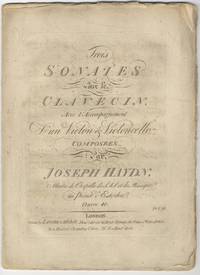
181040477London: Printed by Lavenu & Mitchell Music sellers to his Royal Highness the Prince of Wales at their New Musical Circulating Library 26 New Bond Street 1810. Folio. Unbound and untrimmed as issued. <br /> <br /> Keyboard: i title 2-33 i blank pp. <br /> Violin: 9 pp. <br /> <br /> Somewhat worn browned and soiled a bit more heavily to outer leaves; some corners creased; two small stab holes to blank inner margins; several leaves detached including title with small tears to margins. Lacking violoncello part. Later issue of the edition first published in 1805-1808. HWV I p. 685. RISM H3629 one copy of the piano part only. Printed by Lavenu & Mitchell, Music sellers to his Royal Highness the Prince of Wales at their New Musical Circulating Library, unknown
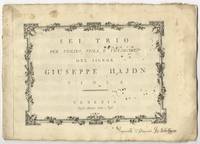
178740113Venezia: Antonio Zatta e Figli 1787. Oblong folio. Sewn. Three parts each with identical title excepting instrument names. Engraved throughout. <br /> <br /> Violino: i title incorporating decorative engraved border with floral motifs and musical instruments including lute recorder trumpet and violin 15 pp. <br /> Viola: i title 14 i blank pp. <br /> Violoncello: i title 12 i blank pp. <br /> <br /> With "Proprietà di Bianconi de Valleta" in contemporary ink to lower outer corner of title to viola part: "Per uso di cancelled" and in another hand to lower outer corner of each title.<br /> <br /> Violin: Title detached soiled foxed and stained with some marginal dampstaining losses to edges and small holes; light dampstaining mainly to upper outer quadrant of first and final leaves; occasional small stains. <br /> Viola: Staining and soiling to title; stain to blank outer upper corner of all leaves; occasional stains and soiling.<br /> Violoncello: Some foxing and small stains mainly to blank margins; final blank leaf stained and soiled. First Edition. Rare. Hoboken 7 966. RISM H3816.<br /> <br /> Originally composed for baryton trio in 1768 during Haydn's period of service to Nikolaus I Prince Esterházy 1714-1790 here cast in a version for violin viola and cello. <br /> <br /> Antonio Zatta fl. late 18th century was an Italian printer and publisher. "He was in business with his sons under the name 'Antonio Zatta e figli Librai e Stampatori veneti' with premises in Venice 'al traghetto di S Barnaba'; theirs was the largest engraving works in the city their activity dating back to about 1750. . From 1786 the firm began printing on its own press from engraved plates a weekly piece of instrumental music for sale by subscription; in the following years this initiative expanded to include trios duos quartets symphonies or sonatas for various instruments and even vocal pieces issued on a monthly basis. In the letters circulated to 'professori e dilettanti di musica' inviting them to become subscribers the firm explained the preponderance of instrumental music by the fact that Italy 'abounds without doubt more in professional and amateur players than in singers.' Instrumental works by Corelli Bertoni Boccherini Capuzzi Andreozzi Cirri Cambini Pichl Fodor Stabinger Grazioli Haydn Mozart and Salieri and vocal pieces arias by Cimarosa Guglielmi Paisiello Anfossi Naumann Gazzaniga Borghi Traetta and Piccinni were printed and published. Many of Zatta's editions were reprints from German or Viennese publications especially of Hoffmeister's a publisher with whom Zatta had connections. Zatta also published didactic methods Pfeiffer La bambina al cembalo and music theory. After 1788 all editorial activity ceased but Zatta continued to trade in music publications. One of Antonio's daughters Marina married the publisher Sebastiano Valle who continued the work of the Zatta family until about 1806." Mariangela Donà in Grove Music Online. Antonio Zatta e Figli unknown
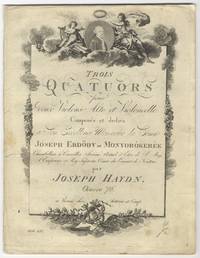
180040068Vienne: Artaria et Comp. PN 837 1800. Folio. Preserved in a custom-made full dark brown linen clamshell box with black leather label with titling gilt to spine. <br /> <br /> Violino primo: 1f. recto title verso blank 19 i blank pp. Title within elaborate border engraved by J. E. Mansfeld incorporating a portrait of Haydn at head a muse holding a flute and trumpet and an angel playing a lyre. <br /> Violino 2o.: 17 i blank pp. <br /> Viola: 17 i blank pp.<br /> Violoncello: 17 i blank pp.<br /> Engraved throughout.<br /> <br /> Slightly worn; occasional soiling and small stains primarily to blank margins; small tear to blank inner margin of title to first violin part extending slightly into border. First Edition with the famous title page incorporating a portrait of the composer. Hob. III:78-80. Hoboken Collection Vol. 7 647. BUC p. 466. RISM H3574. <br /> <br /> "The last of Haydn's six great E-flat quartets 1797 is perhaps - dare one compare on this level - the greatest of them all; in any case it is among the greatest of the his great quartets as well as being the very greatest of the 'celebrated' which status it no doubt again owes to its symmetrical themes - the only aspect of the work one is tempted to suggest which is not drastically innovatory. On hardly knows where to start when listing its lasting innovations . but inasmuch as they affect one's performance of the work one can concentrate on them with a quiet conscience." Keller: The Great Haydn Quartets p. 228. Artaria et Comp. [PN 837] unknown