LISZT, Franz 1811-1886Biblio.com
637 résultats
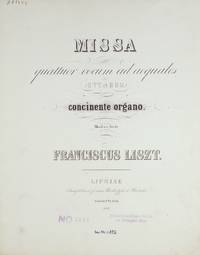
185340935Lipsiae: Breitkopfii et Härtelii PN 8636 1853. Folio. Dark yellow cloth-backed light gray boards. 1f. recto title verso blank 1f. recto dedication to "Patri Venerabili Albach" verso blank 3-35 i blank pp. Engraved.<br /> <br /> Scored for Tenors I and II Basses I and II and Organ.<br /> <br /> Handstamps of the Music Institute of the University of Vienna to title and dedication; deaccession note and stamp to verso of title.<br /> <br /> Binding somewhat worn rubbed and bumped with remnants of label to inner corner of upper board. Minor internal wear; lower outer corners bumped. First Edition of the first version. Searle 8a. Raab 485a. <br /> <br /> The Mass for four male voices and organ was composed in 1846-47 and was first performed in 1852 in Weimar "to celebrate the birthday of the President of the French Republic - later the Emperor Napoleon III. This is an unusual and austere work in which singers effectively declaim not sing parts of the Credo. The melodic line of the Gloria reveals the influence of plainchant." Collet: Franz Liszt. The Man & His Music Alan Walker ed. p. 340. Breitkopfii et Härtelii [PN 8636] unknown
185940579Viennae: Typis Caes. Reg. Status Officinae 1859. Elephant folio 545 x 390 mm. Original black cloth-backed grey printed boards. 1f. recto title. verso blank 130 pp. With J. Schuberth & Co. overpaste to upper board and title.<br /> <br /> Binding somewhat worn rubbed and bumped. First Edition. Scarce. Raabe 484. Searle 9. Hoboken Catalogue Vol. 10 38. <br /> <br /> The "Grau" mass is one of Liszt's major works composed for the consecration of the new basilica at Grau in his native Hungary. It was first performed under Liszt's direction on 31 August 1856 to an audience of approximately 4000 people. "This music is religious to the point of converting Satan himself!" Walker II pp. 403-406. <br /> <br /> An important work in large striking format. Typis Caes. Reg. Status Officinae unknown
1019173319.Ghardcover. Good. Access codes and supplements are not guaranteed with used items. May be an ex-library book. hardcover
1871125188Leipzig: J. Schuberth & Co 1871. 1871 or that era. Folio. Fair Ex-lib. usual markings; heavy wear to extremities of boards; spine mostly gone; front and back boards detached but present; ffep and title pages detached and heavily chipped; main block secure and mostly in good condition but with brittle page edges. Tan paper over boards; Dark brown cloth at spine; 129 pp. comprised totally of a musical score. Oversize 15 x 21.5 inches and heavy 7.5 pounds / 3.4 kilos. The mass was composed by Franz Liszt between 1855 and 1858 for the dedication of the new part of the cathedral at Esztergom Hungary by Archbishop Janos Scitovszky. Liszt conducted the work and the organist was Alexander Winterberger. The dedication concert the work's premiere was on August 31 1856. The reverberation time in the cathedral is 9 seconds Wikipedia creating the potential for an acoustic nightmare in performing a piece of this magnitude! The performance was attended by 4000 guests including Emperor Franz Joseph I and other imperial majesties of Austria-Hungary ecclesiastical dignitaries well-known musicians and members of the press. After the premiere Liszt and others continued to make various small changes and corrections to the original score. The first publication was in 1859 by the Imperial Printing House Vienna followed by subsequent editions and variations piano reductions etc. by J. Schuberth 1871. G. Schirmer 1909. etc. This particular edition/volume contains NO individual parts violin flute soprano etc. for actual performance but IS an actual complete copy of the entire conductor's score meaning that it includes all the orchestral organ vocal soloist SATB and choral SATB parts with vocal text all together for a conductor to use in rehearsal or performance. This edition was published by J. Schuberth & Co. no date likely in Leipzig rather than New York or Philadelphia as the names of the instruments are listed in German and the price on the front cover is listed in Thaler an old German/European coinage. The work is complete: Kyrie Gloria Credo Sanctus Benedictus Agnus Dei with all parts readable even where margins are chipped. An excellent copy for the conducting student Liszt afficionado musical researcher or someone interested in Hungarian/Esztergom ecclesiastical history. For an excellent article by Morten Solvik on Liszt's writing of this work see this link from the American Symphony Orchestra's web site. J. Schuberth & Co hardcover
0486290832.Gpaperback. Good. Access codes and supplements are not guaranteed with used items. May be an ex-library book. paperback
1983Q-379576808XSCHOTT MUSIK INTL MAINZ 1983-10-01. Paperback. New. In shrink wrap. Looks like an interesting title! SCHOTT MUSIK INTL MAINZ paperback
2005__4111095623HAL LEONARD CORPORATION 2005. Paperback. New. bilingual edition. 308 pages. Chinese language. 11.75x8.75x1.00 inches. HAL LEONARD CORPORATION paperback
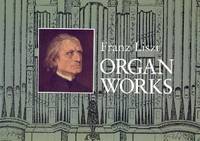
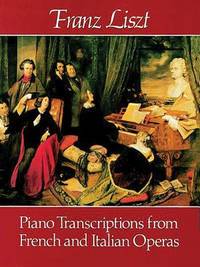
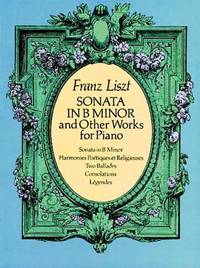
1982Q-0486242730Dover Publications 1982-05-01. Paperback. New. New. In shrink wrap. Looks like an interesting title! Dover Publications paperback
19821-0486242730Dover Pubns 1982. Paperback. New. 247 pages. 12.00x9.25x0.50 inches. Dover Pubns paperback
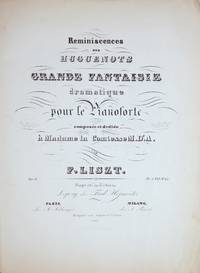
184140942Leipzig: Fred. Hofmeister PN2269 1841. Folio. Ivory wrappers with manuscript titling to upper. 1f. recto title verso blank 3-31 i blank pp. Engraved.<br /> <br /> Slightly worn browned and thumbed; small chips and tears to outer margin of title with minor loss; some upper outer corners slightly turned. <br /> <br /> Wrappers slightly worn browned and stained with small chips to outer edge and spine. Searle 412. Raab 221. Fred. Hofmeister [PN]2269] unknown
1019912456.Ghardcover. Good. Access codes and supplements are not guaranteed with used items. May be an ex-library book. hardcover
1162192151.Ghardcover. Good. Access codes and supplements are not guaranteed with used items. May be an ex-library book. hardcover
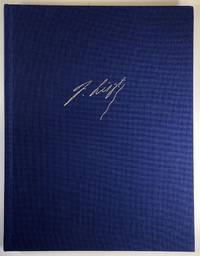
2019s00036613Budapest: Editio Musica Budapest 2019. Hardcover. Near Fine. Quarto 9x12 inches blue cloth covered boards musical score with forward in English German and Hungarian 141pp. Book is near fine with minor shelfwear to boards some faint red staining to rear board text is bright and unmarked binding tight. Editio Musica Budapest hardcover
1990Q-0486261824Dover Publications 1990-01-01. Paperback. New. In shrink wrap. Looks like an interesting title! Dover Publications paperback
6j1332Sony Music ohne Ort 2004. CD in original Kunststoffhülle . - sehr gutes Exemplar/gespielt von Vladimir Horowitz Klavier - unknown
45226508-nnew. unknown
45226508like new. unknown
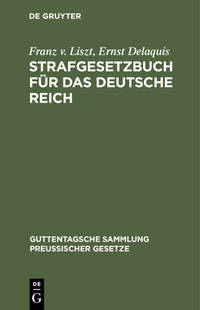
__311116456XDe Gruyter 1900. Hardcover. New. 24 edition. 495 pages. German language. 9.05x6.10x8.00 inches. De Gruyter hardcover
__3112412737De Gruyter 1928. Hardcover. New. 28 reprint edition. 653 pages. German language. 5.00x1.63x8.00 inches. De Gruyter hardcover
__3112676297De Gruyter Art & Architecture 1920. Hardcover. New. 25 reprint edition. 498 pages. German language. 5.00x1.25x8.00 inches. De Gruyter Art & Architecture hardcover
1016916817.Ghardcover. Good. Access codes and supplements are not guaranteed with used items. May be an ex-library book. hardcover
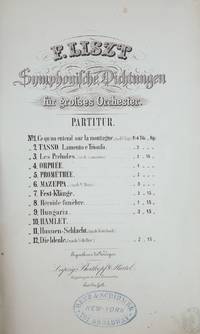
187441065Leipzig: Breitkopf & Härtel PN 9056 1874. Octavo. Original publisher's dark ivory wrappers. 1f. recto title verso blank 1f. recto preface in German verso preface in French 1f. recto composer's note in German on performance practice verso same note in French dated "Weimar Mars 1856" 97 i blank pp. Title preface and note lithographed; music engraved. <br /> <br /> Small B & H stamp to lower outer corner of title.<br /> <br /> With publisher's catalogue to verso of lower wrapper. <br /> <br /> Wrappers slightly worn and soiled; spine lacking. Occasional small stains; dampstaining to lower outer corners of first leaves; one signature partiallky detached. Re-issue from first edition plates. Searle 97. Raabe 414. Sonneck p. 266. <br /> <br /> Liszt was a distinguished Hungarian composer pianist conductor and writer.<br /> <br /> "Sketchbook evidence points to 1846-7 as the years when Liszt began to conceive the idea of a series of programmatic orchestral works. Of the four works he named all based on French poetry Ce qu'on entend sur la montagne and Les Préludes eventually became symphonic poems. . <br /> <br /> Liszt's concentration on the symphonic poem largely coincided with his tenure as Kapellmeister in Weimar where he had an orchestra at his disposal and provided music for performances at the Court Theatre. The Grand Duke commissioned Liszt's 'overtures' to preface specific dramas which thereby determined the subject matter of what were to become a number of his symphonic poems. Cormac F2017 argues that Liszt's approach to the overtures and their transformation into symphonic poems was influenced by his experience of an array of dramatic media opera plays melodramas tableaux vivants and by his interaction with staff and actors involved in the dramatic productions in Weimar. A New German School acolyte Felix Draeseke writing about the symphonic poems in a series of essays from the late 1850s acknowledged the influence of dramatic music especially opera on Liszt's Festklänge. Draeseke also addressed the issue that continues to interest scholars - the symphonic poems' engagement with sonata form. .<br /> <br /> Looking at the 12 Weimar symphonic poems Vande Moortele . views all but three Orpheus Héroide funèbre and Hunnenschlacht as using sonata form as one of the central principles guiding their large-scale organization. Furthermore Liszt seems to have attempted the same merging of sonata form and sonata cycle evident in the B Minor Sonata in Tasso Les préludes and Die Ideale and possibly Ce qu'on entend sur la montagne. .<br /> <br /> Some of the symphonic poems include mimetic representation of scenes and actions such as Hunnenschlacht's depiction of a battle and Prometheus's evocation of a voice followed by a storm. The inclusion of such passages drew criticism that a number of the symphonic poems seemed formless and could not be understood without access to a programme. In other symphonic poems such as Les Préludes and Orpheus Liszt responded to a philosophical programme without compromising musical logic. In these cases critics recognized Liszt the 'tone poet' who could capture a poetic stimulus in an expressive evocative musical flow unified by a single theme that underwent transformations. In general Liszt's sumptuous orchestral colorings were the dominant focus of critics' positive reception of his symphonic poems and programme symphonies." Dolores Pesce Maria Eckhardt and Rena Charnin Mueller in Grove Music Online. Breitkopf & Härtel [PN 9056] unknown
186241066Leipzig: Breitkopf & Härtel PN 9056 1862. Octavo. Original publisher's blue printed wrappers. 1f. recto title verso blank 1f. recto composer's note on performance practice in German verso same note in French dated "Weimar Mars 1856" 1f. recto preface in German verso preface in French 97 iii blank pp. Title note and preface lithographed; music engraved. <br /> <br /> With publisher's catalogue to verso of lower wrapper. <br /> <br /> With Beer & Schirmer New York and Musik-Antiquariat Doblinger handstamps to upper wrapper; Beer and Schirmer and publisher's handstamp to title.<br /> <br /> Wrappers worn soiled chipped and torn; spine reinforced with paper tape with small pieces of same tape to verso of upper wrapper. Minor internal wear. First Edition later issue. Searle 97. Raabe 414. Sonneck Orchestral Music p. 266. <br /> <br /> Liszt was a distinguished Hungarian composer pianist conductor and writer.<br /> <br /> "Sketchbook evidence points to 1846-7 as the years when Liszt began to conceive the idea of a series of programmatic orchestral works. Of the four works he named all based on French poetry Ce qu'on entend sur la montagne and Les Préludes eventually became symphonic poems. . <br /> <br /> Liszt's concentration on the symphonic poem largely coincided with his tenure as Kapellmeister in Weimar where he had an orchestra at his disposal and provided music for performances at the Court Theatre. The Grand Duke commissioned Liszt's 'overtures' to preface specific dramas which thereby determined the subject matter of what were to become a number of his symphonic poems. Cormac F2017 argues that Liszt's approach to the overtures and their transformation into symphonic poems was influenced by his experience of an array of dramatic media opera plays melodramas tableaux vivants and by his interaction with staff and actors involved in the dramatic productions in Weimar. A New German School acolyte Felix Draeseke writing about the symphonic poems in a series of essays from the late 1850s acknowledged the influence of dramatic music especially opera on Liszt's Festklänge. Draeseke also addressed the issue that continues to interest scholars - the symphonic poems' engagement with sonata form. .<br /> <br /> Looking at the 12 Weimar symphonic poems Vande Moortele . views all but three Orpheus Héroide funèbre and Hunnenschlacht as using sonata form as one of the central principles guiding their large-scale organization. Furthermore Liszt seems to have attempted the same merging of sonata form and sonata cycle evident in the B Minor Sonata in Tasso Les préludes and Die Ideale and possibly Ce qu'on entend sur la montagne. .<br /> <br /> Some of the symphonic poems include mimetic representation of scenes and actions such as Hunnenschlacht's depiction of a battle and Prometheus's evocation of a voice followed by a storm. The inclusion of such passages drew criticism that a number of the symphonic poems seemed formless and could not be understood without access to a programme. In other symphonic poems such as Les Préludes and Orpheus Liszt responded to a philosophical programme without compromising musical logic. In these cases critics recognized Liszt the 'tone poet' who could capture a poetic stimulus in an expressive evocative musical flow unified by a single theme that underwent transformations. In general Liszt's sumptuous orchestral colorings were the dominant focus of critics' positive reception of his symphonic poems and programme symphonies." Dolores Pesce Maria Eckhardt and Rena Charnin Mueller in Grove Music Online. Breitkopf & Härtel [PN 9056] unknown