161 résultats
192021818ABParis, A. Durand & fils, o.J. (um 1920). 4°. 3 (1) S., 7 (1) S. Orig.-Umschlag (fleckig, Einrisse mit Filmoplast hinterlegt).
192021818ABParis, A. Durand & fils, o.J. (um 1920). 4°. 3 (1) S., 7 (1) S. Orig.-Umschlag + Wichtig: Für unsere Kunden in der EU erfolgt der Versand alle 14 Tage verzollt ab Deutschland / Postbank-Konto in Deutschland vorhanden + (fleckig, Einrisse mit Filmoplast hinterlegt).
17742111902160200040Kashima Seisuke-ban 1774. Soft Cover. Fine. Number of pages: 110 pages Size: 21.5cmx15.5cm 110p Number of books: 1 Kashima Seisuke-ban paperback
3 S. + Flöten/Gitarrenstimme auf S. 4.
199911199FLUTE D OR 1999 180 pages 1x21x14cm. 1999. Broché. 180 pages. Ce livre est un recueil d'extraits des écrits et causeries de Sri Chinmoy sur la méditation. Il explique de manière simple ce qu'est la méditation propose des exercices accessibles à tous et répond à diverses questions concernant les expériences et difficultés que l'on peut rencontrer dans cette pratique
Book III comprises modern French works, from Berlioz to Messaien. 46 pages. Unused condition. Stapled binding.
6476One full-page woodcut illus. & music printing. 16 folding leaves. 8vo orig. wrappers orig. block-printed title label on upper cover rubbed new stitching. Japan: ca. 1684-1704. First edition and apparently unique; no copy is located in WorldCat or Union Catalogue of Japanese Books. The miyogiri is a type of shakuhachi an end-blown three-node bamboo flute with five finger holes. The various types of shakuhachi flutes have been some of Japan's most popular instruments. They were brought from China in the 8th century and became popular in 17th-century Japan when they were adopted by itinerant Buddhist beggar priests komuso of the Fuke sect who were employed by the ruling warrior class. This rare and comprehensive work begins with a table of contents and a physical description of the miyogiri along with instructions on correct embouchure. The next section is concerned with fingering techniques which are illustrated in two diagrams on two pages. This is followed by a wonderful full-page woodcut illustration of a Zen monk wearing a kara religious attire giving instruction to a samurai and a younger man. Following this are nine pieces of song music for the miyogiri written in a stylized version of katakana in vertical columns from right to left. Indications of blowing intensity and length of phrase are also included in the notation as is the text of the songs. The Fuke sect left a repertoire of between 200 and 300 pieces but most were lost with the forced dissolution of the sect in 1871. Our work provides a valuable record giving the scores and lyrics for nine pieces: Yoshinoyama Inoyama Shishi odari Okazaki Edo shishi Sakai shishi Sugagaki Taki otoshi and Rinzetsu. This seems to be the only record of several of the pieces. On the final page there is an indication that a separately issued second part appeared but there seems to be no surviving copy. Fine copy. ❧ See Grove Dictionary of Music Japan Section IV.3. Andreas Gutzwiller "The Shakuhachi of the Fuke-Sect: Instrument of Zen" in The World of Music Vol. 26 No. 3 Sacred Music II 1984 pp. 53-65. For a discussion of this copy see Seiichi Kishi's article: http://www.dental.gr.jp/bmbnt/bamboo51.htm. unknown books
6476One full-page woodcut illus. & music printing. 16 folding leaves. 8vo orig. wrappers orig. block-printed title label on upper cover rubbed new stitching. Japan: ca. 1684-1704.<br/> <br/> First edition and apparently unique; no copy is located in WorldCat or Union Catalogue of Japanese Books. The miyogiri is a type of shakuhachi an end-blown three-node bamboo flute with five finger holes. The various types of shakuhachi flutes have been some of Japan’s most popular instruments. They were brought from China in the 8th century and became popular in 17th-century Japan when they were adopted by itinerant Buddhist beggar priests komuso of the Fuke sect who were employed by the ruling warrior class.<br/> <br/> This rare and comprehensive work begins with a table of contents and a physical description of the miyogiri along with instructions on correct embouchure. The next section is concerned with fingering techniques which are illustrated in two diagrams on two pages. This is followed by a wonderful full-page woodcut illustration of a Zen monk wearing a kara religious attire giving instruction to a samurai and a younger man.<br/> <br/> Following this are nine pieces of song music for the miyogiri written in a stylized version of katakana in vertical columns from right to left. Indications of blowing intensity and length of phrase are also included in the notation as is the text of the songs. The Fuke sect left a repertoire of between 200 and 300 pieces but most were lost with the forced dissolution of the sect in 1871. Our work provides a valuable record giving the scores and lyrics for nine pieces: Yoshinoyama Inoyama Shishi odari Okazaki Edo shishi Sakai shishi Sugagaki Taki otoshi and Rinzetsu. This seems to be the only record of several of the pieces.<br/> <br/> On the final page there is an indication that a separately issued second part appeared but there seems to be no surviving copy.<br/> <br/> Fine copy.<br/> <br/> ⧠See Grove Dictionary of Music Japan Section IV.3. Andreas Gutzwiller “The Shakuhachi of the Fuke-Sect: Instrument of Zen†in The World of Music Vol. 26 No. 3 Sacred Music II 1984 pp. 53-65. For a discussion of this copy please contact us for the link. unknown
in-8 oblong de 33 pages, couverture imprimee. Bon etat. [TX-15] L'auteur était Professeur au Conservatoire de Lausanne
1980SPN-854Paris : Heugel, 1980. Recueil 27x18,5cm, 55 pages de partitions.
189822447Dana Estes Boston 1898. HB NODustJacket 1898 1st separate edition dates match NF/VG NODJ Blue decorated cloth cover slight rub wear & tiny chips Extremties spine sunned Interior nice tight clean light Wear FoX 72 pgs Ads 2 tiny FoX dots back Cover. First Separate. Hard Cover. Dana Estes, Boston, hardcover
79 pages. Includes solos and duets (with first and second flute part) and piano accompaniment. These arrangements may be played with mixed groups of like and unlike instruments. Above-average wear. Also included is a separate 40-page booklet of music for Second Flute. Book
190680016ABLeipzig, C. F. Kahnt Nachf., 1906. Ca. 24,5 x 17,5 cm. XIV S., (10) Seiten, 277 S., (2) S., (7) S. Notenanhang, (5) Seiten. Mit Noten im Text. Orig.-Halbleinenband.
192612918C.F. Kahnt, Leipzig, 1926. XIV,8,277 Seiten + Tafeln m. Notentabellen, OLeinen, mit einem Vorwort und erläuternden Anmerkungen von Dr. Arnold Schering. (1. Auflage 1906 - 2. Auflage 1926). Zahlreiche Notenbeispiele im Text. Alter handschriftlicher Besitzervermek aT. Der Einband leicht verschmutzt. Gutes Exemplar. Good copy.
1728164231728 débroché d'un recueil. in-4, titre, 16pp., P. Boivin APDR (1728)
1975104732Cambridge: Harvard University Press 1975. X, 340 Seiten. Gr. 8° (22,5-25 cm). Orig.-Leinenband mit illustriertem Orig.-Schutzumschlag. [Hardcover / fest gebunden].
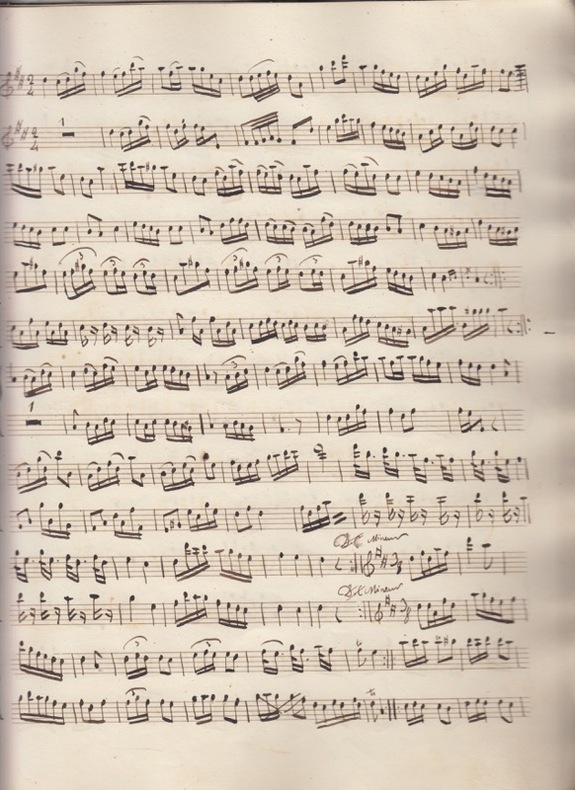
18006070ca. 1800 br. titre manuscrit. 69pp., en ff. manuscrit in-folio,
175011093Paris La Chevardière 1750 in-folio br. titre, 37pp., (2pp. non chiffrée Catalogue N°I et catalogue N°II de M. de La Chevardiere). P. La Chevardiere, (ca. 1742)
24932Cahier in4 broché,non paginé,80 p.,environ,bon état.
194099940460Bruxelles Lemoine SD (vers Bruxelles Lemoine SD (vers 1940), In-4 broché, 48 pages. Trés bon état.
Bruxelles Lemoine SD (vers 1940), In-4 broché, 48 pages. Trés bon état.
19392092902140600469Great Japan Oratorical Society Kodansha 1939. Soft Cover. Fine. Number of pages: 86p Size: B5 Great Japan Oratorical Society Kodansha paperback
2092902138300124Japanese art printing department N.A. Soft Cover. Fine. The book is in fine condition. Japanese art printing department paperback
19872080302106802209Ogata Kimie 1987. Soft Cover. Fine. Number of pages: 149 Size: A5 Ogata Kimie paperback