250 résultats
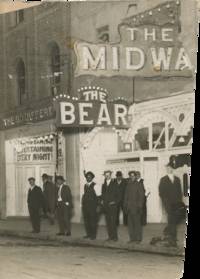
1910List2810San Francisco California 1910. Single photograph approximately 6 ½ x 9 inches manuscript verso reading “SF Barbary Coast 500 Block of Pacific â€THE SO DIFFERENT†now 550 Pacific Ave 1911â€. Appears to be trimmed from a larger photograph. Portion of image cut and pasted with editorial overpainting. Some damage to edges and corners with one tear at right middle some residue from pasting a now-missing object; overall very good. A photograph taken on Pacific Street in about 1910 showing a group of men standing by the curb in front of The Midway The Bear and The So Different nightclubs note that the sign for The Midway is pasted in. This block in Barbary Coast—â€Terrific Streetâ€â€”was home to a number of dance halls and early jazz clubs many of which like Purcell’s So Different Café were “black and tan†– catering to all races. Founded by former Pullman porters Lew Purcell and Sam King shortly after the neighborhood was rebuilt from the 1906 earthquake and fire Purcell’s was one of the better-known clubs. Influential ragtime and jazz pianist Sid LeProtti led the So Different Jazz band and King Oliver and Jelly Roll Morton are among the alleged guest performers. Patrons could buy twenty-cent vouchers for a quick dance with one of the girls who worked and sometimes lived at the venue. Around 1913 though police began to crack down on drinking and dancing in the neighborhood and by the 1920s the venues were gone. unknown
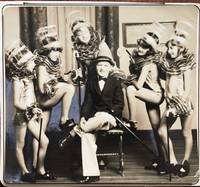
193058055Portland OR: Hollywood College of Music Dancing & Fine Arts Baker Studio Granada Studio La Vere Photo Shoppe Photo Craft Studios ca. 1930-1933. Oblong 4to. 24 original photographs all preserved in archival mylar sleeves sized 6.25 x 7 in. up to 8 x 10 in. some w/ photographer’s imprint w/in negative others w/ manuscript captions added a few w/ annotations and/or photographer’s instructions on versos all with bright strong contrast a few w/ offsetting from previous mounting on versos and one w/ very small pinholes at corners from prior mounting. Recent cloth binder stamping front cover excellent grouping. These photographs vividly document the dance and music studio operated by Annabelle Knowles reflecting the fast evolving costumes and aesthetics of the twilight of the Roaring 20’s as the U.S. descended into the Great Depression. These photos also clearly reflect the influence of Gus Edwards 1879-1945 vaudeville’s premier producer of kiddie acts and who had produced and released the shorts “Kiddie Revue†in 1930 and 1931. His influence was not only driven by his songs “By the Light of the Silvery Moon & “School Days†but also discovering such stars as Groucho Marx Eddie Cantor Mae Murray Sally Rand and many others. The images depict girls in two-piece outfits in front of Art Deco staging for “Body and Soulâ€; bare-backed girls in Flapper Era inspired costumes for chorus line “Kiddie Revueâ€; song and dance routines featuring Ronald Chetwood in top hat with Marcile Shillito Virginia Collins and chorus line in Jazz Age era costumes and canes; and several show Barbara Jane Wicks Shirley Jay Mulkey and Sunny Dentler in Spanish inspired costumes for “Baby Vanities.†Another shows adolescent boy and girl dance team in an “Apache†dance inspired costume number. The Hollywood College of Music Dance & Fine Arts offered classes and instruction in all ages with the last few photos showing teenage girls in chorus line with short hair coquettish expressions and teamwork or chorus line numbers. Annabelle Knowles 1900-1989 was a musician and dancer who founded the Hollywood College of Music Dancing & FIne Arts at 4112 NE Sandy Blvd. some time in the late 1920’s. Most of the street directory references focus on 1929-1932 and her British-America theatre-director husband at the time Vincent Knowles 1883-1944 worked at the studio as well. Baker 1882-1972 was a longtime commercial studio photographer in Portland OR who had initially begun as a photographer with noted tourist travel guide Howard Eaton photographing tours through National Pakrs. Beem 1892-1984 was founder and photographer at Granada Studio located in the 1930’s at 515 Swetland Building in Portland. Centlivere 1878-1964 owned and operated La Vere Photo Shoppe and Photo Craft Studios on Sandy Blvd. in Portland for nearly all of his career. We could find no similar collections or photographs or even references to Annabelle Knowles and very few examples of any of these three photography studios in institutional holdings. Hollywood College of Music, Dancing & Fine Arts, Baker Studio, Granada Studio, La Vere Photo Shoppe, Photo Craft Studios, hardcover
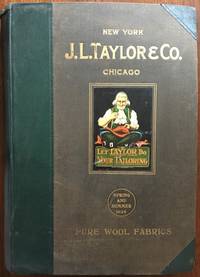
192658100New York & Chicago: J.L. Taylor & Co. 1926. Thick elephant folio 17 x 23.25 x 2.5 ins. 75 3 pp. printed on thick card stock each mounted on linen hinge. With 17 colour fashion plates illustrating Taylor styles of the period verso of almost all pages with 364 of 375 mounted textile samples in wool wool-rayon blends some felt backed silk moleskin corduroy cashmere waistband sample and more -- all samples clearly marked with prices and availability some of the 12 missing samples are indicated in pencil as being “Out†as well as a few present 1 additional pinned-in numerous illustrations throughout in blue-green colour tinting including Chicago & New York factories some diagrams charts and graphs. Original half-green cloth over gray green cloth corners gilt lettering on front cover colour plate w/ J.L. Taylor tailor mounted front cover some wear & minor bumping to fore-edges corners some minor soiling & occasional foxing to interior leaves -- some of it dust from the wool samples 10-15 samples with minor deterioration and evidence of old predation still a very good unsophisticated and remarkably complete example w/ original 9 x 21 in. double-sided stock list in red & black laid-in. First edition of this scarce and unusually complete salesman sample catalogue for Jazz era men’s suits in 1928-1929. J.L. Taylor maintained a huge tailoring operation in both Chicago and New York until after World War II employing hundreds of tailors and seamstresses to fill orders. The catalogues were very expensive to produce and so were most often found in department stores mercantiles and men’s stores which would have these catalogues on the sales floor for two years or more. The catalogue offers invaluable illustrated historical reference for the colours styles and fabrics during the era of F. Scott Fitzgerald and the Flappers. Most of the colour fashion plates illustrating the available styles have elegantly dressed women and settings in the background including with an emphasis on sporting in summer so golf tennis croquet canoeing boating and swimming all make an appearance. Of particular interest is the wonderful dress chart indicating styles needed clothes accessories and shoes which one would need for Day Wedding Matinee Reception Evening Dress and many others offering an excellent marketing opportunity for the store to sell the customer items to compliment his suits overcoats and other fashion wear ordered from J.L. Taylor. The final plate focuses on the lightweight “Palm Beach†& “Mohair†suits at the height of the 1920’s boom in Florida featuring snappily dressed models in Panama straw hats and a lightweight fedora. Worldcat locates 1 partial copy Preserved at the Library of Congress stripped of samples and used as scrapbook for Wilbur’s Drug Store prescriptions of Portland ME -- not an unusual occurrence. J.L. Taylor & Co., hardcover
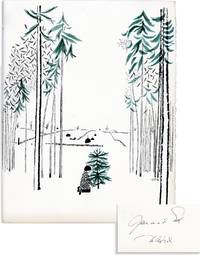
84869Roosevelt NJ: by the Author c.1956. Quarto 37cm. Printed card portfolio holding twelve lithographic plates loose as issued. All lithographs are signed in plate; Martin has inscribed the portfolio "Jean and Sol Libsohn / David" undated. Very mild external toning and soil; Near Fine. Inside of portfolio is printed with a holiday sentiment and also a brief blurb from Alan Lomax commenting on the illustrations.<br /> <br /> Scarce portfolio of lithographic prints reproducing Martin's illustrations for Alan Lomax's Mr. Jelly Roll a biography of jazz pianist Jelly Roll Morton published in 1956. Issued without imprint presumably printed as a Christmas gift to friends of the artist. This copy is inscribed to the photographer Sol Libsohn and his wife Jean who were Martin's neighbors in Roosevelt New Jersey a WPA town founded in 1939 which by the Fifties had become a destination for artists writers and musicians seeking refuge from but proximity to the New York art scene. Martin 1913-1992 was a noted mid-century illustrator known best for his many jazz album covers for Folkways and Blue Note in the Fifties and Sixties. Of the present portfolio we locate only a single copy in OCLC Pitt with no other example traced in commerce. unknown
19279883New York 1927. 4.5x3.5" photograph slightly trimmed down affecting the studio stamp on the bottom edge. Signed by Florence Mills in 1927. Mounted on an autograph album page with a signature card from Betty Blythe to verso. Few spots to photo some soiling to edges. Signature bright and clear. Very good. <br /> <br /> Rare signed photograph from one of the most celebrated Black performers of the 1920s Florence Mills 1896-1927 who died at the age of 31 from complications from tuberculosis and an appendectomy. <br /> <br /> Mills was a child performer in travelling Black stage productions with her sisters as well as "The Tennessee Ten." One of her early major roles was in the Broadway musical Shuffle Along in 1921 one of the defining productions marking the beginning of the Harlem Renaissance. She was a regular performer at the Plantation Club and later headlined the Palace Theatre before becoming internationally known starring in Lew Leslie's Blackbirds of 1926. While performing some 300 shows in London of that year she became ill with tuberculosis her death the following year shocking the entertainment world.<br /> <br /> A naturally scarce signed photo from the year of her death depicting one of the defining performers of the Harlem Renaissance. unknown
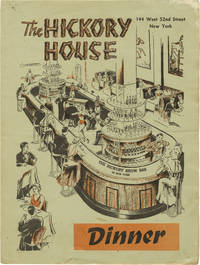
1940158584New York: The Hickory House 1940. Vintage three-color dinner menu from the renowned 52nd Street jazz club circa 1940s with a "Chef's Special" card stapled to the top outer corner of the second leaf.<br /> <br /> One of the longest running and premiere jazz clubs of "Swing Street" as 52nd Street between Fifth and Seventh Avenues was known in the 1930s through the 1950s Hickory House was opened shortly after the repeal of Prohibition in 1933 by impresario John Popkin. Featuring a huge oval music bar depicted on the cover of the menu on offer here Hickory House was both a swing venue and the spot to grab dinner and cocktails before a show. A musician's club Hickory House presented and served jazz luminaries for three decades. Among those known to perform or frequent the venue included Duke Ellington Louis Armstrong Benny Goodman Artie Shaw and Thelonious Monk among countless others many of whom were known to be found sitting in with the house band The Hickory House Trio Marian McPartland Bill Crow and Joe Morello on Sunday afternoons in the 1950s. In 1956 jazz pianist and composer Jutta Hipp released two acclaimed Blue Note albums recorded at the club "At the Hickory House Volume 1" and "At the Hickory House Volume 2." By the mid 1960s the venue was one of the last of the jazz clubs left on 52nd street and by the end of the decade closed. As noted on the back of the menu "Life! Life! From ten thirty until scrambled eggs there is always a popular swingy rhythm band to beat out tuneful and catchy syncopations in their own inimitable style."<br /> <br /> <br /> 10.75 x 14.25 inches bi-fold. Very Good plus with light soiling rubbing and edgewear overall and a faint horizontal crease. The Hickory House unknown
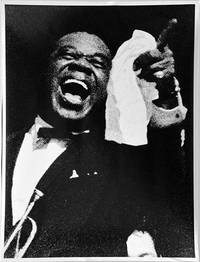
1960CAT206New York et al. 1960. Five 8 x 10 and two 5 x 7 inch gelatin silver prints with Bradley’s estate marks to versos. Excellent. Jack Bradley was a Cape Cod native who after graduating from the Massachusetts Maritime Academy fell in love with Jazz after seeing Louis Armstrong perform at the Boston Armory in 1956. In 1958 he moved to New York from Cape Cod and began dating Jeann Failows a member of Louis Armstrong’s inner circle. Through Failows Bradley gained access to Armstrong eventually becoming very close friends with the trumpeter and his inner circle. Bradley already had amassed a large collection of jazz material much related to Armstrong and he augmented his own collection by photographing Armstrong and his Jazz circle for the next decade. The bulk of Bradley’s collection now resides at the Louis Armstrong House Museum in Queens. <br /> <br /> This collection is of seven photographs of jazz musicians from Bradley’s estate showing a wonderful window into the tail end of the Classic Jazz era. <br /> <br /> Photographs as follows:<br /> <br /> Willie Cook. 5 x 7 inches. A portrait of Cook seated. Excellent condition. <br /> <br /> Count Basie and Duke Ellington. 5 x 7 inches. The two jazz greats are seated at their respective pianos during rehearsal. Excellent condition.<br /> <br /> Duke Ellington’s Empty Bandstand. 8 x 10 inches. The horns chairs and sheet music are laid out. Very good condition with some toning to margins and a faint scratch at outer edge of image. <br /> <br /> Duke Ellington Conducting his Band. 8 x 10 inches. Excellent condition. <br /> <br /> Ella Fitzgerald at the Apollo Theatre New York c. 1959. 8 x 10 inches. Excellent Condition.<br /> <br /> Count Basie Seated at a Table Smoking a Cigar. 8 x 10 inches. Excellent condition. <br /> <br /> Pee Wee russell Painting at his New York Apartment c. 1966. Good condition marginal tear affecting ½ inch of image. <br /> <br /> Overall a nice group and an example of a photographer whose work is not often available on the market. unknown
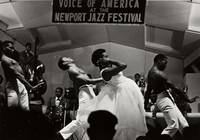
1958List1514New York 1958. Silver Gelatin Photograph measuring 8 ½ x 11 ½ inches with Schatt’s marks verso with his notation “Vintage ‘58†in ink. A fine example fine contrast. A striking image of Eartha Kitt and her band performing at the 1957 Newport Jazz Festival taken by the prolific photographer Roy Schatt perhaps best known for his photographs of James Dean. This is a vintage example likely printed in 1958 from the “1958†and “Vintage†marks to verso. We find no other record of this specific image only a similar image from Kitt’s performance taken by Schatt. unknown
193023072EHollywood CA: 8†x 10†1930. Original sepia tone promotional photo signed by theater director John Murray Anderson: “To the ‘Imp’ - from Murray Anderson Hollywood. 1930â€. The photo shows Mr. Anderson smartly dressed in a three piece suit and tie sitting at a desk pen in hand looking slightly to his left. With the slightly faded inkstamp of the famous movie and theater star photographer James Edward Abbe 1883 - 1973 on the verso. Fine condition. The photo is laid in to a first edition copy of King of Jazz: Paul Whiteman’s Technicolor Revue Severn MD: Media History Press 2016 detailing the making of and the restoration of the film directed John Murray Anderson starring Paul Whitman John Boles and Laura La Plante. Oversize 303 pages extensively indexed and illustrated throughout. Fine in a fine dust jacket. John Murray Anderson 1886 - 1954 worked in almost every genre of show business including vaudeville Broadway and film. He made his Broadway debut in 1919 as a writer director and producer of The Greenwich Follies. In the 20s and 30s he ran an acting school in Manhattan teaching Bette Davis and Lucille Ball among others. Anderson produced the Ziegfeld Follies in 1934 1936 and 1943 as well as directing plays in London’s West End. Some of his other contributions include directing at Radio City Music Hall and Ringling Brothers Circus from 1942 - 1951. Anderson’s work in Hollywood includes in addition to directing King of Jazz 1930 writing the screenplay for Ziegfeld Follies 1946 with Fred Astaire William Powell Judy Garland and Lucille Ball directing the water ballets in Bathing Beauty with Esther Williams Red Skelton and Basil Rathbone and the circus sequences in The Greatest Show on Earth 1952 with Charlton Heston Betty Hutton and Cornel Wilde. 8†x 10†unknown
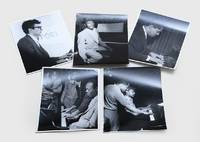
19501726311950-60s. Attractive collection of portraits of five jazz greats those of Paul Bley and John Lewis are vintage prints from the studio of Burt Goldblatt with wet stamps on verso. Goldblatt's New York Times obituary describes him as "a prolific designer of moody jazz LP album covers. In the early 1950s after the introduction of the LP the most progressive American cover designs were created for jazz albums and Mr. Goldblatt was among the pioneers in establishing the cool-jazz style. It encompassed black-and-white portraits and studio photographs inspired by film noir as well as gritty street scenes often abstractly overlaid with flat colours evoking a sense of urban night life". The study of Paul Bley shows him performing at the Newport Jazz Festival where Goldblatt was very much the house photographer publishing an illustrated history of the festival in 1977. Bley in the avant-garde of developments in the music "has produced vivid vital jazz couched in an advanced and challenging idiom" Cook & Morton. That of John Lewis - leader of the MJQ one of the most successful small groups in jazz - is an intimate close-up shot of him at the keyboard. Bill Evans is shown standing at the keyboard working through some changes with another musician perhaps drummer Kenny Clarke; the figure at Evans's elbow may be fellow-pianist Hank Jones. Similarly Tommy Flanagan sporting a flat cap and plaid shirt is going over material with drummer Roy Haynes. Flanagan is perhaps best known for his work accompanying Ella Fitzgerald and Tony Bennett emerging in the '70s and '80s as "a bebopper of gentlemanly distinction" Cook & Morton. The shot of Wynton Kelly is a delightful unguarded portrait showing him at the piano smiling and clearly in conversation sporting a hat with upturned brim and hip suit. Like Evans Kelly played on Miles Davis's timeless album Kind of Blue and is described by the All About Jazz website as "a superb accompanist loved by Miles Davis and Cannonball Adderley". Five original silver gelatin prints each 254 x 200 mm. Bley: identified on verso in black felt tip Burt Goldblatt wetstamp; Evans: identified on verso in pencil; Flanagan: identified on verso in pencil; Kelly: ghost of tape marks on verso; Lewis: identified on verso in blue ballpoint Burt Goldblatt wetstamp. Very slight blue ink smudging to the front of the image of Bley otherwise all in excellent condition. Richard Cook & Brian Morton The Penguin Guide to Jazz Recordings eighth ed. 2006. unknown
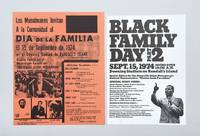
1974149163New York: Nation of Islam 1974. Scarce original handbills for the second of two extraordinary Black Family Days organized by the Nation of Islam in 1974 staged at Downing Stadium on Randall's Island New York and featuring music by among others Lionel Hampton Eddie Palmieri Machito Gil Scott-Heron Jimmy Cliff and "modern black music giants" Max Roach Clifford Jordan Archie Shepp and Jackie McLean. Black Family Day Part 2 was held on 15 September and followed Part 1 held in May the latter described as "the largest gathering of African-Americans in the history of Harlem" Clarke p. 189 when an estimated 70000 people attended and Farrakhan's address was recorded and distributed on the Nation of Islam's own label. "In September Scott-Heron joined Eddie Palmieri and Celia Cruz to perform at the Nation of Islam's Black Family Day at Downing Stadium on Randall's Island at the top of the East River below the Triborough Bridge. A stone's throw from where Robert Moses and the Triborough Commission ran their empire Brother Reverend Louis Farrakhan spoke for two hours to around twenty thousand people denouncing the United States as 'the wickedest nation on the face of the earth' under sunny fall skies. Jimmy Cliff sang 'I'd rather be a free man in my grave than living as a puppet or a slave'" Hermes. 2 handbills 266 x 190 276 x 223 mm printed on white and orange paper respectively text in Spanish on the latter both printed in black each incorporating a portrait of Louis Farrakhan the larger of the two with additional portraits of Eddie Palmieri Machito and Gil Scott-Heron. Each with lateral crease where once folded otherwise in excellent condition. Peter B. Clarke ed. New Trends and Developments in African Religions Westport Connecticut Greenwood Press 1998; Will Hermes Love Goes To Buildings On Fire: Five Years That Changed Music Forever Penguin 2014. unknown
193053742New York: Macmillan Company 1930. 8vo. 8 230 pp. Navy-blue publisher’s cloth gilt lettering minor rubbing to spine very minor shelfwear w/ d.j. printed on metallic silver coated paper Art Deco cover art of 1920s limousine and the well-dressed set in orange & black minor chipping to head & foot of spine very minor edgewear & creasing upper fore-edge couple very small closed tears w/ minor very small tape repair still a VG/VG- copy. First edition of this fast-paced novel set against the backdrop of a penniless Russian Prince exiled by the Revolution who makes a deal with a clever Chicago fashion buyer to act as chauffeur and purchase the sumptuous “Car of Croesus†rented at exorbitant rates to patrons wishing to appear as millionaires. Poole won the first Pulitzer Prize for The Family in 1918. Very scarce in the original dustjacket. Macmillan Company, hardcover
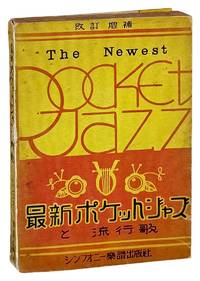
193833168Tokyo: Symphony Publishing Company 1938. Very Good. Tokyo: Symphony Publishing Company 1938. Presumed First Edition. 12mo 15.5 cm; publisher's pictorial yellow and orange card wrappers lettered in black; 1923pp.; brief illus. sheet music throughout. Moderate wear and dust-soiled to wrappers small loss mid-spine briefly affecting text textblock a bit browned and foxed else Very Good bright and sound. <br /> <br /> Evidently unrecorded Japanese guide to popular jazz music the first half almost entirely in Japanese the latter half bilingual primarily in Japanese and English. Includes the music for classics by Jerome Kern like "Ol' Man River" and "Can't Help Lovin' Dat Man"; Romberg and Hammerstein's "Lover Come Back To Me"; Moises Simons' Cuban rumba foxtrot "The Peanut Vendor"; instantly recognizable classics like "Blue Moon" and "La Cucaracha"; and songs by Mabel Wayne and Irving Berlin. The compilation also includes songs in Spanish French and German accompanied by its Japanese translation. <br /> <br /> A fascinating and beautiful little guide documenting the rise in popularity of Jazz music in Japan and Tokyo in particular issued between the devastating earthquake of 1923 and the beginning of World War II. The import of Jazz to Japan was first heralded with the rise in trans-Pacific luxury liners. A Japanese version of "My Blue Heaven" reproduced here became available as early as the 1920s and the popular 1929 Japanese film "Tokyo March" employed Jazz in its soundtrack. The genre was popular enough that Columbia and Victor records formed subsidiary companies in Japan.<br /> <br /> The popularity of jazz in Japan continues to this day touted by one of the country's most prominent public and literary figures Haruki Murakami who first opened his Jazz club right out of college after falling in love with the genre at an Art Blakey and the Jazz Messengers show in Kobe in 1964. <br /> <br /> No copies of this work located in OCLC as of June 2025. <br /> <br /> References: <br /> <br /> "How Japan Came To Love Jazz" online interview with historian E. Taylor Atkins author of "Blue Nippon"<br /> <br /> "Jazz Messenger" by Haruki Murakami available online. Symphony Publishing Company unknown
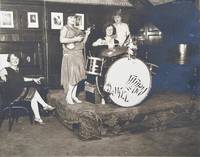
192062329Portland OR Spokane WA San Francisco CA & Seaside OR: Lyle E. Lewis Dance Orchestra ca. 1920-1944. Eight vols. 1st - 4to. 48 pp unpaginated. on thick black paper w/ 100’s of pieces of ephemera mounted and laid-in including 7 silver gelatin photographs sized from 5 x 7 in. up to 8 x 10 in. many different TLS and ALS most on stationery letterhead for assorted hotels KGW Radio and others many newspaper clippings tickets promotional brochures advertising cards dance tickets along with a spoof printed “Wanted†notice for Ted Mullen alias Sourdough Sullen with $ 500 million reward offered and large double-page advertising broadside on yellow-gold tinged thick paper stock at rear for gig in Astoria OR under the auspices of the Co. L 186th Infantry Oregon National Guard. Contemporary pebbled black boards punch-sewn at gutter margin chipping edgewear still VG- exemplar; 2nd - 4to. 92 pp unpaginated w/ majority of leaves on ruled paper including 18 leaves of mylar sleeves featuring the majority of the 23 silver gelatin photographs most sized 8 x 10 in. photographer’s imprints on versos remainder w/ clippings promotional announcements tickets broadsides ALS & TLS documents throughout along with a long radio program script. Contemporary 2-ring blue cloth binder rounded corners some edgewear rubbing still VG; 3rd-7th - 16mo. Five daily diaries Approx. 700 pp unpaginated. w/ approx. 4000 words manuscript annotations in ink & pencil throughout featuring some laid-in miniature photos receipts business cards including 1 photographic souvenir business card for Cole McElroy’s Dance Band and Cole McElroy’s Spanish Ballroom 1 tiny postage stamp photo of Lewis at his bungalow in Seaside all bound in cloth some wear still VG grouping; 8th - 12mo. Approx. 150 pp unpaginated. of ruled paper mostly typescript ink & pencil manuscript some ruling throughout annotations & checkmarks last 4th or so blank. Flexible black cloth 6-ring binder business card for Lewis as Commercial Agent for ACME Fast Freight taped in on front pastedown 3 blank routing order forms in red & black some scuffing edgewear still VG all from the library of Genevieve Martha Lewis Levin 1911-1994. This unusually well-preserved archive of a Roaring 20’s Jazz Orchestra musician and Band Leader in the Pacific Northwest reveals the exuberance and business success of this largely forgotten artist through his successful years before foundering during the Great Depression. Both scrapbooks open with clippings thank you and recommendation letters as well as dance broadsides and photographs during 1926 at the height of Lyle Lewis’s orchestra appreciation. Testimonials include B.J. Saad who owned the Garden Dancing Palace and stated “I have taken the Garden which is second to no other ballroom west of Chicago. That is why I have secured Lyle Lewis recognized as one of the best orchestra leaders on the Coast.†C.W. Craig of Lipman Wolfe & Co. department store extolls that Jazz music dance held at the Multnomah Hotel March 16 1926 that “I don’t think we have ever enjoyed better or more up to date dance music than that furnished by your splendid aggregation.†Broadsides and notices advertise the Lewis Jazz Orchestra playing the Grand Ball Room at the Masonic Temple Congress Hotel leading McElroy’s Oregonians at the McElroy’s Spanish Ballroom the Dessert Hotel Oasis near Spokane parties for Studebaker and more. One of the mounted letters includes a rather sad severance letter signed by Cole McElroy explaining the circumstances of Lyle Lewis’s leaving stating “I realise that you were a victim of circumstances. On account of the fact that you had a fine band organized. . . certain music masters of the theatre jobs saw fit to take your men away from you thereby breaking up your fine band and forcing me to make a deal for another organization.†McElroy 1888-1947 was known as “Pop†McElroy was a popular band leader who during the years before World War I and after played the Palm Gardens often and had great success in his McElroy Spanish Ballroom which opened in 1926 and then opened another Seattle McElroy Ballroom in 1928. Several TLS on letterheads include those for KXL Radio station KGW Radio Station and the KOIN Studio Director for The Portland News which played three nights a week on air for over six months. The many photographs capture the Lyle Lewis band joking around with their instruments on the road fully arrayed on stage in the Radio Station posing at various venues stages and even one as late as 1939 conducting the Lyle E. Lewis Dance Orchestra. The band included Cluet Mansfield formerly with Henry Halsted band William Webber on drums Eddie Scroggins & Frank Champion as sax players G. Berardinelli on Bass and also played dances at the Irvington Club Multnomah Athletic Club and for a while with the historic Congress Hotel in Portland which had been the City’s first reinforced concrete building erected during the Progressive Era and by 1924 expanded to 119 rooms with vibrant Jazz ballroom. The daily diaries for 1929 and 1930 show that Lewis regularly played at the Cotillion Hall now the Crystal Ballroom initially at $ 7.00 per night in 1929 and then steadily dropping to less than half by 1933. He writes about traveling for a gig in San Francisco with Mansfield in 1929 leaving Tuesday and arriving Wednesday Sept. 18 1929 driving 40 mph and getting 19 miles to the gallon with a drive made in 19 hours and 15 minutes. He played extensively at the Bungalow Club in Seaside OR which had opened originally June 19 1920 and for more than 25 years was the destination for the biggest names in the Big Band Jazz era including Lyle E. Lewis Cole McElroy Duke Ellington Bob Crosby Glenn Miller and tragically became connected with the death of Jimmie Lunceford who died from a heart attack just before playing his last set at the Bungalow after playing McElroy’s Ballroom in Portland 2 nights before. Lewis 1890-1948 was a popular Portland Oregon based jazz band & orchestra leader who managed to lie about his age and enlist at 15 in the Oregon National Guard Co. G 3rd Battalion served for three years and in May 1910 married Genevieve Franklin while working as salesman and musician before World War I Following the War he quickly became a successful band leader including successful stints with the Cole McElroy Spanish Ballroom Congress Hotel Multnomah Hotel Bungalow Garden Ballroom as well as the Coronado Hotel in California. As indicated by the daily diaries he maintained a fairly close relationship with his daughter Genevieve “Martha†but became largely estranged from his wife Genevieve living in separate rooming houses or hotels. Still in her position as a sales manager she managed to convince Meier & Frank to hire him as their house band for store functions and the restaurant while during the Great Depression he mostly worked for the US Forest Service mapping division while his show business largely disappeared. By 1943 he became the commercial agent for ACME Fast Freight where he worked as commercial agent until his death. This cataloguer could find no surviving recorded discography record for Lyle E. Lewis and his assorted incarnations although there are a few recordings for the Cole McElroy Band from 1926-1928 which most likely would have included him as band leader and musician. Lyle E. Lewis, Dance Orchestra, hardcover
1962172605Paris: Michel Salou 1962. The band's expanded voicings added orchestral sonority to rhythmic power An evocative sequence: one focusing on Blakey at the kit a particularly luminous shot another showing the front men playing percussion two of Freddie Hubbard soloing one of Curtis Fuller and another of Cedar Walton. Blakey 1919-1920 was a master percussionist and the Jazz Messengers which he led for over 30 years was "the most famous academy in jazz" Cook & Morton. The lineup here is Blakey drums Wayne Shorter tenor sax Freddie Hubbard trumpet Curtis Fuller trombone Cedar Walton piano and Jymie Merritt bass. When Lee Morgan left the band Blakey brought in Hubbard and Fuller with Cedar Walton coming in for Bobby Timmons. The new agglomeration formed perhaps "the most adventurous of Messenger lineups. The band's expanded voicings added orchestral sonority to rhythmic power". The photographer Michel Salou worked as a music executive producing albums by among others Sun Ra Live in Paris at the "Gibus" 1973 the Mal Waldron Trio Ursula 1978 and the French pianists George Arvanitas and Rene Urtreger. He also appears in the annals of the Art Ensemble of Chicago as their "first booking agent. who helped them secure concert dates across France and elsewhere in Europe" Steinbeck p. 130. His excellent work as a lensman appears to have gone virtually unnoticed except that the National Portrait Gallery holds a single print of Ray Charles in performance. Six original carbon print photographs 240 x 180 mm printed on heavy stock paper inscribed on versos in blue ballpoint: "clichés Michel Salou". In excellent condition. Paul Steinbeck Message to Our Folks: The Art Ensemble of Chicago 2017. unknown
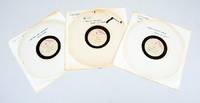
1960149122Chicago: Hugh Hefner c.1960s. Lay back and think of Ellington A trio of discs cut specially for Playboy founder Hugh Hefner comprising two recordings by Duke Ellington "Mood Indigo" and "Sophisticated Lady" and one by Artie Shaw "Begin the Beguine". Each label printed in pink: "Custom Pressed by Jukeboxes Unlimited for Hugh M. Hefner" and bearing Playboy's rabbit logo and typed identification. "Hugh Hefner's initial exposure to music and especially to jazz like that of most people was through vinyl recordings and he's always been a record collector" Farmer p. 71. He was also the owner of a magnificent 1946 Wurlitzer 1015 jukebox see his sale at Julien's Auctions 30 November 2018. That lot was offered with 24 "original" 78rpm recordings by a group of artists including Artie Shaw Frank Sinatra Lena Horne and Harry James. Whether these discs were specially cut as here we have not been able to ascertain. What is certain however is the Playboy kingpin's love of jazz. "In this invented lifestyle for the modern age Hef decided that jazz was the go-to soundtrack. Jazz was the hippest music around and had been for decades. Playboy championed jazz at a time when most music critics were looking in all the wrong places for a truly American art form. Even the most forward-thinking composers of the era the Aaron Coplands and their ilk were still just building upon the European tradition. Jazz was bursting at the seams of the staid and academic classical world ripe with musical development rivalling the greatest of the old European masters. In 1957 Playboy produced a two-record set of their Jazz All-Star series featuring performers from Pops to Frank Sinatra to Dave Brubeck. They produced a second edition in 1958 and a third in 1959. Hefner then held the first Playboy Jazz Festival at Chicago Stadium in 1959" Jeff Fitzgerald at allaboutjazz website 28 September 2017. As a coda the jazz-soaked "Playboy's Theme" written and performed by Cy Coleman was the signature tune of the regular late night TV show Playboy's Penthouse. 3 aluminium-cored one-sided 10 inch acetate discs each with original label both Ellington discs with additional drive-pin hole; original plain paper sleeves annotated in ink possibly in Hefner's hand. Sleeves rather brittle torn and chipped with some loss but just about intact; a few abrasions and finger marks to discs. Patty Farmer and Will Friedwald Playboy Swings!: How Hugh Hefner and Playboy Changed the Face of Music 2015. unknown
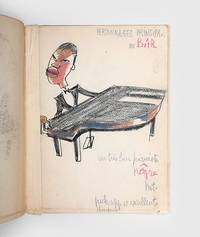
1937171091Paris: c.1937. Jazz à la parisienne From the collection of Rolling Stones drummer and jazz aficionado Charlie Watts with his posthumous bookplate: a delightful and highly unusual illustrated "prospectus" of the requisites for running a successful bar in Paris in the late 1930s. First and foremost you'll need "un très bon pianiste nêgre" along with "2 barmaids" and of course "2 ou 3 nêgresses à laisser vagabonder dans le bar". There then follow three pages that offer pen portraits of various artists that you might like to include on the bill along with their contact details. These include "acteurs animant la soirée ou la nuit": character actor and singer Yves Deniaud 1901-1959 Neapolitan sinti jazz guitarist Henri Crolla 1920-1960 "a travaillé avec Djingo Rainart sic du Hot-club de France" "Trois Jeunes - chanteurs s'accompagnant à la guitare et à la flute" including another well-known actor Guy Decomble 1910-1964 and the photographer Pierre Jamet 1910-2000 a close friend of Robert Doisneau and Willy Ronis. The flamboyant impresario Henri Leduc winds up the volume described as a "personnage comique indispensable à l'atmosphere d'un bar". After the Liberation Leduc a native of Montmartre set up Le Bar Vert on the rue Jacob "the first café-restaurant to play American music" Cowan & Steward p. 234. Our unidentified artist concludes by remarking "We can find for you absolutely everything that you could possibly need elephants - naked ladies - non naked ladies - a 'bus - &c. &c. - whales". Quarto. Five pages of original artwork in pencil crayon and pastel with accompanying text. Commercial sketchbook by L. Bourdillon original blue card wrappers. Variably sunning to wrappers which show lght signs of handling contents toned pale tidemark to edges of leaves front blank professionally restored at the corners but overall very good. Alexander Cowan & Jill Steward eds. The City and the Senses: Urban Culture Since 1500 2007. unknown
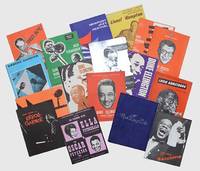
1950137205Late 1950s - early 70s. Excellent group of UK tour programmes for a constellation of jazz greats: Armstrong 2 Basie 8 Bechet Brubeck 2 Nat King Cole Eddie Condon Sammy Davis Jr. 2 Tommy Dorsey Ellington 4 Errol Garner 3 Lionel Hampton Ella Fitzgerald and Oscar Peterson Woody Herman Harry James JATP 4 Newport Jazz Festival Glen Miller Earl Hines and Jack Teagarden Bal du Moulin Rouge. 36 programmes quarto. Illustrated throughout. Original pictorial wrappers wire-stitched as issued. Overall in excellent condition. unknown
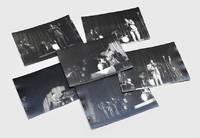
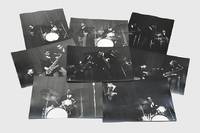
1960172596Paris: Michel Salou 1960. Superb images of the Messengers live in Paris An outstanding series of "in the moment" images showing one of the great Messengers lineups captured in Paris probably at the Olympia in 1960. The lineup comprises Blakey drums Wayne Shorter tenor sax Lee Morgan trumpet Bobby Timmons piano and Jymie Merrit bass. Blakey 1919-1920 was a master percussionist and the Jazz Messengers which he led for over 30 years was "the most famous academy in jazz" Cook & Morton. Wayne Shorter was relatively new to the band and his playing lent a "dark corrosive edge" to the front line while on ballads his tone became "softly beseeching". Lee Morgan "arguably the defining figure of hard bop" had been with Blakey since 1958. The photographer Michel Salou worked as a music executive producing albums by among others Sun Ra Live in Paris: At the "Gibus" 1973 the Mal Waldron Trio Ursula 1978 and the French pianists George Arvanitas and Rene Urtreger. He also appears in the annals of the Art Ensemble of Chicago as their "first booking agent. who helped them secure concert dates across France and elsewhere in Europe" Steinbeck p. 130. His excellent work as a lensman appears to have gone virtually unnoticed except that the National Portrait Gallery holds a single print of Ray Charles in performance. Eight original carbon print photographs 240 x 180 mm 6 landscape 2 portrait printed on heavy stock paper verso with Salou's identifying note in pencil. In excellent condition. Richard Cook & Brian Morton The Penguin Guide to Jazz Recordings eighth ed. 2006; Paul Steinbeck Message to Our Folks: The Art Ensemble of Chicago 2017. unknown
1928173491Austria: 1928-33. Girljazzband" wows 1920s Austria A delightful Jazz Age scrapbook that doubles as liber amicorum and guest book assembled by the pianist and singer Anny Gloss recording in part her career with the Ninon Fleuron Jazz Ladies opening a window into the experiences of European women in jazz during the music's formative years. The first set of newspaper clippings record that in 1928 Gloss was teamed with the American "Jazz Queen" Elsie Teele at the "charming and elegant" Viennese bar the Bonbonnière with Teele billed as "the female Whiteman" - she gave the Austrian premier of Gershwin's Rhapsody in Blue in 1927. Much of the album is then devoted to Gloss's experiences at Hotel Radetzky in Hinterbrühl Lower Austria where she performed as part of the Ninon Fleuron Jazz Ladies. At the time the other members of the band were the eponymous Ninon Fleuron drums pseudonym of Rosa Sophie Radio 1899-1974 Mariska Gerö violin and Gretl Heller piano. One advert mentions them "Singing the Latest American Song-hits" while a newspaper clipping praises their "rendering of classical music". The album contains numerous messages sometimes addressed to her directly from friends audience members and well-wishers. While most of these are in German some are in English "Your music makes me feel 10 years younger". The Ninon Fleuron Jazz Ladies which had various personnel came to an abrupt end with Hitler's invasion of Austria in 1938. Gloss also performed under the name Anni Hölzl as demonstrated by the cast list for a 1931 performance of Der Kärntner Totentanz and the programme for a concert in which she had a soprano solo 1933. Octavo 241 x 190 mm ff. 60 final 20 ff. blank. Contents generally on rectos only numerous items of ephemera pasted in including c.20 newspaper clippings 15 original silver gelatin photographs of which two are signed by Ninon Fleuron messages and autographs in various hands one watercolour sketch of the Karlskirche Vienna one concert programme loosely enclosed. Original patterned cloth covers light orange endpapers. Binding just slightly shaken otherwise in excellent condition. hardcover
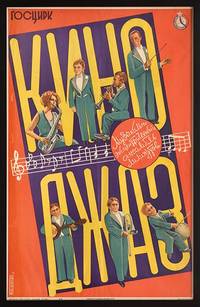
1937124905Moscow: Upravlenie tsirkov V.K.I. Circus Administration 1937. Uncommon print run of just 8000 copies. An advertisement for the Soviet Little peoples' circus group the "Musical and Eccentric Group of Lilliputians" founded in late 1920s under direction of Mikhail Kachuriner 1896-1976 and continued until shortly after his death. The main accent was always on musical talent the performers having musical instruments specially made for them although the group did include performers of "normal" height. "Lilliputian Jazz"was probably the most popular of similar circus groups of the time their first programme "Cinema Jazz" was a parody of some the great stars of the silver screen; Mary Pickford Charlie Chaplin Douglas Fairbanks and the like. A striking example of the work of Mikhail Dlugach 1893-1988 prolific graphic designer and poster artist whose early career centred on the film industry joining Reklam Film the dvertising department of the Soviet film agency. A member of AKhRR The Association of the Artists of the Revolution and ORRP The Association of Revolutionary Poster Artists in the 30s he continued to work in film but diversified into agitprop and exhibition design. In 1940 he helped to design the exhibition pavilion at the All-Union Agricultural Exhibition in Moscow. During the Second World War Dlugach he was was evacuated to Ufa and worked for Okna TASS creating war propaganda. After the war he continued working as a poster designer in politics and the arts including circus promotions. In 1958 he was one of the team involved in the design and building of the Soviet pavilion at the International Exhibition in Brussels. An attractive and unusual piece much enhanced by the presence of the pictorial programme. Lithographically printed colour poster 905 x 580 mm; together with Kino-dzhaz. Odessa: 1935. 4-page "broadsheet" promotional brochure graphics and images printed in sepia letterpress in black. A few minor chips and splits professionally repaired light creases from old folds consequent whitening of the print surface but remains very good. Presented in a black wooden frame with conservation acrylic glazing; the brochure lightly browned creases from folds some edge-slits but overall very good. unknown
1930168557N.p.: N.p. 1930. Large personal archive of nearly 150 photographs of various jazz blues and popular music performers nearly 50 of which are inscribed as well as a handful of personal and family photographs all belonging to jazz drummer and bandleader Nathaniel Jack Nat "Monk" McFay with the majority of photographs dating from the 1930s to the 1950s in jazz clubs in Texas Oklahoma Los Angeles San Francisco St. Louis and Hawaii.<br /> <br /> An impressive archive that is a literal survey of African-American jazz blues and popular music in the first half of the twentieth century all associated with and many inscribed to a notably loved and respected musician and bandleader<br /> <br /> Included among the nearly 150 photographs in the archive are press photographs of African-American jazz blues and popular music performers including: Louis Armstrong Louis Armstrong with Roy Eldridge and Art Tatum at Stuff's Back Stage Club Warren Bracken Buddy Banks Earl Bostic Kirtland Kirk Bradford "Stuffy" Bryant "Sister" Wynona Carr performing with McFay and Art Foxall Sidney "Big Sid" Catlett "Little" Harry Caesar The Eddie Christian Band Marie Dickerson Coker Gene Coy Tina Tixon Dorothy Donegan The Dorsey Brothers Orchestra Lorenzo Flennoy aka Flournox Troy Flloyd Viviane Greene George Jenkins Betty Hall Jones Luke Jones Lorenzo "The Hat" Manley Oscar McLollie wrestler Jim "Black Panther" Mitchell James Moody Esvan Mosby Gladys Palmer Cleo Pierce William "Frosty" Pyles Nina Russell Leslie Sheffield Fred Skinner Effie Smith Fletcher Smith C.B. Stroud Rabon Tarrant and Aaron Thibeaux "T-Bone" Walker among many others.<br /> <br /> As well as the aforementioned musicians and performers the archive also includes various photographs of McFay performing and socializing with various musicians bands and orchestras throughout his career. Also present are: a circa 1915 group schoolhouse photograph presumably including McFay or family members a 1931 photograph of the Salem Baptist Church congregation a 1949 Certificate of Award to McFay from the Bay Area Negro Business Men a "Clef Club" by-laws booklet dated 1957 and a 1986 pencil portrait of McFay artist unknown.<br /> <br /> Nathaniel Jack Nat "Monk" McFay born in Wichita Falls Texas in 1908 began his storied musical career in the early 1930s playing drums for Roderick Thomas' territory band Red Williams and Joe Brantley's Spotlight Entertainer Orchestra in Texas and Oklahoma before moving to Los Angeles in 1935. It was in Los Angeles that McFay joined Bernard Banks' ensembles Bernard Banks and His 5 Clouds of Rhythm and the Bernard Banks Sextet and with whom he made his first of many tours of Hawaii playing the Casino Ballroom in Honolulu. In 1936 McFay lead his own band at the Casa Loma Ballroom in St. Louis with which he toured Honolulu again in 1937. From 1938 to 1944 McFay played along side with among many others Leslie Sheffield Henry Coker and Harlan Leonard before rejoining Buddy Banks again in 1945. It was in 1945 that McFay made his first recordings with the Buddy Banks Sextet Marion "The Blues Woman" Abernathy and Howard McGhee and His Combo which included Charles Mingus. McFay's career continued through the 1950s and into the 1960s playing in and leading various ensembles largely in Los Angeles and Honolulu.<br /> <br /> Photographs: 11 x 14 inches 1 8 x 10 inches 97 5 x 7 to 10 x 7 inches 20 1.5 x 2 inches to 4 x 5 inches 31. Very Good to Very Good plus overall many with creasing and chipping. Eight of the above photographs mounted onto cardboard as maintained by McFay.<br /> <br /> Other materials: Very Good plus overall. N.p. unknown
1947133392Prague: 1947-48 & 1952. Jazz in Cold War Czechoslovakia First and only editions of both of these short-lived fugitive publications. The complete run of Jazz offers a fascinating view of the times. A well-produced illustrated magazine that features reviews pen pictures and features on American and other western jazz performers the editorial direction changed radically following the coup d'état of 1948. The contrast between the final issue before the February 1948 putsch and the first issue afterwards reveals a complete reinterpretation of jazz Czech critic Ján Dalecký remarking that "In the introduction alone which was full of ideological terms we could see that the magazine had taken a 180 degree turn" reviews of Soviet performers began to proliferate. WorldCat locates a single run at the University of Delaware. It is doubtful that more than a handful of each issue of the 1952 journal would have been produced. Extremely uncommon no other copies traced it is impossible to say whether any more was ever produced. Highly risky samizdat published at a time when in Czechoslovakia merely singing jazz lyrics in English was against the law. Both issues heavily promote the AFN American Forces Network radio station providing the jazz schedule for upcoming week including the AFN Hit Parade programme and other western European broadcasts featuring jazz. Also includes a short story about a Czechoslovak family whose lives are utterly transformed by listening to AFN; reviews of current American jazz releases; interviews with Czech jazz musicians and reviews of local jazz-related concerts. First named 15 issues in 13 c.16 pages per issue all published quarto wire-stitched in the original medium paper pictorial wrappers; the second 2 issues octavo all published - issue 1 19 April 1952 19 pages; issue 2 3 May 1952 17 pages - carbon copy typescript the first issue wire-stitched in glossy paper wrappers with illustration to the front panel the second wire-stitched laid loosely into plain blue card wrappers. First named with illustrations to the text. Housed in a plain black cloth solander box. Both with some external wear the wrappers a little rubbed first issue of the first with light vertical crease from folding for mailing "ukazkove cislo" sample issue ink stamp to the front panel; both with pale toning to the text but overall very good. hardcover
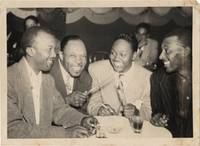
1940169491United States: c.1940-60. A visual record of a rarely seen and poorly documented world - an accidental history An unusually extensive group of these evocative "table photographs" striking records of largely African-American audiences in the glamorous sociable and intentionally inclusive world of mid-century nightclubs. Shot by in-house photographers developed on site and sold for a dollar at the end of the evening these quick souvenirs now amount to a rare visual history of a poorly documented milieu. As Gold notes they "turn the camera round": instead of performers we see the audiences - a critical part of what Jason Moran calls the jazz "ecosystem." The collection offers a nationwide survey of venues from the extravagant to the resolutely down-home. At New York's Café Zanzibar with its spectacular floor shows and "Zanzibeauts" the audience was integrated but largely white prompting Langston Hughes's caustic observation about the seating hierarchy - an impression borne out by the image here. Detroit's Gay Bar Lounge another "black and tan" joint catered to a mostly Black clientele and offered a rougher edge: in 1947 the barkeep famously shot two stick-up artists with the.38s kept beneath the cash register. Equally compelling are the histories of Black enterprise that surface. Oakland's Athens Elks Cocktail Lounge home to Lodge 70 of the Improved Benevolent and Protective Order of Elks of the World stood at the centre of West Oakland's vibrant musical scene hosting countless jam sessions and serving as the informal checkpoint for touring African-American musicians. In Los Angeles Dootsie Williams's Dooto Music Center founded by the trumpeter-turned-entrepreneur provided one of the city's foremost Black cultural venues praised by the Los Angeles Sentinel as "the most-needed cultural and recreation center in Southern California." The photographers themselves remain surprisingly elusive though a few can be traced. In Columbus George Pierce ran a record shop and studio in Bronzeville and supplied images to the Ohio Sentinel and other regional papers; in Detroit Earl Fowler's Top Hat Photo developed into a significant presence in the Black Press with Fowler later serving as chief of the Los Angeles bureau of Now! magazine. Beyond these contexts the photographs' enduring appeal lies in the human dramas unfolding across their tabletops: the conviviality style and fleeting alliances captured in a moment of collective ease. A scene from Gamby's in Baltimore is emblematic - six convivial hat-tipping men and two young women smiling through a forest of shot glasses presided over by a portrait of Fats Waller. It is warmly enigmatic yet inviting an offhand welcome extended across time. A more detailed description and full listing is available on request. Together 66 black and white gelatin silver print photographs 62 c.127 x 178 mm; 3 approximately 178 x 254 mm around 50 are in their original plain or printed souvenir folders the balance loose. Loose photos and folders with occasional wear and mild damp-staining some annotations verso of prints and to folders prints occasionally stapled into folders overall the group remains about very good. Ronald Auther "The Oakland Larks" The Shadow Ball Express: African American Baseball Renderings and other Facts of Life online; Clora Bryant et al Central Avenue Sounds; Jazz in Los Angeles 1930s-1950s 1998; Jeff Gold Sittin' In: Jazz Clubs of the 1940s and 1950s 2020; Robert Petersen "Before Motown: L.A.'s Black-owned Music Empire" PBS SoCal online. unknown
1950190253London: 1950s. Vivid images of jazz greats by one of the "obscure guys" of British jazz photography - from the collection of Charlie Watts From the collection of Rolling Stones drummer and jazz aficionado Charlie Watts: a delightful and absorbing archive of largely unpublished photographs by Jamie Hodgson an unsung hero of British jazz photography capturing both the exuberance and inwardness of the music. Among the jazz greats pictured are Dizzy Gillespie Ella Fitzgerald Duke Ellington Billy Strayhorn and Louis Armstrong. Perhaps the stand out photographs here are two superb studio images of Strayhorn one a memorable image showing him observing a goldfish in its bowl used on the cover of David Hajdu's 1996 biography Lush Life but unattributed another a delightful and unforgettable portrait of "Strays" lying on the studio floor cigarette in hand legs crossed wine glass within reach working on a score marked in 12/8 time with a quill pen and ink stand. A sequence of eight images focus on Louis Armstrong and date from 1956 through to 1970: one a particularly exuberant portrait of Pops sharing the limelight with Trummy Young Barrett Deems at the kit. These were nearly all taken in concert the exception being one marked "solo visit. Rehearsing with Norman del Mar conductor of the Royal Philharmonic Orchestra at the Royal Festival Hall for a concert in aid of the Hungarian Releif sic Fund. December 10th 1956". There are two fine shots of Dizzy Gillespie both in tux in his dressing room looking thoughtful and another of his up-tilted horn in its case the tag from his recent visit to France still attached to the handle. There is a witty bleached-out studio shot of Jimmy Rushing leaning into the horn of a gramophone and further images of the great singer one a boisterous backstage portrait of Rushing with Harry Carney and Jimmy Hamilton sitting in Rushing's capacious lap! smiling and laughing gathered on the stairs leading up to the gents' toilets and holding a gamut of reed instruments; plus a terrific image of "Mr. Five by Five" raising a pint behind the bar of a pub recalling Basie's reminiscence that "Me and old Rush. We were some pair. We just wanted to have a good time" Basie p. 37. Other portraits include a petulant Ella Fitzgerald Duke Ellington and individual images of Ellington alumni Paul Gonsalves Johnny Hodges Ray Nance Harry Carney Barrett Deems and Sam Woodyard; a chuckling Oscar Peterson; Lionel Hampton with Humphrey Lyttelton; Bud Freeman; a humorous shot of Eddie Condon sitting at a bar and scowling playfully; a tight close-up of a beaming Lionel Hampton; drummer Gus Johnson accompanying bassist Bob Haggart; and Ray Charles performing at the Capital Radio Jazz Festival in 1982. A full listing is available on request. For Hodgson 1930-2006 jazz was a private passion and these remarkable photographs did not see the light of day until a 2006 exhibition Masters of Jazz: Unseen Portraits held in the foyer of the National Theatre. In 2007 Jazz Improv magazine described him as one of the "obscure guys" of British jazz photography. His Guardian obituary noted that he "became known for his hobby rather than his profession. The man who owned the Kinnerton Street studio in London's Knightsbridge for many years earned his living in fashion and family photography. But it was the recent exhibition of 50 of his pictures in the National Theatre foyer that attracted more attention than anything previously shown by the largely anonymous Hodgson. Few knew of his work within the music world and fewer still knew of these unguarded often intimate images which were Hodgson's personal homage to the stars he observed and worshipped. All were taken during British tours many in the privacy of dressing rooms across London or in Hodgson's studio The Guardian jazz critic John Fordham regards these images as 'wonderful pictures'. 'They catch the mood on the night of jazz on and offstage' he said 'and they are very expressive of the big personalities of a lot of those old guys who started touring here in the 1950s and 60s after there had been a dearth of live US jazz in Britain'. Hodgson was a Londoner who took up photography after completing his national service in 1950. Starting out as a freelance he began by taking whatever commissions came his way - news and features aerial and architectural photography or commercial and children's pictures. A stint with the Mayflower Studios brought him into contact with advertising and various television personalities including Frankie Howerd Harry Secombe the Crazy Gang and the Ted Heath Band. In 1956 he set up his own studio where he did fashion shoots with Tania Mallet Jean Shrimpton and Sandra Paul He caught the change in mood from the snooty static haute couture fashion shoots of the 1950s to the more playful popular looks of swinging London in the 1960s. And at night he sneaked out to shoot his favourite jazz and blues bands playing across the capital". An important and captivating collection of jazz images imbued with the photographer's deep affection for the musicians the spontaneity of the portraits matching that of the music itself. Together 95 black and white photographs 46 measuring 223 x 170 mm; 49 measuring 402 x 305 mm each with identifying caption on verso by the photographer some with studio wet stamps or labels a number signed by Hodgson. Preserved in the photographer's own commercial boxes. Three prints Duke Ellington Billy Sytrayhorn Louis Armstrong framed and glazed by auction house overall measuring 445 x 620 mm. In excellent condition. Count Basie Good Morning Blues: The Autobiography of Count Basie 1987. unknown