4 427 résultats
193053742New York: Macmillan Company 1930. 8vo. 8 230 pp. Navy-blue publisher’s cloth gilt lettering minor rubbing to spine very minor shelfwear w/ d.j. printed on metallic silver coated paper Art Deco cover art of 1920s limousine and the well-dressed set in orange & black minor chipping to head & foot of spine very minor edgewear & creasing upper fore-edge couple very small closed tears w/ minor very small tape repair still a VG/VG- copy. First edition of this fast-paced novel set against the backdrop of a penniless Russian Prince exiled by the Revolution who makes a deal with a clever Chicago fashion buyer to act as chauffeur and purchase the sumptuous “Car of Croesus†rented at exorbitant rates to patrons wishing to appear as millionaires. Poole won the first Pulitzer Prize for The Family in 1918. Very scarce in the original dustjacket. Macmillan Company, hardcover
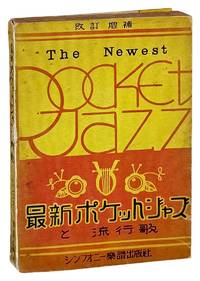
193833168Tokyo: Symphony Publishing Company 1938. Very Good. Tokyo: Symphony Publishing Company 1938. Presumed First Edition. 12mo 15.5 cm; publisher's pictorial yellow and orange card wrappers lettered in black; 1923pp.; brief illus. sheet music throughout. Moderate wear and dust-soiled to wrappers small loss mid-spine briefly affecting text textblock a bit browned and foxed else Very Good bright and sound. <br /> <br /> Evidently unrecorded Japanese guide to popular jazz music the first half almost entirely in Japanese the latter half bilingual primarily in Japanese and English. Includes the music for classics by Jerome Kern like "Ol' Man River" and "Can't Help Lovin' Dat Man"; Romberg and Hammerstein's "Lover Come Back To Me"; Moises Simons' Cuban rumba foxtrot "The Peanut Vendor"; instantly recognizable classics like "Blue Moon" and "La Cucaracha"; and songs by Mabel Wayne and Irving Berlin. The compilation also includes songs in Spanish French and German accompanied by its Japanese translation. <br /> <br /> A fascinating and beautiful little guide documenting the rise in popularity of Jazz music in Japan and Tokyo in particular issued between the devastating earthquake of 1923 and the beginning of World War II. The import of Jazz to Japan was first heralded with the rise in trans-Pacific luxury liners. A Japanese version of "My Blue Heaven" reproduced here became available as early as the 1920s and the popular 1929 Japanese film "Tokyo March" employed Jazz in its soundtrack. The genre was popular enough that Columbia and Victor records formed subsidiary companies in Japan.<br /> <br /> The popularity of jazz in Japan continues to this day touted by one of the country's most prominent public and literary figures Haruki Murakami who first opened his Jazz club right out of college after falling in love with the genre at an Art Blakey and the Jazz Messengers show in Kobe in 1964. <br /> <br /> No copies of this work located in OCLC as of June 2025. <br /> <br /> References: <br /> <br /> "How Japan Came To Love Jazz" online interview with historian E. Taylor Atkins author of "Blue Nippon"<br /> <br /> "Jazz Messenger" by Haruki Murakami available online. Symphony Publishing Company unknown
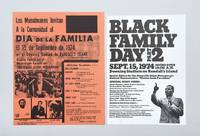
1974149163New York: Nation of Islam 1974. Scarce original handbills for the second of two extraordinary Black Family Days organized by the Nation of Islam in 1974 staged at Downing Stadium on Randall's Island New York and featuring music by among others Lionel Hampton Eddie Palmieri Machito Gil Scott-Heron Jimmy Cliff and "modern black music giants" Max Roach Clifford Jordan Archie Shepp and Jackie McLean. Black Family Day Part 2 was held on 15 September and followed Part 1 held in May the latter described as "the largest gathering of African-Americans in the history of Harlem" Clarke p. 189 when an estimated 70000 people attended and Farrakhan's address was recorded and distributed on the Nation of Islam's own label. "In September Scott-Heron joined Eddie Palmieri and Celia Cruz to perform at the Nation of Islam's Black Family Day at Downing Stadium on Randall's Island at the top of the East River below the Triborough Bridge. A stone's throw from where Robert Moses and the Triborough Commission ran their empire Brother Reverend Louis Farrakhan spoke for two hours to around twenty thousand people denouncing the United States as 'the wickedest nation on the face of the earth' under sunny fall skies. Jimmy Cliff sang 'I'd rather be a free man in my grave than living as a puppet or a slave'" Hermes. 2 handbills 266 x 190 276 x 223 mm printed on white and orange paper respectively text in Spanish on the latter both printed in black each incorporating a portrait of Louis Farrakhan the larger of the two with additional portraits of Eddie Palmieri Machito and Gil Scott-Heron. Each with lateral crease where once folded otherwise in excellent condition. Peter B. Clarke ed. New Trends and Developments in African Religions Westport Connecticut Greenwood Press 1998; Will Hermes Love Goes To Buildings On Fire: Five Years That Changed Music Forever Penguin 2014. unknown
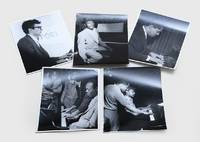
19501726311950-60s. Attractive collection of portraits of five jazz greats those of Paul Bley and John Lewis are vintage prints from the studio of Burt Goldblatt with wet stamps on verso. Goldblatt's New York Times obituary describes him as "a prolific designer of moody jazz LP album covers. In the early 1950s after the introduction of the LP the most progressive American cover designs were created for jazz albums and Mr. Goldblatt was among the pioneers in establishing the cool-jazz style. It encompassed black-and-white portraits and studio photographs inspired by film noir as well as gritty street scenes often abstractly overlaid with flat colours evoking a sense of urban night life". The study of Paul Bley shows him performing at the Newport Jazz Festival where Goldblatt was very much the house photographer publishing an illustrated history of the festival in 1977. Bley in the avant-garde of developments in the music "has produced vivid vital jazz couched in an advanced and challenging idiom" Cook & Morton. That of John Lewis - leader of the MJQ one of the most successful small groups in jazz - is an intimate close-up shot of him at the keyboard. Bill Evans is shown standing at the keyboard working through some changes with another musician perhaps drummer Kenny Clarke; the figure at Evans's elbow may be fellow-pianist Hank Jones. Similarly Tommy Flanagan sporting a flat cap and plaid shirt is going over material with drummer Roy Haynes. Flanagan is perhaps best known for his work accompanying Ella Fitzgerald and Tony Bennett emerging in the '70s and '80s as "a bebopper of gentlemanly distinction" Cook & Morton. The shot of Wynton Kelly is a delightful unguarded portrait showing him at the piano smiling and clearly in conversation sporting a hat with upturned brim and hip suit. Like Evans Kelly played on Miles Davis's timeless album Kind of Blue and is described by the All About Jazz website as "a superb accompanist loved by Miles Davis and Cannonball Adderley". Five original silver gelatin prints each 254 x 200 mm. Bley: identified on verso in black felt tip Burt Goldblatt wetstamp; Evans: identified on verso in pencil; Flanagan: identified on verso in pencil; Kelly: ghost of tape marks on verso; Lewis: identified on verso in blue ballpoint Burt Goldblatt wetstamp. Very slight blue ink smudging to the front of the image of Bley otherwise all in excellent condition. Richard Cook & Brian Morton The Penguin Guide to Jazz Recordings eighth ed. 2006. unknown
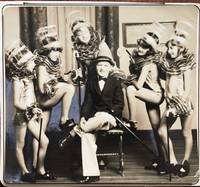
193058055Portland OR: Hollywood College of Music Dancing & Fine Arts Baker Studio Granada Studio La Vere Photo Shoppe Photo Craft Studios ca. 1930-1933. Oblong 4to. 24 original photographs all preserved in archival mylar sleeves sized 6.25 x 7 in. up to 8 x 10 in. some w/ photographer’s imprint w/in negative others w/ manuscript captions added a few w/ annotations and/or photographer’s instructions on versos all with bright strong contrast a few w/ offsetting from previous mounting on versos and one w/ very small pinholes at corners from prior mounting. Recent cloth binder stamping front cover excellent grouping. These photographs vividly document the dance and music studio operated by Annabelle Knowles reflecting the fast evolving costumes and aesthetics of the twilight of the Roaring 20’s as the U.S. descended into the Great Depression. These photos also clearly reflect the influence of Gus Edwards 1879-1945 vaudeville’s premier producer of kiddie acts and who had produced and released the shorts “Kiddie Revue†in 1930 and 1931. His influence was not only driven by his songs “By the Light of the Silvery Moon & “School Days†but also discovering such stars as Groucho Marx Eddie Cantor Mae Murray Sally Rand and many others. The images depict girls in two-piece outfits in front of Art Deco staging for “Body and Soulâ€; bare-backed girls in Flapper Era inspired costumes for chorus line “Kiddie Revueâ€; song and dance routines featuring Ronald Chetwood in top hat with Marcile Shillito Virginia Collins and chorus line in Jazz Age era costumes and canes; and several show Barbara Jane Wicks Shirley Jay Mulkey and Sunny Dentler in Spanish inspired costumes for “Baby Vanities.†Another shows adolescent boy and girl dance team in an “Apache†dance inspired costume number. The Hollywood College of Music Dance & Fine Arts offered classes and instruction in all ages with the last few photos showing teenage girls in chorus line with short hair coquettish expressions and teamwork or chorus line numbers. Annabelle Knowles 1900-1989 was a musician and dancer who founded the Hollywood College of Music Dancing & FIne Arts at 4112 NE Sandy Blvd. some time in the late 1920’s. Most of the street directory references focus on 1929-1932 and her British-America theatre-director husband at the time Vincent Knowles 1883-1944 worked at the studio as well. Baker 1882-1972 was a longtime commercial studio photographer in Portland OR who had initially begun as a photographer with noted tourist travel guide Howard Eaton photographing tours through National Pakrs. Beem 1892-1984 was founder and photographer at Granada Studio located in the 1930’s at 515 Swetland Building in Portland. Centlivere 1878-1964 owned and operated La Vere Photo Shoppe and Photo Craft Studios on Sandy Blvd. in Portland for nearly all of his career. We could find no similar collections or photographs or even references to Annabelle Knowles and very few examples of any of these three photography studios in institutional holdings. Hollywood College of Music, Dancing & Fine Arts, Baker Studio, Granada Studio, La Vere Photo Shoppe, Photo Craft Studios, hardcover
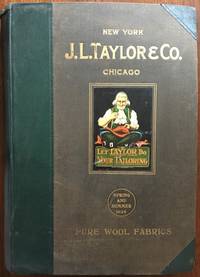
192658100New York & Chicago: J.L. Taylor & Co. 1926. Thick elephant folio 17 x 23.25 x 2.5 ins. 75 3 pp. printed on thick card stock each mounted on linen hinge. With 17 colour fashion plates illustrating Taylor styles of the period verso of almost all pages with 364 of 375 mounted textile samples in wool wool-rayon blends some felt backed silk moleskin corduroy cashmere waistband sample and more -- all samples clearly marked with prices and availability some of the 12 missing samples are indicated in pencil as being “Out†as well as a few present 1 additional pinned-in numerous illustrations throughout in blue-green colour tinting including Chicago & New York factories some diagrams charts and graphs. Original half-green cloth over gray green cloth corners gilt lettering on front cover colour plate w/ J.L. Taylor tailor mounted front cover some wear & minor bumping to fore-edges corners some minor soiling & occasional foxing to interior leaves -- some of it dust from the wool samples 10-15 samples with minor deterioration and evidence of old predation still a very good unsophisticated and remarkably complete example w/ original 9 x 21 in. double-sided stock list in red & black laid-in. First edition of this scarce and unusually complete salesman sample catalogue for Jazz era men’s suits in 1928-1929. J.L. Taylor maintained a huge tailoring operation in both Chicago and New York until after World War II employing hundreds of tailors and seamstresses to fill orders. The catalogues were very expensive to produce and so were most often found in department stores mercantiles and men’s stores which would have these catalogues on the sales floor for two years or more. The catalogue offers invaluable illustrated historical reference for the colours styles and fabrics during the era of F. Scott Fitzgerald and the Flappers. Most of the colour fashion plates illustrating the available styles have elegantly dressed women and settings in the background including with an emphasis on sporting in summer so golf tennis croquet canoeing boating and swimming all make an appearance. Of particular interest is the wonderful dress chart indicating styles needed clothes accessories and shoes which one would need for Day Wedding Matinee Reception Evening Dress and many others offering an excellent marketing opportunity for the store to sell the customer items to compliment his suits overcoats and other fashion wear ordered from J.L. Taylor. The final plate focuses on the lightweight “Palm Beach†& “Mohair†suits at the height of the 1920’s boom in Florida featuring snappily dressed models in Panama straw hats and a lightweight fedora. Worldcat locates 1 partial copy Preserved at the Library of Congress stripped of samples and used as scrapbook for Wilbur’s Drug Store prescriptions of Portland ME -- not an unusual occurrence. J.L. Taylor & Co., hardcover
84869Roosevelt NJ: by the Author c.1956. Quarto 37cm. Printed card portfolio holding twelve lithographic plates loose as issued. All lithographs are signed in plate; Martin has inscribed the portfolio "Jean and Sol Libsohn / David" undated. Very mild external toning and soil; Near Fine. Inside of portfolio is printed with a holiday sentiment and also a brief blurb from Alan Lomax commenting on the illustrations.<br /> <br /> Scarce portfolio of lithographic prints reproducing Martin's illustrations for Alan Lomax's Mr. Jelly Roll a biography of jazz pianist Jelly Roll Morton published in 1956. Issued without imprint presumably printed as a Christmas gift to friends of the artist. This copy is inscribed to the photographer Sol Libsohn and his wife Jean who were Martin's neighbors in Roosevelt New Jersey a WPA town founded in 1939 which by the Fifties had become a destination for artists writers and musicians seeking refuge from but proximity to the New York art scene. Martin 1913-1992 was a noted mid-century illustrator known best for his many jazz album covers for Folkways and Blue Note in the Fifties and Sixties. Of the present portfolio we locate only a single copy in OCLC Pitt with no other example traced in commerce. unknown
19279883New York 1927. 4.5x3.5" photograph slightly trimmed down affecting the studio stamp on the bottom edge. Signed by Florence Mills in 1927. Mounted on an autograph album page with a signature card from Betty Blythe to verso. Few spots to photo some soiling to edges. Signature bright and clear. Very good. <br /> <br /> Rare signed photograph from one of the most celebrated Black performers of the 1920s Florence Mills 1896-1927 who died at the age of 31 from complications from tuberculosis and an appendectomy. <br /> <br /> Mills was a child performer in travelling Black stage productions with her sisters as well as "The Tennessee Ten." One of her early major roles was in the Broadway musical Shuffle Along in 1921 one of the defining productions marking the beginning of the Harlem Renaissance. She was a regular performer at the Plantation Club and later headlined the Palace Theatre before becoming internationally known starring in Lew Leslie's Blackbirds of 1926. While performing some 300 shows in London of that year she became ill with tuberculosis her death the following year shocking the entertainment world.<br /> <br /> A naturally scarce signed photo from the year of her death depicting one of the defining performers of the Harlem Renaissance. unknown
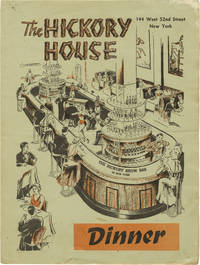
1940158584New York: The Hickory House 1940. Vintage three-color dinner menu from the renowned 52nd Street jazz club circa 1940s with a "Chef's Special" card stapled to the top outer corner of the second leaf.<br /> <br /> One of the longest running and premiere jazz clubs of "Swing Street" as 52nd Street between Fifth and Seventh Avenues was known in the 1930s through the 1950s Hickory House was opened shortly after the repeal of Prohibition in 1933 by impresario John Popkin. Featuring a huge oval music bar depicted on the cover of the menu on offer here Hickory House was both a swing venue and the spot to grab dinner and cocktails before a show. A musician's club Hickory House presented and served jazz luminaries for three decades. Among those known to perform or frequent the venue included Duke Ellington Louis Armstrong Benny Goodman Artie Shaw and Thelonious Monk among countless others many of whom were known to be found sitting in with the house band The Hickory House Trio Marian McPartland Bill Crow and Joe Morello on Sunday afternoons in the 1950s. In 1956 jazz pianist and composer Jutta Hipp released two acclaimed Blue Note albums recorded at the club "At the Hickory House Volume 1" and "At the Hickory House Volume 2." By the mid 1960s the venue was one of the last of the jazz clubs left on 52nd street and by the end of the decade closed. As noted on the back of the menu "Life! Life! From ten thirty until scrambled eggs there is always a popular swingy rhythm band to beat out tuneful and catchy syncopations in their own inimitable style."<br /> <br /> <br /> 10.75 x 14.25 inches bi-fold. Very Good plus with light soiling rubbing and edgewear overall and a faint horizontal crease. The Hickory House unknown
1960CAT206New York et al. 1960. Five 8 x 10 and two 5 x 7 inch gelatin silver prints with Bradley’s estate marks to versos. Excellent. Jack Bradley was a Cape Cod native who after graduating from the Massachusetts Maritime Academy fell in love with Jazz after seeing Louis Armstrong perform at the Boston Armory in 1956. In 1958 he moved to New York from Cape Cod and began dating Jeann Failows a member of Louis Armstrong’s inner circle. Through Failows Bradley gained access to Armstrong eventually becoming very close friends with the trumpeter and his inner circle. Bradley already had amassed a large collection of jazz material much related to Armstrong and he augmented his own collection by photographing Armstrong and his Jazz circle for the next decade. The bulk of Bradley’s collection now resides at the Louis Armstrong House Museum in Queens. <br /> <br /> This collection is of seven photographs of jazz musicians from Bradley’s estate showing a wonderful window into the tail end of the Classic Jazz era. <br /> <br /> Photographs as follows:<br /> <br /> Willie Cook. 5 x 7 inches. A portrait of Cook seated. Excellent condition. <br /> <br /> Count Basie and Duke Ellington. 5 x 7 inches. The two jazz greats are seated at their respective pianos during rehearsal. Excellent condition.<br /> <br /> Duke Ellington’s Empty Bandstand. 8 x 10 inches. The horns chairs and sheet music are laid out. Very good condition with some toning to margins and a faint scratch at outer edge of image. <br /> <br /> Duke Ellington Conducting his Band. 8 x 10 inches. Excellent condition. <br /> <br /> Ella Fitzgerald at the Apollo Theatre New York c. 1959. 8 x 10 inches. Excellent Condition.<br /> <br /> Count Basie Seated at a Table Smoking a Cigar. 8 x 10 inches. Excellent condition. <br /> <br /> Pee Wee russell Painting at his New York Apartment c. 1966. Good condition marginal tear affecting ½ inch of image. <br /> <br /> Overall a nice group and an example of a photographer whose work is not often available on the market. unknown
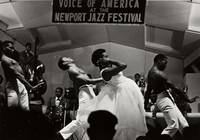
1958List1514New York 1958. Silver Gelatin Photograph measuring 8 ½ x 11 ½ inches with Schatt’s marks verso with his notation “Vintage ‘58†in ink. A fine example fine contrast. A striking image of Eartha Kitt and her band performing at the 1957 Newport Jazz Festival taken by the prolific photographer Roy Schatt perhaps best known for his photographs of James Dean. This is a vintage example likely printed in 1958 from the “1958†and “Vintage†marks to verso. We find no other record of this specific image only a similar image from Kitt’s performance taken by Schatt. unknown
193023072EHollywood CA: 8†x 10†1930. Original sepia tone promotional photo signed by theater director John Murray Anderson: “To the ‘Imp’ - from Murray Anderson Hollywood. 1930â€. The photo shows Mr. Anderson smartly dressed in a three piece suit and tie sitting at a desk pen in hand looking slightly to his left. With the slightly faded inkstamp of the famous movie and theater star photographer James Edward Abbe 1883 - 1973 on the verso. Fine condition. The photo is laid in to a first edition copy of King of Jazz: Paul Whiteman’s Technicolor Revue Severn MD: Media History Press 2016 detailing the making of and the restoration of the film directed John Murray Anderson starring Paul Whitman John Boles and Laura La Plante. Oversize 303 pages extensively indexed and illustrated throughout. Fine in a fine dust jacket. John Murray Anderson 1886 - 1954 worked in almost every genre of show business including vaudeville Broadway and film. He made his Broadway debut in 1919 as a writer director and producer of The Greenwich Follies. In the 20s and 30s he ran an acting school in Manhattan teaching Bette Davis and Lucille Ball among others. Anderson produced the Ziegfeld Follies in 1934 1936 and 1943 as well as directing plays in London’s West End. Some of his other contributions include directing at Radio City Music Hall and Ringling Brothers Circus from 1942 - 1951. Anderson’s work in Hollywood includes in addition to directing King of Jazz 1930 writing the screenplay for Ziegfeld Follies 1946 with Fred Astaire William Powell Judy Garland and Lucille Ball directing the water ballets in Bathing Beauty with Esther Williams Red Skelton and Basil Rathbone and the circus sequences in The Greatest Show on Earth 1952 with Charlton Heston Betty Hutton and Cornel Wilde. 8†x 10†unknown
19502502240131xbvkBerlin, 1950. Silbergelatine auf Barytpapier, ca. 13 x 17 cm.
19706509053Chicago: Living Blues Publications; Mississippi: Center for the study of Southern Culture 1970. je Heft ca. 50 bis 60 S., schw/w Abb., 28cm x 22cm
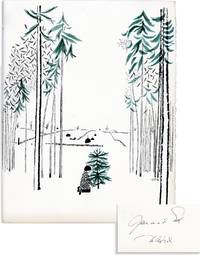
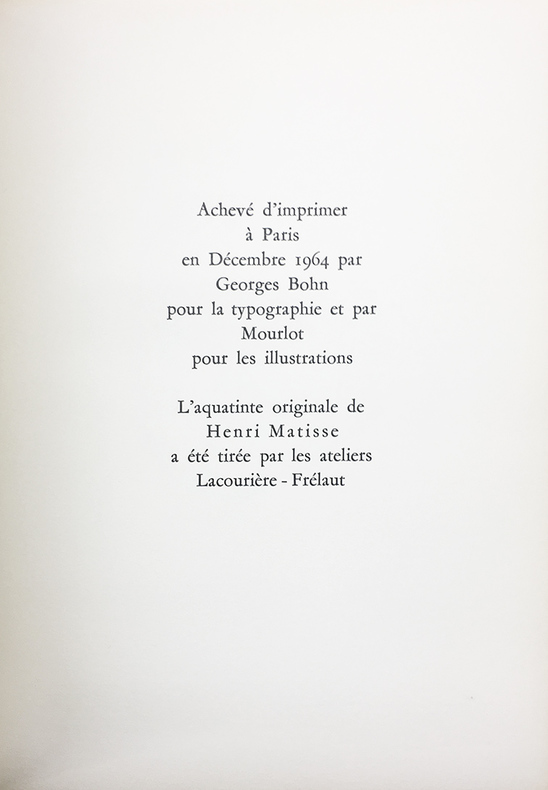
19641685Paris, Mourlot, 1964. 1 volume in-8 broché sous couverture illustrée imprimée sur le premier plat et le dos. 1 DES 50 SUR RIVES AVEC UNE AQUATINTE ORIGINALE DE MATISSE. L'ouvrage est illustré de 12 reproductions de dessins et lithographies, de l'édition de 1964 éditée par Tériade, dont 4 hors-texte. Exemplaire enrichi d'un long et bel envoi autographe de Duthuit à Tériade.
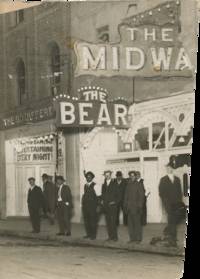
1910List2810San Francisco California 1910. Single photograph approximately 6 ½ x 9 inches manuscript verso reading “SF Barbary Coast 500 Block of Pacific â€THE SO DIFFERENT†now 550 Pacific Ave 1911â€. Appears to be trimmed from a larger photograph. Portion of image cut and pasted with editorial overpainting. Some damage to edges and corners with one tear at right middle some residue from pasting a now-missing object; overall very good. A photograph taken on Pacific Street in about 1910 showing a group of men standing by the curb in front of The Midway The Bear and The So Different nightclubs note that the sign for The Midway is pasted in. This block in Barbary Coast—â€Terrific Streetâ€â€”was home to a number of dance halls and early jazz clubs many of which like Purcell’s So Different Café were “black and tan†– catering to all races. Founded by former Pullman porters Lew Purcell and Sam King shortly after the neighborhood was rebuilt from the 1906 earthquake and fire Purcell’s was one of the better-known clubs. Influential ragtime and jazz pianist Sid LeProtti led the So Different Jazz band and King Oliver and Jelly Roll Morton are among the alleged guest performers. Patrons could buy twenty-cent vouchers for a quick dance with one of the girls who worked and sometimes lived at the venue. Around 1913 though police began to crack down on drinking and dancing in the neighborhood and by the 1920s the venues were gone. unknown
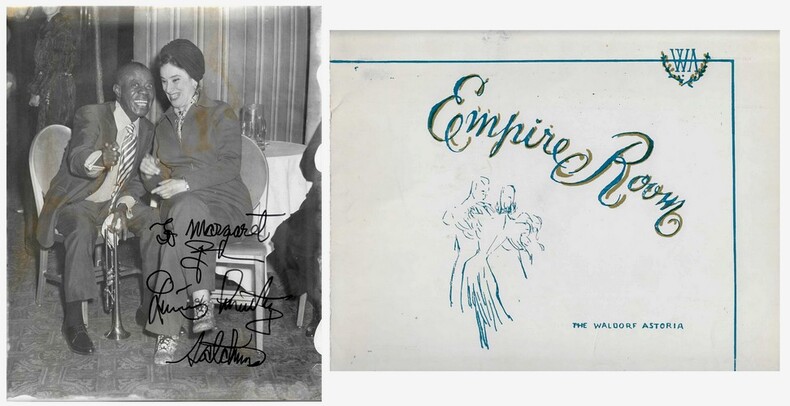
32934Magnifique photographie argentique en noir et blanc de Louis Armstrong au format 24,5 x 20 cm, prise au Waldorf Astoria de New-York. La photographie est glissée sous une chemise ajourée à l'enseigne de l'hôtel. Superbe état général. Rare photographie prise dans les années 60. Rarissime et précieux exemplaire dédicacée par Louis Armstrong.Louis Armstrong, né le 4 août 1901 à La Nouvelle-Orléans en Louisiane et mort le 6 juillet 1971 à New York, est un musicien de jazz et chanteur afro-américain. Il est également connu sous les surnoms de « Dippermouth », « Satchmo », « Satch » (abréviation de satchel-mouth, littéralement « bouche-sacoche ») et « Pops ». Il propose un Jazz issu des influences musicales du folklore afro-américain, comme le gospel et le blues traditionnel. Son talent de trompettiste, son charisme, ses qualités d'homme de scène et sa personnalité généreuse ont forgé au fil du temps sa renommée internationale. Il a aussi popularisé un nouveau style vocal, le scat, basé sur l'improvisation. Tout cela fait de lui l'un des chanteurs de jazz les plus influents de son époque. Durant plus de quarante ans, de tournées en tournées, Louis Armstrong restera le meilleur ambassadeur du jazz à travers le monde entier.Parmi ses principaux succès, figurent notamment les chansons What a Wonderful World, We Have All the Time in the World ou des reprises comme Dream a Little Dream of Me, Hello, Dolly ! ou La Vie en rose.
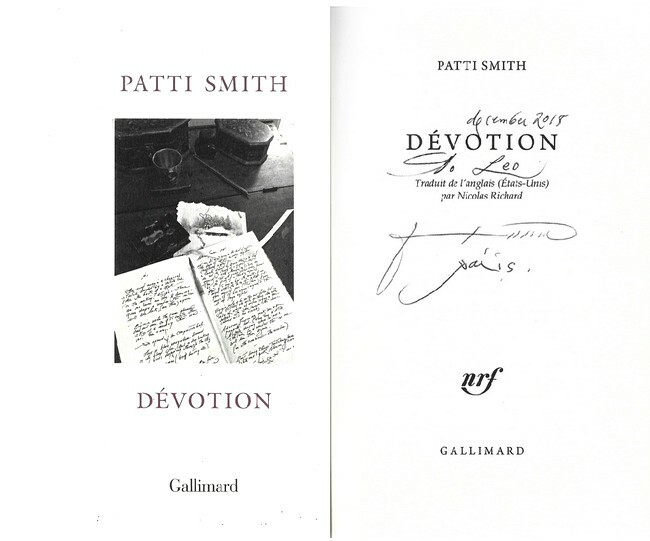
201531700Editions Gallimard 2017. In-8 cartonnage éditeur de 354 pages au format 19 x 3,5 x 25 cm. Couverture cartonnée, illustrée par une photographie en noir représentant Patti Smith et Robert Mapplethorpe. Dos carré. Plats et intérieur frais. Souvenirs de la poétesse et rockeuse accompagné de nombreuses photographies en noir et blanc. Facsimilés en hors texte. Un des exemplaires de luxe, en tirage limité, présenté dans une boite, avec titre imprimé, au format 21 x . Exemplaire enrichi d’une oeuvre originale de Patti Smith, reproduite en facsimilé, signée par Patti Smith et intitulée " Portrait de Rimbaud ". Le tirage à été réalisé à l’encre pigmentaire imprimé sur papier Canson Ultra Smooth par l’Atelier Granon à Paris. On joint le certificat de la Galerie Gallimard, ainsi que 3 feuilles dont une avec photographie inédite de l'artiste, prise pour la sortie du livre. Edition en partie originale et en état de neuf. Rarissimeen tirage de luxe, ultra limité.
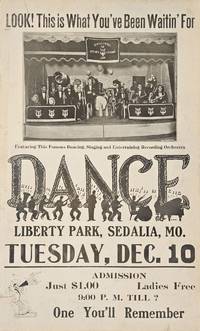
1929List2808Sedalia Missouri 1929. 11 x 18 inches heavy cardstock. Manuscript note verso reads “Flor Alpino Vals / Vanderbeckâ€. Some staining and tears mainly marginal. Overall very good to excellent. An advertisement for a performance by the Original Eleven Clouds of Joy likely an iteration—of which there were many—of the popular Kansas City-based swing jazz band Clouds of Joy. The group was formed in 1921 by trumpeter Terrence Holder 1897–1983 and in 1929 was led by saxophonist Andy Kirk 1898–1992 and found success largely due to the arrangements and playing of Mary Lou Williams. They would tour the US through 1948 playing Kansas City-style jazz had the top song on the Billboard chart in 1938 and the first single to hit number one on Harlem Hit Parade in its inauguration in 1942 with the song “Take It and Git.†Contemporary newspaper accounts list the band as performing under the name “The Original Eleven Dark Clouds of Joy†during this period though the banner in the photograph here omits the word ‘dark.’ This poster represents an uncommon relic of the band’s early days touring regionally roughly a decade before they enjoyed national success. unknown
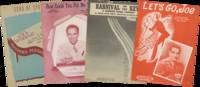
1949List3677New York City: Edwards Music Co. and others 1949. Ten pieces of sheet music see full inventory below. Overall Near Fine. A representative group of sheet music publications by Willie “The Lion†Smith one of the defining architects of Harlem stride piano and a central transitional figure between ragtime-era keyboard traditions and modern jazz performance. Active in New York during the formative decades of twentieth-century jazz Smith developed a powerful pianistic approach combining rhythmic authority harmonic sophistication and improvisational independence becoming widely regarded as a “musician’s musician†and an influential mentor to figures including Duke Ellington.1<br /> <br /> Emerging from the uptown New York scene shaped by pianists such as James P. Johnson and Luckey Roberts Smith helped define the stride style that grew from ragtime into a more expansive jazz idiom frequently performing at Harlem rent parties and participating in competitive “cutting contests†that tested virtuosity and improvisational skill. Smith also published sheet music producing piano solos novelty songs and popular compositions. Offered here are ten pieces reflecting the breadth of his printed output including collaborative songs and published folios issued by firms such as Leo Feist Edwards Music Co. Mills Music and Joe Davis. In his 1964 memoir Smith recalled hearing in everyday life “another weird but musical sound… that I can still hear in my head.â€2<br /> <br /> Uncommon on the market we find only four first edition copies of Smith sheets available at the time of writing with most of these not available. <br /> <br /> Titles include:<br /> <br /> “Between Sharps and Flats An Unusual Piano Soloâ€. Willie Lion Smith. New York: Edwards Music Co New York 1949. 5 pp. Fine condition. <br /> <br /> “Curfew Time in Harlem Novelty Songâ€. Willie The Lion Smith and Neil Laurence. New York: Joe Davis Inc New York 1938. 3 pp. Near fine with minimal wear. <br /> <br /> “Echo of Springâ€. Willie The Lion Smith. New York: Leo Feist Inc New York 1946. 6 pp. Fine condition. <br /> <br /> “How Could You Put Me Down†Willie The Lion Smith with James P. Johnson and Mitchell Parish. New York: Mills Music Inc 1945. 5 pp. Fine condition. <br /> <br /> “Karnival on the Keys A Modern Piano Fantasyâ€. Willie Lion Smith. New York: Edwards Music Co New York 1945. 5 pp. Fine condition. <br /> <br /> “Let’s Go Joeâ€. Cab Calloway Willie Lion Smith and Jack Palmer. New York: Rytvoc Inc 1942. 3 pp. Fine condition. <br /> <br /> “Let’s Mop It Mop! Mop!â€. Jack Edwards Fred Norman and Willie Lion Smith. New York: Edwards Music Co 1942. 3 pp. Fine condition. <br /> <br /> “Modern Piano Solos†folio. Willie The Lion Smith. New York: Leo Feist Inc 1939. 26 pp. Very good plus with a small chip to front wrap. <br /> <br /> “Rippling Watersâ€. Willie The Lion Smith. New York: Leo Feist Inc New York 1939. 5 pp. Fine condition. <br /> <br /> “Sneak Away Piano Soloâ€. Willie The Lion Smith. New York: Mills Music Inc 1937. 5 pp. Fine condition.<br /> <br /> 1 “Willie ‘The Lion’ Smith: Stride Piano Master†NPR’s ‘Jazz Profiles’ June 11 2008 https://www.npr.org/2008/06/11/91365108/willie-the-lion-smith-stride-piano-master.<br /> 2 Willie Smith Music on My Mind: The Memoirs of an American Pianist Doubleday: 1964. Edwards Music Co. and others unknown
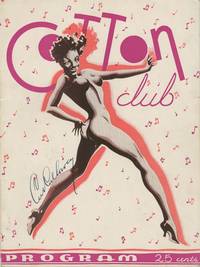
1938List3674New York City 1938. Small folio 12 x 9 inches 16 unnumbered pages. Signed boldly by Calloway on the front cover above the leg of the dancer in the illustration. Near Fine. An illustrated program for the Cotton Club from 1937/1938 with photographs of Cab Calloway the Nicholas Brothers and Mae Johnson in addition to information about the Club’s fifth edition of their Cotton Club Parade though this is a larger program. This copy documents the Midtown Manhattan iteration of the Cotton Club which moved from Harlem to Broadway and 48th Street in 1936 after the Harlem location closed following the Harlem riot of 1935. The new venue attempted to reproduce the earlier club’s formula of elaborate revues combining jazz orchestras chorus lines and specialty dancers in large-scale stage productions such as the Cotton Club Parade. While the performers remained overwhelmingly African American—including Calloway’s orchestra and many of the dancers—the audience at the club continued to be largely white reflecting the segregated entertainment culture of the period. This arrangement had long been criticized by Harlem writers and intellectuals; Langston Hughes writing during the Harlem Renaissance famously described the Cotton Club as a “Jim Crow club for gangsters and monied whitesâ€1 objecting to the racial restrictions placed on patrons even as Black musicians and dancers provided the entertainment. The Midtown Cotton Club continued presenting revues and broadcasts through the late 1930s but ultimately closed in 1940 bringing an end to one of the most famous nightclubs associated with the Harlem Renaissance and the swing era.<br /> <br /> Not in OCLC though see 951748496 for a shorter four page program for the fifth edition of the Cotton Club Parade published in 1938 and held at East Carolina University.<br /> <br /> 1 Langston Hughes “When the Negro was in Vogue†in The Big Sea Alfred A. Knopf 1940. unknown
1956015577Paris Imp. Caractères 1956 En feuilles
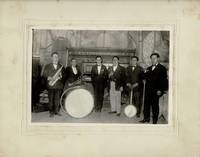
1930313Mexico City: Tacos Jazz Band 1930. <p dir="ltr">10" x 8" black and white photograph with matting 7.25" x 5" photograph alone; includes signatures of all band members on verso. The band name is likely "Tacos Jazz Band" – this is a rare and potentially only photo of this band as confirmed by a foremost Mexican jazz historian who also assisted with the name transcriptions “the photo is unique.†Inscription on the back in Spanish language translated to English: "For our dear and fine friend Mr. Eduardo M. as a loving memory of the Gorcos Jazz Band. México June 12-1926 / Roberto G. F. piano / Leopoldo Zavala saxophone / Juan Concha B. trumpet / Fernando Vazquez banjo / Pedro Plata violÃn / José G. Manrique drums" Photograph is slightly smudged; matting slightly creased and smudged. </p> . [Tacos Jazz Band] unknown
1956015763Paris Imp. Caractères 1956 60 x 40 cm Pas de couverture
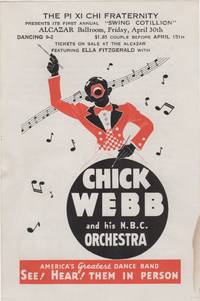
1937206792Philadelphia: Pi Xi Fraternity 1937. Small stain at edge otherwise fine and fresh. Double sided handbill 6 x 9 in. printed on both sides. Original advertising handbill promoting the event at Philadelphia's Alcazar Ballroom Friday April 30th 1937. A colorful flyer featuring the caricature picture of the drummer-bandleader clad in a red tuxedo and swinging his sticks against a backdrop of flying musical notes. On the verso is "An Open Letter to the Dance Lovers of this City" touting the group as "America's Greatest Rhythm Band." After winning first prize at the famed Apollo Theatre's Amateur Night in 1934 at the age of seventeen Ella Fitzgerald was soon introduced to Webb and joined his band the following year. By 1937 she had become a mainstay of the group with her name being prominently highlighted in promotions. After Webb's early death in 1939 she carried on as leader of the band. An excellent evocation of the height of the Swing Era. Pi Xi Fraternity unknown