4 427 résultats
20002502170121xbvkLondon, late 1990s/early 2000s. Ca. 29,6 x 20,9 cm (sheet), ca. 26,3 x 19,5 (image).
192253307Beaver Dam WI: Malleable Iron Range Co. 1922-23. Three works in one. Oblong 4to. 38; 3-24; 34 pp. 35-39A leaves 39-66 i.e. 68 pp. 1st -- Colour-illustrated title in gray black orange & light blue printed and illustrated throughout with each black & white illustration of stove w/ orange & gray border; 2nd -- numerous plates in black & white black printed borders text illustrations diagrams; 3rd -- illustrated title numerous plates 5 linen-backed colour-tinted photographs w/ linen hinges text illustrations. Tan softcovers bound w/ two brass screw-posts at upper margin w/ Monarch Malleable range instructions cooking times and thermometer instructions preserved in original printed envelope laid-in minor shelfwear very minor thumbing rubbing still VG copy w/ ownership stamp of J.ohn Y. Hicks b. 1881 Malleable Iron Range sales rep who worked as railroad messenger and then machinist and salesman following World War I. First edition thus of these nicely illustrated salesman sample catalogues of Jazz Age electric stove appliances with electric cook tops insulating blocks an electric appliance plug-in on the side as well as automatic timer and temperature controls. These beautiful stoves could be purchased with enamel finish and as one oven cabinet ranges two oven cabinet ranges one oven square ranges one oven H type cabinet range with built-in kitchen heaters and more. The nicely executed colour-tinted linen-backed photographs showing Malleable stoves provide excellent contemporary visual documentation of the actual colours of the popular stoves folloowing World War I. Malleable Iron Range Company existed from 1896-1985 and at its height after World War I employed over 1200 employees producing a variety of stove and oven appliances which were coal & wood burning electric and gas. No copies located in Worldcat. Malleable Iron Range Co., paperback
192453221New York: The Charles William Stores Inc. 1924-1925. Two vols. 4to. 548 8; 518 8 pp. With numerous colour plates colour-tinted text illustrations over 1000 black & white text illustrations diagrams. Colour-illustrated softcovers minor soiling wear slight sunning front cover of vol. 1 creasing to spine; minor creasing shelfwear vol. 2 light uniform interior toning as usual still VG- set. First edition of the complete year of Jazz Age catalogues from the Charles William Stores which offered a treasure trove of everyday fashions work clothes and household and consumer goods during the Roaring 20s offering the glamour and style of New York to the rest of the country. Their fashions were intended for the average American with emphasis on the more “endowed†woman and “stout†man during the Jazz Age emphasizing chic styles and well-woven fabrics. These catalogues detail the high grade work pants riding breeches denim jeans corduroy work pants along with triple-sewed work denim overalls and coats which could be purchased as well as those made out of Wabash Stripe Stifel denim cloth noted for its durability. No copies located in Worldcat of Spring & Summer 1925; 3 copies located of Fall & Winter 1925 Henry Ford Harvard American Textile History Museum. The Charles William Stores, Inc., paperback
This is a fine hardcover copy with a fine dust jacket with almost no wear. SIGNED by the photographer, Roy Decarava, on the verso of the title page and briefly inscribed. Otherwise completely clean. Illustrated thoughout with reproductions of Roy Decarava's black & white photographs of America's most beloved and well known jazz musicians from the 1960's. Stated first edition. Scarce signed. 14" high X 11" wide. Large heavy book, foreign shipping will be extra. This book will be securely wrapped and packed in a sturdy box and shipped with tracking.
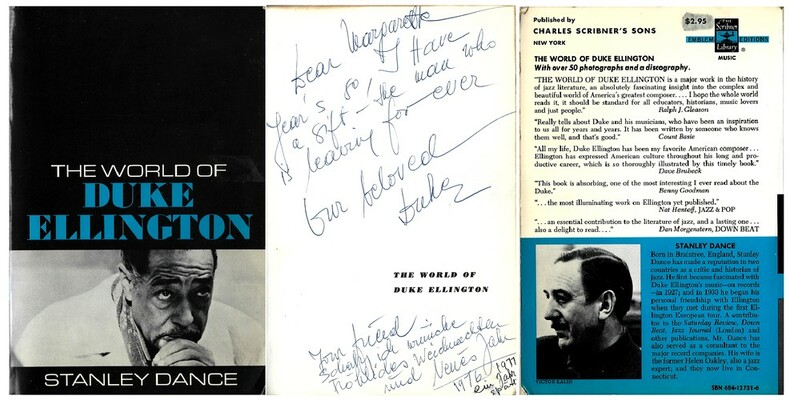
197331294Editions Charles Scribner's Sons, New York 1968. In-8 broché de 312 pages au format 20 x 13,5 cm. Couvertures illustrées par une photographie de Duke Ellington et une autre de Stanley Dance. Dos carré. Plats et intérieur frais malgré d'infimes tassements aux coins et brunissures aux bords de quelques pages et de la tranche extérieure. Etude sur Duke Ellington par Stanley Dance avec photographies en noir, discographie, chronologie et index. Rare édition originale américaine en premier tirage et bel état général. Précieux exemplaire enrichie d'une magnifique dédicace autographe, pleine page, signée de Edward Kennedy Ellington dit Duke Ellington.
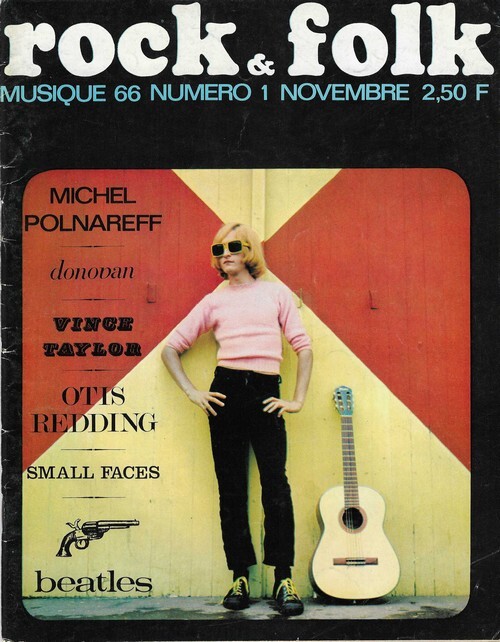
197932429Revue Rock & Folk n° 1 de novembre 1966. In-4 agrafé de 66 pages, au format 27 x 21,5 cm. Couvertures photographiques avec Michel Polnareff et les Beatles. Couvertures avec d'infimes frottis aux coins. Intérieur frais. Mensuel musical français consacré à la musique rock et pop, fondé en 1966 par Robert Baudelet, Jean Tronchot, Philippe Adler, Jean-Pierre Leloir et Philippe Koechlin. La revue connut la participation de nombreux photographes dont : Jean-Pierre Leloir, Claude Gassian, Pierre Terrasson, Gaëlle Ghesquière, Bruno Ducourant,Patrice Guino, Jean-Louis Rancurel, Dominique Tarlé, Bertrand Alary et Saddri Derradji. Nombreux articles sur le Rock, le blues, la soul, la pop dont : Michel Polnareff, Donovan, Vince Taylor, Otis Redding, Small Faces, The Beatles, The Troggs, les Sunlights, Lovin' Spoonful, Little Richard, etc. Nombreuses chroniques avec de très nombreuses photographies en noir et blanc. Dessins en noir de Avoine, Cabu et Serge Dutfoy. Rarissime édition originale, en très bel état de fraicheur de ce mythique n° 1.
193461978Asnières, Les Imp. Mary, (1934). In Braun u. Schwarz gedrucktes illustr. Orig.-Plakat (99,5 x 32 cm).
20071252492007 Dieter Jakob - 2007 - Limited Edition of 100 copies (Edition limitée à 100 exemplaires, celui porte le numéro 54) - Fort in-4, cartonnage illustré, signet vert - 500 pages - Nombreuses illustrations en couleurs dans le texte - Texte en anglais
20071252552007 Dieter Jakob - 2007 - Limited Edition of 100 copies (Edition limitée à 100 exemplaires, celui porte le numéro 50) - Fort in-4, cartonnage illustré, signet noir - 491 pages - Nombreuses illustrations en couleurs dans le texte - Texte en anglais
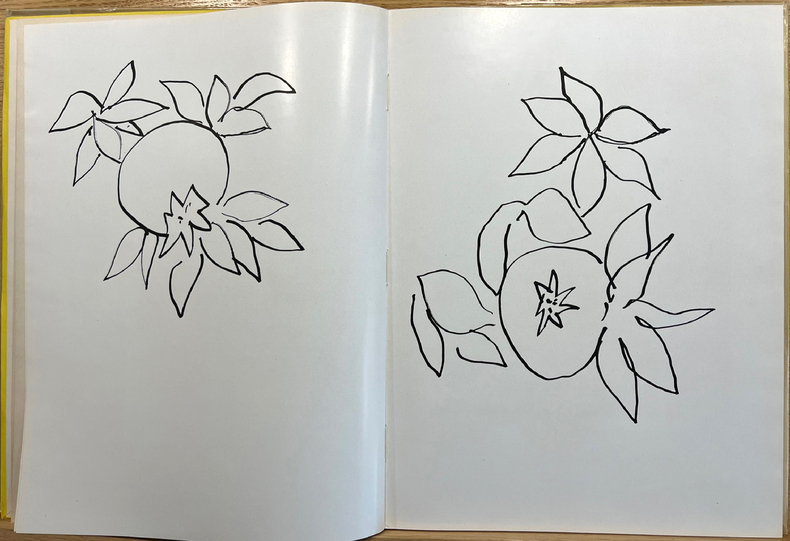
19481306Éditions de la revue Verve, Paris 1948. Volume in-4 (355 x 260 mm), 76 pages, relié sous cartonnage éditeur, jaquette illustrée. - LA COUVERTURE, SPÉCIALEMENT CRÉÉE EN PAPIERS DÉCOUPÉS PAR HENRI MATISSE POUR CE NUMÉRO, EST REPRODUITE EN LITHOGRAPHIE. - 65 reproductions de peintures et dessins illustrent le volume. La couverture a été réalisée d'après une maquette en gouache découpée spécialement créée par Matisse en 1948. Cette composition est limité à deux couleurs jaune et noir, car pour l'artiste "le noir est une couleur"... L'artiste a également composé 40 ornements pour le texte. Avec un avant-propos de Matisse.
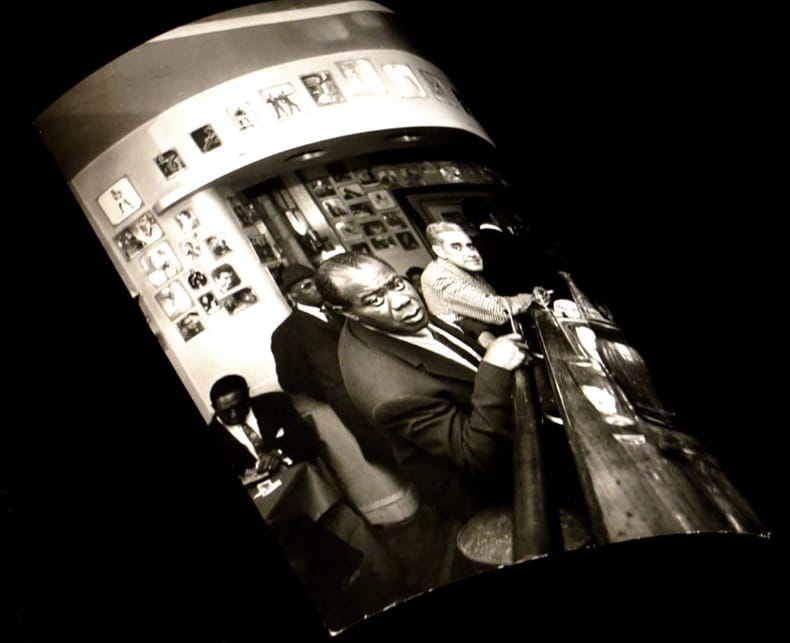
1947105790Belvédère Maîtres du Jazz 1947 Editions du Belvédère, Coll. Maîtres du Jazz, 1947, 107 p., broché, environ 22x16cm, complet des hors-textes, couverture insolée, haut du dos émoussé, bon état pour le reste et intérieur impeccable. Avec un envoi de Hugues Panassié et la signature de Louis Armstrong.
[2] Bll., 47 S. Typendruck. Quer-Gr.-4°. PBd. d. Zt. Ecken bestossen/beschabt. RISM S/SS 2365.
17518Dimensions : 248 x 172 mm.
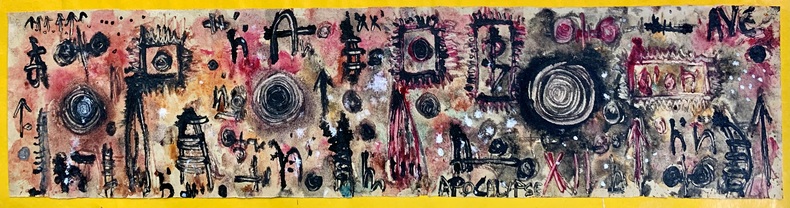
awd-1137Huile sur papier au format horizontal, contrecollée sur papier jaune, vers 1957 (12,5/50 cm). t
2006bf5551Albertville, Parole gravée Feuillets sous chemise cartonnée 2006 TRES BEL EXEMPLAIRE RICHEMENT ILLUSTRE. RAMALLO (Jean). Jazz du désir. Illustrations d'Alain Bar. Albertville, Parole gravée, 2006. In-8 (25x17 cm), (1) f. de titre, (8) f. de texte, (1) f. de justification, en feuilles, 2 eaux fortes en noir hors texte, 2 eaux fortes en couleurs hors texte et 2 in texte à double page, un motif estampé à froid sur le feuillet de titre, 3 compositions typographiques in texte et un motif hors texte, couverture imprimée, étui en plexiglas. Seconde édition illustrée par Alain Bar. Tirage limité à 33 exemplaires numérotés signés par l'artiste (celui-ci n°17). ; Très bel exemplaire à l'état de neuf, accompagné d'une carte illustrée d'une eau forte d'Alain Bar avec un envoi de sa main et de sa carte de visite. Livraison a domicile (La Poste) ou en Mondial Relay sur simple demande.
BN66418Süddeutsche Zeitung Jazz-Edition: Dive into Jazz Dombrowski Ralf <br/><br/> unknown
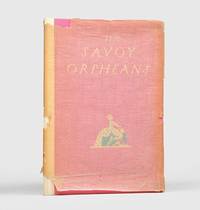
1924139822London: Published Privately at the Savoy 1924. First and only edition one of 1000 copies issued as a "first birthday" celebratory publication; scarce particularly so in the fragile glassine jacket. Loosely inserted in this copy is a slip printing soprano Luisa Tetrazzini's birthday wishes in green. The Savoy Orpheans were formed by former army bandmaster Debroy Somers in 1923 and were resident at the Savoy Hotel until contractual wrangles between W. F. De Mornys entertainments manager at the Savoy and the hotel company led to the orchestra disbanding on New Year's Eve 1927. During their four year tenure the Orpheans were among the cream of British dance bands and "patterned their instrumentation arrangements and classy presentations upon Whiteman's model" Baade p. 25. This attractive publication was printed at the Baynard Press which "employed highly skilled craftsmen. and printed many of London Transport's pictorial posters. the Baynard Press was amongst the largest and most technically accomplished printing firms in Britain" Science Museum. Library Hub locates only the British Library copy among British and Irish institutional libraries; WorldCat adding another copy at Rutgers University New Jersey. Square octavo pp. 16. With 3 tipped-in photogravures 2 showing the Orpheans the other the Savoy-Havana band all in situ in the Savoy Ballroom title page printed in green and pink decorative head- and tailpieces and occasional decorative sprays of notes in pink. Original white quarter cloth pink pictorial boards endpapers with musical notation in pink. With the glassine jacket Negligible rubbing to board edges faintest offsetting to endpapers; else a fine copy in the toned jacket with creasing and a couple of closed tears and chips to edges. Christina L. Baade Victory through Harmony: The BBC and Popular Music in World War II 2012. hardcover
200454877JazzFine, 2004. JFIS-XR-002 CD Digipak
194798087Paris, P., éditions du Belvédère, coll. « Les Maîtres du Jazz, 1 » 1947 In-8 broché, 107 pp., 9 planches hors texte, discographie complète de Louis Armstrong par Charles Delaunay. Infime tache sur le premier plat, couverture un peu poussiéreuse.
1958146640Associated Booking Corp. Joe Glaser, President. New York, Chicago, Hollywood. (Ohne Jahr. Um 1958). Fotoformat: 21x25 cm
192554342Philadelphia PA: Otto F. Schumann Philadelphia Textile School ca. 1925. Small 4to. 8.25 x 9.2 in. 75 leaves unnumbered including 32 leaves with detailed colour charts on weave formations producing various kinds of cloth 3 tipped-in textile samples together w/ weaving instructions in manuscript. Original limp leather 3-ring binder gilt lettering stamped on front cover ink lettering & association of Otto F. Schumann on front cover some soiling dustsoiling edgewear still VG exemplar. This Jazz Age weaving manuscript notebook complete with weave formation design plates fabric samples and instructions offer a remarkable and invaluable artifact of how a young American textile designer and weaver received training at the famed Philadelphia Textile School now Philadelphia University during the 1920s. These course books were judged on completeness and the aspiring weaver’s skill in presenting the details about the instruction as well as their abilities in running the machinery required to produce the cloth. This manuscript notebook includes Schumann’s detailed plates and notes on producing color effect on the plain weave creating Broken Twills Crowfoot Satins Checked & Figured Broken Twills Entwining Twills Basket Weaves and Broken Satins. The extensive manuscript notes detail the loom instructions how many lines are required composition and more in producing the assorted effects. Because of the poor quality of United States textiles exhibited at the Centennial Exhibition in 1876 the Philadelphia Textile Manufacturers pushed for a formalized vocational school to train weavers designers and textile workers. In 1884 it became part of the Pennsylvania Museum and School of Industrial Art with 81 students enrolled by 1885 and by 1894 the School of Textiles added a Department of Wool Carding & Spinning and a Department of Cloth Finishing and Design. By the 1920s the Philadelphia Textile School was offering extensive three-year textile courses chemistry and dyeing courses as well as design courses in cottons woolens worsteds silks Jacquard design and more. Schumann 1906-1967 was the son of Hugo Schumann founder and owner of the Maid Hosiery Mills in Reading PA through the opening decades of the 20th century for whom he worked with until after World War II as designer and sales executive. Otto F. Schumann, Philadelphia Textile School, hardcover
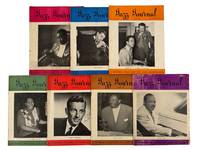
1948223231948. 1 Traill Sinclair ed. Jazz Journal issues 1948 document postwar British jazz culture as readers collectors critics and musicians rebuilt access to American jazz after wartime disruption and expanding record scarcity. Founded by Sinclair Traill in 1948 Jazz Journal became a major English-language jazz periodical; its inaugural year placed African American performers blues aesthetics revivalist debate discography and record reviews at the center of British jazz criticism. These issues support research into jazz reception in the United Kingdom transatlantic music journalism record collecting racialized cultural admiration and the postwar circulation of African American musical authority through British print culture. <br /> <br /> Jazz Journal. Volume 1 Nos. 1-3 5-6 8-9. London: J.J. Publications May-November 1948. Seven issues each approximately 12 pages in pictorial wrappers. The run includes the May June July September October and November 1948 issues with one additional issue represented by number rather than month in the supplied description and contains record reviews discographies artist profiles editorials criticism and jazz news. The premier issue opens with Traill's editorial appeal to jazz readers recalling that "Even in those far-off days between the two wars when paper was to be had for the asking and printers' costs didn't resemble a millionaire's hotel bill it was always a dubious endeavour" and closing with the hope that readers would see "a new issue of JAZZ JOURNAL on the first of each month for many years to come." Contents cited in the supplied description include "Make Way for Dixieland or Return to Sanity" a Thomas Waller discography a September 1948 appreciation of Hoagy Carmichael with signed portrait cover and Hugues Panassié's November essay "Count Basie and the Blues" which argues that "Count Basie knows how to play the blues as well as it seems possible to do so on the piano." Cover portraits include Louis Armstrong Nellie Lutcher Count Basie and Humphrey Lyttelton placing African American jazz innovators alongside British revivalist musicians within a magazine aimed at a postwar readership hungry for recordings biographical knowledge and critical guidance.<br /> <br /> Traill Sinclair ed. Jazz Journal. Vol. 1 No. 1. London: J.J. Publications 1948. The opening issue establishes the magazine's postwar purpose through Traill's editorial address to jazz enthusiasts and its promise of sustained monthly criticism. Its contents including revivalist commentary and discographical attention to Thomas "Fats" Waller show the early publication's effort to organize jazz knowledge for British readers dependent on print mediation and record collecting. 2 Traill Sinclair ed. Jazz Journal. Vol. 1 No. 2. London: J.J. Publications 1948. This issue continues the magazine's early program of criticism record commentary and performer-centered coverage for a readership attentive to American jazz and its British reception. It belongs to the first sequence of issues issued after the May 1948 relaunch from Traill's earlier Pick Up whose final issue preceded the first Jazz Journal in May 1948. 3 Traill Sinclair ed. Jazz Journal. Vol. 1 No. 3. London: J.J. Publications 1948. The third issue forms part of the magazine's initial attempt to stabilize a postwar jazz readership through recurring reviews essays and documentation of recordings and artists. Its position in the first volume is useful for tracing how British jazz criticism developed a regular periodical form in 1948. 4 Traill Sinclair ed. Jazz Journal. Vol. 1 No. 5. London: J.J. Publications 1948. This issue continues the first-year sequence with the supplied description emphasizing the magazine's mix of artist portraits discographical writing and critical essays. The issue contributes to the archive's broader value as evidence of how British jazz readers encountered American performers through images reviews and commentary. 5 Traill Sinclair ed. Jazz Journal. Vol. 1 No. 6. London: J.J. Publications 1948. The September 1948 issue features an appreciation of Hoagy Carmichael with a signed portrait cover connecting jazz readership to popular song composition and the American music industry. Its treatment of Carmichael alongside coverage of African American jazz performers demonstrates the publication's wide understanding of jazz-adjacent culture in the late 1940s. 6 Traill Sinclair ed. Jazz Journal. Vol. 1 No. 8. London: J.J. Publications 1948. This issue belongs to the later portion of the inaugural-year run and continues the magazine's regular pattern of record culture criticism and performer documentation. In the context of the seven-issue group it helps show the durability of Traill's monthly editorial project beyond the launch months. 7 Traill Sinclair ed. Jazz Journal. Vol. 1 No. 9. London: J.J. Publications 1948. The November issue includes Hugues Panassié's "Count Basie and the Blues" a critical essay distinguishing blues feeling and phrasing from commercialized improvisation. Its attention to Basie foregrounds African American musical authority within British jazz discourse and gives the archive direct relevance to the study of blues reception swing-era memory and postwar criticism. Moderate soiling and creasing to wrappers occasional spine chipping intact stapled bindings delicate covers and vivid photographic contrasts good overall. Substantial inaugural-year run of a long-lived British jazz periodical preserving the early critical vocabulary through which postwar British readers studied African American jazz swing-era performers blues expression and record collecting. unknown
199920067Great Barrington: The Figures 1999. First edition. Paperback. Near Fine. Stapled pamphlet with cover by Diego Velaquez. An 18 pp poetry chapbook by the great jazz drummer. A near fine example in thin stapled wrappers. This copy INSCRIBED by the author "for Gary / this copy of the initial/ copy/ "sorrier than a blown lip"/ love/ Billy Higgins/ 15 Mar 99" Photograph of the author on the final page of this pamphlet with the following text below "SPACE JAM played directly into the computer on Jan 29 and 30 1999 then xeroxed at Kwik Print Great Barrington in an edition of two on Feb 20. Copy one for the 60th birthday of Clark Coolidge & copy two for the personal library of Billy Higgins." One copy located at Stanford University. Please note: there has been some suggestion that this book was actually written by Geof Young. Additional info is welcome. The Figures paperback books
1974106886BBRom, 1974. 40 x 30 cm.
199199260BBRom, 1991. 30 x 40 cm.