962 résultats
185331271Napoli: B. Girard e Ci. PNs 4249-51 3163-6 1853. Oblong folio. Brown cloth-backed dark yellow mottled paper boards spine in gilt-ruled compartments with titling gilt. 1f. recto title verso blank 3-52 pp. Each number with separate caption title and pagination. Engraved. <br/><br/>From the collection of Italian conductor vocal coach and close associate of Puccini and Mascagni Luigi Ricci 1893-1981.<br/><br/>Binding slightly worn scuffed and rubbed; endpapers somewhat browned and stained. Minor internal soiling and staining. First Edition later issue with Girard's address from 1846-53. Inzaghi IN. 57 p. 177.<br/><br/>Donizetti composed his one-act opera Il Campanello di notte to his own libretto based on a French vaudeville La sonnette de nuit by Brunswick Mathieu-Barthélemy Troin and Victor Lhérie. It premiered at the Teatro Nuovo in Naples on June 1 1836. The absurd plot follows Enrico as he continually harasses pharmacist Don Annibale who is trying to celebrate his wedding night with Serafina whom Enrico still loves.<br/><br/>"Enrico's role created by Giorgio Ronconi is fitted with all sorts of musical and dramatic opportunities. His encounters with Annibale develop in musical ingenuity. Particularly effective are the episode of the hoarse singer replete with musical allusions to other scores by Donizetti and by Rossini and the encounter over the prescription which develops into something with even more bizarre medical terms than Dr Dulcamara's aria in Elisir and with more frantic parlando than the Don Pasquale-Malatesta duet." William Ashbrook in Grove Music Online.<br/><br/>Ricci was an important figure in the transmission of 19th century traditions passed on to him by noted baritone Antonio Cotogni 1831-1918 whom he accompanied from the age of 12. He was active as a vocal coach at the Accademia Nazionale di Santa Cecilia where he taught amongst many others Sesto Bruscantini Anna Moffo Rosalind Elias Ezio Flagello Peter Lindroos and Martti Wallén. B. Girard e Ci. [PNs 4249-51, 3163-6] unknown books
182933415Milano: Epimaco e Pascquale Artaria PNs 74-77 95-96 79 97 1829. TROMBETTA Giuseppe arranger. Oblong octavo. Dark brown leather-backed textured red paper boards with decorative borders and titling gilt spine in gilt-ruled compartments. 61 pp. Engraved. <br/><br/>With previous owner's name "G. Lorini" gilt to lower outer corner of upper board.<br/><br/>From the collection of Luigi Ricci 1893-1981 Italian conductor vocal coach and close associate of Puccini and Mascagni.<br/><br/>Binding somewhat rubbed and bumped. Extensive pencilling to rear endpapers. Moderately worn and foxed; light scattered soiling. Title lacking. First Edition of this arrangement. Inzaghi IN. 31 p. 148. A vocal score was not published until 1856.<br/><br/>Elisabetta al castello di Kenilworth a melodramma in 3 acts to a libretto by Andrea Leone Tottola after Scribe and Hugo premiered in Naples at the Teatro di S Carlo on 6 July 1829. [Epimaco e Pascquale Artaria] [PNs 74-77, 95-96, 79, 97] unknown books
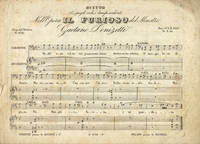
183331313Milano: G. Ricordi e Co. PN 6755 1833. Oblong folio. Red marbled paper wrappers. Sewn. 11 1 blank pp. Engraved.<br/><br/>From the collection of Italian conductor vocal coach and close associate of Puccini and Mascagni Luigi Ricci 1893-1981.<br/><br/>Wrappers slightly worn and faded. Slightly worn and browned; partially detached at lower inner margin; minor foxing and staining throughout; occasional small tears; some corners creased;. First Edition. Inzaghi IN. 44 pp. 158-9. <br/><br/>Il Furioso nell'isola di San Domingo to a libretto by Jacopo Ferretti based on a play of the same name after Don Quixote was first performed at the Teatro Valle in Rome on January 2 1833.<br/><br/>The duet "Di quegli occhi" between Cardenio and Kaidamà comes near the end of the first Act.<br/><br/>"Il furioso is sometimes described as an opera semiseria because of the presence in the cast of a buffo character - Kaidamà who is a 'natural' defective and therefore a foil to Cardenio's delusions; but he is a figure of pathos rather than fun. It is in fact a Romantic melodramma through and through and is so described in the original libretto. The score contains some finely wrought arias and moving ensembles." William Ashbrook in Grove Music Online.<br/><br/>Ricci was an important figure in the transmission of 19th century traditions passed on to him by noted baritone Antonio Cotogni 1831-1918 whom he accompanied from the age of 12. He was active as a vocal coach at the Accademia Nazionale di Santa Cecilia where he taught amongst many others Sesto Bruscantini Anna Moffo Rosalind Elias Ezio Flagello Peter Lindroos and Martti Wallén. G. Ricordi e Co. [PN 6755] unknown books
185231245Napoli: Stabilimento Musicale Partenopeo Successore di B. Girard e Co. PNs 10407-10420 10422-10427 2163-2165 2197 2320 2324 5757 1852. Oblong folio. Vellum-backed and edged boards with burgundy cloth laid down initials "C.G." gilt to upper titling to spine stamped in black original light pink publisher's printed wrappers bound in. 1f. recto title verso blank 1f. recto cast list and table of contents verso blank 5-226 pp. Each number with separate caption title and pagination. Engraved.<br/><br/>Endpapers watermarked with a fleur-de-lis and "Michele Dupino Marmorato." With priced catalog "Opere Teatrali Intere" to upper wrapper listing works by Bellini Donizetti Rossini Verdi et al. composed through 1853 and with list of pieces with individual prices and plate numbers to title.<br/><br/>From the collection of Italian conductor vocal coach and close associate of Puccini and Mascagni Luigi Ricci 1893-1981.<br/><br/>Binding slightly worn bumped and scuffed. Minimal foxing throughout primarily confined to margins. Later edition later issue. Inzaghi IN. 41 pp. 155-7.<br/><br/>Girard's first edition of L'elisir d'amore appeared circa 1833. This new issue from 1852 contains many new plates alongside the older ones.<br/><br/>L'elisir d'amore to a libretto by Felice Romani after Eugène Scribe's text for Auber's Le philtre 1831 was first performed at the Teatro Cannobiana in Milan on May 12 1832.<br/><br/>"Donizetti's score is a study in shrewd contrasts: from the fairly florid lines of the duet 'Chiedi all'aura' - florid yet always rhetorically tidy - to the bumptious 3/8 stretta of the Act 1 finale or from the sharply differentiated tones of Nemorino and Belcore in the 'Venti scudi' duet to the comic irony in the duet for Adina and Dulcamara 'Quanto amore!' which sets off the potion as charm against the charm of Adina herself. The apparently effortless outpouring of melody arouses wonder especially as it is never melodiousness for its own sake but always describes some aspect of character; moreover there are those moments of genuine pathos 'Adina credimi' and 'Una furtiva lagrima' for instance that keep this comedy from seeming merely heartless or cruel. Ultimately the continuing appeal of L'elisir lies in the appropriateness of Donizetti's music to this bucolic variant of the 'male Cinderella' myth. Nemorino's good-heartedness and his singleness of purpose win out in spite of potions and unforeseen inheritances." William Ashbrook in Grove Music Online.<br/><br/>Ricci was an important figure in the transmission of 19th century traditions passed on to him by noted baritone Antonio Cotogni 1831-1918 whom he accompanied from the age of 12. He was active as a vocal coach at the Accademia Nazionale di Santa Cecilia where he taught amongst many others Sesto Bruscantini Anna Moffo Rosalind Elias Ezio Flagello Peter Lindroos and Martti Wallén. Stabilimento Musicale Partenopeo, Successore di B. Girard e Co. [PNs 10407-10420, 10422-10427, 2163-2165, 2197, 2320, 2324, 5757 unknown books
183833430Paris: Marquerie Frères 1838. Octavo. Half brown morocco with matching cloth boards raised bands on spine decorative devices and titling gilt. 1f. title 1f. contents 240 pp. Engraved. Text in Italian. With an elaborate engraved title page by Hibon and A. Lafon. <br/><br/>Former owner's name "S.L. Norris" gilt to upper board.<br/><br/>Binding slightly rubbed. Sligthly browned and foxed; trimmed within platemark. An early edition. Inzaghi IN. 41 p. 156.<br/><br/>L'elisir d'amore a melodramma giocoso in 2 acts to a libretto by Felice Romani after Scribe's Le philtre 1831 premiered in Milan at the Teatro alla Cannobiana on 12 May 1832. Donizetti arrived in Paris on 21 October 1838 and the work was first performed at the Théâtre-Italien there on 17 December 1839 to great acclaim<br/><br/>"Donizetti's score is a study in shrewd contrasts: from the fairly florid lines of the duet 'Chiedi all'aura' - florid yet always rhetorically tidy - to the bumptious 3/8 stretta of the Act 1 finale or from the sharply differentiated tones of Nemorino and Belcore in the 'Venti scudi' duet to the comic irony in the duet for Adina and Dulcamara 'Quanto amore!' which sets off the potion as charm against the charm of Adina herself. The apparently effortless outpouring of melody arouses wonder especially as it is never melodiousness for its own sake but always describes some aspect of character; moreover there are those moments of genuine pathos 'Adina credimi' and 'Una furtiva lagrima' for instance that keep this comedy from seeming merely heartless or cruel. Ultimately the continuing appeal of L'elisir lies in the appropriateness of Donizetti's music to this bucolic variant of the 'male Cinderella' myth. Nemorino's good-heartedness and his singleness of purpose win out in spite of potions and unforeseen inheritances." William Ashbrook in Grove Music Online. Marquerie Frères unknown books
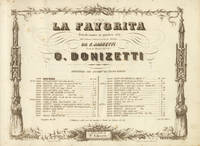
186131239Milano: F. Lucca PNs 10001-10034 1861. Oblong folio. Full dark brown cloth with decorative blindstamping and floral device gilt to upper titling gilt to spine. 1f. recto title printed in brown within decorative borders by G. Sperati verso blank 1f. recto named cast list verso table of contents 5-268 pp. Each number with separate caption title and pagination. Engraved.<br/><br/>Title includes an index of pieces with individual plate numbers and prices. Cast list from the first performance includes Rosine Stoltz Gilbert Duprez Paul Barroilhet and Nicolas Levasseur. <br/><br/>From the collection of Italian conductor vocal coach and close associate of Puccini and Mascagni Luigi Ricci 1893-1981.<br/><br/>Binding slightly worn rubbed and bumped spine slightly faded. Light scattered foxing throughout heavier to a few signatures. Second Italian edition later issue. Inzaghi IN. 67 pp. 187-89. Bergamo catalog p. 123 a similar issue.<br/><br/>Based on the plate numbers the second edition is from 1855 but the decorative title page of this issue by Sperati is dated 1861. Instrumental-only pieces have dual plate numbers from the first edition of 1841: Sinfonia PN 10001 2844 Ballet PNs 10014 2840 10015 2841 10016 2842 10017 2843.<br/><br/>La Favorite to a libretto by Alphonse Royer and Gustave Vaëz with additions by Eugène Scribe was first performed at the Paris Opéra on December 2 1840. Donizetti used his earlier unperformed opera L'ange de Nisida as the basis for La Favorite though the plots are considerably different. The original French version would become a standard in Paris performed regularly at the Opéra until 1918. It has become widely regarded as one of Donzietti's best operas with considerable attention given to the fourth act. <br/><br/>Ricci was an important figure in the transmission of 19th century traditions passed on to him by noted baritone Antonio Cotogni 1831-1918 whom he accompanied from the age of 12. He was active as a vocal coach at the Accademia Nazionale di Santa Cecilia where he taught amongst many others Sesto Bruscantini Anna Moffo Rosalind Elias Ezio Flagello Peter Lindroos and Martti Wallén. F. Lucca [PNs 10001-10034] unknown books
185533416Napoli: Regio Stabilimento Musicale di Teodoro Cottrau PNs 5207-13 5336-49 1855. Oblong octavo. Green cloth-backed marbled boards. 1f. title 3-92 pp. Engraved.<br/><br/>Endpapers watermarked with an anchor and "Alfonso Am ." "La Briglia." Blindstamp of Cottrau to title.<br/><br/>From the collection of Luigi Ricci 1893-1981 Italian conductor vocal coach and close associate of Puccini and Mascagni.<br/><br/>Binding slightly rubbed. Light browning to edges; occasional light foxing. First Edition of this arrangement later issue. Inzaghi IN. 67 p. 188.<br/><br/>La Favorite to a libretto by Alphonse Royer and Gustave Vaëz with additions by Eugène Scribe was first performed at the Paris Opéra on 2 December 2 1840. <br/><br/>Donizetti used his earlier unperformed opera L'ange de Nisida as the basis for La Favorite talhough the plots are considerably different. The original French version became a standard in Paris performed regularly at the Opéra until 1918. It is now widely regarded as one of Donzietti's best operas with considerable attention given to the fourth act. <br/><br/>"In spite of its mixture of sources La favorite must rank among Donizetti's best works although it slips from its high standard in a few instances such as the merely efficient ballet music." Ashbrook p. 447. Regio Stabilimento Musicale di Teodoro Cottrau [PNs 5207-13, 5336-49] unknown books
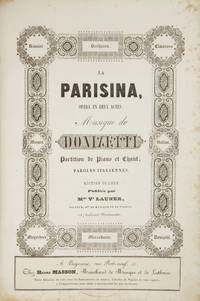
184330256Paris: Launer PN Vve. L. 3396 1843. Large octavo. Quarter black calf with marbled boards. 1f. recto blank verso publisher's catalogue 1f. recto title within decorative border verso blank 220 pp. Engraved. <br/><br/>Overpaste of the French 19th century music and musical instrument dealer Henri Masson to foot of title with small oval handstamp to lower margin obscured.<br/><br/>Named cast list in pencil to verso of title.<br/><br/>Binding worn rubbed and bumped; minor paper loss; hinges partially split; minor discoloration to rear pastedown; minor ink staining to verso of front endpaper and facing blank leaf. Occasional light foxing; some signatures split or partially split; minor dampstaining to upper corners of pp. 177 on; minor tear to upper outer margin of pp. 95/96 and outer margin of pp. 165/166 not affecting music; pp. 217-20 partially detached with wear and minor tears to outer edge not affecting music. The present edition includes an additional aria on pp. 216-220 composed by Tadolini for the Italian tenor Giovanni Rubini 1794-1854 known particularly for his performances of the works of both Bellini and Donizetti. Launer [PN Vve. L. 3396] unknown books
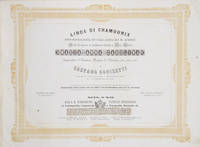
184228417Milano: Ricordi PNs 13931-55 1842. Oblong folio. Contemporary dark blue cloth with decorative blindstamping gilt rules to edges and spine "E.P. Mavromihali" stamped in gilt to upper. 1f. title within decorative dark yellow border ii recto named cast list verso listing 25 numbers 3-275 pp. Engraved. Each individual number with separate pagination. With overpaste of the contemporary music seller Domenico Vicentini of Trieste to title. <br/><br/>Cast list includes Eugenia Tadolini as Linda Agostino Rovere Napoleone Moriani Prospero Derivis Felice Varese and Marietta Brambilla.<br/><br/>With early musical embellishments to Linda's part in Number 12 p. 127 and additional occasional performance markings in pencil. <br/><br/>Binding worn rubbed and bumped at extremities. Slightly worn; some minor foxing; minor thumbing to lower outer corners; very minor staining to lower margin of final leaves; occasional vertical creasing; upper margin trimmed occasionally just affecting printed area and titles but with no loss of music. Second edition first Italian edition published just months after the first edition published in Vienna in May of 1842. Bergamo catalogue 46. Inzaghi IN. 73 p. 192. Crawford pp. 146-7 incorrectly describing this as the first edition. <br/><br/>A melodramma semiserio in three acts to a libretto by Gaetano Rossi after Adolphe-Philippe d'Ennery and Gustave Lemoine's play La grace de Dieu Linda di Chamounix was first performed in Vienna at the Kartnerthortheater on May 19 1842. <br/><br/>"The score of Linda is a monument to Donizetti's unfailing good taste from the finely crafted overture to the final ensemble. Along with Bellini Donizetti epitomized the Italian Romantic spirit of the 1830s. If Bellini expressed Italian Romanticism in its most concentrated form Donizetti compensated by a greater versatility and resource and a stronger feeling for dramatic movement. He also had the benefit of a more thorough musical training under Mayr and Mattei and this contributed much to his superior fluency of technique and invention." TNG II online. Ricordi [PNs 13931-55] unknown books
185033419Napoli: B. Girard e Ci. PNs 5591-96 5718 5734-39 5803 5849-62 1850. Oblong folio. Dark red cloth-backed patterned boards. 1f. title 1 named cast list contents 4-252 pp. Each number with separate caption titles and secondary pagination. Engraved.<br/><br/>Named cast list includes performers from the Vienna Paris and Naples premieres.<br/><br/>A few performance markings in red pencil.<br/><br/>Sinfonia arranged for two pianos by Czerny.<br/><br/>Binding rather worn; paper loss to all edges; spine mostly lacking. Scattered light soiling and foxing. First Naples edition later issue with alternative numbers. Inzaghi IN. 73 p. 192.<br/><br/>In 3 acts to a libretto by Gaetano Rossi after d'Ennery and Lemoine's play La grâce de Dieu 1841 Linda di Chamounix premiered in Vienna at the Kärntnertortheater on 19 May 1842.<br/><br/>"The score of Linda is a monument to Donizetti's unfailing good taste from the finely crafted overture to the final ensemble. A particularly effective moment is the brief unaccompanied prayer for five solo voices in Act 3. Linda although a fixture on the Italian stage for its first 50 years deserves to be better known: it makes clear much about the musical environment in which Verdi developed. Although its naive demi-caractère plot strains the credulity the score is vocally so grateful and possesses so much cohesiveness that it largely overcomes this liability." William Ashbrook in Grove Dictionary of Opera. B. Girard e Ci. [PNs 5591-96, 5718, 5734-39, 5803, 5849-62] unknown books
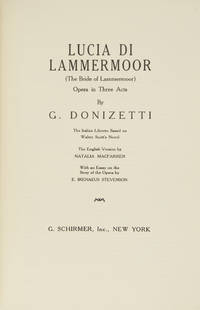
192630261New York: G. Schirmer PN 14047 1926. Large octavo. Full dark green cloth with titling gilt to upper board and spine. 1f. recto title verso copyright statement iii-vi named cast list and introduction vii contents viii-xii essay by Estelle Liebling 1f. recto half title verso blank 240 pp.<br/><br/>Named cast list includes Cosselli Tacchinardi-Persiani Duprez Giacchini Porto Zappucci and Rossi. <br/><br/>Spine slightly faded; former owner's handstamp "William B. L. Janko" to front pastedown and former owner's signature "Dennis Fuscaldo" in red ink to free front endpaper. G. Schirmer [PN 14047] unknown books
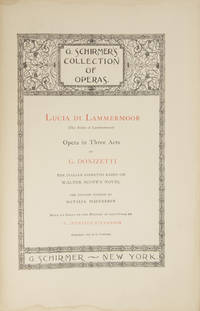
189830260New York: G. Schirmer PN 14047 1898. Large octavo. Full dark green cloth with titling and decoration gilt to upper board titling gilt to spine. 1f. recto title within decorative border verso blank iii-vi notes on first performance named cast list and introduction vii contents i blank 240 pp. <br/><br/>Named cast list includes Cosselli Tacchinardi-Persiani Duprez Giacchini Porto Zappucci and Rossi. <br/><br/>Binding worn stained and shaken. Some signatures split; former owner's signature "Edith Thomas Fordham" in black ink dated October 1910 to front endpaper; minor dampstaining to lower and outer edges of first two leaves. First performed in Naples at the Teatro Fondo on September 26 1835 in London in 1838 Paris in 1839 New York in English at the Park Theatre in 1843 and in Italian in 1849. G. Schirmer [PN 14047] unknown books
183733497Milano: Gio. Ricordi 1837. 5 numbers. Oblong folio. Disbound. Engraved.<br/><br/>- Cavatina nell'Introduzione: Cruda funesta smania PN 8986. 8 pp.<br/>- Cavatina: Regnava nel silenzio PN 8987. 9 1 blank pp.<br/>- Duetto: Il pallor funesto orrendo PN 8989 / 10083. 16 pp.<br/>- Aria: Ah cedi o piu seiagure PN 8990. 6 pp.<br/>- Recit e Cavatina: Regnava nel silenzio PN 10079. 11 1 blank pp. A revised edition of PN 8987.<br/><br/>From the collection of Italian conductor vocal coach and close associate of Puccini and Mascagni Luigi Ricci 1893-1981.<br/><br/>Slightly worn and soiled; spines frayed; "Il pallor." more heavily worn. From the plates of the first edition. Inzaghi IN. 55 pp. 173.<br/><br/>Lucia di Lammermoor to a libretto by Salvadore Cammarano after Walter Scott's novel The Bride of Lammermoor 1819 premiered in Naples at the Teatro San Carlo on 26 September 26 1835.<br/><br/>"Both historically and artistically Lucia deserves its reputation. When it was new it was regarded as the apogee of high Romantic sensibility. The clear plot which trims away much of Scott's accessory detail possesses the stark tautness of a tale by Poe. It is no coincidence that Flaubert employed it as an important point of reference in the downward course of Emma Bovary that quintessential victim of Romantic illusions."<br/><br/>"Although all the principal roles are vocally challenging their music is uniformly grateful. The score contains scant sign of the unevenness that afflicts a number of Donizetti's works. Cammarano's libretto moved him deeply and inspired by his recent first exposure to Paris Donizetti produced what is certainly his masterpiece." William Ashbrook in Grove Music Online. Gio. Ricordi unknown books
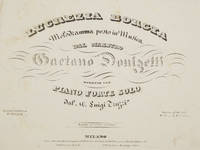
183431259Milano: Gio. Ricordi PNs 7210-7224 1834. Oblong folio. Light yellow calf-backed marbled boards gilt-ruled compartments to spine. 1f. recto title verso blank 1f. recto table of contents verso blank 5-107 pp. Each number with separate caption title some with separate pagination. Engraved. <br/><br/>From the collection of Italian conductor vocal coach and close associate of Puccini and Mascagni Luigi Ricci 1893-1981.<br/><br/>Binding worn rubbed and bumped; minor loss to head and tail of spine; narrow strip cut from upper margin of front free endpaper with remnants of contemporary markings in all likelihood related to ownership. Light foxing and a few small stains to title; very minimal scattered foxing throughout. First edition for piano solo. Inzaghi IN. 47 pp. 164-166.<br/><br/>Lucrezia Borgia to a libretto by Felice Romani after Victor Hugo's play Lucrèce Borgia was premiered in Milan at the Teatro alla Scala on December 26 1833. Despite an uneven reception it became one of Donizetti's most successful operas particularly after the second production of the work in 1840. <br/><br/>Ricci was an important figure in the transmission of 19th century traditions passed on to him by noted baritone Antonio Cotogni 1831-1918 whom he accompanied from the age of 12. He was active as a vocal coach at the Accademia Nazionale di Santa Cecilia where he taught amongst many others Sesto Bruscantini Anna Moffo Rosalind Elias Ezio Flagello Peter Lindroos and Martti Wallén. Gio. Ricordi [PNs 7210-7224] unknown books
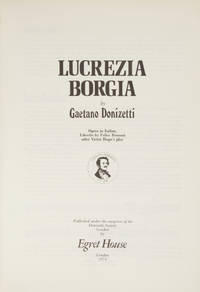
197430266London: Egret House PN 41690 k 1974. Large octavo. Original publisher's decorative wrappers. 1f. recto half title verso blank 1f. recto title verso copyright statement 2ff. publisher's note and introduction 1f. recto chronology verso blank 1f. recto reproduction title verso blank 1f. recto named cast list verso contents 1f. blank 241 i device pp. <br/><br/>Named cast includes Mariani Luciano Lalande Enrichetta Pedrazzi Francesco Brambilla Marietta Marconi Napoleone Visanetti Giuseppe Guaita Ismaele Vaschetti Giuseppe Spiaggi Domenico Pochini Ranieri and Petrazzoli Francesco. <br/><br/>Wrappers slightly worn and soiled; bookseller's label to upper wrapper. Egret House [PN 41690 k] unknown books
184033576Leipzig: Friedrich Hofmeister PN 2387 1840. Oblong folio. Black marbled boards with original publisher's brown printed wrappers bound in. 77 pp. Engraved. Text in Italian and German.<br/><br/>Some early notational additions in pencil to the vocal lines in the sixth number the duet "Oude riedi che mai brami"<br/><br/>From the collection of Luigi Ricci 1893-1981 Italian conductor vocal coach and close associate of Puccini and Mascagni.<br/><br/>Binding considerably worn rubbed bumped and cracked; spine mostly lacking; remnants of paper title label to upper. Some minor signs of wear; light uniform browning; scattered foxing. First German edition. The first edition of the complete piano-vocal score was published in the following year in Vienna by Diabelli. Inzaghi IN. 62 p. 182. <br/><br/>Maria de Rudenz a dramma tragico in 3 acts to a libretto by Salvadore Cammarano after A. Bourgeois J.-G.-A. Cuvelier and J. de Mallian premiered in Venice at the Teatro La Fenice on 30 January 1838. <br/><br/>"With its highly romantic plot unusual in involving a heroine who apparently dies twice Maria de Rudenz marks the extreme of Donizetti's interest in 'strong' subjects. It has often been remarked that the libretto's violent plot and its reliance on past events to move the action on is more than a little reminiscent of Cammarano's later Il trovatore. The score contains much fine music including a mellifluous sortita for the baritone a notable Larghetto to the Act 1 finale later incorporated into Poliuto and Les martyrs several powerful duets with contrasting melodies for the participants particularly effective is the one for Maria and Corrado in Act 2 a moving aria-finale for the heroine and extraordinarily in the prelude to Act 2 an extended solo for bass clarinet." William Ashbrook in Grove Music Online. Friedrich Hofmeister [PN 2387] unknown books
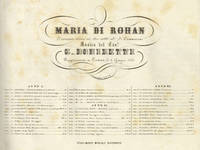
185331243Napoli: Stabilimento Musicale Partenopeo PNs 6056-6060 6063 6065 6133 6136-6141 6402 6492 6535 6652 6659-6660 6721-6724 6727-6730 1853. Oblong folio. Vellum-backed and edged boards with dark brown cloth laid down initials "C.G." gilt to upper titling to spine stamped in black original yellow publisher's printed wrappers bound in. 1f. recto title verso named cast list table of contents 3-158 pp. Each number with separate caption title and secondary pagination. Engraved.<br/><br/>Endpapers watermarked with a fleur-de-lis and "Michele Dupino Marmorato." With priced catalog "Opere Teatrali Intere" to upper wrapper listing works by Bellini Donizetti Rossini Verdi et al. composed through 1853 and with list of pieces with individual prices and plate numbers to title. Named cast list includes the performers from the premieres in Vienna Paris and Naples including: Eugenia Tadolini Giorgio Ronconi Carlo Guasco Lorenzo Salvi Giulia Grisi Marietta Brambilla Gaetano Fraschini and Filippo Coletti. <br/><br/>Piano reduction of the Sinfonia by Czerny "nello stile elegante."<br/><br/>From the collection of Italian conductor vocal coach and close associate of Puccini and Mascagni Luigi Ricci 1893-1981.<br/><br/>Binding slightly worn and with minor defects. Minimal foxing throughout primarily confined to margins. An early edition later issue. Inzaghi IN. 76 pp. 196-7.<br/><br/>Girard's first edition of Maria di Rohan appeared circa 1844 but this issue contains a new title page with Girard's later imprint Stabilimento Musicale Partenopeo.<br/><br/>Maria di Rohan was composed to a libretto by Salvadore Cammarano after Lockroy and Badon's play Un duel sous le Cardinal de Richelieu 1832. It premiered at the Kärntnertortheater in Vienna on June 5 1843.<br/><br/>"The most tautly constructed of Donizetti's romantic melodrammi Maria di Rohan shows clear signs particularly in Act 3 that Donizetti was moving towards the effect of unbroken musical continuity abandoning the closed patterns of conventional 'number' opera. Even in Act 1 the usual succession of 'entrance' arias is given new force and dynamism by Donizetti's tendency to reduce the fixed forms to their minimum and to inject vivid musical characterization. It is a work that calls for accomplished singers who are also powerful actors particularly for the baritone role of Chevreuse. Chorley described the powerful effect produced by Giorgio Ronconi in this part.<br/><br/>Maria di Rohan contains some of Donizetti's most expressive music. The soprano's first-act aria 'Cupa fatal mestizia' suggests Un ballo in maschera. The tenor's aria at the beginning of Act 2 'Alma soave e cara' is one of a number of fine single-movement tenor arias from the final years of Donizetti's output that reveal how effectively he wrote for this range of voice. The baritone's scene in Act 3 'Bella e di sol vestita' has been eloquently recorded by Mattia Battistini." William Ashbrook in Grove Music Online.<br/><br/>Ricci was an important figure in the transmission of 19th century traditions passed on to him by noted baritone Antonio Cotogni 1831-1918 whom he accompanied from the age of 12. He was active as a vocal coach at the Accademia Nazionale di Santa Cecilia where he taught amongst many others Sesto Bruscantini Anna Moffo Rosalind Elias Ezio Flagello Peter Lindroos and Martti Wallén. Stabilimento Musicale Partenopeo [PNs 6056-6060, 6063, 6065, 6133, 6136-6141, 6402, 6492, 6535, 6652, 6659-6660, 6721-6724, 6727 unknown books
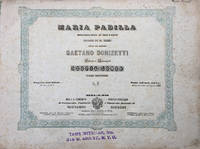
185933417Milano: Giovanni Ricordi PNs 13551-13579 1859. Oblong folio. Disbound. 1f. title printed within decorative light teal blue border 1f. named cast list contents 3-253 1 blank pp. Engraved.<br/><br/>Named cast list includes Giorgio Ronconi Gaetano Rossi Domenico Donzelli Sofia Löwe Luigia Abbadia and Teresa Ruggeri.<br/><br/>Contemporary owner's signature "Geo. Sweet" to upper outer corner of title with handstamp of Tams Witmark to blank lower margin and blindstamp of Tito Ricordi dated April 1859 to lower outer corner.<br/><br/>Wrappers lacking. Slight dampstaining to lower margin throughout; light foxing to outer leaves; occasional markings in pencil. First Italian edition later issue. Published shortly after the French edition. Inzaghi IN. 71 p. 191. Bergamo Catalogue p. 127 54. Gaspari III p. 301.<br/><br/>A melodramma in three acts to a ibretto by Gaetano Rossi and Donizetti after the play by François Ancelot Maria Padilla premiered in Milan at La Scala on 26 December 1841.<br/><br/>"One of the most unfairly neglected of Donizetti's mature operas Maria Padilla contains a wealth of brilliant and dramatically powerful music." William Ashbrook in Grove Dictionary of Opera. Giovanni Ricordi [PNs 13551-13579] unknown books
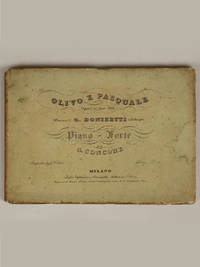
183033414Milano: Epimaco e Pascquale Artaria PNs 128-136 1830. CONCONE Paolo Giuseppe 1801-1861 arranger. Oblong octavo. Original publisher's printed boards paper title label to spine. 1f. illustrated lithographic title 82 pp. Engraved. With publisher's catalogue to verso of lower wrapper.<br/><br/>With lithograph by Le Brass depicting a scene from Act I Scene VI of the opera. <br/><br/>From the collection of Luigi Ricci 1893-1981 Italian conductor vocal coach and close associate of Puccini and Mascagni.<br/><br/>Binding somewhat worn rubbed and soiled; dampstain to upper right. Scattered light foxing. First Edition of this arrangement. Rare. OCLC one copy only in Switzerland. Inzaghi IN. 22 p. 142.<br/><br/>A melodramma in 2 acts to a libretto by Jacopo Ferretti after Simeone Antonio Sografi Olivo e Pasquale premiered in Rome at the Teatro Valle on 7 January 1827. Epimaco e Pascquale Artaria [PNs 128-136] unknown books
183033412Milan: Epimaque et Pascal Artaria PNs 58-67 1830. TROMBETTA Giuseppe arranger. Oblong octavo. Vellum-backed marbled boards with decorative rectangular paper label with manuscript titling to upper manuscript titling to spine. 96 pp. total in various paginations. Engraved. On wove paper.<br/><br/>With small embossed crown with initials "FG" beneath to upper blank margin of title.<br/><br/>From the collection of Luigi Ricci 1893-1981 Italian conductor vocal coach and close associate of Puccini and Mascagni.<br/><br/><br/>Binding somewhat worn rubbed and scuffed; head of spine chipped; free front endpaper lacking. Scattered light foxing. First Edition of this arrangement later issue. Rare. OCLC no copies in North American libraries. Inzaghi IN. 23 p. 143. Bergamo Catalogue p. 133 27.<br/><br/>An opera romantica in 3 acts to a libretto by Domenico Gilardoni after La fille de l'exilé 1819 by Pixérécourt Otto premiered in Naples at the Teatro Nuovo on 13 May 1827. Epimaque et Pascal Artaria [PNs 58-67] unknown books
182933413Milan: Epimaque et Pascal Artaria PNs 58-67 1829. TROMBETTA Giuseppe arranger. Oblong octavo. Original publisher's printed boards paper title label to spine. 1f. title printed in blue and black 96 pp. Engraved. With publisher's catalog to verso of lower wrapper. On laid paper.<br/><br/>From the collection of Luigi Ricci 1893-1981 Italian conductor vocal coach and close associate of Puccini and Mascagni.<br/><br/>Binding somewhat worn and rubbed; free front endpaper lacking. Scattered light foxing. First Edition of this arrangement first issue. Inzaghi IN. 23 p. 143. Bergamo Catalogue p. 133 27.<br/><br/>An opera romantica in 3 acts to a libretto by Domenico Gilardoni after La fille de l'exilé 1819 by Pixérécourt the present work premiered in Naples at the Teatro Nuovo on 13 May 1827. Epimaque et Pascal Artaria [PNs 58-67] unknown books
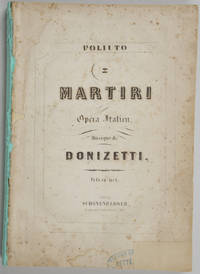
185226482Paris: Schonenberger PNs S. 1828 1188 1852. Octavo. 1f. title i thematic table of contents i publisher's catalog 162 pp. Engraved.<br/><br/>Vendor's handstamp to lower margin of title.<br/><br/>Lacking wrappers with remnants of modern green paper to spine. Moderately foxed; some leaves stained; repairs to margins of some leaves affecting several measures of music. Later edition. Lesure II pp. 395-396. OCLC no. 7618582.<br/><br/>Poliuto a tragedia lirica to a libretto by Salvadore Cammarano after Pierre Corneille's play Polyeucte was first performed at the Teatro San Carlo in Naples on November 30 1848.<br/><br/>"Never very successful in Paris Les Martyrs enjoyed some circulation in an Italian translation as I martiri but in Italy the more compact three-act Poliuto was generally preferred. Its performance history there began in 1848 when it received its première in Naples soon after Donizetti's death; the recent granting of a constitution there made the mounting of the banned work seem a political gesture as well as an artistic one. Throughout the 19th century it was put on periodically as a vehicle for such dramatic tenors as Tamberlik and Tamagno. It has had some notable revivals: at La Scala in 1940 with Gigli and Caniglia and in 1960 with Corelli and Callas; in 1977 at the S Carlo; and in Vienna in 1986 with Carreras. A Rome revival in 1988 followed a text that removed many years' editorial accretions. Les martyrs too has been revived notably in Venice in 1978." William Ashbrook in Grove Music Online. Schonenberger [PNs S. 1828, 1188] unknown books
183631274Napoli: B. Girard e Ci. PN 3068 1836. Oblong folio. Sewn. 11 pp. 1 blank. Engraved.<br/><br/>Inscriptions to title in three hands: "Sr. Palombis " in faded black ink "N Spada" in blue ink "eseguito il 3 ottobre 1858" in brown ink.<br/><br/>From the collection of Italian conductor vocal coach and close associate of Puccini and Mascagni Luigi Ricci 1893-1981.<br/><br/>Spine reinforced with contemporary paper tape partially split. Edges slightly frayed and with small tears; several corners creased; minor foxing and staining throughout. From the first Naples edition. Inzaghi IN. 56 pp. 175-7.<br/><br/>Belisario was composed to a libretto by Salvadore Cammarano after Luigi Marchionni's adaptation of Eduard von Schenk's Belisarius 1820. It premiered at the Teatro La Fenice in Venice on February 4 1836. <br/><br/>The duet "Se vederla a me non lice" is from the finale of Act 2 in which Irene prepares to lead her blinded father Belisarius into exile. The premiere was sung by Celestino Salvatori and Antonietta Vial. "The tenderness and intensity of their duet . prefigures another Verdi speciality the father-daughter duet." William Ashbrook in Grove Music Online.<br/><br/>Ricci was an important figure in the transmission of 19th century traditions passed on to him by noted baritone Antonio Cotogni 1831-1918 whom he accompanied from the age of 12. He was active as a vocal coach at the Accademia Nazionale di Santa Cecilia where he taught amongst many others Sesto Bruscantini Anna Moffo Rosalind Elias Ezio Flagello Peter Lindroos and Martti Wallén. B. Girard e Ci. [PN 3068] unknown books
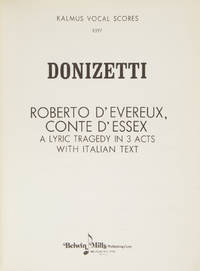
198030259Melville N.Y.: Belwin Mills PN 9397 1980. Folio. Original publisher's green printed wrappers. 1f. recto title verso blank i reproduction incipits and named cast list 2-159 i blank pp. <br/><br/>Named cast list includes Grisi Albertazzi Rubini Morelli Tamburini and Marliano. <br/><br/>Wrappers slightly worn. Kalmus Vocal Scores 9397. Belwin Mills [PN 9397] unknown books
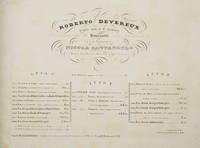
185331257Napoli: Successori della Ditta Girard e Co. PNs 3616-31 3872-3 4292-4 1853. Oblong folio. Vellum-backed and edged boards with burgundy cloth laid down initials "C.G." gilt to upper titling to spine stamped in black original yellow publisher's printed wrappers bound in. 1f. recto title verso blank 8 pp. Sinfonia 3-150 pp. Each number with separate caption title and pagination. Engraved.<br/><br/>Endpapers watermarked with a fleur-de-lis. With priced catalog "Opere Teatrali Intere" to upper wrapper listing works by Bellini Donizetti Rossini Verdi et al. composed through 1853 and with list of pieces with individual prices and plate numbers to title.<br/><br/>From the collection of Italian conductor vocal coach and close associate of Puccini and Mascagni Luigi Ricci 1893-1981.<br/><br/>Binding slightly worn bumped and scuffed. Light browning to title; minimal foxing throughout primarily confined to margins. First Edition of the revised version later issue. Inzaghi IN. 61 pp. 180-2. The first edition of Roberto Devereux was revised by Girard with the changes Donizetti made for the 1838 performance in Paris PNs 4292-4. This later issue has "Successori della Ditta" added to the title indicating that it was issued shortly after Girard's imprint changed in 1853. <br/><br/>Roberto Devereux to a libretto by Salvadore Cammarano after François Ancelot's tragedy Élisabeth d'Angleterre 1829 was first performed in Naples at the Teatro S Carlo on October 28 1837.<br/><br/>"The portrait of Queen Elizabeth I in Roberto Devereux is the most imposing of Donizetti's representations of that character who also appears in Elisabetta al castello di Kenilworth and Maria Stuarda and the role must rank as one of the great acting and singing opportunities in the bel canto repertory. Musically the score has much to commend it. As in other Donizetti operas the first act moves in a rather leisurely manner with a sequence of full arie di sortita; the pace accelerates to a dramatic climax in a briefer Act 2; then Act 3 like that of Lucia is a sequence of three powerful scenes."<br/><br/>"Particularly impressive are Elizabeth's entrance aria the duet for Sarah and Essex the trio-finale to Act 2 the Prison Scene of Essex and Elizabeth's aria-finale. Everywhere the score shows the sure hand of a composer in control of his materials. The powerful prelude to the Prison Scene recalls the opening of Act 2 of Fidelio. Elizabeth's final Larghetto 'Vivi ingrato' is a fine example of a melody developing in a long emotional arc of searing poignancy and of Donizetti's sensitive response to the expressive colour of the words." William Ashbrook in Grove Music Online.<br/><br/>Ricci was an important figure in the transmission of 19th century traditions passed on to him by noted baritone Antonio Cotogni 1831-1918 whom he accompanied from the age of 12. He was active as a vocal coach at the Accademia Nazionale di Santa Cecilia where he taught amongst many others Sesto Bruscantini Anna Moffo Rosalind Elias Ezio Flagello Peter Lindroos and Martti Wallén. Successori della Ditta Girard e Co. [PNs 3616-31, 3872-3, 4292-4] unknown books