Anne E McCall Saint-SaensBiblio.com

221 résultats
1996BN149467Rodopi B.V. 1996. 1996. Softcover. De l'être en lettres: L'autobiographie épistolaire de George Sand <br/><br/>De l'être en lettres: L'autobiographie épistolaire de George Sand Anne E. McCall Saint-Saëns Rodopi B.V. paperback
2001BN245449Durand 2001. 2001. Softcover. Trio Op 92 N 2 Vl-Vlc-Piano En Mi Mineur MUSIQUE D'ENSEM <br/><br/>Trio Op 92 N 2 Vl-Vlc-Piano En Mi Mineur MUSIQUE D'ENSEM Camille Saint-Saëns Durand paperback
BN87991Münster: Coppenrath Verlag. Der Karneval der Tiere - Mit Langspielplatte <br/><br/> Münster: Coppenrath Verlag unknown
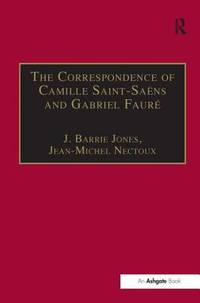
654366588Ashgate Publishing Company pp. 174 . Hardback. New. Ashgate Publishing Company hardcover
19932209180421063Meridian 1993-09-18. Audio CD. Like New. CD plays perfectly & the case looks good. Meridian unknown
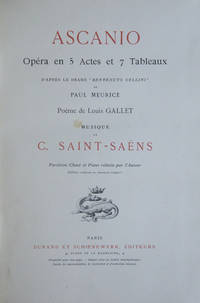
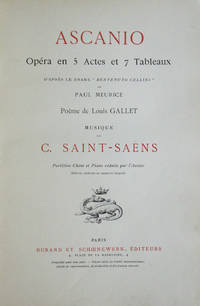
189026255Paris: Durand et Schoenewerk PN D.S. 4025 1890. Large octavo. Quarter contemporary black morocco with textured red paper boards rules and titling gilt to spine marbled endpapers. 1f. half-title 1f. illustration of a scene from the opera 1f. title i facsimile of 2 medallions under which the text "Benvenuto fecit" is printed i note regarding the mise en scène i named cast list for the first performance ii table of contents i blank 391 i blank pp. Text in French. <br /> <br /> With publisher's handstamp to lower outer corner of half-title. Supplement "Annexe" to pp. 388-391.<br /> <br /> Binding slightly worn rubbed and bumped; partially split at joints. Slightly browned; scattered foxing heavier to some leaves; several corners slightly creased. With occasional performance markings including accidentals slurs and breath marks in pencil. First Edition of the first version. Ratner II p. 205.<br /> <br /> Ascanio to a libretto by Louis Gallet after Paul Meurice's play Benvenuto Cellini was first performed at the Paris Opéra on 21 March 1890. <br /> <br /> "Composed in 1887-8 Ascanio makes a grand opera of a play of intrigue set in Paris in 1539. Meurice whom Saint-Saëns knew well had collaborated with Alexandre Dumas père on his novel Benvenuto Cellini published in 1843 and had fashioned a successful play from the story in 1852. To avoid confusion with Berlioz's opera the title was changed even though Cellini is still the principal character in the drama and a scene in the play where Cellini runs out of metal when casting a statue was not included. The choice of an episode from Cellini's life that took place in France at the court of François I satisfied Saint-Saëns' longstanding desire to base his operas on French history and by casting the third act as a fête at Fontainebleau a departure from Meurice's play he found an opportunity for an extensive divertissement of 12 dances very much in the spirit and to some extent in the style of French Baroque opera." Hugh Macdonald in Grove Music Online. Durand et Schoenewerk [PN D.S. 4025] unknown
189026602Paris: Durand et Schoenewerk PN D.S. 4025 1890. Large octavo. Quarter contemporary red morocco with marbled boards raised bands on spine in decorative compartments gilt marbled endpapers. 1f. half-title 1f. illustration of a scene from the opera 1f. title i facsimile of 2 medallions under which the text "Benvenuto fecit" is printed i note regarding the mise en scène i named cast list for the first performance ii table of contents i blank 391 i blank pp. <br /> <br /> With publisher's partial handstamp to lower outer corner of half-title. Supplement "Annexe" to pp. 388-391.<br /> <br /> Binding slighty worn rubbed and bumped. Minor foxing. Contemporary musical notation somewhat smudged.<br /> <br /> An attractive copy overall. First Edition of the first version. Ratner II p. 205.<br /> <br /> Ascanio to a libretto by Louis Gallet after Paul Meurice's play Benvenuto Cellini was first performed in Paris at the Opéra on March 21 1890. <br /> <br /> "Composed in 1887-8 Ascanio makes a grand opera of a play of intrigue set in Paris in 1539. Meurice whom Saint-Saëns knew well had collaborated with Alexandre Dumas père on his novel Benvenuto Cellini published in 1843 and had fashioned a successful play from the story in 1852. To avoid confusion with Berlioz's opera the title was changed even though Cellini is still the principal character in the drama and a scene in the play where Cellini runs out of metal when casting a statue was not included. The choice of an episode from Cellini's life that took place in France at the court of François I satisfied Saint-Saëns' longstanding desire to base his operas on French history and by casting the third act as a fête at Fontainebleau a departure from Meurice's play he found an opportunity for an extensive divertissement of 12 dances very much in the spirit and to some extent in the style of French Baroque opera." Hugh Macdonald in Grove Music Online. Durand et Schoenewerk [PN D.S. 4025] unknown
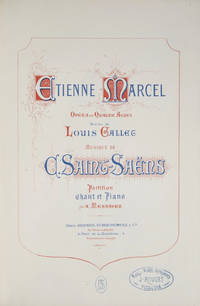
187926260Paris: Durand Schoenewerk PN D.S. & Cie. 2551 1879. Large octavo. Half mid-blue cloth with marbled boards speckled edges marbled endpapers. 1f. dedication 1f. decorative title printed in red and blue 1f. engraved frontispiece portrait of Etienne Marcel by G. Fraipont after A. de Neuville 1f. named cast list 1f. table of contents 365 i blank pp.<br /> <br /> Named cast includes Delrat Stéphanne Plançon De Grave Echetto Baron Nerval Reine Mézeray Amélie Luigini Legénisel Bonnefond Morfer and Frédéric.<br /> <br /> Publisher's and vendor's handstamps to lower blank margin of title.<br /> <br /> Binding very slightly worn and rubbed; minor soiling and wear to outer edge. Occasional very light soiling not affecting music. A very attractive copy overall. First Edition. Ratner II p. 99.<br /> <br /> First performed at the Grand Theatre in Lyons on 8 February 1879. <br /> <br /> Saint-Saens and Gallet took as subject matter for their historical drama the life of Etienne Marcel hero of the 1358 popular rebellion during the regency of the Dauphin Charles. The subject held contemporary resonance in the rebuilding of Paris following the destruction of the Commune. Durand Schoenewerk [PN D.S. & Cie. 2551] unknown
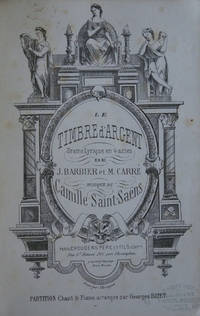
187726236Paris: Choudens Père et Fils PN A.C. 3558. 1877. Large octavo. Quarter contemporary green calf with textured green paper boards rules and titling gilt to spine. 1f. title within decorative borders engraved by J. Bourgeois 1f. dedication to Albert Libon by the composer 1 named cast list for the first performance and table of contents 2-304 pp. Text in French.<br /> <br /> With vendor's handstamp to lower margin of title and printer's note to the lower margin of table of contents "Paris Imp. Fouquet. Baudon Gr.".<br /> <br /> Binding slightly worn rubbed and bumped. Slightly browned; occasional light stainiing; many leaves with light to moderate foxing or mold especially to margins. First Edition of the first version. Ratner II p. 73.<br /> <br /> Le Timbre d'argent to a libretto by Jules Barbier and Michel Carré was first performed at the Théâtre Lyrique in Paris on February 23 1877.<br /> <br /> "Composed in 1864-5 for the Théâtre Lyrique Paris the opera was kept from the stage first by the theatre's bankruptcy then by the Franco-Prussian War and was not played until 1877. In the meantime Saint-Saëns had recomposed the dialogue to form a grand opera version which was not played until 1913. The music is enormously fluent and versatile . There are some bold scenic ideas including a theatre seen from the back of the stage and some fanciful transformations. It seems no coincidence that the opera's 18 performances in 1877 exactly coincided with Offenbach's first concentrated labours on Les contes d'Hoffmann." Hugh Macdonald in Grove Music Online. Choudens Père et Fils [PN A.C. 3558.] unknown
19919971600Edwin Mellen Press Ltd 1991. This is an ex-library book and may have the usual library/used-book markings inside.This book has hardback covers. In good all round condition. No dust jacket. Please note the Image in this listing is a stock photo and may not match the covers of the actual item550grams ISBN:0773495274 Edwin Mellen Press Ltd hardcover
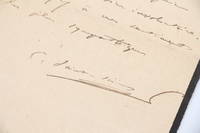
20147explaining that he appreciates very much his request but is "bowled over with work. Please excuse me" 3 sides 8vo. St. Germain-en-Laye 26th May n.y. circa unknown
33004taken from an autograph album "England is a delightful country. respectfully." 1 side 4to. with another entry underneath no place 2nd June A fine example for framing unknown
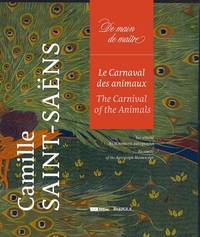
2018BN110312Brepols 2018. 2018. Camille Saint-Saëns Le Carnaval des animaux : Facsimile Edition of the Autograph Manuscript <br/><br/>Camille Saint-Saëns Le Carnaval des animaux : Facsimile Edition of the Autograph Manuscript Brepols unknown
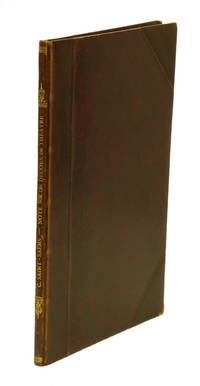
71925Paris L. Baschet 1886. 8vo. 6 23 pp. Title printed in red and black red frames. Somewhat worn contemporary half brown morocco gilt spine and with printed wrappers preserved. Hinges worn with a small crack. Thick paper copy. Not in Garcia or in Furchheim. The composer Saint-Saëns’ 1835-1921 treaty on the ancient theatres dedicated to Charles Nuttier deals mainly with the theatres in Pompeii and with the wall paintings in Pompeii depicting theatres. unknown
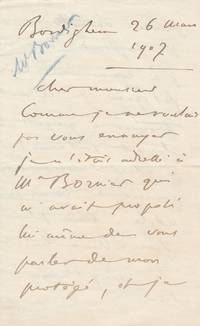
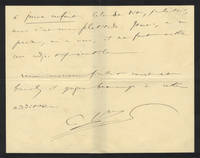
51998Bordighera Italy dated March 26 1907. Single folded leaf measuring 18.2 × 22.5 cm. unfolded with holograph text to recto and verso in brown ink. Illegible note to first page and two words underlined in blue pencil. Old horizontal crease; else very good. Autographed letter signed by French musician and composer Camille Saint-Saëns 1835-1921 to an unidentified addressee concerning his "protégé" one Ferdinand Nayrac whom he knew during his stay in Cairo in 1891 but about whom we are unable to find any information.<br /> <br /> "Cher monsieur comme je ne voulais pas vous ennuyer je m'etais adressé à M. Bornier qui m'avait proposé lui meme de vous parler de mon protégé et je pensais naturellement qu'il l'avait fait. Il s'agit de M. Ferdinand Nayrac que j'ai connu au Caire." The composer goes on to describe how his wife is exhausted by the climate and they are looking for work in milder climes. unknown
271153 pp. of a bifolium. Octavo ca. 159 x 101 mm. Dated "Sunday." On black-bordered ivory mourning stationery. In French with translation. <br /> <br /> Saint-Saëns writes that his correspondent "has done well to be insistent" about the ending of an unidentified work and has implemented the necessary corrections.<br /> <br /> "This ending was necessary. 'L'ombre abrite' is impossible. I put 'dans l'ombre près del la fenêtre' and I substituted 'doux enfant' for 'jeune enfant'. That is obvious I know but it is a platitude. Never neither in prose nor in verse should one put a useless adjective. By finishing short and simple my piece gains a lot from this addition."<br /> <br /> Small annotation to blank final page.<br /> <br /> Slightly worn and soiled; creased at folds. "Like Mozart to whom he was often compared Saint-Saëns was a brilliant craftsman versatile and prolific who contributed to every genre of French music. He was one of the leaders of the French musical renaissance of the 1870s." Sabina Teller Ratner et al. in Grove Music Online. unknown
184539089Paris: Chlendowski 1845. Bertall. A UNIQUE SET OF BON-A-TIRER PROOFS B.A.T.s many signed by Bertall of the wood-engravings used in Balzac's "Petites misères de la vie conjugale" one of the truly great 19th-century French illustrated books. This set includes 60 proofs on Chinese paper of which 36 are SIGNED by Bertall to confirm his approval of the final image and one of which features a small ink sketch. There is no record of any other impressions of any of these prints on Chinese paper or of any signed impressions on any paper at all. Generally in excellent condition although a few are creased or spotted. 12.5 x 12 cm and smaller. UNIQUE AND IMPORTANT. IT IS EXTREMELY UNUSUAL TO FIND HAND-SIGNED PRINTS EARLIER THAN 1875. <br/><br/> Chlendowski unknown
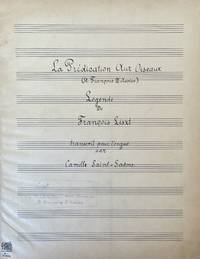
2298Early 20th-century manuscript copy. In blue buckram. Gilt green morocco title vignette on front panel. Written on music manuscript paper marked “J. E. & Co. / Protokoll Schutzmarke / No. 1 / 10 linig.â€. Few notes musical marks and corrections in pencil. Binding rubbed at the extremities. Pages yellowed due to aging. Otherwise in fine condition. Early 20th-century manuscript copy. In blue buckram. Gilt green morocco title vignette on front panel. Written on music manuscript paper marked “J. E. & Co. / Protokoll Schutzmarke / No. 1 / 10 linig.â€. 10 leaves; 16 pages MS score. An early manuscript copy of Saint-Saëns’ organ transcript of Liszt’s La Prédication Aux Oiseaux or Die Vogelpredigt.<br /> As part of a pair of pieces for solo piano Deux légendes Liszt composed St. François d'Assise: La prédication aux oiseaux in 1863. Saint-Saëns finished the composition of the organ reduction before 1878 April and the transcript was first published by Rózsavölgyi & Co. in 1899. unknown
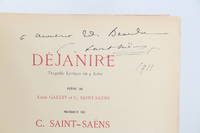
191088499Paris: Durand & Cie 1910. Fine. Durand & Cie Paris 1910 22.5 x 30.5 cm Broché sous étui First edition of the vocal and piano score of the opera Déjanire by Camille Saint-Saëns. A few pencil annotations in the margins of certain staves. Our copy is presented in a 3/4 shagreen clamshell box spine with five raised bands framed by gilt garlands and decorated with gilt fleurons gilt lettering at foot of spine: ""Inscribed by composer"". Boards endpapers and pastedowns in marbled paper. Spine of the box slightly faded. Inscribed dated and signed by Camille Saint-Saëns to music critic Edouard Beaudu. Saint-Saëns presented this copy to Edouard Beaudu a journalist writing for the Intransigeant who would later publish a glowing review of Durand & Cie hardcover
190186408s. l. 1901. Fine. I never stopped saying those who denigrate Mozart do not understand music s. l. 6 Février 1901 11.50 x 17.50 cm quatre pages sur un feuillet et une enveloppe Autograph letter signed by Camille Saint-Saëns to the essayist musicologist and music critic Adolphe Boschot. 43 lines written in black ink on a double leaf edged in black. Transverse fold inherent to the mailing with slight tears to the ends envelope enclosed in Saint-Saëns's hand to Boschot's address at 71 rue de Grenelle. Note in pencil from a previous bibliographer on the back of the envelope. Saint-Saëns wrote this wonderful demonstration of reverence for the Salzburg composer in 1901. That same year his friend Boschot the recipient of this letter was playing Mozart's chamber music at his home at 71 rue de Grenelle. The composer apologized for his absence: ""It's not my fault that in spite of my objurgations the earth refuses to stop in its course around the sun; for the 65th time I am witnessing this gyratory movement and the public performance of pieces of music on the piano is no longer my prerogative. Besides your sessions finish before the end of March and I won't be back until April 1st so I won't even be able to attend"". In his youth it was precisely as an interpreter of the divine artist that the prodigy Saint-Saëns had earned the nickname ""little Mozart"". In the letter he congratulates Boschot the author of a study entitled ""La Lumière de Mozart"" for his defense of the composer whom he himself had supported against the advice of the majority: ""Believe me I regret it and I'll be very happy to see that someone is taking care of getting the public to follow Mozart's path again. Thirty years ago the advanced party wanted to declare war on him so I defended him and never stopped saying those who denigrate Mozart don not understand music. Allow me to recommend his little-known motets with orchestra including the famous Ave Verum."" He ends the letter with a fine analysis of the composer's style: May we learn from listening to Mozart that there is more to music than sensations and nervous vibrations and that delicate artistry and purity of form are things not to be scorned. An exceptional expression of admiration and respect from one musical genius to another. unknown
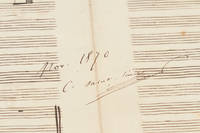
1870877761870. Fine. An exceedingly rare Saint-Saëns unpublished score novembre 1870 33.20 x 24.50 cm un bifeuillet Unpublished and signed autograph score by Camille Saint-Saëns. Two pages of handwritten music for solo voice and piano on an oblong bifolium with twenty staves. Autograph inscription on the first page signed by Saint-Saëns with his signature and date ""Nov. 1870"" appearing again on the second page. Trace of vertical fold with a tiny tear along the fold a small marginal tear on 1 cm of the first page without damage to the manuscript. An exceptional unpublished autograph manuscript of a Persian melody for voice and piano composed by Camille Saint-Saëns during the Siege of Paris in November 1870 enriched with a autograph inscription: 'A Geneviève Bréton / Hommage de respectueux dévouement' To Geneviève Bréton / In homage with respectful devotion signed and dated on the second page 'Nov 1870 C. Saint Saëns'. The lyrics of the piece were directly inspired by its dedicatee the fiancée of the painter and tenor Henri Regnault 'the most musical of all the painters' Saint-Saëns École buissonnière translation by Edwin Gile Rich who was the first performer of several other Mélodies persanes. Geneviève Bréton a cultured and passionate woman was a fixture in the literary and artistic salons of her time surrounded by composers painters and the young Parnassian poets of her generation. Saint-Saëns likely met her through his friend the orientalist painter Henri Regnault a Prix de Rome laureate with whom she fell madly in love in Italy in 1867. A handsome young man already celebrated for his art Regnault also fascinated Saint-Saëns with his 'exquisite tenor; voice . alluring in its timbre and irresistible in its attractiveness just as he was himself' as the composer would later recall in 1913. Regnault premiered several of his compositions: 'In 1868 Regnault was the first to embody the role of Samson in the second act of the celebrated opera Samson et Dalila created during a private evening performance. Saint-Saëns renewed their collaboration by entrusting the artist with two of the Mélodies persanes composed for tenor voice.' Manon Bertaux. The Mélodies persanes op. 26 based on verses by the Parnassian poet Armand Renaud consist in their published version of three works for tenor Sabre en main Au Cimetière Tournoiement and three for contralto La Brise La Splendeur vide La Solitaire. They form one of Saint-Saëns's most famous cycles and belong to the golden age of French mélodie. This manuscript for voice and piano with its ardent colourful tone can unquestionably be linked to this set of melodies begun in June 1870 and sold by Saint-Saëns to his publisher Hartmann shortly afterwards. However Manon Bertaux's research has shown that 'the composer sold Hartmann an incomplete cycle having composed his final melodies at the beginning of the Siege of Paris from September onward"". Dated November 1870 our melody - as far as we know unknown to biographers and musicologists - is one of those composed in the midst of the Franco-Prussian war: 'Serving as a National Guard during the Siege of Paris Saint-Saëns continued his activities as a musician and composer alongside his duties guarding the ramparts'. It appears that both the text and music of this composition remained entirely unpublished and were never sent to Hartmann. For his part the painter Henri Regnault enlisted as a maverick also risked his life in an attempt to break the siege much to the dismay of Geneviève who confided her worries in her now famous diary Ramsay 1985. The young lovers had finally become engaged after years of opposition from the young woman's mother. Saint-Saëns likely offered this exquisite melody to Geneviève as a betrothal gifta radiant piece of warmth for the anxious young woman and here is the first of its two verses: « Ka-douja la chanteu-se Au manteau noir Qu'on trouve sous l'y-eu-se Quand unknown