Beethoven, Ludwig VanBiblio.com
872 résultats
1016615396.Ghardcover. Good. Access codes and supplements are not guaranteed with used items. May be an ex-library book. hardcover
H502Wien Anton Straufl 1823. 8vo. 4 Bl. S.317-748 mit 18 kolorierten Mode-Tafeln davon 1 Mann 3 davon 1 gefalt. Tafeln und 1 gefalt Noten-Blatt. Sehr gesucht und selten wegen der schˆnen kolorierten Mode-Tafeln sowie der Notentafel die einen Canon zu sechs Stimmen von Ludwig von Beethoven mit Worten von Goethe. Weiteres Beschreibung der oper Othello von Rossini. Original-Pappband Rese von Klebespuren auf den Vors‰tzen. Ein gutes sauberes Exemplar. unknown
1412ovscd118xDecca 2014-12-09. audioCD. Like New. 5x0x4. Complete 65 CD Box Set. All Cds sleeves and book in excellent condition. Box has slight shelf wear. Decca unknown
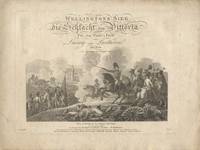
181740804Wien: S.A. Steiner und Comp. PN C.D.S. 2361 1817. Oblong folio. Unbound as issued. 1f. illustrated title depicting General Wellington leading his troops into battle i advertisement 2-29 i blank pp. Engraved throughout. <br /> <br /> Publisher's advertisement "Pränumerations-Anzeige" to page 1 soliciting subscriptions to first editions of Beethoven's symphonies no. 7 and 8 and announcing full scores parts and various arrangements. <br /> <br /> Occasional minor wear soiling and foxing mainly to first and last leaves. First Viennese edition second issue. LvBWV I p. 583. Hoboken 2 391 first issue. Hirsch IV 344.<br /> <br /> The arrangement of this orchestral work is by Beethoven himself. It was first published by Birchall in London in January of 1816. The Viennese edition by Steiner was first published in the following month. <br /> <br /> "Beethoven's 'Battle Symphony' more correctly entitled Wellington's Victory of the Battle of Victoria op. 91 came into being as the result of an idea by Maelzel that Beethoven should write a work for his latest invention the panharmonicon a sort of mechanical orchestra. The timing coincided with Wellington's defeat of Napoleon in 1813. . It is a programmatic piece for a large orchestra with a battery of military and Turkish percussion instruments including cannons and muskets. The first section opens with an English bugle call followed by the patriotic tune Rule Britannia answered by a French bugle call and marching tune known in Britain as For he's a jolly good fellow. Then comes a depiction of the battle. Part 2 called 'Victory Symphony' begins and ends with martial music but is otherwise based largely on the British national anthem which is treated fugally." Cooper: The Beethoven Compendium p. 220. S.A. Steiner und Comp. [PN C.D.S. 2361] unknown
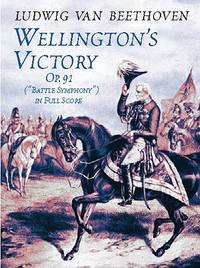
0486422046.Gpaperback. Good. Access codes and supplements are not guaranteed with used items. May be an ex-library book. paperback
1980611693London: The British Library 1980. Hardcover no jacket in very good condition. British Library Music Facsimiles - 3. With an introduction by Alan Tyson. Minor shelfwear and a little sunning to the hardcover. The pages are clean and sound all content is clear. CM. Hardcover. Very Good. Used. The British Library Hardcover
1980019526The British Library 1980. 1st Edition . Hardcover. Very Good. Folio - over 12 - 15" tall. Blue hardcover. In a near fine condition <br/> <br/> The British Library hardcover
19801411780London: The British Library 1980. Hardcover. Quarto oblong vii 20 leaves i.e. 40 pages of plates. In Very Good condition. Spine is gray with gold print. Boards in gray cloth. Illustrated: color plates facsimiles.<br /> <br /> Oversized books. Additional postage necessary for expedited/international orders. Economy International shipping unavailable due to size/weight restrictions. For international/expedited customers please inquire for rates.<br /> <br /> <p>NOTE: Shelved in Locked Annex Area Netdesk Column QB ND-QB Bottom Shelf. 1411780. FP New Rockville Stock. The British Library hardcover
1990SKU0013301RCA 1990-10-25. Audio CD. Like New. /ORIGINAL 1988 BMG/RCA RELEASE/ALL IN MINT CONDITION/COMPLETE WITH ALL INSERTS/SHIPS WITHIN 24HRS!! RCA unknown
1985Q-379576887XSCHOTT MUSIK INTL MAINZ 1985-10-01. Paperback. New. In shrink wrap. Looks like an interesting title! SCHOTT MUSIK INTL MAINZ paperback
19982430190318044Russian Revelation 1998-04-21. Audio CD. Like New. CD plays perfectly & the case looks good. Russian Revelation unknown
1974390646New York: Columbia 1974. Unbound. Near Fine. 4 Original 33 1/2 RPM vinyl records. All records fine in unprinted paper sleeve in a very good box with rubbing and faint spotting with album information taped to the front of the box. Columbia unknown
Q-0793535808GS LIBRARY 5. Paperback. New. New. In shrink wrap. Looks like an interesting title! GS LIBRARY 5 paperback
3385457289.Gpaperback. Good. Access codes and supplements are not guaranteed with used items. May be an ex-library book. paperback
3385457297.Ghardcover. Good. Access codes and supplements are not guaranteed with used items. May be an ex-library book. hardcover
3563870993.Gpaperback. Good. Access codes and supplements are not guaranteed with used items. May be an ex-library book. paperback
a53256Leipzig n.d. c.1910. Peters 8319. Edited by Friedrich Grutzmacher. In German. 4to. 39pp. plus 11pp. and pp. 35-36 in sleeve at rear printed blue cloth. Small single digit number written at bottom of title page. Near Fine. . hardcover
201017443New York City NY: Amadeus Press 2010. First Edition. First Printing. Hardcover. As New/No Dust Jacket As Issued. New York City NY: Amadeus Press 2010. Hardcover. As New/None As Issued. First Edition/First Printing. 500 pages. Retrospective collection of book-length accounts. Now widely regarded as one of the finest modern Introductions to the music of Bach Beethoven and Brahms. The first appearance of the individual titles in a Slipcased Set Edition. Published in a small and limited first print run as softcover originals only. Should not be confused with the individual volumes. Encased in a sturdy hard board slipcase. Without DJ's as issued. Presents in an elegant boxed set "Unlocking The Masters". The music of The Three B's in accessible illuminating book-length Introductions that scholars musicians and listeners alike will find engaging and indispensable. "Along with Beethoven's sonatas and the purely idiomatic works for piano of Chopin and Debussy the solo keyboard music of Johann Sebastian Bach represents the heart of the pianist's repertory; in the more specialized field of music for the organ Bach's primacy is beyond challenge. The composer's tendency to work exhaustively in tightly structured formats such as the Forty-Eight Preludes and Fugues of The Well-Tempered Clavier provides a natural framework for this study but the power beauty high polish and occasionally the sheer strangeness of Bach's imagination are also carefully examined" Publisher's blurb on Bach . "Shows how he bridged the Classical and Romantic Eras. Readers are treated to a detailed nuts-and-bolts description of each of the nine Beethoven symphonies. Perfect for anyone who wants to read listen and learn more about Beethoven and discover how this musical genius changed the face of orchestral music forever" On Beethoven . Explores in depth the composer's private world of musical intimacies that infuriated Wagner but inspired Schumann Schoenberg and millions of music lovers for generations to come. Addresses a controversial issue long-neglected by biographers and critics: Did Brahms sire an illegitimate child and in the absence of concrete evidence did he leave behind clues in his allusion-rich music" On Brahms . The point of listening to truly great music is to discover and experience in all its richness and fullness a particular and unique "sound world". It is not just about un-knotting music's closely intertwined elements melody rhythm harmony tonal color/instrumentation and as pleasurable as listening to various song traditions can be the "sound world" offers a much more complex therefore demanding fusion never heard before or not heard before with the same emphasis intensity and beauty. An absolute "must-have" title for Bach Beethoven and Brahms listener/collectors. This title is a classic. This is one of few copies of the Slipcased Set still available online and is in especially fine condition: Clean crisp and bright. A scarce set thus. 3 CD's attached at the end of each volume. Three of the greatest composers of all time. A fine set. . ISBN 1574671928. Amadeus Press hardcover
100104460Editions Cosmopolites. Bon état circa 1930 couverture défraîchie un peu frottée intérieur propre bonne tenue. in12. Sans date. Relié. Editions Cosmopolites unknown
1803500025622London: Monzani & Cimador 1803. First Edition. . Paperback. Good. 8pp disbound Folio. Monzani & Cimador began in 1800 and were at 2 Pall Mall between 1800 and 1803. Therefore published in Beethoven's Lifetime. Beethoven 1770 - 1827 so this is early period. Reputedly the12 Waltzes are "seldom heard". British Library & National Library of Australia have copies but noone else apparently so rare. <br/> <br/> Monzani & Cimador paperback
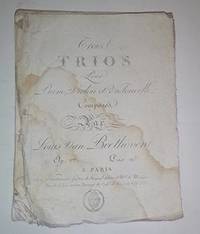
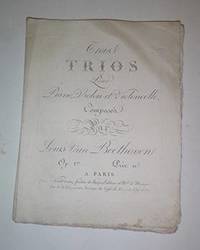
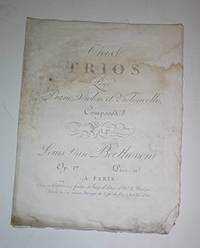
16-3933Paris: Chez Naderman circa early 19th Century. Engraved sheet music. 35 x 27 cm. Printed on laid rag paper. 62 pages. First page defective with losses in lower right quadrant.Light to moderate stains. Stamp with text: Editeur du Musique du Roi.Expertise by Thierry BODIN - 01 45 48 25 31Syndicat Français des experts Professionnels en Oeuvre d'ArtLudwig van Beethoven's Opus 1 is a set of three piano trios written for piano violin and cello first performed in 1795 in the house of Prince Lichnowsky to whom they are dedicated.The trios were published in 1795.François-Joseph Naderman est un compositeur harpiste facteur éditeur de musique et professeur de harpe né le 5 août 1781 à Paris où il est mort le 2 avril 1835.The first of the composer's published works which the composer thought to be important enough to be given an opus number. The trios were composed in 1794 and 1795 possibly with older precursors for the first trio from Beethoven's first years in Vienna in 1792/93. First performed at a private concert in the home of his patron Prince Lichnowsky at which Beethoven's former teacher Joseph Haydn was present. Ferdinand Ries writes about the evening in his "Biographischen Notizen über Ludwig van Beethoven" from 1838 "The three trios by Beethoven Opus 1 were to be played to the artistic world for the first time at a soirée held at Prince Lichnowksy's. Most artists and music lovers had been invited in particular Haydn whose pronouncement was eagerly awaited by all. The trios were played and caused a great stir. Even Haydn said many nice things about them but advised Beethoven not to publish the third one in C minor. This greatly surprised Beethoven as he considered it to be the best one and today it is still the one that is most popular and which is the most effective. So Haydn's remark angered Beethoven and made him think that Haydn was envious jealous and wanted to do him an injustice. I must admit that when Beethoven told me this I did not believe him. I therefore took the opportunity to ask Haydn himself. His answer did however confirm what Beethoven had mentioned as he said he did not think that this trio would be understood very quickly or easily and that the public would not take to it very well." Paris: Chez Naderman, circa early 19th Century. unknown
16-3935Paris: Chez Naderman circa early 19th Century. Engraved sheet music. 35 x 27 cm. Printed on laid rag paper. 10 pages. This is the section for the Violincello.2 17 1 pages Very clean. Expertise by Thierry BODIN - 01 45 48 25 31Syndicat Français des experts Professionnels en Oeuvre d'ArtLudwig van Beethoven's Opus 1 is a set of three piano trios written for piano violin and cello first performed in 1795 in the house of Prince Lichnowsky to whom they are dedicated.The trios were published in 1795.François-Joseph Naderman est un compositeur harpiste facteur éditeur de musique et professeur de harpe né le 5 août 1781 à Paris où il est mort le 2 avril 1835.The first of the composer's published works which the composer thought to be important enough to be given an opus number. The trios were composed in 1794 and 1795 possibly with older precursors for the first trio from Beethoven's first years in Vienna in 1792/93. First performed at a private concert in the home of his patron Prince Lichnowsky at which Beethoven's former teacher Joseph Haydn was present. Ferdinand Ries writes about the evening in his "Biographischen Notizen über Ludwig van Beethoven" from 1838 "The three trios by Beethoven Opus 1 were to be played to the artistic world for the first time at a soirée held at Prince Lichnowksy's. Most artists and music lovers had been invited in particular Haydn whose pronouncement was eagerly awaited by all. The trios were played and caused a great stir. Even Haydn said many nice things about them but advised Beethoven not to publish the third one in C minor. This greatly surprised Beethoven as he considered it to be the best one and today it is still the one that is most popular and which is the most effective. So Haydn's remark angered Beethoven and made him think that Haydn was envious jealous and wanted to do him an injustice. I must admit that when Beethoven told me this I did not believe him. I therefore took the opportunity to ask Haydn himself. His answer did however confirm what Beethoven had mentioned as he said he did not think that this trio would be understood very quickly or easily and that the public would not take to it very well." Paris: Chez Naderman, circa early 19th Century. unknown
16-3932Paris: Chez Naderman circa early 19th Century. Engraved sheet music. 35 x 27 cm. Printed on laid rag paper. 10 pages. This is the section for the Violino. Light to moderate stains. Expertise by Thierry BODIN - 01 45 48 25 31Syndicat Français des experts Professionnels en Oeuvre d'ArtLudwig van Beethoven's Opus 1 is a set of three piano trios written for piano violin and cello first performed in 1795 in the house of Prince Lichnowsky to whom they are dedicated.The trios were published in 1795.François-Joseph Naderman est un compositeur harpiste facteur éditeur de musique et professeur de harpe né le 5 août 1781 à Paris où il est mort le 2 avril 1835.The first of the composer's published works which the composer thought to be important enough to be given an opus number. The trios were composed in 1794 and 1795 possibly with older precursors for the first trio from Beethoven's first years in Vienna in 1792/93. First performed at a private concert in the home of his patron Prince Lichnowsky at which Beethoven's former teacher Joseph Haydn was present. Ferdinand Ries writes about the evening in his "Biographischen Notizen über Ludwig van Beethoven" from 1838 "The three trios by Beethoven Opus 1 were to be played to the artistic world for the first time at a soirée held at Prince Lichnowksy's. Most artists and music lovers had been invited in particular Haydn whose pronouncement was eagerly awaited by all. The trios were played and caused a great stir. Even Haydn said many nice things about them but advised Beethoven not to publish the third one in C minor. This greatly surprised Beethoven as he considered it to be the best one and today it is still the one that is most popular and which is the most effective. So Haydn's remark angered Beethoven and made him think that Haydn was envious jealous and wanted to do him an injustice. I must admit that when Beethoven told me this I did not believe him. I therefore took the opportunity to ask Haydn himself. His answer did however confirm what Beethoven had mentioned as he said he did not think that this trio would be understood very quickly or easily and that the public would not take to it very well." Paris: Chez Naderman, circa early 19th Century. unknown
114379Hamburg chés Jean Auguste Böhme ca. 1815. Folio. Engr. title 32-45 engr. pp. Disbound. Only the piano part to the third sonate. A reprint by Böhme in Hamburg. The three sonatas for pianoforte and violin and dedicated to Salieri were composed in 1797-98 and performed in December 1798. First published by Artaria in 1799. unknown
GOR009733449Paperback. Very Good. paperback