1 236 résultats
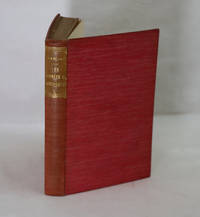
70262P., Calmann-Lévy, sans date (1903), in 12, cartonnage amateur, dos muet, L-348 pages ; exemplaire de travail, partiellement dérelié, dans un modeste cartonnage amateur ; des pâles rousseurs.
100-24010G. Schirmer Inc. Paperback. Good. Good condition with wear and markings. G. Schirmer, Inc paperback
100-24009G. Schirmer Inc. Paperback. Good. Good condition with wear and markings. G. Schirmer, Inc paperback
75-1525Paris FR: Costallat & Cie. 1800s. 4to. Soft covers. Very Good. 38 pp.Musical notation for opera by Berlioz.En Francais. There might be an additional charge due to the large size of the book. Paris, FR: Costallat & Cie., [1800s] paperback
11168PUF, Que-Sais-Je ? n° 1012, 1969. Format poche.Bon etat.
500142718Sans date.
Paris, PUF, 1962. Collection "Que-sais-je ?", N°1012. Un volume broché au format poche de 13pp. Bon état.
1962132581Couverture souple. Broché. 128 pages.
1962VV306081962 Paris, P.U.F., 1962 : in-12, broché 128 pp., 10 figures in-texte, petites salissures en pages de gardes, collection "Que sais-je ?" Parfait état, Couv. fraîche, Dos impeccable, Intérieur frais.
In-4 ° Broché - Sans Editeur, Sans date - Sur feuilles volantes, Chaque texte accompagné d'une gravure et d'une aquarelle . Texte de LAMARTINE, CHATEAUBRIAND, V. HUGO, A. DUMAS BERLIOZ & H. de BALZAC. Commentaire sur lchaque peintre de l'Auteur. Très propre.
1163In-4 ° Broché - Sans Editeur, Sans date - Sur feuilles volantes, Chaque texte accompagné d'une gravure et d'une aquarelle . Texte de LAMARTINE, CHATEAUBRIAND, V. HUGO, A. DUMAS BERLIOZ & H. de BALZAC. Commentaire sur lchaque peintre de l'Auteur. Très propre.
45444621like new. unknown
1015926533.Ghardcover. Good. Access codes and supplements are not guaranteed with used items. May be an ex-library book. hardcover
0265388783.Ghardcover. Good. Access codes and supplements are not guaranteed with used items. May be an ex-library book. hardcover
1890HW23 /11<p>Calmann- Levy. Paris Circa 1890. Good. 12cm x 18cm x 2cm. Maroon cloth binding with tan title plate and gilt title on the spine.</p><ul><li><p><strong>We provide an in-depth photographic presentation of this item to stimulate your feeling and touch. More traditional book descriptions are immediately available</strong></p></li></ul><p>As the photographs illustrate this remains a quality work. This work first published in 1852 is a collection of short stories already serialized in the press the subjects of which revolve around music. The pretext is as follows: the musicians of a northern European orchestra are in the habit "during the performance of mediocre operas" of reading studying or telling stories to each other in turns. "The author" is the rapporteur and sometimes himself is the narrator of anecdotes and "little novels".</p><p>Louis-Hector Berlioz 11 December 1803 – 8 March 1869 was a French Romantic composer and conductor. His output includes orchestral works such as the Symphonie fantastique and Harold in Italy choral pieces including the Requiem and L'Enfance du Christ his three operas Benvenuto Cellini Les Troyens and Béatrice et Bénédict and works of hybrid genres such as the "dramatic symphony" Roméo et Juliette and the "dramatic legend" La Damnation de Faust.</p><p>The elder son of a provincial physician Berlioz was expected to follow his father into medicine and he attended a Parisian medical college before defying his family by taking up music as a profession. His independence of mind and refusal to follow traditional rules and formulas put him at odds with the conservative musical establishment of Paris. He briefly moderated his style sufficiently to win France's premier music prize – the Prix de Rome – in 1830 but he learned little from the academics of the Paris Conservatoire. Opinion was divided for many years between those who thought him an original genius and those who viewed his music as lacking in form and coherence.</p><p>At the age of twenty-four Berlioz fell in love with the Irish Shakespearean actress Harriet Smithson and he pursued her obsessively until she finally accepted him seven years later. Their marriage was happy at first but eventually foundered. Harriet inspired his first major success the Symphonie fantastique in which an idealised depiction of her occurs throughout.</p><p>Berlioz completed three operas the first of which Benvenuto Cellini was an outright failure. The second the epic Les Troyens The Trojans was so large in scale that it was never staged in its entirety during his lifetime. His last opera Béatrice et Bénédict – based on Shakespeare's comedy Much Ado About Nothing – was a success at its premiere but did not enter the regular operatic repertoire. Meeting only occasional success in France as a composer Berlioz increasingly turned to conducting in which he gained an international reputation. He was highly regarded in Germany Britain and Russia both as a composer and as a conductor. To supplement his earnings he wrote musical journalism throughout much of his career; some of it has been preserved in book form including his Treatise on Instrumentation 1844 which was influential in the 19th and 20th centuries. Berlioz died in Paris at the age of 65.</p> Calmann- Levy. hardcover
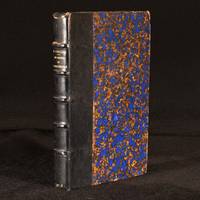
1878956Y21Paris : Calmann Levy 1878. Leather. Very Good. 7.5" by 5". None. A handsomely bound third edition of Hector Berlioz's highly entertaining narrative centring on the exchanges of orchestral performers. The third edition under publisher Calmann Levy. Another third edition was published under Michel Levy in 1871. Bound in quarter crushed morocco with marbled paper covered boards and endpapers. This charming narrative takes the reader through twenty-five evenings in the company of various groups of musicians who tell tales and exchange gossip in between their performances of fashionable operas in northern Europe. From French Romantic composer and conductor Hector Berlioz whose own operas include 'Benvenuto Cellini' and 'Les Troyens'. Bound in quarter crushed morocco with marbled paper covered boards and endpapers. Externally smart with rubbing to the extremities notably to the spine head. Internally firmly bound. Pages are lightly age toned with scattered spots throughout. Very Good Calmann Levy hardcover
0243040768.Gpaperback. Good. Access codes and supplements are not guaranteed with used items. May be an ex-library book. paperback
1878R150199925CALMANN LEVY. 1878. In-8. Broché. Etat d'usage, Couv. convenable, Dos très frotté, Intérieur frais. 428 pages. . . . Classification Dewey : 840.08-XIX ème siècle
200802009Paris, Grund, 1998 ; in-8, 650 pp., broché, couverture illustr.
1968R150164258GRUND.. 1968. In-8. Cartonné. Etat d'usage, Couv. convenable, Coiffe en pied abîmée, Intérieur acceptable. 649 pages. Nombreuses illustrations en noir et blanc hors texte. Gros manque sur la jaquette.. Avec Jaquette. . . Classification Dewey : 840-Littératures des langues romanes. Littérature française
2012LFA-126723370Un ouvrage de 449 pages, format 110 x 180 mm, broché, publié en 2012, Symétrie, bon état
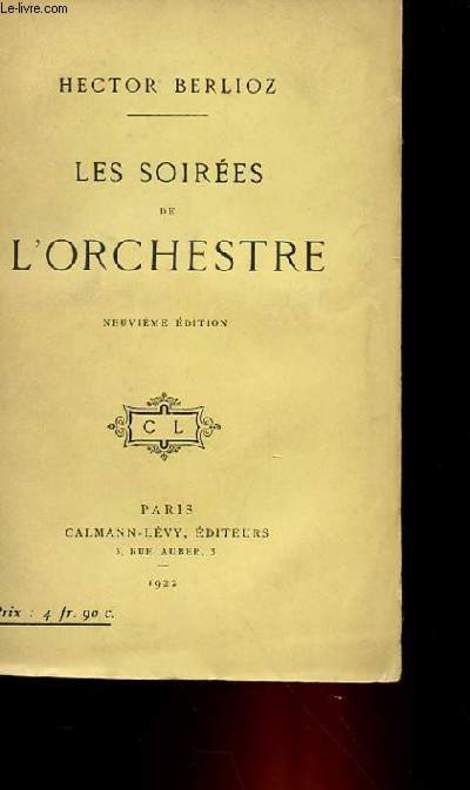
1922RO30101549CALMANN-LEVY 9° EDITION. 1922. In-12. Broché. Etat d'usage, Couv. convenable, Coiffe en pied abîmée, Intérieur frais. 428 pages. Non illustré.. . . . Classification Dewey : 840-Littératures des langues romanes. Littérature française
IN FRANCESE. Ristampa anastatica ed. 1854
187773973Paris, Michel Lévy Frères - Librairie Nouvelle, 1877, in-12, Demi-bradel rouge. Pièce de titre. , 428 pages. Rousseurs. Solide exemplaire dans une reliure bien conservée.
185255230Paris Michel Lvy Frres 1852 In-12, demi-chagrin vert bouteille coins, plats de papier marbr, dos quatre nerfs; doublures et gardes de papier gris-vert; tranches lisses.Edition originale de cet ouvrage dont le texte parut d'abord dans la presse sous la forme de feuilletons. Les 25 soires qui composent cet ouvrage reprennent des histoires plus ou moins longues, dont les sujets tournent autour de la musique, changes par des musiciens d'un orchestre du nord de l'Europe qui auraient l'habitude, pendant l'excution des opras mdiocres, de lire, d'tudier ou de se raconter des histoires tour de rle. Hector Berlioz en est le rapporteur, et parfois lui-mme le narrateur, mlangeant la ralit et la fiction, souvent farfelues. Elles sont l'occasion pour le musicien de dvelopper ses ides sur l'tat prsent de la musique, ses dfauts, ses malheurs et ses chagrins, et sur les musiciens, les chanteurs ou le public dont les trois quarts de l'Europe est cette heure aussi inaccessible que les matelots chinois au sentiment de l'expression musicale. On y trouve galement une rflexion sur la critique, un article froce sur l'administration de l'Opra de Paris amoureux fou de la mdiocrit, des Esquisses biographiques de Spontini et de Paganini, un hommage Rossini, et une longue et curieuse nouvelle de l'avenir situe en 2344 (vingt-cinquime soire), Euphonia ou la ville musicale, qui dcrit une ville idale entirement consacre la musique, o les habitants tous musiciens se dplacent en ballon. Parmi ces vingt-cinq soires, sept ne rapportent pas de bavardages, les musiciens consacrant toute leur attention excuter religieusement, remplis d'motion, des pices considres par Berlioz comme des chefs-d'Suvre : le Freischtz de Weber, la Vestale de Spontini, Fidelio de Beethoven, le Barbier de Sville de Rossini, Don Giovanni de Mozart, Iphignie en Tauride de Glck et les Huguenots de Meyerbeer. Un tmoignage particulirement intressant sur la pense d'Hector Berlioz. Rare.