19 958 résultats
In-4 p. (mm. 288x198), 20 volumi, solida legatura in mz. pelle coeva con ang. (abrasioni), dorso a cordoni con titolo in oro, conservate le brossure originali. L’edizione è così composta: Vol. I: "Discorsi letterari e storici" - Vol. II: "Primi saggi" - Vol. III: "Bozzetti e scherme" - Vol. IV: "Confessioni e battaglie" - Vol. V: "Ceneri e faville, serie prima 1859-1870" - Vol. VI: "Juvenilia e Levia Gravia" - Vol. VII: "Ceneri e faville, serie seconda 1871-1876" - Vol. VIII: "Studi letterari" - Vol. IX: "Giambi ed epodi e rime nuove" - Vol. X: "Studi, saggi e discorsi" - Vol. XI: "Ceneri e faville, serie terza 1877-1901" - Vol. XII: "Confessioni e battaglie, serie seconda" - Vol. XIII: "Studi su Giuseppe Parini. Il Parini Minore" - Vol. XIV: "Studi su Giuseppe Parini. Il Parini Maggiore" - Vol. XV: "Su Ludovico Ariosto e Torquato Tasso" - Vol. XVI: "Poesia e storia" - Vol. XVII: "Ordi barbare e rime e ritmi" - Vol. XVIII: "Archeologia poetica" - Vol. XIX: "Melica e lirica del settecento con altri studi di varia letteratura" - Vol. XX: "Cavalleria e umanesimo". "Rara prima edizione" dell’Opera Omnia di Carducci nell’edizione definitiva curata dallo stesso Autore. Cfr. Diz. Biograf. Italiani,XX, p. 38. Uno dei cento esemplari su carta grande a mano, numerati da 1 a 100. Il ns., 63, è un esemplare marginoso, con barbe, parzialmente intonso, molto ben conservato.
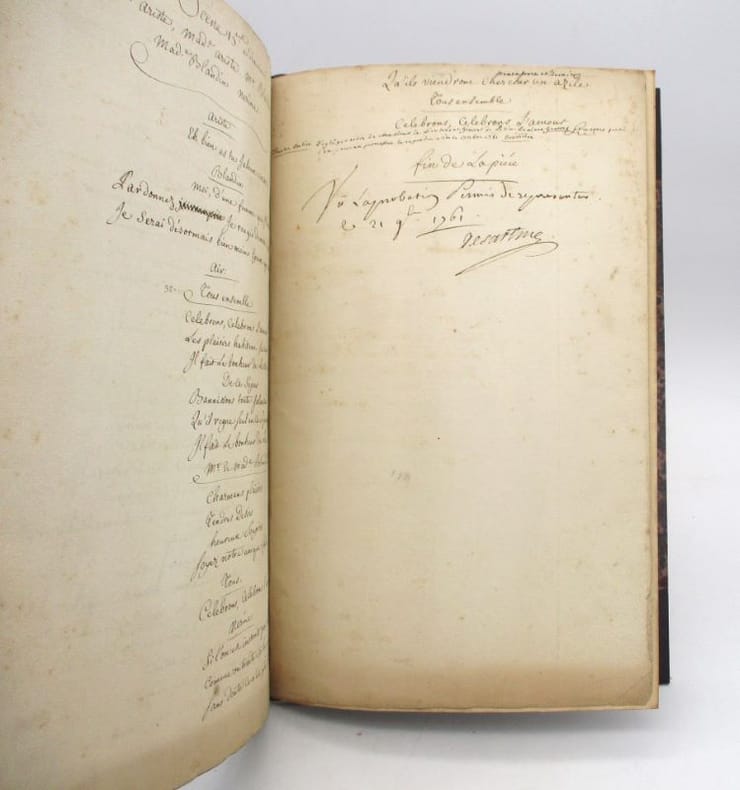
20294S.l., 1761. In-folio, [32] ff., demi-chagrin à coins aubergine, doubles filets à froid sur les plats, dos à nerfs orné de caissons à froid.
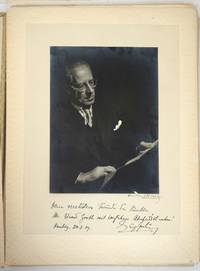
1949293881949. Good overall. An impressive collection of post W.W.II German opera stars dancers & directors and the stunning sets from the Hamburg Opera Ensemble. The 1st page is a dedication of farewell to Edward Groth US Consul General dated 24th May 1949. Groth had a long career in the Foreign Service including Consul in Afghanistan and India. <br /> <br /> Photographs of vocalists dancers directors - many signed - include: Günther Rennert staging director Arthur Grüber Günter Hertel Martina Wulf Theo Herrmann Ilse Koegel Helene Werth Lore Hoffman Hedy Gura Sigmund Roth Peter Markworth Hermann Mendt Nikola Eva Poser Rudolf Zerber Adolph Meyer-Bremen Johannes Drath Elfriede Wasserthal Richard Holm Irma Handler Cornelia Händel Elisabeth de Freitas and Danelies Rothenberger Otti Tenzel Bico von Larsky and several others signed and unsigned but unidentified. = signed. <br /> <br /> There are 20 programs for operas performed between April 1946 Die Entfuhrung aus dem Serail to April 1949 Raskolnikoff. Opera programs include: Tosca La Traviata Peter Grimes Othello Carmen Barber of Seville La Boheme Rigoletto and many others.<br /> <br /> Many of the performers were known through Europe. The portfolio starts with photo portraits which someone has annotated with sticky notes then includes many 1 sheet programs laid down and superb photographs of elegant sets for the varying operas. <br /> <br /> Fabric covered card covers cream cloth no title 38pp stiff card each page with 1 2 3 or 4 b&w photos later pages with programs from various operas dating 1946-1949. 38 portraits many silvertone 53 set photographs 20 programs for a total of 111 pieces. Photos varying in size 24 4 1/2 x 3.1/2" 42 6 329387/8 x 4 ¼" 20 5 ½ x 3 3/8" 4 9 3/8 x 7 1/8" and 20 programs all laid down on heavy card stock. Covers marked and dusty internally clean.<br /> <br /> Considering the Opera House was almost completely destroyed during the war this is a remarkable record of the Hamburg Opera and their artists. unknown
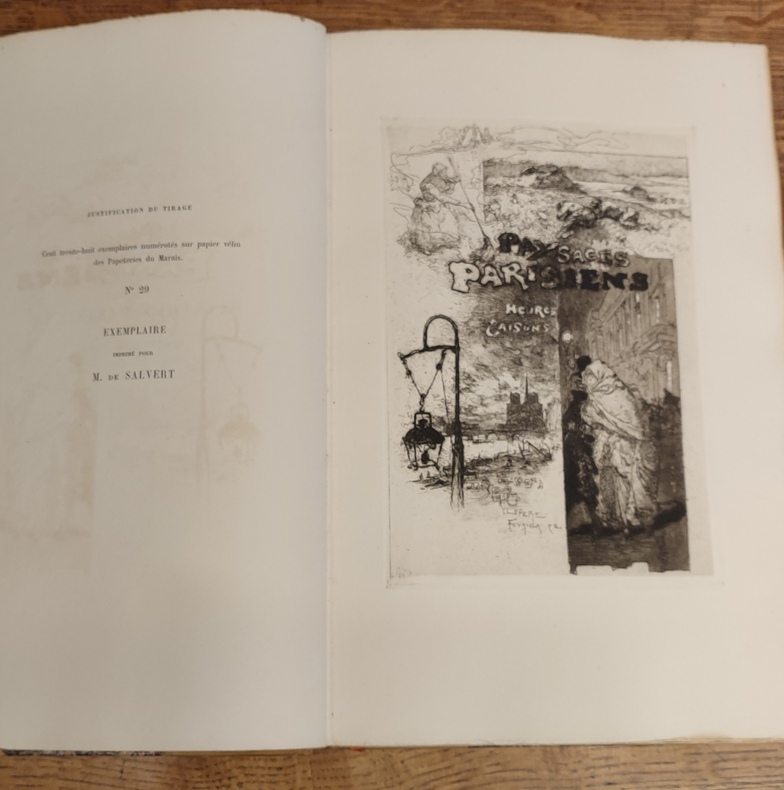
1892000151Paris Imprimé pour Henri Beraldi 1892 In-4 (271 x 184 mm), XV - 176 pp., bradel demi-veau blond, coins, dos lisse orné d'une aquarelle originale d'Albert Robida, signée A.R. et représentant une élégante, non rogné, couverture et dos conservés (reliure signée Carayon). Edition originale, illustrée par Auguste Lepère de 5 eaux-fortes originales hors-texte et de 42 gravures sur bois originales dans le texte. Tirage limité à 138 exemplaires numérotés (N° 29, sur vélin du marais, imprimé pour M. de Salvert, avec son ex-libris) ; imprimé par Lahure ; les eaux-fortes sont tirées par Eugène Delâtre sur la presse d'Auguste Lepère. Très bel ouvrage. (petits frottements sur les coiffes, usures sur les coins, légères piqûres sur la couverture). // Quarto (271 x 184 mm), XV - 176 pp., bradel blond half-calf, smooth spine with an original drawing, uncut, soft cover and spine preserved (binding signed Carayon). First edition, illustrated by Auguste Lepère with 5 full-page original etchings, and 42 original wood-engravings in the text. Limited printing of 138 numbered copies (Nr 29, on Marais vellum, printed for M. de Salvert, with his book-plate) ; printed by Lahure ; the etchings are finished by Eugène Delâtre with the press of Auguste Lepère. The original drawing on spine is signed A.R. (Albert Robida). Very nice book. (little rubbings on top and bottom of spine, corners used, little spots on the soft cover).
2291518 volumes in-8, plein veau raciné de l'époque, dos lisses ornés d'un décor consulat de compartiments entièrement garnis d'une résille et palettes dorées, pièces de titre et de tomaison de maroquin bordeaux et bleu, roulette d'encadrement sur les plats, filets dorés sur les coupes, portrait gravé de l'auteur en frontispice et une planche dépliante. Paris, Jean-François Bastien, An XIII (1805).
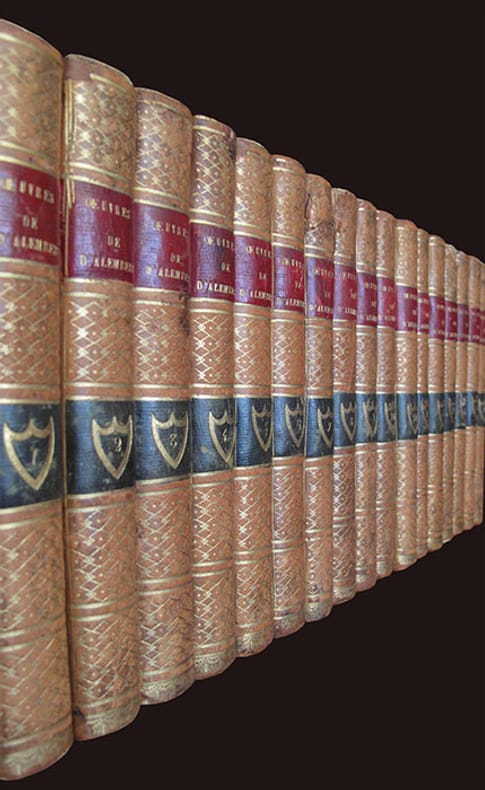
18 volumes in-8, plein veau raciné de l'époque, dos lisses ornés d'un décor consulat de compartiments entièrement garnis d'une résille et palettes dorées, pièces de titre et de tomaison de maroquin bordeaux et bleu, roulette d'encadrement sur les plats, filets dorés sur les coupes, portrait gravé de l'auteur en frontispice et une planche dépliante. Première édition collective complète des œuvres de d’Alembert, qui demeurent une source importante pour les toutes les éditions postérieures. "[Ces œuvres de d’Alembert] que le libraire-imprimeur Jean-François Bastien fit paraître à Paris en 18 volumes, tous datés de 1805, se voulaient une édition soignée : une partie du tirage s’est faite sur papier vélin ; un portrait gravé de D’Alembert est placé en frontispice du tome I ; en tête de l’ouvrage figurent les notices autobiographiques de l’auteur et divers textes biographiques, signés de La Harpe, de Marmontel et de Condorcet. Le titre rappelle celui des 'Mélanges' publiés par D’Alembert de son vivant, mais la distribution des matières a été réorganisée et Bastien n’a pas manqué d’incorporer à cette première édition complète (ainsi qu’il la qualifie lui-même dans sa dédicace) les textes publiés en dehors des Mélanges avant et après la mort de l’auteur" (Irène Passeron, 'Les œuvres complètes de d’Alembert', Introduction, p. xxxiv-xxxvii). Bien complet de la planche dépliante "Système figuré des connoissances humaine" avec son explication. (Brunet, II, 471. France littéraire, I, 27. Cioranescu, 7499). Accidents aux reliures et accrocs, sinon exemplaire solide, intérieur frais.
158158492Paris, Sebastian Nivellius, 1581. Fol. Mit 5 wiederh. großen Holzschn.-Druckermarken u. einigen Holzschn.-Vignetten bzw. -Initialen. Zus. ca. 3.500 S., Pgmt.-Bde. d. Zt. m. handschriftl. Rückentitel, Schließbändern u. dreiseitig marmor. Schnitt.
1763002776Paris, Duchesne, 1763
In-4 (236 x 167 mm), cartonnage marbré moderne à la Bradel, 24 p. Edition originale et unique, très rare, du livret d'un petit opéra que Charles Perrault rédigea à l'occasion de la naissance du premier petit-fils de Louis XIV, le duc de Bourgogne, naissance qui donna lieu à des festivités exceptionnelles à la Cour et dans toute la France. Claude Oudot, Maître de musique de l'Académie française, composa la musique, et l'oeuvre plut tant qu'elle fut représentée devant le roi, cela en dépit du monopole de l'opéra détenu par Lully. Dans cette allégorie annonciatrice de 'Cendrillon', on retrouve toute l'inventivité et la fantaisie du futur auteur des contes (cf. analyse in P. Bouchenot-Déchin, 'Perrault', Fayard, 2018, p. 213-231). Le succès de l'oeuvre n'empêcha pas la disgrâce de Charles Perrault quelques mois plus tard, sous les effets conjugués de ses ennemis, Racine, Boileau, Louvois surtout, puis de la mort de son protecteur Colbert. Restauration de papier en coin inférieur du dernier feuillet, sans atteinte au texte. WorldCat ne recense que trois exemplaires de cet ouvrage dans le monde: Getty Res. Inst., BnF et BM Lyon. Il manque aux principales bibliographies. Bon exemplaire, grand de marges.
67122Berlin, Ferdinand Osertag Verlag,, 1923 Original hardcover binding,(1) 50 pages (1), 27x20cm. illustrated with 20 b/w illustrations (woodcuts) *fine condition.
8753Paris M. et J. de Brunoff, Editeurs, 1928. 1 volume in folio, rebound in modern full leather. Text by [Charles] Templeton Crocker. Music by Joseph Redding. Illustrated with 59 mounted color plates (53 are full-page) from paintings by Hubert Julian Stowitts; numerous vignettes and the text printed in three colors, in very good condition. No. 260 of a limited edition of 400 copies.
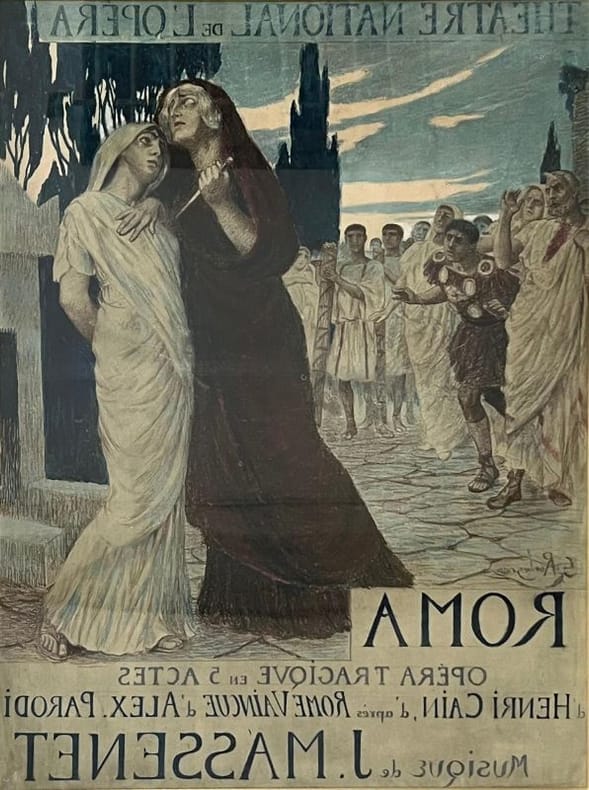
191216706(1912) Pastel et gouache signé, (1912), 79 x 48 cm., encadré.
Due opere in un volume in-4to, 339 (i.e. 341) [1], LXXXVIII pp; Occhietto, antiporta figurata, ritratto di Pascoli, 20 incisioni anatomiche a piena pagina, iniziali silografiche istoriate, testatine e finalini. Presenti le carte bianche H6 e T6.
Very Good Turkish, Ottoman (1500-1928) Original autograph manuscript letter signed by Khedive Abbas Hilmi Pasha II of Egypt. 20,5x16,5 cm. In Ottoman script. 1 p. 6 lines. Sent to an unknown recipient who he called 'Efendim hazretleri' in elqab of the letter. He mentions that he received a telegraph of the recipient. He celebrated 'eid' ('Iyd-i said'). Abbas II Helmy Bey, was the last Khedive (Ottoman viceroy) of Egypt and Sudan, ruling from 8 January 1892 to 19 December 1914. In 1914, after the Ottoman Empire joined the Central Powers in World War I, the nationalist Khedive was removed by the British, then ruling Egypt, in favor of his more pro-British uncle, Hussein Kamel, marking the de jure end of Egypt's four-century era as a province of the Ottoman Empire, which had begun in 1517. Abbas Hilmy, the great-great-grandson of Muhammad Ali, was born in Alexandria, Egypt on 14 July 1874.[4] He succeeded his father, Tewfik Pasha, as Khedive of Egypt and Sudan on 8 January 1892. In 1887 he was ceremonially circumcised together with his younger brother Mohammed Ali Tewfik. The festivities lasted for three weeks and were carried out under great pomp. As a boy, he visited the United Kingdom, and he had a number of British tutors in Cairo including a governess who taught him English.[5] In a profile of Abbas II, the boys' annual, Chums, gives a lengthy account of his education. His father established a small school near the Abdin Palace in Cairo where European, Arab and Ottoman masters taught Abbas and his brother Mohammed Ali Tewfik. An American officer in the Egyptian army took charge of his military training. He attended school at Lausanne, Switzerland; then, at the age of twelve, he was sent to the Haxius School in Geneva, in preparation for his entry into the Theresianum in Vienna. In addition to Arabic and Ottoman Turkish, he had good conversational knowledge of English, French, and German. He was still in college in Vienna when he assumed the throne of the Khedivate of Egypt upon the sudden death of his father, 8 January 1892. He was bare of age according to Egyptian law; normally, eighteen in cases of succession to the throne. For some time he did not cooperate very cordially with the British, whose army had occupied Egypt in 1882. As he was young and eager to exercise his new power, he resented the interference of the British Agent and Consul General in Cairo, Sir Evelyn Baring, later made Lord Cromer. At the outset of his reign, Khedive Abbas II surrounded himself with a coterie of European advisers who opposed the British occupation of Egypt and Sudan and encouraged the young khedive to challenge Cromer by replacing his ailing prime minister with an Egyptian nationalist. At Cromer's behest, Lord Rosebery, the British foreign secretary, sent Abbas II a letter stating that the Khedive was obliged to consult the British consul on such issues as cabinet appointments. In January 1894 Abbas II made an inspection tour of Sudanese and Egyptian frontier troops stationed near the southern border, the Mahdists being at the time still in control of Sudan itself. At Wadi Halfa the Khedive made public remarks disparaging the Egyptian army units commanded by British officers. The British commander of the Egyptian army, Sir Herbert Kitchener, immediately threatened to resign. Kitchener further insisted on the dismissal of a nationalist under-secretary of war appointed by Abbas II and that an apology be made for the Khedive's criticism of the army and its officers. By 1899 he had come to accept British counsels. Also in 1899 British diplomat, Alfred Mitchell-Innes was appointed Under-Secretary of State for Finance in Egypt, and in 1900 Abbas II paid a second visit to Britain, during which he said he thought the British had done good work in Egypt and declared himself ready to cooperate with the British officials administering Egypt and Sudan. He gave his formal approval for the establishment of a sound system of justice for Egyptian nationals, a great reduction in taxation...
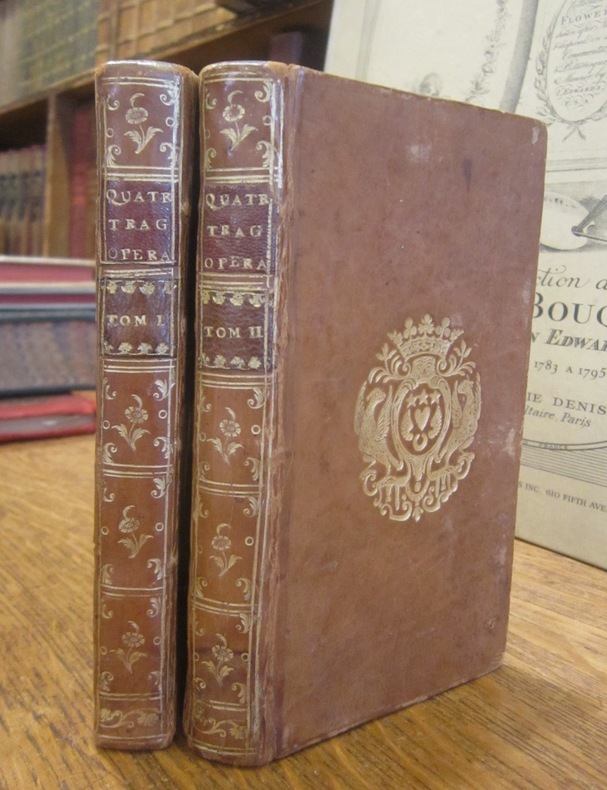
28440Paris, Christophe Ballard, 1703-1720. 11 vol. in-12, veau blond, dos à nerfs ornés de caissons dorés, pièces de titre en maroquin rouge, pièces de tomaison en maroquin citron, roulette dorée sur les coupes, tranches rouges. Reliure de l'époque. Ex-libris héraldique au contreplat de la bibliothèque de Crépan, ex-libris ms. sur le titre de Mougeot. Illustré de 89 frontispices gravés à l'eau-forte.
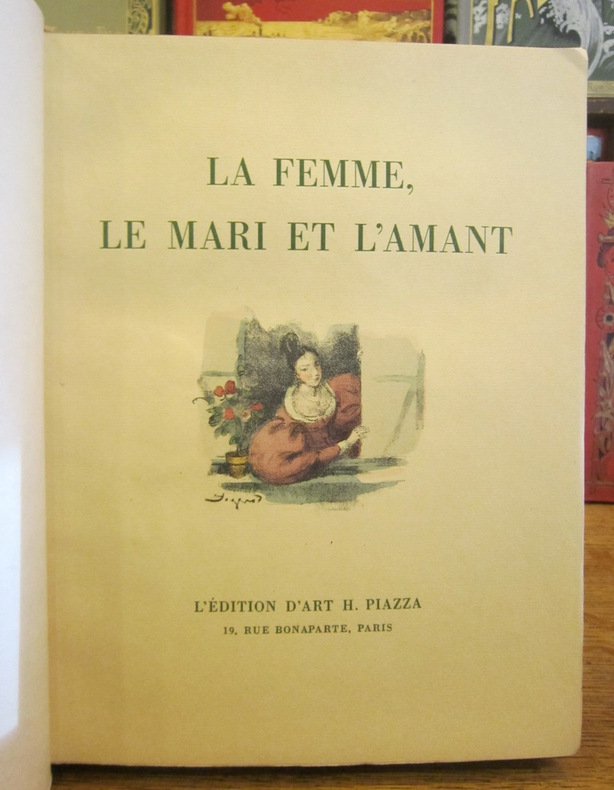
1929002741Paris, Piazza, 1929
1750000402Vienne Vienne: , 1750 1750 Couverture rigide
388403 ouvrages reliés en un volume in-8 (196 x 123 mm), veau marbré de lépoque, dos lisse orné de compartiments fleuronnés, pièce de titre de maroquin bordeaux, tranches rouges.
38939In-folio (350 x 260 mm), demi-chagrin violine, dos lisse orné d'un jeu de filets dorés et au noir, palettes en tête et pied, titre doré (rel. XIXe s.), (1) f. de titre frontispice gravé, 11 pp. (Avis de l'éditeur de ce recueil [Marquis de Girardin], Noms des souscripteurs, Airs, Romances et Duos et Avertissement), 199 p. de partitions entièrement gravées sur papier vergé azuré. (1) f. de table. Paris, De Roullede de la Chevardiere, Esprit, 1781.
1939ABE-1538494660313Royal Opera House Covent Garden 1939 EXTREMELY RARE! REX WHISTLER designed this glorious programme for the State Performance in Honour of The President of the French Republic and Madame Lebrun at the Royal Opera House March 22 1939. WHISTLER's cover design is an elaborate affair; the embossed card covers are ingeniously cut away in curves. It is fabulously decorated by Rex Whistler on the front and back. A gold cord with tassels forms the binding round the twelve folded pages. Dancers included Margot Fonteyn Robert Helpmann William Chappell Frank Staff and Frederick Ashton. Sir Thomas Beecham conducted the London Philharmonic Orchestra. This is a great collectable example of ephemera in its own right but it is of especial value for admirers of Rex Whistler. Soft cover. Fine. Royal Opera House Covent Garden paperback
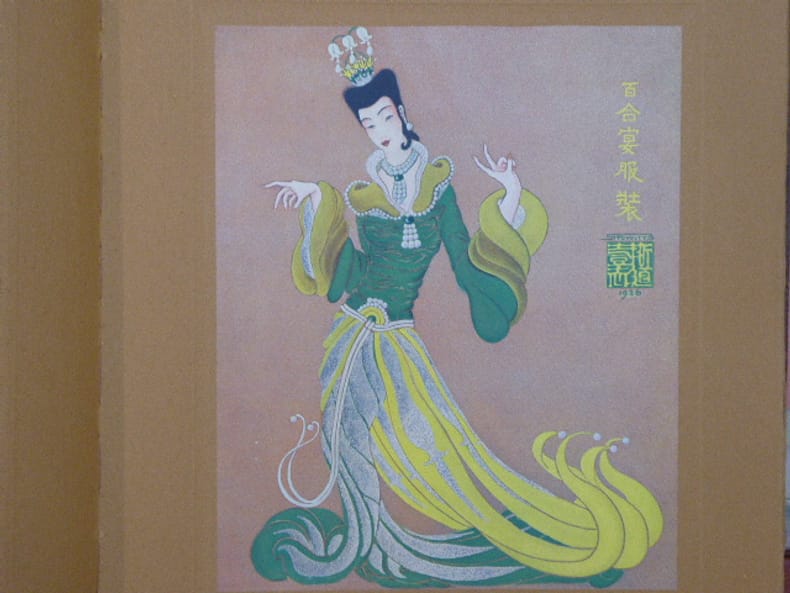
932674M. Et J. De Brunoff, Editeurs Paris 1928 Grand in-4 carré ( 405 X 335 mm ), cartonnage souple de papier maroquiné, motif en ocre et or estampé en relief au centre du premier plat, dos lisse muet ( Présentation de l'éditeur ). MAGNIFIQUE PUBLICATION illustrée en premier tirage de 59 planches gravées en couleur à l'or et au palladium montées ( 53 pleine page ) d'après des peintures d'Hubert Julian STOWITTS pour FAY-YEN-FAH Opéra en 3 actes, Poème de Charles TEMPLETON CROCQUER sur une Musique de Joseph REDDING. Nombreuses vignettes et le texte imprimé en trois couleurs. Edition originale limitée à 200 exemplaires numérotés ( N°35 ). Très minimes défauts à la couverture, bel exemplaire aux coloris éclatants illustrant avec beauté et élégance les personnages et les scènes de cet opéra sur la Chine ancienne.
(Mm. 160x105), bella fotografia in tinta di Giuseppe Verdi, datata Sant’Agata 1879 e firmata. E’ stata realizzata da Giulio Rossi, pittore fotografo, Milano-Genova. Al verso dell’immagine una lunga scritta d’altra mano, recante la data Torino-Pinerolo 1932, attesta che la fotografia con autografo venne donata da Giuseppe Verdi “..al nonno Giovanni Zaffignani in segno di apprezzata amicizia.” Giovanni Zaffignani, piacentino, fu il direttore della prima calzoleria di Piacenza. Diverse sono le missive che il Maestro gli indirizzò. Quando Giuseppe Verdi si trovava a Piacenza, di stanza all'albergo San Marco, sovente faceva visita all’amico in via Garibaldi dove l’artigiano piacentino gli confeziona su misura scarpe e stivali. Il quotidiano cittadino “Libertà” che fu tra i primissimi giornali a dare la notizia della morte del Maestro il 27 Gennaio 1901, ricordava nel suo articolo anche la “preziosa amicizia” che Verdi ebbe con Zaffignani. Buon esemplare.
196088091<p><b>CULTURAL REVOLUTION MODEL OPERA</b></p><p>Manuscript Ledger Master Inventory: General Record of Stage Props for a traveling Chinese theatrical repertory company introducing Revolutionary Opera into its program including costs for creating silk stage props sets costumes and scenery with various paper slip receipts some loose dated from 1963 to 1969. Oblong album measuring 7-3/4 x 10-5/8 inches contents with 20 numbered leaves of double-sided ruled ledger; bound in brown cloth-backed plain light blue paper board with lettered pink paper label decorative pattern endpapers originally with ribbon-tied spine now lost contents loose.</p><p>Includes entries for the revolutionary opera <i>Taking Tiger Mountain</i> 1968 with one entry bearing signature of Wang Xiu Wen dated 12 September 1967. Includes a pink silk armband laid into the album inscribed "Mei Ying Shan" which could be translated as Huaying Mountain. </p><p>https://www.youtube.com/watchv=cjE0LDNycE8</p><p>There is also reference to a 1961 novel which the Bejing Film Studio made into a movie called <i>Lie Huo Zhong Yong Sheng</i> Living Forever in Burning Flame its IMDB title translated as <i>Red Crag</i> based partly on fact by Chinese authors Luo Guangbin and Yang Yiyan former inmates in a Kuomintang prison in Sichuan. It was set in Chongqing during the Chinese Civil War 1949 and featured underground communist agents under the command of Zhou Enlai fighting an espionage battle against the Kuomintang. The story takes place in Huaying Mountain.</p> hardcover
196088091<p><b>CULTURAL REVOLUTION MODEL OPERA</b></p><p>Manuscript Ledger Master Inventory: General Record of Stage Props for a traveling Chinese theatrical repertory company introducing Revolutionary Opera into its program including costs for creating silk stage props sets costumes and scenery with various paper slip receipts some loose dated from 1963 to 1969. Oblong album measuring 7-3/4 x 10-5/8 inches contents with 20 numbered leaves of double-sided ruled ledger; bound in brown cloth-backed plain light blue paper board with lettered pink paper label decorative pattern endpapers originally with ribbon-tied spine now lost contents loose.</p><p>Includes entries for the revolutionary opera <i>Taking Tiger Mountain</i> 1968 with one entry bearing signature of Wang Xiu Wen dated 12 September 1967. Includes a pink silk armband laid into the album inscribed "Mei Ying Shan" which could be translated as Huaying Mountain. </p><p>https://www.youtube.com/watchv=cjE0LDNycE8</p><p>There is also reference to a 1961 novel which the Bejing Film Studio made into a movie called <i>Lie Huo Zhong Yong Sheng</i> Living Forever in Burning Flame its IMDB title translated as <i>Red Crag</i> based partly on fact by Chinese authors Luo Guangbin and Yang Yiyan former inmates in a Kuomintang prison in Sichuan. It was set in Chongqing during the Chinese Civil War 1949 and featured underground communist agents under the command of Zhou Enlai fighting an espionage battle against the Kuomintang. The story takes place in Huaying Mountain.</p> hardcover books