Horanyi, MatyasAntiquariat.de

353 résultats
1962IC10-740[London], Barrie & Rockliff, 1962. original cloth binding with original dust wrapper, large-8vo, 260 pages, a good copy
1978Q-0689109067Atheneum Books 1978-01-01. Paperback. New. In shrink wrap. Looks like an interesting title! Atheneum Books paperback
199914955JAbsecon: MagicImage 1999. First Edition First Printing. Laid in is an Autograph Letter Signed by Mary Philbin co-star with Lon Chaney Sr. in the classic film written to the book’s author Philip J. Riley. Dated September 11 1989 Philbin writes: “Dear Mr Riley: I am sorry about the delay in returning the book and papers. I would appreciate eleven complimentary copies of The Phantom of the Opera book or if you cannot then as many as possible. Thank you Mary Philbinâ€. Accompanied by the original hand-addressed envelope from Philbin’s home in Los Angeles. Philbin died before the book was published so this is as close as one can come to a signed copy. Large 317 page paperbound book. Profusely illustrated. Near fine copy enclosed in a handsome morocco leather and cloth clamshell box. MagicImage hardcover
195991828USA: RCA Victor Soria Series 1959. USA LD 6409 Red label shaded dog. Four mono LP records in sleeves in original slipcase box with 24 page text booklet and leaflet with essay by Beecham No visible faults to record surfaces in about Very Good box with some rubbing to corners and split to portion of top edge. The Booklet which was produced by Skira is only in Acceptable condition with the spine strip chipped away has a 4 inch triangular piece missing from the back cover and edge chips and small tears to some pages but all the colour pastedowns of the artwork reproductions are there. Sir Thomas Beecham conducts the Royal Philharmonic Chorus and Orchestra with Jennifer Vyvyan Monica Sinclair John Vickers Giorgio Tozzi. A heavy set. 4.0 Jm FRT03top. Vinyl LP. Very Good. Used Vinyl LP records. RCA Victor Soria Series Paperback
1991Q-0062730517HarperCollins Publishers 1991-11-01. Paperback. New. New. In shrink wrap. Looks like an interesting title! HarperCollins Publishers paperback
1997Q-0393045366W. W. Norton & Company 1997-10-17. Hardcover. New. In shrink wrap. Looks like an interesting title! W. W. Norton & Company hardcover
199864246Zürich, Carta AG, 1998. origi.Pappband, 8°, 1063 Seiten. Nur Band 1. 1.Auflg.
19735vDh0006New York: The New York City Opera Guild 1973. Book. Very Good. Spiralbinding Soft Cover. Copyright © 1973. 8vo or 8° Medium Octavo: 7¾" x 9¾" tall. 187 pp. Solidly bound copy with minimal external wear crisp pages and clean text. The New York City Opera Guild Paperback
1972203FOREIGN LANGUAGE PRESS PEKING 1972. Soft cover. As New/As New. RARE.; Book <br/> <br/> FOREIGN LANGUAGE PRESS PEKING paperback
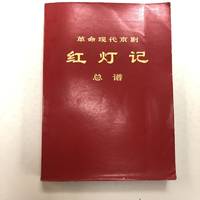
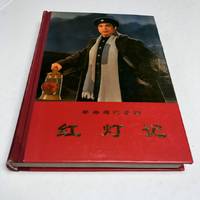
1971AG-10050<p><b><i>The Red Lantern Full Score</i></b><b><i>红ç¯è®°</i></b><b><i> Hong Deng Ji</i></b></p><p>Beijing: Published by People's Publishing House printed by Beijing Xinhua Printing Factory distributed by Xinhua Bookstore Beijing Distributing Agency,August 1971<b> FIRST EDITION</b>. The May 1970 Script Created Collectively by the China Peking Opera troupe. Quotations from Chinaman Mao on the second and third page 8vo. xii 380 2 pp. colophon printed titled wrappers <i>crease to the cover very slight tear to the foot of the binding else fine condition.</i></p><p>In China revolutionary operas or model operas Chinese: yangban xi æ ·æ¿æˆ were a series of shows planned and engineered during the Cultural Revolution 1966–1976 by Jiang Qing the wife of Chairman Mao Zedong. They were considered revolutionary and modern in terms of thematic and musical features when compared with traditional Chinese operas. Many of them were adapted to film.</p><p>京剧《红ç¯è®°ã€‹æ€»è°±</p><p>北京:人民出版社出版,ä¸å›½äº¬å‰§å›¢é›†ä½“制作,基于1970年五月演出本,第一版,书的å‰ä¸¤é¡µæœ‰æ¯›ä¸»å¸è¯å½•ï¼Œå…±380页主体内容。书皮ç¨æœ‰ä¸€é“上下方å‘折痕,其他å“相éžå¸¸å¥½ã€‚</p><p>In China revolutionary operas or model operas Chinese: yangban xi æ ·æ¿æˆ were a series of shows planned and engineered during the Cultural Revolution 1966–1976 by Jiang Qing the wife of Chairman Mao Zedong.1 They were considered revolutionary and modern in terms of thematic and musical features when compared with traditional Chinese operas. Many of them were adapted to film.</p><p>Originally eight revolutionary operas Chinese: Ba Ge Yangban Xi å…«ä¸ªæ ·æ¿æˆ were produced eighteen by the end of the period. Instead of the "emperors kings generals chancellors maidens and beauties" of the traditional Peking opera which was banned as "feudalistic and bourgeois" they told stories from China's recent revolutionary struggles against foreign and class enemies. They glorified the People's Liberation Army and the bravery of the common people and showed Mao Zedong and his thought as playing the central role in the victory of socialism in China. Although they originated as operas they soon appeared on LPs in comic books lianhuanhua on posters postcards and stamps; on plates teapots wash basins cigarette packages vases and calendars. They were performed or played from loudspeakers in schools factories and fields by special performing troupes. The Eight Model Operas dominated the stage in all parts of the country during these years leading to the joke "Eight hundred million people watched eight shows."</p><p>本剧是文é©æ—¶æœŸçš„å…«å¤§æ ·æ¿æˆä¹‹ä¸€ã€Šçº¢ç¯è®°ã€‹ï¼Œç”±æ¯›ä¸»å¸å¤«äººæ±Ÿé’负责制作和演出。很多被æ‹æˆäº†ç”µå½±ã€‚</p><p>最åˆæœ‰å…«ä¸ªæ ·æ¿æˆï¼ŒåŽæ¥åœ¨æ–‡é©æ—¶æœŸçš„åŽæœŸå‘展到了18个。ä¸åƒå› å°å»ºå’Œèµ„产阶级的被ç¦äº†çš„ä¼ ç»Ÿäº¬å‰§ï¼Œé‡Œé¢å‡ºçŽ°çš„ä¸çš„国王大臣少女和美人,é©å‘½çŽ°ä»£äº¬å‰§ä¸»è¦è®²è¿°ä¸å›½è¿‘å¹´æ¥çš„抗战故事,宣扬人民解放军的光辉è£è€€å’Œæ¯›ä¸»å¸çš„英勇。虽然是京剧,很快就å˜æˆäº†å„ç§å½¢å¼å‡ºçŽ°åœ¨è¿žçŽ¯ç”»ã€æµ·æŠ¥ã€æ˜Žä¿¡ç‰‡ã€é‚®ç¥¨ã€é¦™çƒŸã€èŠ±ç“¶ã€æ—¥åŽ†ç‰å„ç§åœ°æ–¹ï¼Œç”¨æ‰©éŸ³å–‡å在å¦æ ¡ã€å·¥åŽ‚ç‰åœ°æ–¹ï¼Œç”±æ¼”出团进行表演。8ä¸ªæ ·æ¿æˆä¸»å¯¼äº†å…¨å›½æ‰€æœ‰çš„舞å°ï¼Œå› æ¤æœ‰äº†8亿人看8个剧的笑è¯ã€‚</p><p><i><br /></i></p> People’s Publishing House paperback
1972AG-10053<p>Beijing: Published by C printed by Beijing Xinhua Printing Factory distributed by Xinhua Bookstore Beijing Distributing Agency February 1972 <b>FIRST EDITION</b> 8vo. The May 1970 Script Revised Collectively by the China Peking Opera Troupe. iv 374 pp. colophon consists of scripts stage photos selected theme score stage action instruction and the stage design started with quotations from Chairman Mao on the second and third page printed pictorial wrappers <i>slightly curled at the head and foot of the wrappers minor tears to the edge of the wrappers else fine condition.</i></p><p>北京:人民出版社出版。本书å‰ä¸¤é¡µå¸¦æœ‰æ¯›ä¸»å¸è¯å½•ï¼Œå†…容包括了剧本ã€å‰§ç…§ã€ä¸»æ—‹å¾‹ã€åŠ¨ä½œè¯´æ˜Žç‰è¯¦ç»†å†…容,由照片和文å—çš„å½¢å¼ç»„æˆï¼Œç…§ç‰‡å›¾ç‰‡å¾ˆå¤šï¼Œä¹Ÿæ˜¯æœ¬ä¹¦çš„一大特色。书皮上下两段ç¨å¾®å·èµ·ï¼Œå…¶ä»–部分å“相éžå¸¸å¥½ã€‚</p><p>In China revolutionary operas or model operas Chinese: yangban xi æ ·æ¿æˆ were a series of shows planned and engineered during the Cultural Revolution 1966–1976 by Jiang Qing the wife of Chairman Mao Zedong.1 They were considered revolutionary and modern in terms of thematic and musical features when compared with traditional Chinese operas. Many of them were adapted to film.</p><p>Originally eight revolutionary operas Chinese: Ba Ge Yangban Xi å…«ä¸ªæ ·æ¿æˆ were produced eighteen by the end of the period. Instead of the "emperors kings generals chancellors maidens and beauties" of the traditional Peking opera which was banned as "feudalistic and bourgeois" they told stories from China's recent revolutionary struggles against foreign and class enemies. They glorified the People's Liberation Army and the bravery of the common people and showed Mao Zedong and his thought as playing the central role in the victory of socialism in China. Although they originated as operas they soon appeared on LPs in comic books lianhuanhua on posters postcards and stamps; on plates teapots wash basins cigarette packages vases and calendars. They were performed or played from loudspeakers in schools factories and fields by special performing troupes. The Eight Model Operas dominated the stage in all parts of the country during these years leading to the joke "Eight hundred million people watched eight shows."</p><p>本剧是文é©æ—¶æœŸçš„å…«å¤§æ ·æ¿æˆä¹‹ä¸€ï¼Œç”±æ¯›ä¸»å¸å¤«äººæ±Ÿé’负责制作和演出。很多被æ‹æˆäº†ç”µå½±ã€‚</p><p>最åˆæœ‰å…«ä¸ªæ ·æ¿æˆï¼ŒåŽæ¥åœ¨æ–‡é©æ—¶æœŸçš„åŽæœŸå‘展到了18个。ä¸åƒå› å°å»ºå’Œèµ„产阶级的被ç¦äº†çš„ä¼ ç»Ÿäº¬å‰§ï¼Œé‡Œé¢å‡ºçŽ°çš„ä¸çš„国王大臣少女和美人,é©å‘½çŽ°ä»£äº¬å‰§ä¸»è¦è®²è¿°ä¸å›½è¿‘å¹´æ¥çš„抗战故事,宣扬人民解放军的光辉è£è€€å’Œæ¯›ä¸»å¸çš„英勇。虽然是京剧,很快就å˜æˆäº†å„ç§å½¢å¼å‡ºçŽ°åœ¨è¿žçŽ¯ç”»ã€æµ·æŠ¥ã€æ˜Žä¿¡ç‰‡ã€é‚®ç¥¨ã€é¦™çƒŸã€èŠ±ç“¶ã€æ—¥åŽ†ç‰å„ç§åœ°æ–¹ï¼Œç”¨æ‰©éŸ³å–‡å在å¦æ ¡ã€å·¥åŽ‚ç‰åœ°æ–¹ï¼Œç”±æ¼”出团进行表演。8ä¸ªæ ·æ¿æˆä¸»å¯¼äº†å…¨å›½æ‰€æœ‰çš„舞å°ï¼Œå› æ¤æœ‰äº†8亿人看8个剧的笑è¯ã€‚</p> People’s Publishing House paperback
1972AG-10057<p><b><i>The Red Lantern Script</i></b><b><i>红ç¯è®°</i></b><b><i> Hong Deng Ji</i></b><br /></p><p>Beijing: Published by People's Publishing House printed by Beijing Xinhua Printing Factory distributed by Xinhua Bookstore Beijing Distributing Agency February 1972 <b>FIRST EDITION</b> 8vo. The May 1970 Script Revised Collectively by the China Peking Opera Troupe. iv374 pp. colophon consists of scripts stage photos selected theme score stage action instructions and designs beginning with quotations from Chairman Mao on the second and third pages printed pictorial stiff cover wrappers <i>fine condition.</i></p><p>京剧《红ç¯è®°ã€‹å‰§æœ¬</p><p>北京:人民出版社出版,ä¸å›½äº¬å‰§å›¢é›†ä½“制作,基于1970年五月演出本,1970å¹´12月第一版,书的å‰ä¸¤é¡µæœ‰æ¯›ä¸»å¸è¯å½•ï¼Œå…±374页主体内容。精装,å“相éžå¸¸å¥½ã€‚</p> People’s Publishing House hardcover
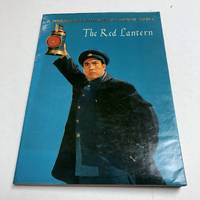
1972AG-10058<p>Beijing: Published by Foreign Language Press 1972 <b>FIRST EDITION</b>. The May 1970 Script Revised Collectively by China Peking Opera Troupe. Started with Quotation from Chairman Mao on the first page. Large 8vo. vii 98 1 pp. colophon printed pictorial wrappers<i> very good condition.</i><br /></p><p><i>北京:外文出版社出版,</i><i>1972</i><i>年第一版,由ä¸å›½äº¬å‰§å›¢æ ¹æ®</i><i>1970</i><i>年剧本è”åˆæ”¹ç¼–。å‰é¡µå¸¦æœ‰æ¯›ä¸»å¸è¯å½•ã€‚å“相éžå¸¸å¥½ã€‚</i></p><p>In China revolutionary operas or model operas Chinese: yangban xi æ ·æ¿æˆ were a series of shows planned and engineered during the Cultural Revolution 1966–1976 by Jiang Qing the wife of Chairman Mao Zedong.1 They were considered revolutionary and modern in terms of thematic and musical features when compared with traditional Chinese operas. Many of them were adapted to film.</p><p>Originally eight revolutionary operas Chinese: Ba Ge Yangban Xi å…«ä¸ªæ ·æ¿æˆ were produced eighteen by the end of the period. Instead of the "emperors kings generals chancellors maidens and beauties" of the traditional Peking opera which was banned as "feudalistic and bourgeois" they told stories from China's recent revolutionary struggles against foreign and class enemies. They glorified the People's Liberation Army and the bravery of the common people and showed Mao Zedong and his thought as playing the central role in the victory of socialism in China. Although they originated as operas they soon appeared on LPs in comic books lianhuanhua on posters postcards and stamps; on plates teapots wash basins cigarette packages vases and calendars. They were performed or played from loudspeakers in schools factories and fields by special performing troupes. The Eight Model Operas dominated the stage in all parts of the country during these years leading to the joke "Eight hundred million people watched eight shows."</p><p>本剧本属于文é©æ—¶æœŸçš„å…«å¤§æ ·æ¿æˆï¼Œç”±æ¯›ä¸»å¸å¤«äººæ±Ÿé’负责制作和演出。很多被æ‹æˆäº†ç”µå½±ã€‚</p><p>最åˆæœ‰å…«ä¸ªæ ·æ¿æˆï¼ŒåŽæ¥åœ¨æ–‡é©æ—¶æœŸçš„åŽæœŸå‘展到了18个。ä¸åƒå› å°å»ºå’Œèµ„产阶级的被ç¦äº†çš„ä¼ ç»Ÿäº¬å‰§ï¼Œé‡Œé¢å‡ºçŽ°çš„ä¸çš„国王大臣少女和美人,é©å‘½çŽ°ä»£äº¬å‰§ä¸»è¦è®²è¿°ä¸å›½è¿‘å¹´æ¥çš„抗战故事,宣扬人民解放军的光辉è£è€€å’Œæ¯›ä¸»å¸çš„英勇。虽然是京剧,很快就å˜æˆäº†å„ç§å½¢å¼å‡ºçŽ°åœ¨è¿žçŽ¯ç”»ã€æµ·æŠ¥ã€æ˜Žä¿¡ç‰‡ã€é‚®ç¥¨ã€é¦™çƒŸã€èŠ±ç“¶ã€æ—¥åŽ†ç‰å„ç§åœ°æ–¹ï¼Œç”¨æ‰©éŸ³å–‡å在å¦æ ¡ã€å·¥åŽ‚ç‰åœ°æ–¹ï¼Œç”±æ¼”出团进行表演。8ä¸ªæ ·æ¿æˆä¸»å¯¼äº†å…¨å›½æ‰€æœ‰çš„舞å°ï¼Œå› æ¤æœ‰äº†8亿人看8个剧的笑è¯ã€‚</p> Foreign Language Press paperback
197281302Peking, Foreign Languages Press 1972. Mit 17 farb. Abbildungen auf Tafeln. 98 S. Gr.-8vo. OBrosch.
194952974New York:: Metropolitan Opera House October 9 1949. original printed wrappers. . Some light creasing and use to the wrappers. 8vo. Boldly signed by Margot Fonteyn on the first text page of the program. Metropolitan Opera House, unknown
1956HALL512162Paperback. 1956. 58pp illustrated throughout card covers 4to London 1956. Loosely inserted are programmes for the 1956 production of The Sleeping Beauty and the 1957 productions of The Prince of the Pagodas & Le Lac des Cygnes. Silver covers slightly rubbed. . paperback
191312583G.G. Harrap & Co, London, o.J. (um 1913). ca 190nn Seiten, ca 28x19cm, goldgeprägter und illustrierter OBroschur Fadenheftung. Durchgängig illustriert, zum Teil mit montierten farbigen Abbildungen. Druck auf getöntem Papier. Die Seiten durchgängig gestaltet, überwiegend im floralen Stil. Der Einband mit deutlichen Schmutzspuren und einigen Fehlstellen an den Kapitalen. Insgesamt noch ein gutes Exemplar dieser seltenen Ausgabe. Text in englisch. English printed edition. Some damages at the binding. Good copy.
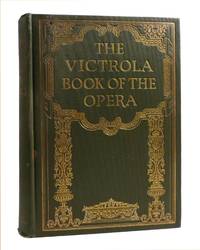
1924191217New Jersey: Victor Talking Machine Company 1924. Seventh Edition; revised. Hardcover. Very Good in boards. Top text block edge gilded fading. Victor Talking Machine Company hardcover
1982Q-0961054204The Washington Opera 1982-06-01. Paperback. New. In shrink wrap. Looks like an interesting title! The Washington Opera paperback
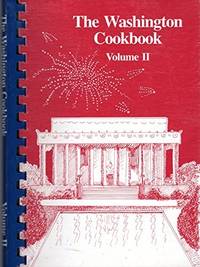
1994Q-0961054212Washington Opera Women&S Committee 1994-01-01. Spiral-bound. New. In shrink wrap. Looks like an interesting title! Washington Opera Women&S Committee unknown
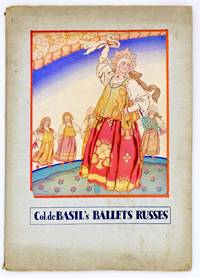
1936300382Paris: Alliance de Publicite et de’Impression 1936. Full color program for the 1936-1937 season of Ballet Russe de Monte Carlo presented by Col. de Basil. Cover illustration by I. Bilibine on silver paper jacket folded over plain covers~ ~66pp. with 4 pages of tipped-in color plates on both sides picturing different aspects of the production such as the costumes and scenery. Some wear to cover edges and bottom of spine. Good. Alliance de Publicite et de’Impression unknown
198447889Melbourne, Thomas Nelson Australia., 1984. 192 S. Gr.-8°, Kt. Used, but good condition. / Leichte Gebrauchsspuren, sonst gut erhalten.
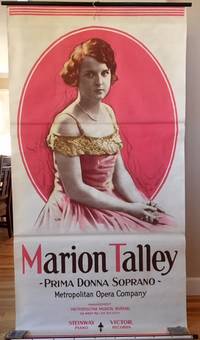
192451696New York NY; Hollywood CA; Taos NM: Underwood & Underwood Anderson Lumiere Guard Vitaphone Studios Metropolitan Music Bureau 1924-1927. Twenty seven items. With 24 photographs 3 sized 3.5 x 5.5 in.; 6 sized 5 x 7.75 in.; 1 w/ colour-tinted blue sized 7.25 x 9.5 in.; 16 sized 8 x 10 in.; many w/ annotations dating the photos in pencil some of the press photos and studio photos stamped on versos with attached newsreel information blurbs many w/ text in negative at lower corner of image; 1 very large colour lithograph poster printed on linen showing the young opera star seated and colours of pink gold and black sized 40 x 80 in. w/ wood bars at upper & lower for hanging some minor creasing from rolling but in Fine condition; and TLS from Lawrence H. Smith at Underwood & Underwood Inc. News Picture Division to Miss Marion Talley. These photographs and giant lobby poster provide splendid artifacts for the lavish attention paid to a young star at the beginning of her career during the Jazz Age. The very large poster is a beautiful example of colour lithography showing her demurely seated against a pink lozenge background with advertisements at the foot of the poster for Steinway Piano and Victor Records. Marion Talley 1906-1983 was the daughter of a telegraph operator for the Missouri Pacific Railroad and by 15 she was appearing in the Kansas City Grand Opera Company of Mignon by Abroise Thomas and quickly became a local celebrity often performing benefit concerts. She studied with music teacher Frank LaForge famed soprano composer who maintained a close relationship with the Metropolitan Opera and was placed under contract in 1925 by Giulio Gatti-Casazza at age 19 becoming the youngest principal female performer in the Met’s history to that point. Her debut performance was Feb. 17 1926 as Gilda the daughter of the title character in Verdi’s Rigoletto. The press photos show her surrounded by the many flowers she received in the 18 encores her performance on stage meeting the opera diva Ernestine Schumann-Heinck d. 1936 as well as her appearance on radio with Marguerite D’Alvarez and Giovanni Martinelli singing Home! Sweet Home!. In addition she also starred in the first Vitaphone short sound films released in 1926 with Don Juan starring John Barrymore and another Vitaphone short performing “Bella figlia dell’amore†from Rigoletto but the critics were savage criticizing her performances and her lack of appeal on camera. During this period she traveled extensively to Europe and through the southwest as evidenced by the series of photos showing her in Taos with the burros young Native American children and adults in regalia as well as her automobile. The photo of the young star by Samuel Lumiere 1878-1971 is a very nice example of his portrait work during the height of the 1920s when he was under contract to shoot celebrities for the Chicago Tribune. See: Barrios A Song in the Dark: The Birth of the Musical Film pp. 20-29; Vitaphone Marks 80th Anniversary Vitaphone News The Vitaphone Project Vol. 8 No. 1 2006; Crafton The Talkies: American Cinema’s Transition to Sound 1926-1931 1999. Underwood & Underwood, Anderson, Lumiere, Guard, Vitaphone Studios, Metropolitan Music Bureau, unknown