89 résultats
1880345831880. Arch. klin. Chir. 25. - Berlin Verlag von August Hirschwald 1880 8° IV 952 pp. Holzschnitte 14 lith. Taf. Halbledereinband der Zeit. unknown
1900347151900. Verh. Dtsch. Ges. Chir. 29. - Berlin Verlag von August Hirschberg 1900 8° LVIII 220 757 1 pp. Abbildungen Holzschnitte und Autotypien und 11 Tafeln Leinenband. Erstdruck! "Um die Konstruktion von Phonationsapparaten die bei vollständigem Abschluß zwischen Trachea und Naspharynx den Luftstrom und den Ton mittelst eines Gummirohrs von vorn ind die Nase oder zwischen den Lippen in die Mundhöhle leiten hat sich später besonders Gluck verdient gemacht 1900 I.178."Friedrich Trendelenburg Die ersten 25 Jahre der Deutschen Gesellschaft für Chirurie 1923 p.231 unknown
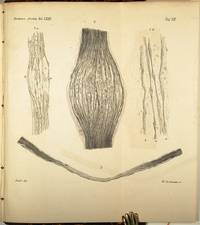
1880212181880. Arch. klin. Chir. 25. - Berlin Verlag von August Hirschwald 1880 8° IV 952 pp. Holzschnitte 14 lith. Taf. Pappband der Zeit. First Edition! "The operation of nerve grafting transplantation was performed by Philipeaux and Vulpian in 1870 and independently by Gluck in 1880." - Walker No.932 unknown
1895347491895. Zbl. Chir. 22/27 Bericht über die Verhandlung der Deutschen Gesellschaft für Chrirugie XXIV. Kongress. - Leipzig Verlag von Johann Ambrosius Barth 1895 8° pp.641-656; 154 pp. Halbleinenband. Erstdruck! Es "ist der Gedanke Elfenbeinstücke nicht nur zu vorübergehendem sondern zu dauerndem Einsatz von Knochendefekten und aus Elfenbein hergestellte künstliche Gelenke zum Einsatz zu benutzen von Gluck ausgegangen. Er berichtete darüber 1890 und ausführlicher in einem Vortrag im Jahre 1895 über Osteoplastik und einheilbare Prothesen der aber nicht in den gedruckten Verhandlungen aufgenommen ist. Ein Autoreferat findet sich im Zentralblatt für Chirurgie Bd. 22 pp.30 ff. Er hob darin den praktischen Nutzen von Implantation von Elfenbein und Knochen sowie vernickeltem Stahl Aluminiumbronze und dergleichen in Knochendefekten nochmals hervor. Wenn Elfenbein und Knochen auch allmählich von dem neuen sich bildenden Knochen umwachsen resorbiert substituiert würden so dienten sie doch als innere Schiene und als Reiz für die Knochenneubildung und erzwängen die Regeneration in der zweckmäßigen Bahn. Die anorganischen Fremdkörper auch künstliche Gelenke könnten für lange Zeit vielleicht dauernd einheilen und reizlos funktionieren. Dem Vortrag folgte eine reichhaltige Demonstration von Präparaten und Modellen von Elfenbeinmetallprothesen und Mittheilungen über klinische Beobachtungen. Einem großen Hunde war ein Metallscharnierapparat eingeheilt. Pean implantierte als Ersatz des resezierten Schultergelenkes ein Gelenk aus Platiniridium und Hartgummi das seit 2 1/4 Jahr tadellos funktionierte." Friedrich Trendelenburg Die ersten 25 Jahre der Deutschen Gesellschaft für Chirurgie 1923 p.163 unknown
1878346341878. Virch. Arch. path. Anat. 72. - Berlin Verlag von Georg Reimer 1878 8° VI 650 pp. 12 Tafeln Halbleinenband. Erstdruck! "Ein Hauptvertreter der prima intentio nervorum war Gluck der sich schon als Student durch eine Preisaufgabe der Berliner Fakultät angeregt mit Tierversuchen über Nervenregeneration befaßt hatte. Die gekrönte Preisschrift "Experimentelles zur Frage der Nervennaht und Nervenregeneration" findet sich im 72. Bande des Virchowschen Archivs 1877. Durchschnitt Gluck einen 3-4 Tage zuvor genähten Ischiadicus eines Huhnes oberhalb der Nahtstelle so rief nicht nur elektrische sondern auch mechanische Reizung des oberen Nervenstückes Zuckung hervor. Auch etwas kompliziertere Versuche mit Durchschneidung und Naht der beiden Vagi schienen für die prima intentio zu sprechen. Auf dem 9. Kongreß 1880 II. 22 hielt Gluck jetzt Assistent von Langenbeck einen Vortrag über Neuroplastik auf dem Wege der Transplantation und demonstrierte Hühner an denen er 3-4 cm lange Defekte des Ischiadicus durch Stücke von Kaninchennerven ersetzt hatte. Obgleich nur wenige Wochen seit der Operation verstrichen waren glaubte er eine Wiederherstellung der Funktion bis zu einem gewissen Grade feststellen zu können." Trendelenburg Die ersten 25 Jahre der Deutschen Gesellschaft für Chirurgie: Ein Beitrag . p. 158 unknown
1883345911883. Arch. klin. Chir. 29. - Berlin Verlag von August Hirschwald 1883 8° IV 866 pp. Holzschnitte 25 lith. Taf. Halbledereinband. Erstdruck! unknown
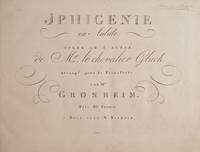
180940434Bonn: Chez N. Simrock PN 609 1809. Oblong folio. Quarter black leather with gilt rules mid-brown cloth boards spine in compartments gilt with titling gilt marbled edges. 1f. recto title verso cast list 3-149 pp. Text in French and German. Engraved throughout. <br /> <br /> With contemporary signature of former owner "Mappes" to upper outer corner of free front endpaper with handstamp of August Kuby in Munich below; "Amalie Mappes" to upper outer corner of title.<br /> <br /> Binding worn rubbed bumped and slightly stained. Occasional soiling; small ink stains browning and foxing to blank margins; small loss to lower outer corner of p. 27. First Edition. Hopkinson p. 41 40F. Wotquenne 40. RISM G2753 and GG2753 no copies in the U.S. <br /> <br /> Iphigenie en Aulide was first performed in Paris at the Opéra on 19 April 1774. <br /> <br /> "Judging from contemporary accounts such as the memoirs of Mannlich the several months of rehearsals for Iphigénie en Aulide must have been quite a spectacle with the irascible 60-year-old composer struggling to reform the bad habits of the singers and players of the Académie Royale to teach them his new opera. However the première of Iphigénie en Aulide in April 1774 was a triumph but the run of performances was interrupted by the death of Louis XV a month later. All the theatres closed and during the period of mourning Gluck quickly revised Orfeo ed Euridice and made a French version of the opera with a translation of the text by Pierre Louis Moline." Jeremy Hayes in Grove Music Online. Chez N. Simrock [PN 609] unknown
1891013212New York: Banks & Brothers 1891 580 pp.; HB. Pages: clean ivory tight; eps toned a.e. tanned t.e. dusty front hinge starting. Cover: leather 5 raised bands gilt titles to the 1 remaining of 2 spine blocks; substantial shelfwear esp extremities leather scuffed and worn. The original real deal. Banks & Brothers hardcover
185017851AB1850. Pest Heckenast 1850. 175 : 11 cm. Faksimiliertre Brief Vortitel gestochener Titel 2 Blatt 258 Seiten. Grüner Lederband der Zeit mit reicher Rückenvergoldung Deckelfileten dreiseitiger Goldschnitt. Seltene erste Ausgabe. - Betty Paoli eigentlich Barabara Elisabeth Glück Wien 1814 - Baden bei Wien 1894 österreichische Lyrikerin Novellistin Journalistin und Übersetzerin. Paoli offiziell die Tochter des Militärarztes Anton Glück vertraulich wurde sie aber als die natürliche Tochter des Fürsten Nikolaus von Esterhazy gennant. Mit ihren einfühlamen Gedichten und kritischen Aufsätzen wurde Betty Paoli zu einer wichtigen Figur der frühen Frauenbewegung. Durch ihre Reisen hatte sie auch Kontakt zu Bettina von Arnim. - Sehr dekorativ gebundenes Exemplar mit dem eingebundenen Faksimile eines ihrer Gedichte womöglich Geschenk-Exemplar. unknown
1892347501892. Verh. Dtsch. Ges. Chir. 21.Congress. - Berlin Verlag von August Hirschwald 1892 8° XXXII 137 544 pp. Abbildungen Leinenband. Erstdruck! "Es handelt sich um den Ersatz von Beugesehenen der Finger. Die vorgestellten Fälle wurden von Bergmann König Riedel nicht als beweisend angesehen." Friedrich Trendelenburg Die ersten 25 Jahre der Deutschen Gesellschaft für Chirurie 1923 p.161 unknown
180518110A Paris: A L'Imprimerie du Conservatoire Faubourg Poissonniere No. 152 1805. Used; Like New/Used; Like New. Messe De Requiem Par Mozart. Exécutée pour la première fois à Paris par le Conservatoire de Musique le 30 Frimaire An 13 21 décembre 1804. Cet ouvrage est précédé d un extrait de la vie de l'Auteur par Charles-Louis de Sevelinges. Early French edition of Mozart's final opus which was performed for the first time in Paris in 1804 bound together with: De Profundis. Musique de Gluck. Ouvrage Posthume Gravé sur le Manuscrit Original de l'Auteur Paris: Faubourg 1805. 138; 15 pp. Full score with SüÃmayr's completion. Engraved throughout. Stamped on both title pages by music dealer Ãtienne Ozi. Hardcover later brown boards with gold lettering to spine. Some light corner wear and small loss to head of spine with this fragment present. Overall fine. 13.5 x 10 inches 34.3 x 25.3 cm. Hirsch IV 877. WorldCat records only three copies.<br>Mozart's Requiem remains one of his best-loved works not little because of the mythology surrounding it. Mozart left it unfinished when he died in December 1791. The completion by Franz Xaver SüÃmayr made in order to fulfill the Count von Walsegg's commission of the piece is still generally the completion performed today although several modern musicologists have offered alternative completions. The first French performance took place in Paris in 1804 with the present title page giving the date of 30 Frimaire An 13 in the French Revolutionary calendar.<br>Gluck's De Profundis is a short setting of Psalm 130 for SATB choir and small orchestra with an unusual and low instrumentation oboe viola horn three trombones cello and continuo. The work was first performed at Gluck's own funeral in November 1787 conducted by none other than Antonio Salieri. The use of trombones with the associations of death and the afterlife make it a fitting pairing with Mozart's Requiem. A L'Imprimerie du Conservatoire Faubourg Poissonniere No. 152 hardcover books
1836248049Palm & Enke Erlangen 1836. Hardcover kartoniert 1836-1872 lückenlos. 42 Bände. Band 12345678910111213141516171819202122232425262728293031323334353637 der gesamten Folge Alphabetisches und systematisches Register über die ersten 10 Bände über die Bände 11 bis 20 über die Bände 21 bis 30 Beilagenheft zu Band 34 der neuen Folge 14. Ergänzungsband zu Band 31 und 32. Zustand: keine Beschädigungen Eintragungen einer Klosterbibliothek Stempel. Rücken Ecken Kanten bei allen gleichmäßig berieben/bestoßen gut. Palm & Enke, Erlangen, hardcover
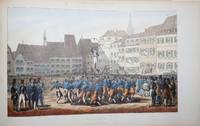
1840008068Strasbourg: Emile Simon Fils 1840. First Edition. Quarter Morocco. Marbled paper pastedown on boards. Very Good. Colorful 1840 three day celebration of the unveiling of a statue to Johann Gutenberg which occurred on June 24 through the 26th 1840. This stunning color plate book is almost entirely devoted to the endless parade organized for the event that proceeded during the second day or the 25th -- based on the dates given in the plate captioning. In this parade each of many professions had its own contingent and dressed and carried a sometimes impressive prop reflecting on the profession. From the vast number of paraders it would seem that virtually everyone in Strasbourg was an active participant. Oblong folio 32 by 53 cm. 48 hand-colored plates with five of the plates with fold-outs and thus extra long. Fold-out plates are counted as two plates in the enumeration which thus goes up to the number 53. In complete form this book is scarce. Outside of France and Germany the only hard copy showing on OCLC First Search is at the Morgan. It isn't clear to us whether the copies in Europe are commensurate but at most there may be half a dozen copies. No copies found in commerce on the date of this listing. Contemporary morocco spine moderately rubbed and scratches on the paper pastedown. Leaves age toned with deeper age toning affecting the fold-out plates. Occasional foxing with perhaps two plates with a considerable amount. A very short closed tear or two. Some shake to the binding as typical in such an extreme oblong book. Emile Simon Fils unknown
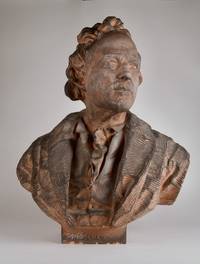
1864404171864. Height 26.75" 68 cms. With the artist's name "Francin" to truncation of left arm; integral base inscribed "Gluck."<br /> <br /> Some wear and soiling; age-toned. In quite good condition overall.<br /> <br /> Provenance<br /> Catalogue of the Collection Musicale André Meyer 1961 Vol. I p. 97 and plate 122. Auction catalogue of Pescheteau-Badin Godeau et Leroy Collection Musicale André Meyer et a divers Paris July 2 1998 Lot 101 including color photograph. Auction catalogue of Bonhams London The Roy Davids Collection London 3 October 2005 Lot 246 illustrated. Houdon: An Exhibition of Sculpture from the Collection of Michael Hall esq. Catalogue by Christine Defazio Karl Fugelso and Philip Mezzatesta. New York: Salander-O'Reilly Galleries 1998 pp. 12-15. Poulet et al.: Jean-Antoine Houdon - Sculptor of the Enlightenment. Exhibition Catalogue. The National Gallery of Art Washington D.C. 2003 pp. 102-108. Exposition du Centenaire de Houdon Paris: Galleries Buvelot 1928 pp. 40-41. Vitry: Une Liste d'oeuvres de J.-A. Houdon p. 9.<br /> <br /> The present sculpture exists in two versions: the present scarcer version with full shoulders and partial torso and a second version with partial shoulders and reduced torso<br /> <br /> "Following Houdon's plaster bust of Gluck shown in the Salon of 1775 . the marble was exhibited in 1777 . and destroyed in the fire at the Paris Opera 28-29 Oct. 1873. A faithful reproduction ordered in 1798 by Alexandre Lenoir for the Musée des monuments français and executed in marble by Guillaume Francin is in the Musée national du chateau de Versailles. The Louvre's plaster cast workshop distributed copies of this reproduction beginning in 1864." Poulet et al.: Jean-Antoine Houdon - Sculptor of the Enlightenment. Exhibition Catalogue. The National Gallery of Art Washington D.C. 2003 p. 107.<br /> <br /> "The present bust is probably one of the Louvre's copies. . It was in his depiction of Gluck that Houdon first showed the ravages of smallpox on a subject - it was a common affliction in eighteenth-century France but artists were expected to flatter their subjects in this respect at least." Bonhams catalogue<br /> <br /> "Gluck was an artist a great musician and therefore must be given the attributes of a genius. His face was deeply pockmarked and the sculptor used this fact to establish his theme. He clothed him in a heavy coat whose texture is an overall pattern of slashed grooves free and direct in their expressive impact. Here there was no attempt to stimulate the appearance of the actual material but rather in a manner almost Rodinesque to bring out the quality of the clay. The open shirt the unbuttoned vest the short disheveled hair and the alert titled pose of the head all emphasize the impact of genius." Arnason: The Sculptures of Houdon p. 34. unknown