7 975 résultats
1951015647New York: Bell Telephone Laboratories Inc. / Western Electric Co. Inc. 1951. First Edition . Soft cover. Very Good. 10 15/16" Tall. 792 Pp. Grey Card Covers Printed In Black. First Printing. "The Material Included Herein Covers The Same Ground And Supplements The Talks Given At A Symposium On Transistors Which Was Held At The Bell Telephone Laboratories During The Week Beginning September 17 1951. Includes Reprints Of Important Shockley Papers Including The "The Theory Of P-N Junctions In Semiconductors And P-N Junction Transistors" From The 1949 Bell System Telephone Journal And 33 Other Articles By Shockley And Others Most Of Which Are First Published Here Representing A Comprehensive Overview Of The Latest Developments In This Important Milestone In Electronics. Includes A Joint Article By Shockley And Sparks On P - N Transistor Junctions; The Junction Transistor First Announced By Bell Labs In 1951 Was More Efficient And Consumed Far Less Power Than The Original 1947 Type And Led To The Electronics Revolution In Small Devices; Sparks Was Later Directore Of Sandia Labs 1972-1981 And Was Involved In Plasma Research. Note: No Articles Credited To Bardeen Or Brattain. Some Wear And Light Soiling To Covers But All Lettering Clear On Front Cover And All Lettering Worn But Present On Spine. Internally A Clean Copy. Laid In Loosely Are Signed First Day Covers Commemorating Their Achievements One Each Signed By Shockley Brattain And Bardeen. <br/> <br/> Bell Telephone Laboratories, Inc. / Western Electric Co., Inc. paperback
1929025041Pasadena 1929. Original Drawing . No Binding. Near Fine. 13 3/4" x 12 1/4. Original Pencil Engineering Drawing Of Three Views Of A "Latitude Finder At Any Hour Angle With Three Reflections" Dated 1929 Signed Rwp. The Drawing Is 9 5/8" X 11 1/8" With Ample Margins. Porter Is Famous For His Prescient Pre-Construction Drawings Of The Palomar Observatory And Its Telescopes Machinery And Buildings So Well Visualized That They Were Used As Guides During Construction. <br/> <br/> unknown
1910028079New York City: D. Van Nostrand 1910. 1st Edition 1st Printing. Hardcover. Good/No Jacket. 56 Illustrations. Xii 119 Large Catalog At End. Green Cloth Lightly Worn But Most Of Fragile White Lettering Has Rubbed Away No Fraying Or Stains. Hinges Solid. Signature Of "George F Haller / Sept 14 1910" On Front Endpaper With Remains Of Tipped In Printed Paper Label Beneath The Signature Of Which Only A "T" Remains Possibly A Publisher's Note. In 1915 Cunningham 1889-1965 Started The Audio Tron Sales Company In San Francisco. Based On The West Coast He Was In Direct Competition With Lee De Forest A Leading Manufacturer Of Triodes Sold Under The Audion Brand. Before 1915 Triode Vacuum Tubes Were Spherical Or Shaped Like An Incandescent Light Bulb. Cunningham Took A Different Route. His Triode Tube Was Tubular And Had The Capability Of Being Double Sided. This Design Allowed Dual Filaments Which Provided Longer Operating Life. Cunningham Was Able To Produce This Vacuum Tube In Large Numbers And Maintain Quality. The Rise In Amateur Radio Interest Was A Great Asset To Audio Tron Sales. This Design Proved Influential On Vacuum Tube Production And Prompted De Forest To Come Up With A Tubular Audio. Another Important Design In The Audio Tron Tube Is The Use Of A Cylindrical Plate Instead Of The Typical Flat Plate In The Audion. The Cylindrical Plate Provided Better Gain And Tube Efficiency. This Design For The Audio Tron Was Probably Inspired By George Halle.In 1916 Elmer T. Cunningham And His Writing Partner George Haller Formed The Haller-Cunningham Company. The Main Purpose Was To Sell And Make Wireless Equipment. In Addition Cunningham Provided Financial Backing To Otis B. Moorehead Late In 1915 To Start A New Vacuum Tube Company Called Moorehead Laboratories Also Based In San Francisco Ca. In July 1916 Otis Moorehead Marketed The Electron Relay Tube. This Vacuum Tube Was Similar In Appearance As Cunningham's Audio Tron. Like The Audio Tron Moorehead's Tube Would Cut Into De Forest's Tube Business On The West Coast And De Forest Would Take Legal Action On Moorehead As Well. Moorehead Would Later Make The First Military Tubes For The Us And United Kingdom During World War I. In 1919 The Radio Corporation Of America Rca Took Legal Action Against Cunningham For The Violation Of The Flemming And Deforest Patents. The Decision Made By The Us District Court For Northern California Proved Quite Favorable To Cunningham. By 1921 Audio Tron Manufacturing Company Started Slowly Changing Their Name To "E.T. Cunningham Inc." In Later Years After The Court Decision Cunningham Played A Bigger Part In Rca's Business Activities. According To The Rca Publication " Rca A Historical Perspective" By 1931 The E.T. Cunningham Company Became An Integral Part Of Rca And Consolidated With The Rca Radiotron Company Giving Rca Rights To The Use Of The Cunningham Brand. In Addition Elmer T. Cunningham Became A Part Of The Rca Organization. In 1932 His Name Appears On Page 16 Of The August-September Edition Of "Music Trade Review" As President Of Rca Radiotron Division Vacuum Tube Production And Distribution. By The Mid 1930S He Rose To The Position Of President Of Rca Manufacturing Division. Haller Was In A Responsible Position With Westinghouse In 1910. He Wrote The Use And Care Of Storage Batteries In 1916. He Became Vice President And General Manager Of Haller Cunningham Electric And In 1917 Was Traveling Throughout The U.S. Arranging For Installation Of Their Extensively Patented Wireless Equipment On Steamers. By 1923 He Was President Of The San Francisco Labor Council And That Year Became A Member Of The California Commission On Immigration And Housing. <br/> <br/> D. Van Nostrand hardcover
192560077Cleveland OH: The Superior Die Casting Co. The Heiser Co. Commercial Photographers; Rebman Photo Service ca. 1925-1944. Twelve items; 1st - Oblong 4to. 12.5 x 9 in. With 41 linen-backed silver gelatin photographs sized 9.5 x 7.5 in. mounted on linen hinges at gutter margin most with typescript inscriptions on linen versos most dated 2 images of promotional articles bound as folding double-page panoramic photo. Contemporary ribbed flexible calf post-binder gilt lettering stamped on front cover Company logo of SuperCast in lower left corner margin some chipping to head & foot of spine edgewear scuffing minor soiling to rear pastedown still a VG copy; 2nd - Folio. 12.5 x 14 in. Two parts in one vol. Left hand half features 32 pp unpaginated. w/ mylar sleeves each w/ colour-tinted printed mylar film cell recto & verso of each comprising an additional 64 leaves overlaying the 32 silver gelatin product images sized 8.5 x 11 in. revealed below carefully identifying the cast parts; 34 pp unpaginated. mylar sleeves holding 22 black & white silver gelatin photos sized 8.5 x 11 in. on glossy photo stock photographer’s imprint stamped on verso along with printed text & sales figures tables for Superior Die Casting Co. Contemporary flexible pebbled cafl facing 22-ring binders at gutter fore-edges khaki-coloured zipper around fore-edges gilt stamping & logo on front cover minor scuffing edgewear some curling to mylar cell overlays still a VG exemplar; 3rd-14th - 4to. 4; 4; 4; 2; 2; 2; 2; 2; 4 including three SuperCast product catalogues from the 1920’s a Better Methods catalogue; Die Casting Adler Bag linen bag leaf w/ 8 Superior Die Casting Co. business cards dated in MS from 1925-1927 camera-ready add copies envelopes and even loose leaves touting the newly completed factory to be opened in 1928. These salesman sample photo albums and ancillary ephemera vividly document the die cast alloy products churned out by the fast growing Superior Die Casting Co. founded in 1919 following World War I by two intrepid Jewish-American engineers. The first album composed entirely of linen-backed photographs open with images of the newly opened SuperCast Die Cast factory and reproductions of trade magazines touting the company’s new ally with 50000 lbs. of tensile strength with 25% greater permanency when subjected to extreme heat and steam as well as greater strengths when subjected to sub-zero testing in 1930. The myriad of inventive and eye-catching product photographs depict oil pump bodies Motometer mounts partition castings piston and crank assemblies fans rotors pulls speedometer drives rumble seat arm rests auto pedals oil gauge parts auto door panel glass holders and more. Of particular interest are the photographs depicting the vast nearly surrealist collage product exhibits created for the 8th National Exposition of Power & Mechanical Engineering in Grand Central Palace New York 1929; the 1929 Cleveland Automobile Show at the Public Auditorium or the 1927 Cleveland Industrial Exposition. The second sales album featuring 54 silver gelatin photographs and 32 of them designed with a nearly avante-garde creativity with ingeniously arranged product collages augmented with colour-tinted overlays. The SuperCast castings display a wide range of Wartime products including gun sight components computer cams for targeting gun turrets flight instruments Army Air Force automatic pilot and bomb sight parts and more. In addition a myriad of ticket marking machines metering instruments auto heaters refrigerator parts vending machine frames hair dryers T.V. antenna rotators pump impellers railroad speed recorders and much more spill across the large photos. This sales album focuses on the SuperCast zinc alloy die castings some with electro-plating along with machined aluminum alloy castings. A few of the Wartime Homefront factory photographs show a significant number of women working to aid the War effort in the packing and shipping department and the factory production floor. Harry Weiss 1882-1975 and Adrian Weiss 1894-1964 were both machinists and engineers with Adrian serving as engineer in the AEF in Europe from 1917-Dec. 1919 while Harry Weiss arranged financing and began producing the initial products of iron and steel castings sheet metal steel wire and steel products. From the 1920’s until after World War II the company produced die castings for automobiles electric motors appliances engines phonographs calculating machines mechanical toys motion picture projectors and more. Heiser 1881-1938 was art and commercial photographer in Cleveland OH who maintained a large staff of photographers and engravers. He frequently taught classes in and around Cleveland along with W.H. Bass of Indianapolis on how to build successful commercial photography businesses and detailing how to prepare product photos. Rebman 1910-1962 formed his commercial studio during World War II after leaving his job working as pressman and photographer for the Cleveland Plain Dealer and his commercial Rebman Photo Service expanded and continued operating as a family business following his death. Family tradition would be continued later by his nephew Mort Tucker who had enhanced the business of Rebman Photo by focusing more on department store and fashion photography as well as architects financial institutions and more. This cataloguer could find almost no remaining historical reference or physical presence of any photographs related to the company and in fact the sole portfolio of undated company trade literature under SuperCast Die Castings is held by Cleveland State. The Superior Die Casting Co., The Heiser Co., Commercial Photographers; Rebman Photo Service, unknown
19982110502151003497elementary school 1998. Soft Cover. Fine. Number of books: 5 elementary school paperback
196758878Whitechapel Gallery; Loughborough University of Technology. As New. 1967. Paperback. FREE UPGRADE to Courier/Priority Shipping Upon Request IN STOCK AND IMMEDIATELY AVAILABLE FOR SHIPMENT - AS NEW THE TEXT BLOCK IS PRISTINE CLEAN UNMARKED AND IN EXCELLENT CONDITION - - 60 pp. With 71 ills. 22 x 19 cm. -- with a bonus offer-- . Whitechapel Gallery; Loughborough University of Technology paperback
191356323Detroit & New York: The American Light and Traction Company May 1913. 4to. 9.5 x 11 in. 140 pp unpaginated. With 55 linen-backed silver gelatin photographs sized 8 x 10 in. nearly all w/ identifying text w/in negative at lower fore-edge many w/ dittoed labels on versos photographer’s marks on versos and nearly all mounted on linen hinges at gutter margins; 1 cyanotype chart. Contemporary black cloth post-binder brass screw posts at gutter margin rear cover repaired wear & bumping to corners occasional fraying & wear to fore-edges of text leaves still a VG copy w/ nearly all photos having bright strong contrast. First edition of this exceedingly scarce product photo album touting the industries and products produced and powered by the American Light & Traction Co. utility consortium providing an essential visual survey of United States power use and applications prior to World War I. The striking photographs depict the often gritty working conditions the presence of women in some industries such as the chocolate dipping factory and the myriad of industrial processes in the opening decades of the 20th Century. These industries and machines powered by the AL&T Co. include asphalt melting ovens annealing furnaces barrel drying beer production commercial bakeries smelting of brass and aluminum candy furnaces china the testing of Lozier automobile engines and the operation of Nash and International Harvester gas engines. Of particular interest are the expansive sections on converting commercial kitchens in Milwaukee WI hotels and restaurants to run on gas ice machines in Cleveland rivet heating factories in Milwaukee and the massive tire and wheel factories in Milwaukee & Detroit. Founded originally in 1900 for consolidating many small utilities and power suppliers such as Detroit City Gas Co. Milwaukee Gas Light Co. Southern Light and Traction Co. Muskegon Traction & Lighting Co. and others the company quickly expanded gaining control over 40 gas producing plants electric light and streetcar companies as well as manufacturing plants. McMillin 1844-1922 was an Ohio financier and banker who controlled the company until his death which subsequently came under fire as a monopoly utility from such strident critics as Gifford Pinchot and in 1935 was broken up by the enactment of the Public Utility Holding Act eventually emerging as Michigan Consolidated Gas and eventually merged with DTE Energy. Benham 1883-1964 worked as a photographer before World War I with his own studio before becoming an inspector with the Lincoln Auto Co. and then reestablishing his commercial photography studio until his death. He is perhaps best rememebered for his photo taken in 1901 of Henry Ford’s only automobile race against Alexander Winton in 1901. No copies located in Worldcat; See: Cyphers The National Civic Federation and the Making of a New Liberalism 1900-1915 pp. 142-143; Gifford Pinchot The Power Monopoly Its Make-Up and its Menace 1928; Debunking Henry Ford’s “Faster Horse†Quote Observations & Inspirations ZinZin by Jay Nov. 28 2012. The American Light and Traction Company, hardcover
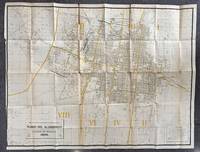
19046209Mexico 1904. Good. Map 31 x 41 inches. Old folds; slight loss and wear at some folds wear and chipping at edges. Lightly toned at folds minor soiling. A large and wonderful map depicting the streetlight illumination of Mexico City. The map puts the Alameda Central at the center of the sheet with eight outlined districts divided around it. A key provides a series of varying red dots which denote streetlights at various bulb levels as well as those planned for an increase. Green lines show electric lines both planned and in place. Various railroads snake throughout the city with the central train yard featured in the upper left center. The area with the most illumination left to do is the eighth district centered on the Paseo de la Reforma. Though the Paseo does have a series of lamps in place most of the rest of the area around it does not as it is still under development. We find no copies of this map in OCLC though with maps that is not uncommon. A fascinating look at the modernization and electrification of Mexico City at the turn of the 20th century. unknown
1985EG-210Boston MA.: A.A.Balkema 1985. Comprehensive Five-Volume reference set contains over 440 technical papers presented by internationally respected field experts from 47 countries. Contents include: Vol.I- Theme Lectures; Volumes II-IV- Technical Papers including Geotechnical aspects of Environmental Control Piles and Other Deep Foundations Evaluating Seismic Risk in Engineering Practice Soil Mechanics etc. Vol.V- Post Conference Proceedings including general reports and late papers. 3061 pp. collectively in five volumes. Text in English with a few contributed papers in French. Illustrated. Very minimal shelfwear. Gilt spines. Prior owner's name on the front endpaper in Vol.I only. Heavy Item. First Edition. Hard Cover. Fine/ . 4to - over 9¾" - 12" tall. A.A.Balkema Hardcover
198458040BBMilano, Automobilia, 1984-1996. 29x25,5 cm. Originalleinwandbànde mit Schutzumschlägen. Band 7, 8, 11-13, 16-19, 21-25 mit Bauchbinde.
19698249849Iliffe Books 1969. This is an ex-library book and may have the usual library/used-book markings inside.This book has hardback covers. In good all round condition. No dust jacket. Please note the Image in this listing is a stock photo and may not match the covers of the actual item450grams ISBN:059202525X Iliffe Books hardcover
1960ZB394122Society of Glass Technology 1960-1970. volumes 1-11 1960-1970 complete volumes partly bound library markings textually clean & tight price is for the set. - If you are reading this this item is actually physically in our stock and ready for shipment once ordered. We are not bookjackers. Buyer is responsible for any additional duties taxes or fees required by recipient's country. Photos available upon request. Society of Glass Technology unknown
1929020899New York: D. Van Nostrand Company 1929. 1st Edition 1st Printing. Hardcover. Very Good/Near Fine DJ. Photographs and Diagrams Throughout. X 194 Pp 1 Pp Ad At Rear. Beige Cloth Stamped In Black. First Lightly Used Hinges Tight No Marks Or Names Light Bumping At Some Corners Faint Mottling Or Loss Of Color To Cloth Foxing Spots To Top Edges Of Covers And Top Edge Of Page Block Contents Entirely Immaculate. Dj Is Bright Red Very Slight Fading And Soiling To Spine Tiny Losses At Two Upper Corners Of Spine And At Upper Front And Lower Right Tips. Harold Horton Sheldon 1893 -1964 Was A Canadian-American Physicist Scientist Inventor Teacher Editor And Author. He Was A Science Editor Who Wrote On Futuristic Subjects Especially Pertaining To Human Space Travel. Sheldon Attended Queen's University In Kingston Ontario Where He Received His Bachelor Of Arts Degree In 1916 And Master Of Arts Degree In 1917. He Received His Ph.D. In 1920 From The University Of Chicago And Was An Assistant Professor Of Physics There 1918 And 1919. He Later Attended Brooklyn Polytechnic Institute In New York City And Received A Degree In Electrical Engineering In 1934. Sheldon Became A Physics Instructor At The University Of Michigan In 1922. He Served As Science Editor Of The New York Herald-Tribune From 1927 To 1931. He Was A Professor At New York University From 1927 To 1941 And Dean At University Of Miami From 1946 To 1953. Sheldon Became A Professor At Roosevelt University In 1956 And Became The Chairman Of The Physics Department; In The 1960S He Was The Acting Dean Of Faculties And A Vice President Of The University Until His Death. He Was Science Editor Of The New York Herald Tribune From 1928 To 1931. For The Tribune He Wrote On Futuristic Subjects That Ultimately Became Matters Of Scientific Interest To The General Public. Likewise He Was The Prentice-Hall Science Editor. He Is Considered A Pioneer In Several Twentieth-Century Scientific Fields And Was A Specialist In Several Areas Of Electronics. One Is The Conduction Of Electricity Through Crystals Which Is The Basic Concept Of Modern-Day Electronic Integrated Circuits. Another Was The Field Of Ultra-High-Radio Frequencies. During World War Ii 1940-46 Sheldon Was An Independent Research And Development Engineer. He Was Named Research Professor Of Engineering At The University Of Miami After The War. In The Early 1950S He Was A Consultant To Several Industries Companies And Conglomerates. Sheldon Was A Scientist Who Was Ahead Of His Time Especially In Space Travel Notions. In 1929 He Wrote About The Serious Possibility Of Man Visiting Other Planets Through The Use Of Rockets. He Wrote The Original Introduction To The Conquest Of Space By David Lasser The First Book Written In English That Seriously Connected Rocketry With Space Travel And The Possibility Of One Day Man Visiting Other Planets. Sheldon Was The Third Ph.D. Member Of The Newly Formed American Interplanetary Society Founded In 1930 By G. Edward Pendray David Lasser And Others. Sheldon Invented A Precision Photoelectric Colorscope Measurement Instrument More Accurate Than The Human Eye Could Detect. He Was A Pioneer In Neon Tube Designs And In The Design Of Cold Cathode Rectifiers. He Was Also A Discoverer Of Selective Absorption Of Hydrogen And Nitrogen In Charcoals And A Co-Discoverer Of The Actino-Electric Effect. <br/> <br/> D. Van Nostrand Company hardcover
1974EG-134New York: Academic Press 1974. Classic comprehensive two-volume treatise presents Vol. I: Finite Motions contains coverage of the theory of singular surfaces; shock waves; finite amplitude oscillations; propagations of waves in deformed and stressed elastic solids; quasilinear system of hyperbolic equations with two independent variables; etc. Vol. II: Linear Theory is devoted to an exposition of the dynamical theory of linear isotropic elasticity including detailed coverage of the mathematical problems relevant to linear theory; fundamental theorems; numerous exact solutions of significant problems in one two and three space dimensions; diffraction theory of elastic waves; etc. 1003 pgs. collectively. Illustrated. Prior owner's small stamps on front endpaper lower title pg. and outer edges; small black label to lower spine; minor label removal mark on rear endpaper. Tight binding; contents clean and unmarked. Minimal shelfwear. Vol. I ISBN- 012240601x Scarce. First Edition. Hard Cover. Very Good/ . 8vo - over 7¾" - 9¾" tall. Ex-Professional Library. Academic Press Hardcover
1905GB126Holtshill Walsall England: E.J. Parkes 1905. Original Ediiton . Boards. Vg. 4to. A RARE ORIGINAL SADDLERY CATALOGUE. UNDATED BUT PRE WW1. Lovely original LITHOGRAPHIC title-page illus. The Holtshill Saddlery factory within an ornate decorative border. Index 62 full page lithographic plates of the companys stock. Tipped-in to the index page is a printed note stating this is catalogue number 809 in ink and remains the property of the company 'and only lent to you'. Most of the pages are in colour and cover all aspects of products from a leather makers output. Saddles straps buggy harnesses heads and reins dog collars muzzles metal bits harnesses and buckles tools brushes cart hames saddlers tools etc etc. The boards are original but worn leaving a fine example of a scarce catalgue intect and complete within. A RARE ITEM. No copy traced and no literature relating to E.J. Parkes seems to have survived. The illus. cover depicts a very large business before the first world war and they must have had a busy period during the Great War but Walshall despite being the major city for horse equipment manufacturing lost that status with the advent of cars lorries and international competition in the 1920s There are many general traders catalogue of horse related equipment found but manufacturers catalogues are rare and no copy of this catalogue have been traced. Indeed none by the manufacturer appears to have survived. This could have been that the catalogue has a bound in slip printed in red stating 'THIS CATALOGUE in No 809 and and is only lent to you' .The binding is original hard boards with a plain cloth finish but worn. <br/> <br/> E.J. Parkes hardcover
1953025133New York: The Institute of Radio Engineers 1953. This volume of Proceedings of the IRE includes the "Computer Issue" Vol. 41 No.10 October 1953 pp. 1217 - 1568. The "Computer Issue" contains 41 papers on the subject of electronic computers the most significant of which are described in Hook and Norman's ORIGINS OF CYBERSPACE. See Hook and Norman entries Nos. 508 513 626 641 664 672 871 885-886. Among the authors in this "Computer Issue" are Werner Buchholz Arthur W. Burks & Jesse B. Wright; Clarence E. Frizzell Sidney Greenwald Grace Murray Hopper Thorenson Huskey Harold D. Ross Claude E. Shannon & Edward F. Moore. The "Computer Issue" is one of 6 consecutive monthly issues bound together. They consist of Volume 41 July - December #7 - 12 1953 pages 833 - 1818. HARDCOVER. NOT a library discard. Near Fine condition. NO owner's name or bookplate. Pages are clean and unmarked - probably never read. Institute of Radio Engineers. Original front wraps are bound in. The binding is sturdy blue buckram stamped in bright gold on the spine. Oversize Hardcover. 8.75" wide by 11" tall by 1.75" thick. This large heavy book will require extra postage for Priority and International shipments but only the standard charge for media mail. SEE Hook and Norman's ORIGINS OF CYBERSPACE 675 508 513 626 641 664 672 871 885-886. First Edition. Oversize Hardcover. Near Fine condition. Illus. by NOT a library discard. pp. 833 - 1818 985 total pages. Great Packaging Fast Shipping. The Institute of Radio Engineers Hardcover
192255371Granite City IL & St. Louis MO: John H. Wedig Sun Motors Corporation; William L. Schreiber Commercial Photographer 1922. Two vols. 1st - 4 leaves Five plates & diagrams. Steel-engraved printed softcovers typed form on front cover with US seal awarding Patent No. 1421632 to John H. Wedig and Sun Motors punch-sewn at gutter margin w/ blue ribbon minor dustsoiling edgewear w/ TLS from Ralph Kalish addressed to John H. Wedig; 2nd -- Oblong 4to. 12 x 9.25 in. With 39 linen-backed silver gelatin photographs including 4 images 35 of blueprints & diagrams many hand-coloured on images all mounted on linen hinges at gutter margin stamped on versos w/ photographer’s studio stamp. Contemporary Acco-folder post-binder bound w/ nickel-plated sliding Acco fastener at gutter margin minor edgewear rubbing still VG exemplar. A fascinating patent model album and patent award for a rotary “internal-combustion engine†developed by Wedig a Granite City IL physician and inventor. Rotary engines had first been developed by Millet and Hargrave by 1889 with applications to motorcycles and operating large flywheels. By 1900 Adams-Farwell automobiles had developed and introduced rotary engines into their motor cars. Prior to World War I there was a flurry of activity surrounding the development of rotary engines for aircraft as their power-to-weight ratios gave them an advantage over in-line engines being developed at the time. Dr. Wedig 1885-1934 an Illinois physician and inventor believed that he had made enough improvements to claim a U.S. patent including the piston sequences camshaft issues oil distribution and cooling problems. He filed in April 1918 just months after the U.S. had entered World War I and formed the Sun Motors Corporation to develop a lighter weight and more efficient rotary engine apparently not only for aircraft but also other uses. However his patent was not awarded until July 1922 and by that time high fuel consumption and oil lubrication issues would doom the rotary engine within a very short time and Sun Motors Corporation disappeared. Air-cooled radial engines notably produced by Jaguar and Bristol Jupiter replaced rotaries in aircraft and rotary engines before the Wankel rotary engine were largely confined to small and short-lived automobile companies such as Adams-Farwell Bailey Intrepid and others. Wedig had previously invented and patented a double-chamber syringe and known to have worked on other technological and medical devices. Schreiber 1879-1947 was a lithographer who became a successful commercial photographer whose business flourished until the Great Depression and then he disappears from street and commercial directory listings and is registered as unemployed for the World War II draft in 1942. John H. Wedig, Sun Motors Corporation; William L. Schreiber, Commercial Photographer, paperback
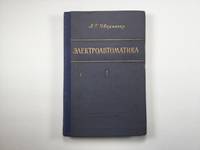
1954007867Kiev: State Technical Press of Ukrainian SSR 1954. Very Good condition. SEE PHOTOS. 14 cm x 21 cm. A solid copy. Square and tight. Minor bumps/rubbing to corners. Inner hinges are sound. Pages are clean crisp and unmarked. This is the original 1954 Russian language edition. Since our book listing service does not offer the capability to enter titles using the Cyrillic alphabet the bibliographical data given above are based on an automated translation from the Russian using Babel Fish Altavista. Bound in the original blue boards with a blue cloth spine lettered in shiny gold. The author A. G. Ivakhnenko was born in the Ukraine in 1913. This book is one of his earliest publications probably the 3rd. With more than 30 monographs and over 400 published scientific articles to his credit Professor Ivakhnenko has made numerous major contributions to the fields of cybernetics automatic control adaptive learning systems and infomatics. His most influential invention is probably the Group Method of Data Handling GMDH also known as Polynomial Neural Networks. GMDH is widely used to identify unknown relationships of complex systems to solve a multitude of problems in medicine business sociology and other fields. Ivakhnenko also developed the algorithms on which the artificial intelligence tool KnowledgeMiner is based and was chief editor of the journal Avtomatika. This copy is one of several dozen books from Alonzo Church's library that we were lucky enough to purchase at auction in New Jersey. Several of the books contain his signature or a presentation inscription to him. Unfortunately this copy does not have those signs of his ownership. But please check our inventory for several others that do. However there is a paper laid-in with bibliographic data concerning the book that appears to be written in Dr. Church's hand. Alonzo Church 1903 - 1995 was professor of mathematics at Princeton University 1929-1967 and of mathematics and philosophy at UCLA 1967-1990. He was the founding editor of the JOURNAL OF SYMBOLIC LOGIC. Among his most influential contributions are Church's Theorem Church's Thesis and the Lambda Calculus. His work was of major importance in mathematical logic recursion theory theoretical computer science and functional programming languages in general. Professor Church's creation of lambda calculus was the foundation for the LISP programming language and provided the semantic model for ALGOL. He was elected to the National Academy of Sciences British Academy and the American Academy of Arts and Sciences. Church is regarded by many as the greatest American logician of the 20th century. For more on Church's contributions see items 250 251 321 394 and 533 in Hook and Norman's ORIGINS OF CYBERSPACE A LIBRARY ON THE HISTORY OF COMPUTING. First Edition. Hardcover. Very Good condition/No dust acket. 8vo. 291pp. Great Packaging Fast Shipping. State Technical Press of Ukrainian SSR Hardcover
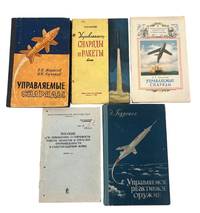
1956231011956. Guided Missiles USSR Coild War Soviet guided missile technology archive documenting Russian weapons development and civil defense planning during the Cold War when ballistic missile systems and nuclear strategy defined global military competition between the United States and the Soviet Union. Issued by Soviet military and state publishing bodies these works provide direct evidence of how missile guidance rocket engineering and industrial survivability were formalized taught and disseminated within Soviet scientific and defense institutions. All text in Russian. The archive supports research into Cold War military science Soviet technological education and the integration of weapons systems knowledge with civil defense planning under conditions of anticipated nuclear conflict.<br /> <br /> Archive of five books published between the mid-1950s and early 1970s encompassing both technical instruction and applied military doctrine. The group includes translated and domestically produced works on guided missile systems as well as a civil defense manual addressing industrial resilience under nuclear conditions. Archive includes:<br /> 1 Burgess Eric. Guided Weapons. London 1957; Russian translation: Moscow: Izdatelstvo Inostrannoy Literatury 1958. Illustrated blue boards. 8vo. 325 pages. Technical overview of guided missile systems including propulsion control mechanisms and early missile design principles based on Western research. <br /> 2 Lyapunov B. V. Guided Projectiles. Moscow: Voennoe Izdatelstvo Ministerstva Oborony SSSR 1956. Illustrated wrappers. 8vo. 136 pages. Introductory military-scientific text explaining the structure and function of guided munitions within Soviet weapons systems. This volume establishes foundational terminology and conceptual frameworks for missile technology within Soviet military education. A few pen markings and ex-libris stamps.<br /> 3 Petrov V. P. Guided Missiles and Rockets. Moscow: Izdatelstvo DOSAAF 1957. Illustrated wrappers. 8vo. 118 pages. Expanded treatment of rocket systems and guided weapons likely intended for paramilitary or technical training audiences associated with DOSAAF. Some minor loss to spine and foxing on cover. Binding tight.<br /> 4 Marisov V. I. and Kucherov I. K. Guided Projectiles. Moscow: Military Publishing House of the Ministry of Defense. 1959. Illustrated blue and yellow boards. 8vo. 259 pages. Mid-century instructional work focused on guided weapons systems with emphasis on operational and mechanical principles. This volume reinforces standardized Soviet instruction on missile technology. Some pen and pencil markings on title page and back pastedown.<br /> 5 Headquarters of Civil Defense of the USSR. Manual on Increasing the Stability of Industrial Operations in a Missile Nuclear War. Moscow: Voennoe Izdatelstvo Ministerstva Oborony SSSR 1972. Light blue wrappers. 8vo. 95 pages. Civil defense manual detailing procedures for maintaining industrial productivity and infrastructure resilience under conditions of missile and nuclear attack. Some loss to spine minor markings on cover and title page. Binding tight. <br /> Together these works document the convergence of military engineering scientific education and civil defense policy in the Soviet Union during the height of the Cold War when guided missile technology and nuclear strategy reshaped both warfare and domestic planning. The inclusion of both technical manuals and civil defense instruction shows how missile systems were not only weapons platforms but also organizing principles for industrial and societal preparedness. Light wear including edge wear creasing and handling marks; some volumes with softcover wear and minor staining; binding sound on all volumes; overall very good condition. This archive offers material evidence of how the Soviet state disseminated complex military knowledge across professional educational and civilian sectors contributing to broader studies of Cold War science technology transfer and defense infrastructure. unknown
1968EG-346Arcadia California: A.A. Mathews Inc. 1968. Classic comprehesive text originally published in 1906 presents a detailed preeminent treatise on shield-work and compressed air working including its early history 1818-1880 with notes on caisson sickness. Topics covered include: cast iron lining for tunnels; the Greathead shield in London clay- the assisted shield Great Northern and Strand shields Kingsway subway shield Glasgow District subway Thomson's excavator; the shield in water-bearing strata- the Hudson River Tunnel the Vyrnwy Aqueduct Tunnel Glasgow Harbour Tunnel the Blackwall Tunnel the East River Gas Tunnel in New York the Greenwich subway the Lea Tunnel the Baker Street and Waterloo Railway; the shield in masonry tunnels- the Chagnaud shield the Tremont Street Tunnel in Boston the Boston Harbor Tunnel the Champigneul shield the Lamarre shields the Dieudonnat and Weber shields; tunnelling work carried out with a shield or compressed air- tube railways in London the Rotherhithe Tunnel Paris Metropolitan Railway the River Dee Tunnel the Brackenagh Tunnel the Hilsea Tunnel; etc. Includes a chronological list of events connected with tunnelling by means of a shield or of compressed air and some English patents relating to tunneliing with shield and compressed air 1818 to 1904. 389 pgs. Illustrated with 260 figures drawings and diagrams including a fold-out chart. Gilt spine. Minor rubbing to corners; very minimal shelfwear. Scarce. Limited Edition Reprint. Hard Cover. Fine. 4to - over 9¾" - 12" tall. A.A. Mathews Inc. Hardcover
190827415Black Hills SD: H. W. Kitsen. Good with No dust jacket as issued. 1908. First Edition. Flexible leather. These are the original handwritten notes by the engineer who surveyed and worked on the mine. Plans of or for tunnels location all sorts of stuff. Done in pencil but very legible. In part appears to be instruction on how to set up the mine. The leather covers are flaking and rubbed at the edges. Contents are very good to fine. ; Small 8vo 7½" - 8" tall . H. W. Kitsen hardcover
19521205300085Center for International Studies: MIT 1952. Perfect Paperback. Good. A classified study of the political vulnerabilities of the Soviet Union. This study was rated Secret under Title 18 of the US espionage laws. Walt Whitman Rostow and other cold war analysts such as Adam Ulam McGeorge Bundy Andreas Lowenfeld Barrington Moore Allen Dulles etc. prepared it for the CIA DOD and Psychological Strategy Board. The recommendations are quite fascinating and have important implications for future US cold war policies. The analyzes of the study are quite vivid and strongly argued for example "The regime might also undertake major war in a variety of conditions under which it became convinced that major war was the only realistic alternative to loss of control over Soviet society. In other terms the regime is likely o choose to go down fighting rather than surrender its domestic base without a fight. For example on the knowledge available to us it seems likely that an overt ultimatum to the regime whose acceptance would be judged to involve both loss of essential positions and open capitulation to an external threat would be rejected." Machiavelli is quoted in the analysis. <br> 5 volumes. "Secret" has been inked out on the top and bottom margin of all pages. Bound in CENIS wraps. viii 222 i 275 pp. <br><br> Contents include: Part I. Recommendations secret; Part II. A Origin Present Status and Prospects for Soviet Society B Vulnerability of the Soviet Union and its European Satellites to Political Warfare; Part III. A Cancellation; B Some Problems of Radio Broadcasting to the Soviet Union and its European Satellites; C Some problems of policy in respect to the non-Russian Soviet Peoples; D A statement of U.S. Interests and objectives in Russia and Eastern Europe. Volume II The Dynamics of Soviet Society. Center for International Studies: MIT paperback
19113430Concessionnaire des brevets de Leopold Cassella & Cie, G.m.b.H., Frankfort S.-L.-M. Mit 185 (statt 186) montierten farbigen Lederproben auf 19 Tafeln sowie einer Ansicht der Fabrik in Lyon als Frontispiz. Lyon, Selbstverlag, [ca. 1911]. 8vo. (24,7 x 16,1 cm). 2 Bll., 26 S. Orig.-Leinwandband mit Blindprägung.
193264022St. Charles MO & Chicago IL: American Car & Foundry Engineering Dept. Chicago Rock Island & Pacific Railway; St. Louis & San Francisco Railroad 1932-1940. Oblong folio. 15.5 x 11.25 in. 112 pp unpaginated. thick black paper stock. With 151 silver gelatin photographs mounted within sized from 7 x 9 in. up to 10.5 x 13.5 in. a few long narrow 6 x 13.5 in. nearly all w/ typed captions w/in negative at lower fore-edges some w/ minor chipping at corners others w/ minor rippling from mounting. Contemporary faux textured flexible black calf post-binder nickel-plated screwposts at gutter margin wraparound spine black cloth w/ white lettering for title “Air. Condt. Equip.†on spine in manuscript some bumping to corners a few leaves w/ cracking in center from weight of images a few reinforced at gutter margin w/ black cloth tape still a VG exemplar. This exceptional in-house factory album visually details the American Car & Foundry’s research & development testing laboratory facilities as they raced to compete with the Pullman Company to introduce the latest innovation in rail technology -- air conditioning. This one technology was not only essential for fast streamlined trains as prior to their introduction passenger railcars were largely cooled by opening windows but also for their standard railcars as well. However all steel cars with the emphasis on less wind resistance allowed all railroad car sets to travel at higher speeds -- streamliners up to 100 miles per hour. Ralph Budd the president of Chicago Burlington & Quincy Railroad was the innovator who combined the all steel cars first developed in 1907 by Alexander Cassatt with stainless steel air-conditioning equipment and powerful diesel engines. This album opens with equipment for the Chicago Rock Island & Pacific Railway diner cars along with mechanical air-conditioning systems for the Wabash RR Chair Cars; together with the mechanical systems motors belts fan systems compressor coils air-conditioning ice boxes for transporting perishable foods and so much more. Of additional interest are the portable temporary rolling air-conditioning units which would be hooked up to diner and passenger coach cars when in the depot allowing comfort while the cars were not powered by diesel locomotive engines and their power plants so as to not drain the batteries. American Car & Foundry systems proved so successful that many of these photos show their large “Thermo-Gravity Air Conditioning System†units for overseas railways. No similar albums or technological records for American Car & Foundry are located in Worldcat; See: Air Conditioning: The Essential Technology Streamliner Memories August 1 2013. American Car & Foundry, Engineering Dept., Chicago, Rock Island & Pacific Railway; St. Louis & San Francisco Railroad, hardcover
19912092902137702542Former Yakage Honjin Ishii House Preservation Committee 1991. Soft Cover. Fine. The book is in fine condition. Former Yakage Honjin Ishii House Preservation Committee paperback