Oil Drilling in TexasBiblio.com
1 313 résultats
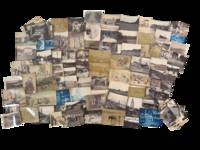
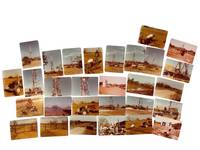
1970218701970. Texas Labor History Environmental History Photography Unidentified photographer Texas oil field photographs circa 1970s document petroleum extraction industrial labor and land transformation in the American Southwest during a period of sustained energy production and infrastructure expansion. The images provide direct visual evidence of drilling operations mechanical systems and work crews engaged in oil field development situating human labor within the broader environmental changes associated with resource extraction. The archive supports research into energy history industrial technology and the reshaping of rural landscapes through oil production in the late twentieth century.<br /> <br /> Texas circa 1970s. Archive of 82 original color snapshot photographs each measuring approximately 3.5 x 4.75 inches depicting oil drilling sites machinery and surrounding terrain. The photographs include wide views of steel derricks and drilling rigs with visible components such as rotary tables crown blocks and mud systems as well as close range images of workers engaged in construction welding and equipment alignment. Additional scenes show cement mixing and foundational work amid limestone aggregates trailer mounted compressors and generators oil storage tanks and transport vehicles positioned throughout the worksite. The surrounding environment is documented through images of cleared access roads graded earth holding ponds fencing and mesquite brush alongside occasional views of adjacent ranch life including livestock enclosures and domestic scenes.<br /> <br /> The archive situates oil extraction within the broader transformation of rural Texas landscapes during the late twentieth century when energy production reshaped land use infrastructure and local economies. The juxtaposition of heavy industrial equipment with agricultural and residential elements illustrates the integration of petroleum development into existing rural environments. Seasonal variation including a snow covered pasture further emphasizes the continuity of operations across changing conditions. Light edge wear and minor curling to some prints; colors remain strong and images clear. Overall very good condition. A substantial photographic record of oil industry labor and environmental change in Texas during the 1970s. unknown
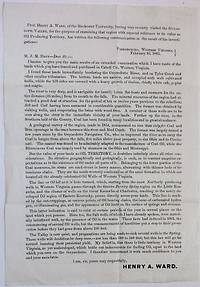
186534056Parkersburg 1865. Printed Broadside 7-3/4" x 11". Old folds Very Good.<br/><br/> This is an early report on the development of the petroleum industry in West Virginia. Professor Ward reports on the mineral resources of lands which Mr. Day purchased in Cabell County "Western Virginia." Although navigable waters salt coal and iron have been found in abundance "The value of your lands as OIL TERRITORY is doubtless infinitely above all other considerations. Its situation geographically and geologically is such as to warrant sanguine expectations as to the existence of Oil under all parts of it." Ward describes the "Oil belt" which graces Davy's land and assures him "There is little territory in Western Virginia as yet undeveloped which holds out inducements for finding Oil equal to the value which you own on the Guyandotte."<br/>Not located on OCLC as of October 2020. unknown books
18201388Milano: presso Giovanni Silvestri 1820. <p>8vo. 24 pp. Illustrated with one plate. Original blue printed paper wrappers; water stained at the lower third of the wrappers and text block with tide marks visible. With faults a useful copy. </p> <br /> <p>This anonymous pamphlet examines the characteristics of rapeseed and colza plants with the aim of illustrating the most economical and functional method for extracting an excellent oil. Front and back wrappers with advertisements for works on agriculture and viticulture that have been published by Silvestre.</p> <br /> <p>ICCU Italian Union Catalogue cites 10 copies in Italy. OCLC only cites the copy in Torino Italy. Not in Niccoli or Paleari-Henssler.</p> . presso Giovanni Silvestri unknown
1983ZB1349559Oil/Fisheries Group of Alaska 1983. 125 pp. hardcover 3 ring binder ex library else text and binding clean and tight. - If you are reading this this item is actually physically in our stock and ready for shipment once ordered. We are not bookjackers. Buyer is responsible for any additional duties taxes or fees required by recipient's country. Oil/Fisheries Group of Alaska hardcover
19442091502135301220Izumi shobo 1944. Soft Cover. Fine. Volume: 1 Izumi shobo paperback
19422110502150413484Yokusan Publishing Association 1942. Soft Cover. Fine. Volume: 1 Yokusan Publishing Association paperback
2080202106700260Hirofumi Do N.A. Soft Cover. Fine. The book is in fine condition. Hirofumi Do paperback
1900233951900. Turn-of-the-century Japan photo archive documenting foreign commercial travel oil and mining activity rural labor and domestic life during the late Meiji era when Japan was rapidly building railways mines refineries modern ports and industrial companies after the 1868 Meiji Restoration. The material appears connected to a Western man and his family moving through Japan in connection with oil extraction or related industrial work with repeated views of derricks refinery sites pipe trenches miners labor crews interpreters servants hotels villages and named regional destinations. Images show various scenes throughout northern Japan such as Hokkaido settlements Sapporo gatherings Naoetsu refinery work Nara and coastal travel household service and encounters between foreign visitors and Japanese workers at a time when foreign technical knowledge and Japanese state-backed industrial growth were reshaping the country.<br /> <br /> Photo archive of more than 150 photographs including approximately 6 cyanotypes and numerous silver gelatin and albumen photographs sizes range between 2" x 3.5" to 4" x 6" Japan circa late 1890s to early 1900s. Nearly every image bears a handwritten caption en verso identifying places people professions work scenes and social relationships. Captions include "Launching conveying pipe to and from steamship Corea Yokohama" "Refinery location Naoetsu Japan" "Celebrating the fall of Mukden Sapporo Mar. 21st 1905" "Crowd at Naoetsu Hotel" "Working on foundation for refinery Naoetsu" "Digging a great ditch for drain pipe from refinery to ocean" "Drillers and visitors" "Japanese servants at home in the bamboo grove" "Old American Naval Hospital" and "Mines & Smelters Sumitake Hotel Omori Japan." Workers dig trenches handle pipe gather beside derricks and refinery structures pose at mine entrances stand near kilns and industrial yards and move through villages and hotel courtyards. Other scenes record women in kimono children household staff rickshaw pullers street processions with rising-sun banners thatched structures coastal views mission or hospital buildings and Western family members partaking in local culture seated in gardens or standing among Japanese attendants and guides.<br /> <br /> The archive records Japan's industrial modernization from the perspective of foreign business presence rather than official state publicity. Oil had been produced in Japan since the nineteenth century especially in regions such as Niigata while Hokkaido mining railway building and settlement became central to Meiji development; this group places those broader changes inside fieldwork travel and household arrangements. The handwritten captions add another layer of specification by naming locations and functions that would otherwise be difficult to identify especially the refinery and drilling views. Condition varies across the group with curling fading toning creasing edge wear occasional surface loss and some with missing corners; images generally clean and clear captions remain present and visible on many versos. Overall in very good condition. By the turn of the century oil fields in Niigata and Akita were part of Japan's push to build an industrial economy but domestic crude was limited and often difficult to refine. The archive also reflects the unequal social and technical relationships that accompanied Meiji industrial expansion with foreign commercial specialists Japanese labor crews domestic servants and frontier extraction zones appearing together within the same industrial landscape. unknown
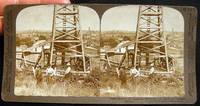
13394New York: Underwood Image depicts several gentlemen standing in front of a a wooden-frame oil rig several others in background; back of mount gives a couple of paragraphs of information regarding the history of the site more; ".Nobody began to realize the immense importance and value of such natural resources.In 1859 the first great 'strike' was made oil being reached only 69 feet below the surface.the beginning of one of the most exciting 'booms' in American Industrial history."; photographer identifier at side of mount not dated title on back in six languages; earlier 'split-image' type of view two separate photos; a couple of identifying numbers: a large "S 127" at top right; the number 5535 is at the title bar position at the bottom of the right-hand image; light wear to card tips edges; very good condition. Very Good. Underwood unknown books
2012N5167Tel Aviv: Archaeological Center 2012. Original Decorative Cloth. Very Good. Folio. 287pp. Text English and French. A VERY GOOD CLEAN AND FRESH COPY. RICHLY ILLUSTRATED. <br/> <br/> Archaeological Center hardcover
2001MM403Independent Publisher 2020-01-01. paperback. New. 8x8x0. BRAND NEW! Ships within 24 hours! Independent Publisher paperback
2001DADAX17923494912020-01-01. First Edition. paperback. New. xx. Buy with confidence. Excellent Customer Service & Return policy. paperback
2021AOMOil Magic Publishing 2021-09-01. 5th Edition. hardcover. New. 10x8x0. BRAND NEW! Ships within 24 hours! Oil Magic Publishing hardcover
0999368982New. Brand new and still unused unknown
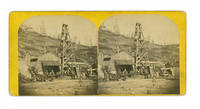
1866235961Titusville: J.A. Mather 1866. 22 stereo cards with printed paper labels on verso titled in manuscript. 3-1/4 x 6-3/4 inches. Some wear to cards images near fine. 22 stereo cards with printed paper labels on verso titled in manuscript. 3-1/4 x 6-3/4 inches. A fascinating and important record of the birth of the oil industry in northwestern Pennsylvania.<br/><br/>British-born John Aked Mather 1829-1915 moved to the United States in 1856 and soon after was introduced to photography by an itinerant daguerreian. Mather travelled through West Virginia and Ohio before settling in Titusville Pa in 1860 with his wife. Edwin Drake of the Seneca Oil Company had begun drilling in August of 1859 and Mather was poised to become the oil boom's photographer of record travelling along Oil Creek River on his flatbed studio. Mather's views of wells and rigs were so popular in their time that owners would request Mather photograph their operations to encourage more investment. <br/><br/>The photographs that Mather took make up the largest and most significant pictorial record of the western Pennsylvania oil boom "a record of the first ten years of the industry a coverage without equal in any nineteenth century technology" Darrah The World of Stereographs p. 80. Notably these stereoviews are contemporary to the boom and thus more desirable than Mather's Historical Oil Region Views published in 1895 from the original negatives.<br/><br/>This group of 22 stereo views includes "Oil Seekers Pithole Penn" "Green Mountain Well " "Champion Wells Pioneer River" "RR Bridge & Pioneer from Oil Creek" "New York Well Pioneer" "Lady Stewart & Lady Brooks Pioneer River" "Petroleum Center Penn" "Fishers Shipping Sheds" "Old Shipping Platform Miller Farms" and the humorous "Sunken Fortune or Ruined Man"<br/><br/>See Giddens Paul H. Early Days of Oil: A Pictorial History of the Beginnings of the Industry in Pennsylvania Princeton: 1948. J.A. Mather unknown books
20051187Butler Genealogy Club 2005. Hardcover. Very good. No dustjacket as issued. Cover has light wear. Reprint. Butler Genealogy Club hardcover
194028275<p>1940. Wooden Framed oil Painting 13 X 16 inchesVG AS-IS NOT A BOOK 1940'S. Signed by Illustrator. 1st Edition. Unbound. Illus. by B. Hanley California Artist.</p>
5486<p>Wooden Framed oil painting 13 X 16 inchesVG AS-IS. Signed by Illustrator. First Edition. Unbound.</p> unknown
34620Original bust oil portrait 11-1/2" x 14". The canvas is mounted to a 1/2" thick piece of wood held with small nails along the fore-edges. Framed in a later dark brown recessed molded wood frame behind a burnt orange velvet mat with oval opening measuring approximately 9-1/2" x 12". The painting's surface has some usual age cracks and crackling patterns some very small spots where paint has rubbed off along the line of the oval beneath the matting. Very Good. <br/><br/> We can identify neither the subject nor artist. Her dress is of high quality possibly of European design with an empire waist sleeves with large puffs at the top which sit off the shoulders the top line of the dress being a bit demure and cut above the cleavage and nearly straight across with lace trimmed netting leading up to the neckline and ending in a collar. A brooch is placed at the center where the dress material and netting meet. This type of apparel was popular during the early to mid-1800s. unknown books
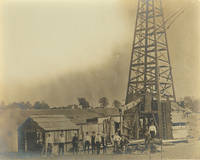
1900WRCAM49847N.p. perhaps Pennsylvania 1900. Silver gelatin photograph 15 3/4 x 19 1/2 inches. Mounted to backing board and framed to an overall size of 20 1/2 x 25 inches. Slight silvering of part of the image light edge wear minor chipping to frame. A very good image. A fascinating image featuring eleven men standing in front of an oil rig complete from engine house to the oil derrick the latter extending beyond the frame of the picture. Most of the men are fairly well dressed and perhaps picture the management of the rig or the oil company that owns the rig. Among the better-dressed subjects is a young boy perhaps in his early teenage years. Two of the men are dressed in overalls and are likely the roughnecks for this particular rig. A rare large photograph capturing the early days of the oil business in America. unknown books
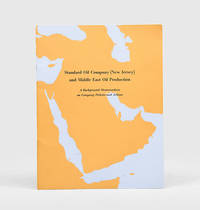
1954170939New York: Standard Oil Company New Jersey 1954. A new era in Middle East oil Revised and updated edition following the first of 1947 of this glossy guide illustrated with three colour maps of the Arabian Peninsula showing oil fields and concessions pipelines and refineries. Recognizing the potential of Saudi Arabia's vast oil reserves in 1946 Standard Oil Company New Jersey acquired a 30 percent stake in the Arabian American Oil Company. A colour bar chart illustrates Saudi Arabia's rapid growth as an oil producer after 1946. The introduction stresses the region's importance to emerging Cold War geopolitics: "Middle Eastern oil is a major element in the economies of Europe and the East. It is essential to the defence of the free world" p. 5. Quarto. Colour reference maps in text as well as photographic half-tones. Original wrappers front cover lettered in black against outline of Arabian Peninsula wire-stitched as issued. Front cover bright rear wrapper lightly soiled a little internal creasing from handling: a near-fine copy. unknown
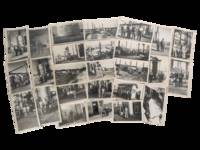
1945232411945. Oil refinery photo archive documenting refinery labor plant operations and worker identity at Kern Oil in Southern California and Mid West Refineries in Grand Rapids Michigan in the immediate postwar years showing how petroleum production expanded through the daily work of identified laborers during the industrial reorganization that followed World War II. The group centers on the men who stood on the ground among cracking towers tank farms piping runs shop buildings and control areas. Postwar oil demand rose with civilian automobile use trucking suburban growth and military-industrial continuity and refineries became key sites where that expansion was made practical through skilled and semi-skilled labor shift work maintenance inspection and dangerous physical proximity to heat pressure fuel storage and heavy equipment. The archive records that system at worker level where industrial growth appears as crews posing beside process units inside service spaces and at small plant structures rather than as abstract production statistics.<br /> <br /> Photo archive of 26 silver gelatin photographs each 2.5" x 4.5" Kern Oil Southern California and Mid West Refineries Grand Rapids Michigan circa 1945-1949. Roughly half the images show refinery infrastructure with dense fields of distillation columns and stacks cylindrical tanks elevated piping steel frameworks service roads and storage areas; one dramatic view shows a damaged or collapsed horizontal tank or vessel within a twisted metal structure. A large painted sign reading "MID-WEST REFINERIES INC." advertises "GASOLINES / FUEL OILS / BURNER OILS / KEROSENE." Other views show broader plant grounds with horizontal storage tanks outbuildings and open yards. The remaining photographs focus on workers posed alone and in groups in overalls work shirts caps and brimmed hats standing beside towers near pipe runs outside small office or shack structures and in work areas with process equipment visible behind them. Several versos identify individuals by name including groupings such as "Perry / Bob Patter / Lou Lane / John Higdon" "Charles Johnson / Bart Klein / 1946" "B. Klein / C. West / D. Golden" one inscription reads "4-15-49 / Place / MAX WERTZ SHACK / M-50 / Lou Peterson."<br /> American oil refining in the mid-1940s stood at the junction of wartime production and postwar consumer expansion. Plants that had helped sustain military logistics now fed the fuel economy that depended on workers whose labor was physically demanding and hazardous. These photographs preserve the named men occupying the industrial landscape that structured their livelihoods. Light wear and minor curling; numerous versos with identifying inscriptions; overall very good condition. A grounded postwar labor archive that places refinery workers inside the machinery of American oil production at the moment petroleum became central to everyday life. unknown
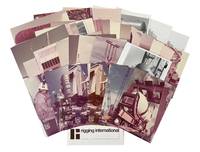
1970233511970. Rigging International photographs of refinery vessels crawler transporters port cranes and module lifts place oil-industry labor at the center of the late 1970s and early 1980s energy buildout. Captions in the group name offloading modules at Prudhoe Bay on Alaska's North Slope moving a 420 ton nuclear vessel from Oceanside to San Onofre erecting refinery vessels at Come-By-Chance Newfoundland offloading a 550 ton refinery vacuum tower in Aruba and handling 130 ton bulk-loader cranes at Cherry Point Ferndale Washington. The archive is best dated to roughly the late 1970s and early 1980s from its overlap with San Onofre Units 2 and 3 after the Atomic Energy Commission issued construction permits in 1973 and with Prudhoe Bay work after the Trans-Alaska Pipeline began operating in 1977; Rigging International later identified Alameda California as its world headquarters.<br /> <br /> Rigging International. Archive of 34 large format photographs. Circa late 1970s to early 1980s Alameda California with projects in California Alaska Hawaii Washington Newfoundland Aruba and Sweden. Each 8" x 10" predominantly color with a few black-and-white prints. Captions identify specialized heavy-lift and transport work in refinery construction marine offloading nuclear-component hauling port-crane erection maintenance and machinery installation with recurring references to crawler transporters barge operations lifting frames and oversized refinery vessels. Specific projects documented in the visible prints include Come-By-Chance refinery work in Newfoundland; San Onofre Nuclear Generating Station transport; Hanford reactor hauling; Prudhoe Bay module offloading; the Port of Oakland and Port of San Francisco; the Hawaiian Independent Refinery; Spreckels sugar refinery in Salinas; Cherry Point bulk-loader crane installation near Ferndale; and the Total concrete jacket construction site at Stord Norway.<br /> <br /> Labor shown in this archive document the transport lifting erection and maintenance work required to make energy production function across refineries ports and offshore supply systems. The North Slope photographs belong to the years after the Trans-Alaska Pipeline opened Prudhoe Bay to sustained high-volume production while the refinery and marine-lift photographs align with a broader period in which energy companies expanded output through new modules replacement vessels piping additions and upgraded handling systems rather than through constant construction of entirely new refineries. Alameda Oakland San Francisco Ferndale Aruba Newfoundland and Hawaii appear here as linked points in that industrial geography joined by the labor of crews moving vacuum towers reactors cranes and process equipment too large for ordinary transport. Light handling wear scattered edge wear minor curling and a few corner bends visible across the prints; overall good condition. A record of the heavy-lift labor that built and maintained oil and industrial infrastructure during the post-1973 energy expansion. unknown
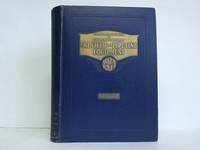
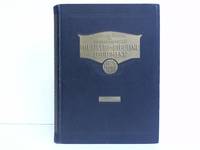
2J9040The Oil Weekly Houston 1934. 666 S. mit zahlreichen Textabb. blind- und goldgeprägter Leinen-Einband quart etwas berieben und bestoßen/Stempel auf Vorsatz/Vorsatz etwas gebräunt. - Also covering the latter part of 1933 / Text englisch - unknown
2J9038The Oil Weekly Houston 1931. 260 135 S. mit zahlreichen Textabb. blind- und goldgeprägter Leinen-Einband quart etwas berieben und bestoßen/Stempel auf Vorsatz/Vorsatz etwas gebräunt. - Text englisch - unknown