Oil and Colour Chemists' AssociationBiblio.com

347 résultats
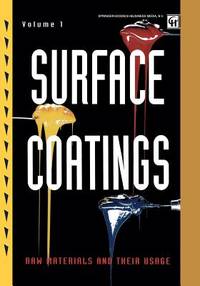
1993DADAX0412552108Springer 1993-10-31. 3rd. hardcover. New. 7.00x1.38x10.00. Buy with confidence. Excellent Customer Service & Return policy. Springer hardcover
ria9789401045346_inpPaperback. New. New Book; Fast Shipping from UK; Not signed; Not First Edition; Since Surface Coatings first appeared in 1974 the industry has undergone dramatic and rapid changes both in direction and emphasis and this new edition mirrors these changes. Volume I includes coverage of aqueous systems with chapter paperback
ria9780412552106_inpHardcover. New. New Book; Fast Shipping from UK; Not signed; Not First Edition; Since Surface Coatings first appeared in 1974 the industry has undergone dramatic and rapid changes both in direction and emphasis and this new edition mirrors these changes. Volume I includes coverage of aqueous systems with chapter hardcover
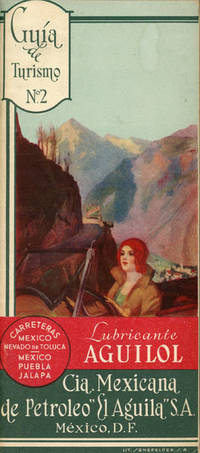
53032n.p.: privately printed n.d. n.d. 8 3/4" x 4" in pictorial wrappers. 34 pp . 17 pages written in Spanish and 17 pages written in English. An itinerary of a trip from the National Palace to Toluca and the Toluca Volcano followed by information on points of interest. Itinerary of a trip from Mexico to Jalapa via Puebla to Perote and Jalapa followed by information on points of interest. Two fold-out maps printed in green and burgundy . one showing route to Toluca and the other showing the route to Jalapa with points of interest noted on each map. Inset are basic street maps of Jalapa Puebla and Toluca. Light soiling to wrappers and with light rubbing to spine. Also includes 9" x 13 1/2" sheet folded to 8 panels titled "Driving to Mexico Helpful Hints for the Motorist." 2 cover panels and 2 panels showing a distance chart and locations of "Aguila" Gasoline & "Aguilol" Lubricants. Opposite 4 panels offer a map printed in red and green and showing various points of interest along the "Laredo-Mexico City" Road. Soiling throughout panels. privately printed, n.d. unknown
195952165Vancouver BC: Shell Oil of British Columbia On-The-Spot-Photographers Williams Brothers Feb. 1 1959. 4to. 44 pp unpaginated 12 pages on bonded paper w/ signatures 32 pages of two-sided mylar sleeves with white & black paper inserts for photographs with 76 original and studio photographs inserted into sleeves sized from 2.5 x 2.5 in. up to 8 x 10 in. nearly all originally glued with adhesive to backing papers but now just laid-in to mylar sleeves a few w/ photographer’s stamps on versos. Original tweed-patterned white vinyl padded 20-ring binder engraved silver plate mounted lower front corner minor soiling shelfwear thumbing to covers occasional creasing on some of the images glue offsetting on paper backing leaves behind the photos still a VG exemplar. This remarkable souvenir photo album documents the safety efforts and operations of the Shell Oil Shellburn Oil Refinery located on Burrard Inlet in British Columbia. Shell’s original refinery was constructed in 1932 but by the end of World War II the Canadian economy’s demands for oil products resulted in a substantial expansion which added thermal cracking distillation stabilization U.O.P. catalytic polymerization of stabilizer overhead gas gasoline refining and gasoline sweetening units. The refinery applied a number of new refining techniques perfected during the war to produce high-grade gasoline from high-pour waxy straight-run residue. Gardiner worked not only as public relations and safety inspector for the refinery but also as petroleum engineer. The album begins with large photo by W.T. Davis & F.B. Hughes of On-the-Spot Photographers with Gardiner showing three young girls the details on an oil refinery model which had been developed by Shell and Standard Oil of California in order to promote interest in the petroleum industry. This is then followed by birds-eye images of the refinery operating on the Burrard Inlet in the 1950s earlier images before and after expansion after World War II executive offices oil workers in frigid temperatures with icicles hanging off the equipment in the background large Shell Oil safety sign recording how many days since last industrial accident in the refinery in 1954 as well as awards ceremonies and banquets. Of interest is a particularly nice image towards the end of a Shell Oil Executive fronted with large Shell advertising sign and behind large architectural rendering of 1950s Shell service station with signage and Shell Oil tanker pulling into the station. A few of the photographs were by Donn and Warner Williams the Williams Brothers who served as aerial photographers in the R.C.A.F. during World War II and then established their Williams Bros. Ltd. Commercial Photo lab in 1948 in Vancouver BC. On-the-Spot Photographers operated by W.T. Davis and F.B. Hughes from 1945-1955 maintained studios at 520 Sixth Ave. and later 2124 London St. in New Westminster British Columbia. See; Shell Canada Shellburn Refinery Construction Projects Fluor; Rick Erickson Williams Brothers Mining Fishing Logging Thru the Trapdoor Exhibition 2014; Jim Wolf Royal City: A Photographic History of New Westminster 1858-1960 pp. 174 184 191. Shell Oil of British Columbia, On-The-Spot-Photographers, Williams Brothers], unknown
19142091502133700042Nippon Oil Co. Ltd. 1914. Soft Cover. Fine. Number of books: 1 Nippon Oil Co., Ltd. paperback
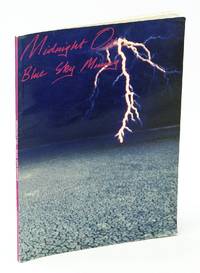
1989563h5940Australia: Sprint Music. Good. 1989. First Edition. Paperback. 1875124888 . 66 pages of guitar tablature lyrics and guitar chords for these songs: Bedlam Bridge Forgotten Years River Runs Red King of the Mountain Mountains of Burma Blue Sky Mine Stars of Warburton Shakers and Movers One Country Antarctica. Six one-page colour photos of the band and its members plus a great color-photo foldout poster of the band inside back cover. Faint bits of writing atop page 1 otherwise unmarked with moderate wear. Binding intact. A sound vintage copy.; 4to . Sprint Music paperback
1900003482Washington: Government Printing Office 1900. Very Good condition. Cover lightly rubbed else clean square and unmarked. No underlining. No highlighting. No margin notes. No foxing. Pages are fresh and crisp. Bound in the original green cloth with decorations in blind on the front and rear covers. Gilt lettering on the spine is still bright and shiny. This thick heavy book is in 2 parts. Part I contains the Report of the Commission; Review of Evidence; Charts Showing Effects of Combinations on Prices; Topical Digest of Evidence; Index of Digest. Part II features testimony on trusts/combinations in various industries: sugar whisky oil tin steel silver etc. Some 540 pages are filled with testimony concerning the Standard Oil Company by John D. Rockefeller his would-be competitors etc. Oversize Hardcover. This thick heavy book will require extra postage for Priority and International shipments but only the standard charge for media mail. . First Edition. Oversize Hardcover. Very Good condition. 264pp. 1325pp. Great Packaging Fast Shipping. Government Printing Office Hardcover
191775579Powell WY: Southern Montana Oil Company. 1917. Original silver gelatin photograph measuring measuring 39 x 10 inches caption in the plate in white. Small stain to the blank upper margin else very good.First of all we have to love this photograph for having a man with his arms outspread placed in the very middle of the image. It bespeaks a person very exalted to be present in a deserted and beautiful landscape. Southern Montana Oil Company incorporated on October 30 1916 and had established offices in Missoula Montana by 1917. All of its directors came from Anaconda a region known for its copper deposits. The directors I.W. Walker A.F. Mavity R.A. Cobban F. Shannon and T.P. Stewart decided to pursue petroleum riches in southern Wyoming.By April 1917 the new exploration company was drilling wells in the Elk Basin oilfield which crosses the state line between Carbon County Montana and Park County Wyoming. The giant Elk Basin field has a dramatic history of its own as noted in First Wyoming Oil Wells. Southern Montana Oil successfully completed a well that produced 25 barrels of oil a day.y November 1917 company manager George L. Means reported to Colorado’s Fairplay Flume newspaper that drilling operations were getting underway on eight 40-acre tracts near Meeteetse Wyoming once a hideout for outlaw Butch Cassidy. Drilling commercially successful wells proved elusive however and by 1921 Southern Montana Oil Company stock was offered at only two cents per share. After the company failed its stock was described in subsequent inheritance litigation as valueless.The photographer A. G. Lucier was one of the first in the area. He opened his photography studio in Powell in 1909. He was later hired by Tex Holms to be the photographer of his famous 18-day tours of Yellowstone Park. He was also published heavily in the local paper the Powell Tribune. He also tried his hand at motion pictures filming 25000 feet of film at the Pine Ridge Agency. For his work in the Elk Basin Columbia University sent him a congratulatory and flattering letter. By 1920 he and his wife had set up a stand near the current Buffalo Bill Visitor's center and sold photographs of the dPark and it fauna andflora to tourists. Southern Montana Oil Company. unknown
1911029303London and Tonbridge: Bradbury Agnew & Co. Ltd. Printers 1911. J.D. Henry was best known British Oil journalist at the beginning of the 19th century when modern international oil industry started. Quite clean content b/w illustrations binding tight. In original dark green decorative cloth with gilt titles. Old light sunning to spine. Small knocks on edge. Just a few tiny light spots to front cover. Gilt head edge still shiny with mild rubbing. Fldg frontis part of else complete with plates many fldg maps adverts at end. Some pages badly opened due to being conjugated contemporary owners details 1918 on ffep. Quite clean content b/w illustrations binding tight. 338p Heavy book: 264mm. First Edition. Hb. VG/None. Bradbury, Agnew & Co. Ltd., Printers Hardcover
2012DADAX9401045348Springer 2012-11-02. 3rd ed. 1993. paperback. New. 7.01x1.44x10.00. Buy with confidence. Excellent Customer Service & Return policy. Springer paperback
SKU1012612F. H. Gower. HARDCOVER. Good. 1957. Utah Colorado Wyoming and Montana 1958 Supplements in back pocket. Back pocket has small split and each book is date and owner stamped. Former law firm owner name and stamp on fly page. Binding solid pages crisp and clean no other markings found. Covers bright and shiny with light scuffs and dents. Extremities lightly bumped with small rubs. F. H. Gower hardcover
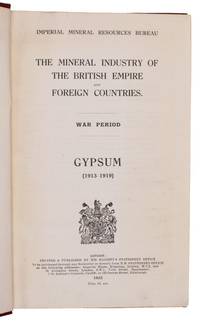
1923L2FB7C8EALK3London: His Majesty's stationery office 1923. Contemporary red cloth paper title-label on spine. 6 works in 1 volume. Compilation of publications on the worldwide resources of gypsum strontium molybdenum silver and "petroleum and allied products" and its mining industry in the period 1913-1919. Written two decades before the discovery of oil the Middle East the last and longest publication describes an almost unrecognizable oil production. "It will be noted that the United States and Mexico together produced over 87 per cent. of the world's output in 1921 " p. 13. Under the header "Arabia" follows one of the shortest descriptions only stating that "Indications of oil are known on the Farsan Islands in the Red Sea where drilling has been unsuccessful. On the Persian Gulf coast of Arabia indications of oil occur in the neighbourhood of Basra and near Koweit. A deposit of asphalt is known on Bahrein Island" p. 185.With the spine slightly discoloured and the front hinge somewhat worn; a very good copy. His Majesty's stationery office, hardcover
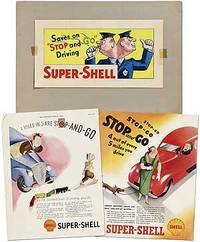
19373969791937. Unbound. Near Fine. Original painted color illustration on paper. Image size 14" x 7¼" on 18" x 12" artist board. Near fine with some light toning darkening to the tape and bump to corner of the board. A fun pictures of a two headed traffic cop representing the stop and go traffic that Shell Oil's Super-Shell gasoline to designed to combat. The art was produced by an unknown artist who worked the 1940s for the advertising agency Foote Belding & Cone which represented some of the biggest clients in the world. The art is accompanied by two proofs of magazine advertisements produced by the same artist. A wonderfully whimsical ad. unknown
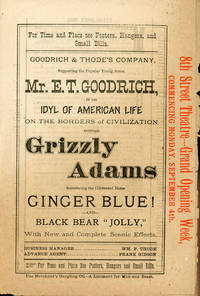
188250838N.P.: Privately printed n.d. ca 1882. 1882. 9" x 12" sheet folded to 4 panels. A 4-page promotional flyer for the theatrical performance of Grizzly Adams. Grizzly Adams came West in 1849 and forsook the gold mines for life in the Western and California wilderness where he acquired a legendary reputation for hunting grizzly bears and fending off Indians. Cover panel offers title actors manager etc. as well as printed in red ink on the right side front carries the notice "8th Street Theatre - - Grand Opening Week Commencing Monday September 4th" which would most likely have been 1882. The second panel offers a full-page advertisement for Merchant's Gargling Oil the company sponsoring the show. Merchant's Gargling Oil is “a Liniment for Man and Beast" a catch-all salve first produced by George W. Merchant a druggist in 1833. The salve was made up of petroleum soap ammonia water oil of amber iodine tincture benzine and water and supposedly would cure anything . burns scalds scratches foot rot on sheep roup in poultry hemorrhoids toothaches etc. Panel 3 offers general information about the play followed by a synopsis for all three acts. The rear panel offers a full-page woodcut illustration showing Adams on horseback rescuing innocent settlers in the wilderness from Indians. 1 1/2" closed tear to fold and with a 1" closed tear to side panels. Very good. Privately printed, n.d. [ca 1882]. unknown
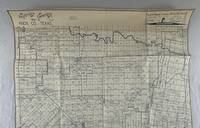
19765965Wichita Falls Tx: Heydrick Mapping Company 1976. About very good. Blue line map 45.5 x 42 inches. On paper. Folded. Toning across top and bottom portions light edge wear. A late but nonetheless instructive oil map of Knox County Texas printed by the Heydrick Mapping Company which was known for its oil maps. Indeed their slogan on the map indicates "Oil men have used Heydrick maps since 1870." The legend shows various kinds of oil and gas wells -- producing dry drilled etc. Most of the oil activity is along the southern part of the county with a deep concentration of wells and oil companies noted across the D.G. Burnett lands. Dozens of oil companies are represented here many of which would be gone when the Texas oil boom busted in the early-1980s though production in Knox County was relatively steady through the lean times. Knox County is located between the DFW metroplex and Lubbock and oil was discovered there in 1945. <br /> <br /> "Oil was discovered in Knox County in 1945. By 1946 the county's first successful oil well had been spudded on the Beavers Ranch north of Benjamin; in subsequent years other wells were drilled in the southern part of the county. In 1948 oil production was only thirty-seven barrels but in 1956 it reached 978715 and in 1960 almost 2415000. County oil wells produced 2065000 barrels in 1965 771089 barrels in 1974 and 1421964 barrels in 1982. Production totaled about 888000 barrels in 1990 and by January 1 1991 almost 55881000 barrels had been taken from Knox County lands since discovery in 1945" - Handbook of Texas online. <br /> <br /> All Heydrick maps of Texas are scarce regardless of when they were produced with the vast majority being located in only one or two copies. OCLC shows one copy each of editions printed in 1930 and 1957 but not this 1976 version. Heydrick Mapping Company unknown
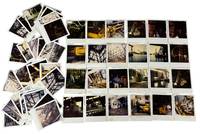
1970234111970. Offshore oil rig construction photo archive recording fabrication machining and dockside heavy-lift work at Farmers Marine Copper Works in Galveston Texas during the mature expansion of Gulf Coast petroleum engineering. After offshore drilling moved beyond shallow coastal waters Texas port cities became essential service centers for the fabrication of platforms pipe assemblies pressure systems and marine equipment needed by the oil and gas industry. These scenes place Galveston inside that industrial network through the labor machinery and waterfront facilities that made offshore production physically possible.<br /> <br /> Photo archive of 50 Polaroid snapshot photographs measuring 3.5" x 4" standard instant print format Galveston Texas circa 1970s to 1980s. Workers in hard hats and shop clothing stand among yellow-painted pipe systems hydraulic lines large flanged fittings deck-mounted machinery and scaffolded cylindrical components. Several interiors show machine-shop work including a worker operating or adjusting equipment at a large industrial station marked "44" while other scenes move outside to the waterfront where cranes barges dock edges and fabrication sheds frame components being staged near the water. Additional views include a small white operator cab heavy hoses across the deck red scaffolding around a large round metal housing and a massive concrete or metal assembly positioned beside an indoor slip or basin.<br /> <br /> The archive records the practical environment behind offshore oil production: the shore-based construction repair and preparation that allowed rigs and marine petroleum equipment to operate. Galveston's port economy depended on this kind of specialized industrial work linking local metal shops and waterfront yards to Gulf energy development petrochemical expansion and marine engineering. Surface soiling abrasions emulsion wear and handling marks to many Polaroid borders; images generally legible with expected fading and industrial handling wear. Overall in good condition. A photographic record of fabrication-floor and dockside labor at a named Galveston marine petroleum shop. unknown
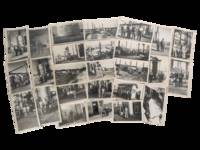
1945232411945. Oil refinery photo archive documenting refinery labor plant operations and worker identity at Kern Oil in Southern California and Mid West Refineries in Grand Rapids Michigan in the immediate postwar years showing how petroleum production expanded through the daily work of identified laborers during the industrial reorganization that followed World War II. The group centers on the men who stood on the ground among cracking towers tank farms piping runs shop buildings and control areas. Postwar oil demand rose with civilian automobile use trucking suburban growth and military-industrial continuity and refineries became key sites where that expansion was made practical through skilled and semi-skilled labor shift work maintenance inspection and dangerous physical proximity to heat pressure fuel storage and heavy equipment. The archive records that system at worker level where industrial growth appears as crews posing beside process units inside service spaces and at small plant structures rather than as abstract production statistics.<br /> <br /> Photo archive of 26 silver gelatin photographs each 2.5" x 4.5" Kern Oil Southern California and Mid West Refineries Grand Rapids Michigan circa 1945-1949. Roughly half the images show refinery infrastructure with dense fields of distillation columns and stacks cylindrical tanks elevated piping steel frameworks service roads and storage areas; one dramatic view shows a damaged or collapsed horizontal tank or vessel within a twisted metal structure. A large painted sign reading "MID-WEST REFINERIES INC." advertises "GASOLINES / FUEL OILS / BURNER OILS / KEROSENE." Other views show broader plant grounds with horizontal storage tanks outbuildings and open yards. The remaining photographs focus on workers posed alone and in groups in overalls work shirts caps and brimmed hats standing beside towers near pipe runs outside small office or shack structures and in work areas with process equipment visible behind them. Several versos identify individuals by name including groupings such as "Perry / Bob Patter / Lou Lane / John Higdon" "Charles Johnson / Bart Klein / 1946" "B. Klein / C. West / D. Golden" one inscription reads "4-15-49 / Place / MAX WERTZ SHACK / M-50 / Lou Peterson."<br /> American oil refining in the mid-1940s stood at the junction of wartime production and postwar consumer expansion. Plants that had helped sustain military logistics now fed the fuel economy that depended on workers whose labor was physically demanding and hazardous. These photographs preserve the named men occupying the industrial landscape that structured their livelihoods. Light wear and minor curling; numerous versos with identifying inscriptions; overall very good condition. A grounded postwar labor archive that places refinery workers inside the machinery of American oil production at the moment petroleum became central to everyday life. unknown
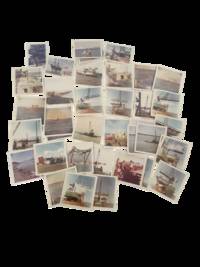
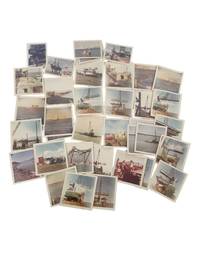
1965233141965. Offshore oil construction photographs documenting platform fabrication barge work marine transport and field logistics tied to the Gulf Coast petroleum industry in 1965-66 with direct evidence of how offshore drilling depended on a broad labor system before a rig ever reached a producing field. Taken at Farmers Marine Copper Works in Galveston Texas the archive records the building and handling of steel jackets deck sections cranes work barges service vessels and crew activity that made offshore extraction possible. The Gulf of Mexico was the proving ground of the modern offshore petroleum industry as the region became the incubator for an industry later exported worldwide.<br /> <br /> Photo archive of 53 color photographs 3.5" x 3.5" Galveston Texas 1965-66. The photographs show offshore structures in multiple stages of assembly and movement rather than a single completed drilling scene. Repeated views include steel platform legs and jacket sections standing in the water beside cranes and barges; large deck modules being hoisted or aligned over pilings; work decks with hoses railings and moored service boats; crewmen gathered onshore and aboard vessels; and small aircraft and automobiles used in project access and inspection. Several images show major marine lifts in progress with cranes extending over partially assembled structures and barges positioned tight against the work. Others widen out to open water towing scenes or partially completed platforms against distant mountainous terrain indicating that some photographs may record project deployment or field work beyond Galveston even if no specific destination is identified on the objects themselves. Handwriting on one verso of a group of men identifies "McClure / Chas. Young / Smithy."<br /> <br /> By the mid 1960s offshore oil had become central to both the U.S. energy economy and Texas coastal industry. Gulf Coast yards built and serviced the jackets pipe vessels and equipment that allowed companies to move farther offshore and later federal studies described fabrication yards as a core part of the offshore system that linked land based labor to offshore production. Texas held a special place in that expansion because its ports yards engineering firms and petroleum capital helped turn the Gulf into a permanent industrial frontier. Light handling wear and most exhibit curling; images generally clean and well preserved. Overall good condition. A strong documentary record of offshore construction labor at the moment when Texas Gulf Coast yards were helping scale the offshore oil industry from regional enterprise to national system. unknown
1970233331970. Texas and Kansas petroleum infrastructure photo archive 1970s and 1984 documenting the industrial system that linked Gulf Coast fabrication yards port facilities heavy marine transport offshore petroleum extraction and inland drilling in the mature oil fields of Kansas. The photographs show offshore structures moving from shore side assembly into open water service and a separate 1984 Kansas sequence inscribed "Lee's oil well" where a land based drilling rig trucks workers and rig floor equipment record oil production away from the coast. The archive places petroleum extraction within both the Gulf Coast industrial corridor that built and deployed offshore structures and the inland lease field where drilling remained dependent on mobile rigs pipe handling and small crews. Its value lies in that shift of scale from Galveston waterfront engineering and offshore installation to the working machinery of a Kansas well in the early 1980s.<br /> <br /> Photo archive of 42 chromogenic color photographs 3.5 x 5 inches Galveston Texas circa 1970s and Kansas 1984. The photographs center first on large offshore structures at several stages of completion and deployment including jack up rigs elevated decks cranes and a prominent circular helipad or radar platform mounted above the main deck. Several views show rigs still at dockside beside harbor pavement parked vehicles and industrial lifting equipment; others place the same or similar structures offshore standing above open water on extended legs or surrounded by service craft. One photograph includes a banner reading "Galveston Project Post USA" anchoring part of the sequence to a named project site while another frames the Galveston waterfront with dense ranks of harbor cranes and marine industrial equipment. Additional images show smaller fixed platforms a long yellow boom or gangway extending over water crane barges maneuvering beside offshore structures and a wider sea view with multiple platforms operating at once establishing repeated movement between fabrication yard port transfer and offshore installation. Six later Kansas photographs show "Lee's oil well" in 1984 including a land drilling rig in open field country truck mounted support equipment a lowered mast or rig component being moved into position workers on the rig floor handling chain and pipe a standing derrick and close views of the drill string hoisting line block and metal rig fittings.<br /> <br /> By the mid 1960s offshore oil had become central to both the U.S. energy economy and Texas coastal industry. Gulf Coast yards built and serviced the jackets pipe vessels and equipment that allowed companies to move farther offshore and later federal studies described fabrication yards as a core part of the offshore system that linked land based labor to offshore production. Texas held a special place in that expansion because its ports yards engineering firms and petroleum capital helped turn the Gulf into a permanent industrial frontier. Kansas had a different petroleum history beginning with commercial production in the 1890s and continuing through thousands of smaller lease fields where independent operators and mobile drilling crews extended the life of older oil districts. The 1984 "Lee's oil well" photographs add that inland production economy to the Galveston material showing how petroleum infrastructure depended not only on large coastal fabrication and marine transport but also on field rigs pipe work trucks and crew labor at individual wells. Light surface wear mild fading and minor edge wear; overall very good condition. A concentrated visual record of how American petroleum production moved between Gulf Coast offshore construction marine installation and inland drilling work in late twentieth century Texas and Kansas. unknown
19990112421999. Soft Cover. Very Good. Publisher: Automotive Oil Chanhe Association 1999 V.Good Plastic Case Cassettes 12 Tapes. paperback
193075392Coalinga: n.p. ca. 1930. This small gathering belonged to Stanley Siegfus a mining consultant geologist and engineer whose papers are held at the Huntington Library. It includes:Four panoramic silver gelatin photographs 10 1/2 x 3 3/4 inches of Big Tar Canyon an oil producing region in the San Joaquin Valley near Coalinga. In the original envelope from R. W. Richards of the USGSSixteen 3 duplicates original photographs of the oil business in the Tupman oil field.A typed letter signed from R.W. Richards to Stanley Siegfus. It discusses the Big Tar Canyon as well as other oil fields Garza Creek McAdam's well. Written on USGS letterhead and dated June 7 1933. Oil field photographs from the Tupman lease in Kern County CA—acquired in 1920 by the Standard Oil Company. Images include oil derricks rigs company buildings views of the fields etc. n.p. unknown
2012SONG9401045348Springer 2012-11-02. 3rd ed. 1993. paperback. Used: Good. 7.01x1.44x10.00. Buy with confidence. Excellent Customer Service & Return policy. Springer paperback
19982081502111902485China Guangxi Art Publishing House 1998. Soft Cover. Fine. The book is in fine condition. China Guangxi Art Publishing House paperback
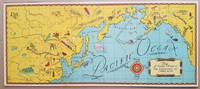
19343798<p>This delightful pictorial map focusing on the North Pacific Ocean was distributed as a premium in connection with the syndicated radio program "Air Adventures of Jimmie Allen." The program featuring Jimmie Allen as an adventurous 16-year old pilot ran from 1933 to 1937 and from 1946 to 1947 and was sponsored initially by the Skelly Oil Company.</p><p>Background on the show appears on the Radio Days Theater of the Mind Museum website http://radiodaysmuseum.org<strong>:</strong></p><p><strong>"Broadcast History:</strong> 1933 to 1937 and 1946 to 1947.</p><p>The writers of Jimmie Allen had been flying aces in World War I. They came up with the idea of a show about a boy pilot while at a party in Kansas City and used their experience as pilots to create and write the show.</p><p>The show was one of the first to capitalize on the idea of a club as a promotional tool. To join the Jimmie Allen Flying Club all a child had to do was apply at any Skelly Gas Station the initial sponsor. As a member the child received a whole host of goodies ranging from a set of wings through to a "personal" letter from Jimmie himself. An incredible 600000 club newspapers were sent out to children each week and many thousands attended the Jimmie Allen Air Races that were held in Midwest cities.</p><p>The show was first broadcast between 1933 and 1937 and then came back to the air with brand new stories after the war between 1946 and 1947. The post-war stint in no way lived up to the fascination for the show in the 1930s."</p><p>http://radiodaysmuseum.org/index.php/our-collection-1/2-old-time-radio-shows/7-juvenile/265-air-adventures-of-jimmie-allen-the</p><p>An uncommon map.</p><p><strong>References:</strong> David Rumsey Map Collection: List no. 11105.001. No examples on OCLC.</p><p><strong>Condition: </strong> Two vertical fold lines which may have been partially separated. Mounted on backing board. Very good.</p><p>ICN 7719.3</p> Skelly Oil Co.