347 résultats
63-6753London: John Boydell ca. 1767. Engraving 20" x 17" with Decorative Border On Paper Mounted on Canvas Good with marginal tears. [London: John Boydell, ca. 1767.] unknown
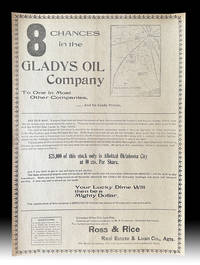
19014590Oklahoma City OK: Daily Oklahoman 1901. Map Illustrated Advertisement. Near Fine. A seminal promotional piece by an American oil company offering a nascent map of the rich Spindletop drilling area in Southern Texas during it's proving and cash-raising stages. Published in the Daily Oklahoman newspaper in 1901 to encourage investors to "buy-in" to the excitement of the oil boom this enticing ad worked her wallet-opening charms well as the region ultimately became famous for both it's quality and quantity of sustained oil production. The ad measures 19.5 inches tall x 14 inches wide with some toning and faint fold lines barely evident. It has been deacidified and linen backed with a few tiny archival repairs to top and left edges. A significant and early piece of Texas Petroliana. Daily Oklahoman unknown
P2954Used; Very Good. 61-C-24 Baker Hughes Oil Tools 2006 Spiral Notebook bound. Text is clean and unmarked. Covers have light wear. Book Condition; Very Good . 2006. FLEX-BINDING. unknown
0471262463New. Brand new and still unused unknown
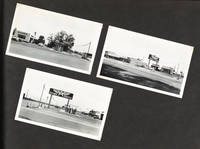
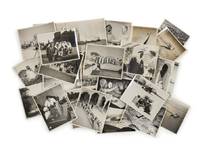
1948BB.23.032<em><strong>Silver prints 158; 3 x 5 and 7 x 9 inches; Some with identifying locations recto and others with photographer's hand stamp verso.</strong></em> This compelling photo album compiled between 1948 and 1957 offers a view into the rapid development of roadside infrastructure that took place in California during the transformative period of post-war prosperity.<br /><br />As California experienced a surge in car ownership and a growing reliance on automobiles for transportation the need for accessible and conveniently located gas stations became increasingly apparent. The album shows how Associated Oil Company by this time a subsidiary of Tidewater Oil owned by Getty strategically positioned their now-iconic "Flying A" gas stations to cater to the burgeoning market up and down the West Coast. This album presents prospective locations some depicted with realtors' advertising boards scenes of construction and improvements and views of recently completed service stations spanning from the Southern Bay Area to Los Angeles.<br /><br />The album is mostly un-captioned with just a few prints having notations on the rectos but many scenes are identifiable by the signage of local businesses and vehicles or the sharp and visible street-signs. Some identifiable locations include: San Jose Saratoga Los Gatos San Marino Canoga Avenue in Woodland Hills and Nordhoff & Terra Bella Streets in Los Angeles among numerous others.<br /><br />A fantastic album which captures the relationship between changing consumer needs swiftly-increasing land development and the iconic roadside gas stations that have become synonymous with California's roadside landscape.
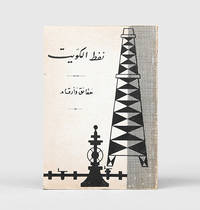
1963169036Kuwait: Matba at hukumat al-kuwayt 1963. Kuwaiti oil policy in the state's earliest years First edition first printing of this rare pamphlet which is at once a statistical record of Kuwaiti oil production and a policy document arguing for oil as the key factor in the development of the country. When this pamphlet was published Kuwait had only been independent for about two years. The text is accompanied by a superb fold-out map showing the state's oil fields and the companies that ran them at the time. Following a very brief outline of Kuwait's geography climate and history the first chapter is devoted to oil production. Kuwait is named as the fourth-largest producer of oil in the world after the United States the Soviet Union and Venezuela. Subsequent sections are given over to each of the five oil companies operating on Kuwaiti territory: Kuwait Oil Company Ltd Aminoil Japan's Arabian Oil Company Shell Kuwait and Kuwait National Petroleum Company. The most expansive sections give precise information on how many fields and wells the companies ran how many barrels each field produced per year and the annual volume of exports by country with accompanying fold-out colour bar charts. The second chapter is devoted to revenues again broken down by company and details the concessions paid by the American and Japanese concerns to the state of Kuwait. The third chapter discusses Kuwaiti oil policy including the state's role in the foundation of OPEC in 1960 to avoid unilateral decreases in the price of oil as well as its commitment to train home-grown talent in the oil sector and thereby reduce dependence on foreign expertise. Octavo. With 6 black and white illustrations 3 fold-out colour bar charts fold-out colour map. Text in Arabic. Original white wrappers wire-stitched as issued lettered and illustrated in black. Wrappers nicked rear wrapper split at head and soiled along the spine fold-out map nicked. A very good copy. unknown
192549705Pittsburgh PA & Port Arthur TX: Gulf Refining Co. ca. 1925. Folio. 11.5 x 14.25 in. 5 large oversize folding leaves of typed descriptions measurements specifications; mounted 7 linen-backed photo leaves 2 folding -- w/ 39 images printed on 34 silver gelatin photos. Original split-pin post-binder blue silk red cloth corners brass split pins minor edgewear rubbing minor fraying to corners first typed leaf w/ creasing minor closed tears still a VG exemplar from the library of John W. Jackson former Marketing & Sales executive with Gulf Oil Corporation Tulsa OK. This spectacular packaging catalogue for Gulf Oil Company petroleum products in the 1920s provides an incomparable photographic reference for all of the available products their dimensions sizes specific directions about tin lithograph colours as well as the cardboard and wooden shipping crates. Gulf Oil Corporation was initially organized in May 1901 by J.M. Guffy Andrew W. Mellon and others. By 1907 they had built a 400-mile pipeline from Port Arthur to the Glenn Pool Field in Oklahoma and started refining Oklahoma crude by 1907. By the 1920s this integrated Oil Company had built service stations across the country sold Good Gulf Gasoline and actively promoted automobile travel with Gulf Maps marketing promotions and more. This catalogue begins with photos of 1 5 10 and 25 lb. tins of Gulf Supreme Grease Transmission Grease Red Top Axle Grease Gulf Petrol-atum Gulf High Pressure Grease and Gulf Lubricant with all of the product tins carefully sized by stack showing their side graphics sizes lids and lid configurations. The oil cans include Tractor Oil Auto Oil Harvester Oil Gulf Motorcycle Oil small illustration of 1920s era motorcycle with Gulf Logo and even the blank tin soldered cans of assorted sizes. Of particular interest are the images of all the specialty products Gulf Oil was marketing during the Flapper Era including Venom pesticide & bug killer in glass bottles with screw-top tin lids & corks; Gulf Gas-o-Clenz cans in 1/2 pint 1 pint 1 quart and 1 gallon sizes; Gulf Gleam Cans Gulf Jelly Clens tubes Gulf Grease tubes and more. The last group of photos show all of the varieties of Gulf Venom Jelly-Clenz Gulf Pressure Grease Gulf Gleam cardboard and wooden packaging complete with printed labels lithograph labels Venom hand-sprayers and packaging and crates in assorted sizes and amounts. These types of photographic sales catalogues for the Petroleum industry are quite scarce and often unique items. Gulf Refining Co., hardcover
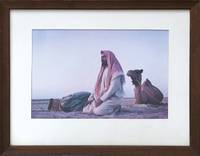
1958163043Kuwait: 1958. A fitting gift for a veteran oil man This evocative image was likely captured at dawn and shows two Bedouin engaged in the daily Fajr prayer both wearing the traditional shemagh headdress . Although not marked as such this was presented to William K. Whiteford 1900-1968 president of Gulf Oil in 1958 - the 20th anniversary of the discovery of oil in Kuwait. In 1934 Gulf Oil formed an alliance with the Anglo-Persian Oil Company to create the Kuwait Oil Company. It received concession rights in 1934 started drilling in 1936 and discovered oil two years later in the massive Burgan oil field. In 1957 Whiteford was described by Time magazine as "burly aggressive Bill Whiteford who started as an oilfield roughneck out of Stanford University was brought into Gulf in 1951 from the presidency of Canada's British American Oil Co. Ltd. made chief administrative officer in 1953 under Sidney A. Swensrud who moved up from president to board chairman. Whiteford shook up Gulf's management strengthened its domestic and Western Hemisphere holdings firmly but unofficially took over much of the executive authority". 1958 was also the year in which Whiteford published a short in-house history Gulf and the World Oil Industry. The image of Bedouin at their sunrise prayers may be an intentional hommage to the dawn of the Kuwaiti oil industry. Original colour photograph measuring 232 x 347 mm; mounted and glazed in brown wood frame by the Kendrick Bellamy Company Denver overall 407 x 507 mm. Pencilled date below framer's label "5-14-57". Light damp staining to bottom edge of mount a few scratches to frame and minor loss to backing. Overall in excellent condition. Time 25 March 1957. unknown
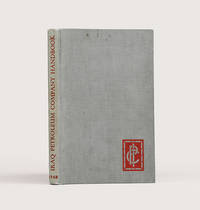
1948183725London: Compiled in the Companies' Head Office 1948. An informative survey of the Middle East and its oil industry First edition of this excellent handbook for IPC employees outlining the operations and expanding importance of the petroleum industry and surveying the history and current condition of states in Arabia the Gulf and the Levant. Chapter 1 describes the IPC's formation the mechanisms for opening a new concession the history of its prospecting and extraction projects and the Mediterranean pipeline. A chapter on the culture of the Arab world is followed by regional breakdowns that draw on company and government reports. Concerning the Gulf the handbook emphasizes the potential of oil exploration to transform the region. In Qatar where an oil field was discovered in the late 1930s "the population is scanty and wretchedly poor. The Company's present operations supply almost the sole source of wealth. The building of necessary roads jetties dwellings offices workshops stores and the like has advanced simultaneously with drilling" pp. 15 & 69. Accompanying the text are valuable plates showing IPC operations in Kirkuk and near Tripoli views of Qatar and Bahrain from the air and a well with head fittings and flow lines. The folding regional map details oil fields refineries and pipelines both built and projected. A useful tabular appendix summarizes the present state of the IPC's concessions including the area they cover and the rights granted as well as current exploration licenses. Octavo. Half-tone portrait frontispiece of King Faisal and 26 plates folding area map at rear maps in text. Original grey cloth spine lettered in red company logo in red on front board. Ownership inscription "L. B. Griffiths Tripoli 21.11.1948" on front free endpaper. Light sunning marking at head of front board top edge foxed: very good. hardcover
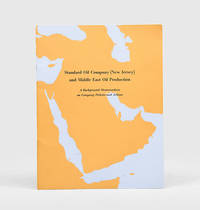
1954170939New York: Standard Oil Company New Jersey 1954. A new era in Middle East oil Revised and updated edition following the first of 1947 of this glossy guide illustrated with three colour maps of the Arabian Peninsula showing oil fields and concessions pipelines and refineries. Recognizing the potential of Saudi Arabia's vast oil reserves in 1946 Standard Oil Company New Jersey acquired a 30 percent stake in the Arabian American Oil Company. A colour bar chart illustrates Saudi Arabia's rapid growth as an oil producer after 1946. The introduction stresses the region's importance to emerging Cold War geopolitics: "Middle Eastern oil is a major element in the economies of Europe and the East. It is essential to the defence of the free world" p. 5. Quarto. Colour reference maps in text as well as photographic half-tones. Original wrappers front cover lettered in black against outline of Arabian Peninsula wire-stitched as issued. Front cover bright rear wrapper lightly soiled a little internal creasing from handling: a near-fine copy. unknown
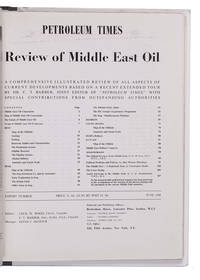
1948L2EG76GNBQ6GLondon: Brettenhem house 1948. Later cardboard binder. 30 x 23.5 cm. With many reproductions of photographs ground plans maps and cross-sections. Extract from the periodical The Petroleum Times containing an extensive article on oil in the Middle East. It opens with a list of Middle East oil companies and their concessions accompanied by a map showing their oil fields followed by a section on the future of Middle East oil. Individual chapters are devoted to the oil industry in Iran Iraq Bahrein Saudi Arabia Haifa Israel and Kuwait describing the area's geology oil fields reservoirs and more illustrated with photographs and cross-sections of the soil. The first 25 and last 16 pages consist of advertisements. Lacking the first 4 leaves of the preliminaries probably advertisements but the article itself complete some leaves slightly creased otherwise in very good condition. Brettenhem house, unknown
1970ABC_50132Iran 1970. The collection is housed in a plastic file folder with each photograph also separately kept in a plastic folder. Various sizes. With 10 photographs. Collection of ten beautiful press photographs of the oil industry in Abadan Iran which was home to the largest oil refinery in the world at the time these photographs were taken. They show various parts of the industry such as the oil refinery oil tankers pipelines and fire department. The photographs were take by various French and German news agencies.With the stamps of various French and German news agencies on the back of each photograph. Some of the photographs are slightly creased. Otherwise in good condition. unknown
159397Abu Dhabi: Abu Dhabi Oil Company for Onshore Oil Operations 1982. Celebrating the first oil shipments from a key port First and sole edition of this specially produced work published to commemorate the 20th anniversary of ADCO's first crude oil shipment from Jebel Dhanna. An online institutional search showing one copy only at Exeter University. Provenance: lid of box lettered in gilt J. Turnbull and loosely inserted compliments slip with typed name of the same; this is almost certainly John Turnbull BP's General Manager Production Overseas and later chief executive of BP Indonesia. Quarto. With colour illustrations throughout. Original presentation binding of moderate blue padded leatherette gilt-lettered on covers within gilt and blind ornamental borders bright blue watered silk endpapers. Housed in the original matching box. Box showing just light signs of handling light scratch to front cover of book. A very good copy bright and sharp. hardcover
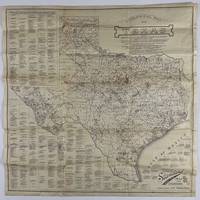
192012758Fort Worth: Standard Blue Print Map & Eng. Co 1920. Very good. Folding map 25.75 x 25.75 inches on thin paper. Old folds minor edge wear several short closed edge tears a couple of small areas of loss at crossfolds. Overall good condition and a wonderful display item. A rare and detailed Texas oil map produced by a Fort Worth firm just after World War I and here present in the larger 25-x-25-inch issue advertised in the promotional text on the map itself. The map shows the distribution of oil wells and derricks across the Lone Star State in 1920 prints the names of the most prominent oil fields and lists the names of Texas counties along with the oil companies active in each county. The map also shows the types of soil and rock deposits encountered throughout Texas counties with a legend of abbreviations for each at bottom right. The area of the map is crowded in places but still quite attractive and legible and is a good encapsulation of the rapidly developing oil industry in Texas at the time. Contemporary advertisements for the publisher of this map Standard Blue Print Map and Engineering promote the availability of over 200 oil maps of Texas Oklahoma New Mexico Louisiana and Arkansas from the firm. A rare map rarer still in this larger size; we locate just two copies at SMU one issued with a slightly later "May 1920" copyright notice with a larger "photocopy" reported at Denver Public Library and the Colorado School of Mines. Standard Blue Print Map & Eng. Co unknown
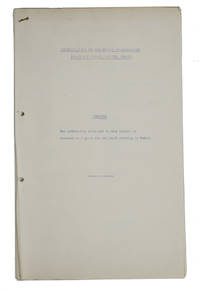
1952ABC_46142Al Ahmadi: Kuwait Oil Company 1952. Loose sheets stapled together at the left top corner with holes punched in the left margin. Small folio 33 x 20.5 cm. Duplicated typescript printed on the rectos only in purple ink probably with a spirit duplicator. Unrecorded information guide for new employees of the Kuwait Oil Company KOC who would be residing in Al Ahmadi headquarters of the Company. The Kuwait Oil Company was founded in 1934 a joint venture between the British Anglo-Persian Oil Company and the American company Gulf Oil. In the same year the sheik of Kuwait Ahmad Al-Jaber Al-Sabah reigned 1921-1950 granted them rights to the oil concession which they were to retain until 1975. The first oil was discovered in 1938 in Burgan field followed by discoveries in Magwa in 1951 Al Ahmadi in 1952 and many more regions. In 1946 the first commercial shipment took place. Because the initial development of the KOC coincided with the end of the British Raj in India many British and Indian people in its service were transferred to Kuwait in particular to Al Ahmadi. Al Ahmadi was set up to house these workers.This unrecorded guide is quite rare especially because it seems to be a quite cheaply produced and ephemeral document which was issued only in small numbers for in-house circulation.At some places very slightly frayed and creases along the edges and corners staple a little rusted leaves slightly toned some leaves a little cut short at the foot with no loss except for some of the catch-words but overall in remarkably good condition. A rare and unrecorded guide for employees of the Kuwait Oil Company in Ahmadi. Kuwait Oil Company, unknown
65872Saudi Arabia 1955 - 1960. 43 silver gelatin press photographs of Saudi Arabia particularly of the workers and possessions of the Arab American Oil Company. 40 measure 25.5 x 20.5 cm 2 measure 21.5 x 16.5 cm and 1 measures 23 x 18 cm; 32 prints stamped by Aramco with 8 evidently also produced by the company 2 by Keystone Pictures Inc. and one by Wide World Photo; 18 photographs are accompanied by descriptions. Some creasing to corners one print with small tears to the top and left edge. In excellent condition overall. The Arabian American Oil Company also known as Aramco emerged from US efforts to extract and refine crude oil in the Arabian Peninsula. The California-Arabian Standard Oil Company discovered oil at Dhahran in 1937 which was extracted at a rate of 115 barrels a day. This became the first commercial well in Saudi Arabia and was a breakthrough for American Oilmen looking for reservoirs of 'black gold' overseas. In 1944 the company changed its name to the Arabian American Oil Company. These photographs were almost all taken by Aramco to showcase the company's logistical and mechanical achievements as well as the care it took of its workforce. Many of the photos were circulated in the Aramco World Magazine and Sun and Flare internal company magazines that were generally intended to boost the company's corporate identity as well as improve relations with the Saudi world around them. Contents include: Aramco hardware drill; pipes and coating machine for the trans-Arabian pipeline; stabilising plant at Dhahran; Aramco employees at work Saudi employees filling tank car; Saudi employee operating temperature gauge; Aramco employee towns and living quarters senior staff housing in Abqaiq; Aramco houses at Rahimah near Ras Tanura; various aerial views probably of Dhahran; Saudi townscapes and vernacular buildings school in Hofuf; market at Hofuf; Riyadh old town; etc.; American and Saudi employee recreations boat trip to Tarout Island; American wives shopping; swimming pool at Dhahran etc.; portraits and posed photographs 'Qidaith ibn Mubarak … Starting as a laborer he advances to the position of assistant driller'. In addition the collection includes two portraits of King Saud bin Abdulaziz. This is a fascinating set of photographs documenting the early days of US-Saudi relations and a key moment in modern oil production. Saudi Arabia, [1955 - 1960]. unknown
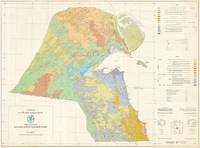
654341981. Original large colour-printed map 76 x 103.5 cm with detailed key and legend. Compilation and cartography by Hunting Geology and Geophysics Limited. Generally in excellent condition. Kuwait becomes a Major Player in the Global Oil Industry This is a scarce large-format bilingual geological map of Kuwait prepared in 1981 by Hunting Geology and Geophysics for the Kuwait Oil Company. It was produced at a time when Kuwait's oil production was undergoing rapid changes including the creation of the Kuwait Petroleum Corporation KPC of which the Kuwait Oil Company became a subsidiary and expansion into international markets and the securing of vertical integration. The map covers the mainland of Kuwait along with the Bubyan and Failaka Islands using colour-shading to indicate a variety of sands gravels clay and stone as explained in the bilingual legends present at right which also indicate geological era. Lines and other notation are used to indicate geological and international boundaries fault lines wadis elevation contour lines roads depressions and intertidal and shoaling sand. Developed areas namely Kuwait City and some nearby coastal settlements are shaded grey. Additional supplementary information appears at right including a diagram and explanation of the local grid employed. Historical Context Upon gaining independence from the United Kingdom in June 1961 Kuwait inherited an oil industry dominated by the Kuwait Oil Company KOC a joint venture between British Petroleum and Gulf Oil. However like other emerging postcolonial states in the region Kuwait was determined to assert control over its primary resources. This effort began with the formation of the Kuwait National Petroleum Company KNPC in 1960 and the Petrochemical Industries Company PIC in 1963 which allowed the government to build domestic technical expertise. A major milestone of this era was the 1962 relinquishment agreement which forced foreign concessionaires to return 60 percent of their unexplored territories to the state paving the way for independent national exploration and the 1968 opening of the Shuaiba Refinery the world's first all-hydrogen refinery. The 1970s saw a shift from foreign partnership to total nationalization following the 1973 oil crisis and the subsequent surge in global prices. After an initial 'participation' agreement in 1972 that gave the state a 25 percent stake in KOC Kuwait moved for a full takeover by December 1975. By 1976 the state held 100 percent ownership of its oil assets allowing it to cap production to conserve reserves for future generations a policy that stood in contrast to the high-extraction strategies of foreign firms who further increased production as they sensed nationalization was in the offing. Thus the vast revenues generated by the oil industry were funneled directly into the Reserve Fund for Future Generations established in 1976 to provide long-term fiscal stability. They also financed a comprehensive welfare state providing citizens with free education healthcare and subsidized housing while transforming the capital of Kuwait City simply 'Kuwait' here into a modern metropolis. By the early 1980s Kuwait shifted its focus toward global integration and organizational efficiency. In January 1980 the government established the Kuwait Petroleum Corporation KPC as a centralized holding company to manage all aspects of the industry from upstream exploration to downstream retail. Kuwait became a pioneer among OPEC nations by aggressively expanding into international markets acquiring the American drilling and engineering giant Santa Fe International in 1981. This strategy continued with the acquisition of refining and retail networks in Europe laying the groundwork for the 1983 launch of the 'Q8' brand. Thus by the mid-1980s Kuwait had successfully established one of the most vertically integrated and professionally managed state oil industries in the world. Publication History and Census This map was compiled and drawn by Hunting Geology and Geophysics for the Kuwait Oil Company. It is quite scarce noted only in the holdings of the Colorado School of Mines the U.S. Geological Survey Library and the Library of Congress with no known market history. Cartographer Hunting Geology and Geophysics Ltd. 1952 - 1987 was a British surveying firm that specialized in cutting-edge methods of mapping especially aeromagnetic surveys and focused on discovering potential reserves of natural resources especially fossil fuels. It was part of the larger Hunting group originally founded in 1874 as a shipping company by Charles Hunting and later moving into aircraft surveying and petroleum. Companies within the Hunting group frequently merged with each other and with outside acquisitions leading to frequent name changes; in this case Hunting Aerosurveys founded 1944 merged with Hunting Geophysics founded 1952 to form Hunting Surveys in 1960. In 1965 a public company was formed called Hunting Associated Industries Ltd. which included Hunting Surveys Holdings Ltd. but not a new entity Hunting Geology and Geophysics Ltd. which remained part of the privately-owned Hunting Group. In 1987 Hunting Geology and Geophysics Ltd. was closed down in a consolidation process that saw the public company now Hunting plc buy out the Hunting Group though the Hunting family retains a significant share of the company's stock and one of its members remains Chairman of the Board. Hunting Geophysics and later Hunting Geology and Geophysics Ltd. made pioneering surveys of Great Britain itself along with several countries in Central Africa seeking uranium and other minerals the Philippines Ethiopia and especially countries in the Middle East where the company conducted critically important surveys that helped to develop the lucrative oil industries of the United Arab Emirates Qatar and Kuwait among others. OCLC 9971094 1981. unknown
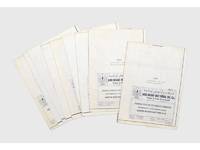
187383Abu Dhabi: 1987. Geology and oil fields A rare set of large blueprints produced by the Abu Dhabi National Oil Co. ADNOC with stratigraphic cross-sections of the Habshan formation in the Thamama Group in western and central Abu Dhabi. We have traced no other similar blueprints institutionally or on the market. Issued by the ADNOC geologists Abdullah al-Habshi and Mohammed M. Abd al-Sattar in May 1987 the blueprints provided the results of experiments in the gamma ray porosity correlation of the Habshan formation in order to clarify the rock type and composition of onshore and offshore oil fields including Umm Salsal West Mubarras Zakum Abu al-Bukoosh Bab and Sahil. While Abu Dhabi's oil production had slowed down markedly during the 1980s the reorganization of ADNOC in 1988 and the start of the Gulf War in 1990 prompted a sharp increase in output particularly in the areas covered by these blueprints. Nine blueprints from 130 x 40 mm to 233 x 40 mm folding into 285 x 200 mm numbered 1-9 sequentially. Small inset maps to folded verso c.10 vertical charts per map. Text in English occasional Arabic. Preserved in archival box. Inset map highlighted in ink. Occasional slight marginal soiling or small tears at folds: very good copies. unknown
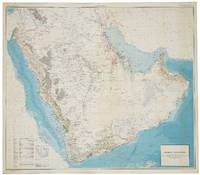
56801Washington D.C.: Department of the Interior United States Geological Survey and the Kingdom of Saudi Arabia Ministry of Finance 1963. SECOND EDITION ENGLISH ISSUE. Large chromolithohraphed map 122 x 139 cm of the Arabian peninsula shown with topographic relief and marked with water pipelines oases oil fields oil pipelines ports and harbours oil wells natural gas fields quarries and mines. Key lower left. The map includes the territories of modern day Kuwait Qatar Bahrain United Arab Emirates Oman and Yemen and was the work of a team lead by the distinguished geologist Glen F. Brown whose pioneering work on surface geology with its emphasis on water resources minerals and oil pertains to this day. Minor light spotting lower right generally in excellent condition. Issued simultaneously in an English and Arabic versions. Originally conceived in 1953 this second edition shows significant additional topographical detail and noticeably showing the growth in oil fields and accompanying infrastructure. Brown 1911-2001 began his career conducting coal investigations in South China and the Philippines and ground water investigations in Mississippi and Colorado the latter mostly concerned with supplying water to military installations. In response to a request from Ibn Sa'ud for assistance from the United States Geological Survey USGS Brown was selected in 1944 to investigate water supplies in the Saudi Arabian desert. Brown "arrived in Saudi Arabia early in 1945 and joined a mission sponsored by the US Foreign Economic Administration to study possibilities for agricultural development in central Arabia. As part of the mission he carried out a detailed investigation of the geologic formations in the Al Kharj district and identified substantial ground-water resources in buried aquifers. His report on the results of that investigation was very enthusiastically received by Saudi officials. Brown returned to Saudi Arabia at the request of Ibn Saud to conduct reconnaissance geologic mapping mineral evaluation and water-resource studies in the western and central parts of the kingdom. The mapping was carried forward from 1950 to 1958 by Brown with USGS and Saudi associates and extended to the entire Arabian Peninsula in cooperation with the Arabian American Oil Company Aramco as well as to organizations and companies of other countries in the peninsula. This resulted in a remarkable series of bilingual geologic and geographic maps of Saudi Arabia at a scale of 1:500000 and a geologic and geographic map of the entire Arabian Peninsula at a scale of 1:2000000 all of which were published by the USGS. These maps together with reports on the geology mineral deposits and water resources prepared by Brown and his associates providing the basis for Saudi Arabia to undertake a major national resource exploration and development program" obituary Geological Society of America. The map includes the territories of modern day Kuwait Qatar Bahrain United Arab Emirates Oman and Yemen. Although the hunt for oil gas and minerals ultimately drove geological survey work across the region in its early years it was the need for continual water sources which was the catalyst for Saudi Arabia's resource exploration. In 1944 King 'Abd al-'Aziz approached the United States for a technical expert who could assist with the identification and plotting of the kingdom's natural resources particularly its groundwater reserves. Glen F. Brown who undertook the task and is responsible for this map was one of the pioneers of a partnership between the United States Geological Survey USGS and the government of Saudi Arabia. This collaboration was one of international importance spanning the next five decades and influencing the development of the kingdom significantly. By 1954 the Saudi Ministry of Finance United States Geological Survey USGS and Aramco were working together to produce the first full series of geographic and geologic maps of the country. The first of their type in the Peninsula were published between the late 1950s and early 1960s in both Arabic and English copies. The information these maps contained formed the basis of subsequent Saudi national development plans. To this day all modern maps of the kingdom trace their roots back to these publications. Washington D.C.: Department of the Interior, United States Geological Survey and the Kingdom of Saudi Arabia Ministry of Finance unknown
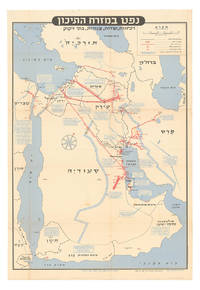
1957ABC_46260Tel Aviv: Israel Defence Forces General Staff 1957. Folded. 56 x 82.5 cm. Chromolithographic map of the Arabian Peninsula from Turkey in the north to the Indian Ocean in the south and covering Saudi Arabia Egypt Israel Palestine Jordan Syria Lebanon Iraq Iran Kuwait Bahrain Qatar United Arab Emirates Oman North and South Yemen. Scale 1:5000000. Scale and key in Hebrew inset to top-right inset explanatory panels in Hebrew and English compass rose in Saudi Arabia. Extremely rare Israeli strategic map of the Arabian Peninsula showing oilfields and associated infrastructure. Printed in black red and blue the map demarks the political boundaries of the time along with the areas covered by oil companies concessions. Pipelines form a web across the northern part of the Arabian Peninsula shown in an uncommon vertical orientation while oilfields and refineries large and small are also marked. The IDF probably made the map in responce to the 1956 Suez Crisis and its associated geopolitical shifts. With the Egyptians operating the Suez Canal and the USA forcing Britain and France to abandon their post-imperial plans Israel now counted in both U.S. and Soviet plans for their control of Middle Eastern politics. Britain had to anchor its Middle Eastern influence in Cyprus Aden and Iraq while the increased American influence can be seen in the huge swathe of territory assigned to Aramco. We have located only one institutional copy of this map in the National library of Israel.With traces of pins from former wall mounting. A couple of small light stains some uneven creasing and tears at the edges of some folds and a couple tiny holes where the folds cross. Otherwise in good condition. Israel Defence Forces, General Staff, unknown
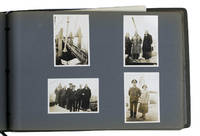
1931ABC_46004Greece Palestine Iran Iraq Egypt 1931. Oblong photograph album 20.5 x 32 cm. With 72 sepia photographs ca. 6 x 8.5 cm. Album of personal photographs commemorating a journey in 1931-1932 to the oilfields in modern Iran and Iraq by a trio of travellers which included the Reverend Philip "Tubby" Clayton 1885-1972 the founder of the Toc H movement. Several photographs show Galilee Jerusalem Rutbah Wells Ar-Rutbah and about 10 show "fields" mostly the main oilfield at Masjed Soleyman and its gas separator.In 1931 Clayton was invited by the director of the Anglo-Persian Oil Company the predecessor of the British Petroleum Company "to inspect the work among the Company units in Persia and the Middle East generally" Harcourt. Accompanied by two friends he travelled by plane train and boat to Lake Tiberias and further by plane to Rutbah Wells a British airfield where the group spent Christmas Eve with British Dutch and German travellers. On Christmas Day they reached Abadan and from there visited the oilfields near Tehran Ahvaz Haftkel Mohammerah Basra and Masjed Soleyman. After a journey to Cairo and Alexandria they boarded an oil tanker for the return journey to Britain. This journey inspired Clayton to plead passionately for improvements to the life of the crews of oil tankers. He described "carrying oil by sea" as "the most lonely job on the world's waters" Clayton. In 1940 he became chaplain of Anglo-Saxon Petroleum's tanker fleet and would subsequently sail on multiple tankers.The photographs must have been taken by Henry Pegg Chappell 1909-1997 since the other members appear he is the only member not present in the photographs and he does not and only Clayton who completed the journey by oil tanker. A carbon copy of a typed list describing all photographs is inserted in the album. Since typed and handwritten additions to the carbon paper refer to Clayton in the third person he probably typed the original list and gave Chappell this carbon copy to insert in his album.With an inscription probably by the three travellers on the title page. Binding slightly worn at the extremities. Paperclip and staple on the typescript rusted. In very good condition.l Clayton "In a tanker" in: The Times 9 March 1932 p. 15; Harcourt The impudent dreamer pp. 216-219. unknown
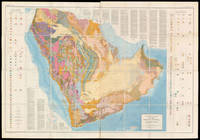
58310Washington D.C.: The US Geological Survey 1963. 129.5 x 185.5 cm. Original chromolithographed folding map laid onto new linen. Excellent condition. Large and detailed map depicting the geology of the Arabian Peninsula. The search for oil on the Peninsula started in 1933 when the Saudi Arabian government granted an oil concession to Standard Oil Co. of California which was later joined by Texaco buying a 50% stake in the concession. Geologists soon followed to start the surface mapping of the area and beyond achieving by 1937 a broad understanding of the region's geological strata. The first test to yield oil was in Dhahran on 4 March 1938. After a hiatus during WWII the activity of surveying and test-drilling resumed with reinvigorated effort. Aerial photography was introduced in 1949 and proved an invaluable tool for the surveying. In 1954 the US Geological Survey and Aramco the Arabian American Oil Company began work on a series of geological and geographic maps which would incorporate the data collected over the years. The project was sponsored by the US Department of State and the Kingdom of Saudi Arabia. The effort resulted in 1:500000-scale geologic sheets and a 1:200000-scale geological map of the Arabian Peninsula and the base topographical map — the present maps. The geological map delineates the strata of the peninsula with colour codes in two tables on either sides and text within the blank regions of Eastern Africa and Iran. A paper to accompany the map and further explain the geology was published in 1966 by the US Geological Survey. Powers Ramirez Redmond Elberg Geology of the Arabian Peninsula Sedimentary Geology of Saudi Arabia U.S. Geological Survey Professional Paper 1966. Washington, D.C.: The US Geological Survey, 1963. unknown