42 résultats
1896SCUtrVAC40Rochester NY: c1896. 1896. 12mo. pp. 39. original cloth upper portion of covers bit spotted light foxing crease marks to corner of several leaves. Hardcover. Rochester, NY: [c1896]. Hardcover
1900003482Washington: Government Printing Office 1900. Very Good condition. Cover lightly rubbed else clean square and unmarked. No underlining. No highlighting. No margin notes. No foxing. Pages are fresh and crisp. Bound in the original green cloth with decorations in blind on the front and rear covers. Gilt lettering on the spine is still bright and shiny. This thick heavy book is in 2 parts. Part I contains the Report of the Commission; Review of Evidence; Charts Showing Effects of Combinations on Prices; Topical Digest of Evidence; Index of Digest. Part II features testimony on trusts/combinations in various industries: sugar whisky oil tin steel silver etc. Some 540 pages are filled with testimony concerning the Standard Oil Company by John D. Rockefeller his would-be competitors etc. Oversize Hardcover. This thick heavy book will require extra postage for Priority and International shipments but only the standard charge for media mail. . First Edition. Oversize Hardcover. Very Good condition. 264pp. 1325pp. Great Packaging Fast Shipping. Government Printing Office Hardcover
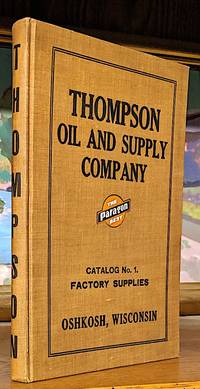
19009733Oshkosh Wisconsin 1900. Hardcover. Near fine. Tall 8vo. 229 pages many illustrations of various products. Black and white photo illustrations of the "Home of the Thompson Oil and Supply Co." and the "Thompson Oil and Supply Co's. Filling station. -- Binding slightly bowed. No other notable defects. hardcover
1869665DG1869. Oel auf Leinwand. Format: 58 x 76 cm. Mit Holzrahmen: 75 x 96 cm. + Wichtig: Für unsere Kunden in der EU erfolgt der Versand alle 14 Tage verzollt ab Deutschland / Postbank-Konto in Deutschland vorhanden +
1869665DG1869 Oel auf Leinwand. Format: 58 x 76 cm. Mit Holzrahmen: 75 x 96 cm.
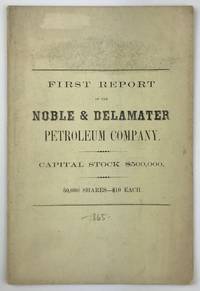
18651597Philadelphia 1865. Still very good. 411-14pp. Original printed wrappers. Light dust soiling to wraps. Moderate tanning and light foxing internally. Unrecorded report that documents the first annual shareholder meeting of the Noble & Delamater Petroleum Company which took place on April 10 1865 the day after Lee's surrender at Appomattox. The pamphlet presents the current financial circumstances of the company delineates levels of production and revenue over the past year and presents the by-laws of the company. The Noble well was one of the most significant and famous early bonanzas in the oil country of northwestern Pennsylvania. The well was first bored on farm land leased by Orange Noble and George Delamater in 1860. It produced no oil for three years until the decision was made to drill deeper at which point the well turned into a gusher producing thousands of barrels of oil per day for the next two years. By the time this public company was formed production was declining rapidly and according to contemporary reports the well was in the process of being closed up by the end of 1865 with both Noble and Delamater having sold their interests in the company. An excellent document of a famous episode in the early oil history of Pennsylvania. books
186538685Philadelphia 1865. Broadside with a table of the rates of fare on verso. Woodcut illustration of a locomotive. Sheet size: 19 x 8 inches. Extraordinary survival: a railroad broadside advertising a route to America's first oil boom.<br/> <br/>The first oil well in the United States was drilled by E. L. Drake in Oil Creek Pennsylvania near Titusville in 1859. On the 29th of August oil was struck and the first boom was on. Towns such as Oil City and Pithole sprang up. The Titusville population exploded from 250 residents to over 10000 in little more than five years; Pithole expanded from four log-cabin farmhouses to a bustling city with over 50 hotels over the span of five months in 1865. At its peak the Pennsylvania wells were producing one third of the world's oil. An ephemeral survival of America's first oil rush. unknown books
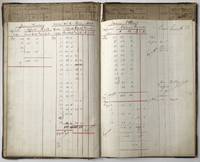
1892613N.p. but likely Pennsylvania 1892. Good. 28pp. Folio. Original black half sheep and marbled boards. Spine and corners heavily worn boards worn. Several leaves cut away with later French funeral notices pasted in on stubs. Ledger recording transactions for several companies and individuals extracting oil in Pennsylvania from 1889 to 1892. The ledger records the name of the company listing the date and then barrels of crude and refined oil "sound" and "broke." Named parties involved in the extraction include James Stewart Aetna Oil Co. Miles Stitt Crew Levick Co. Jos. Kelly & Co. James Harding and others. Several have street addresses listed below their names which would allow for firmer identification with some research. Notations are occasionally in French and taken together with the funeral notices pasted in at the front of the volume we surmise that the owner of the ledger may have been Francois Poulard of Philadelphia to whom one of the notices is addressed. unknown books
185660171856 plaquette in-octavo, dos et couverture bleus légèrement défraîchis, long papier, mouillures, illustration : 1 carte noire repliée "théatre de la guerre d'Alhadji 1856", de la page 393 à la page 504, Mai 1856 Paris Imprimerie et Librairie Administrative de Paul Dupont,
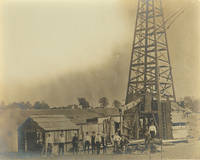
1900WRCAM49847N.p. perhaps Pennsylvania 1900. Silver gelatin photograph 15 3/4 x 19 1/2 inches. Mounted to backing board and framed to an overall size of 20 1/2 x 25 inches. Slight silvering of part of the image light edge wear minor chipping to frame. A very good image. A fascinating image featuring eleven men standing in front of an oil rig complete from engine house to the oil derrick the latter extending beyond the frame of the picture. Most of the men are fairly well dressed and perhaps picture the management of the rig or the oil company that owns the rig. Among the better-dressed subjects is a young boy perhaps in his early teenage years. Two of the men are dressed in overalls and are likely the roughnecks for this particular rig. A rare large photograph capturing the early days of the oil business in America. unknown books
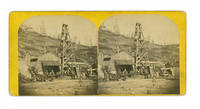
1866235961Titusville: J.A. Mather 1866. 22 stereo cards with printed paper labels on verso titled in manuscript. 3-1/4 x 6-3/4 inches. Some wear to cards images near fine. 22 stereo cards with printed paper labels on verso titled in manuscript. 3-1/4 x 6-3/4 inches. A fascinating and important record of the birth of the oil industry in northwestern Pennsylvania.<br/><br/>British-born John Aked Mather 1829-1915 moved to the United States in 1856 and soon after was introduced to photography by an itinerant daguerreian. Mather travelled through West Virginia and Ohio before settling in Titusville Pa in 1860 with his wife. Edwin Drake of the Seneca Oil Company had begun drilling in August of 1859 and Mather was poised to become the oil boom's photographer of record travelling along Oil Creek River on his flatbed studio. Mather's views of wells and rigs were so popular in their time that owners would request Mather photograph their operations to encourage more investment. <br/><br/>The photographs that Mather took make up the largest and most significant pictorial record of the western Pennsylvania oil boom "a record of the first ten years of the industry a coverage without equal in any nineteenth century technology" Darrah The World of Stereographs p. 80. Notably these stereoviews are contemporary to the boom and thus more desirable than Mather's Historical Oil Region Views published in 1895 from the original negatives.<br/><br/>This group of 22 stereo views includes "Oil Seekers Pithole Penn" "Green Mountain Well " "Champion Wells Pioneer River" "RR Bridge & Pioneer from Oil Creek" "New York Well Pioneer" "Lady Stewart & Lady Brooks Pioneer River" "Petroleum Center Penn" "Fishers Shipping Sheds" "Old Shipping Platform Miller Farms" and the humorous "Sunken Fortune or Ruined Man"<br/><br/>See Giddens Paul H. Early Days of Oil: A Pictorial History of the Beginnings of the Industry in Pennsylvania Princeton: 1948. J.A. Mather unknown books
1900233951900. Turn-of-the-century Japan photo archive documenting foreign commercial travel oil and mining activity rural labor and domestic life during the late Meiji era when Japan was rapidly building railways mines refineries modern ports and industrial companies after the 1868 Meiji Restoration. The material appears connected to a Western man and his family moving through Japan in connection with oil extraction or related industrial work with repeated views of derricks refinery sites pipe trenches miners labor crews interpreters servants hotels villages and named regional destinations. Images show various scenes throughout northern Japan such as Hokkaido settlements Sapporo gatherings Naoetsu refinery work Nara and coastal travel household service and encounters between foreign visitors and Japanese workers at a time when foreign technical knowledge and Japanese state-backed industrial growth were reshaping the country.<br /> <br /> Photo archive of more than 150 photographs including approximately 6 cyanotypes and numerous silver gelatin and albumen photographs sizes range between 2" x 3.5" to 4" x 6" Japan circa late 1890s to early 1900s. Nearly every image bears a handwritten caption en verso identifying places people professions work scenes and social relationships. Captions include "Launching conveying pipe to and from steamship Corea Yokohama" "Refinery location Naoetsu Japan" "Celebrating the fall of Mukden Sapporo Mar. 21st 1905" "Crowd at Naoetsu Hotel" "Working on foundation for refinery Naoetsu" "Digging a great ditch for drain pipe from refinery to ocean" "Drillers and visitors" "Japanese servants at home in the bamboo grove" "Old American Naval Hospital" and "Mines & Smelters Sumitake Hotel Omori Japan." Workers dig trenches handle pipe gather beside derricks and refinery structures pose at mine entrances stand near kilns and industrial yards and move through villages and hotel courtyards. Other scenes record women in kimono children household staff rickshaw pullers street processions with rising-sun banners thatched structures coastal views mission or hospital buildings and Western family members partaking in local culture seated in gardens or standing among Japanese attendants and guides.<br /> <br /> The archive records Japan's industrial modernization from the perspective of foreign business presence rather than official state publicity. Oil had been produced in Japan since the nineteenth century especially in regions such as Niigata while Hokkaido mining railway building and settlement became central to Meiji development; this group places those broader changes inside fieldwork travel and household arrangements. The handwritten captions add another layer of specification by naming locations and functions that would otherwise be difficult to identify especially the refinery and drilling views. Condition varies across the group with curling fading toning creasing edge wear occasional surface loss and some with missing corners; images generally clean and clear captions remain present and visible on many versos. Overall in very good condition. By the turn of the century oil fields in Niigata and Akita were part of Japan's push to build an industrial economy but domestic crude was limited and often difficult to refine. The archive also reflects the unequal social and technical relationships that accompanied Meiji industrial expansion with foreign commercial specialists Japanese labor crews domestic servants and frontier extraction zones appearing together within the same industrial landscape. unknown
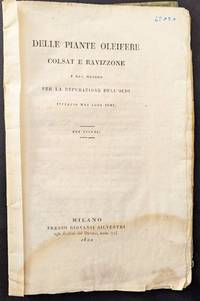
18201388Milano: presso Giovanni Silvestri 1820. <p>8vo. 24 pp. Illustrated with one plate. Original blue printed paper wrappers; water stained at the lower third of the wrappers and text block with tide marks visible. With faults a useful copy. </p> <br /> <p>This anonymous pamphlet examines the characteristics of rapeseed and colza plants with the aim of illustrating the most economical and functional method for extracting an excellent oil. Front and back wrappers with advertisements for works on agriculture and viticulture that have been published by Silvestre.</p> <br /> <p>ICCU Italian Union Catalogue cites 10 copies in Italy. OCLC only cites the copy in Torino Italy. Not in Niccoli or Paleari-Henssler.</p> . presso Giovanni Silvestri unknown
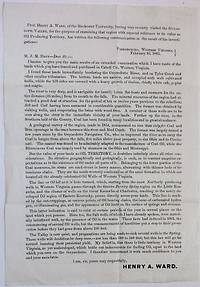
186534056Parkersburg 1865. Printed Broadside 7-3/4" x 11". Old folds Very Good.<br/><br/> This is an early report on the development of the petroleum industry in West Virginia. Professor Ward reports on the mineral resources of lands which Mr. Day purchased in Cabell County "Western Virginia." Although navigable waters salt coal and iron have been found in abundance "The value of your lands as OIL TERRITORY is doubtless infinitely above all other considerations. Its situation geographically and geologically is such as to warrant sanguine expectations as to the existence of Oil under all parts of it." Ward describes the "Oil belt" which graces Davy's land and assures him "There is little territory in Western Virginia as yet undeveloped which holds out inducements for finding Oil equal to the value which you own on the Guyandotte."<br/>Not located on OCLC as of October 2020. unknown books
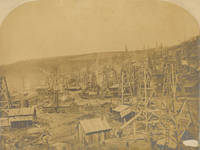
1865250221Benninghoff Run Pennsylvania 1865. Vintage albumen print rounded at top corners mounted on card captioned in pen beneath image. Image: 10 x 13 3/8 in. Image lightly faded some surface abrasion mount soiled. Vintage albumen print rounded at top corners mounted on card captioned in pen beneath image. Image: 10 x 13 3/8 in. Benninghoff Run Oil Derricks. Vintage albumen print showing the oil derricks and pump house of Benninghoff Run an important early oil field in Pennsylvania's Oil Creek Valley. The site's Ocean Well dug in 1865 was the first to prove that oil could be extracted from hilly terrain. Benninghoff Run was the scene of violence when teamsters angered over loss of work attempted to destroy the pipeline that comission dealer Henry Harvey built from Benninghoff Run to tanks at the Shaffer railroad two miles away. The right-of-way of the Benninghoff-Shaffer pipeline can be seen in this image as a white streak extending vertically from the fields to the hill in the distance cf. www.petroleumhistory.org. unknown books
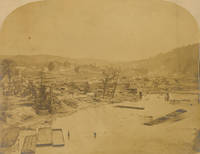
1860250325Petroleum Centre 1860. Vintage albumen print rounded at top corners mounted on card captioned in pen beneath image. 1 vols. Image: 10 x 13 3/8 in. Image lightly faded some surface abrasion mount soiled and worn. Vintage albumen print rounded at top corners mounted on card captioned in pen beneath image. 1 vols. Image: 10 x 13 3/8 in. Oil Creek. Vintage albumen print of Petroleum Centre Pennsylvania with Oil Creek in the foreground with a few scattered derricks and the town proper on the far bank. Petroleum Centre sprang up in 1861 with the birth of the oil industry in western Pennsylvannia. By 1873 the town was nearly deserted; it is now part of Oil Creek State Park. unknown books
186088DGo.J. (um 1860). Öl auf Leinwand. Bildformat: 78 x 59 cm. + Wichtig: Für unsere Kunden in der EU erfolgt der Versand alle 14 Tage verzollt ab Deutschland / Postbank-Konto in Deutschland vorhanden +, Abb.
186088DGo.J. (um 1860). Öl auf Leinwand. Bildformat: 78 x 59 cm.
1887007198Lockport NY: Merchant's Gargling Oil Co. 1887. 32 pp. advertising pamphlet for Merchant's Gargling Oil Liniment for horses. Features one popular song's lyrics no music at top of each page with advertising at bottom each page. Color lithographs front and rear wrappers by G. H. Dunston Lith. Buffalo N. Y. 1887 calendar verso front wrapper. Very Good wrappers soiled small corner creases. RARE Worldcat has no listing for this title . . First Edition. Stapled Wrappers. Very Good/No Jacket As Issued. 16mo - over 5¾" - 6¾" tall. Merchant's Gargling Oil Co. Paperback books
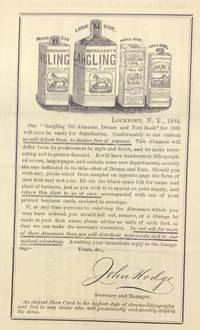
188464746Lockport NY 1884. Single sheet folded. 21 cm. 4 pp. of text printed on yellow paper. An illustration on the first page shows the different sizes of the Gargling Oil offered by the company the product suitable "for man or beast." John Hodge Secretary and Manager of Merchant's Gargling Oil advertises the publication of the company's almanac produced with "handsomely lithographed covers larger pages and containing some new departments notably the one indicated in its title- that of Dream and Fate." Dealers are offered copies of the almanacs shipped free of charge for distribution to their customers. Printed on the two internal pages are card samples to choose from allowing for the name and address of the dealer to be printed on the almanacs ordered. The final page requests the dealer fill out shipping directions. This copy is unused. Merchant's Gargling Oil was created by Dr. George Merchant of Lockport New York in 1833 according to an article written by Doug Farley director of the Erie Canal Discovery Center in 2008. Although it was called a 'gargling oil' it was primarily intended for external use as a liniment. The city of Lockport was located along the route of the Erie Canal and Merchant's liniment found a market with the canallers and their horses and mules. By the time John Hodge joined the company in the late 1850s it was a very successful enterprise. He was a master at marketing and advertising producing almanacs notebooks circulars and placing ads in numerous publications for his product. see a brief biography of the company in the Atwater catalogue Vol. 2 p. 48. <br/><br/> unknown books
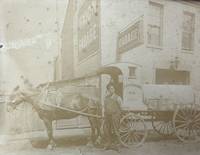
1900233021900. Massachusetts oil delivery photographs documenting the horse drawn transport system that moved petroleum products through small town New England before motor trucks displaced wagon distribution. Images depict oil wagons teamsters and tank rigs tied to local commercial delivery via horse and carriage. The turn of the century marked an industrial boom when kerosene lubricants and other oil products circulated through growing towns. This archive shows how it's its daily movement still relied on animal power and local hand delivery.<br /> Photo archive of 5 albumen and silver gelatin photographs and one RPCC photos measuring about 3.5" x 5" with various sized mounts Ashfield Massachusetts circa 1900-15. Three photographs bear photographer credit on the reverse to A.W. & G.E. Howes Ashfield Mass. One view shows a line of horse drawn tank wagons posed along an unpaved street before frame houses and utility poles with drivers seated in their rigs and teams held in place for a group portrait; the company is identified as Consumers Oil Company as visible on one of the carriages. A second image shows a single horse and tank wagon before a brick commercial building painted "UNION GARAGE" linking oil delivery by wagon to the emerging repair and automobile service trade. Two photographs are duplicate prints of the same scene each showing a man beside a white horse and covered oil wagon while a child sits on the driver's seat beneath the canopy; the man holds a metal can and partial wagon lettering ending in "OIL CO." is visible on the side. Another photograph shows a two horse team hitched to a larger wagon with partial company lettering also ending in "OIL CO." <br /> Massachusetts was deeply tied to the early oil economy not as a major drilling region but as a refining shipping storage and consumption market linked to the industrial Northeast. By the late nineteenth and early twentieth centuries petroleum products moved into the state through rail and coastal trade then outward through local dealers who supplied homes shops farms garages and machinery with kerosene fuel and lubricants. These photographs place that distribution system at ground level in Ashfield where horses still pulled the wagons that served an industry increasingly associated with mechanization and the rise of motor transport. Light fading and surface wear throughout; several mounts chipped at corners and edges; one of the duplicate pair having a 1.5" chip to the right side of the mount. Photos mostly show no signs of loss though the sepia photograph on the largest mount has a small chip to edge and a 0.5" tear to left side where horse's face is. Overall good condition. A compact Massachusetts record of the petroleum trade at the moment when horse drawn delivery and automotive modernity still occupied the same street. unknown
188016520Marseille Barlatier-Brissay 1880 in-4 br.(couverture détachée, frottée mais bon état intérieur). in-4, (2ff.), 10 et 26pp.,, (4pp.)
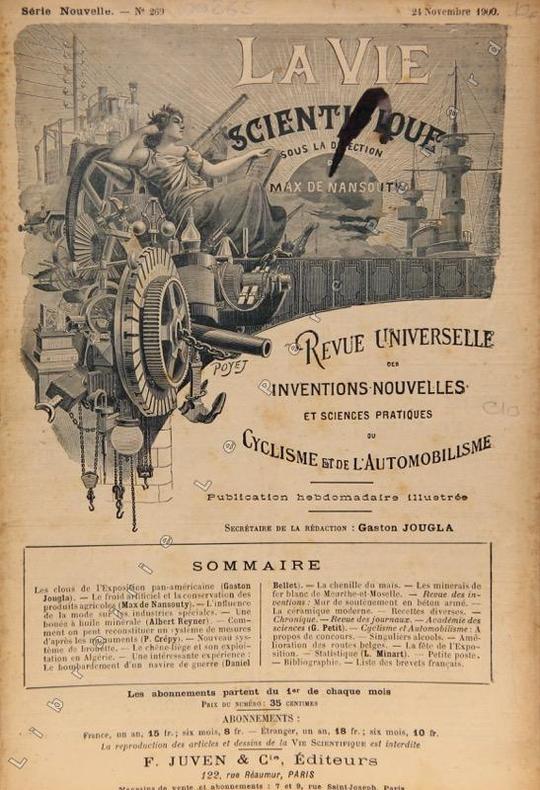
19001008651900 N° 269 - 24 Novembre 1900 - Publication hebdomadaire illustrée - Editions F. Juven & Cie - In-4, broché - pp. 401-430, nombreuses images en N&B.
1845fremont1845house<p>First House edition of this famous report. 1845. Complete in original binding except for the gigantic map which is available in full size color thick glossy paper professional reproduction $25 extra if desired. Pagination: 583 pages 22 plates 4 maps all blanks present. Includes fascinating pencil diagram of oil rig on back of map. Oil rig drawing titled "Sheffield Oil Company. Warren Co. Pa." That pencil drawing is the only interior writing or ownership marking anywhere in the book. Condition is a mixed bag. Original half leather marbled boards show heavy wear and looks like they were professionally rehinged in the distant past. Binding is sound. Pages show moderate to heavy toning and foxing. Some plates have weird 'dot' foxing I have never seen elsewhere see scan. Marbled endpapers. A nice well maintained copy suitable for reading and research with a cool drawing. Howes F372; Wagner-Camp 115:2; Graff 1436. House Doc. No. 166. Feel free to inquire. Please see scans of the book you will receive. Note: the large map published in 1845 was the road map people used in the gold rush of 1849. It was routinely extracted hence its rare nature. Map is 52 x 32 inches. Furthermore I do not believe map was issued with all House editions which contributes even more to its scarcity. Map is sufficiently large that if it had ever been present there would be evidence of removal. No evidence it was ever in this volume.</p> House of Representatives. Blair and Rives. hardcover
188347642Piccadilly: The "Graphic" Office 1883-4 to 1888-9. Six volumes bound in one. 8vo. Contemporary purple buckram gilt and blind ruled bands to the spine gilt lettered direct to two panels an early armorial bookplate Molyneux to the front pastedown with a corresponding ownership inscription dated 1890 to the opposing free endpaper. Sunning to the spine very good overall. The final three volumes with double page price lists bound in. Piccadilly: The "Graphic" Office unknown