Anderson, DonMareMagnum

1 314 résultats
107 pages. "To all my oilfield friends and even those that are not... this book is written so that families, descendants, relatives, friends, historians, a few companies, wealthy people and politicians understand a little of what kind of people it took to build an industry in Canada under conditions not seen in too many places." - from Dedication page. Black and white illustrations from photos. Unmarked with moderate wear. Binding intact. A sound copy of this interesting, informative and entertaining work. Book
19952081502111901767Nakasu ko seki 1995. Soft Cover. Fine. The book is in fine condition. Nakasu ko seki paperback
1970233511970. Rigging International photographs of refinery vessels crawler transporters port cranes and module lifts place oil-industry labor at the center of the late 1970s and early 1980s energy buildout. Captions in the group name offloading modules at Prudhoe Bay on Alaska's North Slope moving a 420 ton nuclear vessel from Oceanside to San Onofre erecting refinery vessels at Come-By-Chance Newfoundland offloading a 550 ton refinery vacuum tower in Aruba and handling 130 ton bulk-loader cranes at Cherry Point Ferndale Washington. The archive is best dated to roughly the late 1970s and early 1980s from its overlap with San Onofre Units 2 and 3 after the Atomic Energy Commission issued construction permits in 1973 and with Prudhoe Bay work after the Trans-Alaska Pipeline began operating in 1977; Rigging International later identified Alameda California as its world headquarters.<br /> <br /> Rigging International. Archive of 34 large format photographs. Circa late 1970s to early 1980s Alameda California with projects in California Alaska Hawaii Washington Newfoundland Aruba and Sweden. Each 8" x 10" predominantly color with a few black-and-white prints. Captions identify specialized heavy-lift and transport work in refinery construction marine offloading nuclear-component hauling port-crane erection maintenance and machinery installation with recurring references to crawler transporters barge operations lifting frames and oversized refinery vessels. Specific projects documented in the visible prints include Come-By-Chance refinery work in Newfoundland; San Onofre Nuclear Generating Station transport; Hanford reactor hauling; Prudhoe Bay module offloading; the Port of Oakland and Port of San Francisco; the Hawaiian Independent Refinery; Spreckels sugar refinery in Salinas; Cherry Point bulk-loader crane installation near Ferndale; and the Total concrete jacket construction site at Stord Norway.<br /> <br /> Labor shown in this archive document the transport lifting erection and maintenance work required to make energy production function across refineries ports and offshore supply systems. The North Slope photographs belong to the years after the Trans-Alaska Pipeline opened Prudhoe Bay to sustained high-volume production while the refinery and marine-lift photographs align with a broader period in which energy companies expanded output through new modules replacement vessels piping additions and upgraded handling systems rather than through constant construction of entirely new refineries. Alameda Oakland San Francisco Ferndale Aruba Newfoundland and Hawaii appear here as linked points in that industrial geography joined by the labor of crews moving vacuum towers reactors cranes and process equipment too large for ordinary transport. Light handling wear scattered edge wear minor curling and a few corner bends visible across the prints; overall good condition. A record of the heavy-lift labor that built and maintained oil and industrial infrastructure during the post-1973 energy expansion. unknown
20051187Butler Genealogy Club 2005. Hardcover. Very good. No dustjacket as issued. Cover has light wear. Reprint. Butler Genealogy Club hardcover
VG hbk reprint in yellow cloth with green decoration and lettering. Previous owner's inscription on the front endpaper. 11803. eng
A clean, unmarked book with a tight binding. Staple-bound. 10 1/4"w x 13 3/4"h. 30 pages. No date shown; circa 1962. Previous owner's name on cover.
199420537NY: Watson-Guptill. Fine in Fine dust jacket. 1994. Hardcover. 0823032736 . 335 color illustrations. First printing. Fine in a fine dust jacket. . Watson-Guptill hardcover books
99301The Public Catalogue Foundation London. 2012. First edition. The Public Catalogue Foundation London. 2012. Quarto hardback with dust-wrapper. xvi 348 pages. Colour reproductions throughout. Index of Artists. Very clean and sound; a rather lovely volume. hardcover
352 pages. Index. Bibliography. Extensively illustrated in black and white. A sensational reference. Average wear. Unmarked. Chips from top of backstrip. A sound reference copy. Book
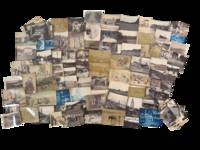
1900233951900. Turn-of-the-century Japan photo archive documenting foreign commercial travel oil and mining activity rural labor and domestic life during the late Meiji era when Japan was rapidly building railways mines refineries modern ports and industrial companies after the 1868 Meiji Restoration. The material appears connected to a Western man and his family moving through Japan in connection with oil extraction or related industrial work with repeated views of derricks refinery sites pipe trenches miners labor crews interpreters servants hotels villages and named regional destinations. Images show various scenes throughout northern Japan such as Hokkaido settlements Sapporo gatherings Naoetsu refinery work Nara and coastal travel household service and encounters between foreign visitors and Japanese workers at a time when foreign technical knowledge and Japanese state-backed industrial growth were reshaping the country.<br /> <br /> Photo archive of more than 150 photographs including approximately 6 cyanotypes and numerous silver gelatin and albumen photographs sizes range between 2" x 3.5" to 4" x 6" Japan circa late 1890s to early 1900s. Nearly every image bears a handwritten caption en verso identifying places people professions work scenes and social relationships. Captions include "Launching conveying pipe to and from steamship Corea Yokohama" "Refinery location Naoetsu Japan" "Celebrating the fall of Mukden Sapporo Mar. 21st 1905" "Crowd at Naoetsu Hotel" "Working on foundation for refinery Naoetsu" "Digging a great ditch for drain pipe from refinery to ocean" "Drillers and visitors" "Japanese servants at home in the bamboo grove" "Old American Naval Hospital" and "Mines & Smelters Sumitake Hotel Omori Japan." Workers dig trenches handle pipe gather beside derricks and refinery structures pose at mine entrances stand near kilns and industrial yards and move through villages and hotel courtyards. Other scenes record women in kimono children household staff rickshaw pullers street processions with rising-sun banners thatched structures coastal views mission or hospital buildings and Western family members partaking in local culture seated in gardens or standing among Japanese attendants and guides.<br /> <br /> The archive records Japan's industrial modernization from the perspective of foreign business presence rather than official state publicity. Oil had been produced in Japan since the nineteenth century especially in regions such as Niigata while Hokkaido mining railway building and settlement became central to Meiji development; this group places those broader changes inside fieldwork travel and household arrangements. The handwritten captions add another layer of specification by naming locations and functions that would otherwise be difficult to identify especially the refinery and drilling views. Condition varies across the group with curling fading toning creasing edge wear occasional surface loss and some with missing corners; images generally clean and clear captions remain present and visible on many versos. Overall in very good condition. By the turn of the century oil fields in Niigata and Akita were part of Japan's push to build an industrial economy but domestic crude was limited and often difficult to refine. The archive also reflects the unequal social and technical relationships that accompanied Meiji industrial expansion with foreign commercial specialists Japanese labor crews domestic servants and frontier extraction zones appearing together within the same industrial landscape. unknown
030927429X.Gpaperback. Good. Access codes and supplements are not guaranteed with used items. May be an ex-library book. paperback
ria9780309274296_inpPaperback / softback. New. New Book; Fast Shipping from UK; Not signed; Not First Edition; N/A paperback
20031-0309084385National Academies Press 2003. Hardcover. New. 395 pages. 11.50x8.50x0.75 inches. National Academies Press hardcover
1358988889.Ghardcover. Good. Access codes and supplements are not guaranteed with used items. May be an ex-library book. hardcover
1911029303London and Tonbridge: Bradbury Agnew & Co. Ltd. Printers 1911. J.D. Henry was best known British Oil journalist at the beginning of the 19th century when modern international oil industry started. Quite clean content b/w illustrations binding tight. In original dark green decorative cloth with gilt titles. Old light sunning to spine. Small knocks on edge. Just a few tiny light spots to front cover. Gilt head edge still shiny with mild rubbing. Fldg frontis part of else complete with plates many fldg maps adverts at end. Some pages badly opened due to being conjugated contemporary owners details 1918 on ffep. Quite clean content b/w illustrations binding tight. 338p Heavy book: 264mm. First Edition. Hb. VG/None. Bradbury, Agnew & Co. Ltd., Printers Hardcover
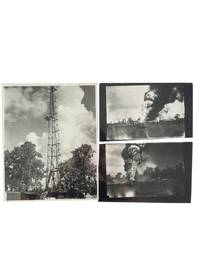
1952217461952. Oil Extraction and Oil Well Fires in South Texas. Three silver gelatin black-and-white photographic prints including one gelatin silver press photo 8 x 10 in. and two photo prints from negatives 5 x 7 in. Dated 1952 and 1954. Content includes an image of a wildcat rig in Lavaca County Texas and dramatic scenes of oil well fires. All photos with extensive manuscript notations on verso including references to press filing. This small but gripping photo archive documents the volatility and danger of oil drilling operations in mid-century South Texas including one catastrophic blowout and fire. The 8 x 10 inch silver gelatin press photograph dated June 1954 and stamped "RETURN TO CHRONICLE FILES" shows a towering oil derrick rising above dense trees. The reverse identifies the location as Lavaca County and describes a wildcat operation in Hallettsville Texas where drilling reached 8000 feet. A hand-written note reads "Field Drilling Co. Ext. Exterior - cementing protective casing 10240 down to 8000 ft - Lavaca County 2 1/2 mi. N. Hallettsville."<br /> <br /> The two smaller prints-captioned in manuscript as "Oil Well Fires"-capture the momentous force of an uncontrolled eruption. One image shows a roiling column of black smoke and flame rising from a well site surrounded by distant silhouettes of onlookers. Another more closely framed emphasizes the explosive power as the plume expands over nearby treetops. A note on the verso dates one of these prints to October 1952 stating it is a "Print from Studio of late Cecil Thomson." Cecil Thomson 1881-1953 was a prolific Houston-based commercial photographer and photojournalist who operated Thomson Studio a major supplier of images to regional newspapers including the Houston Post and Houston Chronicle. His studio active from 1909 until his death in 1963 continued producing prints posthumously from its extensive negative archive making it likely these fire images were developed and distributed under the studio's imprint even if not taken by Thomson personally.<br /> <br /> All three photos are from the Houston Chronicle archives with two stamped or inscribed "Return to Chronicle Morgue." One image includes the notation "Sunday Oil - Lavaca County Wildcat." These images preserve both the ambition and peril of mid-century oil operations in Texas a period when wildcat drilling fueled economic speculation and technological innovation often with great human and environmental risk. Surface creases and light wear to edges; verso of each image shows editorial markings and annotations in grease pencil and ink. Overall very good condition. A vivid visual record of the oil industry's volatility in 1950s Texas with provenance from the Houston Chronicle press files. unknown
1935biblio737<p>TEMPLE PRESS; 3d edition 1935. NearFine Hardcover Cover design in black and red. As shown. Small gift inscription inside front board looks as autograph. Otherwise book is in excellent VG to Like New condition. 8.2"x5.7"x0.6". be31209.</p> TEMPLE PRESS hardcover
19545119183New York: Wittier Books 1954. XXIX, 405 Seiten. 8° (17,5-22,5 cm). Orig.-Leinenband mit Titelprägung auf dem Rücken.
1954mon0000116423National Tube Division 1954-01-01. Hardcover. Acceptable. in x in x in. Pages are free from any markings. Some water staining on back blank pages. Inscribed by previous owner. Faux leather binding. Cover wear. National Tube Division hardcover
289 pages including index and bibliography. Describes how the emergence and evolution of the Brazillian oil industry, from its tentative beginnings late in the nineteenth century to its maturity in 1970, were largely influenced by misinformed and manipulated public opinion. A study of how scarcity of capital and expertise, so characteristic of an underdeveloped country, and the nationalism equally characteristic of such countries in the mid-twentieth century, interacted with the facts of geology to produce a result unique to Brazil. The first attempt at an objective assessment of the results of Brazils's experience in the oil industry. Book clean and unmarked with light to moderate wear. Dust jacket remains attractive with average wear and two half-inch tears. Binding sound. Book
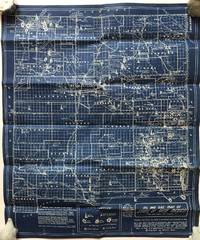
19361182Los Angeles: Brooks Bros 1936. Very good plus. Blueprint map 21.5 x 18.25 inches. Old fold lines minor wear. A few pencil annotations. An interesting and quite attractive blueprint map that shows the oil and gas fields of New Mexico where oil was first discovered in 1924. The map was compiled and drawn by Fabius and Sam Brooks Los Angeles publishers and was based on a 1931 map by Dean Winchester and "corrected to date" likely in the mid-1930s. The map shows the locations of oil and gas fields across the state and delineates sites of oil drilling their proprietors and the depths at which they hit oil or gas. Also included are the routes of major gas and oil pipelines. At the lower left corner of the map is a list of principal lease holders in New Mexico broken into tiers by acreage with Standard Oil holding over a million acres and the next group holding 100000 to 500000 each down to 5000 individuals and small companies who hold anywhere from 40 to 5000 acres. We locate a handful of copies of the Winchester map and one copy of a later dated Brooks map with a different title but none of the present issue. A highly attractive and informative New Mexico oil map. Brooks Bros unknown books
a504511980 Bureau of Land Management. 4to. 285pp. photo illustrations many color foldout maps pin bound wraps 3 holes punched at left margin. Depository library stamp on front and on title page. Residue of label on front. VG light wear. paperback
ria9780367541972_inpPaperback / softback. New. New Book; Fast Shipping from UK; Not signed; Not First Edition; Oil and gas industries apply several techniques for assessing and mitigating the risks that are inherent in its operations. In this context the application of Bayesian Networks BNs to risk assessment offers a different probabilistic paperback
47868BBo.J. Victor Popov geboren 1952 in Kasachstan, studierte Kunst in Lemberg. Er ist seit 1980 freier Künstler. Victor Popov lebt und arbeitet in Düsseldorf. [2 Warenabbildungen]
1975969DG1975. Oel auf Leinwand. Bildformat: 96 x 56 cm. + Wichtig: Für unsere Kunden in der EU erfolgt der Versand alle 14 Tage verzollt ab Deutschland / Postbank-Konto in Deutschland vorhanden +