56 résultats
181045887(London, W. Bulmer and Co., 1810). 4to. No wrappers as extracted from ""Philosophical Transactions"" 1810 - Part I. Pp. 16-74 and 2 engraved plates showing Davy's electrochemical apparatus for decomposing substances, Davy's versions of the Voltaic-pile.. Plates a bit brownspotted, otherwise clean and fine, wide-margined.
181042219London W. Bulmer and Co. 1810. 4to. No wrappers as extracted from "Philosophical Transactions" 1810 - Part I. Pp. 16-74 and 2 engraved plates showing Davy's electrochemical apparatus for decomposing substances. The plates dampstained. Text fine and clean. <br/><br/><em>First appearence of this historical chemical paper Davy' fifth Bakerian Lecture in which he announced his discovery of hydrogen telluride."Mr. Davy having from the commencement of his electro-chemical researches communicated the several steps of his progress to the Society The Royal Society takes the present opportunity of reporting the results of his further inquiries under four principal heads. First on the nature of the metals of the fixed alkalis. Second on the nature of Hydrogen and composition of ammonia. Thirdly on the metals of the earth; and Fourthly he makes a comparison between the antiphlogistic doctrine and a modified phlogistic hypothesis."Abstract. He further gives arguments for considering potassium and sodium which he discovered in 1808 as a element."Humphry Davy was one of the most brilliant chemists of the early nineteenth century. His early study of nitrous oxide brought him his first reputation but his later and most importent investigations were devoted to electrochemistry. Following Galvani's experiments and the discovery of the voltaic pile interest in galvanic electricity had become widespread. The first electrolysis by means of the pile was carried out in 1800 by Nicholson and Carisle who obtained oxygen and hydrogen from water. Davy began to examine the chemical effects of electricity in 1800 and his numerous discoveries were presented in his Bakerian lectures." - Wheeler Gift: 2518. </em> unknown
181045887London W. Bulmer and Co. 1810. 4to. No wrappers as extracted from "Philosophical Transactions" 1810 - Part I. Pp. 16-74 and 2 engraved plates showing Davy's electrochemical apparatus for decomposing substances Davy's versions of the Voltaic-pile. Plates a bit brownspotted otherwise clean and fine wide-margined. <br/><br/><em>First appearence of this historical chemical paper Davy' fifth Bakerian Lecture in which he announced his discovery of hydrogen telluride."Mr. Davy having from the commencement of his electro-chemical researches communicated the several steps of his progress to the Society The Royal Society takes the present opportunity of reporting the results of his further inquiries under four principal heads. First on the nature of the metals of the fixed alkalis. Second on the nature of Hydrogen and composition of ammonia. Thirdly on the metals of the earth; and Fourthly he makes a comparison between the antiphlogistic doctrine and a modified phlogistic hypothesis."Abstract. He further gives arguments for considering potassium and sodium which he discovered in 1808 as a element."Humphry Davy was one of the most brilliant chemists of the early nineteenth century. His early study of nitrous oxide brought him his first reputation but his later and most importent investigations were devoted to electrochemistry. Following Galvani's experiments and the discovery of the voltaic pile interest in galvanic electricity had become widespread. The first electrolysis by means of the pile was carried out in 1800 by Nicholson and Carisle who obtained oxygen and hydrogen from water. Davy began to examine the chemical effects of electricity in 1800 and his numerous discoveries were presented in his Bakerian lectures." - Wheeler Gift: 2518.Also with William Hyde Wollaston "The Croonian Lecture. Read November 16 1809.On Muscular Action - On Sea-Sickness - On the salutary Effects of Riding and other Modes of Gestation. Pp. 1-15. </em> unknown
232 pages. Index. Profusely illustrated with black and white photos and some colour plates. "This encyclopedic work presents for the first time historical and technical data for every nuclear warhead built by the U.S. since 1945. The most comprehensive technical history ever written about the postwar development of American nuclear weapons, this book includes explantions of fission and fusion weapon physics; significant postwar technological advancements in atomic warheads; and commonly-used warhead arming and fuzing equipment and techniques." - from dust jacket. "Extensive footnotes in each chapter cite specific sources for many of the points discussed" - from Preface. Book clean and bright with light wear. Prior owner's large signature atop front free endpaper and reverse of back free endpaper. Dust jacket, now preserved in glossy new archival-grade Brodart, bears three fine scratches to front panel and a short closed tear to bottom of back panel. A quality copy of this fascinating work. Book
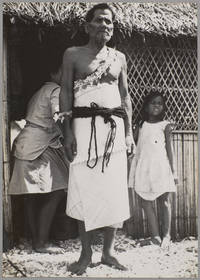
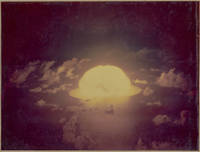
195142820836<p>This rare album documents Operation Greenhouse the first series of tests in the nascent American thermonuclear weapons program. The four tests were performed in April and May 1951 at the Enewetak Atoll of the Marshall Islands. Following the Soviet Union's successful test of an atomic bomb in August 1949 the United States made the controversial decision to proceed with the development of thermonuclear weapons. These fusion weapons the "Super" or hydrogen bomb would be orders of magnitude more destructive than the fission weapons used against Japan.</p><p>"Greenhouse consisted of four tests. The first two—Dog and Easy—were weapon development tests. The third—George—used a large fission yield to ignite for the first time a small mass of thermonuclear fuel. With an overall yield of 225 kilotons George was the most impressive and largest shot to date more than ten times the size of the Trinity blast. Greenhouse Task Force Commander Elwood Quesada declared it 'the greatest spectacle within recorded history' as the 'white day became dark by comparison with the brilliant light radiating' from George. … The fourth shot—Item—provided the initial demonstration of a technique called 'boosting' in which a fission device contained some thermonuclear fuel that enhanced the yield of the fission explosion" Battlefield of the Cold War. Volume I. Atmospheric Nuclear Weapons Testing 1951-1963.</p><p>The George test created "the first small thermonuclear flame ever to burn on Earth. According to Edward Teller the success of the 'George' shot was pivotal in the development of the Super the hydrogen bomb and provided scientists with the confidence to proceed along further speculations of thermonuclear design principles" Atomic Heritage Foundation.</p><p>The album contains nine photographs of the blasts themselves six in color showing the fireballs mushroom clouds and smoke trails used to gauge shockwaves. Other photographs show top brass including task force's commander General Elwood Richard Quesada visiting dignitaries as well as the construction of bases housing and testing structures and detonation towers. Monitoring devices and equipment include a small blimp tracer rockets cameras airplanes including radio-controlled drones and tanks and other equipment to be placed within the blast radius. Two photographs show the unloading of beagles to be monitored for the effects of radiation. Photographs of life on the base include Black and white men gathering at mess a church entertainment facilities a wall covered in pinups and portraits of two indigenous Marshall Islanders in traditional clothing.</p><p>VERY RARE. We can locate only one other example University of Illinois Urbana-Champaign. The casual group portraits of top officers and the absence of printed captions suggest that the album was prepared in very small numbers for well-informed insiders.</p><p>Provenance: Commander Elbert W. Pate of the United States Navy with his name gilt-stamped on the upper board. Pate was Deputy Officer for meteorology a key role given the importance of radioactive fallout in the tests. Pate was co-author of the Operation Greenhouse Meteorological Technical Report. Laid in is Pate's certificate for "Meritorius sic Service Performed with Operation Greenhouse" signed by the task force's commander General Elwood Richard Quesada and dated 15 July 1951. Also laid in is a membership certificate in the Grand Council Exclusive Order of Guinea Pigs issued to Commander Pate on 7 September 1951 acknowledging that he has "through an exaggerated sense of patriotism subjected his body to the rigors attendant to atom bombs hundred-foot tidal waves mermaids vampires sandfleas …"</p><p>Printed title page detached with Official Use Only at top. 90 gelatin silver photographs including 6 in color various sizes mainly approx. 8½ x 6½ in. mounted on 35 album leaves one color photograph loose another a little discolored. Original dark green cloth ring-bound album 14 x 12 in. gilt-stamped "Operation Greenhouse." Some wear and soiling. Very good.</p> United States Air Force Lookout Mt. Laboratory hardcover
195142820856<p>This rare album documents Operation Greenhouse the first series of tests in the nascent American thermonuclear weapons program. The four tests were performed in April and May 1951 at the Enewetak Atoll of the Marshall Islands. Following the Soviet Union's successful test of an atomic bomb in August 1949 the United States made the controversial decision to proceed with the development of thermonuclear weapons. These fusion weapons the "Super" or hydrogen bomb would be orders of magnitude more destructive than the fission weapons used against Japan.</p><p>"Greenhouse consisted of four tests. The first two—Dog and Easy—were weapon development tests. The third—George—used a large fission yield to ignite for the first time a small mass of thermonuclear fuel. With an overall yield of 225 kilotons George was the most impressive and largest shot to date more than ten times the size of the Trinity blast. Greenhouse Task Force Commander Elwood Quesada declared it 'the greatest spectacle within recorded history' as the 'white day became dark by comparison with the brilliant light radiating' from George. … The fourth shot—Item—provided the initial demonstration of a technique called 'boosting' in which a fission device contained some thermonuclear fuel that enhanced the yield of the fission explosion" Battlefield of the Cold War. Volume I. Atmospheric Nuclear Weapons Testing 1951-1963.</p><p>The George test created "the first small thermonuclear flame ever to burn on Earth. According to Edward Teller the success of the 'George' shot was pivotal in the development of the Super the hydrogen bomb and provided scientists with the confidence to proceed along further speculations of thermonuclear design principles" Atomic Heritage Foundation.</p><p>The album contains nine photographs of the blasts themselves six in color showing the fireballs mushroom clouds and smoke trails used to gauge shockwaves. Other photographs show top brass including task force's commander General Elwood Richard Quesada visiting dignitaries as well as the construction of bases housing and testing structures and detonation towers. Monitoring devices and equipment include a small blimp tracer rockets cameras airplanes including radio-controlled drones and tanks and other equipment to be placed within the blast radius. Two photographs show the unloading of beagles to be monitored for the effects of radiation. Photographs of life on the base include Black and white men gathering at mess a church entertainment facilities a wall covered in pinups and portraits of two indigenous Marshall Islanders in traditional clothing.</p><p>VERY RARE. We can locate only one other example University of Illinois Urbana-Champaign. The casual group portraits of top officers and the absence of printed captions suggest that the album was prepared in very small numbers for well-informed insiders.</p><p>Provenance: Commander Elbert W. Pate of the United States Navy with his name gilt-stamped on the upper board. Pate was Deputy Officer for meteorology a key role given the importance of radioactive fallout in the tests. Pate was co-author of the Operation Greenhouse Meteorological Technical Report. Laid in is Pate's certificate for "Meritorius sic Service Performed with Operation Greenhouse" signed by the task force's commander General Elwood Richard Quesada and dated 15 July 1951. Also laid in is a membership certificate in the Grand Council Exclusive Order of Guinea Pigs issued to Commander Pate on 7 September 1951 acknowledging that he has "through an exaggerated sense of patriotism subjected his body to the rigors attendant to atom bombs hundred-foot tidal waves mermaids vampires sandfleas …"</p><p>Printed title page detached with Official Use Only at top. 90 gelatin silver photographs including 6 in color various sizes mainly approx. 8½ x 6½ in. mounted on 35 album leaves one color photograph loose another a little discolored. Original dark green cloth ring-bound album 14 x 12 in. gilt-stamped "Operation Greenhouse." Some wear and soiling. Very good.</p> United States Air Force Lookout Mt. Laboratory hardcover