Livre Rare Book
1 445 résultats
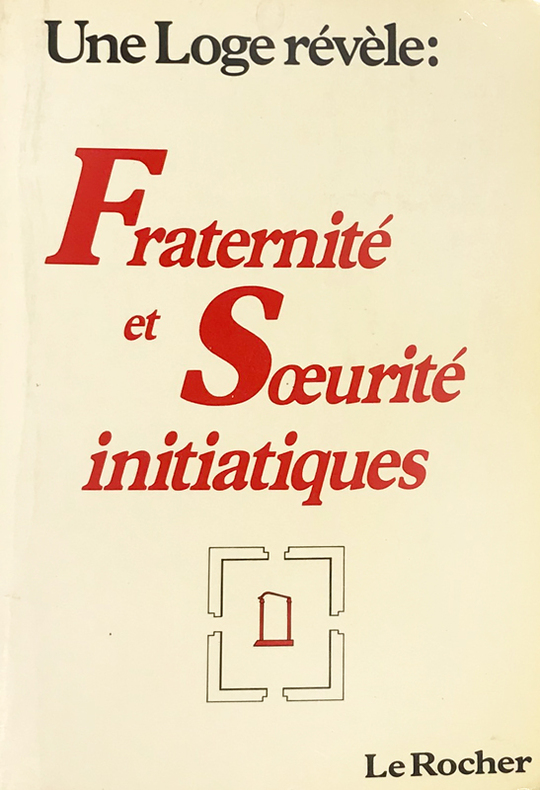
198815199Les Cahiers de la Maison de Vie, tome 1. Monaco, Le Rocher, 1988 ; in-8, broché ; 206 pp., couverture blanche pelliculée.
Mm 150x210 Brossura editoriale di pp. 111, con 22 illustrazioni a colori su tavole fuori testo, in buono stato. SPEDIZIONE IN 24 ORE DALLA CONFERMA DELL'ORDINE.
Toraldo di Francia Giuliano Un universo troppo semplice. La visione storica e la visione scientifica del mondo. , Feltrinelli 1990, piatti e dorso lievemente segnati dal tempo. tagli bruniti. interno ingiallito,complessivamente in buono stato. Buono (Good) . <br> <br> Copertina flessibile <br> 155<br> 8807080885
Collana Scienza e Idee. Prima edizione.<BR>In 8°; pp. 303 con numerose illustrazioni in nero nel testo; brossura editoriale con alette; cucito.<BR>NUOVO.
500322613Sans date.
1986500036900Laffont 1986 536 pages in8. 1986. Broché. 536 pages.
53270Paris, Editions Aedena, 79/60 et 64/43 cm hors cadre. Deux coins inférieurs insolés, sans affecter la sérigraphie -cf photos. Sinon bon état.
182243751Leipzig Johann Ambrosius Barth 1822. Without wrappers as extracted from "Annalen der Physik und der Physikalischen Chemie. Hrsg. Ludwig Wilhelm Gilbert" Bd. 71. Titlepage to vol. 71 pp. 124-171 a. pp. 172-176 and 1 folded engraved plate showing experimental apparatus. Clean and fine. <br/><br/><em>First German edition of Faraday's famous paper "On some new Electro-Magnetical Motion and on the Theory of Magnetism. By Michael Faraday Chemical Assistant in the Royal Institution. 1821" recording one of the most influential discoveries in physics in the 19th Century as Faraday here as the very first showed how to CONVERT THE ELECTRICAL AND MAGNETIC FORCES INTO CONTINUAL MECHANICAL MOVEMENT thus creating the first electric motor using the principle of electromagnetic rotation. In the first paper he introduced for the first time the concept of "LINE OF FORCE" and hereby deliniating "a picture of the universe as consisting of fields of various types one that was more subtle flexible and useful than the purely mechanical picture of Galileo and Newton. The FIELD UNIVERSE was to be recognized with Maxwell half a century later and with Einstein after an interval of another halfcentury."Asimov."Ever since Hans Christian oersted's announcement of the discovery of electromagnetism in the summer of 1820 editors of scientific journals had been inundated with articles on the phenomenon. Theories to explain it had multiplied and the net effect was confusion. Were all the effects reported real Did the theories fit the facts It was to answer these questions that Phillips turned to Faraday and asked him to review the experiments and theories of the past months and separate truth from fiction.Faraday agreed to to undertake a short historical survey.His entusiasm was aroused in September 1821 when he turned to the investigation of the peculiar nature of the magnetic force created by an electrical current. Oersted had spoken of the "electrical conflict" surrounding the wiree and had noted that "this conflict performs circles".Yet as he experimented he saw precisely what was happening. Using a small magnetic needle to map the pattern of magnetic force he noted that oneof the poles of the needle turned in a circle as it was carried around the wire. He immediately realized that a single magnetic pole would rotate unceasingly around a current-carrying wire so long as the current flowed. He then set about devising an instrument to illustrate this effect. His paper "On some new Electro-Magnetical Motion and on the Theory of Magnetism" appeared in the 21 October 1821 issue of the "Quarterly Journal of Science" The paper offered in the first German edition. It records the first conversion of electrical into mechanical energy. It also contained the first notion of the line of force."DSB IV pp. 533. </em> unknown
185443057Leipzig Johann Ambrosius Barth 1854. No wrappers as extracted from: "Annalen der Physik und Chemie. Hrsg. von J.C. Poggendorff" Vierte Reihe Bd. 3 = Poggendorff Bd. 93 No. 12. Pp. 481-506. Clean and fine. <br/><br/><em>First printing of this milestone paper in thermodynamics which together with his paper from 1850 established the second law of thermodynamics. In the offered paper Clausius introduces the symbol T for the universal function of temperature a 1 and he introduces the concept of "entropy" the greek word for 'transformation' but without using the word Clausius introduced the word later in 1865 he calls this new theorem "the principle of the equivalence of transformations". This principle paints a dramatic picture of the end of the world the so-called "heath-death of the universe"."Entropy on the other hand of the complementary experience of water seeking its own level of hot bodies cooling of springs untensing of magnetism wearing off and electrical charges leaking away of a destiny suchThat no life lives forever; - That dead men rise up never; that even the weariest river Winds somewhere safe to sea: a world getting old and running down."Gillespie in "The edge of Objectivity" p. 400-01."Clausius discovered that if he took the ratio of the heat content of a system and its absolute temperature this ration would always increase in any process taken place in a closed system. A closed system is one that loses no energy to the outside world and gains no energy from it. With perfect efficiency which is never realized in the real world of course the ratio would remain constant but i would never under any circumstances decrease."Asimov. - Parkinson: Breakthroughs 1854 C. </em> unknown
185444808Leipzig Johann Ambrosius Barth 1854. No wrappers in "Annalen der Physik und Chemie. Hrsg. von J.C. Poggendorff" Bd. 93 No 12 entire issue offered. Titlepage to vol. 93. Pp. 481-632. Clausius's paper pp. 481-506. <br/><br/><em>First printing of this MILESTONE PAPER IN THERMODYNAMICS which together with his paper from 1850 established the second law of thermodynamics. In the offered paper Clausius introduces the symbol T for the universal function of temperature a 1 and he introduces the concept of "entropy" the greek word for 'transformation' but without using the word Clausius introduced the word later in 1865 he calls this new theorem "the principle of the equivalence of transformations". This principle paints a dramatic picture of the end of the world the so-called "heath-death of the universe"."Entropy on the other hand of the complementary experience of water seeking its own level of hot bodies cooling of springs untensing of magnetism wearing off and electrical charges leaking away of a destiny suchThat no life lives forever; - That dead men rise up never; that even the weariest river Winds somewhere safe to sea: a world getting old and running down."Gillespie in "The edge of Objectivity" p. 400-01."Clausius discovered that if he took the ratio of the heat content of a system and its absolute temperature this ration would always increase in any process taken place in a closed system. A closed system is one that loses no energy to the outside world and gains no energy from it. With perfect efficiency which is never realized in the real world of course the ratio would remain constant but i would never under any circumstances decrease."Asimov. - Parkinson: Breakthroughs 1854 C. </em> unknown
185446907Leipzig Johann Ambrosius Barth 1854. Contemp. marbled boards. In: "Annalen der Physik und Chemie. Hrsg. von J.C. Poggendorff" Vierte Reihe Bd. 3 = Poggendorff Bd. 93. Entire volume offered. Two stamps to titlepage. X632 pp. and 4 folded engraved plates. Clausius's paper: pp. 481-506. Internally clean and fine. <br/><br/><em>First printing of this milestone paper in thermodynamics which together with his paper from 1850 established the second law of thermodynamics. In the offered paper Clausius introduces the symbol T for the universal function of temperature a 1 and he introduces the concept of "entropy" the greek word for 'transformation' but without using the word Clausius introduced the word later in 1865 he calls this new theorem "the principle of the equivalence of transformations". This principle paints a dramatic picture of the end of the world the so-called "heath-death of the universe"."Entropy on the other hand of the complementary experience of water seeking its own level of hot bodies cooling of springs untensing of magnetism wearing off and electrical charges leaking away of a destiny suchThat no life lives forever; - That dead men rise up never; that even the weariest river Winds somewhere safe to sea: a world getting old and running down."Gillespie in "The edge of Objectivity" p. 400-01."Clausius discovered that if he took the ratio of the heat content of a system and its absolute temperature this ration would always increase in any process taken place in a closed system. A closed system is one that loses no energy to the outside world and gains no energy from it. With perfect efficiency which is never realized in the real world of course the ratio would remain constant but i would never under any circumstances decrease."Asimov. - Parkinson: Breakthroughs 1854 C. </em> hardcover
185443057Leipzig, Johann Ambrosius Barth, 1854. No wrappers as extracted from: ""Annalen der Physik und Chemie. Hrsg. von J.C. Poggendorff"", Vierte Reihe Bd. 3, (= Poggendorff Bd. 93, No. 12). Pp. 481-506. Clean and fine.
185444808Leipzig, Johann Ambrosius Barth, 1854. No wrappers in ""Annalen der Physik und Chemie. Hrsg. von J.C. Poggendorff"", Bd. 93, No 12 (entire issue offered). Titlepage to vol. 93. Pp. 481-632. Clausius's paper pp. 481-506.
185446907Leipzig, Johann Ambrosius Barth, 1854. Contemp. marbled boards. In: ""Annalen der Physik und Chemie. Hrsg. von J.C. Poggendorff"", Vierte Reihe Bd. 3, (= Poggendorff Bd. 93,). Entire volume offered. Two stamps to titlepage. X,632 pp. and 4 folded engraved plates. Clausius's paper: pp. 481-506. Internally clean and fine.
182243751Leipzig, Johann Ambrosius Barth, 1822. Without wrappers as extracted from ""Annalen der Physik und der Physikalischen Chemie. Hrsg. Ludwig Wilhelm Gilbert"", Bd. 71. Titlepage to vol. 71, pp. 124-171 a. pp. 172-176 and 1 folded engraved plate showing experimental apparatus. Clean and fine.
11156,Paris, Beauchesne 1948, 287 pp., 1 vol. in 8 br. illustrations in et hors-texte
5307in 12 broché titre,190 pages,1 page de catalogue Germer Baillière & Cie Bibliothèque utile XLI rousseurs éparse, plus fortes en début et fin de volume
0789316587.Gcalendar. Good. Access codes and supplements are not guaranteed with used items. May be an ex-library book. unknown
9786526109670-11-99697CIRANDA CULTURAL. New. CIRANDA CULTURAL unknown
0332567974.Gpaperback. Good. Access codes and supplements are not guaranteed with used items. May be an ex-library book. paperback
1390606503.Gpaperback. Good. Access codes and supplements are not guaranteed with used items. May be an ex-library book. paperback
Reveu, & augment? en quatri?me Edition, de plusieurs Remarques, & Figures - L'Autheur au Lecteur - Le Libraire au Lecteur - Table des Longitudes...principales villes de l'Univers, avec leursblongitudes & latitudes - 1 15,2x9,2 cm., legatura ottocentesca in mezza pelle, piatti marmorizzati, fregi e titolo in su tassello, pp. (10) 324. 79 tavole fuori testo, di cui 10 tabelle, (numerazione si ferma a 70 per che alcune son contrassegnate con stesso numero ma con lettera), altre numerose tabelle nel testo, testatine, capilettera e finalini, in lingua francese, segni d'uso, strappo con mancanza ad una tavola, manca l'antiporta, discreto esemplare, ex libris
19811151171981 Editions Lattès, Collection "Titres/SF" - 1981 - In-12, broché, couverture illustrée - 248 p.
Monografia fuori commercio, per gli abbonati di "Universo" (4c).
In 8? (cm ), senza rilegatura, pagg.1 cromolitografia di cm 20,2x12,7 (cm 26,8x18,2) compresi i margini bianchi), velina di protezione parlante con qualche leggera aderanza d'inchiostro, ottimo e fresco es.