501 résultats
193148849Brooklyn NY: Consolidated Lithographing Corporation 1931-1962. Two vols. Thick oblong elephant folio 24 x 20 x 6 in. 206; 190 pp misnumbered in ink manuscript on corners of each page. With 2375 chromolithograph and colour lithographed cigar labels and cigar box labels most printed with elaborate embossed & gilt borders many with raised lettering & printing ranging in size from 3.25 x 3.5 in. up to 12 x 18 in. outer cigar box wrappers 25 printer’s proof sample pages -- mostly for Doubleday Books and Garden City Press largely 4to and Folio sized 3 Lotos Club menus 30 elaborately printed samples of Christmas wrap for Seagrams Avon Reader’s Digest & Revlon 1 giant Seagrams Christmas promotional banner 5 ft. 9 in. x 4 ft. 3 in. several uncut proof sheets for Paul Jones and Philadelphia Gold Label Whiskey Labels and even game box labels many with extensive manuscript ink annotations indicating lithograph stone No. production run and amount and date printed. Contemporary gray-green buckram over heavy boards rounded leather reinforced corners thick card stock leaves some of the labels creased w/ minor damage some paper-clipped in multiple batches tipped-in to each other minor tears some leaves cropped with samples taken out in which the stones were no longer some labels removed edgewear rubbing to covers still a remarkable set of factory sample catalogues including numerous in-house typed memos printer’s notes and more. These colossal and striking factory sample catalogues for cigar box labels wonderfully display a chromolithographic advertising archive by one of the largest commercial printing firms in the United States from the Great Depression until the Kennedy Administration. Jacob A. Voice formed the Consolidated Lithographing Corporation around 1925 by merging Wm. Steiner & Sons Lithographers the label producing division of American Lithographic Co. in 1929 as well as two other companies. So by 1935 Voice’s company was printing 6500 different labels for over 4000 million cigars. From the 1880s until the 1950s cigar manufacturers were one of the most competitive and lucrative industries in the United States and they employed raised lettering embossing and chromolithography of exceptional quality using printing processes which remained largely unchanged until the mid-20th century when photo-mechanical colour printing largely replaced traditional lithography. These samples provide incredible visual historical records of the cigar-box labels appearing on the ends top and sides of boxes serving as vital advertising display material in cigar stores and with the inner beautifully printed labels on the inside of the lid drawing the attention of the customers. In addition these provide an invaluable cultural archive of the influence of cigars produced from Cuban Puerto Rican and Floridan tobaccos in the 20th century. Over 150 different cigar company labels are preserved in varying states some with special holiday labels others with different colour schemes for varying markets and many over decades showing the changing tastes of the consumer and the advertising art. Included are such companies as Alcazar Judge Wright Ardova Phillies Stetson Wabon Faustino Rubens La Magnitaz Treaty Bond especially striking with images of Napoleon & Jefferson Famous Players White Owl Juan de Fuca White Heather Hauptmann’s National Speaker -- Joe Cannon Havana Ribbon Villa Reina Jockeys Benson & Hedges El Macco La Palina Paramount Admiration -- E. Regensburg & Sons Wm. Penn Panatelas Socrates Muriel Gato Donalda Jose Arango Van Dyck Optimo Dutch Masters Moonshine Crooks and many others. In addition there are product labels included for White Rock Orange Soda Ginger Ale Cola Root Beer Yuban Coffee Prest-of-Flex watch bracelets Champion Prest-o-Slide Buckles Flagstaff Jellys & Preserves Rubinstein & Revlon Cosmetics and much more. Consolidated also served as the colour printers for many of the Doubleday Books published in the 1950s including McCracken Hoofs Claws & Antlers; McCracken Charles Russell; Dare Wright Lonely Doll; Palazzo Don Quixote and many others. The beautifully printed Christmas wraps for cigar companies liquor companies such as Seagrams as well as Rubinstein Avon and Revlon are striking with colour embossing and gold work. The large Seagrams Christmas advertising Banner for 1954 at over 5 feet tall is visually impressive and offers a superb example of mid-Century advertising artwork and printing by Consolidated. The numerous memos blue-lines and proof sheets inserted throughout offer a historical record of how these labels wraps posters and books were produced at the time. See: Rickards Encyclopedia of Ephemera 2000 pp. 94-96; Twyman A history of chromolithography pp. 189-191. Consolidated Lithographing Corporation, paperback
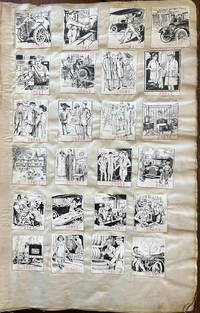
192061659New York: American Publishing & Engraving Co. J.J. Schultz & Co. 184 William St. Bookbinder ca. 1920-1939. Thick folio. 13 x 19 x 3.5 in. 135 leaves numbered reverse in pencil on versos of last half. on linen with 4274 camera-ready clipart samples all w/ inventory numbers rubber stamped below the image sized approx. 2 x 2 in. throughout arranged in montages of 24 28 32 & 40 per page each carefully mounted some crossed out w/ annotation “Killed†and others worn through at the lower right corner of some leaves while just a few have been removed and in once case clipped from the upper fore-edge of the leaf. Contemporary light gray/beige buckram soiled dampstained wear at fore-edges partially shaken rebacked still a VG- exemplar. An extraordinary printing & engraving firm’s factory sample catalogue for over 4000 of their camera-ready clipart advertisements for subscribing businesses following World War II through the Great Depression and the New Deal programs of President Roosevelt. This superlative archive of images traces Art Deco styles spanning nearly two decades advertising campaigns printing styles fonts and with almost not repeated images offered by American Publishing & Engraving Co. AP&E Co. to their extensive client list. In addition these engravings capture the revolutionary changes in American industry and commerce with nearly 50% devoted to the automobile industry including automobile manufacturers and dealerships accessory suppliers automobile repair public safety from bad driving the fast-growing electric motors and battery industries and more. Ford the Dodge Brothers Buick Studebaker Cadillac Plymouth Auburn Chrysler Essex Auburn-Cord DeSoto Hudson Terraplane and many others all are featured here advertising their service departments features speed and more. A significant portion also reveal the very real needs to wash the cars clean engines repaint the lacquer update the automobile tops replace batteries repair radiators and the always pressing need to maintain safety equipment and tires. Interspersed as well are automobile movers commercial body builders for trucks and commercial delivery vehicles with a significant percentage showing cylinder grinding engine rebuilding boiler repair and other very necessary secondary market needs as metal alloys and tolerances were far less durable with breakdowns an ever pressing problem for the motorist. Public safety notices reflecting the impact of the Progressive Era illustrate the dangers of the automobile with many indicating streetcars potentially hitting stalled cars which had not been repaired properly gridlock automobile accidents from ignoring traffic signals and police traffic officers as well as speeders hitting pedestrians or ignoring motorcycle police traps. Early in the sample illustrations are many reflecting the interest in building large Tudor Revival or Arts & Crafts homes installing electric lighting new furniture stylish clothes & shoes beautiful Oriental carpets and jewelry and watches for young flapper-era women. There are also promotional ads for Art & Stained Leaded Glass windows for homes interior decorators a panoply of beauty products many reflecting the Flapper Era hair and dress styles as well as evolution of the Art Deco lettering. As the AP&E Co. continued to add their sample engravings through the Great Depression not only is there a greater emphasis on repairing automobiles shoes recovering furniture and even repairing mattresses reflecting the belt tightening of the 1930’s but there are also increasing influences of more streamlined automobiles introduction of appliances such as refrigerators appearance of beer ads following the repeal of Prohibition and the fast growing radio industry. American Publishing & Engraving Co. based out of New York was one of a myriad of job printer engraving firms who emerged at the end of the 19th Century and initially specialized in publishing local histories and genealogies for historical societies by subscription typically with illustrations. Although this cataloguer could find no specific trade reference either in contemporary magazines or newspapers they appear to have operated out of the same locations as the Atlantic Publishing & Engraving Co. with some overlap and by the beginning of the 20th Century had largely dispensed with publishing local histories engraved portraits or vanity press projects. Contemporary court cases and other references indicate that they operated a subscription service for businesses advertising art to be run in magazines newspapers pulps or added to trade literature for matchbook covers business flyers etc. and by 1916-1925 were managed by Thomas W. Smith. No similar factory sample collection or published collection located in Worldcat. American Publishing & Engraving Co., J.J. Schultz & Co., 184 William St., Bookbinder, hardcover
192453007Rochester NY: Consolidated Machine Tool Corp. 1924-1953. Two vols. 4to. 147; 131 leaves all w/ 278 silver gelatin photos sized 8.5 x 11 in. all preserved in archival mylar sleeves and nearly all with typed captions dated and often pen & pencil annotations on versos most with hole punches at gutter blank margin from being bound originally in 3-ring factory binders. Uniformly bound in recent black cloth post-binders gilt lettering stamped on covers & spines NF set. This remarkable factory photo archive documents the durable and invaluable machine tools which built American industrial production through the 1920s and the post-World War II era. The Colburn drill presses turning lathes boring machines and boring mills were essential for such companies as Ford Motor Co. Maxwell Motorcar Co. John Deere Oakland Motor Car Co. Delco Light Co. International Harvester Nash Motors Co. Allis Chalmers Manufacturing Co. Caterpillar Tractor Co. Monarch Tractors Co. Hughes Tool Co. of Los Angeles part of Hughes Aviation Westinghouse and so many others. Many of the images show the connecting rods gears bearings engine blocks and other parts manufactured by these massive machines. A large number of the photos in the first volume show machines built and installed for the first National Machine Tool Builders’ Exposition which was held Sept. 19-23 1927 in the Cleveland Auditorium and attracted over 12000 attendees including Henry Ford the Dodge Brothers Durant George Westinghouse and many other automotive and industrial innovators and builders at the time. A number of these machines were also sold to Railroad companies including the Missouri Pacific the International & Great Northern Railway in Palastine TX the Chesapeake & Ohio Railway Co. in Huntington WV and more. The second volume includes Newton duplex milling machines cold saws and hot saws for metal especially aluminum and more. These photos show Newton machines being sold to Dodge Chrysler Buick General Motors Ford Bendix Wright Aeronautical Corp. ALCOA as well as photos showing engine blocks being milled and the internal works of many of the machines. Newton was originally founded in 1880 by Charles C. Newton who specialized as a twist drill manufacturer in Philadelphia and continued to expand operations until merged with Betts Machine Co. and Colburn Machine Tool Co. in 1922 to form the Consolidated Machine Tool Corp. of Rochester NY. Colburn Machine Tool Co. was founded sometime in 1890 by Henry J. Colburn and after his death in 1902 was run by his son Leslie who died in 1918. The Company which maintained a number of machinery patents for drill presses and table saws was merged later with Consolidated in 1922. Consolidated Machine Tool Corp. operated on Blossom Road in Rochester NY producing tools and machinery used in metal and plastics manufacturing. In 1951 they were acquired by the Farrel-Birmingham Co. operating until 1983 when they were sold to the Conlon Corp. See: Directory of American Toolmakers: Early American Industries Association 1999; Betts Machine Co. Manufacturers Index Vintage Machinery 2017; Colburn Machine Tool Co. Franklin PA Manufacturers Index Vintage Machinery 2017. Consolidated Machine Tool Corp., hardcover
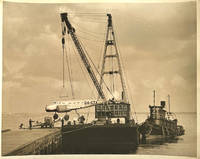
171961720Brooklyn NY: Brenack Inc. Moving & Shipping Co. Brenack Stevedoring Co. Inc. ca. 1917-1945. Two vols. 4to. 33; 70 leaves unnumbered. of archival mylar sleeves. Preserving 132 original photographs & negatives sized from 2.5 x 3.5 in. up to 8 x 10 in. many of them linen-backed including as well four 7.5 x 9.5 in. silver gelatin photos mounted on 8 x 10 in. studio boards all 4 w/ evidence of having been previously framed w/ old matting residue and mounting glue at fore-edges 2 original negatives; Vol. II’s majority of images are 8 x 10 in. several sized 4 x 6 in. and a few silver print negative prints with most of the images in both vols. bearing photographer’s imprint on verso w/in negative or embossed in lower fore-edge many w/ annotations several w/ typescript explanations occasional minor soiling edgewear some evidence that linen-backed were intended to be held in post-binder salesmen’s sample albums for the Brenack Co.; two TLS dated 1932 and second dated 1943 w/ several negative photo state silver prints to hand out to clients as endorsement letters during World War II. All now preserved in pair of cloth-bound 3-ring binders nearly all images with bright crisp contrast and excellent archive. This factory photo sales archive captures the innovations of Thomas P. Brenack 1882-1961 with his groundbreaking streamlined methods of employing vast warehouse spaces for disassembling packing and shipping of automobiles trucks aircraft and odd-sized industrial equipment overseas out of the Brooklyn NY docks during the opening decades of the 20th Century. Before FedEX UPS and other shipping companies became household names Brenack while working for B.J. Hall & Sons had concluded that the port of New York was so congested with freight awaiting shipment and every stevedoring enterprise overloaded with orders a new freight system was required. Subsequently beginning in 1916 he designed an entirely new system of specialist teams to quickly and efficiently disassemble and package difficult items as well as implementing better cranes upgrading flatbed trucks to carry the large shipping crates along with more systematic flow. Eventually the company developed logistics warehouses with capacity of 40000 tons of freight and entire lumber yards and companies fed the warehouses with supplies sufficient to disassemble and box up to 300 automobiles per day for shipment by sea along with other specialist items such as large amphibian clipper aircraft. Brenack Inc. employed several different commercial photographers including Rudy Arnold 1902-1966 Garcia & Zeuner Inc. Al Hoffmann Photo George W. King Commercial Photographers Union Photo Co. and even the photos of military freight shot by the U.S. Signal Corps. The first archive album opens with photos of a Mack Truck packed into a large crate being hauled by a 1924 Fordson Tractor followed by images of a open stave bed Mack Truck for the Orinoco Oil Company and image of a Mack Truck entirely disassembled and neatly in piles ready to be crated. Further images show Ford touring cars awaiting disassembly nested truck chassis being prepared for boxing along with images of a MACCAR dump truck and early Mack passenger buses. Many of the photos show the staged crates and frames to hold parts carefully boxed freight wooden boxes for M.S. Friede Co. and still more showing piles of boxed parts for shipment to the Soviet Union. Other images depict the vast warehouse floor filled with chain-driven conveyors and wooden crates unspecified drums being loaded into barges; aircraft parts from the Keystone Aviation Co.for the U.S. Navy being loaded into ships; followed by series of photos showing massive Sikorsky boxes 50 feet long being loaded from flatbeds. The second volume opens with images of the Brenack Inc. wooden boxes followed by series of photos capturing the company’s specialized service of shipping aircraft. Images encompass those of the Lockheed Electra fuselage with landing ear down onto the barge “Clermont;†Ford Tri-Motor parts loaded onto deck of a ship; stages of trucks being disassembled; vast piles of crates and boxes in warehouses along with a photo of the E.F. Ryman Lumber Co. yard and truck which was a supplier out of Wilkes-Barre PA. A 1932 letter to Brenack dated April 4 1932 outlines that “The equipment arrived there in very good shape with the exception of one job which had the case broken and showed signs of being roughly handled the lower crank case was cracked on this pumper. . . Everybody down there Bogota was pleased with these jobs.†The TLS is followed by series of photos showing the Mack Truck fire trucks operating and then crated for shipment to Colombia. Many other photos show the loading of several of Sikorsky S-43 “Baby Clippers†being disassembled and shipped which were used primarily for flights in the Caribbean to Cuba and within Latin America. Others depict the Naval versions of the Grumman G-21 Goose flying boars which were 8-seat commuter aircraft. Of particular interest are the several photos including silver prints of original negatives for the famed Martin M-156 “Russian Clipper†which had been rejected by Pan Am as they decided to use the Boeing 314 for the Clipper line in the Asia-San Francisco routes. The M-156 was packed up and shipped to the Soviet Union by Brenack where it flew with Aeroflot in the Soviet Union’s far-East routes under the designation of PS-30 flying until 1944. Also included is an original TLS from the Commanding officer of H.M.S. LST 428 of the British Royal Navy dated June 1st 1943 writing that “With reference to the cradles and securing of two tugs on the deck of this ship. You will be pleased to hear that your work stood the passage excellently and although at times we were rolling 35 degrees each side we hever had to touch any of your gear. . . .†Included in this archive are several photostat copies intended as promotional customer letters to hand out to Defense Dept. officials and other war materiel shippers during World War II. LST-428 was a tank landing ship transferred to the Royal Navy in Feb. 1943 after commissioning as part of Roosevel’s Lend-Lease program during the War and was returned to the US Navy June 10 1946 and decommissioned and scrapped by Oct. 1947. This cataloguer could find no similar archive of photos or even similar individual images in Institutional Collections; See: Germinal for Gravesend Bay The Success of a Brooklyn Boy Brooklyn Daily Eagle May 25 1919 p. 3; NY Marine News Service 1920. Brenack Inc., Moving & Shipping Co., Brenack Stevedoring Co., Inc., hardcover
0081089New York: Wooster Projects 2008. Hardcover. Fine/Slipcase. 2008. Portfolio of 4 cibachrome photographs of Edie Sedgwick by Nat Finkelstein. Each photo signed and numbered by Finkelstein on the blank side. This copy is 1 of 3 artists proofs from a total of only 31 sets produced. Photos in full color and mounted between dibond aluminum and UV acrylic. Each measures 9 x 14 inches. In original black clamshell case. All contents Fine and like new. Published a year before Finkelstein's death. Nat Finkelstein 1933-2009 was a well known photographer who studied under Alexey Brodovitch and was a regular habitue at Andy Warhol's Factory from 1964 to 1967 and in fact was employed by Warhol as the Factory photographer. It is his photographs that mainly illustrated 'Andy Warhol's Index Book' and many of his photographs uncredited were published in Up-Tight the Velvet Underground Story. A rare and beautiful collection. Digital images available upon request. Wooster Projects hardcover
170721533Utrecht, G. vande Water, 1707. 4°. Mit Holzschn.-Titelvignette u. 10 gefalt. Kupfertafeln. 6 Bll., 143 (1) S., 6 Bll. - Angeb. - Duverney, Guichard Joseph. Tractatus de organo auditus, continens structuram, usum et morbos omnium auris partium [...] e Gallico Latine versus. Nürnberg, J. M. Spörlin für J. Zieger, 1684. Mit 16 gefalt. Kupfertafeln. 6 Bll., 48 S., Blindgepr. Prgt. d. Zt. mit durchzogenen Bünden u. handschrift. Rückenschild.
19671458751967. Archive of eight vintage borderless photographs three typescript essays and a carbon typescript of the first essay and first page of the second by photographer Jerry Bauer circa 1967 with the photographs corresponding to the topics of the essays. <br/><br/>Bauer was an American photographer best known for his photographic portraits of writers with his portraits of Samuel Beckett being held in particularly high regard. Much of his work resides in the collection of the National Portrait Gallery in London.<br/><br/>The first essay "The American Underground: Mind Expansion A Messiah 'Love'" is an examination of Timothy Leary and the "League for Spiritual Discovery" LSD a communal organization carrying out studies in the religious use of psychedelic drugs as well as the effects of LSD. Two photographs are of the New York Millbrook estate mentioned in the essay one of the centers for the group one photograph of the estate itself and the other of two participants on the porch. Another photograph shows three young people lounging on a bed a young man with beads in his hand matching the description in the essay of a subject's focus on "a set of beads" and a description of the living quarters being ". . . simple: mattresses on the floor." <br/><br/>The second essay "American Underground : Mind Expansion The Poets 'Love' 2" is broken into three sections. The first is about the musical group The Fugs who Bauer describes as "the Beatles of the American underground." Two of the photographs in and around Washington Square Park feature members of The Fugs one of a gleaming Ed Sanders and Geoff Outlaw with two unidentified young women. In a second photograph the same group is on the grass along with Ken Weaver and a third unidentified young woman.<br/><br/>The second section of the essay is about "the two stars" of the underground film movement Andy Warhol stars Baby Jane Holzer and Edie Sedgewick with a corresponding photograph taken in Warhol's Factory showing Ingrid Superstar sitting on a mattress Baby Jane Holzer on the floor with her back to the camera along with several unidentified subjects. Holzer is identified from a published photograph by Bauer titled "Baby Jane Holzer" taken at the same time as the one in the archive.<br/><br/>The final section of the essay is a about American youth and drug culture in Greenwich Village as well as the neighborhood itself. Here the related photographs are of several young people seated on the grass one playing the guitar in Washington Square Park and one of several people standing around a Greenwich Village intersection.<br/><br/>The third essay "Andy Warhol: Film Director of America's Underground" is a study of Warhol's early experimental films. Beginning with a brief summation of Warhol's early career Bauer goes on to postulate about Warhol's films discussing the director's various regulars including Elekro Baby Jane Holzer Sally Kirkland Nico here spelled "Nicot" and others.<br/><br/>Photographs: Six photographs 10.75 x 8.25 inches two photographs 10.75 x 8 inches. Near Fine overall.<br/><br/>Ribbon typescript essays: 8.25 x 10.75 inches. Typescript on onionskin stock six leaves bound with a silver corner clip. Near Fine.<br/><br/>Carbon typescript essays: 8.25 x 10.75 inches. Carbon typescript on onionskin stock three leaves bound with a silver corner clip. Near Fine. unknown books
17933897Mit 18 Abb. auf 2 gefalt. gest. Tafeln. Halberstadt, in Kommission in der Buchhandlung der Grossschen Erben, 1793. 8vo. (17,1 x 10,5 cm). Titel, 92 S., 2 Bll. Zwischentitel u. Vorerinnerung, (S. 93)-166, 1 Bl. Inhalt. Einfacher Pappband d. Zt. mit Kiebitzpapierbezug. [3 Warenabbildungen]
19082201030038xbvkBlackburn, R. Denham & Co. / Southport, Shackerley Literary Agency; 1908. viii pages incl. foretitlepage, photographic frontispice-plate on glossy paper, titlepage, Dedication, 'Prelude', 'Contents' and prefaces to the first (''Feb. 16th, 1907.'') and this second edition (''Jan. 1st, 1908.''); 92 pages, except the photoplate printed on untrimmed handmade rag-paper throughout. - Publisher's illustrated cardboard-wrapper, titled in red and black, ornamentally framed; 8vo.(ca. 19,5 x 13,5 cm).
1876137821876 P., Imprimerie Seringe Frères, s.d. (1876), 1 vol. in-4° (347 x 270) sous cartonnage éditeur pleine percaline verte, encadrements à froid sur les plats, titre avec lettrines ornées dorées sur le plat supérieur, dos muet, de (2) ff. (titre illustré et titre), 53 planches dont 1 dépliante. Angle supérieur du plat supérieur très légèrement taché, petit manque au coin inf. de la planche XXX, excellent état par ailleurs
19083618Hauptversammlung des Vereins Deutscher Ingenieure. Bezirksverein Dresden. Dresden 1908. 25 Orig.-Photographien im Format ca. 22 x 28 cm. Aufnahme mit Apparaten u. Objektiven der Hüttig AG, Dresden. Kopiert auf "Schwerter-Platino-Mattpapier Chamois" der Vereinigten Fabriken photographischer Papier, Dresden. Jeweils einzeln montiert in Papierumschlag, innen mit Seidenhemdchen, außen mit Bezeichnung u. kurzer Beschreibung. Lose in Orig.-Leinwandmappe mit geprägtem Deckeltitel.
172893NAKAZAWA DYEING FACTORY. Ouchi. Emperor's Palace. 80 silk colour samples mounted on 5 cardboard sheets. 8vo 240 x 140 mm publisher's tied cloth. Kyoto: Nakazawa n.d. An elegant collection of colour samples. hardcover
1940233861940. Marathon Paper Mills and later American Can Company industrial safety archive documenting workplace medicine accident prevention campaigns first-aid training and factory safety administration in Menasha Wisconsin from the 1940s-60s. The album records how Midwestern paper and graphic arts manufacturers attempted to reduce industrial injuries during a period when paper mills and printing plants remained physically hazardous workplaces filled with heavy rollers cutting machinery chemical exposure steam systems and high-speed industrial presses. During the postwar decades American manufacturers increasingly institutionalized safety committees plant nursing departments and employee first-aid instruction in response to rising workers' compensation costs union pressure and national workplace safety campaigns promoted by organizations such as the National Safety Council. Marathon Paper Mills was acquired by American Can Company in 1957 placing the Menasha Graphic Arts plant within one of the nation's largest packaging and industrial printing corporations.<br /> <br /> Photo and scrapbook archive of over 100 pieces with approximately 75 black-and-white photographs including twelve 8 x 10 inch prints with typed programs corporate memoranda newspaper clippings conference photographs official correspondence and safety-related ephemera Menasha Wisconsin 1940-1969. Group portraits identify attendees at the Fox River Valley and Lakeshore Safety Conferences of 1940 1941 and 1942. Numerous mounted photographs depict factory nurses treating workers administering oxygen equipment conducting examinations teaching first-aid procedures inspecting washrooms and sanitary facilities and leading emergency-response instruction for plant employees. Workers stand beside industrial presses and mechanical equipment while captions stress housekeeping sanitation accident reporting and machine safety. Several pages preserve newspaper coverage celebrating "one million safe man hours" and "three consecutive years of safe working without a disabling injury" alongside a 1969 letter signed by Wisconsin Governor Warren P. Knowles congratulating the American Can Graphic Arts Plant on its safety record. A 1953 letter from the National Safety Council thanks Marathon Corporation for photographs displayed at the Industrial Nursing Section exhibit during the National Safety Congress in Chicago directly tying the album to nationally circulated industrial safety programming.<br /> <br /> The album preserves a narrower glimpse into ground level industrial plants with the emergence of workplace medicine and safety management as formal corporate systems. The main photographs focus on the Marathon First Aid Department where nurses supervisors and workers collaborated in organized training programs intended to reduce accidents and standardize emergency response inside hazardous production environments. Captions repeatedly emphasize sanitation inspections accident prevention emergency transport and employee instruction demonstrating how industrial safety became both a managerial program and a public relations tool during the postwar era. Photographs mounted with corner tabs throughout; scrapbook pages retain mounted newspaper clippings letters and typed documentation; light toning occasional adhesive discoloration and minor edge wear present. Overall in very good condition. unknown
19692091502135202851Kyo bunsha 1969. Soft Cover. Fine. Size: 37cm Number of books: 1 Kyo bunsha paperback
2018237872018 1 Encre de Chine et aquarelle à deux mains et co-signée en bas à droite, 2018, 38 x 26 cm.
1981149836Manchester: Factory Records 1981. Vintage promotional sticker announcing upcoming releases from Factory Records from July through December 1981. Included are the release dates Factory Records number artist and title information and format. Featuring the rarely seen FCL Factory Records Division designation and logo. <br/><br/>The period covered by the sticker includes releases by Joy Division the double album of studio and unreleased material "Still" and the video album "Here are the Young Men" New Order's debut album "Movement" and second single "Procession / Everything's Gone Green" and the 12" single "Waterline / Funaezekea" and a video called "Untitled" by A Certain Ratio. <br/><br/>4.5 x 5.5 inches. Unpeeled with backing intact. About Near Fine with a diagonal crease to the top edge and light rubbing to the edges. Factory Records unknown books
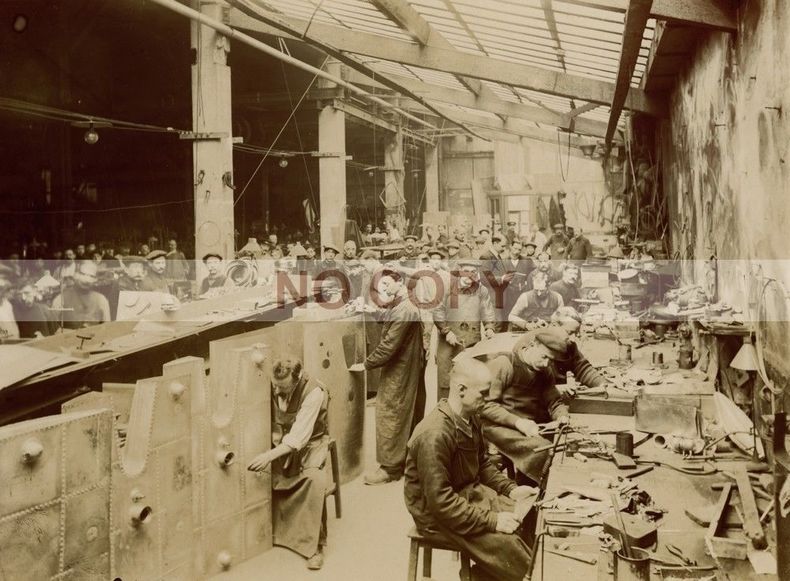
1920AMO-2999Très belle et très rare photographie originale ancienne (vers 1920) de l'intérieur de l'atelier Louis Blériot à Paris, rue Henri Chevreau. Photo par Yvon à St-Mandé (cachet au verso) Dimensions du tirage : 23 x 17 cm Très bon état, bon contraste, sépia. Grand format. Voir photo. Filigrane NO COPY évidemment absent de la photographie originale vendue dans cette annonce. thème : avion aviation aéronautique industrie usine ouvriers atelier
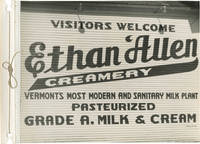
1930149350N.p.: N.p. 1930. Archive of six double weight borderless photographs of the Ethan Allen Creamery in Essex Junction VT circa 1930s. The photographs contain images of both the creamery buildings and interior of the facilities including the vats used to pasteurize milk at what the creamery's sign claims is "Vermont's most modern and sanitary milk plant."<br/><br/>Photographs roughly 9.75 x 7.75 inches. Fine. Tipped onto linen on the left edge and bound with a string. Housed in a contemporary card folder with a vintage photography studio label to the rear pastedown. N.p. unknown books
197645761Stuttgart Germany: Porsche KG 1976. Original Porsche red vinyl 4 ring binders with printed title label in spine compartment. General wear & soiling. Some foxing to paper. Some leaves detached some dividers chipped. Overall Very Good. 4 volumes. Divers paginations. Plastic tabbed section dividers. Illustrated with photographic images drawings schematics graphs etc. 12-1/8" x 10" <br/><br/>Covers Assembly Groups: 1 2 3 4 5 6 7 8 9 0. Essential reference for 1970s Porsche 911 enthusiasts. Porsche KG unknown books
21504Paris, Imprimerie de Crapelet, 1807. 4 vol. in-8, LXXIX-302 pp. 10 pl. + VIII-544 pp. 1 pl. + VIII-534 pp. 1 pl. + VIII-554 pp., basane mouchetée havane, dos long orné de frises et fleurons dorés, pièce de titre rouge, pièce de tomaison verte, tranches jaunes mouchetées de rouge (petites épidermures, quelques petites rousseurs éparses).
Abundant black and white illustrations and reproductions of photos. Features: Barton's Grizzly - Well-known Western hunter and guide J. Barton sets out to single-handedly capture a live California grizzly bear (includes cover illustration); In Search of Adventure - Part IV - the story of a chequered cruise; Kidnapped - A Tale of the Burmese Border in which Sir Robert Carson retrieves his kidnapped daughter; An Interrupted Holiday - John Hawkins was tramping through Idaho in 1886; Down the Amazon From Source to Mouth - Part II - J. Campbell Besley and his party continue their journey from the source of the Amazon to the Atlantic, fighting for their lives along the way; Three Years off the Beaten Track - H.E. Weller spent three years in Northern Canada running a small steamer for the Hudson's Bay Company among fur traders and Indians - article with many interesting photos; A Prize-Fight in Mexico - amusing story of what happened when a Spaniard fought an American; Life Among the Eskimos - Clint Wiseman describes a visit he paid to these hardy little hunters of north, complete with photos; The Story of the Missing Fingers - the awful experience of Melvin Parker who fell overboard and clung to a bell-buoy for many hours in the depth of winter; Fallen Among the Theives - exciting adventures of two novice rubber-collectors in Central America, by Rowland W. Cater; Hotel-Keeping in the Wilds - two ex-members of the Cape Mounted Rifles and their hotel-keeping adventures out on the veldt; and more. pp. 9 [ads], 94, 10-32 [ads]. Clean and unmarked with moderate wear. A sound vintage copy. Book
1940233241940. Dictaphone Corporation factory photographs documenting women and men manufacturing dictating machines in Bridgeport Connecticut circa 1940s showcasing the postwar expansion of women's employment inside a growing communications technology industry. The group centers on Dictaphone's Bridgeport plant at 335 Howard Avenue where workers appear at long rows of benches with recording and transcription equipment tool drawers lamps wiring and partly assembled machines placing this archive within the larger World War II and postwar reorganization of American factory labor. Several photographs give women a central place within that system not as incidental figures but as seated operators bench workers and posed employees inside the production rooms themselves grounding the archive in the history of women's industrial employment as office technology manufacturing expanded beyond clerical use into large scale commercial production.<br /> <br /> Archive of 21 pieces including 20 black and white and one red photographs ranging from 2" x 2" to 5" x 7" and original envelope. Bridgeport Connecticut circa 1940s. One original company envelope is printed "DICTAPHONE CORPORATION / 335 HOWARD AVENUE / BRIDGEPORT CONN." fixing the factory location. Interior views show crowded production rooms under fluorescent strip lighting with dozens of workers seated at benches operating or assembling dictating machines and related components; in the largest image male workers fill a deep factory floor while several men in the foreground lean into handsets or testing devices at stations packed with equipment. One view shows a male worker alone at a bench in a long machine lined room with belts tools and suspended mechanisms overhead; several smaller prints show women seated at desks or worktables women and men posed together on the shop floor and mixed groups of workers assembled outdoors or around demonstration tables with supervisors and visiting men in suits. The images repeatedly emphasize rows of benches machine bodies cords lamps and standardized work positions while the envelope and repeated factory interiors tie the lot to Dictaphone's manufacturing operation rather than to sales or office promotion alone.<br /> <br /> During World War II and the immediate postwar years firms producing office equipment occupied an important place in the broader American communications and business machine economy supplying devices that organized dictation transcription record keeping and administrative workflow for corporations law offices and government users. This archive makes that industrial system visible at the level of labor showing how the growth of business technology relied on factory discipline gendered employment patterns and the integration of women into production space during a period when wartime labor demand altered who worked at the bench and who appeared in the industrial workforce. Light edge wear envelope toned. Overall very good condition. A concentrated visual record of 1940s office machine manufacturing placing women's industrial labor inside the production history of one of the leading American dictation companies. unknown
1930149350N.p.: N.p. 1930. Archive of six double weight borderless photographs of the Ethan Allen Creamery in Essex Junction VT circa 1930s. The photographs contain images of both the creamery buildings and interior of the facilities including the vats used to pasteurize milk at what the creamery's sign claims is "Vermont's most modern and sanitary milk plant."<br /> <br /> Photographs roughly 9.75 x 7.75 inches. Fine. Tipped onto linen on the left edge and bound with a string. Housed in a contemporary card folder with a vintage photography studio label to the rear pastedown. N.p. unknown
19692081402109803362Koyu-sha 1969. Soft Cover. Fine. Volume: 1 Koyu-sha paperback
186429021415Anthony Coventry RI 1864-1894. General wear and toning. The smaller of the two notebooks has semi detached covers. . A set of two notebooks containing nearly thirty years of the meeting minutes of the annual July 4 gathering of the Coventry Factory Fire Engine Company. These minutes includes a list of members and officers voted in each year as well all the outcome of any topic put to vote. The meetings take place in Anthony RI which is a small village within Coventry RI. The smaller copybook is completely full and contains minutes from their annual meetings dating from 1864 to 1881. The second and larger notebook begins where the first notebook left off in 1882 and continues until 1890 when at the annual meeting there was no quorum present and as such "the charter of the company was declared forfeited sic and the company disbanded." In August of 1893 the company was reorganized under the old charter. Four more meetings follow in 1893 with the last meeting recorded stating that the fire company met to compete at the Kent Co. Fair and won the third prize of ten dollars. Included with this set are several receipts and notes of the fire company. There are eight 8 receipts dating between 1893-1894 two of them are undated. One scrap piece of paper which served as a draft for a portion of one of the annual meeting minutes. A roll call list of members from the 1893 annual meeting. A list of dues paid by each individual member. And lastly a note dated September 15 1893 which certifies that the fire company won the third prize in the Hand Engine Contest Open at the Kent Co. Fair. Below is an excerpt from one of the entries: "The squirt gun was tested and proved very satisfactory. It was voted that Lt Capt Byron Matteson be a committed to inspect the Hay Cart and any other machine he may see fit and report as soon as posable. There being more business the meeting adjourned to the call of the Captain." - August 3 1893 Meeting These journals most likely belonged to Arthur J. Matteson 1859-1925 who was the Secretary of the Company from 1888-1893. Matteson lived in Coventry RI and worked as a machinist. Small Notebook: Brown illustrated wrappers depicting several scenes of children on a farm. The back cover has a multiplication table and a decorative border. String binding. Completely full. Measures 8" x 6 1/2" Large Notebook: Black decorative paper over boards. Red fore edge. One fourth filled. Measures 8 1/2" x 6 3/4" <br/><br/> hardcover books