1 674 résultats
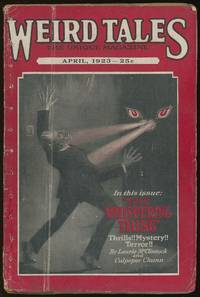
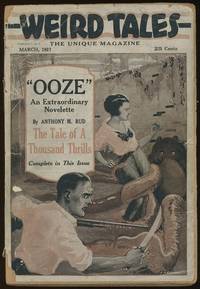
192332048Chicago: Rural Publishing Corporation 1923. Text paper tanned but supple light edge wear creasing closed tear to right front edge paper loss at spine ends not affecting title lettering or date cover appears to have been separated and re-glued small loss at upper and lower left corners a good copy. 32048. Octavo single issue pictorial wrappers. Pulp Magazine. The first issue of this important 20th century magazine. Includes stories by Anthony M. Rud Otis Adelbert Kline R.T.M. Scott Joel Townsley Rogers Howard Ward and many others. Reference: Tymm and Ashley Science Fiction Fantasy and Weird Fiction Magazines pp. 727-736. Rural Publishing Corporation unknown
192332049Indianapolis IN: Rural Publishing Corporation 1923. Text paper mildy tanned vertical crease to front cover series of small holes along left edge-likely from being bound at some point a little paper loss to spine ends some rubs to spine edge a good to very good copy. 32049. Octavo single issue pictorial wrappers. Pulp Magazine. The second issue of this important 20th century magazine. Includes stories by Howard Ward Anthony M. Rud Otis Adelbert Kline Francis Grierson Ted Olson and many others. Reference: Tymm and Ashley Science Fiction Fantasy and Weird Fiction Magazines pp. 727-736. Rural Publishing Corporation unknown
189724<i>This book is over 122 years old. <br />"The Raven"</i> in particular—Poe investigates the loss of ideal beauty and the difficulty in regaining it. These pieces are usually narrated by a young man who laments the untimely death of his beloved. <i>"To Helen"</i> is a three stanza lyric that has been called one of the most beautiful love poems in the English language. The subject of the work is a woman who becomes in the eyes of the narrator a personification of the classical beauty of ancient Greece and Rome. <i>"Lenore"</i> presents ways in which the dead are best remembered either by mourning or celebrating life beyond earthly boundaries. In <i>"The Raven"</i> Poe successfully unites his philosophical and aesthetic ideals. In this psychological piece a young scholar is emotionally tormented by a raven's ominous repetition of "Nevermore" in answer to his question about the probability of an afterlife with his deceased lover. Charles Baudelaire noted in his introduction to the French edition of <i>"The Raven"</i>: "It is indeed the poem of the sleeplessness of despair; it lacks nothing: neither the fever of ideas nor the violence of colors nor sickly reasoning nor drivelling terror nor even the bizarre gaiety of suffering which makes it more terrible." Poe also wrote poems that were intended to be read aloud. Experimenting with combinations of sound and rhythm he employed such technical devices as repetition parallelism internal rhyme alliteration and assonance to produce works that are unique in American poetry for their haunting musical quality. In <i>"The Bells"</i> for example the repetition of the word "bells" in various structures accentuates the unique tonality of the different types of bells described in the poem.Poe's stature as a major figure in world literature is primarily based on his ingenious and profound short stories poems and critical theories which established a highly influential rationale for the short form in both poetry and fiction. Regarded in literary histories and handbooks as the architect of the modern short story Poe was also the principal forerunner of the "art for art's sake" movement in nineteenth-century European literature. Whereas earlier critics predominantly concerned themselves with moral or ideological generalities Poe focused his criticism on the specifics of style and construction that contributed to a work's effectiveness or failure. In his own work he demonstrated a brilliant command of language and technique as well as an inspired and original imagination. Poe's poetry and short stories greatly influenced the French Symbolists of the late nineteenth century who in turn altered the direction of modern literature. It is this philosophical and artistic transaction that accounts for much of Poe's importance in literary history.<br /><br />This book contains the first collection of Poems Poems and Tales. See Pictures Houghton Mifflin Company hardcover
192731906Camden NJ: Personal Arts Company Publishers 1927-1928. Issues slightly trimmed for binding otherwise quite fine with little tanning to text paper mostly cream colored. At the base of the spine is stamped "Dunninger Collection." A lovely presentation. 31906. Octavo five issues pictorial wrappers bound in blue boards with gold stamping to spine. A bound volume of all five issues that were noted magician Joseph Dunningers copy with his signed name and also inscribed and signed by editor/author Walter Gibson to Joe Dunninger. Gibson wrote several books about magic for Dunninger they were lifelong friends. This is likely a presentation volume to Dunninger. Tales of Magic and Mystery was a short lived magazine which published stories and articles about magic and the occult as well as some short fiction. The March 1928 issue published the H. P. Lovecraft short story "Cool Air." Other authors of fiction include Frank Owen Miriam Allen de Ford Archie Binns Robert Leslie Bellem and others. Gibson wrote most non-fiction material under his own name and also using the pseudonyms Alfred Maurice and Bernard Perry. Personal Arts Company, Publishers unknown
BASILE Giovan Battista. Il Pentamerone overo Lo Cunto de li Cunte trattenimento de li Peccerille. In Napoli, ad istanza di Antonio Bulifon libraro all'Insegna della Sirena, 1674. In 16mo; pp.12n.nn., 633, 3n.nn. Pergamena coeva, titolo calligrafato al dorso. Ex libris. Rara e celebre raccolta di fiabe in dialetto napoletano, la più antica opera di racconti fiabeschi e tradizioni popolari della storia europea. In questa edizione compare per la prima volta il titolo "Pentamerone". Lo Cunto de li Cunte ebbe grande influenza in tutta Europa su scrittori come C. Brentano, i fratelli Grimm, Perrault, Carlo Gozzi, Wieland. Dall'introduzione di Benedetto Croce all'edizione del 1891: "Il Cunto de li Cunti è un libro di fiabe. E le fiabe, non occorre quasi il dirlo, sono racconti popolari tradizionali di avventure, alle quali pigliano parte esseri umani, ed esseri sovraumani od estraumani della mitologia popolare, come fate, orchi, animali parlanti, ecc. Questo complesso di racconti tradizionali, la cui origine è incerta e discussa e risale senza dubbio a una remota antichità, viene ora considerato dalla moderna filologia come un gruppo di documenti importanti per la storia del genere umano e per la psicologia popolare. Ma, per molti secoli, essi non furono se non un oggetto di diletto e di trattenimento pel popolo ingenuo e pei fanciulli, che avidamente li ascoltavano: lo scienziato disdegnava d'appressarvisi, e solo, di rado, vi si appressò l'artista. E uno dei primi artisti, anzi il primo, che vi si appressasse, fu appunto il nostro Giambattista Basile... Nel 1674 l'editore Antonio Bulifon, un francese stabilito a Napoli, «vedendo, com’egli stesso dice, che veniva sommamente desiderato questo, altrettanto arguto quanto giocoso, Pentamerone del vivace e bizzarro ingegno del Cavalier Giovan Battista Basile», fece sì che, «ridotto alla vera lettione, per mezzo delle stampe ei rinascesse». Chi lo ridusse alla «vera lettione» fu un abate pugliese, Pompeo Sarnelli, poi vescovo di Bisceglie, appassionato cultore del dialetto napoletano, che allora serviva, a quanto sembra, da correttore nella stamperia del Bulifon. Il Cunto de li Cunti fu, in quest'edizione, intitolato, per la prima volta, sul frontespizio: Il Pentamerone: titolo più breve, che ricorda illustri precedenti, e che perciò prevalse. Ed, anche sul frontespizio, è detto «co tutte le zeremonie corrietto»; e, certo, il Sarnelli vi spese intorno molte cure". Le cinquanta fiabe delle cinque giornate sono tutte collegate tra loro, e racchiuse in una cornice generale, che ravvicina questo libro di fiabe ai più classici libri italiani di novelle, ai Decameron, alle Cene, ai Diporti, alle Piacevoli Notti, ecc. Pironti, Editori francesi in Napoli, pag.87.
Two Volumes. pp. xiv, [2], 268, [2], 8; [2], viii, [2], 306, [4], [9]-16 + Plus a remarkable group of elegant engravings, including: Two frontispieces by Fiquet, after Rigault and Vispre; over fifty vignettes and culs-de-lamp by Choffard; and 80 full-page plates after Eisen by - Aliamet, Baquoy, Choffard, Delafosse, de Longueil, Flipart, Le Mire, Lempereur. Leveau, Ourvrier, et. al. One plate is apparently from a different copy. Some slight age foxing. ALSO: Two plates that are often censored - Cas de Conscience & Diable de Papefiguiere - do not seem to appear at all in my examples. 12mo (in 8s). 185 mm. Attractive contemporary French red morocco gilt bindings, with only very slight defects. First Edition. Provenance: The set belonged to Edwin Wolf II (1911 1991) - famous as the Librarian of the Library Company of Philadelphia, and as a collector, and an employee of the renowned Rosenbach Co. from 1930 to 1952. The Family Album purchased a large part of his collection of early books in 1992. About this work : The world famous tales and fables of Jean de La Fontaine (1621-1695), neatly printed in verse, are joined by a 'Dissertation sur la Joconde' by Nicolas Boileau Despreaux (1636-1711); and the best work of the great illustrators & engravers Charles Eisen (1720-1778) and Pierre-Philippe Choffard (1730-1809). Justly considered one of the greatest examples of French rococo illustration. The Fermiers Generaux, an entrepreneurial financial association responsible for gathering and banking certain kinds of taxes, commissioned this edition of La Fontaine's zesty tales. Determined that the book should be the best of its kind, they allowed their agent, the Chevalier d'Agincourt, unlimited resources. It is still provocative to consider that patronage of the arts by this new plutocracy produced the greatest monument and triumph of this renowned age of illustration. See: Cohen-de Ricci 558-571; Ray. 'Art of the French Illustrated Book' p. 54-56; Holloway. 'French Rococo Book Illustration' pp. 21-24; & Etc. THE IMMORTAL FERMIERS GENERAL EDITION OF THE TALES OF LA FONTAINE. **PRICE JUST REDUCED! SAFE ADD 1
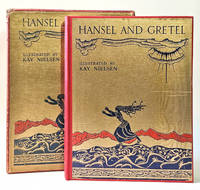
1925010664<p>New York: George H Doran 1925 310 pgs. Red cloth with pictorial pastedown in metallic gold black & red a few spots to edge of text block else a fine copy housed in the original pictorial box which is worn and soiled with a couple of breaks but complete. A gorgeous copy of Kay Nielsen's magnificent illustrated edition of Grimm's fairy tales featuring 12 tipped-in color plates and 10 full page b&w plates and decorative initials. This was the last of Nielsen's lavish gift books and no British trade edition was issued. . First Trade Edition. Pictorial Cover. Near Fine/No Jacket. Illus. by Kay Nielsen. Large Thick 4to.</p> George H Doran hardcover
In-8°, (2), 172 i.e.173cc, buone condizioni tranne le prime carte restaurate all’angolo superiore con parziale mancanza di testo, legatura in pergamena. Passano I, 164 “collezione curiosa di novelle, moltissime delle quali assai licenziose. Il Libri, che così lo qualifica (Catal. del 1859, n.464), aggiunge che è libro estremamente raro”. Brunet I, 193. Conforme a Edit 16 id.CNCE 7834 Il volume contiene anche L’isola di Narsida (1572) vero e proprio romanzo utopistico, antesignano dei primi romanzi di fantascienza. In-8 °, (2), 172 i.e.173cc, good condition although the first leaves have been restored at the upper corner (the text is partially missing), vellum binding. Passano I,164 “curious collection of short stories, many of which are very licentious. Libri, which qualifies it this way (Catal. of 1859, n.464), adds that it is an extremely rare book ". Brunet I, 193. In accordance with Edit 16 id. CNCE 7834 The volume also contains The Island of Narsida (1572) a true utopian novel, a forerunner of the first science fiction novels.
Small 4to (218 x 155 mm), [xxiv], 518, [1, blank]pp., from the Beckford library, initials 'F.H.G.' stamped in ink to front endpaper, with a pencil note signed by the same relating to the engravings within, engraved printer's device on title page of a cat with a rat in its mouth, copiously illustrated with half-page woodcut vignettes at chapter headings, woodcut initials, woodcut head and tail-pieces, bound in full nineteenth-century Russia leather, covers tooled in gilt and blind as is the spine, green binder's ticket of C. Kaltthoeber to front endpaper, joints a little rubbed, all edges gilt, a very nice copy. First edition of a collection of tales of virtues and vices exemplified by miscellaneous historical figures. Provenance: Hamilton Palace Libraries, Sotheby, Wilkinson & Hodge, 29th November 1883, lot 717, sold to Rev. F. Gall for ?1 10s; the library of Lord Gretton, Stapleford Park, Leicestershire.
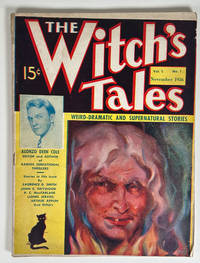
193632955New York: The Carwood Publishing Co. 1936. Some darkening to text paper slight edge wear a nearly fine set. 32955. Large octavo two issues illustrated by Elmer Stoner pictorial wrappers side stapled. Pulp magazine. All published. Inspired by a radio program started in May 1931 with the same title. Several original stories were adapted from the radio program. Many of the stories were reprints from much earlier magazine publications. Reference: Parnell and Ashley Monthly Terrors pp. 296. Tymn and Ashley eds Science Fiction Fantasy and Weird Fiction Magazines pp. 742-3. The Carwood Publishing Co. unknown
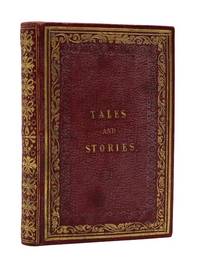
AQ32533s.i.: s.n. s.d. 8pp. With numerous woodcut illustrations in the text. Bound with: Drop-head title: The waggon load of gold. Part II. s.i. s.n. s.d. 8pp. With numerous woodcut illustrations in the text. And: Drop-head title: The house that jack built. s.i. s.n. s.d. 8pp. With numerous woodcut illustrations in the text. And: Drop-head tile: Jack jingle. s.i. s.n. s.d. 8pp. With numerous woodcut illustrations in the text. And: Drop-head tile: The child's new year's gift. s.i. s.n. s.d. 8pp. With numerous woodcut illustrations in the text. And: Drop-head tile: Little red riding hood. s.i. s.n. s.d. 8pp. With numerous woodcut illustrations in the text. And: Drop-head tile: Nursery rhymes. s.i. s.n. s.d. 8pp. With numerous woodcut illustrations in the text. And: Drop-head tile: The history of the children in the wood. s.i. s.n. s.d. 8pp. With numerous woodcut illustrations in the text. And: Drop-head tile: History of jumping joan. s.i. s.n. s.d. 8pp. With numerous woodcut illustrations in the text. And: Drop-head tile: Death & burial of cock robin. s.i. s.n. s.d. 7pp 1. With numerous woodcut illustrations in the text. And: Drop-head tile: Tom tucker. s.i. s.n. s.d. 8pp. With numerous woodcut illustrations in the text. And: Drop-head tile: Cinderella s.i. s.n. s.d. 8pp. With numerous woodcut illustrations in the text. And: Drop-head tile: The history of simple simon. s.i. s.n. s.d. 8pp. With numerous woodcut illustrations in the text. And: Drop-head tile: The history of Mother Goose. s.i. s.n. s.d. 8pp. With numerous woodcut illustrations in the text. And: Drop-head tile: London cries. s.i. s.n. s.d. 8pp. With numerous woodcut illustrations in the text. And: Drop-head tile: The history of old Mother Hubbard. s.i. s.n. s.d. 8pp. With numerous woodcut illustrations in the text. 16mo. Contemporary red morocco richly tooled in gilt and blind lettered in gilt 'Tales and stories' to upper board A.E.G. A trifle rubbed and marked. Internally clean and crisp. An attractively bound sammelband of sixteen diminutive chapbooks intended for a juvenile readership. The titles within all illustrated with crude yet charming wood-engravings include staples of the Victorian street literature market; compendious retellings of perennially popular nursery rhymes such as Cinderella Little Red Riding Hood and the Children in the Wood. An exception is a remarkably rare version of a recherché didactic verse curiosity The Waggon Load of Gold. Issued in two seemingly separately published parts; the work is comprised of a total of sixteen unassociated stanzas calculated to amuse the young reader and each - unusually for chapbook fare of the era - accompanied by illustrations which actually relate to the text; for example the opening couplets of the second part a celebration of the library is partnered with a depiction of a bookcase: 'The chief prize of the whole Here you now may behold 'Tis a library of choice books From the Waggon Load of Gold.' OCLC records a single copy of The Waggon Load of Gold. Part II. at Richmond Public Library Virginia Part I. is apparently unrecorded. The copy retains the original publisher's wrappers bearing the imprint 'London: Printed and published at 60 St. Martin's Lane' with the date recorded as '1820'. This would suggest that the other titles contained within this sammelband - all printed on similar paper stock and some reusing woodcut ornaments - where issued contemporaneously from the same location. . [s.n.], [s.d.] unknown
192419001TYPED LETTER SIGNED dated March 28th 1924 on RURAL PUBLISHING CORP. stationery to author and famous member of the Lovecraftian Circle Frank Belknap Long about 375 words stating that Long's story THE DESERT LICH has unfortuantely been delayed as it was decided that one man namely Edust-wrapper in Baird could not possibly have the time to be editor for WEIRD TALES DETECTIVE TALES and their new venture GHOST STORIES and thus he "will assume the editorial helm of WEIRD TALES & GHOST STORIES" that he has "read several thousand manuscripts when he was a reader for Baird and that he knows the thrill that comes of discovering a distinctively written story" that he "wishes to use DESERT LICH Long's accepted tale in the combination summer issue for June July & August which we are making triple size and putting out to clear the deck for the issuance of GHOST STORIES" "that their rates are not yet as high he would like them to be and that by summer he hopes we can pay on a pay on acceptance basis" and that "Our rates at present are one cent a word". He finishes with these plaudits for Lovecraft: "Please thank Mr. Lovecraft for me for turning THE DESET LlICH our way. And I want to thank you also for telling me of other Lovecraft stories that I have not yet seen. I would as soon think of changing a line or a word or a title of Mr. Lovecrat's work as I would rewriting an Edgar Allen Poe story. He is to my way of thinking the supreme master of weird tales whose mastery is not accidental but the result of careful and directed thought. So far I have seen Mr. Lovecraft's works only in print for I have not had the thrill of reading them in manuscript. I have not even read HYPNOS but I am looking forward to reading the page proofs of the May Weird Tales which contains the story. But those that I have read in the magazine-----THE HOUND THE RATS IN THE WALL DAGON----are marvels of writercraft." Letters from Wright the acknowledged foremost editor of Weird Tales are notoriously scarce and I know of none earlier. They rarely surface on the market place. Indeed letters with a full strong signature of Wright are rarer still as he was virtually unable to sign anything due to Parkinsons disease by 1930. So here's your chance to snatch a piece of history from one major player in the Golden Age of Science Fiction and Weird Tales specifically to another. The earliest letter I have seen by Farnsworth Wright. N.p. unknown
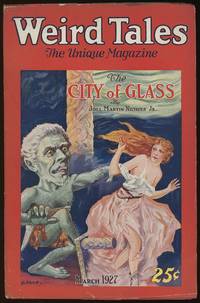
192732053Indianapolis IN: Popular Fiction Publishing Company 1927. Mild tanning to text paper crease to lower edge slight edge wear and some edge trims a fine copy. 32053. Octavo single issue cover art by C. C. Senf. pictorial wrappers. Pulp Magazine. Includes stories by Seabury Quinn H. P. Lovecraft "The White Ship" Edmond Hamilton Eli Colter and others. Reference: Tymm and Ashley Science Fiction Fantasy and Weird Fiction Magazines pp. 727-736. Popular Fiction Publishing Company unknown
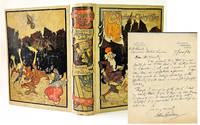
1904010920<p>Boston: Old Corner Book Store 1904 464 pgs. Beige cloth pictorially stamped in color on all panels mild surface rubbing light shelf wear overall a lovely clean copy. Originally published in this format in 1900 but this edition replaces the pictorial endpapers with plain all else is identical. Illustrated with a color frontis & title page the balance in b&w as full- and partial-page plus chapter heads and decorations. All iterations of Rackham's Grimm fairy tales are elusive. This one is made even more special by an autograph letter signed by Rackham addressed to Canadian author Howard Angus Kennedy declining an invite to a party held by the Candian Author's Association. Reprint. Pictorial Cloth. Very Good Plus/No Jacket. Illus. by Arthur Rackham. Thick 8vo.</p> Old Corner Book Store hardcover
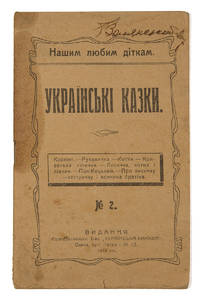
120902Odesa 'Ukrains'ka knyzhka' 1919. . First edition 16mo 17.7 x 11 cm; contemporary ink ownership inscription to p.3; original printed wrappers ink inscriptions to upper and lower wrappers stain to spine and guttersmore so to preliminary leaves a good copy.<br /> A scarce collection of seven Ukrainian folk tales published in independent Ukraine.<br /><br />The publisher 'Ukrains'ka Knyzhka' was based in Lviv and was active during 1917-1922. Founded by Antin Krushel'nyts'kyi 1878 - 1937 editor publisher teacher short-term minister of education and as many Ukrainian officials executed by Bolsheviks. They produced books in a number of cities printing literature and textbooks in Ukrainian for primary schools and children. There was a huge demand for learning material in Ukrainian after decades of prohibition and the number of books published in the native language far outweighed those in Russian in 1918. Not found in WorldCat.<br /> Odesa, 'Ukrains'ka knyzhka', 1919. unknown
18992221708<p>ORIGINAL 14 PARTS</p><p>First edition in the original 14 parts. 11" x 8 1/2" circa 400 b/w illustrations by Lemercier and Helen Stratton who gets sole credit on the title page. Original stitched green pictorial wrappers. Part 14 with half title title page contents and list of illustrations 320 pages. No dust jacket. Very good minor rubbing; signs of handling and some light foxing. Scarce.</p><p>Printed by Butler & Tanner The Selwood Printing Works.</p><p>Some illustrations in first two parts are signed "Lemercier" in the plate.</p> George Newnes paperback
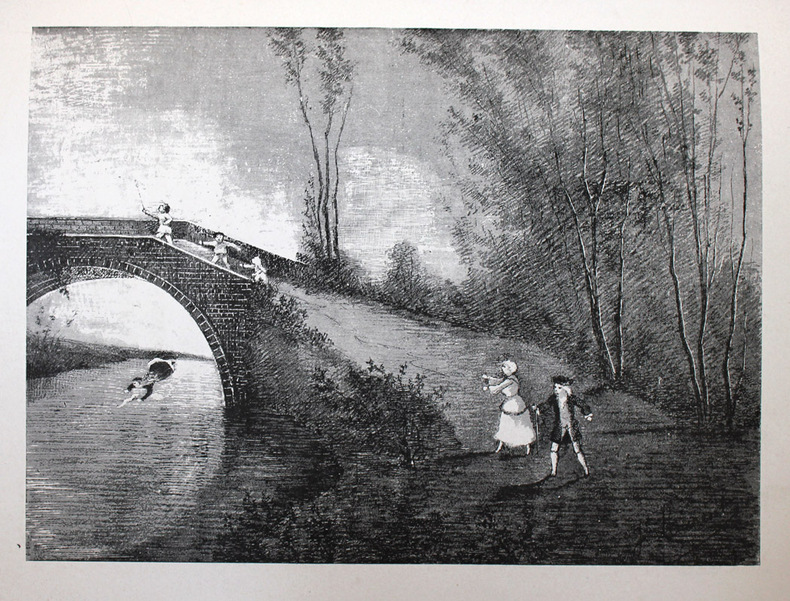
188124481881 Paris, G. Charpentier, 1881. 28,5 x 21 cm (R), in-4, 90 pp. - 2 ff. n. ch. (annonce et imprimeur) - 11 planches hors texte en noir sous serpentes légendées dont l'une en frontispice, cartonnage de l'éditeur, premier plat orné d'une large composition à froid et dorée, dernier plat reprenant la même composition, cette fois-ci entièrement en noir, dos orné portant le titre en long, tranches dorées.
One volume (of two). pp. xiv, [2], 268, [2], 8 [Directions to the Binder often lacking] + Plus a remarkable group of (40) elegant engravings, including two duplicates and a portrait frontis. Lacks the plate at p. 87. Many fine vignettes. Most of the plates are after Charles-Dominique-Joseph Eisen (1720-1778). 12mo (in 8s). 185 mm. Some age stain, but generally clean. All edges gilt. Attractive contemporary French dark green morocco bindings, with only slight defects. Hardbound. Very Good. First Edition. The world famous tales and fables of Jean de La Fontaine (1621-1695), neatly printed in verse, are joined by the best work of the great illustrators & engravers Charles Eisen (1720-1778) and Pierre-Philippe Choffard (1730-1809). Justly considered one of the greatest examples of French rococo illustration. The Fermiers Generaux, an entrepreneurial financial association responsible for gathering and banking certain kinds of taxes, commissioned this edition of La Fontaine's zesty tales. Determined that the book should be the best of its kind, they allowed their agent, the Chevalier d'Agincourt, unlimited resources. It is still provocative to consider that patronage of the arts by this new plutocracy produced the greatest monument and triumph of this renowned age of illustration. See: Cohen-de Ricci 558-571; Ray. 'Art of the French Illustrated Book' p. 54-56; Holloway. 'French Rococo Book Illustration' pp. 21-24; & Etc. By offering this one volume we give you an addordable opportunity to acquire part of THE IMMORTAL FERMIERS GENERAL EDITION OF THE . TALES OF LA FONTAINE. Please check our other entries for the full set of this great work in fine condition. CHEST 2/1
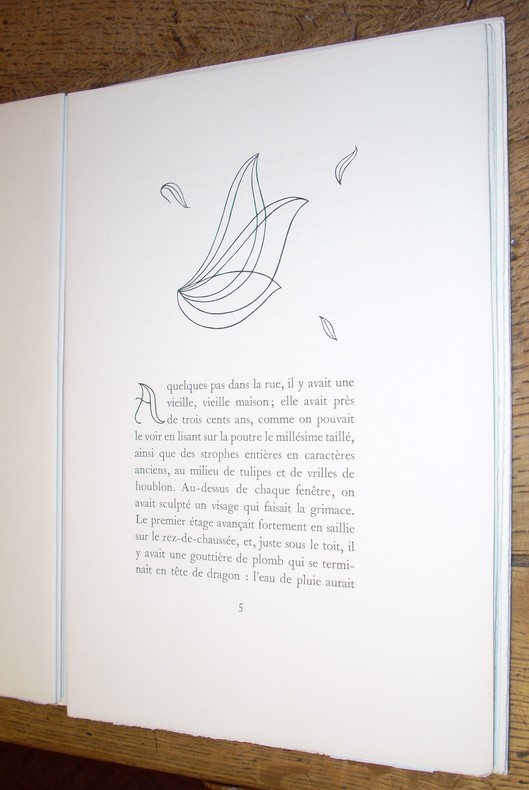
1952002334Paris Gérard Le Gris 1952
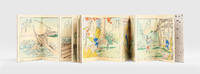
190861Tokyo: late-19th century. A colourful Meiji-period edition depicting a traditional fairy tale of a villainous tanuki racoon dog being defeated by a heroic rabbit. The story originated in the 16th century and remains popular to this day. It became especially widespread in the late 19th century as a moral tale targeted at young children. Kachi-kachi yama opens with an old man capturing a tanuki a well-known trickster. The animal is released by the old man's wife but then goes on to kill her. In revenge a friendly rabbit plays three increasingly violent pranks on the tanuki including setting fire to a bundle of sticks it was carrying while climbing a mountain. The story ends with the rabbit returning to the old man who is grateful for the help. Duodecimo concertina-style 118 x 89 mm. With 12 colour woodblock prints; text in classical Japanese. Original light brown cloth boards manuscript paper label on front board black speckled front panels. Housed in modern blue cloth folding case. Remains of old shelf label on rear board. Contents bright: a fine copy. hardcover
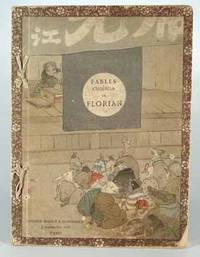
1895830091895. EHON - FAIRY TALES BARBATOU P. FABLES CHOISES DE FLORIAN. The first volume only. Paris: Librairie Marpon & Flammarion; Tokyo: Shueisha Meiji 28 1895. Fukuro toji cord-bound in printed paper covers. This first volume is 26.6 X 19.8 cm with 14 full page color woodcuts by Kano Tomonobu and Kajita Hanko. #167 of 200 from a deluxe edition on Japanese hosho paper. Covers soiled and a bit edgeworn one cvorner chipped. The contents are very good and the impressions and colors are quite lovely. This work despite its French text may be seen as squarely in the tradition of the Japanese ehon and it shares many characteristics of the revival of picture book printing in mid to late Meiji demonstrated by other works: an emerging Nihonga style skilled printed increasingly restrained coloration etc. In that context the large scale of its illustrations renders it particularly interesting. The first volume only of two. unknown
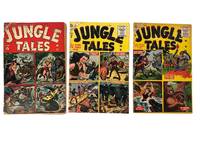
1954232401954. African American Comics The first Black hero in Marvel Comics publishing history in Jungle Tales nos. 1 5 and 7. These issues date from a 1954-1955 run in which Atlas Comics the label that developed into Marvel Comics featuring one of the earliest Black lead features in American mainstream comics Waku: Prince of the Bantu. Marvel has identified Waku as the first regular Black lead character in its publishing history and these issues give the character cover billing and stories including "Fire Spirit" "Blood Brother to the Lions!" and "Trial by Fire!" alongside recurring Jann of the Jungle features such as "Rampage!" "Jungle Fangs!" and "Swamp Fever!". Jungle Tales ran for seven issues from September 1954 to September 1955 with numbering then continuing as Jann of the Jungle no. 8. <br /> Jungle Tales. New York: Classic Syndicate Inc. for Atlas Comics 1954-1955. Group of 3 issues: vol. 1 no. 1 September 1954; vol. 1 no. 5 May 1955; vol. 1 no. 7 September 1955. Each issue retains its original pictorial wrappers with full-color covers and newsprint interiors; contents across the group include Waku Prince of the Bantu Jann of the Jungle Cliff Mason White Hunter and The Unknown Jungle.<br /> 1 Jungle Tales. Vol. 1 no. 1. New York: Classic Syndicate Inc. September 1954. First issue of the series with a red cover introducing the title and cover panels for Cliff Mason Jann of the Jungle Waku Prince of the Bantu and The Unknown Jungle. The Waku feature is titled "Fire Spirit." His story opens with the death of Chief Kaba whose final command binds his son to the jungle's fire spirit and forces Waku into exile rather than immediate succession. Waku kills the wild bull marauding the village learns that the hunter Mabu has profited by sending white hunters after elephant herds and returns when Kaba's spirit releases him from his vow ending with Waku restored as leader of the Bantu beside Lalei.<br /> 2 Jungle Tales. Vol. 1 no. 5. New York: Classic Syndicate Inc. May 1955. Yellow cover with five-panel layout and the Comics Code Authority seal naming Jann of the Jungle Cliff Mason White Hunter Waku Prince of the Bantu and The Unknown Jungle. The Waku feature "Blood Brother to the Lions!" begins with h is defeat of Naru for leadership but the dispute continues when Kom drives Waku into the jungle and Lalei follows him into danger. Waku enters a lion enclosure to save Naru fights through fire gorilla attack and jungle beasts and returns on the backs of lions prompting Naru to yield leadership and call him "blood brother to all things of the jungle."<br /> <br /> 3 Jungle Tales. Vol. 1 no. 7. New York: Classic Syndicate Inc. September 1955. Final issue of the title before continuation as Jann of the Jungle no. 8 with a yellow cover again foregrounding the anthology's principal features. The Waku story "Trial by Fire!" centers on Kojii's challenge to his rule: Kojii seizes Lalei demands that Waku surrender the Bantu throne and draws him into the mountain sanctuary of the monkey people. Waku escapes captivity survives the monkey assault defeats Kojii in the trial by fire and the story closes with Lalei and the great bird carrying the Bantu out of the flames while Kojii acknowledges that Waku remains the true ruler.<br /> These issues preserve a short-lived title in which a Black hero regarded by some as a direct predecessor to the later Marvel superhero Black Panther carried a recurring feature and cover representation in a mainstream American comic. Front and back wrappers on vol. 1 no. 1 fully detached; some light toning and edge wear consistent with age and handling across the group otherwise good. Overall fair to good condition. A three-issue group of Jungle Tales featuring the earliest appearance of Waku Prince of the Bantu the first Black hero in Marvel's publishing history. unknown
1811001511Paris Imprimerie de F. Didot 1811
2 vols., 8vo., First Edition thus, with very numerous illustrations, initials, and head- and tail-pieces by Gill in the text; full niger morocco, sides and backstrip blocked and lettered in gilt, gilt edges, silk marker, Commentary Volume bound in boards with buckram back, the two fine volumes housed in publisher's cloth solander case lettered in gilt. EDITION LIMITED TO 1980 COPIES. A magnificent facsimile of the Golden Cockerel masterpeice, widely regarded as the finest private press production of the period.
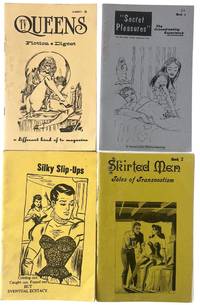
1982235301982. Four Transvestite Fiction Booklets containing reflections on gender trans identity self expression from 1982-1994 including story titles such as "Sissy in Satin" "Living Doll" "Jim into Jamie" "Trapped in Panties" and "My Husband Married Me To be a Woman." A first-person passage states that a transvestite needs "feedback from others" to understand "gait" "voice" and "other mannerisms" while "perfecting a gender role" placing social performance and self-assessment inside the language of everyday presentation. The group emerged during a period when queer and trans communities faced AIDS-era stigma homophobic public discourse and the lingering legal and social memory of anti-crossdressing enforcement in American cities. By 1980 defendants had challenged cross-dressing arrests in at least sixteen cities while the domestic HIV/AIDS epidemic began in 1981 and intensified public hostility toward already stigmatized queer communities. These booklets preserve small-press fiction created for readers seeking transvestite crossdressing and transfeminine narratives outside mainstream publishing with fantasy plots gender transformation motifs and direct language about feminine identity appearing within the same print culture.<br /> <br /> Crossdressing and Transvestite Fiction Booklets. Seattle and s.l.: Empathy Press and unidentified publishers 1982 to 1994 and undated. Four staple-bound booklets each approximately 50 pages including two Empathy Press titles and two related transvestite or crossdressing fiction titles.<br /> 1 Slavik Charles. Skirted Men: Tales of Transvestism. Book 2. Seattle: Empathy Press 1982. The contents page lists "Sissy in Satin" beginning on page 4 with copyright credited to Charles Slavik and the publisher given as Empathy Press P.O. Box 12466 Seattle Washington 98111. Princeton cataloging identifies Charles Slavik as creator of another Empathy Press Skirted Men issue confirming the publisher's place within late twentieth-century LGBTQIA periodical and ephemera collecting.<br /> 2 TV Queens Fiction Digest. Number 23. Seattle: Empathy Press 1990. The contents page lists "Living Doll" "Jim into Jamie" and "Trapped in Panties" and the imprint invites readers to send material if they "enjoy writing and would like to see your fantasies in print." That solicitation places the digest within a participatory reader-writer circuit where fantasy manuscripts could move from private desire into small-run printed circulation.<br /> 3 Secret Pleasures: The Crossdressing Experience. Book 16. Seattle: Empathy Press 1994. The contents page gives the story title "My Husband Married Me To be a Woman" and the front cover identifies the work as "A Transvestite Fiction Fantasy." Gerber/Hart's transgender periodicals exhibit describes Cathy Charles Slavik's Empathy Press enterprise as evolving by the early 1970s into several concurrent trans-oriented magazines giving this later booklet a connection to a publisher with a longer transvestite and trans readership history.<br /> 4 Silky Slip-Ups. S.l.: s.n. undated. The cover caption reads "Coming out. Caught out. Found out. BUT EVENTUAL ECSTACY" using discovery exposure and eventual pleasure as the narrative promise. The cover art and title align the booklet with forced-feminization and crossdressing fiction conventions described in trans small-press fiction where many plots turn on coerced dressing transformation or power exchange.<br /> <br /> The booklets use the historical vocabulary of "transvestism" "crossdressing" "feminine identity" and "gender role" before "transgender" became the dominant umbrella term in many public and archival contexts. Their contents connect erotic fantasy to questions of passing social recognition voice gait coming out exposure and reader participation making the group especially useful for tracing how trans and crossdressing readers articulated identity through small-format fiction during the 1980s and 1990s. All four booklets are in very good condition with intact spines minor price-sticker residue light discoloration and handling wear to the covers. The group preserves an early small-press record of transvestite and crossdressing fiction made around the desires anxieties vocabulary and self-fashioning practices of its own readership. unknown