4 270 résultats
395 pages including notes, references and index. Indicates the motivation and significance of the changes in physical geometry brought about by Einstein in both the first and second phases of Relativity. Also offers a historical and critical exposition of hte elements of the Special and General Theory of Relativity, with emphasis throughout on geometrical ideas and concepts. "A remarkable combination of first-rate historical scholarship and advanced mathematical acumen... an essential addition to my personal library." - Roger B. Angel, Concordia University. Clean, bright and unmarked with very light wear. Excellent copy. Book
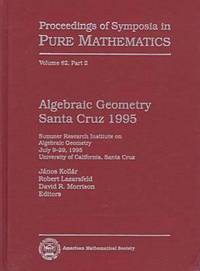
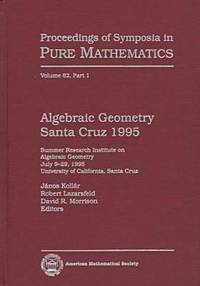
1997__082180894XAmer Mathematical Society 1997. Hardcover. New. 447 pages. 10.50x7.50x1.00 inches. Amer Mathematical Society hardcover
1998__0821808958Amer Mathematical Society 1998. Hardcover. New. 2 pages. 10.50x7.25x1.25 inches. Amer Mathematical Society hardcover
Fine Arabic Original decorative full red leather bound. Gilt traditional style on boards. Large demy 8vo. (22 x 15 cm). Bilingual preface in German and Turkish. [12], [2], p., [49] p. facsimile in Arabic., ills. Das Achte Buch zu den Conica des Apollonios von Perge. Rekonstruiert von Ibn al-Haysam. Herausgegeben und eingeleitet von Nazim Terzioglu. Ibn al-Haytham (Alhazen) was born c. 965 to an Arab family in Basra, Iraq, which was at the time part of the Buyid emirate. He held a position with the title vizier in his native Basra, and made a name for himself for his knowledge of applied mathematics. As he claimed to be able to regulate the flooding of the Nile, he was invited to by Fatimid Caliph al-Hakim in order to realise a hydraulic project at Aswan. However, Ibn al-Haytham was forced to concede the impracticability of his project. Upon his return to Cairo, he was given an administrative post. After he proved unable to fulfill this task as well, he contracted the ire of the caliph Al-Hakim bi-Amr Allah, and is said to have been forced into hiding until the caliph's death in 1021, after which his confiscated possessions were returned to him. Legend has it that Alhazen feigned madness and was kept under house arrest during this period. During this time, he wrote his influential Book of Optics. Alhazen continued to live in Cairo, in the neighborhood of the famous University of al-Azhar, and lived from the proceeds of his literary production until his death in c. 1040. Among his students were Sorkhab (Sohrab), a Persian from Semnan, and Abu al-Wafa Mubashir ibn Fatek, an Egyptian prince. Signed and inscribed by Nazim Terzioglu, (1912-1976), was one of the first mathematicians in Turkish academia. One of the contributions of Terzioglu as the director of the Mathematics Research Institute to Turkey's mathematical culture and the history of science was the systematic scan of the Islamic literature relevant to mathematics and the presentation of the information related to conic sections in ancient mathematics to the scientific community. As a result of these efforts, the facsimile of two ancient texts of mathematics originally written in Arabic were realized. The first one is the preface of Mecmuatu'r-risail, the Arabic translation by Beni Musa b. Sakir (died in 873) of Conica, which is the work of Apollonius of Perga (BC 262-190) on the conic sections. This preface, published with the title Das Vorwort des Astronomen Bani Musa b. Sakir, describes how the Apollonius' Conica was acquired by the Islamic world. After that, Terzioglu published the facsimile of the copy of the lost 8th book of Apollonius' Conica which was rewritten by Ibnu'l-Heysem (965-1039) with the help from other sources. In the introduction part of this book with the title Das Achte Buch zu den Conica des Apollonios von Perge, the following information is provided in summary: In ancient mathematics, the interest for conics starts with Menaechmus (BC IV. Century) and reaches the summit with Apollonius of Perga. Apollonius wrote his famous work Conica by processing previous information and adding up his own inventions. The first 7 volumes of this work consisting of 8 volumes in total are known whereas the 8th volume is missing. The Islamic and Western mathematicians working in this field took place in the reconstruction of the 8th volume. The most successful one of these works is that of Edmund Halley's (1656-1742) Apollonii Per-gaei conicorum (Oxoniae, 1710). The 8th book of Conica reconstructed by Ibn el-Heysem is the 4th manuscript with the name Makalatu'l-Hasan b.el-Hasan b.el Heysem fi el-kitabu'l-mahrutat in the Mecmu'atu'r-risail, which is recorded under no. 1796 in Manisa Library. The fact that Ibn el-Heysem completed this work nearly 700 years before Halley is interesting.
Very Good English Original types document with autograph scripts. 4to. (30 x 21 cm). In English. 1 p. A typed document for the registration to the Congress of Sociology at Istanbul in 1952. Dated 31. IX. 1952. His autograph notes are his name and surname, his address, date, title of communication (his proceeding's title) and signature. His proceeding entitled 'Osmanlica'nin inkisafinda içtimâî faktörler' [i.e. Social factors in the development of Ottoman Turkish]. German Turkologist; educated in Switzerland; member of the Kommunistische Partei Deutschlands (KPD); traveled widely in Turkey together with the Austrian Turkologist and fellow party member Andreas Tietze; settled in Turkey in 1939; after the Second World War director of the German cultural institute, later Goethe Institute (1961-68), in Istanbul and lastly of the Goethe Institute in Amsterdam. Anhegger was born in Vienna in 1911, the son of a German trader. After World War I (much of which he spent in Switzerland), Anhegger moved with his parents to Rotterdam. In 1923 the family moved to Zürich. In Zürich, Anhegger started to read Law, History and Literature at the university, before moving to Vienna in 1932. There he continued his studies, this time reading Economic History, Slavonic studies and Islamic studies. He also started to learn Turkish. It was during his studies in Vienna that he befriended Andreas Tietze. They not only shared scholarly interests, but also a passion for left-wing politics. Anhegger made his first trip to Turkey in 1935. In 1939 he received his Ph.D. degree at the University of Zürich and in 1940 he moved (and as it turned out emigrated) to Istanbul. He had several motives for doing so: quite apart from his scholarly interest in Turkey, his background in the Communist movement and the fact that he shared his life with a Jewish woman, made him feel unsafe so close to Germany. In Istanbul he worked at the German Archeological Institute until he was dismissed in 1942 for refusing to join up when called to serve in the German army. After his dismissal he worked as a teacher of German language and literature in a number of places, notably Istanbul University. As a German with intimate knowledge of Turkey, who was untainted by any Nazi connections, Anhegger from the early fifties onwards became the lynchpin of German cultural activities in Istanbul, culminating in his directorship of the Goethe Institute after 1961. In 1958 Anhegger married the Turkish architect Muallâ Eyüboglu, the sister of the painter Bedri Rahmi. His connections with modern Turkish painters led him to found the first private art gallery in Istanbul in 1957. Robert and Muallâ Anhegger now live partly in Istanbul, partly in Amsterdam.
1854113618München: F. Straub / Schurich / Bauer. 1854. 22cm. Zustand: Gut gering gebräunt (Innen); Einband (Außen) hat im Durchschnitt geringe bis leichte Gebrauchsspuren, Ausnahme 2 oder 3 Ausgaben, sind schlechter erhalten; Einzelhefte können wir folgt geleifert werden: 1881, 1878, 1884, 1891, 1894, 1885, 1883, 1901 und 1900; Broschiert
16°, pp. 8, 99, 1, e 17 tavole incise e ripiegate al fondo; cartoncino coevo colorato a motivi geometrici, lievemente allentata la legatura, peraltro ottima copia fresca e genuina con barbe. Edizione originale di questo fortunato manuale
1870W89980Paris, Armand Colin 1870 Atlas (seul) de 41 grandes planches (dont des planches double-page et dont une dépliante) avec de nombreuses figures, 4e édition, 42cm., br.orig. (dos renforcé), planches frais et sans rousseurs, bon état, W89980
Atlas (seul) de 41 grandes planches (dont des planches double-page et dont une dépliante) avec de nombreuses figures, 4e édition, 42cm., br.orig. (dos renforcé), planches frais et sans rousseurs, bon état, W89980
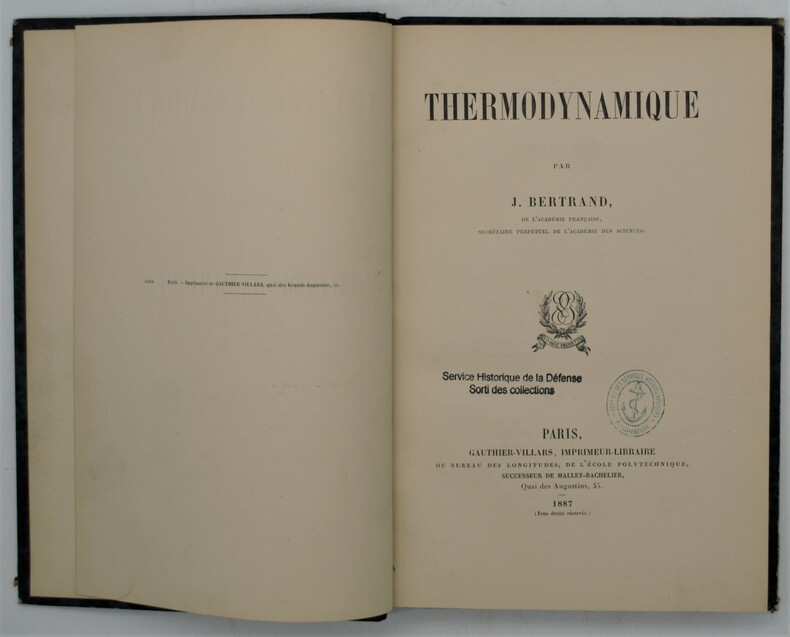
1887PHO-9171887, Paris, Gauthier-Villars , in-8 ,XVIII-294 pp demi-cuir époque, dos lisse avec auteur , titre et date, cachet , inscription sur le plat , bon exemplaire
3306Grand in 8 plein cuir fauve raciné à nerfs,pièce de titre manquante et tomaison illisible,fers dorés,Titre,VI,570 pages,tranches rouges,nombreuses figures en 25 planches dépliantes.Durand libraire 1750 un ex-libris à la plume,1 tampon de bibliothèque,charnières renforcées et réparation triangulaire en tête,pages de garde remontées,petite trace de brûlure circulaire,en marge inférieure de la page 465,en croissant,pour atteindre un maximum d’environ 8mm,puis en décroissant.Un cahier légèrement déboité,ensemble de nouveau très maniable et solide
in-8, pp. VIII, 200, IX, leg. cart. rust. coevo. Fregio xilogr. al front. Testat. e iniziali in legno. Con 9 tavv. in rame più volte ripp. al fine di disegni e grafici geometrici. Non comune seconda ediz., accresciuta rispetto alla prima del 1755, opera del religioso e docente di geometria all'Università di Pisa (Gattinara 1711 - Pisa 1789). Riccardi, I, 213-214. Mancanza al front. Alcune antiche annotazioni mss sulla prima e ultima cb. Ottimo esempl. su carta forte. [137]
176449291764 Paris, H. L. Guerin & L. F. Delatour, éditeurs, 1764. 8vo 277 pp
In-8° (200x131mm), pp. (8), 351, (1), cartonatura coeva alla rustica. 6 tavv. ripiegate in fine con 97 figure al loro interno. Minimali forellini di tarlo al margine superiore dell'ultima tavola e alla sguardia posteriore. Ottimo esemplare. Edizione veneziana della traduzione latina delle "Leçons élémentaires de Mathematiques ou élémens d'Algebre et de Géométrie", fortunato trattato del La Caille, esemplato sulla quinta edizione parigina. Nicolas Louis La Caille (Rumigny-en-Thiérache, Ardennes, 1713-Parigi, 1762) fu celebre matematico ed astronomo. Nel Capo di Buona Speranza estese all'emisfero australe le determinazioni di posizioni stellari già iniziate a Parigi, redigendo così un catalogo di 398 stelle edito nel 1833 dal Baily e la grande collezione del "Coelum Australe Stelliferum". Professore di matematica al Collège Mazarin di Parigi appena venticinquenne, membro dell'Académie des Sciences dal 1741, le sue osservazioni, così come quelle compiute da La Lande nell'osservatorio di Berlino, permisero di determinare più esattamente la distanza dalla Terra alla Luna. Sul La Caille, Dictionary of Scientific Biography, VII, pp. 542-545. De Backer-Sommervogel, I, 1840. Latino
Opera completa in 3 pari in volume unico, 8°, mz. pelle coeva, tit. in oro al dorso, pp. CXCVI - (4) - 664 - (2) + 10 tavv. inc. in rame rip. f.t. Lievi fioriture, buon es. Giovanni Alessandro Maiocchi (Codogno 1795 – 1854) fu noto fisico, inventore del galvanometro universale. Rara edizione originale.
6017in 8 broché,faux-titre,titre,179 pages,non coupé,Paris Gauthier Villars et fils libraires imprimeurs 1892 très pâle mouillures sur le premier plat de couverture,sans gravité,édition originale.
In 4, pp. XXXI + (1) + 154 + (1) + (1b) con una bella tav. inc. all'acq. all'antip., 1 tav. f.t. con figure geometriche e un facsmile n.t. di lettera di Cavalieri a Federigo Borromeo. Intonso. D. parzialmente rifatto. Br. ed. con cornicetta tip. ai p. Elogio di Bovanentura Cavalieri (1598-1647), allievo di Galileo, docente a Bologna. Cavalieri sviluppo' le idee di Galileo e studio' i problemi relativi al calcolo infinitesimale. Nel volume sono raccolte alcune postille matematiche fra le quali: Sulla misura degli angoli solidi; Dimostrazione analitica del teorema di Cavalieri relativo alla spirale confrontata colla parabola, Ultimo pensiero di Cavalieri intorno allo specchio ustorio, etc...
187425944Jena: Costenoble 1874. XIII, (1), 184 S. Halbleinenbd. 22x15 cm. [2 Warenabbildungen]
240 pages. Many line drawings and excellent vintage black and white photos. "Above-average wear and soiling. Moisture induced rippling to all contents. Front free endpaper and half-title page missing. Prior owner's inkstamps to title page. A worthy copy of this classic text. Book
184889930Paris, Librairie de Firmin-didot Frères 1848 In-8. Reliure de l’époque pleine basane havane marbrée, dos à nerfs ornés de roulettes et de petits fers dorés, III-271 pp., figures dans le texte, 13 planches repliées in fine. épidermures sur le deuxième plat, sinon bon exemplaire.
082180894X.Ghardcover. Good. Access codes and supplements are not guaranteed with used items. May be an ex-library book. hardcover
0821808958.Ghardcover. Good. Access codes and supplements are not guaranteed with used items. May be an ex-library book. hardcover
PARIS, BACHELIER, 1831. In 8°, pp. XX + 640 n. + XV tavole f.t. piu volte ripiegate. Arrossature per il tipo di carta, ma ottimo nel complesso. Bella legatura d'amatore dell'epoca in piena pelle bruna, duplice filettatura in oro ai piatti; dorso riccamente ornato ai piccoli ferri
1838100826BBStuttgart, Balz, 1838. Gr.-8°. XXII, 304 S. u. 60 Kupfertafeln. Hldr. d. Zt. mit goldgepr. Rückenschild u. dezenter Rückenverg.
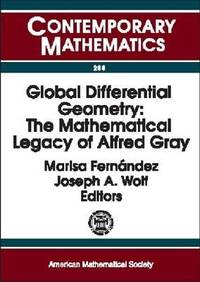
0821827502.Gmass_market. Good. Access codes and supplements are not guaranteed with used items. May be an ex-library book. unknown