417 résultats
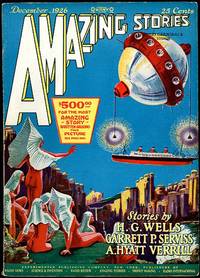
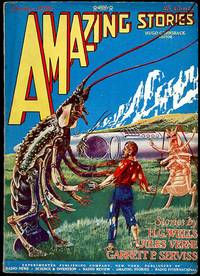
192630570New York: Experimenter Publishing Company 1926. Text paper browned but fairly supple some loss to minor loss to lower corner tips latter part of book mild edge rubs a bright nearly fine copy. 30570. Large octavo single issue cover by Frank R. Paul pictorial wrappers. Pulp magazine bedsheet format. Fiction by H. G. Wells Jules Verne Garrett P. Serviss A. Hyatt Verrill and Alexander Snyder. Reference: Tymm and Ashley Science Fiction Fantasy and Weird Fiction Magazines pp. 14-49. Experimenter Publishing Company unknown
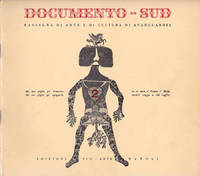
19591476<p><strong>Numero 2</strong><br />Oblong quarto unpaginated 32 pages illustrated throughout. Stiff illustrated wrappers. Front cover illustration by Guido Biasi.<br />- First edition. Texts by: Persico Baj Lebel Andriani Crispolti Barletta Castellano Jaguer and Biasi illustrations by: Luca Galdo Palumbo Trubbiani Pollock Alfano Baj Brauner R. d'Haese Lebel Reuterswärd Dubuffet Verga Gruppo '58 Barisani C. del Pozzo Massey Fergola Biasi L. Del Pezzo Viscardi Freda di Bello Persico Jaguer and Colucci. Front cover by Guido Biasi with a rearranged excerpt from the Neapolitan song Lily Kangy by Capurro and Gambardella – "chi me piglia pe' francese/ chi mi piglia pe' spagnola/ io so nata o' Conte e' Mola/ mett'a' coppa a chi vogl'io" "Some take me for French / some take me for Spanish / I was born in Conte e' Mola / I'll put on top whoever I want"</p><p><strong>Numero 6</strong><br />Oblong quarto unpaginated 32 pages illustrated throughout. Stiff illustrated wrappers. Front cover illustration after drawing by Gustave Moreau.<br />- First edition. Texts by D'Angelo's: Un centenario dell'Indipendenza; Delire des ombres; Delire des ombres; Toniato Andriani von Holten Martini Benayoun Jaguer Persico Thiercelin; Biasi: Apologia dell'interrogazione; Llinas Leonard Castellano Havrenne Petersen and Walter Fedler: Realismo socialista nella Repubblica Democratica Tedesca. Illustrations by Mesens Fergola Andriani Boucher Max Ernst Lucio Del Pezzo; Persico Toyen Petersen Baj Vielfaure Lacomblez Picabia Biasi Pabi Castellano Fahlström Sant'elia Russo Dova and di Bello.<br />The central double page is dedicated to Franz Picabia featuring a reproduction of one of his works and nine quotations from other authors who wrote about him Apollinaire Breton Estienne Fricker De Massot Olga Picabia Seuphor Tapié.</p><p>'The merit of Documento Sud and its creators undoubtedly lies in their contribution to the development of Italian visual poetry their attempt to build a new interplay between image and word a connection between drawing and writing poetry and collage always guided by an unconventional use of forms and freedom in the figurative repertoire "disobeying any logical criterion" to use the words of Mario Persico." Marina Borrelli</p> Edizioni Sud Arte
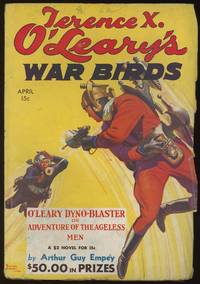
193532688New York: Dell Publishing Co. Inc. 1935. Tanning to text paper cover with mild wear to yapp edges with several closed tears penciled notation to upper front cover small damp stain to upper rear cover a nearly fine copy. 32688. Octavo single issue cover by Rudolph Belarski pictorial wrappers. Pulp magazine. Second of three SF themed issues written by Arthur Guy Empey. Reference: Tymn and Ashley eds Science Fiction Fantasy and Weird Fiction Magazines pp. 659-60. Dell Publishing Co., Inc. unknown
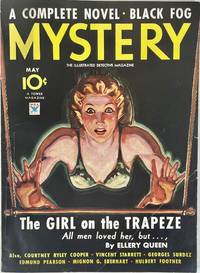
193428769Chicago IL: Tower Magazines Inc. 1934. Crease to lower right cover several tiny edge tears small tear at upper left front corner at spine a very good to nearly fine copy. 28769. Large octavo single issue pictorial wrappers. Fiction by Ellery Queen Vincent Starrett Mignon G. Eberhart Hulbert Footner and others. A large format densely illustrated bedsheet-sized pulp. "The fiction emphasized the woman's point of view was often narrated by a woman and featured as many feminine as masculine detectives. In the rear of the magazine flowered all the usual departments of a more conventional woman's publication . That this magazine would publish much fiction of interest seems improbable. But without effort it contrived to be superb. ILLUSTRATED DETECTIVE selected outstanding writers who had made their mark in the 1920s and mingled these with rising writers of the 1930s. Over the years the magazine would publish work by top names in the mystery field including Ellery Queen Stuart Palmer Sax Rohmer Arnold Kummer Hulbert Footner Vincent Starrett and H. Bedford-Jones. The fiction was polished often strongly compressed and good enough for a large amount of it to appear later between book covers. The magazine appeared monthly for almost six years sixty-nine issues at ten cents a copy. After three years the title was changed to THE MYSTERY MAGAZINE . Covers were tasteful bright and uneventful relying heavily on the faces of self-confident women. Inside was an astonishing amount of material: eight to ten pieces of fiction four or more crime-fact articles and up to ten continuing departments about half of these slanted directly toward women. When the magazine was at its peak in the early 1930s it offered material carefully calculated to appeal to most tastes and both sexes . MYSTERY was as meticulously planned as an orchestral score. Its careful variations played upon every shade of reader interest. It was consciously polished self-consciously feminine. A curious pared sound rang in its fiction as if the stories had been edited with a chain saw but the prose flashed with a bright nickel glitter. Slick the magazine may have been and often over illustrated but it was also considerably interesting and for years excellent." - Cook Mystery Detective and Espionage Magazines pp. 287-90. Tower Magazines, Inc. unknown
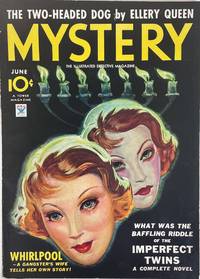
193428770Chicago IL: Tower Magazines Inc. 1934. Edge rubs to spine mild wear at the head of the spine panel a nearly fine copy. 28770. Large octavo single issue pictorial wrappers. Fiction by Ellery Queen Francis Beeding Stuart Palmer and others. A large format densely illustrated bedsheet-sized pulp. "The fiction emphasized the woman's point of view was often narrated by a woman and featured as many feminine as masculine detectives. In the rear of the magazine flowered all the usual departments of a more conventional woman's publication . That this magazine would publish much fiction of interest seems improbable. But without effort it contrived to be superb. ILLUSTRATED DETECTIVE selected outstanding writers who had made their mark in the 1920s and mingled these with rising writers of the 1930s. Over the years the magazine would publish work by top names in the mystery field including Ellery Queen Stuart Palmer Sax Rohmer Arnold Kummer Hulbert Footner Vincent Starrett and H. Bedford-Jones. The fiction was polished often strongly compressed and good enough for a large amount of it to appear later between book covers. The magazine appeared monthly for almost six years sixty-nine issues at ten cents a copy. After three years the title was changed to THE MYSTERY MAGAZINE . Covers were tasteful bright and uneventful relying heavily on the faces of self-confident women. Inside was an astonishing amount of material: eight to ten pieces of fiction four or more crime-fact articles and up to ten continuing departments about half of these slanted directly toward women. When the magazine was at its peak in the early 1930s it offered material carefully calculated to appeal to most tastes and both sexes . MYSTERY was as meticulously planned as an orchestral score. Its careful variations played upon every shade of reader interest. It was consciously polished self-consciously feminine. A curious pared sound rang in its fiction as if the stories had been edited with a chain saw but the prose flashed with a bright nickel glitter. Slick the magazine may have been and often over illustrated but it was also considerably interesting and for years excellent." - Cook Mystery Detective and Espionage Magazines pp. 287-90. Tower Magazines, Inc. unknown
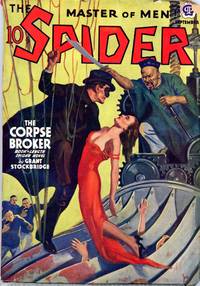
193934784Chicago: Popular Publications Inc. 1939. Mild tanning to text paper mild edge wear several tiny tears to upper edge with small chip to right corner several light creases a nearly fine copy. 34784. Octavo single issue cover by John Howitt pictorial wrappers. Pulp magazine. "The Corpse Broker" with Wayne Rogers writing as "Grant Stockbridge." The character was established to be a direct competitor to Street and Smith's Shadow magazine. After Doc Savage and The Shadow this was the most popular hero character. The Spider character was considered one of the most brutal and violent of the pulp era. Reference: Cook Mystery Detective and Espionage Magazines pp. 521-527. Tymm and Ashley Science Fiction Fantasy and Weird Fiction Magazines pp. 602-604. Popular Publications, Inc. unknown
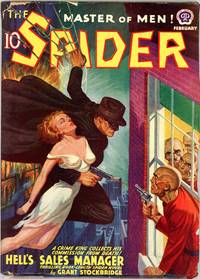
194034789Chicago: Popular Publications Inc. 1940. Mild tanning to text paper mild edge wear with several tiny tears shallow small chip to upper left front edge a very good to nearly fine copy. 34789. Octavo single issue cover by Rafael DeSoto pictorial wrappers. Pulp magazine. "Hell's Sales Manager" with Norvell Page writing as "Grant Stockbridge." The character was established to be a direct competitor to Street and Smith's Shadow magazine. After Doc Savage and The Shadow this was the most popular hero character. The Spider character was considered one of the most brutal and violent of the pulp era. Reference: Cook Mystery Detective and Espionage Magazines pp. 521-527. Tymm and Ashley Science Fiction Fantasy and Weird Fiction Magazines pp. 602-604. Popular Publications, Inc. unknown
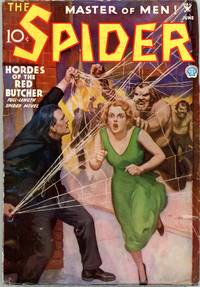
193534731Chicago: Popular Publications Inc. 1935. Mild tanning to text paper mild edge wear with small tear to right edge slight trimming color fade at head of spine a nearly fine copy. 34731. Octavo single issue cover by John Howitt pictorial wrappers. Pulp magazine. "Hordes of the Red Butcher" with Norvell Page writing as "Grant Stockbridge." The character was established to be a direct competitor to Street and Smith's Shadow magazine. After Doc Savage and The Shadow this was the most popular hero character. The Spider character was considered one of the most brutal and violent of the pulp era. Reference: Cook Mystery Detective and Espionage Magazines pp. 521-527. Tymm and Ashley Science Fiction Fantasy and Weird Fiction Magazines pp. 602-604. Popular Publications, Inc. unknown
1951003389Paris Maeght 1951 In-2 En feuilles Edition originale
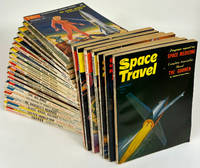
195431550Evanston IL: Greenleaf Publishing Company 1954-1958. A nearly fine to fine set. 31550. Small octavo 26 issues pictorial wrappers. Digest magazine. This magazine initial started out with fiction leaning toward the humorous with a note of 'spice' as evidenced by the titillating covers by Harold McCauley over the first seven issues. In the fall of 1956 the magazine moved to more conventional stories. In the waning days of the magazine the editor tried to move to a more serious image with the age of Sputnik and changed the title to Space Travel in which the magazine lasted only three more issues. Authors included Robert Bloch Edmond Hamiltion some pseudonymous Steven Marlowe under pseudonym Robert Silverberg some pseudonymous Randall Garrett A. Bertram Chandler Margeret St. Clair Harlan Ellison and others. Reference: Tymm and Ashley Science Fiction Fantasy and Weird Fiction Magazines pp. 347-350. Greenleaf Publishing Company unknown
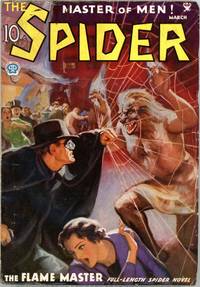
193534728Chicago: Popular Publications Inc. 1935. Mild tanning to text paper mild edge wear with some trims small separation at lower left edge a nearly fine copy. 34728. Octavo single issue cover by John Howitt pictorial wrappers. Pulp magazine. "The Flame Master" with Norvell Page writing as "Grant Stockbridge." The character was established to be a direct competitor to Street and Smith's Shadow magazine. After Doc Savage and The Shadow this was the most popular hero character. The Spider character was considered one of the most brutal and violent of the pulp era. Reference: Cook Mystery Detective and Espionage Magazines pp. 521-527. Tymm and Ashley Science Fiction Fantasy and Weird Fiction Magazines pp. 602-604. Popular Publications, Inc. unknown
1999__3110157152De Gruyter 1999. Hardcover. New. reprint 2012 edition. 1185 pages. 9.75x6.25x2.75 inches. De Gruyter hardcover
19272111902160201275Nagoya Communications Bureau 1927. Soft Cover. Fine. Volume: 1 Nagoya Communications Bureau paperback
195227771<p>Philosophical Library NY 1952 HBDJ 1952 1ST EDITION VG/VG DJ light rub wear & tiny chips extremities DJ Protected clear Mylar BROWN CLOTH titled in black on spoine cvr & light top edge chips a terrific downpour drove us for shelter intoa small coffee house inside of which we had never been before we ordered coffee sat down hoping the ran would abate to a drizzle. Presently the proprietor brought us on a Tray 2 cups of Turkish coffee we were both srck by the way he walked as 1 walking barefooted on chips of glass. He said dont you know Pitted Face . 1st Edition. Hardcover. Very Good/Very Good.</p> Philosophical Library NY hardcover
1917005414Paris Lyre et Palette 1917 In-4 En feuilles, couverture illustrée Edition originale
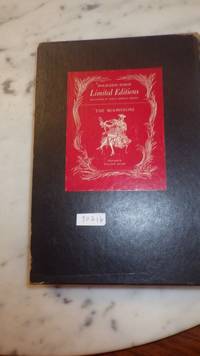
194430216A<p>HB NODJ SLIPCASE HAS RED & WHITE ILLIUSTRATION ON FRONT OF GENTLEMAN SEATED SLIPCASE EDGE WEAR SEPARATION 1944 on Title Pg COPY # 571 LIMITED NUMBERED 1ST EDITION VG/VG- AS-IS EXTREMITIES CHIPS WEAR DJ Printed from Plates in Original Limited Edition of 1000 BEIGE CLOTH GREY ILLUSTRATED BOARDS Set in an aristocratic estate in Victorian England pronounced by critics as the oldest full length English mystery novel and to this day the best. Outlandish HORROR During a battle in India a sacred shrine is robbed of a jewel by a British soldier and the curse of the East Indian God follows the gem through generations of English ownership. A group of Fanatical East Indians follow the Moonstone to England where a mysterious death overtakes every heir to the fatal jewel Against the Gentle Background of an Aristocratic Estate in Victorian EnglandMoves a Story so Intriguing in Mystery Fascinating in Character Presentation & Beguiling in the Telling. During a Gory Battle in Far Off India a Sacred Shrine is entered & Robbed of a Jewel by an Adventurous British Soldier & the Curse of the East Indian God follows</p> DORAN DOUBLEDAY & CO LIMITED EDITIONS GARDEN CITY NY hardcover
199730257<p>HBNODJ SLIPCASE HAS RED & WHITE ILLIUSTRATION ON FRONT OF GENTLEMAN SEATED SLIPCASE EDGE WEAR SEPARATION clear tape repairs 1944 on Title Pg COPY # 713 LIMITED NUMBERED 1ST EDITION VG/VG- AS-IS EXTREMITIES CHIPS WEAR DJ 1ST EDITION THUS Printed from Plates in Original Limited Edition of 1000 BEIGE CLOTH GREY ILLUSTRATED BOARDS IN WORN SLIPCASE Set in an aristocratic estate in Victorian England pronounced by critics as the oldest full length English mystery novel and to this day the best. Outlandish HORROR During a battle in India a sacred shrine is robbed of a jewel by a British soldier and the curse of the East Indian God follows the gem through generations of English ownership. A group of Fanatical East Indians follow the Moonstone to England where a mysterious death overtakes every heir to the fatal jewel Against the Gentle Background of an Aristocratic Estate in Victorian EnglandMoves a Story so Intriguing in Mystery Fascinating in Character Presentation & Beguiling in the Telling. During a Gory Battle in Far Off India a Sacred Shrine is entered & Robbed of a Jewel by an Adventurous British Soldier & the Curse of the East Indian God follows </p> DORAN DOUBLEDAY & CO LIMITED EDITIONS GARDEN CITY NY hardcover
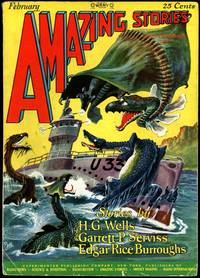
192729018New York: Experimenter Publishing Company 1927. Pages tanned mild edge wear small paper loss base of spine two large chips upper and lower left rear corners. A very good to nearly fine copy with attractive front cover. 29018. Large octavo single issue cover by Frank R. Paul pictorial wrappers. Pulp magazine bedsheet format. Features part one of "The Land That Time Forgot" by Edgar Rice Burroughs. Other authors include H.G. Wells Edwin Balmer and William MacHarg Garrett P. Serviss and others. Reference: Tymm and Ashley Science Fiction Fantasy and Weird Fiction Magazines pp. 14-49. Experimenter Publishing Company unknown
192630572New York: Experimenter Publishing Company 1926. Pages tanned and supple slight edge rubbing a fine copy. 30572. Large octavo single issue cover by Frank R. Paul pictorial wrappers. Pulp magazine bedsheet format. Fiction by H. G. Wells Garrett P. Serviss Fitz-James O'brien Edwin Balmer and William H. MacHarg and others. Reference: Tymm and Ashley Science Fiction Fantasy and Weird Fiction Magazines pp. 14-49. Experimenter Publishing Company unknown
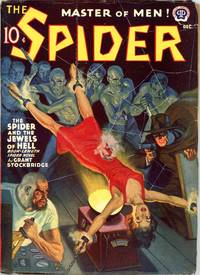
194034799Chicago: Popular Publications Inc. 1940. Mild tanning to text paper slight trim to right edge several tiny tears tiny chip and small closed tear to upper left corner closed tear around upper right corner a nearly fine copy. 34799. Octavo single issue cover by Rafael DeSoto pictorial wrappers. Pulp magazine. "The Spider and the Jewels of Hell" with Norvell Page writing as "Grant Stockbridge." The character was established to be a direct competitor to Street and Smith's Shadow magazine. After Doc Savage and The Shadow this was the most popular hero character. The Spider character was considered one of the most brutal and violent of the pulp era. Reference: Cook Mystery Detective and Espionage Magazines pp. 521-527. Tymm and Ashley Science Fiction Fantasy and Weird Fiction Magazines pp. 602-604. Popular Publications, Inc. unknown
19402110502150414612Nagoya Local Traffic Investigation Committee 1940. Soft Cover. Fine. Volume: 1 Nagoya Local Traffic Investigation Committee paperback
19062111902160200727Toyuridono Castle General High School 1906. Soft Cover. Fine. Volume: 1 Toyuridono Castle General High School paperback
194072114Berkeley and Los Angeles: University of California Press 1940. First edition. Narrow octavo. 14 pp. Publisher's printed wrappers. Together with 274 IBM punch cards each with the same printed title across the top - "Quadratic Character of m" and with Robinson's name and copyright data. Both housed together in the publisher's cloth case with metallic snap and spine lettering in black. Bit of wear to bottom case joint but overall an excellent copy.From the introduction - "Since quadratic congruences play a fundamental role in the theory of numbers it seems very desirable to have a simple way to solve them even when moderately large numbers are involved. The method of exclusion when combined with a suitable mechanical device such as these stencils provides an easy method for solution" Raphael M. Robinson was a leading figure in mathematics and taught at Berkeley from 1937 to 1973."Even among world-renowned mathematicians Robinson was exceptional. In an age of specialization he contributed significantly to six fields: logic set theory geometry complex analysis number theory and combinatorics; and in a subject often considered a young person's game he continued to produce significant mathematics into his eighties. He also anticipated most of the mathematical community by a good 20 years in making use of computers to obtain results in pure mathematics. In 1951 never having seen one of the new computing machines and working only from a manual he coded the first successful program to test very large numbers for primality. “That the code was without error was and still is a remarkable feat†according to the recently published history of the Institute for Numerical Analysis on the UCLA campus. “In an age where most of our journals are filled with papers which even if good exploit theories for their own sake. it is refreshing and stimulating to encounter one of Robinson's papers†one of the foremost number theorists of the century has written. “In each of them he takes a problem old or new which can be stated in simple and intelligible terms and either solves it or at least adds much that is new. His scholarship is impeccable; it is plain that he never writes until he has thought deeply and until he has sought out every relevant piece of existing knowledge.â€Approximately a quarter of Robinson's publications are distributed among seven different topics in logic and the foundations of mathematics. The one to which he gave most attention was that of undecidable theories an interest that he shared with his wife Julia. By way of illustration the mathematical structure consisting of the integers with their operation of addition is said to have a decidable theory. This means it is possible to program a computer so that given any sentence about the structure in a logically defined language the computer will make a finite computation that determines whether the sentence is true or false. Another mathematical structure with a decidable theory is that of all real numbers with their operations of addition and multiplication. This was shown by Alfred Tarski also of Berkeley But a major mathematical discovery of this century was the fact that that the structure of integers with both operations of addition and multiplication has an undecidable structure because there is no computer program that can decide the truth or falsity of every sentence of its language. In several papers Robinson was able to show that a number of other mathematical theories are also undecidable. His most valuable contribution however was devising a theory with a finite number of axioms that is “essentially undecidableâ€--a concept introduced by Tarski. The book Undecidable Theories Mostowski Robinson and Tarski has provided a tool for researchers to identify undecidable theories in all parts of mathematics. " Calisphere. University of California Press hardcover
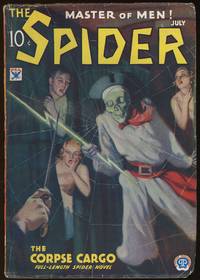
193432337Chicago: Popular Publications Inc. 1934. Creamy paper minimal edge wear tiny loss at lower right corner a nearly fine copy. 32337. Octavo single issue cover by John Howitt pictorial wrappers. Pulp magazine. "THE CORPSE CARGO" by Grant Stockbridge pseudonym. Reference: Cook Mystery Detective and Espionage Magazines pp. 521-527. Tymm and Ashley Science Fiction Fantasy and Weird Fiction Magazines pp. 602-604. Popular Publications, Inc. unknown
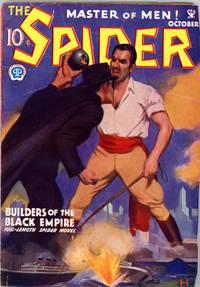
193434722Chicago: Popular Publications Inc. 1934. Mild tanning to text paper small closed tear to upper and lower edges bright red spine a fine copy. 34722. Octavo single issue cover by John Howitt pictorial wrappers. Pulp magazine. "Builders of the Black Empire" with Norvell Page writing as "Grant Stockbridge." The character was established to be a direct competitor to Street and Smith's Shadow magazine. After Doc Savage and The Shadow this was the most popular hero character. The Spider character was considered one of the most brutal and violent of the pulp era. Reference: Cook Mystery Detective and Espionage Magazines pp. 521-527. Tymm and Ashley Science Fiction Fantasy and Weird Fiction Magazines pp. 602-604. Popular Publications, Inc. unknown