Albert Einstein; Hanoch GutfreundBiblio.com
1 803 résultats
2004Q-0807615323George Braziller Inc 2004-05-17. Paperback. New. In shrink wrap. Looks like an interesting title! George Braziller Inc paperback
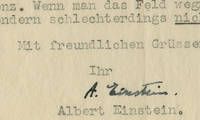
184029/9/54. <blockquote><p>The fullest summation we have seen by Einstein comparing relativity to Newtonian concepts of space and time</p></blockquote><p>Immanuel Kant took both Euclidean geometry and the Newtonian laws of motion to be synthetic a priori principles which from Kant’s point of view function as necessary presuppositions for applying our fundamental concepts of space time matter and motion to our sensible experience of the natural world meaning they are fixed necessary conditions. This idea rested on the absolute nature of space and time the work of Newton and the relationship between geometry and physics.</p><p>In 1905 while a young patent clerk and physicist in Bern Switzerland Albert Einstein obtained his doctorate and published a paper that explained his newly developed Special Theory of Relativity. This unlocked many mysteries of the universe and introduced the world to ""e=mc2"" equating mass and the speed of light with energy. It established that time and space are not fixed and in fact change to maintain a constant speed of light regardless of the relative motions of sources and observers. Just 10 years later in 1915 Einstein published his General Theory of Relativity which described the universe as a four-dimensional continuum with time added as the fourth dimension where gravitational effects are explained by the warping of space-time. In this theory Einstein incorporated gravity as a geometric property of space-time.</p><p>The impact of Einstein's work between 1905 and 1915 challenged many principles of physics that had been accepted for centuries. In 1921 he won the Nobel Prize for his work. Time Magazine named him the Person of the Century for the 20th century for his discoveries in relativity and space-time. Einstein is the most important scientist since Isaac Newton and probably the most famous in history.</p><p>Space and time were considered relativistic more subjective and not the fixed a priori notions that had long permeated the mathematical and scientific worlds.</p><p>Max Fischler was a California scientist who was interested in the implications of this distinction: were space and time now to be studied together in this context only or were the nature of space and the nature of time different</p><p>In special relativity what appears simultaneous to one person might not to another - they are relative. You cannot separate space and time; they occur subjectively and semi-dependently but are not tied to the content of that space.</p><p>With General Relativity space-time remains but matter warps it. It's a field like the sheet of a trampoline but reacts to matter. One needs all four dimensions of space-time and without them the others don't exist. You need matter for space.</p><p>On September 5 1954 he wrote to Einstein: "".Can anything in your theory of Relativity be said to throw new light on the nature of space and time themselves Or must we rest satisfied with the purely new logical treatment of these conceptions In other words does the new view of space and time as space-time carry any new meaning ontologically beyond the purely mathematical and logical relationship between the two. Or to put it differently: When Minkowski in his famous words said 'Space by itself and time by itself must not sink into the mere shadows and only a kind of union of the two can preserve an independent existence' did he not attach some new real meaning to the 'spacetime' which the old independent notions of space and time could not convey If so in what does this new meaning consist.""</p><p>Four days later Einstein replied in this letter:</p><p><strong>Typed letter signed</strong> in German on his personal blind embossed letterhead Princeton September 9 1954 to Max Fishler. <em>""The expression cited in the second paragraph only signifies the wish for logical clarity in the formal expressions. De facto the justification for concepts lies in their ability to comprehend the empirically given.</em></p><p><em>""In classical mechanics space and time were completed existences which had to be presupposed as real a priori in order to give meaning to the laws of motion. It was a reality in the same sense as the reality of matter; even governing the latter. In this sense Kant was entirely wrong.</em></p><p><em>""The case was the same as regards the Special Theory of Relativity only that an objective separation of space and time was abandoned in the sense that there could no longer be any objective simultaneity. Here too the four dimensional space is a reality independently of the physical content of space.</em></p><p><em>""Regarding the General Theory of Relativity however this is principally different. What we call ""space"" is here only an extension of a Field dimensionality hence no longer independent of the content of space. It is real in the same sense as matter but has no real existence independently of matter. When the field is taken away there does not remain any space but just nothing.â€</em></p><p>Letters of Einstein directly relating to relativity are increasingly uncommon and this is one of the finest such letters we have had.</p> unknown
195050104New York: Philosophical Library 1950. First Edition. Hardcover with Dust Jacket. Rare VG First Edition. DJ is in VG condition and has the original $3.00 price. In an acetate. Moderate foxing through the book but unmarked with VG binding. . Philosophical Library hardcover
20119781258113438-2025Literary Licensing LLC 2011. Hardcover. New/New. <p><strong>Author:</strong> Albert Einstein</p><p><strong>Publisher:</strong> Literary Licensing LLC</p><p><strong>Binding:</strong> Hardcover</p><p><strong>ISBN:</strong> 9781258113438</p><p><strong>Release Date:</strong> 2011</p><p><strong>Number Of Pages:</strong> 128</p><p><strong>Details:</strong> In this thought-provoking collection renowned physicist Albert Einstein explores the philosophical underpinnings of humanism providing insights that resonate with both scholars and curious minds alike. The essays delve into the relationship between science and human values emphasizing the importance of ethical reasoning in a rapidly changing world. Readers will appreciate how Einstein articulates the need for a moral framework that supports scientific advancement making this edition a compelling read for anyone interested in the intersection of science philosophy and society.<br /><br />This edition not only showcases Einstein's eloquent writing style but also addresses key topics such as the role of education in fostering humanistic values the significance of personal responsibility and the impact of culture on science. Students and professionals alike will benefit from Einstein's unique perspective which encourages critical thinking and a deeper understanding of what it means to be human in an age of technological progress. Whether you are studying philosophy sociology or the sciences this book offers valuable insights that are still relevant today.</p> Literary Licensing, LLC hardcover
19839780802224170-2025Philosophical Library 1983. Hardcover. New/New. <p><strong>Author:</strong> Albert Einstein</p><p><strong>Publisher:</strong> Philosophical Library</p><p><strong>Binding:</strong> Hardcover</p><p><strong>ISBN:</strong> 9780802224170</p><p><strong>Release Date:</strong> 1983</p><p><strong>Number Of Pages:</strong> 122</p><p><strong>Details:</strong> Book by Einstein Albert</p> Philosophical Library hardcover
19839780802224170-2025Philosophical Library 1983. Hardcover. New/New. <p><strong>Author:</strong> Albert Einstein</p><p><strong>Publisher:</strong> Philosophical Library</p><p><strong>Binding:</strong> Hardcover</p><p><strong>ISBN:</strong> 9780802224170</p><p><strong>Release Date:</strong> 1983</p><p><strong>Number Of Pages:</strong> 122</p><p><strong>Details:</strong> Book by Einstein Albert</p> Philosophical Library hardcover
20119781258113438-2025Literary Licensing LLC 2011. Hardcover. New/New. <p><strong>Author:</strong> Albert Einstein</p><p><strong>Publisher:</strong> Literary Licensing LLC</p><p><strong>Binding:</strong> Hardcover</p><p><strong>ISBN:</strong> 9781258113438</p><p><strong>Release Date:</strong> 2011</p><p><strong>Number Of Pages:</strong> 128</p><p><strong>Details:</strong> In this thought-provoking collection renowned physicist Albert Einstein explores the philosophical underpinnings of humanism providing insights that resonate with both scholars and curious minds alike. The essays delve into the relationship between science and human values emphasizing the importance of ethical reasoning in a rapidly changing world. Readers will appreciate how Einstein articulates the need for a moral framework that supports scientific advancement making this edition a compelling read for anyone interested in the intersection of science philosophy and society.<br /><br />This edition not only showcases Einstein's eloquent writing style but also addresses key topics such as the role of education in fostering humanistic values the significance of personal responsibility and the impact of culture on science. Students and professionals alike will benefit from Einstein's unique perspective which encourages critical thinking and a deeper understanding of what it means to be human in an age of technological progress. Whether you are studying philosophy sociology or the sciences this book offers valuable insights that are still relevant today.</p> Literary Licensing, LLC hardcover
B9781258003166Hardback. New. hardcover
67-01046Philosophical Library. Hardcover. Very Good. Very good condition with dust jacket. Few tears. Philosophical Library hardcover
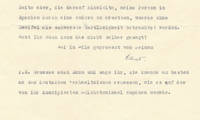
225685/5/33. <blockquote><p>Germany as an island of intellectuals is no longer possible he writes blaming the fall of his country and exile of his colleagues on poor education a vestige of Bismarck</p><p> </p><p><em>""I am almost collapsing under all my responsibilities."" </em></p><p> </p><p>A glimpse into the tragic end to the scientific flowering of pre-Nazi Germany along with Einstein's explanation for why it all happened</p><p> </p><p>A rare letter from a brief but consequential period in Einstein's life: after he left Germany but before he arrived in America</p></blockquote><p>Einstein had long been a revered scientist and member of the Prussian Academy of Sciences and was employed by Berlin University. At the beginning of March 1932 he returned to Germany from a visit to the United States where he had discussed heading the soon-to-open Institute for Advanced Study in Princeton New Jersey. He determined to accept and to spend half the year in Berlin and half the year in Princeton. But that year the Nazis were on the rise. It was becoming increasingly obvious to Einstein that his life was in danger. A Nazi organization published a magazine with Einstein’s picture and the caption “Not Yet Hanged†on the cover. There was even a price on his head.</p><p>In December 1932 Einstein again left Germany to be a visiting professor at CalTech in Pasadena California. When Hitler was appointed German chancellor on January 30 1933 the physicist had just arrived in New York on his way to California to lecture on his theory of relativity. Nazi persecution of Jews in Germany was now open swift and often violent. Prominent Jews were denounced by Nazi officials attacked in the media and subjected to violence and arrest. As a vocal opponent of Nazism and a staunch advocate of pacifism Einstein was a particularly attractive target. Fortunately at the time Hitler came to power Einstein was already in the United States. Nonetheless the Nazis publicly agitated against Einstein as a symbol of “Jewish degeneracy†and accused him of spreading “atrocity propaganda.†In February and March 1933 the Gestapo repeatedly raided his family’s apartment in Berlin.</p><p>Despite his own March 15 1933 declaration of self-imposed exile from Nazi Germany as well as warnings from friends that it was too dangerous to return Einstein and his wife decided to travel back to Germany intending to visit their summer cottage. At the end of March they arrived in Antwerp on the SS Belgenland owned by the shipping company Red Star Line. There they learned that Nazis had ransacked their cottage in Caputh at which point they decided that re-entering Germany was unwise.</p><p>In April 1933 Einstein discovered that the new German government had passed laws barring Jews from holding any official positions including teaching at universities. Thousands of Jewish scientists were suddenly forced to give up their university positions and their names were removed from the rolls of institutions where they were employed. Einstein was now without a permanent home unsure where he would live and work and equally worried about the fate of countless other scientists still in Germany. He rented a house in De Haan Belgium where he lived for a few months. In late July 1933 he went to England for about six weeks where he was introduced to Winston Churchill. Einstein asked Churchill to help bring Jewish scientists out of Germany. British historian Martin Gilbert notes that Churchill responded immediately and sent his friend physicist Frederick Lindemann to Germany to seek out Jewish scientists and place them in British universities. In October 1933 Einstein returned to the US and took up his position at the Institute for Advanced Study. He had already revoked his German citizenship in Brussels and handed in his notice at Berlin University. He would never return to Germany.</p><p>Michele Angelo Besso was a Swiss/Italian engineer. A Sephardic Jew by birth he was a close friend of Einstein during his years at the Federal Polytechnic Institute in Zurich and then at the patent office in Bern where Einstein helped him to get a job. Einstein called Besso ""the best sounding board in Europe"" for scientific ideas. In Einstein's original paper on special relativity he ended the paper stating ""In conclusion let me note that my friend and colleague M. Besso steadfastly stood by me in my work on the problem here discussed and that I am indebted to him for many a valuable suggestion.""</p><p>After his resignation in 1890 Otto von Bismarck was venerated as unified Germany’s founding father not only during the remaining twenty-eight years of the monarchy but also albeit less emphatically in the Weimar Republic in Nazi Germany and in the Federal Republic. Throughout Germany numerous Bismarck statues are testament to the admiration. Hamburg has three. His memorialisation even went beyond Germany; the capital of the US state of North Dakota for example is named after him. Einstein was evidently not a proponent of the erstwhile unifier of Germany. As Einstein wrote of Bismarck’s influence ""The characteristic feature of this mentality is that people place the importance of what Bertrand Russell so tellingly terms “naked power†far above all other factors which affect the relations between peoples. The Germans misled by Bismarck’s successes in particular underwent just such a transformation of their mentality—in consequence of which they were entirely ruined in less than a hundred years.""</p><p>In this letter he encourages Besso to let him have his suggestions for saving Hermann Weyl from the regime – through substituting him for Einstein on a proposed trip to Spain would seem disastrously tactless. He sends his regards to Anna Besso with the rueful remark that the German example bodes ill for an intellectual utopia which she had proposed. Weyl would go on work with him at Princeton.</p><p>These two men were among Einstein's closest friends and colleague - Jewish or closely tied to Jewish relatives. He is rushing to get them out.</p><p><strong>Typed letter signed</strong> in German Le Coq-sur-mer Belgium May 5th 1933 to Besso. <em>""Dear Michele! I was not affected personally but just about everybody else who is kind of close to me was. Bismarck’s dismal education policy is wreaking havoc again with the German people.</em></p><p><em>""I would love to follow your suggestion regarding Weyl if I saw any possibility at all especially since I am almost collapsing under all my responsibilities. Even the slightest attempt to replace me with someone else in Spain would without a doubt be perceived as extremely upsetting. Have you not thought of that</em></p><p><em>""Rushed greetings to you Albert.""</em></p><p>He writes a postscript: <em>""Greetings to Anna from me and tell her she can judge herself based on the current German conditions what her concept of 'island of intellectuals' would look like.""<br /></em></p><p>In July 1933 upon Einstein’s request a committee of 51 American artists intellectuals and political leaders came together to form the International Relief Association. Among them were the philosopher John Dewey the writer John Dos Passos and the theologian Reinhold Niebuhr. Other prominent citizens including First Lady Eleanor Roosevelt soon joined the effort. Its mission as The New York Times reported on July 24 1933 was to “assist Germans suffering from the policies of the Hitler regime.â€</p><p>But Einstein did much more. He tried to persuade political leaders in the United States and Europe to take action to help the Jewish populations at risk particularly those of his colleagues in Germany's scientific community which was very hard hit. He worked tirelessly to help Jewish refugees escape the Nazis and to find them places of refuge and employment. Many immigrants to the United States during the mid to late 1930s were Jewish between 1939 and 1940 more than half of all immigrants were Jews most of them refugees fleeing persecution in Europe.</p><p><img class=""alignnone wp-image-22732 size-post-window"" src=""https://cdn.raabcollection.com/wp-content/uploads/20231204162353/Folder-site-1600x1327.jpg"" alt="""" width=""1600"" height=""1327"" /></p> unknown
20011-3898211681ibidem-Verlag 2001. Paperback. New. 134 pages. German language. 8.11x5.67x0.39 inches. ibidem-Verlag paperback
ria9780826407474_inpPaperback. New. New Book; Fast Shipping from UK; Not signed; Not First Edition; N/A paperback
ria9783540878469_inpPaperback. New. New Book; Fast Shipping from UK; Not signed; Not First Edition; N/A paperback
BN303257Grundzüge der Relativitätstheorie <br/><br/>Grundzüge der Relativitätstheorie Albert Einstein unknown
2004003292EENorwalk CT: The Easton Press 2004. The Easton Press. Hardcover. Fine. A fine clean and tight copy bound in full leather. Collector's Edition with silk moire end papers with ribbon. No bumped corners to book. No rubbing to leather binding. No bookplates no signatures. Gold gilt edges are clean and bright with just a couple of mild marks. A very nice copy. The Easton Press hardcover
2010042673London: The Folio Society 2010. 1st Thus. Hardcover. As New/No Dust Jacket. Octavo. pp XVIII 370. 1st printing. An unread book in a fine condition slipcase showing slight use. The Folio Society hardcover
1954096396Crown Publishers 1954. 1st Edition 1st Printing. Hardcover. Very Good/Good. Very good clean tight condition. First American edition first printing. Jacket price $4.00 has tape and edge wear. Jacket in mylar cover. Previous owners name on bookplate and on top of closed pages. Text free of marks. Professional book dealer since 1999. All orders are processed promptly and carefully packaged. <br/> <br/> Crown Publishers hardcover
1954215859New York: Crown Publishers 1954. First Edition; First Printing. Hardcover. Very Good in boards. Crown Publishers hardcover
146349New York: Bonanza Books 1954. Reprint; Fourteenth Printing. Hardcover. Very Good in a Very Good dust jacket. Foxing on top text block edge. 1/4 inch open tear at top of rear flap fold.; 8.1 X 5.6 X 1.3 inches; 384 pages. Bonanza Books hardcover
1988154135New York: Bonanza Books 1988. Hardcover. Near Fine in a Near Fine dust jacket. Light crease on front flap.; 8.1 X 5.6 X 1.3 inches; 384 pages. Bonanza Books hardcover
1985Q-0517556014Crown Publishers 1985-12-13. Paperback. New. In shrink wrap. Looks like an interesting title! Crown Publishers paperback
1988124910New York: Bonanza Books 1988. Hardcover. Very Good in a Very Good dust jacket. ; 8.1 X 5.6 X 1.3 inches; 384 pages. Bonanza Books hardcover
1954196390Crown Publishers January 1954. First Edition. Hardcover. Very Good. Very Good in a Good dustjacket. Corners and spine ends of the binding are bumped but not rubbed p.o. inscription at the top of the front free enpaper some foxing to the top edge of the text block a lengthy note on the verso of the rear free endpaper. The jacket has a few problems: the entire length of the front and rear panels is creased there is shallow chipping at the top of the spine just barely affecting the name and a larger triangular chip at the top right of the rear panel. All in all a presentable copy of a scarce first edition with jacket. Crown Publishers hardcover