797 résultats
19752080502106908136Not Available 1975. Soft Cover. Fine. The book is in fine condition. Not Available paperback
199287382La Grange Park IL: American Nuclear Society 1992. Presumed First Edition First printing. Hardcover. Very good. xii 193 3 pages. Footnotes. Illustrations a few with color. Tabular data. Bibliography. Illustrated front cover. No dust jacket present. It's been 50 years since the Chicago Pile experiment and the first controlled chain reaction. Anonymous volunteer contributors from the ANS have put together this history which ends with a celebration of the future of nuclear power but does not talk of what to do with radioactive waste. This book was prepared by a volunteer effort of a large number of people over several months. The authors take responsibility for the choice of material on the many possible issued covered. It was the belief of the authors that the beneficial impacts of nuclear energy while already enormous represent only a small fraction of the benefits yet to be gained and that this brief history of the first 50 years of the controlled nuclear chain reaction represents only the first phase of the nuclear era. The contents include Introduction Chicago Pile No. 1: The First Controlled Nuclear Chain Reaction; Development of Nuclear Power Plants in the United States; Development of Nuclear Power Plants in Canada and Europe; Status of Nuclear Power Development; Other Peaceful Applications of Nuclear Energy; Nuclear Fuel Technology; Nuclear Safety; and Working Toward a Nuclear Future. Chicago Pile-1 CP-1 was the world's first artificial nuclear reactor. On 2 December 1942 the first human-made self-sustaining nuclear chain reaction was initiated in CP-1 during an experiment led by Enrico Fermi. The secret development of the reactor was the first major technical achievement for the Manhattan Project the Allied effort to create nuclear weapons during World War II. Developed by the Metallurgical Laboratory at the University of Chicago CP-1 was built under the west viewing stands of the original Stagg Field. Although the project's civilian and military leaders had misgivings about the possibility of a disastrous runaway reaction they trusted Fermi's safety calculations and decided they could carry out the experiment in a densely populated area. Fermi described the reactor as "a crude pile of black bricks and wooden timbers." After a series of attempts the successful reactor was assembled in November 1942 by a team of about 30 that in addition to Fermi included scientists Leo Szilard Leona Woods Herbert L. Anderson Walter Zinn Martin D. Whitaker and George Weil. The reactor used natural uranium. This required a very large amount of material in order to reach criticality along with graphite used as a neutron moderator. The reactor contained 45000 ultra-pure graphite blocks weighing 360 short tons and was fueled by 5.4 short tons of uranium metal and 45 short tons of uranium oxide. Unlike most subsequent nuclear reactors it had no radiation shielding or cooling system as it operated at very low power - about one-half watt. The success of Chicago Pile-1 provided the first vivid demonstration of the feasibility of the military use of nuclear energy by the Allies as well as the reality of the danger that Nazi Germany could succeed in producing nuclear weapons. Previously estimates of critical masses had been crude calculations leading to order-of-magnitude uncertainties about the size of a hypothetical bomb. The successful use of graphite as a moderator paved the way for progress in the Allied effort. The Germans had failed to account for the importance of boron and cadmium impurities in the graphite samples on which they ran their test of its usability as a moderator while Leo Szilard and Enrico Fermi had asked suppliers about the most common contaminations of graphite after a first failed test. They consequently ensured that the next test would be run with graphite entirely devoid of them. In 1943 CP-1 was moved to Red Gate Woods and reconfigured to become Chicago Pile-2 CP-2. There it was operated for research until 1954 when it was dismantled and buried. The stands at Stagg Field were demolished in August 1957; the site is now a National Historic Landmark and a Chicago Landmark. American Nuclear Society hardcover
1970mon0003244871American Nuclear Society 1970. Hardcover. Good. . No jacket. Book has shelf wear. Pages are tanning. American Nuclear Society hardcover
1957ROD0040580René Kister. 1957. In-4. Relié toilé. Bon état, Couv. convenable, Dos satisfaisant, Intérieur frais. ~ 150 p. par tomes., nombreuses illustrations noir et blanc in texte.. . . . Classification Dewey : 539-Physique nucléaire
1957705492PN. New. 1957. Soft Cover. Date is original print. This is a reprint edition. . PN paperback
1963718938PN. New. 1963. Soft Cover. Date is original print. This is a reprint edition. . PN paperback
198412867New York/London, Plenum Press, 1984. Issues, Methods and Case Studies (Advances in Risk Analysis, Vol. 2) X, 571 S. (26 cm) Pappband / gebundene Ausgabe
1987778891PN. New. 1987. Soft Cover. Date is original print. This is a reprint edition. . PN paperback
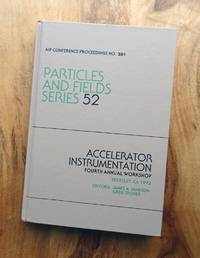
1993204575New York: AIP Press: American Institute of Physics 1993. Printed Gray Boards. Very Good/No Jacket. 9 1/2"; 21.6cm. This is AIP Conference Proceedings No. 281. Representative of the nine invited papers are Multibunch Feedback -- Strategy Technology and Implementation Fox Eisen et al.; Introduction to Beam Diagnostics and Physics for Circular Accelerators Billing; and Log-Ratio Signal-Processing Technique for Beam Position Monitors Shafer. In addition there are nine contributed papers Bunch Shape Monitors Using Low Energy Secondary Electron Emission Feschenko; and 15 Poster Sessions Beam Current and Beam Lifetime Measurements at the HERA Proton Storage Ring Schütte Unser. 350 xi pages with List of Participants and Author Index. Boards show insignificant shelf use; name of prior owner on front endpaper; text is strong and unmarked. <br/> <br/> AIP Press: American Institute of Physics hardcover
197859785Portland OR: Trojan Decommissioning Alliance 1978. One atlas folio poster. 17 x 21.25 in. printed in blue & brick-red on tan-coloured textured paper unidentified photo of couple on verso minor creasing edgewear very minor pinholes at corners still a VG exemplar from the library of Sam Oakland 1934-2014 was an English professor poet and author and bicycle advocate who started rallying bicycle riders in the late 1960’s and led groups in support of Oregon’s groundbreaking 1971 Bike Bill. First edition of this exceedingly scarce protest poster for Jesse Colin Young of the “Youngbloods†benefit concert raising funds for the famed Oregon-based anti-nuclear protest group Trojan Decommissioning Alliance. The previous August 1977 the group led by Nina Bell and Norman Solomon had carried out the first civil disobedience protest occupation of a U.S. nuclear power plant. Sixty-eight protesters were arrested and the group continued to organize and protest in the remaining months of 1977. By the time this poster was issued they had even issued the Trojan Decommission Alliance Occupation Handbook for another series of civil disobedience protests held August 6-9 1978 which resulted in 100’s more arrests. No copies located in Worldcat; See: Gregory Nipper Progress and Economy: The Clash of Values Over Oregon’s Trojan Nuclear Plant 2005. Trojan Decommissioning Alliance, unknown
1962285279CERN Geneva 1962. Softcover 2 Bände mit 3 Teilen Part I: Relativistic kinematics and precession of polarization. Part II: Recapitulation of quantum mechanics. III: Formal theory of scattering. Zustand: mit einer Namenseintragung. Ecken Kanten gut. Der Rücken fehlt jeweils gänzlich der Block hält aber gut zusammen. CERN, Geneva, paperback
1962R260270787Editions du CNRS. 20 mars 1962. In-4. Relié. Bon état, Couv. convenable, Dos satisfaisant, Intérieur frais. 486 pages augmentées de quelques photos et figures en noir et blanc dans et hors texte.. . . . Classification Dewey : 539-Physique nucléaire
1923R260270496Librairie scientifique Albert Blanchard. 1923. In-8. Broché. Bon état, Couv. convenable, Dos satisfaisant, Intérieur frais. 384 + 360 pages environ.. . . . Classification Dewey : 539-Physique nucléaire
196487717Livermore CA: U.S. Army Engineer Nuclear Cratering Group 1964. Presumed First Edition First printing. Wraps. Good. The format is approximately 8 inches by 10.5 inches. Various paginations approximately 120 pages. Illustrations figures tables tabular data. Ex-library copy with the usual library markings some blacked out. This is part of Plowshare--civil industrial and scientific used for nuclear explosives. The US Army Corps of Engineers Nuclear Cratering Group NCG program activities include: 1 cratering calibration of various geologic media and development of techniques designed to provide a desired crater geometry with chemical high-explosive detonations; 2 joint planning of and technical participation in AEC nuclear-excavation experiments; 3 development of data on the engineering properties of nuclear craters; 4 development of civil works nuclear construction technology; 5 accomplishment of engineering studies of nuclear construction feasibility; and 6execution of joint CE/AEC civil works nuclear-construction experiments. Four conceptual nuclear-construction applications have been identified as having a significant potential for accomplishment: 1 nuclear quarrying to produce rock fill or aggregate; 2 nuclear ejecta dam construction; 3 nuclear harbor construction; and 4 nuclear canal excavation. This inclosure described the design of the nuclear explosions required to excavate the channel for an Isthmian sea-level canal. The Columbian nuclear cue would use 262 devices with a total yield of 2709 megatons fired in 21 separate detonations. Project Plowshare was the overall United States program for the development of techniques to use nuclear explosives for peaceful construction purposes. The program was organized in June 1957 as part of the worldwide Atoms for Peace efforts. As part of the program 35 nuclear warheads were detonated in 27 separate tests. A similar program was carried out in the Soviet Union under the name Nuclear Explosions for the National Economy. Successful demonstrations of non-combat uses for nuclear explosives include rock blasting stimulation of tight gas chemical element manufacture unlocking some of the mysteries of the R-process of stellar nucleosynthesis and probing the composition of the Earth's deep crust creating reflection seismology vibroseis data which has helped geologists and follow-on mining company prospecting. The project's uncharacteristically large and atmospherically vented Sedan nuclear test also led geologists to determine that Barringer crater was formed as a result of a meteor impact and not from a volcanic eruption as had earlier been assumed. This became the first crater on Earth definitely proven to be from an impact event. Negative impacts from Project Plowshare's tests generated significant public opposition which eventually led to the program's termination in 1977. These consequences included tritiated water projected to increase by CER Geonuclear Corporation to a level of 2% of the then-maximum level for drinking water and the deposition of fallout from radioactive material being injected into the atmosphere before underground testing was mandated by treaty. Peaceful nuclear explosions PNEs are nuclear explosions conducted for non-military purposes. Proposed uses include excavation for the building of canals and harbors electrical generation the use of nuclear explosions to drive spacecraft and as a form of wide-area fracking. PNEs were an area of some research from the late 1950s into the 1980s primarily in the United States and Soviet Union. In the U.S. a series of tests were carried out under Project Plowshare. Some of the ideas considered included blasting a new Panama Canal constructing the proposed Nicaragua Canal the use of underground explosions to create electricity Project PACER and a variety of mining geological and radionuclide studies. The largest of the excavation tests was carried out in the Sedan nuclear test in 1962 which released large amounts of radioactive gas into the air. By the late 1960s public opposition to Plowshare was increasing and a 1970s study of the economics of the concepts suggested they had no practical use. Plowshare saw decreasing interest from the 1960s and was officially canceled in 1977. The Soviet program started a few years after the U.S. efforts and explored many of the same concepts under their Nuclear Explosions for the National Economy program. The program was more extensive eventually conducting 239 nuclear explosions. Some of these tests also released radioactivity including a significant release of plutonium into the groundwater and the polluting of an area near the Volga River. A major part of the program in the 1970s and 80s was the use of very small bombs to produce shock waves as a seismic measuring tool and as part of these experiments two bombs were successfully used to seal blown-out oil wells. The program officially ended in 1988. U.S. Army Engineer Nuclear Cratering Group paperback
1997008627American Nuclear Society 1997. Hardcover. Fine. August 1-14 1997. Amelia Island Plantation Florida. Very Nice Clean Copy. No marks or writings pages bright and clean binding tight and sound. Carefully packaged and shipped in box. pp 601-1071 American Nuclear Society hardcover
198582468Department of Defense Defense Nuclear Agency Armed Forces Radiobiology Research Institute 1985. Presumed First Edition First printing thus. Wraps. Good. Various paginations Approximately 275 pages. Illustrations. Table of Contents mis-bound with second page first. Cover has some wear and soiling. Marked For Official Use Only but given the passage of time and introduction of related information into the public domain this limitation is understood to no longer apply. From the Introduction: Forty years after the introduction of nuclear weapons information is still incomplete concerning the effects on man from ionizing radiation produced by those weapons. the information is important because radiation adversely affect both the combat performance effectiveness and the survivability of personnel. It is hoped that further knowledge will be gained from research such as that conducted by the Armed Forces Radiobiology Research Institute AFRRI. Research to define and manage the effects of ionizing radiation on military personnel is the primary responsibility of AFRRI. AFRRI a unit of the Defense Nuclear Agency DNA is the principal radiobiology research laboratory for the Department of Defense This Five-Year Research Plan is developed in response to the currently defined requirements of the U.S. Armed Services in the area of radiation research. This is the third generation of a DoD Radiation Research Plan. This Plan presents a fully integrated DoD Radiobiology Research Program by including the AFRRI in-house research effort as well as the complementary DNA Biomedical Effects STBE Directorate effort with specific research areas of the Army and the Air Force. Since the development of the first Five-Year Research Plan the AFRRI Board of Governors has required that the Five-Year Research Plan be evaluated and priorities by an operational and medical representative of each Surgeon General. This group the Radiation Research Review Committee has met numerous times since 1981 to recommend changes to the Five-Year Research Plan most recently on 31 October 1985. The changes recommends by the Radiation Research Review Committee have been incorporated and the research priorities established. The major priorities are: Radioprotection Section III Human Response Section IV Quantitation and Preservation of Combat Performance Section V Reconstitution and Preservation of Hemopoietic and Immune Function Section VI Treatment of Radiation Casualties Section VII and Mechanisms of Radiation Sensitivity Section VIII. Department of Defense, Defense Nuclear Agency, Armed Forces Radiobiology Research Institute paperback
197785184New York: American Physical Society 1977. Presumed First Edition First printing thus. Wraps. Good/No dust jacket issued. Format is approximately 8.5 inches by 11 inches by 1.5 inches. Three hole punched. Various paginations. Front cover has wear soiling a blacked out portion name and an edge tear. Other pages have small blacked out portions at the top. This report was to be published in teh Review of Modern Physics per cover. The APS Study Group found existing technology and straightforward extensions sufficient for managing nuclear wastes but unresolved economic institutional and political questions cloud the commercial use of plutonium. The study group consisted of a dozen physicists chemists engineers and geologists. Contents include: Summary of the Study; Introduction; Primer on the Fuel Cycle; LWR Fuel Cycle--Technology and Economics of Reprocessing and Recycle; LWR Fuel Cycle--Assessment of Radiation Exposures; LWR Fuel Cycle--Safeguards; High-Level and TRU Waste Management; Advanced Fuel Cycle Alternatives; Institutional and Organizational Issues of the Nuclear Fuel Cycle and Waste Management Program and Appendixes. Utilization of nuclear fuels and management of nuclear wastes have become major topics of public discussion. Under the auspices of the American Physical Society this study was undertaken as an independent evaluation of technical issues in the use of fissionable materials in nuclear fuel cycles together with their principal economic environmental health and safety implications. Reprocessing and recycling in light water reactors were examined along with technical measures proposed as possible safeguards; advanced reactor fuel cycles were also studied for their resource and safeguards implications. Much of the work of the group centered on the principal alternatives for disposal of radioactive wastes and control of effluents. The group examined the research and development programs sponsored by government agencies along with associated relationships among agencies and between government and private industry. Available information was also considered on nuclear fuel resources and on important economic and environmental aspects of the various fuel cycles in order to strive for a balanced comparative study. The report presents many conclusions on various aspects of the nuclear fuel cycles and also provides recommendations concerning present utilization and future improvement of fuel cycle technology. American Physical Society paperback
19672092902143900652Japan Atomic Industry Council 1967. Soft Cover. Fine. Number of books: 1 book Japan Atomic Industry Council paperback
19672092902143800650Japan Atomic Industry Council 1967. Soft Cover. Fine. Number of books: 1 book Japan Atomic Industry Council paperback
1971HVD-52210-OS-0Geneva: Juelich Nuclear Research Center. Good. 1971. Paperback. 102 pages; B&W photographs and illustrations. Color illustrations. Glue which connects spine to binding has worn a bit and binding is exposed on title page. Book is structurally sound however and every page is connected. Slightly cocked spine. Light fading. Minor rubbing and creasing. Light wear and tear to the foot of the spine. Good condition otherwise. No other noteworthy defects. No markings. ; - Your satisfaction is our priority. We offer free returns and respond promptly to all inquiries. Your item will be carefully cushioned in bubble wrap and securely boxed. All orders ship on the same or next business day. Buy with confidence. . Juelich Nuclear Research Center paperback
1986__0309078660National Academies Press 1986. Paperback. New. 640 pages. 9.00x6.00x9.00 inches. National Academies Press paperback
197987716Washington DC: Defense Nuclear Agency 1979. Preliminary Draft. Comb binding. Fair. iii 60 pages some pages have multiple page numbers used with designation of "a" 'b' etc. These added pages appear to be solely used for illustrations. Pages printed on one side only. Cover has some wear and soiling. There is a blank page between pages 21 and 22. Illustrations/figures/tables. Maps. Tabular data. Ink notation at bottom of front cover. Pencil correction on page iii. replacing 'demolition' with 'detonation'. Pencil notations on pages 14 17 18 46 and 59. There appear to have been no pages 15 and 16 as the text flows seamlessly from page 14 to page 17. The text moves from page 32 through 32a to 33 b. There is a gap before page 34 indicating a missing page 33 and illustration 33a. It is not unusual for there to be areas where the document appears incomplete as this is stated as a preliminary draft and it is possible some text and illustration were removed pending resolution of potential concerns regarding information classification. The Department of Defense led the radiological cleanup of Enewetak Atoll in the Marshall Islands. The combined federal effort cost about $100 million and required an on-atoll task force numbering almost 1000 people for three years 1977-1980. The departments of Defense Energy and Interior were involved in this project. The DOD organized three separate efforts in support of the cleanup: Removal and lagoon-dumping of uncontaminated debris and structures removal and crater-entombment of radiological contaminated debris and structures and excision and crater-entombment of radiological contaminated soil from the islands. This document is not listed/identified on the ENEWETAK ATOLL CLEANUP DOCUMENTS web page which is an official U.S. Government web page supported by the Defense Threat Reduction Agency. This chapter discusses Operation Sandstone Rehabilitation and Construction Activities Operation Greenhouse Operation Ivy Operation Castle Operation Redwing Operation Hardtack Moratorium and provides a Summary of Test Effects. There is a discussion of the Effects of Test Program on 26 individual islands. There is a discussion of the effect of Atoll experience on cleanup. and the final portion addresses Enewetak Interim 1958-1972 and Projects Hues Pace and Expo. An example of the information content is from pages 31 and 32: "Fallout from 16 events caused Eleleron to be ranked second of all islands of the atoll in H-1 hour exposure having accumulated 10643 R/hr. Most of the land mass receiving this exposure has been blasted or eroded away. Soil sampling showed surface activity to be relatively low and the one profile sample displayed a homogeneous distribution with depth this being considered to be the result of hydraulic influences." Defense Nuclear Agency unknown
197244585Vienna, International Atomic Energy Agency, 1972. 663 Seiten , 24 cm, kartoniert
1983Alibris.0011466Paris: Organization for Economic Co-operation and Development OECD 1983. Trade paperback. Fair. Ex-library. Other than library markings NO EXTRANEOUS MARKINGS IN THIS BOOK. Fading-> fair. 250 p. Out-of-print book. GEOLOGY shelf. Organization for Economic Co-operation and Development (OECD) paperback
1962012975Stockholm Eric Diefenbronner 1962 in-4° Cartonnage toilé, jaquette illustrée et rhodoïd imprimé. Dédicacé par l'illustrateur