335 résultats
197464132Portland OR: Portland General Electric Company 1974-1979. Two vols. hick 4to. 11.25 x 11.75 x 3.25 in. Approx. 1200 leaves sections variously numbered. w/ thumb tab sections printed affixed at fore-edges w/ over 100 maps many large folding most colour folding charts graphs diagrams; large folding site map in vol. 2. Original green vinyl 3-ring binders black lettering stamped on front covers & spines occasional interior age toning shelfwear rubbing still a VG set from the library of Dr. Clive F. “Rick†Kienle 1942-2025 geologist and specialist in aerial photo mapping . First edition of this very scarce original safety analyses reports for Portland General Electric’s pair of nuclear power plants to have been constructed at Pebble Springs in Gilliam County Oregon as part of a group with the proposed Trojan Nuclear Power plant licensed to run beginning in 1976 at 1100 Megawatts. These nuclear power plants had been proposed and begun development soon after construction began at the Trojan Nuclear Power Plant and by 1979 over $ 250 million had been spent by the State of Oregon and PGE on development costs. The two reactors would have been located 3 miles southeast of the Columbia River would have consisted of a Nuclear Steam System for each plant with a Reactor Coolant System supplied by Babcock & Wilcox square lattice reactor cores and abundant auxiliary systems. These reports include a myriad of updates carried out during the regulatory review of the project and the preliminary development work but after passage in 1980 of Ballot Measure 7 by Oregon voters no nuclear power plants could be considered for construction unless there was a Federal high-level waste repository and approval by Oregon voters. Several nuclear power plants had been proposed and received geotechnical studies in the Pacific Northwest following up the Trojan Nuclear Power Plant constructed upon the site of the former Trojan Powder Co. plant site as well as adjacent properties beginning in 1967. Pitched to PGE as a means to solve the exploding power usage demand in the fast-growing Portland OR area in the Mid-20th-Century by Admiral Lewis Strauss of the Atomic Energy Commission PGE and 13 other utilities began planning in 1967 and construction began July 30 1968. PGE chose to build a pressurized water reactor plant and the enormous plant and huge construction cost were projected at the time to be cheaper than coal-fired power plants to supplement the massive hydropower presence in the PNW. Oregon Governor Tom McCall established the first Nuclear Siting Task Force of the Nuclear Development Coordinating Committee in 1969 in order to approve location of nuclear power plants consistent with Oregon’s environmental protections as well as comply with the forthcoming Clean Air Act passed in 1970. Should be noted that the original Pebble Springs site is now the location of a massive 99 Megawatt Wind Farm. Worldcat locates 4 copies of similar reports divided into more volumes - Multnomah County PSU UO WA State Lib; See: Timeline of Oregon’s Energy History Oregon Department of Energy 2026; McTeague Renewable Energy Not Nuclear is the Oregon Way Oregon Capital Chronicle March 26 2026. Portland General Electric Company, unknown
197664131Portland OR: Shannon & Wilson Inc. Northwest Geological Services Inc. February 1976. 4to. 11.25 x 12 in. Approx. 250 leaves sections variously numbered. w/ several maps many large folding hand-coloured folding charts graphs diagram 7 mounted colour photos folding maps inserted into rear pocket. Original green vinyl 19-ring binder silver lettering stamped on front cover & spine occasional interior age toning shelfwear rubbing still a VG copy from the library of Dr. Clive F. “Rick†Kienle 1942-2025 geologist and specialist in aerial photo mapping w/ business card mounted on front inner cover. First edition of this exceedingly rare slope stability report for a Pacific Power & Light Co.’s proposed nuclear power plant to have been constructed at West Roosevelt Washington along the edge of Lake Umatilla in the Columbia River Gorge as part of a group of similar nuclear power plants with the proposed Trojan Nuclear Power plant licensed to run beginning in 1976 at 1100 Megawatts. PP&L together with PG&E had previously examined 2 sites near Arlington OR but then shifted to this site near the Columbia River down from the Hanford Sites later developed for the WPPSS projects. This report focuses on the stability of the slopes to the north of the proposed site and estimate the effect of the design earthquake on slope stability and plant safety. This required nine additional borings geologic mapping of the area identification of basalt outrcops by chemical petrographic and remnant magnetism analyses lab studies liquefaction analyses along with construction of a 3-D model of the site. Several nuclear power plants had been proposed and received geotechnical studies in the Pacific Northwest following up the Trojan Nuclear Power Plant constructed upon the site of the former Trojan Powder Co. plant site as well as adjacent properties beginning in 1967. Pitched to PGE as a means to solve the exploding power usage demand in the fast-growing Portland OR area in the Mid-20th-Century by Admiral Lewis Strauss of the Atomic Energy Commission PGE and 13 other utilities began planning in 1967 and construction began July 30 1968. PGE chose to build a pressurized water reactor plant and the enormous plant and huge construction cost were projected at the time to be cheaper than coal-fired power plants to supplement the massive hydropower presence in the PNW. Oregon Governor Tom McCall established the first Nuclear Siting Task Force of the Nuclear Development Coordinating Committee in 1969 in order to approve location of nuclear power plants consistent with Oregon’s environmental protections as well as comply with the forthcoming Clean Air Act passed in 1970. No copies in Worldcat or other collections; See: Timeline of Oregon’s Energy History Oregon Department of Energy 2026. Shannon & Wilson, Inc., Northwest Geological Services, Inc., unknown
196161500N.p. New York: Carl C. Burns 1961. Offset broadside 11" x 8-1/2"; text printed in black on thin wove paper. Heavy stains verso bleeding through to recto conspicuous but not affecting legibility of text. Just Good. Dated at end of text August 1961.<br /> <br /> A resounding evangelical response to the threat of nuclear war published a few months after the Bay of Pigs Invasion during the build-up of Soviet nuclear defenses in Cuba. The author who signs himself "Carl C. Burns B.D. and Front Line Soldier" promises that New York City "will be in flames" and asks "not what but Who is your defense" Burns cites several lines of scripture to make clear his message that only God may be counted on to protect citizens from the flaming hell of nuclear war. Not separately catalogued in OCLC. We note one other copy recorded in commerce D. Anthem Bookseller Dec. 2021 but can find no contemporary references to the author whose hysteria no doubt spoke for millions. Carl C. Burns unknown
195656600Baton Rouge LA: Army & Navy Publishing Inc. 1956. 8vo. 80 pp unpaginated. Photo-illustrated throughout many colour plates text & captions printed in blue & red black white photo illustrations colour borders. Colour-illustrated softcovers red plastic comb binding as issued minor soiling front cover minor shelfwear still VG- copy. First edition of this souvenir yearbook detailing the largest field trials held in the United States following World War II testing Army and Air Force personnel under conditions of simulated nuclear war even including the faked dropping of an atomic bomb. A number of experimental groups were introduced including a Sky Cavalry which combined the 82nd Airborne with a helicopter unit although there was controversy following the exercises with Armor wanting helicopters attached to mechanized cavalry units and Intelligence wanting aircraft with radar and infrared sensors. Unfortunately the massive maneuvers covering 45 days resulted in massive traffic jams with mechanized units trying to attack during torrential downpours and other logistics issues emerged which the US military attempted to correct when they later applied many of the results to new tactics during the Vietnam War. Worldcat locates 3 copies Filson Historical Society US Army War College Artillery School only copy dated correctly; Rickey Robertson Exercise Sage Brush 1955 Stephen F. Austin State University January 2013. Army & Navy Publishing, Inc., paperback
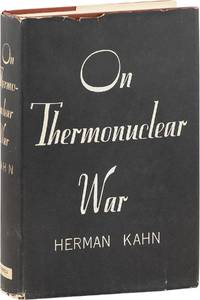
196085542Princeton New Jersey: Princeton University Press 1960. First Edition. Octavo. 24cm. Publisher's terracotta cloth titled and ruled in black and gilt to spine. Dustjacket. xx; 651pp. Very light wear and bumping to spine ends and extremities strong and bright; internally clean and fresh; in a grey dustjacket with some minor edgewear and shallow chipping to the spine ends and edges a hint of toning to the spine panel and some light soiling and wear to the white rear panel. A very good handsome copy indeed.<br /> <br /> Kahn's deeply influential analysis of the spectre of thermonuclear war partly intended as a counterpoint to von Neumann's apocalyptic concept of MAD or Mutually Assured Destruction. Kahn posits the strategic possibility of a 'winnable' nuclear conflict questions the solidity of a peace structure based on thermonuclear threat and makes the highly controversial for the time suggestion that the spectre of thermonuclear conflict itself isn't actually that terrifying and that the spectre of it is really what most people get worked up about. Kahn is an analytical strategist his conclusions are based in a zone in which emotion only plays the smallest part and upon publication the book elicited some powerful reactions from readers uncomfortable with the potential at the time inevitable deaths of millions being presented in the form of graphs and calm inexorable strategic detachment. Hubert Humphrey's contemporary review of the work stated "New thoughts particularly those which contradict current assumptions are always painful for the human mind to contemplate. On Thermonuclear War is filled with such thoughts."<br /> <br /> Perhaps as inevitable antidote to the grimly sardonic nature of his analysis Kahn's work earned him a place in the eternal halls of pop culture being the impromptu scriptwriter for the character of General Buck Turgidson in "Dr. Strangelove" and with popular understanding of his theories featuring prominently in fiction from Tom Clancy to "Wargames." Kahn is also credited with the coining of the phrases "Megadeath" as a unit of fatality and "Wargasm" describing the focus of the military personnel he worked with both of which have seeped into common usage. Kahn's borderline crude delivery combining horrifying statistics with jokes about how women will come to love their two-headed babies was deliberately jarring and intended to be equally disruptive to those locked in fearful uninformed paralysis and those working towards the wargasm. The reception of his book was one of the catalyzing elements that led Kahn to be a co-founder of The Hudson Institute after his work at RAND reached its inevitable close. Regardless of how divisive Kahn was both in theory and delivery "On Thermonuclear War" ranks as one of the most important 20th century works of strategic analysis right down to the title being an updated and expanded nod to von Clausewitz's "On War. Princeton University Press unknown
1957106646<p>Large 8vo softcover illustrated 579 pp. Lower spine and bottom front cover chipped and missing a small portion paper fragile some aging; otherwise fair to good condition. Published by the government and edited by Samuel Glasstone this work tells the reader everything they need to know about nuclear weapons. Illustrated with photographs and charts to make sure you get the picture.</p> United States Atomic Energy Commission.
197859785Portland OR: Trojan Decommissioning Alliance 1978. One atlas folio poster. 17 x 21.25 in. printed in blue & brick-red on tan-coloured textured paper unidentified photo of couple on verso minor creasing edgewear very minor pinholes at corners still a VG exemplar from the library of Sam Oakland 1934-2014 was an English professor poet and author and bicycle advocate who started rallying bicycle riders in the late 1960’s and led groups in support of Oregon’s groundbreaking 1971 Bike Bill. First edition of this exceedingly scarce protest poster for Jesse Colin Young of the “Youngbloods†benefit concert raising funds for the famed Oregon-based anti-nuclear protest group Trojan Decommissioning Alliance. The previous August 1977 the group led by Nina Bell and Norman Solomon had carried out the first civil disobedience protest occupation of a U.S. nuclear power plant. Sixty-eight protesters were arrested and the group continued to organize and protest in the remaining months of 1977. By the time this poster was issued they had even issued the Trojan Decommission Alliance Occupation Handbook for another series of civil disobedience protests held August 6-9 1978 which resulted in 100’s more arrests. No copies located in Worldcat; See: Gregory Nipper Progress and Economy: The Clash of Values Over Oregon’s Trojan Nuclear Plant 2005. Trojan Decommissioning Alliance, unknown
100-26131L. Ron Hubbard. Hardcover. Good. Good condition with wear and markings. L. Ron Hubbard hardcover
9810208014New. Brand new and still unused unknown
20081348697PN. New. 2008. Soft Cover. This is a reprint edition. . PN paperback
0841238375New. hardcover. New. Satisfaction Guaranteed or your money back. hardcover
199287382La Grange Park IL: American Nuclear Society 1992. Presumed First Edition First printing. Hardcover. Very good. xii 193 3 pages. Footnotes. Illustrations a few with color. Tabular data. Bibliography. Illustrated front cover. No dust jacket present. It's been 50 years since the Chicago Pile experiment and the first controlled chain reaction. Anonymous volunteer contributors from the ANS have put together this history which ends with a celebration of the future of nuclear power but does not talk of what to do with radioactive waste. This book was prepared by a volunteer effort of a large number of people over several months. The authors take responsibility for the choice of material on the many possible issued covered. It was the belief of the authors that the beneficial impacts of nuclear energy while already enormous represent only a small fraction of the benefits yet to be gained and that this brief history of the first 50 years of the controlled nuclear chain reaction represents only the first phase of the nuclear era. The contents include Introduction Chicago Pile No. 1: The First Controlled Nuclear Chain Reaction; Development of Nuclear Power Plants in the United States; Development of Nuclear Power Plants in Canada and Europe; Status of Nuclear Power Development; Other Peaceful Applications of Nuclear Energy; Nuclear Fuel Technology; Nuclear Safety; and Working Toward a Nuclear Future. Chicago Pile-1 CP-1 was the world's first artificial nuclear reactor. On 2 December 1942 the first human-made self-sustaining nuclear chain reaction was initiated in CP-1 during an experiment led by Enrico Fermi. The secret development of the reactor was the first major technical achievement for the Manhattan Project the Allied effort to create nuclear weapons during World War II. Developed by the Metallurgical Laboratory at the University of Chicago CP-1 was built under the west viewing stands of the original Stagg Field. Although the project's civilian and military leaders had misgivings about the possibility of a disastrous runaway reaction they trusted Fermi's safety calculations and decided they could carry out the experiment in a densely populated area. Fermi described the reactor as "a crude pile of black bricks and wooden timbers." After a series of attempts the successful reactor was assembled in November 1942 by a team of about 30 that in addition to Fermi included scientists Leo Szilard Leona Woods Herbert L. Anderson Walter Zinn Martin D. Whitaker and George Weil. The reactor used natural uranium. This required a very large amount of material in order to reach criticality along with graphite used as a neutron moderator. The reactor contained 45000 ultra-pure graphite blocks weighing 360 short tons and was fueled by 5.4 short tons of uranium metal and 45 short tons of uranium oxide. Unlike most subsequent nuclear reactors it had no radiation shielding or cooling system as it operated at very low power - about one-half watt. The success of Chicago Pile-1 provided the first vivid demonstration of the feasibility of the military use of nuclear energy by the Allies as well as the reality of the danger that Nazi Germany could succeed in producing nuclear weapons. Previously estimates of critical masses had been crude calculations leading to order-of-magnitude uncertainties about the size of a hypothetical bomb. The successful use of graphite as a moderator paved the way for progress in the Allied effort. The Germans had failed to account for the importance of boron and cadmium impurities in the graphite samples on which they ran their test of its usability as a moderator while Leo Szilard and Enrico Fermi had asked suppliers about the most common contaminations of graphite after a first failed test. They consequently ensured that the next test would be run with graphite entirely devoid of them. In 1943 CP-1 was moved to Red Gate Woods and reconfigured to become Chicago Pile-2 CP-2. There it was operated for research until 1954 when it was dismantled and buried. The stands at Stagg Field were demolished in August 1957; the site is now a National Historic Landmark and a Chicago Landmark. American Nuclear Society hardcover
1992Q-0894485571Amer Nuclear Society 1992-12-01. Hardcover. New. In shrink wrap. Looks like an interesting title! Amer Nuclear Society hardcover
1997008627American Nuclear Society 1997. Hardcover. Fine. August 1-14 1997. Amelia Island Plantation Florida. Very Nice Clean Copy. No marks or writings pages bright and clean binding tight and sound. Carefully packaged and shipped in box. pp 601-1071 American Nuclear Society hardcover
Z1-E-014-01535Amer Nuclear Society. Used - Good. Ships from UK in 48 hours or less usually same day. Your purchase helps support Sri Lankan Children's Charity 'The Rainbow Centre'. Ex-library so some stamps and wear and may have sticker on cover but in good overall condition. 100% money back guarantee. We are a world class secondhand bookstore based in Hertfordshire United Kingdom and specialize in high quality textbooks across an enormous variety of subjects. We aim to provide a vast range of textbooks rare and collectible books at a great price. Our donations to The Rainbow Centre have helped provide an education and a safe haven to hundreds of children who live in appalling conditions. We provide a 100% money back guarantee and are dedicated to providing our customers with the highest standards of service in the bookselling industry. Amer Nuclear Society unknown
1966730807PN. New. 1966. Soft Cover. Date is original print. This is a reprint edition. . PN paperback
19911130308.38American Nuclear Society La Grange Park IL. 1991. Paperback. Good. 4to paperback. VOLUME 2 ONLY: Aerospace Power Systems; Conversion Technologies. Good condition. Covers lightly edge-rubbed rear cover creased; contents clean binding tight. 569 pp. illus. American Nuclear Society, La Grange Park, IL. paperback
199574849La Grange Park IL 1995. Wraps. Very good. vii 1 86 pages. Footnotes. Institution stamp on title page with date in ink. Among the members of the Special Panel were: Glen Seaborg Harold Bengelsdorf Harold Agnew Alexander Haig Bertrand Goldschmidt and Rudolph Rometsch. Laid in is a related item 11 pages and business card of the key conclusions and recommendations and other information. The American Nuclear Society ANS established an independent and prestigious panel to publish a report regarding the protection and management of civil and excess weapons plutonium. In terms of approach ANS focused on several short- and long-term issues. The short-term focus was on the disposition of excess weapons plutonium while the longer-range issue concerned the disposition of the plutonium being produced in the civil nuclear fuel cycle. The report contains recommendations that the members believed to be vital to US plutonium management policy it also was intended to serve as a tool for further use. The panel has concluded that immediate emphasis should be placed on the assurance that all unconverted materials are protected as securely as when they were part of the active weapon stockpiles. More importantly the panel also recommended prompt implementation of the so-called reactor option for disposing of surplus US and Russian weapons plutonium. The longer-term issues covered by the panel were those posed by the growing stocks of both separated plutonium and spent fuel generated in the world`s civil nuclear power programs. These issues included what fuel cycle policies should be prudently pursued in light of proliferation risks and likely future energy needs what steps should be taken in regard to the increase in the demand for power in the future and how plutonium in its various forms should be protected and managed to minimize proliferation. Overall the panel concluded that plutonium is an energy resource that should be used and not a waste material to be disposed of. paperback
1970mon0003277477PN 1970T. paperback. Good. . Volume 1 only. Bound into hardcover with original wraps bound-in. Cover shows minor wear and soiling pages are clean. PN paperback
197083909Washington DC: American Nuclear Society and United States Atomic Energy Commission 1970. Presumed First Edition First printing. Wraps. Fair. 4 106 pages. Front cover missing. Contents include: Plenary Session Nuclear Excavation Nuclear Excavation Effects Underground Nuclear Effects Radioactivity Oil and Gas Mineral Recovery Nuclear Operations Seismic Effects Water Resources Development Scientific Applications Underground Engineering Applications Closing Plenary Session and Index to Authors. This symposium on 'Engineering with Nuclear Explosives' reports to the Plowshare community both national and international the progress achieved since April 1964 the date of the Third Plowshare Symposium. In structuring the technical presentations contributions of broadest interest were placed at the beginning thus forming a common base of current information and applied science understanding developed in support of Plowshare technology. Sessions of specialty or pertaining to specific areas of application and engineering follow logically in the program. The Plenary Session reviewed the current status of the Plowshare Program from the technical government and industrial points of view. The 112 papers presented at 15 technical sessions covered all technical aspects of the Plowshare Program. The conference summary reviewed principal themes areas of significant advance and subjects requiring further attention that emerged during the technical conference. The full proceedings were issued in two volumes the fuller volume was reportedly approximately 850 pages. This volume consists of presentation summaries. Peaceful nuclear explosions PNEs are nuclear explosions conducted for non-military purposes. Proposed uses include excavation for the building of canals and harbors electrical generation the use of nuclear explosions to drive spacecraft and as a form of wide-area fracking. PNEs were an area of some research from the late 1950s into the 1980s primarily in the United States and Soviet Union. In the U.S. a series of tests were carried out under Project Plowshare. Some of the ideas considered included blasting a new Panama Canal constructing the proposed Nicaragua Canal the use of underground explosions to create electricity project PACER and a variety of mining geological and radionuclide studies. The largest of the excavation tests was carried out in the Sedan nuclear test in 1962 which released large amounts of radioactive gas into the air. By the late 1960s public opposition to Plowshare was increasing and a 1970s study of the economics of the concepts suggested they had no practical use. Plowshare saw decreasing interest from the 1960s and was officially canceled in 1977. The Soviet program started a few years after the U.S. efforts and explored many of the same concepts under their Nuclear Explosions for the National Economy program. The program was more extensive eventually conducting 239 nuclear explosions. Some of these tests also released radioactivity including a significant release of plutonium into the groundwater and the polluting of an area near the Volga River. A major part of the program in the 1970s and 80s was the use of very small bombs to produce shock waves as a seismic measuring tool and as part of these experiments two bombs were successfully used to seal blown-out oil wells. The program officially ended in 1988. As part of ongoing arms control efforts both programs came to be controlled by a variety of agreements. Most notable among these is the 1976 Treaty on Underground Nuclear Explosions for Peaceful Purposes PNE Treaty. The Comprehensive Nuclear-Test-Ban Treaty of 1996 prohibits all nuclear explosions regardless of whether they are for peaceful purposes or not. Since that time the topic has been raised several times often as a method of asteroid impact avoidance. American Nuclear Society, and United States Atomic Energy Commission paperback
1970mon0003244871American Nuclear Society 1970. Hardcover. Good. . No jacket. Book has shelf wear. Pages are tanning. American Nuclear Society hardcover
1970739753PN. New. 1970. Soft Cover. Date is original print. This is a reprint edition. . PN paperback
1970743921970. Presumed First Edition First printing. Hardcover. Good. 2 volumes. Volume 1 x 858 2 pages and Volume 2 vi 859-1785 5 pages. Illustrations. Footnotes. Formulae. References. Binding added proceeding soft covers present. Cover has some wear and soiling. Sponsored by the American Nuclear Society in cooperation with the Atomic Energy Commission. Related to the Plowshare program. In structuring the technical presentations contributions of the broadest interest were placed at the beginning thus forming a common base of current information and applied science understanding developed in support of Plowshare technology. Sessions of specialty or pertaining to specific areas of application and engineering follow logically in the program. Name of previous owner Jerry R. Kline present on fep of each volume. This is believed to be the Jerry Kline who served at the Puerto Rico Nuclear Center 1965-68 Argonne National Laboratories 1968-1973 and with the Atomic Energy Commission and as an Administrative Judge on the Atomic Safety and Licensing Board. Edward Teller was a presenter! This proceedings includes 112 papers presented at 15 technical sessions covered all technical aspects of the Plowshare Program. The conference summary reviewed the principal themes areas of significant advance and subjects requiring further attention that emerged during the technical conference. This proceeding is the record of this symposium. At this symposium there were 620 registrations peak attendance in technical sessions was 800 and 28 members of the press attended. There were 16 foreign countries represented and 24 universities. In terms of industrial firms 117 were from the United States and 18 were foreign. The International Atomic Energy Agency participated as did representatives from 5 foreign governments. hardcover
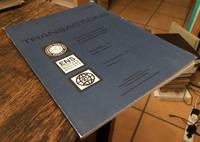
1989004998La Grange Park Illinois: American Nuclear Society Inc. 1989. Paper Back. Very Good/No Jacket. 4to - over 9¾" - 12" tall. 109pp.index; SC dark blue w/black; clean tight pgs. "Transactions" Volume 58. Record of papers presented at ANS national meetings. 8.5x11 <br/> <br/> American Nuclear Society, Inc. unknown
197540583Hinsdale IL: American Nuclear Society 1975. First Edition. First Printing. good. 836 wraps illus. index coves somewhat worn and soiled. Volume 22 of the Transactions of the American Nuclear Society. American Nuclear Society paperback