11 838 résultats
1968143730Berkeley: Berkley Graphics Arts 1968. Collection of five vintage bumper stickers from the 1968 political campaigns run via a collaboration between the Black Panthers and the Peace and Freedom Party. <br /> <br /> Each of the stickers were made for various Peace and Freedom Party political campaigns including: Mario Savio for California state senator Black Panther founders Huey Newton and Bobby Seale and Eldridge Cleaver for president and two stickers simply advertising the Peace and Freedom Party itself. <br /> <br /> In 1968 the Black Panthers would move away from direct actions including their legendary confrontations with the Berkeley police department and briefly into the political sphere when they joined forces with the PFP a left-wing anti-war party advocating Black liberation women's liberation and LGBTQ rights. The campaigns were largely seen as political statements as Cleaver was a convicted felon and technically ineligible for the presidency due to his being under the age of 35 by the time of inauguration and as Newton and Seale were on trial at the time repeatedly being denied their civil liberties. <br /> <br /> All items rare each with original peel-off paper backing and each between 4 x 13.5 an 4 x 15 inches. Near Fine and unused with light soil on two of the stickers and rubber stamp for the "Lancaster County Peace & Freedom Movement Organizing Committee" on the verso of one sticker. A few of these rear peel-off panels have come loose due to dryness but most are intact and the bumper stickers themselves are unaffected. Berkley Graphics Arts unknown
199319117EMunich: Schirmer / Mosel 1993. First Edition - Paperbound. From the library of the great film director and art collector Billy Wilder signed and inscribed by the author / photographer Helmut Newton to Mr. Wilder. Inscribed on the title page: “For Billy with love and admiration. Helmut. 4.1.1996.†An illustrated catalogue issued to accompany an exhibit of color and black & white photographs by Helmut Newton focused mainly on his fashion and nude photography as well as portraits cityscapes night scenes and ballet images. Including photographs of Darryl Hannah Anita Ekberg Leni Riefenstahl Francois Sagan Karl Lagerfeld Grace Jones Catherine Deneuve Jodie Foster Princess Caroline of Monaco Birgit Nielsen etc. Fine bright copy in printed wrappers. Billy Wilder’s legendary status in Hollywood as a director screenwriter and producer includes such classic films as Ninotchka Sunset Boulevard Double Indemnity The Lost Weekend Stalag 17 Some Like it Hot The Seven Year Itch The Apartment and The Fortune Cookie. Schirmer / Mosel unknown
2021132043Cambridge University Press. New. 2021. Hardcover. 1108954227 . - IN STOCK AND IMMEDIATELY AVAILABLE FOR SHIPMENT - BRAND NEW FLAWLESS COPY - with a bonus offer--; 7.7 X 2.8 X 11.6 inches; 1080 pages . Cambridge University Press hardcover
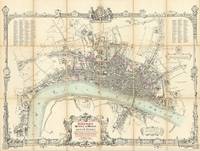
63984London: Published by Wm. Newton October 1855. Original large decorative lithographed plan of London 106.5 x 141 cm printed in red and black with original partial hand-colour sectionalised and backed onto linen together with the accompanying book pp.x120 in the original publisher's binding of brown cloth gilt the pair housed in modern brown cloth portfolio preserving original upper cover with gilt title. Some light toning along folds generally an excellent example of this impressive plan of London during the reign of King Henry VIII. The book is titled: 'London in the Olden Time. Being a Topographical and Historical Memoir of London Westminster and Southward accompanying a Pictorial Map of the City and its Suburbs as the existed in the Reign of Henry VIII. before the Dissolution of Monasteries. Compiled from Ancient Documents and other Authentic Sources by William Newton Author of a Display of Heraldry' London: Published for the Author by Bell and Daldy 1855. London: Published by Wm. Newton, October 1855. hardcover
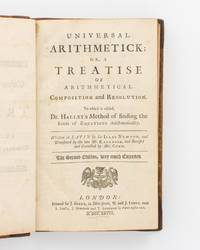
1728117773London: Printed for J. Senex W. and J. Innys J. Osborne and T. Longman 1728. 2nd Edition. Hardcover. Very Good. London Printed for J. Senex W. and J. Innys J. Osborne and T. Longman 1728 'Second Edition very much Corrected'/ 1720 first edition in English/ 1707 first edition in Latin. Octavo iv half-title and title leaves versos blank iv 271 1 publisher's advertisement pages plus 8 full-page plates. Early full polished calf decorated in blind on the sides later expertly recornered and rebacked retaining the original gilt-decorated spine with two contrasting leather title-labels; leather a little unevenly discoloured and rubbed with minor loss to the polished surface of the spine; scattered foxing moderate in places; plates offset; tiny blemish to the bottom margin of one plate a paper flaw well clear of the printed surface; trifling signs of age and use a shallow crease to the bottom corner-tip of the last ten leaves is about the extent of it; overall an excellent copy. The eight plates normally found with a small folding section are bound into this copy in an unfolded state by the simple expedient of having the narrow left-hand border of the printed surface of each plate deep in the gutter. The border is visible in four instances and although the border cannot be seen on the other four plates all of the other printed plate surface is visible. Interestingly the plates show no evidence of ever having been folded. Babson 202. Printed for J. Senex, W. and J. Innys, J. Osborne, and T. Longman hardcover
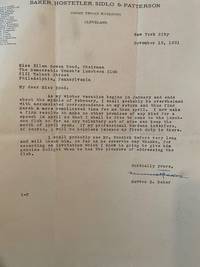
1940List1819V.P. 1940. With fifty-eight letters from Newton Baker 1924-1937. Generally fine condition. Ellen Gowen Hood was active in the Democratic party at both the local and national levels. An obituary from the Philadelphia Daily News in 1970 described her as “one of the earliest local advocates of women in politics.†She was the chairman of the Democratic Women’s Luncheon Club of Philadelphia for 20 years and had regular correspondence with women such as Edith Bolling Wilson and Eleanor Roosevelt. <br /> <br /> Democratic women’s clubs became active across the country after the 19th amendment passed in 1920 and the democratic party sought to mobilize women voters. As chairman of the Democratic Women’s Luncheon Club of Philadelphia Hood organized events with prominent political speakers and then had the speeches printed in book format. Without Hood’s side of the correspondence we don’t get insight into her philosophy of women’s participation in politics. We do however get a sense for the role that the club played in the Democratic Party. Baker was a periodic guest of the luncheon club and in his letters he praised the organization saying “I think I have never addressed a more intelligent or obviously influential audience†and "I think there is no more useful forum anywhere. They print the addresses made at their luncheons and give them a wide circulation throughout the country so that their pamphlets are now in libraries and in the hands of studious and thoughtful people everywhere." As an avid supporter of Wilsonian ideas and the League of Nations Hood’s political intention with the club seems more focused on bringing speakers that would highlight those causes than specifically speaking to women’s participation in politics.<br /> <br /> The letters from Baker to Hood reveal their shared political beliefs and goals. Their letters are ongoing conversations about the League of Nations and the World Court; the Democratic Conventions in 1924 1928 and 1932; and how democrats should govern following the Great Depression and prohibition. Baker frequently recommends essays and speeches for Hood to read and also helps connect her with potential speakers for the Luncheon Club. He addresses her as a political peer and we also get a sense of her professional persistence and savvy -- in nearly every letter for twenty years Baker responds to her requests for him to come and speak at the club.<br /> <br /> The letters give insight into Baker’s political beliefs as they evolve through the 1920s and 1930s. In the 20s-30s he writes as his thinking on the League of Nations changes from strongly feeling that the United States should join to discouraging it until there is complete support. In one letter Baker describes in confidence one of the only times he disagreed with President Wilson as Secretary of War -- when Wilson sent American troops to North Russia at the end of World War I. In a few memorable letters from 1932 Baker writes about his experience of the 1932 democratic convention and his sense of relief when he was not chosen for nomination.<br /> <br /> The letters also exhibit Baker’s writing style and his tendency to wax poetic about democratic politics. For example speaking about the limitations of the Democratic Party he writes “The trouble about it all is that nobody has yet invented anything better for the long run and the steady pull than democracy and so we just have to be patient with it as we are with the small misdoings of our children and take our joy out of the sure forecast of their fine performance when they have matured.â€<br /> <br /> Other correspondences in the collection include letters from Edith Bolling Wilson Eleanor Roosevelt Secretary of State Cordell Hull historian and diplomat Claude Bowers and Bess Truman. There are also several letters from Ralph Hayes Baker’s wartime secretary in the war department and a central figure in Baker’s 1932 presidential campaign. These letters go into detail about Baker’s role at the 1932 convention his legacy on labor issues and a rumor that he was Jewish.<br /> <br /> Overall the collection provides insight into Democratic Women’s Clubs of the period. We suspect the Baker letters to exist in duplicate at his archive but the collection still provides a succinct opportunity for research on the subject. <br /> <br /> Please contact us for a full inventory. unknown
1679323256London: Thomas Passinger 1679. hardcover. Illustrated with 14 folding plates. Rubricated title. 16 512 14 pages. Small thick 8vo contemporary blind-ruled calf re-backed in brown leather with red spine label well-rubbed. London: Thomas Passinger 1679. First edition. A very good copy of this unusual book with some light foxing throughout. From the library of Harrison D. Horblitt with his bookplate. --Wing N-1055.<br/> <br/> Early English pedagogical treatise on mathematics. John Newton 1622-1678 was a mathematics teacher and rector of the mathematics school at Ross Herefordshire. Designed as a practical guide on the instruction of mathematics the work includes sections on surveying geometry and astronomy and geography as well as tables to determine area and other calculations. The preface stresses the need for mathematics as part of general education.<br/> <br/> Thomas Passinger unknown
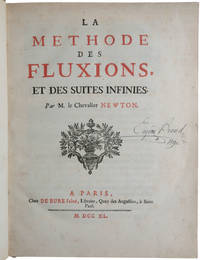
17405802Paris: De Bure l'aine 1740. First edition. <p>First edition in French of Newton's first exposition of his fluxional calculus translated with a long and impotant preface by the celebrated naturalist Comte de Buffon. Originally written in 1671 in Latin this was Newton's first comprehensive presentation of his method of fluxions which according to Hall 'might have effected a mathematical revolution in its own day' Philosophers at War pp. 65-6. It should properly be placed first in the great trilogy of Newton's major works: Fluxions Principia 1687 and Opticks 1704.</p>. BUFFON'S TRANSLATION OF NEWTON'S EXPOSITION OF CALCULUS. <p>First edition in French of Newton's first exposition of his fluxional calculus translated with a long and important preface by the celebrated naturalist Comte de Buffon. Originally written in 1671 in Latin this was Newton's first comprehensive presentation of his method of fluxions which according to Hall 'might have effected a mathematical revolution in its own day' Philosophers at War pp. 65-6. It should properly be placed first in the great trilogy of Newton's major works: Fluxions Principia 1687 and Opticks 1704. Newton's Methodus fluxionum remained unpublished until its English translation by John Colson in 1736. In it he presents a method of determining the magnitudes of finite quantities by the velocities of their generating motions. At its time of preparation it was Newton's fullest exposition of the fundamental problem of the calculus in which he presented his successful general method. Newton prepared this treatise just before his death. The autograph manuscript which survives in Cambridge University Library was entrusted to Henry Pemberton after Newton's death but he did not publish it. John Colson 1680-1760 based his translation on a copy of Newton's original manuscript made by William Jones. Both Newton's manuscript and Jones's copy lack a title page and it is unknown what title if any Newton gave to the manuscript. The title 'De methodus fluxionum' originates with Colson. In the preface Colson writes "I thought it highly injurious to the memory and reputation of our own nation that so curious and useful a piece should be any longer suppressed." Buffon translated Colson's edition in 1737 and added his lengthy preface the following year. The most interesting part of the preface is that dealing with the conception of the infinite and the metaphysical errors to which it leads. This includes a discussion of Berkeley's The analyst 1734 which oddly he criticizes although Berkeley's conclusions are very similar to his own.</p> <br /> <p>Provenance: Eugène Brand signature on title dated 1890.</p> <br /> <p>Newton wrote three accounts of the calculus. The composition of the first a tract entitled 'De analysi per aequationes numero terminorum infinitas' resulted from Newton's reception from Isaac Barrow in the early months of 1669 of a copy of Mercator's Logarithmotechnia a work which contained the series for log1 x. The work in which Newton demonstrated his much more general methods of infinite series was not published until 1711 when William Jones included it along with a number of other tracts in his Analysis per quantitatum series. In 'De analysi' however Newton "did not explicitly make use of the fluxionary notation or idea. Instead he used the infinitely small both geometrically and analytically in a manner similar to that found in Barrow and Fermat and extended its applicability by the use of the binomial theorem. . It will be noticed that although the work of Newton contains the essential procedures of the calculus the justification of these is not clear from the explanation he gave. Newton did not point out by what right the terms involving powers of o were to be dropped out of the calculation any more than Fermat or Barrow . His contribution was that of facilitating the operations rather than of clarifying the conceptions. As Newton himself admitted in this work his method is 'shortly explained rather than accurately demonstrated'" Boyer The Concept of Calculus p.191.</p> <br /> <p>It was first in 'Methodus fluxionum' that "Newton introduced his characteristic notation and conceptions. Here he regarded his variable quantities as generated by the continuous motion of points lines and planes rather than as aggregates of infinitesimal elements the view which had appeared in 'De analysi'. . In the 'Methodus fluxionum' Newton stated clearly the fundamental problem of the calculus: the relation of quantities being given to find the relation of the fluxions of these; and conversely" ibid. pp. 192-3.</p> <br /> <p>In Newton's third exposition De quadratura which was composed some twenty years after 'Methodus fluxionum' and published as an appendix to the Opticks "Newton sought to remove all traces of the infinitely small" ibid.</p> <br /> <p>"It was often lamented that the world had had to wait so many years to see Newton's masterpiece on fluxions. It is astonishing to realize that publication sixty years beforehand would have changed the history of the calculus and would have avoided for Newton any controversy over priority. In 1736 all the results contained in Newton's treatise were well known to mathematicians. However it was too concise for a beginner and Colson added almost 200 pages of explanatory notes. His commentary contributed to the establishment of a kinematical approach to the problem of foundations. In his explanatory notes Colson presents the 'geometrical and Mechanical Elements of Fluxions'. He writes:</p> <br /> <p>'The foregoing Principles of the Doctrine of Fluxions being chiefly abstracted and Analytical. I shall here endeavour after a general manner to shew something analogous to them in Geometry and Mechanicks: by which they may become not only the object of the Understanding and of the Imagination which will only prove their possible existence but even of Sense too by making them actually to exist in a visible and sensible form'.</p> <br /> <p>"Colson was convinced that by using moving diagrams it is possible to exhibit 'Fluxions and Fluents Geometrically and Mechanically . so as to make them the objects of Sense and ocular Demonstration'. The motivation for using the geometrical and mechanical elements of fluxions is clearly that of guaranteeing an ontological basis to the calculus; in fact:</p> <br /> <p>'Fluents Fluxions and their rectilinear Measures will be sensibly and mechanically exhibited and therefore must be allowed to have a place in rerum natura'.</p> <br /> <p>"Colson's approach to the calculus is representative of a whole generation of British mathematicians: his 'sensibly exhibited rectilinear measures' of fluxions are a naive anticipation of Maclaurin's kinematic definitions of the basic concepts of the calculus" Guicciardini The Development of Newtonian Calculus in Britain 1700-1800 pp. 56-57.</p> <br /> <p>"In his preface . Colson noted:</p> <br /> <p>'The chief Principle upon which the Method of Fluxions is here built is. taken from the Rational Mechanicks; which is That Mathematical Quantity particularly Extension may be conceived as generated by continued local Motion; and that all Quantities may be conceived as generated after a like manner. Consequently there must be comparative Velocities of increase and decrease during such generations whose Relations are fixt and determinable and may therefore . proposed to be found.'</p> <br /> <p>"Thus a line or a curve was seen as generated by a continuously moving point a surface by the motion of a line and a solid by the motion of a surface. After defining fluxions fluents and moments Newton went on to show how within this framework significant results could be derived. Following an introduction in which it was shown how equations could be solved with the use of infinite series seven major problems were considered:</p> <br /> <br /> From the Following Quantities fluents given to find their fluxions.<br /> From the given Fluxions to find the Flowing Quantities.<br /> To determine Maxima and Minima of Quantities.<br /> To draw Tangents to Curves.<br /> To find the Quantity of Curvature in any Curve.<br /> To find the Quality of Curvature in any Curve.<br /> To find any number of Curves that may be squared"<br /> <br /> <p>Gjertsen Newton Handbook p. 158.</p> <br /> <p>"Buffon did start his scientific career as a Newtonian. He agreed that science should search for nature's laws and that those laws should be as simple and as universal as possible. Buffon's strong stance in favor of an orthodox Newtonianism was most obvious during his academic polemics with Alexis Clairaut. Buffon also published translations of two English books: Stephen Hales's Vegetable Staticks 1735 and Newton's Treatise on Fluxions 1740. The young man who wrote the prefaces to these books praised the experimental spirit of the English. But to what extent did these texts in fact express Buffon's supposed Newtonian position .</p> <br /> <p>"The case of the preface to Newton's Fluxions 1740 was a different matter since it appeared to be a sign of allegiance both to Newton and to mathematics in the guise of the calculus. But in fact Buffon's preface while acknowledging the perfect clarity of Newton's ideas developed a metaphysical critique of the concept of the infinite that had been closely tied to the practice of geometry. Buffon asserted that our daily experience by means of sensation is restricted to the limited the finite-and therefore that the arithmetical or geometrical infinite had no actual existence. The preface to the Fluxions far from being a sign of Buffon's loyalty to mathematical conceptions of science instead stressed the lack of reality of mathematical ideas. Some of these strong statements would later be developed near the end of the 'Premier discours' of the Histoire naturelle" Hoquet pp. 39-41.</p> <br /> <p>"In his preface Buffon rewrote the history of the calculus - drawing inspiration largely from a book that Fontenelle had published in 1727 Élémens de la géométrie de l'infini - in which he sided strongly with Newton against Leibniz. He was rightly criticized for his lack of objectivity and he became closely tied with English scholars whose point of view he blindly adopted. In France furthermore he became involved with Clairaut Maupertuis and Voltaire in a battle in defense of Newton. His translation and preface must be viewed from his perspective - historical objectivity was not his main concern .</p> <br /> <p>"The debate on infinity tells us something about Buffon's intellectual temperament . At the end of the seventeenth century a lengthy evolution of ideas had led to the Newtonian conception of an infinite time and space and therefore an infinite universe . Calculus gave a new topicality to this philosophical debate since it raised the question of whether the infinitely small quantities manipulated by the new calculus really existed. Leibniz did not believe so . In 1727 Fontenelle defended their real existence and Buffon seemed at first to have accepted his argument. He now attacked Fontenelle without naming him .</p> <br /> <p>"Buffon rejected Fontenelle's conclusion mainly because he did not differentiate between geometrical and metaphysical infinities. 'The idea of infinity' he said 'is only an idea of absence and has no concrete representation.' Even 'space time and duration are not real Infinities.' Likewise 'there is no number that is at present Infinite or infinitely small or smaller or bigger than an Infinity etc.' Because 'Numbers are no more than representations and never exist independently of the things they represent' they do not have a 'real existence' and things themselves cannot be infinite .</p> <br /> <p>"The direct consequence of this philosophy was that mathematics does not teach us anything about reality. More precisely - and here Buffon distanced himself radically from Fontenelle - mathematics does not have its own reality. Fontenelle gives an intellectual reality to numbers and geometrical figures independent of all physical and metaphysical reality. For Buffon there was only physical reality. Thus mathematics was only a tool practical even indispensable but nothing more .</p> <br /> <p>"The last argument in which Buffon intervened was the one that the idealistic philosopher Berkeley had provoked by attacking the metaphysical foundations of calculus .it is clear that Buffon addressed it only to defend his friend the English doctor and mathematician James Jurin. Regardless of what he said Buffon certainly had not read Berkeley's book The analyst 1734 attentively otherwise he would have seen that Berkeley's criticisms of the status of the infinitely small corresponded exactly to his own although they were based on an extremely different metaphysics. As with Leibniz the fundamental philosophical differences prevented Buffon from recognising what they had in common. His attack on Berkeley was more satire than philosophical discussion. By intervening so lightly into a serious debate Buffon exposed himself to criticism. The interesting thing about this episode is that it shows his friendship with James Jurin and suggest that it was Jurin who had advised him in the Leibniz-Newton controversy" Roger pp. 34-38.</p> <br /> <p>Babson 173; Macclesfield 1533; Wallis 236. Hoquet 'History without Time. Buffon's natural history as a nonmathematical physique Isis 101 2010 pp. 30-61. Roger Buffon: A Life in Natural History 1997.</p> <br/> <br/> 4to 255 x 196 mm pp. xxx 4 errata and privilege 148 title printed in red and black woodcut figures in text. Contemporary quarter-morocco and marbled boards spine ruled and in gilt with red lettering-piece a little rubbed joints starting. De Bure l'aine unknown
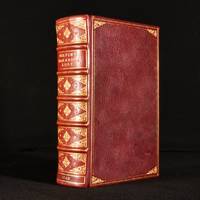
1760838P7DBirmingham; London: John Baskerville; J. and R. Tonson 1760. Leather. Near Fine. 10" by 6.5". None. A beautiful Baskerville edition of John Milton's 'Paradise Lost' and 'Paradise Regain'd' both epic poems bound here in one volume. A Baskerville edition.Complete as two volumes bound in one.ESTC citation number T134228 and N11290 - 'Paradise Regain'd' with 'Life of Milton' paginated in Roman numerals.List of subscribers to the front of 'Paradise Lost'. Pages 69 231 235 262 and 330 misnumbered 96 131 135 268 and 230.Bound by BookEnds.Collated complete.Both of John Milton's epic poems bound in one volume 'Paradise Lost' and 'Paradise Regain'd'.'Paradise Lost' is an epic blank verse poem concerning the biblical Fall of Man with the temptation of Adam and Even and their subsequent expulsion from the Garden of Eden. The poem is considered to be one of the greatest works of literature ever written.The sequel 'Paradise Regain'd' is likewise a blank verse poem though is much shorter than its predecessor being described as a brief epic.Written by John Milton a seventeenth century English poet who is best known for 'Paradise Lost'. He wrote during a period of political upheaval and religious flux in England with the English Civil War.John Baskerville was an important and pioneering printer and type designer who invented 'wove paper'.Prior owner's ink inscription to the verso of the front blank. Prior owner's ink inscription to the head of the title of 'Paradise Lost'. In a modern crushed morocco binding. Externally smart. A little very light rubbing to the extremities and a couple of very faint marks to the boards. Prior owner's ink inscription to the verso of the front blank. Internally firmly bound. Pages are lightly age toned and generally clean with the occasional spot. Tide mark to the gutter of the last few pages. Very small chip to the tail of the title page of 'Paradise Lost'. Prior owner's ink inscription to the head of the title of 'Paradise Lost'. Near Fine John Baskerville; J. and R. Tonson hardcover
140946700New York: Vintage Books 1972. Reprint. Very Good. First Vintage Books edition. Signed by Huey P. Newton and dated on the half-title page. Bound in publisher's illustrated wraps. Very Good with light wear to covers slight sunning and reading creases to spine price effaced from front cover front inner hinge over-opened and contents tanned. Newton was an African American revolutionary and political activist who founded the Black Panther Party. He served as the party's first leader and crafted its ten-point manifesto with Bobby Seale in 1966. Books signed by him are scarce. Vintage Books unknown
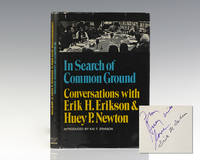
127535New York: W.W. Norton and Company 1973. First edition of this record of two conversations which took place between Newton and Erickson. Octavo original cloth. Signed by both authors on the front free endpaper "From Huey with love" and below signed "Eric. H. Erickson. Very good in a very good price-clipped dust jacket. Introduction by Kai T. Erikson. Jacket design by Robert Antler. Jacket photograph by Reginal A. Krasney. Books signed by Newton are scarce. W.W. Norton and Company hardcover
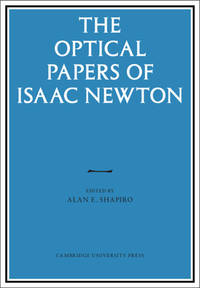
1740S13116Lausannae & Geneva: Marci-Michaelis Bousquet & Sociorum 1740. 1740. 4to. iv xxxii 363 1 pp. Half-title engraved frontispiece portrait of Newton engr. Jean-Louis Daudet after Vanderbank title printed in red & black 12 engraved folding plates title vignette of 4 cherubs and a female figure each using an optical instrument representing learning optics/perspective drawn by Delamoncein and engraved by Daudet head & tail pieces and woodcut initial letters drawn by Papillon index; first 11 leaves browned. Contemporary full vellum green leather gilt-stamped spine label edges with decorative red freckling as designed by the binder; foot of spine with faint ink marking "11-". Paper unevenly browned. Verso of title with small ink annotation "=1135="; rear pastedown with another notation "a 20.Luglio 1801." Very good. Third Latin edition edited by Bousquet with a dedication to Joannes Bernoulli. This edition contains the full array of 31 querries. / "Newton's contributions to the science of optics :: his discovery of the unequal refractions of rays of different color his theory of color and his investigations of 'Newton's rings' to mention only a few of the most noteworthy :: place him among the premier contributors to that science. . . . Today we recognize that his work on optics offers unique rewards in its exciting innovative conjunction of physical theory experimental investigation and mathematics and in the revealing glimpse that it provides of a crucial period in the evolution of experimental science." :: Alan E. Shapiro The Optical Papers of Isaac Newton: Volume 1 1984 p. xi. / Jean-Louis Daudet 1695-1756 who made the frontispiece and title vignette was an engraver and print publisher active in Lyon inherited business from his father Etienne Joseph Daudet. He flourished from 1722 till his death in 1756. Thereafter the business continued by his widow in association with his son-in-law Louis Martin Roch Joubert until 1773. / "Newton famously declared that it is not the business of science to make hypotheses. However it's well to remember that this position was formulated in the midst of a bitter dispute with Robert Hooke who had criticized Newton's writings on optics when they were first communicated to the Royal Society in the early 1670's. The essence of Newton's thesis was that white light is composed of a mixture of light of different elementary colors ranging across the visible spectrum which he had demonstrated by decomposing white light into its separate colors and then reassembling those components to produce white light again. However in his description of the phenomena of color Newton originally included some remarks about his corpuscular conception of light perhaps akin to the cogs and flywheels in terms of which James Maxwell was later to conceive of the phenomena of electromagnetism. Hooke interpreted the whole of Newton's optical work as an attempt to legitimize this corpuscular hypothesis and countered with various objections." / "Newton quickly realized his mistake in attaching his theory of colors to any particular hypothesis on the fundamental nature of light and immediately back-tracked arguing that his intent had been only to describe the observable phenomena without regard to any hypotheses as to the cause of the phenomena. Hooke and others continued to criticize Newton's theory of colors by arguing against the corpuscular hypothesis causing Newton to respond more and more angrily that he was making no hypothesis he was describing the way things are and not claiming to explain why they are. This was a bitter lesson for Newton and in addition to initiating a life-long feud with Hooke went a long way toward shaping Newton's rhetoric about what science should be. . ." / "The first edition of The Opticks 1704 contained only 16 queries but when the Latin edition was published in 1706 Newton was emboldened to add seven more which ultimately became Queries 25 through 31 when in the second English edition he added Queries 17 through 24. Of all these one of the most intriguing is Query 28 which begins with the rhetorical question "Are not all Hypotheses erroneous in which Light is supposed to consist of Pression or Motion propagated through a fluid medium" In this query Newton rejects the Cartesian idea of a material substance filling in and comprising the space between particles. Newton preferred an atomistic view believing that all substances were comprised of hard impenetrable particles moving and interacting via innate forces in an empty space as described further in Query 31." :: Newton's Cosmological Queries :: MathPages. / Grace K. Babson Sir Isaac Newton 1950 141; George J. Gray A Bibliography of the Works of Sir Isaac Newton 182; Wallis 182. See: Printing and the Mind of Man 172. Marci-Michaelis Bousquet & Sociorum, 1740. hardcover
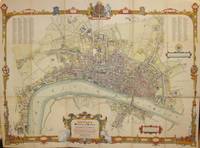
1855M7534London: Bell & Daldy 1855. Very good folding map laid down on contemporary canvas. Notes: This very decorative and large-scale mid-19th century map engraved on copper by Thomas Sherralt represents London at the time of Henry VIII circa 1517 from Westminster Abbey to the Tower. A pink line represents the area destroyed by the Great Fire of 1666. A decorative border encases the map illustrated by the royal coat of arms important English shields the names of important Englishmen and kings and allegorical figures around the title cartouche. Two indexes sit in the upper corners a compass rose and scale sit beneath the upper right index and a dedicatory cartouche sits in the lower right. The map folds and is backed by dark navy cloth.<br><br>The map is accompanied by a historical text by William Newton "London in the Olden Time." It is in matching dark navy cloth a small folio. Paginated x 120 pp. The whole comes in a navy cloth case with the title gilt on the upper board. Unlike the map the cloth case is scuffed and rubbed at the extremities in good condition. Size : 1020x1370 mm 40.16x53.94 Inches Coloring: Hand Colored Category: Maps City Maps; Maps Europe United Kingdom England London;Maps Folding Maps; Bell & Daldy hardcover
1855542536London: Bell and Baldy 1855. A very scarce hard cover within a protective rigid pocket folder both in very good condition for their age. An extensive and decorative historical map of the capital in the time of Henry VIII. Its full title is "London in the Olden Time being a Topographical and Hiftorical Memoir of London Weftminster and Southwark Accompanying a Pictoral map of the City and its Suburbs as they exifted in the Reign of Henry VIII before the Diffolution of the Monafteries." The map laid on linen is presented within the hard cover book. This details the history of London and contains a complete index to the map. According to details penned to title page this copy was presented to the Herne Bay Literary Institute by Miss Newton the daughter of the author William Newton d.10.07.1861 Herne bay in July 1883. Brown cloth pocket folder rigid has bright gilt title and decoration to the front. Light fading rubbing and wear to front edges and corners with bubbling to rear board where a section of cloth has lifted from card. No tears present. Pocket folder 'closing' flap is worn creased and faded with marble backing paper torn and missing in places. Boards show wear to edges and corners bumped light wrinkling and fading to cloth cover creasing to spine head and foot closed tear to spine foot split to spine head and occasional blemish. Front board is decorated as per card case. Map within shows some age-related discolouration at folds but details and colours are bright and true. A pink line represents the area of London destroyed by the Great Fire of London in 1666. Beautifully illustated border comprises of a royal coat of arms various English shields the names of notable Englishmen and Kings and allegorical figures around the title cartouche. Within pages and map are securely bound. Tanning and foxing is present to pages and reverse of map however none is overly significant and content is bright and clear. More pictures are available upon request. CN. Hardcover. Very Good/Very Good. Illus. by Sherratt Thomas Original engraving. Used. Bell and Baldy Hardcover
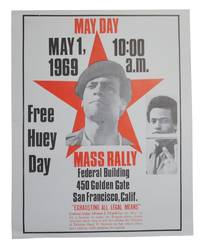
1969140945163San Francisco: Black Panther Party 1969. Original poster printed in black and red measuring 17 1/2" x 21 3/4". Untrimmed at left and right edges register marks still present. Near Fine very bright and clean with faint corner crease at bottom left. From the collection of a journalist/acivist who was involved in the defense of the Black Panthers.<br /> <p>A visually striking poster announcing a May Day rally to force the US government to grant Black Panther Party co-founder Huey P. Newton release on bail. The text at the bottom reads: "Exhausting all legal means. Federal Judge Alfonso J. Zirpoli has set May 1st for a hearing to make the Reagan-Alioto power structure show why it will not release the Minister of Defense Huey P Newton on bail which Huey has a right to while pending his appeal. [Black Panther Party] unknown
172819285London: S. Palmer 1728. FIRST EDITION. With engraved title-vignette of an observatory within a border of instruments 12 folding plates and historiated initials all engraved by J. Pine after J. Grison including the arms of Sir Robert Walpole to whom the work is dedicated. Complete with subscriber’s list including Isaac Newton’s 12 books. Half-calf over marbled boardsspine with gilt decorations and morocco label. An absolutely exquisite wide-margined copy preserved in a slipcase. First edition. Pemberton’s ability in mathematical problems impressed Newton and consequently he asked him to edited the third and definitive edition of his Principia mathematica 1726. The preface contains Pemberton’s recollections of Newton especially in his old age. However this work is most notable for its explanation of Newtonia philosophy. Pemberton 1694-1771 studied under Boerhaave at Leiden and was attached to St. Thomas’ Hospital in London. <br /> <br /> Babson 98; Gray 132. S. Palmer unknown
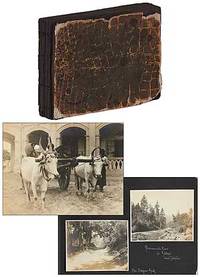
19034074691903. Softcover. Very Good. Oblong large octavo album. Worn leather covers and front cover detached. Contains 165 black and white gelatin silver photos lacking two others removed from their mounts of varying sizes ranging between 1.25" x 3" and 6" x 8" many with hand-written captions in white album ink. Newton B. Coghill's name and address are hand-lettered on the first page. Many of the photos show a group of young men and women on what was apparently their annual pilgrimages to Willow Camp beyond the relatively new settlement of Mill Valley first in September of 1901 then later in July of 1902 and finally in August of 1903. They are shown on the beach at Willow Camp on their way to Bonita Light House and Lone Pine Tree hiking Mt. Tamalpais the Castle Crags of Shasta County and the snow covered Mt. Shasta plus views of Mossbrea Falls Black Buttes and the source of the Sacramento River 93 photos.<br /> <br /> An additional 25 photos are primarily scenic views of unidentified mountains valleys and waterfalls presumably from the same area of Northern California. There are also 12 possibly stock photo images of Mt. Shasta with printed captions in the margins. There are six photos of a hike taken by a group of young men only captioned "One Sunday in January we walked from Mill Valley to the Summit of Bolinas Ridge" which includes images of the tired group lounging at the top with beer glasses in hand. There is a photo of the Tavern of Tamalpais. Seven images show the group of young men and women playing tennis at Mr. Billings' Court and Tournament and at Eastland Tennis Court. In addition there are two photos of Stanford University including one of an arch with a young woman in cap and gown; two photos at Ben Weeds Amphitheatre Berkeley Commencement Exercises in 1903 a game of tug-of-war five against one "We Boys have a Pull with Anita". Additionally there are images set in downtown San Francisco where Coghill worked one photo shows the "Donohoe Statue" at the junction of Market & Battery Streets in San Francisco; three more show scenes "at the store" during the Teamsters Strike July 1901 and one pictures a Chinese cobbler on Jackson Street. All of the photos are very good and clear. Newton B. Coghill 1873-1966 whose photographs are collected in this album was the son of Andrew Jackson Coghill of San Francisco. A.J. Coghill was at one time a partner with his two brothers James Henry Coghill and William Newton Coghill in the firm of J.H. Coghill & Co. later Coghill Lyon & Co. wholesale grocers and commission merchants in San Francisco. Newton whose occupation in several city directories from the early 1900's is listed as clerk or salesman may have been a part of the firm. The three photos of the Teamsters Strike of 1901 seems to indicate he was part of an affected business. The Donohoe Labor Statue he photographed in downtown San Francisco survived the earthquake in 1906 though the buildings visible in the photograph did not.<br /> <br /> This group of photos primarily shows his recreational activities with friends in the area of Mill Valley. This small city just north of San Francisco was incorporated in 1900. The decade preceding incorporation saw an increase in population in the region as people came from San Francisco to enjoy the hiking and beaches. The area later designated as Muir Woods was nearby. The annual trips Coghill and his friends made to Willow Camp renamed Stinson Beach in 1916 required both train and stagecoach travel to reach it. They played tennis on the courts built by entrepreneur and early property owner George Billings owner of 'Redwood Lodge.' Amongst his compatriots on these trips some were apparently connected with Stanford University and University of California Berkeley. The two commencement photos at Ben Weed's Amphitheatre were taken in May of 1903 when the theatre was still under construction. President Theodore Roosevelt gave the commencement address that year. unknown
133991Hardcover. Book Condition: Very Good. Jacket Condition: No Jacket. Atlantic Monthly Press New York NY 1918. First Edition. 1st Printing. 355 pages. A. Edward Newton's own Copy. Front endpaper has pamphlet 'Christmas 1918' pasted with text 'I am permitted by my friend Christopher Morley - to reprint for my friends two of his ballades which have given me much pleasure.' Front free page has the typical Oak Knoll bookplate. On verso is another bookplate with Daylesford Pennsylvania illustrating Newton's Reading Room. On page 268 a printed note is attached with a safety pin. 'The Author has made a slip of the pen in locating the Carlton Hotel in Piccadilly and not on the corner of Pall Mall and the Haymarket. His attention has been called to it but he preferred to leave the blunder as it was - and is - as a sort of lightning rod for critics to divert their attention from - possibly - probably - more serious blunders.' Below the text is obliterated - missing. A pencil written note is inside: 'Bought at Goodspeeds Oct. 24 1930.' Book was probably sold because of the obliteration of text. Goodspeed's at the time was Bostons best bookstore. Nice Firm Clean copy ! Spine label vertically snapped apart. Size: 8vo 7.75 - 9.75'' tall. Books on Books::Collecting Books RBR30 hardcover
VB1330300146LexisNexis. hardcover. Very Good. 108x36x160. VERY GOOD Contains one or two pages of minor writing or highlights and Underlines. Legible and in good shape. Minor to slightly heavy wears on cover from warehouse shelves. Used so may not contain codes/CDs/Inserts that is included with the book. LexisNexis hardcover
1966P18HS1194Macmillan London 1966. 1st Edition. HARDCOVER. No 27 of only 100 copies made signed by both Peterkiewicz and Souza on the title-page. Large 8vo in blue leather backed black boards silver lettering to spine top edge gilt original hand printed lithograph as frontispiece done in black ink over a colour printed London Tube map on gloss art paper specially made for this book the trade edition has a b/w reproduction of one of these lithographs as frontispiece. 185pp with 22 hand tipped-in line illustrations all printed on off-white proof paper. __CONDITION : An extremely well preserved AS NEW unmarked copy in an almost AS NEW slip-case corner tips are faintly shelf rubbed. An excellent copy. . NOTE: Depending on destination this item may require an extra payment for insurance. If so orders made by card will be completed only after you have approved any such extra cost. __To see more of our Art Monographs etc type DbbARTIST in the Keywords search box __We always ship in PROTECTIVE CARD PARCELS Macmillan, London hardcover
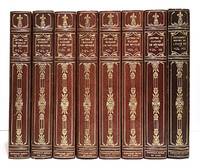
1927655804J. P. Horn and Company 1927. Limited Edition. Leather Binding. Near Fine. 8 volumes including the document volume. One of 1550 sets printed of the Carnavalet edition of which this is #57. This is one of a small number of copies include which includes a signed original document by King Louis XIV of France believed to be 100 sets. The set is beautifully bound by Whitman Bennett in 3/4 plum morocco over marbled boards spines with raised bands gilt floral devices covers sectioned with a single gilt fillet top edge gilt marbled endpapers light rubbing. The document volume is matcing full morocco with a burgundy cloth chemise. With a hand-colored portrait by Clara Tice opening Volume I. Hand-colored frontispieces in each volume b/w illustrations in text. The signed Louis XIV is a hand-written military appointment on vellum from 1689 in very good condition signed at foot by the Sun King himself folded has some wear; clipped at lower right presumably to remove a seal. Madame de Sevigne 1626-1696 one of the great figures in the history of French literature. J. P. Horn and Company unknown
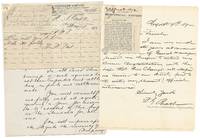
1892457459Cincinnati; Chicago 1892. Near Fine. A small archive of six letters written to C. Jay French general manager of the American Bell Telephone Company including two holograph letters and a telegram written in 1879 by the Theodore Vail who oversaw the building of America's first coast to coast telephone system. The remaining four letters are from four business colleagues in 1892. Each set of letters is neatly pinned together at the upper left corner: the first with an autograph note by French; and the second with a clipping outlining French's career. Both sets are in fine condition overall.<br /> <br /> Contemporary journalists called Theodore Vail the “Cincinnatus of Communications†and modern biographers call him “one of the two or three foremost organizing geniuses in the history of American industry.†In 1878 he was called to run Bell Telephone as its general manager just two years after Alexander Graham Bell patented his invention of the telephone in 1876. He helped establish the country’s first commercial telephone exchange lines in 1878 and organized the Bell empire in the 1880s.<br /> <br /> The two Vail letters retained by French reveal his direct management style: the first was written to the head of a regional Bell company at Cincinnati to introduce French: “… As he will be in your city for a few days I would like if you would give him all the insight possible into the manner of conducting an exchange and also any other information in regard to the Telephone business that may be in your power.â€<br /> <br /> The second letter outlines French’s duties: “You will make it your first duty to visit the different agencies of this Co. and establish a correct uniform and prompt system of reports to this Company … You will consult freely and fully with all agents … You will impress upon the agents the necessity of the Company being fully advised as to the operations of the agency. In all cases we desire reports of the business – In all cases also it is the desire of this Company that the agents’ interest be consulted.â€<br /> <br /> The other set of letters were written by four leading managers to congratulate French for his promotion to general manager of the American Bell Telephone Company in 1892. A scarce cache of letters documenting the beginning of America’s telephone exchange network. A list of both sets of letters is available. unknown
1813117185London: H.M.S.O. 1813. First edition thus of Newton's reports to the Privy Council or the Treasury during his position of Master of His Majesty's Mint the report signed and dated in print 21 September 1717. Newton was first appointed warden of the Mint in May 1696 rising to the position of Master following the death of Thomas Neale in December 1699. "Macaulay avers in his history that Newton - independently I suppose of his public action in reference to the Re-Coinage - has left no exposition of his opinions touching the currency. The eloquent historian thus leaves out of view the well-known report of 1717 upon which was based the reduction of the Guinea from 21 shillings and 6 pence to 21 shillings. It would seem then that the doctrinal importance of this Report had escaped recognition from the English historian though as I have had occasion to ascertain it was the subject of appreciative comment in France and Prussia more than a century ago. Indeed I read it first in a German translation printed at Berlin in 1762." Horton quoted in Gray. Foolscap folio 332 x 202 mm pp. 3. Docket title printed on final blank for folding. Disbound two sewing holes as issued. Two small sewing holes to centre fold; in excellent condition. Gray 350; Wallis 350.6. World Cat and Library Hub Discover record a 4-page version with the title "Return to an order of the House of Commons dated 1 March 1813; - for copies of all reports or memorials; made by Sir Isaac Newton when Master of his Majesty's Mint to the Privy Council or to the Treasury on the state of the coin of these realms: so far as relates to the Treasury." taken from the series of British Parliamentary papers; Accounts and papers Great Britain Parliament. Session 1812-13. House of Commons; 77. We can find no record of the present version. unknown
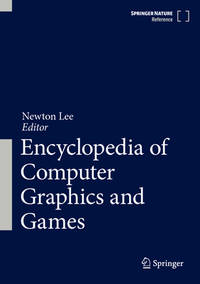
2024x-3031231597Springer-Nature New York Inc 2024. Hardcover. New. 2169 pages. 10.00x7.01x5.12 inches. Springer-Nature New York Inc hardcover
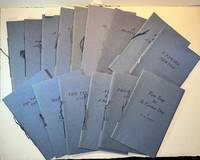
1923016676Daylesford PA: A.Edward Newton 1923. 1st Edition. Soft cover. Fine. A terrific collection of 19 items made up of primarily of the small blue pamphlets with stiff paper wraps that Newton sent out as Christmas presents to friends family and a limited number of subscribers. Also included are three hand-written letters to the owner of the collection Horace B. Hare a close personal friend of Newton's and Pennsylvania neighbor. Hare's wife Mary Ellen nee Cassatt was a niece of painter Mary Cassatt. The pamphlet collection has several items signed and inscribed by Newton. Also included is the important First Edition of Three Songs for St. Cecilia's Day by W.H. Auden The collection comes in a custom made folding box that Newton himself had made for Hare at a binder in London which is the subject of one of the letters and mentioned in another. The box is 3/4 navy morocco over blue cloth covered boards. Titles in gilt. Marbled liner. In generally nice condition however the front hinge is split fully along its length. Still it is holding firm by the liner beneath. All pieces are square tight and clean throughout with little or no wear. One or two have a slight dog-eared corner but very trivial defects. Items include: A Leech Drawing. 1923 Signed and inscribed presentation copy. "Mr. & Mrs. Horace Hare How time flies printed eleven years ago for my friends. A. Edward Newton". My Library. 1926 Signed & inscribed simply to/from. A Reprimand and What Became Of It. 1927 Nelson. 1928. The Christmas Spirit. 1930 Thomas Hardy Mermorial. 1931. Signed and inscribed simply to/from With laid-in printed folded sheet: "Tabloid" describing this as the 24th Newton ephemera. Also laid in are two Jimmy Hatlo cartoon bookplates. Ascot. 1933. Signed simply to/from with Newton's initials. Trollop Society. 1934. Trollop Society. 1934. Another copy. Staffordshire. 1935. Pope Poetry and Portrait. 1936. With addendum tipped in at page 8-9. Plus: A Tribute to A. Edward Newton. MacLeish Archibald et. al. 1940. "Issued from the Rare Book Room of the Library of Congress in an edition of one thousand copies December 1940". Auden W. H. Three Songs for St. Celia's Day. 1941. First Edition Limited Edition of 250 copies. Fore-edges slightly creased. Richardson Frederick. Letter from England to A. Edward Newton. 1940 With original mailing envelope. Laid in is a printed card: "The family of A. Edward Newton wish to take this way of acknowledging your expression of sympathy. Upon Newton's death. Richardson Frederick. Letter from England to A. Edward Newton. 1940. Another Copy lacking acknowledgment card. Plus three hand-written signed letters two with original envelopes. Two are from December 1934 and discuss the gift from Newton to Hare of the custom made box to hold these pamphlets his "Newtonia". The third letter is dated December 1939 and is an acknowledgment of a gift Newton received from Hare and the hope that they may get together soon. Clearly this was a close association. To conclude this remarkable gathering is a two-page 8.5" x 11" proof on onion skin dated June 1940 of a letter from Newton to be published as a Broadside with a third page written and signed by Newton describing the project and its limitation to 200 copies. The letter "Gives Newton's views on aiding England in the war and reprints an article he mailed to several newspapers titled 'Give Without Counting'". Newton died just two months later. Fleck Oak Knoll Books Cat. #86 Item 189 A.46 A simply gorgeous and quite unique collection. A.Edward Newton unknown