Boston Board of Fire CommissionersBiblio.com
2 550 résultats
0666486840.Ghardcover. Good. Access codes and supplements are not guaranteed with used items. May be an ex-library book. hardcover
0265871344.Ghardcover. Good. Access codes and supplements are not guaranteed with used items. May be an ex-library book. hardcover
1332068472.Gpaperback. Good. Access codes and supplements are not guaranteed with used items. May be an ex-library book. paperback
2014nn1023Editions Icone Graphic Album souple 2014 In-8 (15 x 21 cm.), album souple, 194 pages, 8e édition V2, pour Agent de service, quelques passages au fluo ; coiffes et coins un peu frottés, quelques plis à la couverture, bon état. Livraison a domicile (La Poste) ou en Mondial Relay sur simple demande.
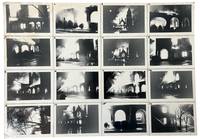
1968233001968. Fire destruction of Trinity United Methodist Church on South 2nd Street in Clearfield Pennsylvania photographed during the active overnight blaze of December 21 1968 in a dramatic sequential record of one of the borough's largest twentieth century urban fires. The archive captures the church while fully engulfed preserving flames erupting through the roofline smoke pouring from the arcaded façade hose streams striking the structure from darkened streets and the silhouette of the church tower rising above the fire. The photographs record not only the destruction of a major downtown religious landmark led at the time by Rev. Oliver H. R. Krapf but also the operational reality of late 1960s volunteer firefighting systems in small town Pennsylvania where borough police volunteer companies ladder apparatus hydrant pressure and regional mutual aid networks were rapidly assembled in an effort to contain a spreading structural fire. The blaze was first spotted around 2:10 a.m. by taxi driver Billy Knepp after which Fire Chief William Swisher summoned neighboring companies to prevent the fire from spreading beyond the church into the surrounding civic center.<br /> <br /> Photo archive of 16 silver gelatin photographs mounted to a large cardstock sheet measuring approximately 20" x 14" each image roughly 3.5" x 5" Clearfield Pennsylvania December 1968. Each photograph is numbered by hand from 1 to 16 and together they function almost cinematically moving through different stages and vantage points of the firefight. The images center the church's cut stone arcades and bell tower as bright interior firelight blows outward through the large arched openings and flames tear across the roof structure above. Several photographs show powerful hose streams cutting diagonally across the frame toward the burning façade while others pull back into wider nighttime street scenes where bare winter trees utility poles parked cars wet pavement and gathered onlookers remain visible beneath smoke and reflected firelight. One frame includes a firefighter seen from behind at street level facing the inferno while another captures a bicyclist or passerby entering the foreground as the church burns behind him. Multiple views emphasize the repetition of the long arcade row transforming the church exterior into a glowing sequence of arches illuminated by active fire inside the structure. The resulting series preserves not only the destruction itself but the visual atmosphere of the emergency response: steam smoke glare darkness reflective pavement and shifting vantage points from the surrounding streets as firefighters attempted to control the blaze.<br /> <br /> The archive is especially significant as documentation of pre modernized municipal fire response during a period when Pennsylvania boroughs depended heavily on intercompany volunteer assistance for major structural fires. The identified responding companies from Lawrence Township Hyde Curwensville Philipsburg and Chester Hill gives the group great specificity within the history of regional mutual aid firefighting networks. At the same time the photographs preserve the loss of an architecturally prominent early twentieth century Methodist church before widespread sprinkler retrofitting and later fire protection standards transformed many American religious and civic structures in the decades that followed. Mount toning with expected contrast loss and glare in several high intensity night exposures. Overall good condition. unknown
0365224243.Ghardcover. Good. Access codes and supplements are not guaranteed with used items. May be an ex-library book. hardcover
19682080202103901383Kyuryudo 1968. Soft Cover. Fine. Number of books: 1 book Kyuryudo paperback
0656085908.Ghardcover. Good. Access codes and supplements are not guaranteed with used items. May be an ex-library book. hardcover
1334205418.Gpaperback. Good. Access codes and supplements are not guaranteed with used items. May be an ex-library book. paperback
19761874009808Graphic Technology 1976. Hardcover. Good. Pages can have notes/highlighting. Spine may show signs of wear. ~ ThriftBooks: Read More Spend Less.Wear commensurate with age and use. Gift inscription in ink on front endpaper otherwise clean and unmarked copy. Light bumping visible to corners of boards and ends of spine strip. Light scuffing and smudging to boards and spine strip. Corner clipped from front flap. This could have light cosmetic flaws but remains in good condition. Dust jacket condition is Good. Secure packaging for safe delivery.Dust jacket quality is not guaranteed. Graphic Technology hardcover
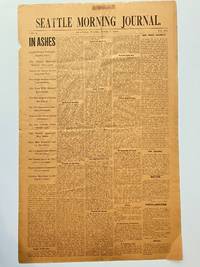
188911467Seattle: Journal Publishing Co 1889. First Edition. Single leaf. Good. 11 x 18 in. P. 1 printed recto only. Age toned single mellowed horizontal crease five-inch vertical closed tear from the top edge with aged cello tape repair verso small edge chips. Single-page issue of the short-lived Seattle Morning Journal published the day after the fire leading with the headline: "IN ASHES Seattle Sorely Visited by Fearful Fire." With their headquarters destroyed the Journal staff had temporarily moved into the printing office of Benjamin Baker Dearborn. <p>While the competing but long-established Post-Intelligencer on the same day incorrectly attributed the origin of the fire to an overturned glue pot in McGaugh's sign shop the Journal reports here "It is learned that the fire started in the carpenter shop under the sign works. A workman was melting glue with a gasoline lamp and the lamp exploded." This report has withstood historical scrutiny but has gone unrecognized.<br /> <p>Seattle's commercial Daily Trade Journal was started in 1888 but within a year had changed owners dropped "Trade" from its name and expanded focus to include daily local events. The Seattle Directory for 1889 lists the editor as E. W. S. Tingle. While the self-described Democratic-leaning paper survived the Great Fire the paper was only printed into the mid-1890s.Meany Newspapers of Washington Territory 48-49.<p>A very scarce item of Seattleana. Now housed in a clear archival sleeve with acid-free backing. Journal Publishing Co unknown
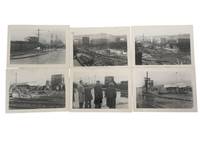
1948232471948. Seattle freight yard fire photo archive documenting the destruction and emergency aftermath of a rail served maritime industrial site in 1948. The photographs center a burned yard associated with the American Hawaiian Steamship Company a major intercoastal carrier that linked Pacific ports with Atlantic and Gulf Coast trade and maintained a substantial presence on Seattle's waterfront during the first half of the twentieth century. Rather than isolating a single ruined structure the group shows the working system around it: street access fire response rail lines lumber storage cargo handling space and the industrial buildings that tied Seattle's urban growth to port commerce.<br /> <br /> Photo archive of 6 black and white photographs each 3" x 4.5" Seattle Washington studio stamp en verso dated December 4 1948. The images show a broad debris field of charred timbers collapsed framing burned posts pooled water and smoke rising across a freight yard crossed by railroad tracks. Two views prominently include the sign for American Hawaiian S.S. Co. while another visible sign reads Keystone Steel & Wire Company placing the site within Seattle's maritime industrial district. One street view shows fire hoses snaking across wet pavement toward the still smoking yard and another frames a group of men in long overcoats and hats standing at the edge of the destruction surveying the scene. Utility poles warehouse buildings sidings stacked material and the hillside cityscape beyond the yard anchor the fire within a dense industrial section of Seattle shaped by port traffic and rail distribution.<br /> <br /> Seattle's maritime industry shaped the city from its earliest waterfront settlement into a major Pacific port where rail lines piers warehouses and steamship companies made Elliott Bay the engine of urban growth and commercial expansion. Minor edgewear and curling. Overall very good condition. These photographs preserve a short concentrated record of emergency aftermath on a working Pacific Coast waterfront at the start of the postwar shipping era when Seattle remained a major junction of rail and ocean transport and steamship firms still occupied prominent waterfront facilities. unknown
Features: Fire in the Mexican Gulf; The Marine Art of Arthur Briscoe; P & O Liner "Canton" of 1938; Ships on Stamps - The Chichester Breed; Dover Re-visited; Malta's National Shipping Line; The Barge Carriers - 3 - "LASH" on the North Atlantic; The John Herron Line. Book
ria9781138037021_inpPaperback / softback. New. New Book; Fast Shipping from UK; Not signed; Not First Edition; This latest fully updated Third Edition reflects the most recent developments in the field and ties together the changing standards for fire investigations with the fundamental scientific knowledge presented in the early chapters of th paperback
199158790ABStuttgart, Franckh-Kosmos Verlag / Ott Verlag, (1991). 4°quer (23x28), 127 S., mit 123 ganzseitigen farb fotograf Aufnahmen mit Beschreibungen, ill OPbd, ohne Gebrauchsspuren, offensichtlich ungelesen,
200558937ABBrilon, Verlag Podszun Motorbücher, (2005). 4° (29x22), 190 S., 1 Bl., mit zahlr. historischen und farb fotograf Aufnahmen, fotoill OPbd, ohne Gebrauchsspuren, offensichtlich ungelesen, frisch,
190813705ABBasel, Frobenius, (1908). 4°. (17) Bl. Mit 16 farbigen Illustrationen von Theodor Barth. Farbig illustrierter Orig.-Halbleinenband.
56635Paris, Trame Way, 1991, Edition de Luxe réservée à Monsieur Kerlakian Vincent, gd. in-4, plein chagrin bordeaux éd., titre doré sur dos, trois tranches dorées, jaquette photos et dessins coul. éd., 120 pp., très nb. photos et dessins, ainsi que de nombreuses reproductions de documents anciens en coul. et en noir, Sommaire, Très belle iconographie ancienne sur la vie des pompiers à travers les âges. Belle édition de luxe. Pas Courant. Très bon état
424p. + Frontis. Illustrated with numerous full page photographs and drawings. 8vo. Original full green cloth binding, lettered in red and black. Spine and front board decorated with scenes of the San Francisco earthquake and fire. Very slight wear at extremities. Hardbound. AMERICANA BOX 11 x3
190633036San Francisco: Issued by General Passenger Department Southern Pacific Company 1906. Rocq 12242. Some modest age toning to paper. Occasional split along a fold junction. A Very Good copy of a somewhat uncommon item with OCLC recording 7 holding institutions. One sheet printed both sides folded 3x. 8 pp of text. Illustrated with 3 panoramic b/w images 6-7/8" x 20" from photographs plus one city plan 2 pages in size. The 3 photographic images show 1 San Francisco the morning of April 18th 2 the intact residential section of the city as taken from an air ship over Twin Peaks & 3 the active & untouched San Francisco waterfront as of June taken by another air ship. Sheet size: 27-3/4" x 21". Folded: 10-1/2" x 7". Rocq mentions a 'pocket' none is present here. <br/><br/>A 'folder' issued by the Southern Pacific a few months after the conflagration to update interested parties stockholders that San Francisco was NOT destroyed is still active & viable and that the city's situation should now be viewed as an "Opportunity" with "the mighty forces that here created a great city . are now creating a greater one ." Issued by General Passenger Department, Southern Pacific Company unknown books
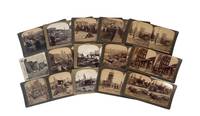
1906221651906. San Francisco 1906 earthquake and fire aftermath stereoview archive. One of the most devastating events in U.S. history Archive includes 15 stereoview photograph cards. Albumen and hand-colored prints on curved mounts. San Francisco California: Underwood & Underwood Keystone View Co. and others ca. 1906. Each measure 7" x 3.5". Many with detailed captions en verso. An extraordinary visual archive of fifteen stereoscopic photographs documenting the catastrophic destruction and human response to the 1906 San Francisco earthquake and fires. Published by prominent companies such as Underwood & Underwood and Keystone View Co. these stereoviews provide a layered immersive record of one of the most devastating urban disasters in U.S. history. The photographs vividly capture the obliteration of the cityscape the resilience of displaced residents and the scale of humanitarian relief efforts following the April 18 earthquake which killed more than 3000 people and left hundreds of thousands homeless. The stereoviews include panoramic views of leveled downtown blocks collapsed masonry and scorched ruins with iconic San Francisco landmarks-such as City Hall-looming gutted in the distance. Many images show military personnel laborers and civilians navigating streets reduced to rubble. Several cards portray temporary relief camps: refugees lining up for food under military supervision ad-hoc kitchens operated by volunteers and makeshift shelters constructed from salvaged corrugated iron. One notable hand-tinted card emphasizes the surreal almost painterly quality of the wreckage. Another particularly poignant image depicts a soup line under the caption "The bread line-at world's gift of food to the victims of earthquake and fire" highlighting the philanthropic aid provided to survivors. Overall this set exemplifies how stereoview photography functioned as both journalistic evidence and mass media spectacle offering middle-class Americans across the country a first-hand look at urban catastrophe. Beyond its documentary value the archive also reflects early 20th-century social hierarchies as the relief lines and laborers are primarily composed of working-class individuals and immigrants. Cards remain in very good condition overall with some edge wear and light soiling to mounts. Images retain strong contrast and clarity. A powerful immersive visual archive of America's most infamous natural disaster illustrating not only devastation but also the collective response and resilience that followed. unknown
A clean, unmarked book with a tight binding. Edge wear to cover. Previous owner's name inside. A Little Golden Book.
18542111902160201214Izumiya Hanbei version 1854. Soft Cover. Fine. Volume: 1 Izumiya Hanbei version paperback
Safety standards for small boat owners covering water-craft, marine equipment, safe design, construction and practice. 228 pages. Marks and spots on covers, particularly near fore-edge.