209 résultats
16210Two letters commending a female medical student Clara Cowles who is about to enter the field. The first is an autograph letter signed and dated 16 March 1893. 1 page handwritten on National Homeopathic Medical College of Chicago letterhead from the desk of W. M. W. Davison M. D. 9 x 5 ¾ in. Excellent condition with two horizontal fold lines. Davison writes in part: "Miss Cowles Kindly I wish to congratulate you for your most excellent paper." This letter also comes with a business card from W. M. W. Davison again dated March 16th 1893 which verifies that "Miss C S Cowles has passed the examination in Histology and Physiology and her standing is 90 in the former and 100 in the latter."<br/><br/>The second is a typed letter signed and dated January 24 1896. 1 page on The People's Health Journal letterhead from the desk of editors L. D. Rogers M.D. and Ida Wright Rogers M.D. two married doctors. 8.5 x 11 in. They write:<br/><br/>"Miss Clara CowlesEl Dorado Kas.<br/>Dear Miss Cowles:--<br/>Your favor of the 17th. together with your first examination papers came duly to hand. We have returned the papers. They were excellent. <br/>We thank you for the names of your two friends and will write to them. Let us hear from you often. <br/>Yours very sincerely Drs Rogers & Rogers"<br/><br/>Very good condition with two vertical fold creases and one horizontal one at center. Small tear at upper left crease. Comes with a joint business card for Drs. Rogers & Rogers and inscribed in pencil on verso is the address for Dr. E. S. Reed Dentist. Four more inscribed business cards from doctors are included. One of the cards is from Dr. E. S. Reed and has a neat inscription on verso in ink declaring that Miss C. S. Cowles "has a standing of 98 in Dental-Surgery for the session of 1892 & '93" signed by E.S. Reed Professor of Dental Surgery. Interesting 19th century correspondence related to a young woman's medical education and those who offered her professional support and encouragement. unknown books
16209Autograph letter signed from a male doctor E. C. Houston practicing out of Memphis TN to a woman doctor Lydia Bailey located in Philadelphia. 6 pages 7 ¾ x 5 in. Houston addresses the letter "Dear Doctor" and goes on to write about his interest in finding a wife who is "educated in the same profession" as himself. He writes that believes that he "could love her better" than one who didn't share his medical background. He goes on to list basic facts about himself and inquires about her background and physical qualities such as her "height weight and measurement around hips waist & chest". Very good condition with two worn horizontal fold lines in letter pages. Papers are separating at edges of fold lines sheets 2 and 3 have minor tape repairs. Light soiling from handling but overall clean and clear script. Includes original envelope Houston's calling card listing him as a medical doctor and a blank prescription sheet that lists his medical credentials. An interesting letter that demonstrates a unique social situation that educated professional women could face in the late 19th century. unknown books
16189Original vintage photograph of a female teacher directing male medical students dissecting a cadaver c. 1890. Black and white 3"x5" with back matting. One woman surrounded by four men lean over a table with a skeleton. Behind them is a chalkboard with anatomical pull down charts. Although women had participated in the informal practice of medicine for hundreds of years the United States and most industrialized nations did not allow women into the formal practice of medicine until the latter half of the 19th century. This female doctor was part of the first generation formally accepted by medical institution. She wears a medal indicating her importance and perhaps former military involvement. Early photographs of women in medicine are very rare photograph of surgery or dissection much rarer. <br/><br/>Women practiced in the medical field for hundreds of years until new licenser rules established in the Victorian era provided a means for their exclusion. The story of how women reclaimed their role in medicine is one of resourcefulness and determination. In 1849 the first American woman graduated medical school. The path was difficult; few medical schools would accepted them and the reception was not always welcoming. Female doctors were called not only to prove their ability to practice medicine but to justify their unique necessity to the field. Of all the specialties the most embattled for women is surgery; early on they faced a challenge obtaining education training and facilities. A perennial argument was that cadaver dissection necessary to training was inappropriate for the delicate female disposition. However this Victorian-era photograph showing a woman capably participating in cadaver dissection proves that in the words of Dr. Mary Putnam Jacobi the best known female doctor in 1891 "It is perfectly evident.that the opposition to women physicians has rarely been based upon any sincere conviction that women could not be instructed in medicine but upon an intense dislike to the idea that they should be. unknown books
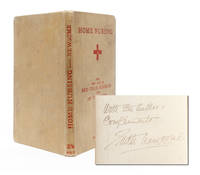
19163202London: The Scientific Press 1916. First edition. Very Good . Scarce first edition of a Red Cross manual designed both for emergency workers and women in the home. Original publisher's cloth binding titled in red on spine and front board. Boards a bit rubbed and soiled corners bumped. Faint offsetting to the endpapers. Inscribed by Edith Newsome on the front pastedown: "With the Author's Compliments Edith Newsome. 16.10.23." A scarce book institutionally and in trade OCLC reports only 11 copies in libraries this being the only one currently on the market. <br/><br/>Edith Newsome's first major work on nursing produced after she realized that her Red Cross lecture series could not provide complete enough information to train "those who have so nobly responded to the 'call of duty'; to do all that is in their power to tend and succour the brave men of our nation by proving themselves valuable and intelligent helpers." Indeed Newsome's work was released two years into World War I -- the first modern war which brought with it a horrifying number of previously unknown injuries and ailments. In addition to professional nurses women enrolled to assist as Volunteer Aid Detachments VADs because there simply were not enough women with medical educations to serve the nation's need. The present work is a stirring acknowledgement of this. Comprehensive in training VADs and new nurses in field operations it also contains information for women in the home who confronted infection illness or injury and served as domestic caretakers for men returning from the front. Very Good . The Scientific Press unknown books
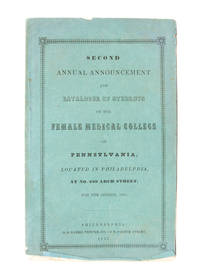
18512970Philadelphia: G.S. Harris 1851. First edition. Very Good . Original blue printed paper wraps printed to front. Some chipping and creasing to edges but overall intact and undamaged despite being quite delicate. Light scattered foxing throughout. Ownership signature of the college's original dean N.R. Mosely struck out at the top of the Faculty list on page 4; pencil ticks next to the names of several students listed in the catalogue on page 6. Exceptionally rare OCLC lists copies of this Announcement at only 2 institutions.<br/><br/>Only one year after Dr. Elizabeth Blackwell graduated valedictorian and became the first female M.D. in the U.S. the Female Medical College of Pennsylvania opened its doors. Located in Philadelphia it was the only the second school to open with the mission of training women in medicine -- having been preceded by the New England Female Medical College two years earlier in 1848. Founded by Quaker abolitionist and Underground Railroad activists who believed that women could make exceptional doctors "the college provided rare opportunities for women to teach perform research manage a medical school and with the eventual establishment of the Woman's Hospital in 1861 learn and practice in a hospital setting. It was the longest-lasting all-women medical school in the nation until it became coeducational in 1970" Mandell. The present Announcement predates these growths however showing the roots from which they emerged. One year running and the faculty remain largely male because there has yet to be an inaugural graduating class this would come in 1852; but already a female student Hannah E. Longshore is listed as a Demonstrator in Anatomy. Indeed Longshore and her sister Anna would both be part of the inaugural class of the college with the latter going on the author Discourses to Women in Medical Subjects 1897. Indeed the majority of women listed in this catalogue went on to become doctors even when it took time -- as it did for Hannah W. Ellis and Susanna H. Ellis both listed among the graduates of the 1865 class. 12 pages in all this scarce pamphlet contains Officers Corporators Faculty and Students of the school; an Announcement on the school's missions and accomplishments; information on Specialties available; Terms of enrollment; and a list of required Textbooks. It also conveys the excitement optimism and pride of those involved. "The Faculty of the Female Medical College of Pennsylvania are inspired by very different feelings from those that attended their efforts one year ago. Then they were about to enter into an untried path to engage in a great experiment.But that which was an experiment is an experiment no longer.give a woman knowledge commensurate with her natural qualifications enable her to go forth healing the sick and comforting the afflicted and she will bless the world." A rare survivor documenting that pivotal moment when women had been given the chance to prove their intellect rose to the challenge and made the future of the next female students more secure. Very Good . G.S. Harris unknown books
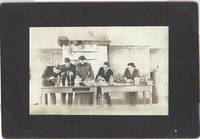
16672Women in Science Medicine Original Gelatin silver print photograph of a Rustic pharmacological laboratory with female technician c. 1910. Three individuals pose amongst dozens of glass vials containing medical powders and remedies. 3.5 x 5 in. Original black and white photograph. Two figures wear white aprons or smocks indicating their important role in mixing and measuring different medicines. The first university Pharmacology department was established in 1847 and thus began the formalization of this field of scientific research as the 20th century witnessed a steady increase in the number of new drugs that would improve the human condition tremendously. Verso inscription in pencil and pen in European language. Very good condition. unknown books
1919M8116Washington D.C.:: Government Printing Office 1919. 1919. 267 x 190 mm. Tall 8vo. 446 pp. Color frontis. extensively illustrated with photographs of aviation equipment in use physical examinations of flight candidates and test equipment constructed to test the physiological effects of flight conditions tables 1 folding index. Gilt-stamped navy cloth; rubbed inner hinge cracked. Very good. Government Printing Office, 1919. hardcover books
1919M8115Washington D.C.:: Government Printing Office 1919. 1919. 267 x 190 mm. Tall 8vo. 446 pp. Color frontis. extensively illustrated tables 1 folding index. Gilt-stamped navy cloth; rubbed. Very good. This extensively illustrated manual for the medical personnel of the United States Air Service contains numerous figures and plates including photographs of aviation equipment in use physical examinations of flight candidates and test equipment constructed to test the physiological effects of flight conditions. Government Printing Office, 1919. hardcover books
16584World War I Photo Album of World War I 1915-1918. Hospital Camp. 9 vintage photographs. 7 x 9 in. Photographs mounted with adhesive; 2 loose. During WWI the flow of casualties from the various theaters of war overwhelmed the existing medical facilities in Great Britain and many ad-hoc war hospitals were created at military camps across the country. Remarkable photograph of surgery performed by nurse and four doctors who wear aprons and have their sleeves rolled up. Photographs of military officers medical staff and exterior of the camp including military barracks medical buildings and images of medical transport automobiles marked with a large Red Cross. Throughout the photos individuals are busy with caring for injured soldiers who are carried on stretchers and shown resting in bed. Includes many images of women working as nurses and medical staff alongside men. 9 blank pages at end of album. Small tears and chips around edges of front and back cover. Photos in very good condition. unknown books