209 résultats
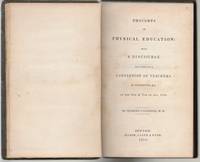
183414918Boston: Marsh Capen & Lyon 1834. First Edition. Hardcover. Very good. 4.75" x 7.5" 133 pp errata slip. Original blue cloth with paper spine label. Extremities rubbed spine cloth chipped shadow of bookplate removed from front free endpaper; very good. Caldwell 1772-1853 was a student and at times a critic of Benjamin Rush and founder of the Louisville Medical Institute. He was one of several American physicians of the early nineteenth century who popularized the term "physical education" by which they meant the instruction of children in all matters relating to the body and its overall health. In this work which achieved national recognition Caldwell argues that physical education is an essential companion to moral and intellectual education for without it "man cannot attain the perfection of his nature." It should include "every thing that by bearing in any way on the human body might injure or benefit in its health vigor or fitness for action" including "diet cleanliness clothing atmospherical temperature respiration muscular exercise sleep and animal passions. Marsh, Capen, & Lyon hardcover books
184958811Cincinnati OH: Various publishers 1849. First editions. 1 "An Address on the Bonds of Professional Union Delivered before the Medical Association of Adams Brown and Clermont Counties O. at Batavia October 30 1847." Cincinnati: Atlas Job Room Print 1847. 27 pp. OCLC locates three copies National Library of Medicine Cincinnati History Library Countway; 2 "Valedictory Address on the Sources and Benefits of Professional Earnestness Delivered March 3 1849 to the Graduates of the Medical College of Ohio." Cincinnati: Printed at the office of the "Western Lancet" 1849. 15 pp.; 3 On the Formation of Professional Character: An Introductory Lecture Delivered Nov. 4th 1844." Cincinnati: Printed by R.P. Donogh 1844. 15 pp. American Imprints 44-2945; 4 "An Introductory Address Delivered to the Students of the Medical College of Ohio November 3 1847." Cincinnati: Collins & Van Wagner Printers 1847. 16 pp. OCLC locates five copies Rochester Medical Clendening Medical National Library of Medicine Cincinnati History Library Cincinnati Public; 5 "An Introductory Lecture on the Reciprocal Obligations of the Medical Profession and Society Delivered November 2 1846." Cincinnati: Printed by Looker & Co. 1846. 28 pp. American Imprints 46-3181. OCLC locates 8 copies; 6 "Clinical Lecture on Cholera" caption title. Cincinnati 1849. 8 pp. OCLC locates two copies Chicago Cincinnati History Library; 7 Manuscript copy of the address delivered by Dr. John C. Warren at an October 23 1849 meeting of the Boston area members of the American Medical Association occasioned by the death of Dr. Harrison. 4to. 5 pp. approximately 750 words. Harrison fell victim to the cholera epidemic that was discussed in the final pamphlet in this volume. Some foxing but a lovely presentation of a career's work from a son to his mother. Presentation binding of contemporary black morocco gilt boards framed with quadruple thin gilt rules floral ornaments at each corner spine with gilt rules on raised bands marbled endpapers all edges gilt. #5997. Harrison 1796-1849 a native of Louisville Kentucky studied medicine there and at the University of Pennsylvania returning home to begin his practice at the newly founded Louisville Hospital in 1820. He was appointed to his position at the Medical College of Ohio in 1841 edited the medical periodical "Western Lancet" and served as vice-president of the American Medical Association. For a longer biographical sketch see Kelly and Burrage "American Medical biographies" 1920 pp. 497-498. Dr. Warren's address reads in part: "This gentleman was one of the ablest practitioners in the United States. In the West he was considered as without a superior . while warm & decided in discussion he was not dogmatical and gave an agreeable influence to all he said by the openness and amenity of the manner in which he said it . the respect for him of the profession and community is derived from the noble manner in which he contended against the fatal epidemic of cholera . he continued to expose himself to the disease till he was destroyed by it." Also laid in is a 1961 letter of presentation from one Harrison descendant to another. <br/><br/> Various publishers hardcover books
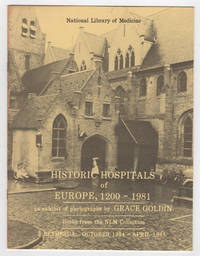
198443924Bethesda: National Library of Medicine 1984. First edition. Stapled paper wrappers. Slightly browned edges else near fine. 8 pp. Illus. with b/w photos. Sm. 4to. Grace Goldin photos. National Library of Medicine unknown books
190926971Paris France: Compagnie Des Eaux Minerales Economiques 1909. A photograph album composed of 29 heavy cardstock leaves each titled with a French hospital with a mounted photograph of the interns of 1908-09. On the mounts printed below the images are the surname-identification of the new doctors along with a quote from a famous medical personage. Photographic studio not identified aside from the printed notice in the surround of "Cliche Femina." Our research indicates that these albums were produced by the Compagnie des Eaux Minerales. as promotional devices; the cover titles are further personalized and include the name of one of the graduates A Monsieur Corylles actually Coryllos from the Hopital Cochin Paris. Dr. Coryllos 1880-1938 was an eminent thoracic surgeon and pioneer in the use of the mobile field hospital saving lives during military conflicts Every photograph black and white silver gelatin process; approx. 4 ¾" x 6" size is characterized by extraordinary clarity and very professionally taken; several of them presenting the graduating physician's candid expressions of humor - one posing with a monkey on his back another lugging a huge travel-box by a rope over his shoulders many with pet dogs & cats one with what appears to be a monstrous lizard; in another three men sit astride sheep and a goat; other portraits promoting expressions of extreme gravitas. The Hopital Des Enfants Malades with two women identified Mlle. Bouteil and Mme. Debre; the Hopital de la Pitie with Mme. Long; Mlle. Dechaux at Hopital Claude-Bernard Aubervilliers; two of the images from the Hopital Bichat & Hopital Beaujon with unidentified women posed with the groups. The images appear to have been taken on the grounds and building forecourts of these medical establishments including: Hopital Andral & Bastion 27 et 29; Beaujon; Berck Sur-Mer; Hospice de Bicetre; Bichat; Boucicaut; Bretonneau; Broca; Broussais; de la Charite; Claude-Bernard Aubervilliers; Cochin; Cochin Annexe; Maison Dubois; des Infantes Assistes; des Infantes Malades; Herold; Hotel-Dieu; Hospice D'Ivry; Laennec; Lariboisiere; La Maternite; Necker; de la Pitie; Saint-Antoine; Saint-Louis; Hospice de la Salpetriere; Tenon; and Hopital Trousseau. Heavy oblong format covers about 8 pounds shipping weight. Approx. 11" x 14" size; gilt titled green pebbled cloth & leather corners; binding damaged worn spine covering gone; all photographs in very good condition. First Edition. Hard Cover. Good. Compagnie Des Eaux Minerales Economiques hardcover books
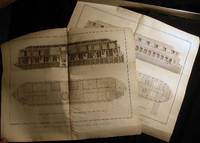
177225506European Origin: Various 1772. These two plates only from the Encyclopedie of Diderot; depicts the public bathing facilities with women's and men's sections. Approx. 15 1/2" x 18 1/2" size overall; double-page plates. Old center-fold lines; light edge tips wear couple of tiny spots; top corner chipped away a little; in very good condition. Art. Not Bound. Very Good. Various paperback books
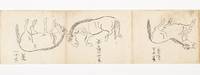
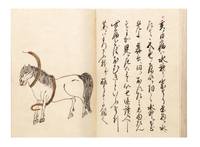
698630 black & white brush & ink drawings of diseased horses. Scroll 130 x 27630 mm. 94 joined sheets with several extension flaps which fold down with additional text recently & expertly backed. Omi Province today's Shiga Province: the most modern date we find in the scroll is 1809. A remarkably long scroll 90 feet; this is the most comprehensive old Japanese encyclopedia of horse diseases and their treatments we have encountered. The text includes recipes for medicines and acupuncture techniques as well as numerous case histories. There are references in this scroll to texts being copied in 1611. Each of the 94 sheets is numbered. It is obvious this was once a codex in at least two volumes that has been converted into an enormously long scroll. The accompanying title label was clearly the upper wrapper of the codex. At the beginning of this scroll are 30 brush & ink drawings of diseased horses representations of case histories adapted from the Inner Classic of the Yellow Emperor written about 2700 B.C. The case histories discuss rare diseases digestive problems drinking too much cold water kidney diseases heart problems lung problems wounds to the head diseases of the spleen parasitical worms breathing problems including asthma constipation cramping intestinal blocking food poisoning lack of appetite nervous horses brain diseases "black sweat" chills etc. Each case history concludes with pharmaceutical recipes. Sheets 51 to 94 contain sections on specific topics and include eye diseases tongue diagnosis diagnosis based on the condition of the tail setting of broken bones medicines to treat blood clots the six meridians the 18 meridians acupuncture treatments for tumors with a long list of pressure points and explanations of their relationships to tumors and other diseases etc. At the very end of this scroll we find the date "1809" with the name "Akatsu." In fine condition preserved in a box. unknown books
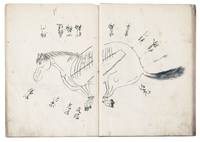
6987Many fine drawings some double-page some single-page a few heightened in wash of several colors. 47 folding leaves. Large 8vo 298 x 217 mm. orig. wrappers wrappers somewhat soiled new stitching. Japan: early to mid-Edo. A fine and well-illustrated equine medicine manuscript based on the traditional Chinese veterinary medical theories of the five organs liver heart spleen lung and kidney their seven related personality traits anger fear disgust happiness sadness surprise and contempt and eight elements of pulse condition at the six locations. There is also a substantial section on the use of moxibustion for treating the liver heart lung kidney and other organs. The illustrations are very striking. The first two depict a horse splayed on his back with moxibustion locations marked. These are followed by one image of a horse splayed on his stomach again with marked moxibustion points. Following this are three images of a horse lying on his side feet tied together with names and locations of pressure points. Next we encounter five images of various aspects of the five organs and their related pressure points with names. The final three images are side views of a horse with pressure points marked for acupuncture. There are instructions on how long the needles should be and how deeply inserted. The considerable text discusses the above-mentioned theories of traditional Chinese veterinary medicine. Very good condition. Our manuscript has worming touching both text and image but is entirely legible. unknown books
7052Seven vols. 8vo 218 x 160 mm. orig. wrappers each with an individual title label on upper cover new stitching. Japan: all late Edo. A fascinating collection of texts on equine medicine all bound in a similar fashion: Vol. 1: Manuscript label on upper cover entitled "Basho hijutsu den" "Horse Book Secret Methods Passed On". Nine brush & ink illus. in the text. 31 folding leaves. This text is concerned with exercising horses in each season and includes "32 Rules of Exercise." At the end we find a date of 1825 the name of the person who provided this information Seizaimon Sekiguchi and the name of the copier Hanemon Hasegawa. Vol. 2: Manuscript label on upper cover entitled "Basho yakuho den" "Horse Book Medicine Passed On". 12 most unusual brush ink & wash drawings. 23 folding leaves. Each illustration depicts an unwell horse and 12 symbols of ill health demons snake ogre monkey female deity Buddhist practitioner archer bird etc. relating to the horse's disease with recipes for medicines. These illustrations are all finely colored. The rest of the text is devoted to how to maintain a horse's health in each of the four seasons. At the end there is the date 1596 and the information was given by Ichiraku Obata who lives in Kyoto. Vol. 3: Manuscript label on upper cover entitled "Basho hiden shu" "Collection of Horse Medicine Secrets Passed On". Seven brush & ink illus. in various colors. 15 folding leaves. This manuscript is concerned with methods of keeping a horse healthy while travelling. Herbal medicine recipes are given. At the end we find the following names: Ogasawara Taizen Taifu Ofusa Yawata Takeyori Ason and Kunai Taifu. Vols. 4 & 5: Manuscript label on each upper cover entitled "Basho ryoji den" "Horse Book Diagnoses & Treatments Passed On". 18; 13 folding leaves. Vol. 4 ends with the date 1858 and the statement that "Sokyu passed on this information to Ittai Sekiguchi." Vol. 5 ends with the same date and a note that "Aikyu who lives in Ecchu in today's Toyama Prefecture gave this information to Sekiguchi." Vol. 6: Manuscript label on each upper cover entitled "Basho juniyaku" "Horse Book. 12 Medicines. A Part". Ten folding leaves. The text describes symptoms of various illnesses and provides 12 herbal medicine recipes. We believe the next part is contained in Vol. 7. Vol. 7: The label is no longer present but the beginning of the text states that there are 12 ingredients for medicines described. 17 folding leaves. The text is concerned with diseases common in each of the four seasons and the theory of the five organs and six intestines. In fine condition. Vol. 4 and 5 each have some marginal worming. unknown books
36701London: Wellcome Institute for the History of Medicine n.d. First edition. Stapled paper wrappers. A fine copy. 30 pp. Illus. with b/w reproductions. 8vo. Wellcome Institute for the History of Medicine unknown books
185056045Mexico: Tipografia de R. Rafael 1850. First edition. 8vo. 16 pp. Short treatise on the treatment of cholera in Mexico a disease that became more widespread there in the wake of the recent war with the United States. OCLC locates eight copies New York Academy of Medicine California-San Diego Countway Ohio State College of Physicians Brown SMU Wellcome. Original printed yellow wrappers text within a wide ornamental border. Very good. 2488. <br/><br/> Tipografia de R. Rafael unknown books
1992UCROFRO00AFOrion 1992. Good. Crow Joseph Medicine. From the Heart of the Crow Country: The Crow Indians' Own Stories. NY: Orion 1992. 138pp. Indexed. Illustrated. 8vo. Paperback. Book condition: Good with light moisture staining to bottom edges. Orion paperback books
1958011723Bologna: Società Italiana Di Storia Della Medicina 1958. Torino 1-3 giugno 1957. 294p. b/w illus. original stiff wrappers. Società Italiana Di Storia Della Medicina unknown books
1969003601Roma: Società Internazionale Di Storia Della Medicina 1969. 2 vols. li 1824p. b/w illus. original stiff wrappers. Contains 208 papers in four languages. Società Internazionale Di Storia Della Medicina unknown books
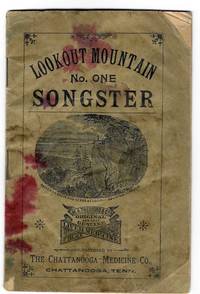
189060295Chattanooga Tenn: The Chattanooga Medicine Co 1890. Illustrated paperwraps stapled. 15 cm. 32 pp. Promotional pamphlet for M.A. Thedford & Co.'s Original and Only Genuine Black Draft Liver Medicine and for McElree's Womans Relief Wine of Cardui. Both medicines manufactured by Chattanooga Medicine Co. successors to the M.A. Thedford Co. Old staining to front cover bleeding through to a few leaves a few chips to wrappers. Text interspersed with song lyrics without music and testimonials from satisfied customers; last leaf is an ad with the container design for "Thedford's Black-Draught Stock Medicine A Liver Medicine for Horses Cattle Hogs and Poultry." Printed on poor quality paper. A good copy. Three listings on OCLC: Univ. of Rochester Med. Ctr. Brown Univ. and Middlebury. <br/><br/> The Chattanooga Medicine Co paperback books
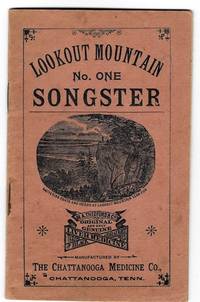
189060300Chattanooga Tenn: The Chattanooga Medicine Co 1890. Black illustrated salmon colored paperwraps stapled. 15 cm. 30 pp. Promotional pamphlet for M.A. Thedford & Co.'s Original and Only Genuine Black Draft Liver Medicine and for McElree's Womans Relief Wine of Cardui. Both medicines manufactured by Chattanooga Medicine Co. successors to the M.A. Thedford Co. Text interspersed with song lyrics without music and testimonials from satisfied customers. Printed on poor quality paper pencil notes and a drawing on rear cover but a very good copy otherwise. Three listings on OCLC: Univ. of Rochester Med. Ctr. Brown Univ. and Middlebury. <br/><br/> The Chattanooga Medicine Co paperback books
198437805Bethesda: National Institutes of Health 1984. First edition. Stapled paper wrappers. Thin sunning along spine else a near fine copy. v 30 pp. Sm. 4to. "This sketch is a reconstruction . of the captions and other textual material prepared for the exhibit entitled "The History of Medical History in the United States" which was displayed at the National Library of Medicine between April 12 and October 1 1982." National Institutes of Health unknown books
1996186231University of South Carolina Press 1996-02-01. Hardcover. New. New in shrink wrap. Dust jacket is sun faded at spine. HB HS University of South Carolina Press hardcover books
1955M1508Sao Paulo: 1955. 1955. 8vo. 391 pp. Illus. Wrappers. 1955. unknown books
196544087Bethesda: National Library of Medicine 1965. First edition. Stapled paper wrappers. About near fine faint finger soiling on wrapper small corner crease. Unpaged 10 pp. Illus. with b/w reproductions. Sm. 4to. National Library of Medicine unknown books
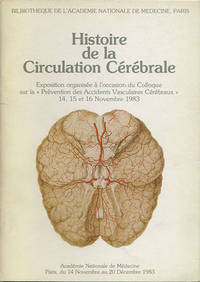
198336757Paris: Académie Nationale de Médecine 1983. First edition. Stapled paper wrappers. A very good copy. 32 pp. 8vo. Académie Nationale de Médecine unknown books
1988226721Washington DC: National Academy Press 1988. Paperback. xiii 84p. softbound in 9x6 inch wraps. Covers are a bit rubbed with a little edgewear and a minuscule tear in foredge margin. Clean and sound a good copy. National Academy Press paperback books
191912189Washington: G.P.O. 1919. 1st edition. 4to. 446pp. original cloth with illustrations. Front hinge loose signature on pastedown endpaper otherwise good. G.P.O. unknown books
194074411Washington: Government Printing Office. Very Good. 1940. Softover. This technical manual is soft-bound in tan printed wrappers. The cover wrappers show soiling and light edge-wear. The binding is solid. The contents are bright and clean with illustrations including some folding. . Government Printing Office unknown books
19262327New York: Gallia Laboratories Inc. 1926. <br /><br />24mo 5 1/2 x 4 1/4 inches; 138 x 107 mm 8 pages in stapled wrappers. <br /><br />Promotional pamphlet for Kola Astier a product possessing "remarkable curative and stimulative properties quite unknown to any other preparation." According to the manufacturer Gallia Laboratories Kola Astier builds muscular strength fights fatigue relieves depression and "melancholia" stimulates the heart and helps in combatting bronchitis pneumonia and "senile debility." It also acts we're told as a "remarkable regenerator" for "tired overworked men and women." <br /><br />Where did this cure for every ailment come from According to the company Dr. P. Astier recognized the amazing properties of the kola nut. "Long before the white man traversed the midnight jungles and the wild plains of mysterious Africa the natives were using the fruit of the Kola Tree to increase their physical stamina and powers of endurance. Finally when the first white explorers forced their way into the heart of the Dark Continent they too soon recognized the value of this gift of the Gods." <br /><br />This text is accompanied by an illustration of spear-wielding African warriors. Other illustrations depict runners an apparently sick office worker and an exhausted home maker. <br /><br />Unfortunately for the company the U.S. Agriculture Department determined that Kola Astier contained no ingredients capable of producing any therapeutic or curative effects claimed by the company. <br /><br />In March 1933 the U.S. Attorney for New Jersey sought the seizure of 199 bottles of Kola Astier Granulated charging misbranding in violation of federal rules. Analysis by the U.S. Agriculture Department showed that the product consisted essentially of sugar 97.3% and small proportions of plant material including kola. A federal district court ordered that the 199 bottles be destroyed. <br /><br />That judgment didn't stop Gallia Laboratories from promoting its miracle cure. In June 1943 the Federal Trade Commission charged the company with making false misleading and deceptive statements about its products. It ordered the company to stop claiming that Kola Astier had any therapeutic value in the treatment of any disorder. <br /><br />This pamphlet is rare. OCLC shows no institutional holdings. None in commerce. <br /><br />CONDITION: Some staining soiling and a few small nicks to wrappers as well as rusting to staples. But the pages are clean bright and unmarked. A Very Good copy. Gallia Laboratories, Inc. paperback books
15655777<p><b><i>"FOR MANY YEARS THE MOST IMPORTANT WORK ON THE MEDICINAL PLANTS OF THE NEW WORLD"</i></b></p><p>8vo 13.4 x 9.1 cm 132 ff. with woodcut border to title page and woodcut initials. Bound in later stiff vellum title stamped on spine gift inscription on the front flyleaf to a certain 'Carmen Ballina' dated 1922 now covered in paper. Only minor wear and rubbing to binding. 'Tassa' price of 51 maravedis entered in manuscript on title page as issued early signature of a certain 'Henrique Correa' at fol. aiiir the occasional contemporary annotation in the text minor occasional dampstaining very minor occasional marginal worming.<br /></p><p>Very rare first edition 1565 – virtually unacquirable for the past half century or more – of the first printed work devoted to the botanical and medicinal discoveries made in the Americas a treatise which through its later expansions and numerous translations would remain "for many years the most important work on the medicinal plants of the New World" Garrison & Morton. The <i>Dos libros</i> was written by the renowned physician Nicolás Monardes 1493-1588 in Seville then the center of the Spanish printing industry and the only port from which ships were authorized to sail to and from the New World. Born in 1493 in the very year Columbus returned from his first voyage Monardes thus both occupied a front row seat for first decades of the 'Columbian Exchange' and was ideally positioned to disseminate his findings to a wider European indeed global audience.</p><p>Monardes shared much with his contemporary Garcia d'Orta 1501-68 the Portuguese physician stationed in India and famed for his <i>Coloquios dos simples e drogas e consas medicinais da India</i> Goa 1563: "Just as d'Orta gave the learned world of the West the first accurate accounts of various Asian medicinal and commercial plants so did Monardes with those of America … Monardes like Garcia d'Orta has a strong claim to be regarded as one of the fathers of the science of pharmacognosy. Both of them compiled what were virtually complete monographs on many important items of our actual <i>materia medica</i> which were then unknown or only inaccurately known to the Western World Boxer pp. 23-24. Even the diffusion of these two authors throughout the learned world of early modern Europe shared a common source in the Latin versions made of them by the Flemish physician and botanist Charles de L'Ecluse Carolus Clusius 1526-1609 who published them together for the first time at Antwerp by Plantin in 1574 and afterwards.</p><p>Monardes eagerly capitalized on his unique position in Seville to acquire botanical news specimens and seeds from the New World cultivating his own garden of American plants and distributing cuttings to correspondents throughout Spain and Europe. In 1553 he established a transatlantic business partnership with a colleague in Tierra Firme and over the next three decades Monardes' three sons and four daughters emigrated to Tierra Firme and New Spain thus providing him with a network which would prove invaluable in collecting information for the 1565 <i>Dos libros</i> and in expanding the treatise in its 1571 and 1574 editions published as <i>Segunda Parte</i> and <i>Primera y Segunda y Tercera Partes de la Historia Medicinal</i>. In the <i>Dos libros</i> Monardes describes more than two dozen botanical remedies sarsaparilla copal and other aromatic balsams guaiacum lignum vitae etc. their medicinal applications native nomenclature and where they were to be found Mexico City Jalisco Michoacán Cuba Santo Domingo San Juan Cartagena Honduras Peru Nicaragua. Fascinatingly he views this specialized information through the broader lens of early American exploration discussing the voyages of Columbus and Hernán Cortés Monardes' near contemporary the spread of New World diseases among the first conquistadors and assessing the value of America's medicinal riches against her wealth of gold and silver.</p><p>In his first printed work <i>Dialogo llamado pharmacodilosis o declaracion medicinal</i> Seville 1536 Monardes noted that he was skeptical of the therapeutic value of plants from the New World but "his change of heart between 1536 and 1565 about the value of American <i>materia medica</i> was a gradual process and was due to his own experience" Boxer p. 22. Monardes "took great care after about 1536 to examine those plants imported and/or transplanted into Spain – a self-imposed task facilitated by the unrivaled position of Seville as the sole <i>entrepôt</i> for Spanish trade with the New World … just as d'Orta cultivated Asian plants in his gardens and orchards at Goa and Bombay so Monardes had a botanical garden with native and exotic plants at Sevilla" Boxer 22.</p><p>In addition to Clusius' Latin translation of Monardes <i>De simplicibus medicamentis ex Occidentli India delatis</i> 1574 first Latin edition an English translation appeared in 1577 by John Frampton under the title <i>Joyful newes out of the newe found world. </i>Italian French and German translations followed with the work going through 19 editions during Monardes' lifetime and 14 after his death.</p><p>In the present 1565 first edition of the <i>Dos libros</i> Monardes challenged European travelers and residents in the Americas to "'<i>investigate and experiment with the many kinds of medicines that the Indians sell in their markets or Tianguez; it would be a thing of great utility and profit to see and know their properties and to experiment with their varied and great effects which the Indians make public and manifest through the great experiences they make of them among themselves'"</i> Monardes quoted from Bleichmar <i>Visual Voyages</i> p. 51. But tapping into native knowledge of medicinal matters apparently proved more difficult than Monardes had anticipated: In the 1571 <i>Segunda Parte</i> he notes that the increasing Amerindian hostility to the European presence in the Americas was provoking them to keep their medicinal/botanical practices secret to the point of providing misleading information to colonists seeking local remedies and consequently his 1565 <i>Dos Libros</i> had in fact become the primary source for Indian medicinal knowledge even among Europeans stationed and living in the Americas among the native populace see Bleichmar <i>Visual Voyages</i> p. 51.</p><p>Monardes' other published works include the 1539 <i>De secanda vena in pleuriti inter Grecos et Arabes concordia</i> and his 1540 <i>De rosa et partibus eius</i>. His treatise on the medicinal properties of the bezoar stone is appended to the present <i>Dos libros</i>.</p><p>OCLC locates U.S. examples of this 1565 <i>Dos Libros</i> of Monardes at the National Library of Medicine John Carter Brown Wisconsin Hunt Botanical SMU and NYPL.</p><p> Alden European Americana 565/45; Medina BHA 194; JCB vol. 1 no. 240; Palau 175485; Wellcome 4390; USTC 340089; Garrison & Morton 1817; ; Hunt 106 1569 ed.; Sabin 49936 the 2nd ed.; F. Guerra <i>Nicolás Bautista Monardes</i>; D. Bleichmar <i>Visual Voyages: Images of Latin American Nature from Columbus to Darwin</i>; J. Jiménez-Castellanos y Calvo-Rubio <i>Historia medicinal de las cosas</i>… Seville Padilla 1988; D. Bleichmar "Books Bodies and Fields: Sixteenth-Century Transatlantic Encounters with New World <i>Materia Medica</i>" in L. Schiebinger and C. Swan eds. <i>Colonial Botany: Science Commerce and Politics</i> pp. 83–99; J. M. López Piñero "Las 'Nuevas Medicinas' Americanas en la Obra 1565-1574 de Nicolás Monardes" <i>Asclepio</i> vol. 42 no. 1 1990 pp. 3-67; A. Barrera "Local Herbs Global Medicines: Commerce Knowledge and Commodities in Spanish America" in P. Smith and P. Findlen eds. <i>Merchants and Marvels: Commerce Science and Art in Early Modern Europe</i> pp. 163-81; J. D. Sauer "Changing Perception and Exploitation of New World Plants in Europe" in F. Chiappelli ed. <i>First Images of America</i> vol. 2 pp.-813-32; F. Egmond <i>The World of Carolus Clusius: Natural History in the Making 1550-1610</i>; A. Ubrizy and J. Heniger "Carolus Clusius and American Plants" <i>Taxon</i> vol. 32 no 3 1983 pp. 424-35; C. R. Boxer <i>Two Pioneers of Tropical Medicine: Garcia d'Orta and Nicolás Monardes</i> Wellcome Lecture Series No. 1 1963.</p> Sebastian Trugillo hardcover books