Antiquariat.de

955 résultats
197534741acpCanada, The Akademy of Oriental Heritage, 2.ed., 1975. Kaliko / Leinen /Hardcover, mit Goldschrift, kl. DinA 4, quadratisch, 309 Seiten, englischer Text, viele Tabellen, wenige sw-Illustrationen, Einband mit Gebrauchsspuren, leicht berieben und bestoßen, Rücken stark knubbelig, Einbandinnenseiten/Vorsatzblatt fleckig, knubbelig verzogen und bestempelt, Titelblatt und erste Seite bestempelt, Schnitt und Seiten papierbedingt leicht gebräunt, BEACHTE: Zwischen Vorsatzblatt und Titelblatt ist die Falz gebrochen und der Buchblock hat sich vom Einband zum Rücken gelöst, STARKE Gebrauchs- und/oder Altersspuren / very used [3 Warenabbildungen]
Hommage à la mémoire du Docteur Paul Ferreyrolles. Travaux sinologiques Dr. Huard trois ermites médecins Chinois. Dr. Quaglia Senta L'acupuncture et la médecine occidentale Mr. Kaltenmark :Les médecins dans la Chine antique Travaux de l'Ecole marseillaise. Drs Niboyet et Méry Compte-rendu de Recherches expérimentales sur les méridiens..Dr. Albert Méry. De la méthode dans le rétablissement de l'équilibre général de l'énergie.Dr.Regard. Pléthores et carences.Drs. Niboyet et Casez:les points que l'on peut ne pas faire en acupuncture.Dr.Pierre Schmidt:la grande piqûre. Dr Mauries : Statistiques concernant les résultats cliniques obtenus par la pratique de l'acupuncture.Dr. S. Gillard : traitement de l'aérophagie par la méthode chinoise.Dr. Frimat:L'action de l'acupuncture sur la maladie de Basedow. Dr.Nogier : le pavillon de l'oreille, points de commande généraux, indications thérapeutiques.Dr.Moulin : le médecin acupunteur en présence d'une sciatique. Travaux originaux. Drs.Marcel Martiny et Ruffe ; typologie chinoise etoccidentale.Med. Col. Labrousse et Dr. Muller : Acupuncture et rééducation fonctionnelle.Dr. Grall : Réflexe oculo-cardiaque et acupuncture.Dr. Grall : Variations sur le méridien du coeur.Dr. Perret : physionomie des méridiens.Dr. Cassin:l'acupuncture et la psychothérapie.Dr.Emerit : un cas de paralysie faciale.Dr. Fleury : Acupuncture et maladies saisonnières.Dr.Runacher : Quelques observations de pratique courante.
197435420akpHong Kong, Medicine & Health Publishing Co., 1974. fester Pappband, mit Goldschrift-Deckelprägung, ca. DinA 5, 80 Seiten, nur wenige sw-Illustrationen, englischer Text, illustrierter Originalumschlag / Schutzumschlag / OU (beschabt, leicht bestoßen, Rücken ausgeblichen), Einband mit leichten Gebrauchsspuren, aber oberer Rücken gestaucht, privater Stempel auf dem Vorsatzblatt und Vorwort, Schnitt und Seiten papierbedingt gebräunt, insgesamt gut erhalten / insgesamt guter Zustand [4 Warenabbildungen]
1979DEMO011317IMiami: Occidental Institute of Chinese Studies 1979. Special Limited edition. Hardcover. Very Good. charts. Quarto 225 187 105 pages in a black D-ring binder. Worldcat has only 1 listing for this and it is only part one and is a photocopy. Rare. <br/><br/>Edited & translated by Dr. Albert Chamfrault and Ung Kan Sam; also by Dr. Nguyen Van Nghi and Mike C. Barnett. Illustrated with charts. This edition was done "for the two hundred and thirty-four persons named within and the future of traditional 'energetical' acupuncture in North America." Also known as Huangdi nei jing or Huang di nei jing. or Huangdi Neijing: whichever way it has been the most fundamental text for Chinese medicine for two thousand years. Chamfrault was an acupuncture practitioner in France. Nguyen Van Nghi was a Vietnamese-French doctor. A major part of his life was translating the Nei Ching from a Tang Dynasty manuscript" "What has been said to distinguish his particular version of the Huangdi Neijing from those available in China was that it included commentary by two Tang Dynasty physicians without which he claimed made the texts indecipherable. He was insistent that Western medicine and Chinese Medicine were not separate scientific pursuits but that there was One Medicine - Wikipedia." <br /> <br /> Occidental Institute of Chinese Studies hardcover
47108Juko Jushikei Hakki. Three parts in one volume. Kyoto Enami Jinbee Genroku 8 = 1685. 4to size 27.0 x 19.0 cm. Xylographically printed on 69 double leaves folded in an accordion or oriental style with 16 full-page woodcut plates. Original blue paper wrappers with xylographic text vignette on front. Contained in a modern blue cloth box made in Japanese style. = Very rare illustrated work on acupuncture. Bibliographically little is known about this work. It was anonymously published and our copy seems to be a second issue. Mestler describes a similar work that was issued in 1684; this copy was published in 1685. The book was written in classical Chinese in Japanese typescript. The author claims that he bases his writings on several classic Chinese medical texts from the 14th and 15th century. The beautiful illustrations appear to be made in the style of the mid-14th-century Chinese classic Shi si jing fa hui An Elucidation of the Fourteen Channels by Hua Shou. The plates show bodies of men with the acupunctural nodes indicated. The first 10 leaves have extensive contemporary handwritten annotations in two different hands in red and black. Minor worming to lower blank margin of last two leaves. Wrappers with some wear and slight loss of blue paper some uniform light age toning but otherwise a very good copy of this rare work. Mestler A Galaxy of Old Japanese Medical Books II 474-475. hardcover
20072092902140305473dental medicine 2007. Soft Cover. Fine. Number of books: 1 dental medicine paperback
198940753Hildesheim: Olms 1989. Gebunden. Olms unknown
192930997Jena: Fischer G 1929. Gebunden. Fischer G unknown
31394EDINBURGH WAUGH 1829. SECOND EDITION BOUND IN COURSE BLUE CARD WITH BLIND STAMP OF ABERDEEN UNIVERSITY WITH A NEW SPINE. NEW ENDPAPERS. 476 PAGES VERY GOOD. SCARCE. EDINBURGH, WAUGH, 1829 unknown
31129LONDON LONGMAN 1811-1819. FOUR VOLUMES IN TWO CARD COVERS WITH LEATHER SPINES. VOLUME 1 CONTAINS: ON THE CONSTITUTIONAL ORIGIN AND TREATMENT OF LOCAL DISEASES P1-246; ON ANEURISMS P247-315; ON DISEASES RESEMBLING SYPHILIS P1-171; DISEASES OF THE URETHRA P172-234; AN ENQUIRY INTO THE PROBABILITY AND RATIONALITY OF MR HUNTER'S THEORY OF LIFE 1814 TWO LECTURES 79 PAGES; MR HUNTER'S OPINIONS RESPECTING DISEASES 1819 37 PAGES REFLECTIONS ON GALL AND SPURZHEIM'S SYSTEM 1821 67 PAGES. VOLUME 2 CONTAINS: PHYSIOLOGICAL LECTURES IN THE YEAR 1817 7 LECTURES PLUS APPENDIX 352 PAGES SURGICAL OBSERVATIONS ON TUMOUR AND LUMBER ABSCESSES 1822 THIRD EDITION 221 PAGES; THE HUNTER ORATION FOR THE YEAR 1819 66 PAGES. THE INNER HINGE TO VOLUME 2 HAS SPLIT THE COVERS ARE WORN SLIGHT OCCASIONAL SPOTS OF FOXING ARMORIAL BOOKPLATE BUT OVERALL VERY GOOD AND SCARCE IN THIS COMPLETENES. LONDON, LONGMAN, 1811-1819 hardcover
197036503New york: McGraw Hill 1970. Gebunden. McGraw Hill unknown
197582745Peking, Foreign Languages Pr3ess, 1975. Original Halbleinenband, kl.4°, 305 Seiten.
19852091502135201186Morinomiya Medical School Publishing Department 1985. Soft Cover. Fine. Volume: 1 Morinomiya Medical School Publishing Department paperback
70001Shanghai:: Shanghai Provincial Academy of Traditional Chinese Medicine no date. instruments preserved in publisher's gilt-lettered padded plastic case with magnetic closure. Fine. About 8 x 12 inches. Shanghai Provincial Academy of Traditional Chinese Medicine, unknown
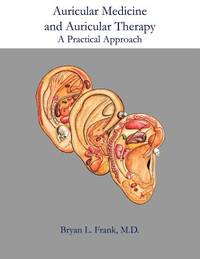
B9781434301048Paperback. New. paperback
1434301044.Gpaperback. Good. Access codes and supplements are not guaranteed with used items. May be an ex-library book. paperback
2007SONG1434301044Authorhouse 2007-03-27. paperback. Used: Good. 8.62x0.79x10.92. Buy with confidence. Excellent Customer Service & Return policy. Authorhouse paperback
2007DADAX1434301044Authorhouse 2007-03-27. paperback. New. 8.62x0.79x10.92. Buy with confidence. Excellent Customer Service & Return policy. Authorhouse paperback
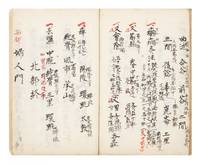
6847Two brush & ink drawings in the text. 89 folding leaves. 8vo 190 x 127 mm. orig. wrappers wrappers somewhat frayed orig. stitching. Japan: mid-Edo.<br/> <br/> A most interesting and extensive manuscript on acupuncture and moxibustion divided into seven parts. Based on WorldCat and Kyoto University’s manuscript with the same title we can attribute the authorship of these texts to Chishin Tanaka a physician of the early Edo period. <br/> <br/> The first four parts “East†“West†“South†“Northâ€; 17 17 25 12 leaves respectively are devoted to general principles of acupuncture and moxibustion. In each of these parts many symptoms and case histories are described in great detail along with their treatments through acupuncture and moxibustion. There are guides to locate the pressure points.<br/> <br/> Part Five eight leaves is devoted to female illnesses and their treatment. Menopause vaginal discharges irregular menstruation breast cancer difficulties during pregnancy and childbirth abortion etc. are all discussed. The sixth part in three leaves describes pediatric illnesses. The final section of seven leaves contains several “secret†methods including the “bone length method†to locate pressure points.<br/> <br/> The two illustrations depict the spine and associated pressure points.<br/> <br/> In very good condition. unknown
7073Two full-page brush & black ink illus. of the human body front & back with names of pressure points. 36 folding leaves. 8vo 247 x 172 orig. wrappers wrappers rather worn & wormed recased new stitching. Japan: late Edo.<br/> <br/> Our manuscript is arranged by section of the body from head to foot with a listing of about 120 pressure points and their meridians allied organs and related illnesses. There are precise instructions on how to locate each pressure point by measurement. <br/> <br/> At the end is a list of 45 pressure points that should not be touched followed by two full-page images of the body front and back with names of pressure points. These are followed by 354 pressure points arranged into groups. Each group is connected to a specific organ.<br/> <br/> Good copy. This manuscript is rather wormed increasingly towards the end but completely legible. unknown
7074Two parts in one vol. 25 13 folding leaves. 8vo 198 x 135 mm. orig. wrappers rubbed old stitching. Japan: at the beginning of each part & on final leaf in trans.: “Oyo today Nagoya retired doctor Tokei or Tokoku Yoshida copied 6 June 1767.â€<br/> <br/> The first part provides a detailed explanation of the theory and practice of acupuncture concentrating on 28 different ways to use the needle. At the end of this part there is a most interesting discussion of Zi Wu Liu zhu The Midnight-Noon Ebb-Flow Acupuncture Method which is used as a theoretical guide to determine whether the meridian is open at a particular moment.<br/> <br/> The second part contains descriptions of 36 common illnesses sexually transmitted diseases paralysis headache heart disease contagious diseases ulcers various pains fevers children’s diseases gynecological illnesses insanity etc. their symptoms appropriate pressure points for treatment and application of the needle shallow or deep etc.<br/> <br/> Fine copy written in a clear hand. unknown
1699000020Kyoto Genroku period 12 1699. Sewn Binding. Good . 2 volumes. 4to 216 x 150 mm. Contemporary Japanese blue rice paper with silk ties paper worn and torn in places; opening leaves of vol. 1 wormed in blank upper margins. Collation:126 ; 90 pp. 11 large mostly full page woodcuts and several smaller woodcuts in text. The volumes are worn; opening leaves of vol. 1 wormed in blank upper margins occasionally affecting part of a character. There is some staining and foxing in text areas and dusting to edges. Numerous Japanese notations in red ink throughout text. Title from table of contents./ "Igaku shiyo sho . cho Ryuunken . " Cf. Kokusho somokuroku v. 1 p. 146./ "Kottaihitsuretsu . ga henshitaru Kinran junkyo . o honmon ni mochiite chuseraretari." <br/><br/>This study on acupuncture was translated from Chinese to Japanese. This is a translation of a classical text from the Yuan dynasty 1264-1368 written by Hua Shou which translated literally is "An Elucidation of The Fourteen Channels or Meridians and their functions." According to the descritionn for a copy in the National Medical Library "The work is divided into three parts: the first dealing with the circulation of the yin and yang in the arms and legs; the second with the course of the qi through the fourteen meridians; and the third with the eight "extraordinary vessels." Unlike many Western anatomies Hua Shou's does not depict or describe the body's musculature or skeleton; in fact during this period and for many centuries afterward Chinese physicians lacked a specific term for "muscle." unknown books
6847Two brush & ink drawings in the text. 89 folding leaves. 8vo 190 x 127 mm. orig. wrappers wrappers somewhat frayed orig. stitching. Japan: mid-Edo. A most interesting and extensive manuscript on acupuncture and moxibustion divided into seven parts. Based on WorldCat and Kyoto University's manuscript with the same title we can attribute the authorship of these texts to Chishin Tanaka a physician of the early Edo period. The first four parts "East" "West" "South" "North"; 17 17 25 12 leaves respectively are devoted to general principles of acupuncture and moxibustion. In each of these parts many symptoms and case histories are described in great detail along with their treatments through acupuncture and moxibustion. There are guides to locate the pressure points. Part Five eight leaves is devoted to female illnesses and their treatment. Menopause vaginal discharges irregular menstruation breast cancer difficulties during pregnancy and childbirth abortion etc. are all discussed. The sixth part in three leaves describes pediatric illnesses. The final section of seven leaves contains several "secret" methods including the "bone length method" to locate pressure points. The two illustrations depict the spine and associated pressure points. In very good condition. unknown books
7073Two full-page brush & black ink illus. of the human body front & back with names of pressure points. 36 folding leaves. 8vo 247 x 172 orig. wrappers wrappers rather worn & wormed recased new stitching. Japan: late Edo. Our manuscript is arranged by section of the body from head to foot with a listing of about 120 pressure points and their meridians allied organs and related illnesses. There are precise instructions on how to locate each pressure point by measurement. At the end is a list of 45 pressure points that should not be touched followed by two full-page images of the body front and back with names of pressure points. These are followed by 354 pressure points arranged into groups. Each group is connected to a specific organ. Good copy. This manuscript is rather wormed increasingly towards the end but completely legible. unknown books
7074Two parts in one vol. 25 13 folding leaves. 8vo 198 x 135 mm. orig. wrappers rubbed old stitching. Japan: at the beginning of each part & on final leaf in trans.: "Oyo today Nagoya retired doctor Tokei or Tokoku Yoshida copied 6 June 1767." The first part provides a detailed explanation of the theory and practice of acupuncture concentrating on 28 different ways to use the needle. At the end of this part there is a most interesting discussion of Zi Wu Liu zhu The Midnight-Noon Ebb-Flow Acupuncture Method which is used as a theoretical guide to determine whether the meridian is open at a particular moment. The second part contains descriptions of 36 common illnesses sexually transmitted diseases paralysis headache heart disease contagious diseases ulcers various pains fevers children's diseases gynecological illnesses insanity etc. their symptoms appropriate pressure points for treatment and application of the needle shallow or deep etc. Fine copy written in a clear hand. unknown books