3 190 résultats
100146aafBern, Verlag u. Lith. Anstalt v. J.F. Wagner, s.d., (1840), 24 x 19 cm (la feuille), Lithographie originale teinté (série ‘Fribourg N° 9), 1 feuille / 1 Blatt (ca. 19x24 cm).
100176aafBern, Verlag u. Lith. Anstalt v. J.F. Wagner, s.d., (1840), 24 x 19 cm (la feuille), Lithographie originale teinté (série ‘Fribourg N° 9), 1 feuille / 1 Blatt (24 x 19 cm).
100177aafBern, Verlag u. Lith. Anstalt v. J.F. Wagner, s.d., (1840), 24 x 19 cm (la feuille). Lithographie originale (série ‘Fribourg N° 9), 1 feuille / 1 Blatt (24 x 19 cm).
128071aafBern, Verlag u. Lith. Anstalt v. J.F. Wagner, s.d. (1840), 24 x 19 cm (la feuille), getönt. Lithographie, aus: Ansichten sämtlicher Burgen, Schlösser und Ruinen der Schweiz. Kanton Freiburg,
136546aafBern, Verlag u. Lith. Anstalt v. J.F. Wagner, s.d. (1840), 24 x 19 cm (la feuille), getönt. Lithographie, aus: Ansichten sämtlicher Burgen, Schlösser und Ruinen der Schweiz. Kanton Freiburg, 1 feuille / 1 Blatt (cadre or 20.5 x 25 cm).
104345aaf(Bern, J.F. Wagner), s.d., (1840), 12.5x17.5 cm, Lithographie originale , ex. en bistre (série ‘Fribourg’, n° 3), 1 feuille / 1 Blatt (25 x 18 cm).
Tübingen, Stauffenburg Verlag, 1999 [Stauffenburg Festschriften]. 4to. mayor; X-447 pp. Enc. original en tela estampada.
Madrid, Blass Tipográfica, 1934. Folio; 65 pp., 2 hs. Con 54 ilustraciones fotográficas entre el texto. Cubiertas originales.
17605888London c. 1760. Copper engraving 25 x 40 cms bilingual title in English and French with Dutch translation in a contemporary hand beneath original hand-colour copyright date given under Hogarths Act as 1760 trivial soiling blank verso. Print unknown
188054523Solothurn n.d. ca. 1880. Leporello 165 x 148 cm. in orig. clothcovers with ties. Original printed pictorial wrapper on frontboard. Tinted lithography by X. Amiet Solothurn. On foot "Vom Weissenstein aufgenommen". Clean and fine. hardcover
Incisione da matrice in rame (mm.300x400 e margini), abilmente colorata da mano coeva: veduta prospettica animata da numerosi personaggi. Titolo lungo il margine inferiore, firmata "Marieschi delin. -J Bowles fecit". Queste «vues d'optique», dai colori molto vivaci, se opportunamente predisposte con intagli, forature e controffondature, erano presentate al pubblico all'interno di apparecchi ottici semplificati dal pantoscopio, allo zogroscopio, dalla lanterna magica al mondo novo. . Cfr. Maria Adriana Prolo - Luigi Carluccio. Il Museo Nazionale del Cinema di Torino. 1978, la ricercata prima pubblicazione relativa al nascente Museo della Mole Antonelliana. C.A. Minici Zotti, Il Mondo Nuovo. Le meraviglie della visione dal '700 alla nascita del Cinema, 1988..
Incisione da matrice in rame (mm.210x320 e margini), abilmente colorata da mano coeva: veduta prospettica animata da numerosi personaggi. Titolo e legenda lungo il margine inferiore. Piccoli difetti ma nel complesso un discreto esemplare molto decorativo. Queste «vues d'optique», dai colori molto vivaci, se opportunamente predisposte con intagli, forature e controffondature, erano presentate al pubblico all'interno di apparecchi ottici semplificati dal pantoscopio, allo zogroscopio, dalla lanterna magica al mondo novo. . Cfr. Maria Adriana Prolo - Luigi Carluccio. Il Museo Nazionale del Cinema di Torino. 1978, la ricercata prima pubblicazione relativa al nascente Museo della Mole Antonelliana. C.A. Minici Zotti, Il Mondo Nuovo. Le meraviglie della visione dal '700 alla nascita del Cinema, 1988..
Incisione da matrice in rame (mm.300x400 e margini), abilmente colorata da mano coeva: veduta prospettica animata da numerosi personaggi. Titolo lungo il margine inferiore . Queste «vues d'optique», dai colori molto vivaci, se opportunamente predisposte con intagli, forature e controffondature, erano presentate al pubblico all'interno di apparecchi ottici semplificati dal pantoscopio, allo zogroscopio, dalla lanterna magica al mondo novo. . Cfr. Maria Adriana Prolo - Luigi Carluccio. Il Museo Nazionale del Cinema di Torino. 1978, la ricercata prima pubblicazione relativa al nascente Museo della Mole Antonelliana. C.A. Minici Zotti, Il Mondo Nuovo. Le meraviglie della visione dal '700 alla nascita del Cinema, 1988..
Incisione da matrice in rame (mm. 280x400 e margini), abilmente colorata da mano coeva: veduta prospettica animata da numerosi personaggi. Queste «vues d'optique», dai colori molto vivaci, se opportunamente predisposte con intagli, forature e controffondature, erano presentate al pubblico all'interno di apparecchi ottici semplificati dal pantoscopio, allo zogroscopio, dalla lanterna magica al mondo novo. . Cfr. Maria Adriana Prolo - Luigi Carluccio. Il Museo Nazionale del Cinema di Torino. 1978, la ricercata prima pubblicazione relativa al nascente Museo della Mole Antonelliana. C.A. Minici Zotti, Il Mondo Nuovo. Le meraviglie della visione dal '700 alla nascita del Cinema, 1988..
Incisione da matrice in rame (mm. 300x420 e margini), abilmente colorata da mano coeva: veduta prospettica animata da numerosi personaggi. Queste «vues d'optique», dai colori molto vivaci, con cieli azzurri digradanti verso un orizzonte più chiaro, strade e piazze con una prospettiva accentuata, se opportunamente predisposte con intagli, forature e controffondature, erano presentate al pubblico all'interno di apparecchi ottici semplificati dal pantoscopio, allo zogroscopio, dalla lanterna magica al mondo novo. . Cfr. Maria Adriana Prolo - Luigi Carluccio. Il Museo Nazionale del Cinema di Torino. 1978, la ricercata prima pubblicazione relativa al nascente Museo della Mole Antonelliana. C.A. Minici Zotti, Il Mondo Nuovo. Le meraviglie della visione dal '700 alla nascita del Cinema, 1988..
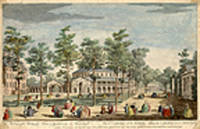
175110664London: Printed for & Sold by Rob. Sayer at the Golden Buck opposite Fetter Lane Fleet Street. & Hen. Overton at the White Horse without Newgate 1751. Engraved by N. Parr after Canaleti. Engraving with original colour. Printed on laid paper. In good condition with the exception of being trimmed within the platemark. Corners are stained. Image size: 9 3/16 x 15 3/16 inches. A beautiful Vue d'Optique of the Rotunda House at Ranelagh.<br/> <br/>During the eighteenth century "vues d'optique" or "perspective views" became extremely popular in England and Europe. Like other optical prints they capitalized on a connoisseur market eager for the latest novelty. English publishers such as John Bowles and Robert Sayer had great success with these optical views which quickly developed into a collecting craze that swept through print shops on both sides of the Channel. "Vues d'optiques" were specifically designed to create the illusion of perspective when viewed with a zograscope or perspective glass. These viewing devices used a series of reflecting mirrors to enhance the illusion of depth in the print creating a veritable "view" for the onlooker. Typically these prints depicted city or landscape views and were horizontal in format. They had roughly the same dimensions and were sold with heavy opaque colouring so as to show the tints when viewed through the lens. In their heyday optical prints were a technical revolution; they could be seen in almost every fashionable drawing room and were enjoyed by the poorer classes in print shops or at traveling fairs. For a small fee the citizens of Europe and England could travel the world without leaving their village. The "vue d'optique" was the first medium to bring the visible appearance of the wider world to a large European public. Ironically the artists and engravers who created these prints rarely had first hand knowledge of the scenes depicted hence the views were often not as accurate as they were advertised to be. As a result of their constant handling optical prints such as these are rare especially in good condition. They are not only beautiful images but a fascinating glimpse into the history of printmaking.<br/> <br/>Clayton The English Print 1688-1802 140-141. Printed for & Sold by Rob. Sayer at the Golden Buck, opposite Fetter Lane, Fleet Street. & Hen. Overton at the White Horse witho unknown books
176618808London and Paris: a Londres ches Wichnyther A Paris chez J. Chereau rue St. Jacques au dessus de la Fontaine St. Severin aux 2 Colonnes No. 257 1766. Engraving with original colour. Printed on laid paper. In good condition with mild soiling and creasing. A beautiful Vue d'Optique with strong early colour depicting the old Palace of Westminster where the Lords and Commons met.<br/> <br/>An interesting late 18th century view of Westminster prior to the great fire of 1834 which brought into being the present Houses of Parliament. Westminster had been a royal residence until Henry VIII left it after a fire to reside at Whitehall. After that the Houses of Parliament met there. During the eighteenth century "vues d'optique" or "perspective views" became extremely popular in England and Europe. Like other optical prints they capitalized on a connoisseur market eager for the latest novelty. English publishers such as John Bowles and Robert Sayer had great success with these optical views which quickly developed into a collecting craze that swept through print shops on both sides of the Channel. "Vues d'optiques" were specifically designed to create the illusion of perspective when viewed with a zograscope or perspective glass. These viewing devices used a series of reflecting mirrors to enhance the illusion of depth in the print creating a veritable "view" for the onlooker. Typically these prints depicted city or landscape views and were horizontal in format. They had roughly the same dimensions and were sold with heavy opaque colouring so as to show the tints when viewed through the lens. In their heyday optical prints were a technical revolution; they could be seen in almost every fashionable drawing room and were enjoyed by the poorer classes in print shops or at traveling fairs. For a small fee the citizens of Europe and England could travel the world without leaving their village. The "vue d'optique" was the first medium to bring the visible appearance of the wider world to a large European public. Ironically the artists and engravers who created these prints rarely had first hand knowledge of the scenes depicted hence the views were often not as accurate as they were advertised to be. As a result of their constant handling optical prints such as these are rare especially in good condition. They are not only beautiful images but a fascinating glimpse into the history of printmaking.<br/> <br/>Clayton The English Print 1688-1802 140-141. a Londres ches Wichnyther (?) A Paris chez J. Chereau rue St. Jacques au dessus de la Fontaine St. Severin aux 2 Colonnes No. 25 unknown books
1760103861760. Engraving with original colour. Printed on laid paper. In good condition with the exception of some creases within the image. Sides have been remargined with laid paper and bottom edge is trimmed within the platemark. Surface soiling within image. Image size: 11 x 16 1/4 inches. A wonderful "vue d'optique" of Somerset House on the Strand in London.<br/> <br/>During the eighteenth century "vues d'optique" or "perspective views" became extremely popular in England and Europe. Like other optical prints they capitalized on a connoisseur market eager for the latest novelty. English publishers such as John Bowles and Robert Sayer had great success with these optical views which quickly developed into a collecting craze that swept through print shops on both sides of the Channel. "Vues d'optiques" were specifically designed to create the illusion of perspective when viewed with a zograscope or perspective glass. These viewing devices used a series of reflecting mirrors to enhance the illusion of depth in the print creating a veritable "view" for the onlooker. Typically these prints depicted city or landscape views and were horizontal in format. They had roughly the same dimensions and were sold with heavy opaque colouring so as to show the tints when viewed through the lens. In their heyday optical prints were a technical revolution; they could be seen in almost every fashionable drawing room and were enjoyed by the poorer classes in print shops or at traveling fairs. For a small fee the citizens of Europe and England could travel the world without leaving their village. The "vue d'optique" was the first medium to bring the visible appearance of the wider world to a large European public. Ironically the artists and engravers who created these prints rarely had first hand knowledge of the scenes depicted hence the views were often not as accurate as they were advertised to be. As a result of their constant handling optical prints such as these are rare especially in good condition. They are not only beautiful images but a fascinating glimpse into the history of printmaking.<br/> <br/>Clayton The English Print 1688-1802 140-141. unknown books
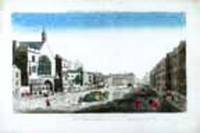
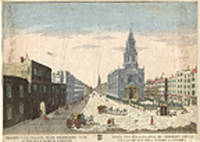
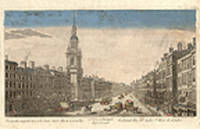
176010384Paris: chez Daumont rue St. Martin 1760. Engraving with original colour. Printed on watermarked laid paper. In excellent condition with the exception of some surface soiling in the upper section of the image. Image size: 8 7/8 x 15 13/16 inches. A wonderful "vue d'optique" of St. Mary's Church in London<br/> <br/>During the eighteenth century "vues d'optique" or "perspective views" became extremely popular in England and Europe. Like other optical prints they capitalized on a connoisseur market eager for the latest novelty. English publishers such as John Bowles and Robert Sayer had great success with these optical views which quickly developed into a collecting craze that swept through print shops on both sides of the Channel. "Vues d'optiques" were specifically designed to create the illusion of perspective when viewed with a zograscope or perspective glass. These viewing devices used a series of reflecting mirrors to enhance the illusion of depth in the print creating a veritable "view" for the onlooker. Typically these prints depicted city or landscape views and were horizontal in format. They had roughly the same dimensions and were sold with heavy opaque colouring so as to show the tints when viewed through the lens. In their heyday optical prints were a technical revolution; they could be seen in almost every fashionable drawing room and were enjoyed by the poorer classes in print shops or at traveling fairs. For a small fee the citizens of Europe and England could travel the world without leaving their village. The "vue d'optique" was the first medium to bring the visible appearance of the wider world to a large European public. Ironically the artists and engravers who created these prints rarely had first hand knowledge of the scenes depicted hence the views were often not as accurate as they were advertised to be. As a result of their constant handling optical prints such as these are rare especially in good condition. They are not only beautiful images but a fascinating glimpse into the history of printmaking.<br/> <br/>Clayton The English Print 1688-1802 140-141. chez Daumont rue St. Martin unknown books
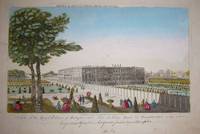
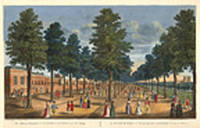
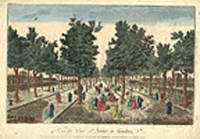
180010694London: Printed for Bowles & Carver No. 69 St. Pauls Church Yard 1800. Engraving with beautiful hand-colour. In excellent condition with the exception of tape on the verso of sheet. Image size: 9 3/8 x 15 3/4 inches. Vue d'Optique of the Royal Palace in St. James' Park in London<br/> <br/>During the eighteenth century "vues d'optique" or "perspective views" became extremely popular in England and Europe. Like other optical prints they capitalized on a connoisseur market eager for the latest novelty. English publishers such as John Bowles and Robert Sayer had great success with these optical views which quickly developed into a collecting craze that swept through print shops on both sides of the Channel. "Vues d'optiques" were specifically designed to create the illusion of perspective when viewed with a zograscope or perspective glass. These viewing devices used a series of reflecting mirrors to enhance the illusion of depth in the print creating a veritable "view" for the onlooker. Typically these prints depicted city or landscape views and were horizontal in format. They had roughly the same dimensions and were sold with heavy opaque colouring so as to show the tints when viewed through the lens. In their heyday optical prints were a technical revolution; they could be seen in almost every fashionable drawing room and were enjoyed by the poorer classes in print shops or at traveling fairs. For a small fee the citizens of Europe and England could travel the world without leaving their village. The "vue d'optique" was the first medium to bring the visible appearance of the wider world to a large European public. Ironically the artists and engravers who created these prints rarely had first hand knowledge of the scenes depicted hence the views were often not as accurate as they were advertised to be. As a result of their constant handling optical prints such as these are rare especially in good condition. They are not only beautiful images but a fascinating glimpse into the history of printmaking.<br/> <br/>Clayton The English Print 1688-1802 140-141. Printed for Bowles & Carver, No. 69 St. Pauls Church Yard unknown books
178010559Paris: Chez. Daumont rue St. Martin. Presentement chés Lachaussée rue S. Jacques 1780. Engraving with original colour. Printed on wove paper. This is a later copy of the earlier print of St. James' published by Daumont. In good condition with the exception of some scattered brown marks. Trimmed within the platemark. Image size: 9 1/4 x 14 1/2 inches. Vue d'Optique of St. James' Park in London<br/> <br/>During the eighteenth century "vues d'optique" or "perspective views" became extremely popular in England and Europe. Like other optical prints they capitalized on a connoisseur market eager for the latest novelty. English publishers such as John Bowles and Robert Sayer had great success with these optical views which quickly developed into a collecting craze that swept through print shops on both sides of the Channel. "Vues d'optiques" were specifically designed to create the illusion of perspective when viewed with a zograscope or perspective glass. These viewing devices used a series of reflecting mirrors to enhance the illusion of depth in the print creating a veritable "view" for the onlooker. Typically these prints depicted city or landscape views and were horizontal in format. They had roughly the same dimensions and were sold with heavy opaque colouring so as to show the tints when viewed through the lens. In their heyday optical prints were a technical revolution; they could be seen in almost every fashionable drawing room and were enjoyed by the poorer classes in print shops or at traveling fairs. For a small fee the citizens of Europe and England could travel the world without leaving their village. The "vue d'optique" was the first medium to bring the visible appearance of the wider world to a large European public. Ironically the artists and engravers who created these prints rarely had first hand knowledge of the scenes depicted hence the views were often not as accurate as they were advertised to be. As a result of their constant handling optical prints such as these are rare especially in good condition. They are not only beautiful images but a fascinating glimpse into the history of printmaking.<br/> <br/>Clayton The English Print 1688-1802 140-141. Chez. Daumont rue St. Martin. Presentement chés Lachaussée rue S. Jacques unknown books
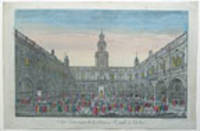
177015059Paris: Chez Daumont rue St. Martin 1770. Engraving with beautiful early colour. Printed on watermarked laid paper. In excellent condition with the exception of being trimmed within the platemark on the lower margin. Small tear on upper margin. Small puncture mark on left margin. Image size: 10 1/8 x 16 1/8 inches. This is a beautiful perspective view of the courtyard of the Royal Stock Exchange in London published by a Parisian printseller at the close of the eighteenth century.<br/> <br/>During the eighteenth century "vues d'optique" or "perspective views" became extremely popular in England and Europe. Like other optical prints they capitalized on a connoisseur market eager for the latest novelty. English publishers such as John Bowles and Robert Sayer had great success with these optical views which quickly developed into a collecting craze that swept through print shops on both sides of the Channel. "Vues d'optiques" were specifically designed to create the illusion of perspective when viewed with a zograscope or perspective glass. These viewing devices used a series of reflecting mirrors to enhance the illusion of depth in the print creating a veritable "view" for the onlooker. Typically these prints depicted city or landscape views and were horizontal in format. They had roughly the same dimensions and were sold with heavy opaque colouring so as to show the tints when viewed through the lens. In their heyday optical prints were a technical revolution; they could be seen in almost every fashionable drawing room and were enjoyed by the poorer classes in print shops or at traveling fairs. For a small fee the citizens of Europe and England could travel the world without leaving their village. The "vue d'optique" was the first medium to bring the visible appearance of the wider world to a large European public. Ironically the artists and engravers who created these prints rarely had first hand knowledge of the scenes depicted hence the views were often not as accurate as they were advertised to be. As a result of their constant handling optical prints such as these are rare especially in good condition. They are not only beautiful images but a fascinating glimpse into the history of printmaking.<br/> <br/>Clayton The English Print 1688-1802 140-141. Chez Daumont rue St. Martin unknown books
175110664London: Printed for & Sold by Rob. Sayer at the Golden Buck opposite Fetter Lane Fleet Street. & Hen. Overton at the White Horse without Newgate 1751. Engraved by N. Parr after Canaleti. Engraving with original colour. Printed on laid paper. In good condition with the exception of being trimmed within the platemark. Corners are stained. Image size: 9 3/16 x 15 3/16 inches. A beautiful Vue d'Optique of the Rotunda House at Ranelagh.<br/> <br/> During the eighteenth century "vues d'optique" or "perspective views" became extremely popular in England and Europe. Like other optical prints they capitalized on a connoisseur market eager for the latest novelty. English publishers such as John Bowles and Robert Sayer had great success with these optical views which quickly developed into a collecting craze that swept through print shops on both sides of the Channel. "Vues d'optiques" were specifically designed to create the illusion of perspective when viewed with a zograscope or perspective glass. These viewing devices used a series of reflecting mirrors to enhance the illusion of depth in the print creating a veritable "view" for the onlooker. Typically these prints depicted city or landscape views and were horizontal in format. They had roughly the same dimensions and were sold with heavy opaque colouring so as to show the tints when viewed through the lens. In their heyday optical prints were a technical revolution; they could be seen in almost every fashionable drawing room and were enjoyed by the poorer classes in print shops or at traveling fairs. For a small fee the citizens of Europe and England could travel the world without leaving their village. The "vue d'optique" was the first medium to bring the visible appearance of the wider world to a large European public. Ironically the artists and engravers who created these prints rarely had first hand knowledge of the scenes depicted hence the views were often not as accurate as they were advertised to be. As a result of their constant handling optical prints such as these are rare especially in good condition. They are not only beautiful images but a fascinating glimpse into the history of printmaking.<br/> <br/> Clayton The English Print 1688-1802 140-141. Printed for & Sold by Rob. Sayer at the Golden Buck, opposite Fetter Lane, Fleet Street. & Hen. Overton at the White Horse witho unknown
176618808London and Paris: a Londres ches Wichnyther A Paris chez J. Chereau rue St. Jacques au dessus de la Fontaine St. Severin aux 2 Colonnes No. 257 1766. Engraving with original colour. Printed on laid paper. In good condition with mild soiling and creasing. A beautiful Vue d'Optique with strong early colour depicting the old Palace of Westminster where the Lords and Commons met.<br/> <br/> An interesting late 18th century view of Westminster prior to the great fire of 1834 which brought into being the present Houses of Parliament. Westminster had been a royal residence until Henry VIII left it after a fire to reside at Whitehall. After that the Houses of Parliament met there. During the eighteenth century "vues d'optique" or "perspective views" became extremely popular in England and Europe. Like other optical prints they capitalized on a connoisseur market eager for the latest novelty. English publishers such as John Bowles and Robert Sayer had great success with these optical views which quickly developed into a collecting craze that swept through print shops on both sides of the Channel. "Vues d'optiques" were specifically designed to create the illusion of perspective when viewed with a zograscope or perspective glass. These viewing devices used a series of reflecting mirrors to enhance the illusion of depth in the print creating a veritable "view" for the onlooker. Typically these prints depicted city or landscape views and were horizontal in format. They had roughly the same dimensions and were sold with heavy opaque colouring so as to show the tints when viewed through the lens. In their heyday optical prints were a technical revolution; they could be seen in almost every fashionable drawing room and were enjoyed by the poorer classes in print shops or at traveling fairs. For a small fee the citizens of Europe and England could travel the world without leaving their village. The "vue d'optique" was the first medium to bring the visible appearance of the wider world to a large European public. Ironically the artists and engravers who created these prints rarely had first hand knowledge of the scenes depicted hence the views were often not as accurate as they were advertised to be. As a result of their constant handling optical prints such as these are rare especially in good condition. They are not only beautiful images but a fascinating glimpse into the history of printmaking.<br/> <br/> Clayton The English Print 1688-1802 140-141. a Londres ches Wichnyther (?) A Paris chez J. Chereau rue St. Jacques au dessus de la Fontaine St. Severin aux 2 Colonnes No. 25 unknown
1760103861760. Engraving with original colour. Printed on laid paper. In good condition with the exception of some creases within the image. Sides have been remargined with laid paper and bottom edge is trimmed within the platemark. Surface soiling within image. Image size: 11 x 16 1/4 inches. A wonderful "vue d'optique" of Somerset House on the Strand in London.<br/> <br/> During the eighteenth century "vues d'optique" or "perspective views" became extremely popular in England and Europe. Like other optical prints they capitalized on a connoisseur market eager for the latest novelty. English publishers such as John Bowles and Robert Sayer had great success with these optical views which quickly developed into a collecting craze that swept through print shops on both sides of the Channel. "Vues d'optiques" were specifically designed to create the illusion of perspective when viewed with a zograscope or perspective glass. These viewing devices used a series of reflecting mirrors to enhance the illusion of depth in the print creating a veritable "view" for the onlooker. Typically these prints depicted city or landscape views and were horizontal in format. They had roughly the same dimensions and were sold with heavy opaque colouring so as to show the tints when viewed through the lens. In their heyday optical prints were a technical revolution; they could be seen in almost every fashionable drawing room and were enjoyed by the poorer classes in print shops or at traveling fairs. For a small fee the citizens of Europe and England could travel the world without leaving their village. The "vue d'optique" was the first medium to bring the visible appearance of the wider world to a large European public. Ironically the artists and engravers who created these prints rarely had first hand knowledge of the scenes depicted hence the views were often not as accurate as they were advertised to be. As a result of their constant handling optical prints such as these are rare especially in good condition. They are not only beautiful images but a fascinating glimpse into the history of printmaking.<br/> <br/> Clayton The English Print 1688-1802 140-141. unknown