ZINGG Adrian.Livre Rare Book
3 191 résultats
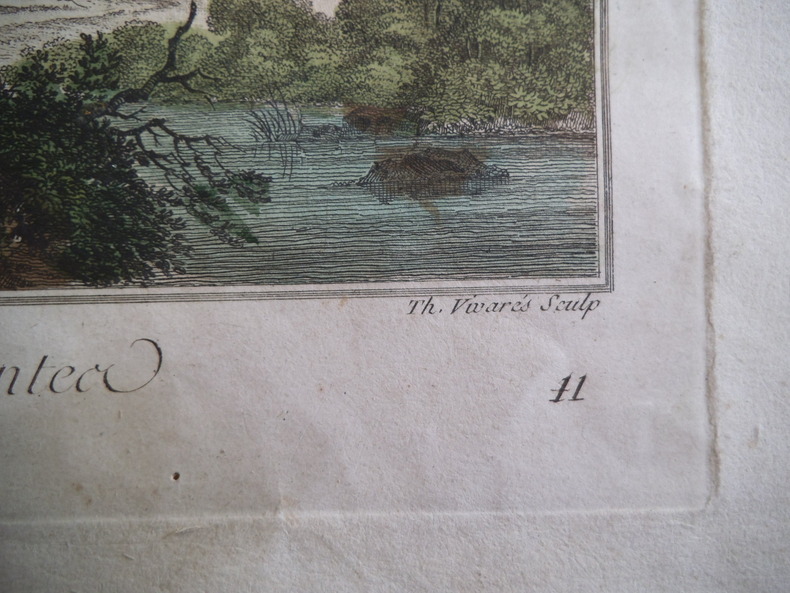
8590Eau-forte originale en couleurs, du XVIIIème siècle. Format 252x212mm à la cuvette,et 330x290mm avec marges. Th. VIVARES graveur.Une déchirure,réparée,en marge inférieure. Peintre né à Saint-Gall 1734 Mort à Leipzig 1816. Ecole Suisse
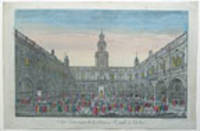
177015059Paris: Chez Daumont rue St. Martin 1770. Engraving with beautiful early colour. Printed on watermarked laid paper. In excellent condition with the exception of being trimmed within the platemark on the lower margin. Small tear on upper margin. Small puncture mark on left margin. Image size: 10 1/8 x 16 1/8 inches. This is a beautiful perspective view of the courtyard of the Royal Stock Exchange in London published by a Parisian printseller at the close of the eighteenth century.<br/> <br/> During the eighteenth century "vues d'optique" or "perspective views" became extremely popular in England and Europe. Like other optical prints they capitalized on a connoisseur market eager for the latest novelty. English publishers such as John Bowles and Robert Sayer had great success with these optical views which quickly developed into a collecting craze that swept through print shops on both sides of the Channel. "Vues d'optiques" were specifically designed to create the illusion of perspective when viewed with a zograscope or perspective glass. These viewing devices used a series of reflecting mirrors to enhance the illusion of depth in the print creating a veritable "view" for the onlooker. Typically these prints depicted city or landscape views and were horizontal in format. They had roughly the same dimensions and were sold with heavy opaque colouring so as to show the tints when viewed through the lens. In their heyday optical prints were a technical revolution; they could be seen in almost every fashionable drawing room and were enjoyed by the poorer classes in print shops or at traveling fairs. For a small fee the citizens of Europe and England could travel the world without leaving their village. The "vue d'optique" was the first medium to bring the visible appearance of the wider world to a large European public. Ironically the artists and engravers who created these prints rarely had first hand knowledge of the scenes depicted hence the views were often not as accurate as they were advertised to be. As a result of their constant handling optical prints such as these are rare especially in good condition. They are not only beautiful images but a fascinating glimpse into the history of printmaking.<br/> <br/> Clayton The English Print 1688-1802 140-141. Chez Daumont rue St. Martin unknown
177015059Paris: Chez Daumont rue St. Martin 1770. Engraving with beautiful early colour. Printed on watermarked laid paper. In excellent condition with the exception of being trimmed within the platemark on the lower margin. Small tear on upper margin. Small puncture mark on left margin. Image size: 10 1/8 x 16 1/8 inches. This is a beautiful perspective view of the courtyard of the Royal Stock Exchange in London published by a Parisian printseller at the close of the eighteenth century.<br/> <br/>During the eighteenth century "vues d'optique" or "perspective views" became extremely popular in England and Europe. Like other optical prints they capitalized on a connoisseur market eager for the latest novelty. English publishers such as John Bowles and Robert Sayer had great success with these optical views which quickly developed into a collecting craze that swept through print shops on both sides of the Channel. "Vues d'optiques" were specifically designed to create the illusion of perspective when viewed with a zograscope or perspective glass. These viewing devices used a series of reflecting mirrors to enhance the illusion of depth in the print creating a veritable "view" for the onlooker. Typically these prints depicted city or landscape views and were horizontal in format. They had roughly the same dimensions and were sold with heavy opaque colouring so as to show the tints when viewed through the lens. In their heyday optical prints were a technical revolution; they could be seen in almost every fashionable drawing room and were enjoyed by the poorer classes in print shops or at traveling fairs. For a small fee the citizens of Europe and England could travel the world without leaving their village. The "vue d'optique" was the first medium to bring the visible appearance of the wider world to a large European public. Ironically the artists and engravers who created these prints rarely had first hand knowledge of the scenes depicted hence the views were often not as accurate as they were advertised to be. As a result of their constant handling optical prints such as these are rare especially in good condition. They are not only beautiful images but a fascinating glimpse into the history of printmaking.<br/> <br/>Clayton The English Print 1688-1802 140-141. Chez Daumont rue St. Martin unknown books
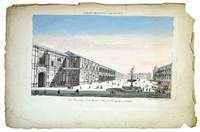
Incisione da matrice in rame (mm. 300x420 e margini), abilmente colorata da mano coeva: veduta prospettica animata da numerosi personaggi. Queste «vues d'optique», dai colori molto vivaci, con cieli azzurri digradanti verso un orizzonte più chiaro, strade e piazze con una prospettiva accentuata, se opportunamente predisposte con intagli, forature e controffondature, erano presentate al pubblico all'interno di apparecchi ottici semplificati dal pantoscopio, allo zogroscopio, dalla lanterna magica al mondo novo. . Cfr. Maria Adriana Prolo - Luigi Carluccio. Il Museo Nazionale del Cinema di Torino. 1978, la ricercata prima pubblicazione relativa al nascente Museo della Mole Antonelliana. C.A. Minici Zotti, Il Mondo Nuovo. Le meraviglie della visione dal '700 alla nascita del Cinema, 1988..
Incisione da matrice in rame (mm. 280x400 e margini), abilmente colorata da mano coeva: veduta prospettica animata da numerosi personaggi. Queste «vues d'optique», dai colori molto vivaci, se opportunamente predisposte con intagli, forature e controffondature, erano presentate al pubblico all'interno di apparecchi ottici semplificati dal pantoscopio, allo zogroscopio, dalla lanterna magica al mondo novo. . Cfr. Maria Adriana Prolo - Luigi Carluccio. Il Museo Nazionale del Cinema di Torino. 1978, la ricercata prima pubblicazione relativa al nascente Museo della Mole Antonelliana. C.A. Minici Zotti, Il Mondo Nuovo. Le meraviglie della visione dal '700 alla nascita del Cinema, 1988..
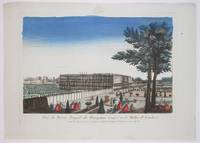
52112Paris: chez Daumont. c.1760. Original hand-coloured landscape engraving 26 x 40 cm overall sheet size 32 x 49.5 cm. Margins slightly dampstained and frayed at extremities. Vues d'optiques or perspective view prints were a fashionable entertainment in the elite drawing rooms of the eighteenth century and also a popular street entertainment at fairs and markets. Publishing houses in London Paris Augsburg and Bassano competed in their production. In total about 5000 vues d'optiques were produced. Paris: chez Daumont.. [c.1760] unknown
Incisione da matrice in rame (mm.300x400 e margini), abilmente colorata da mano coeva: veduta prospettica animata da numerosi personaggi. Titolo lungo il margine inferiore . Queste «vues d'optique», dai colori molto vivaci, se opportunamente predisposte con intagli, forature e controffondature, erano presentate al pubblico all'interno di apparecchi ottici semplificati dal pantoscopio, allo zogroscopio, dalla lanterna magica al mondo novo. . Cfr. Maria Adriana Prolo - Luigi Carluccio. Il Museo Nazionale del Cinema di Torino. 1978, la ricercata prima pubblicazione relativa al nascente Museo della Mole Antonelliana. C.A. Minici Zotti, Il Mondo Nuovo. Le meraviglie della visione dal '700 alla nascita del Cinema, 1988..
Incisione da matrice in rame (mm.210x320 e margini), abilmente colorata da mano coeva: veduta prospettica animata da numerosi personaggi. Titolo e legenda lungo il margine inferiore. Piccoli difetti ma nel complesso un discreto esemplare molto decorativo. Queste «vues d'optique», dai colori molto vivaci, se opportunamente predisposte con intagli, forature e controffondature, erano presentate al pubblico all'interno di apparecchi ottici semplificati dal pantoscopio, allo zogroscopio, dalla lanterna magica al mondo novo. . Cfr. Maria Adriana Prolo - Luigi Carluccio. Il Museo Nazionale del Cinema di Torino. 1978, la ricercata prima pubblicazione relativa al nascente Museo della Mole Antonelliana. C.A. Minici Zotti, Il Mondo Nuovo. Le meraviglie della visione dal '700 alla nascita del Cinema, 1988..
Cm. 42,5x28 incluso il titolo che appare speculare, al contrario. Incorniciata con passepartout ornato a filetti oro sotto vetro, complessivi cm. 52x39. Piccola usura a alla modanatura della cornice in legno dorato. La "vue d'optique" è una veduta destinata ad essere proiettata con uno speciale apparecchio, (zograscope o « boîte d'optique »). pe rquesto ilo titolo è impresso a senso inverso. Di gran successo poplre dal 1740 all'1800 furono prodotte a Londra, Pqarigi, Augsburg e Bassano del Grappa.
176027965Augsburg: L'Academic Imperiale des Arts 1760. Print. Otherwise very good condition. A view of Westminster over the water with the bridge and many vessels in the foreground. Fine original hand color. 11.5 x 15.75" some rusted pin holes in the margin where the print was hung. L'Academic Imperiale des Arts unknown
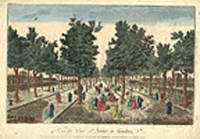
178010559Paris: Chez. Daumont rue St. Martin. Presentement chés Lachaussée rue S. Jacques 1780. Engraving with original colour. Printed on wove paper. This is a later copy of the earlier print of St. James' published by Daumont. In good condition with the exception of some scattered brown marks. Trimmed within the platemark. Image size: 9 1/4 x 14 1/2 inches. Vue d'Optique of St. James' Park in London<br/> <br/>During the eighteenth century "vues d'optique" or "perspective views" became extremely popular in England and Europe. Like other optical prints they capitalized on a connoisseur market eager for the latest novelty. English publishers such as John Bowles and Robert Sayer had great success with these optical views which quickly developed into a collecting craze that swept through print shops on both sides of the Channel. "Vues d'optiques" were specifically designed to create the illusion of perspective when viewed with a zograscope or perspective glass. These viewing devices used a series of reflecting mirrors to enhance the illusion of depth in the print creating a veritable "view" for the onlooker. Typically these prints depicted city or landscape views and were horizontal in format. They had roughly the same dimensions and were sold with heavy opaque colouring so as to show the tints when viewed through the lens. In their heyday optical prints were a technical revolution; they could be seen in almost every fashionable drawing room and were enjoyed by the poorer classes in print shops or at traveling fairs. For a small fee the citizens of Europe and England could travel the world without leaving their village. The "vue d'optique" was the first medium to bring the visible appearance of the wider world to a large European public. Ironically the artists and engravers who created these prints rarely had first hand knowledge of the scenes depicted hence the views were often not as accurate as they were advertised to be. As a result of their constant handling optical prints such as these are rare especially in good condition. They are not only beautiful images but a fascinating glimpse into the history of printmaking.<br/> <br/>Clayton The English Print 1688-1802 140-141. Chez. Daumont rue St. Martin. Presentement chés Lachaussée rue S. Jacques unknown books
178010559Paris: Chez. Daumont rue St. Martin. Presentement chés Lachaussée rue S. Jacques 1780. Engraving with original colour. Printed on wove paper. This is a later copy of the earlier print of St. James' published by Daumont. In good condition with the exception of some scattered brown marks. Trimmed within the platemark. Image size: 9 1/4 x 14 1/2 inches. Vue d'Optique of St. James' Park in London<br/> <br/> During the eighteenth century "vues d'optique" or "perspective views" became extremely popular in England and Europe. Like other optical prints they capitalized on a connoisseur market eager for the latest novelty. English publishers such as John Bowles and Robert Sayer had great success with these optical views which quickly developed into a collecting craze that swept through print shops on both sides of the Channel. "Vues d'optiques" were specifically designed to create the illusion of perspective when viewed with a zograscope or perspective glass. These viewing devices used a series of reflecting mirrors to enhance the illusion of depth in the print creating a veritable "view" for the onlooker. Typically these prints depicted city or landscape views and were horizontal in format. They had roughly the same dimensions and were sold with heavy opaque colouring so as to show the tints when viewed through the lens. In their heyday optical prints were a technical revolution; they could be seen in almost every fashionable drawing room and were enjoyed by the poorer classes in print shops or at traveling fairs. For a small fee the citizens of Europe and England could travel the world without leaving their village. The "vue d'optique" was the first medium to bring the visible appearance of the wider world to a large European public. Ironically the artists and engravers who created these prints rarely had first hand knowledge of the scenes depicted hence the views were often not as accurate as they were advertised to be. As a result of their constant handling optical prints such as these are rare especially in good condition. They are not only beautiful images but a fascinating glimpse into the history of printmaking.<br/> <br/> Clayton The English Print 1688-1802 140-141. Chez. Daumont rue St. Martin. Presentement chés Lachaussée rue S. Jacques unknown
52922Paris: Jacques Chereau. c.1750. Overall sheet size 33.5 x 47cm. Plate mark 27 x 38cm. Original hand-coloured engraving. Small water stain to middle of top margin. Image itself very good. Vues d'optiques or perspective view prints were a fashionable entertainment in the elite drawing rooms of the eighteenth century and also a popular street entertainment at fairs and markets. Publishing houses in London Paris Augsburg and Bassano competed in their production. In total about 5000 vues d'optiques were produced. Paris: Jacques Chereau. [c.1750] unknown
Une vue d'optique de dimensions 48x32 cm; très grandes marges; coloriée à la main. Les marges sont effrangée mais c'estsans importance compte tenu de leurs dimensions. Rare témoignage d'une controverse religieuse qui fait encore parler d'elle. Voir la photo.
1837128842Strasbourg (Ohne Jahr. Um 1837). Bildformat ca. 22x30 cm. In schlichtem Holzrahmen. Rahmenformat ca. 37x48 cm (Teils etwas stockfleckig. Unbedruckte Ränder fleckiger u. gering beschädigt).
1840141904Ca. 1840. Format: 14,5 x 19,5 cm. Blattgröße: 28 x 39 cm.
1840141905Ca. 1840. Format: 21 x 29,5 cm. Blattgröße: 32 x 42,5 cm.
188054523Solothurn n.d. ca. 1880. Leporello 165 x 148 cm. in orig. clothcovers with ties. Original printed pictorial wrapper on frontboard. Tinted lithography by X. Amiet Solothurn. On foot "Vom Weissenstein aufgenommen". Clean and fine. hardcover
13182DBo.J. [2 Warenabbildungen] Rutger Christoffel Alberts, geboren 1691, gestorben 1732. Drucker und Buchhändler in Den Haag. Giovanni Giacomo de Rossi
52104Paris c.1760. Original hand-coloured landscape engraving 23 x 42 cm overall sheet size 32 x 49.5 cm. Vues d'optiques or perspective view prints were a fashionable entertainment in the elite drawing rooms of the eighteenth century and also a popular street entertainment at fairs and markets. Publishing houses in London Paris Augsburg and Bassano competed in their production. In total about 5000 vues d'optiques were produced. [Paris c.1760] unknown
1776009Vue d'optique, Estampe « Le cap de bonne esperance » Chez Chereau 1776, Sous verre, l'Encadrement mesure 31 x 44 cm, le dessin mesure 27 x 42 cm et pèse 1 kg (c). Très Bon état général.
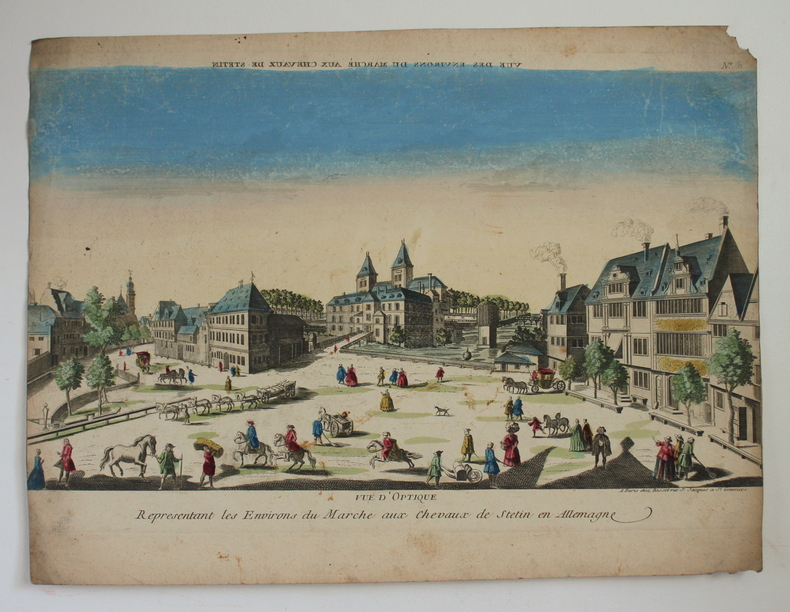
1800038Vue d'optique Estampe « representant les environs du marche aux chevaux de Stetin en Allemagne », 18ème, Chez Basset. La Feuille mesure 33 x 43,5 cm. Le Dessin mesure 29 x 43,5 cm et pèse 0.300 kg. La gravure est en très bon état général, petits trous de punaise sous le cheval du milieu (très peu perceptible).
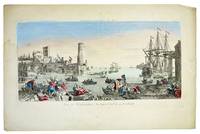
1800046Vue d'optique Estampe « Vue de la ville de Naples » XVIIIème Chez Chereau. Sous verre. l'Encadrement mesure 31 x 44 cm, le dessin mesure 28 x 42 cm et pèse 1 kg (c). Très Bon état général, plusieurs petites tâches.
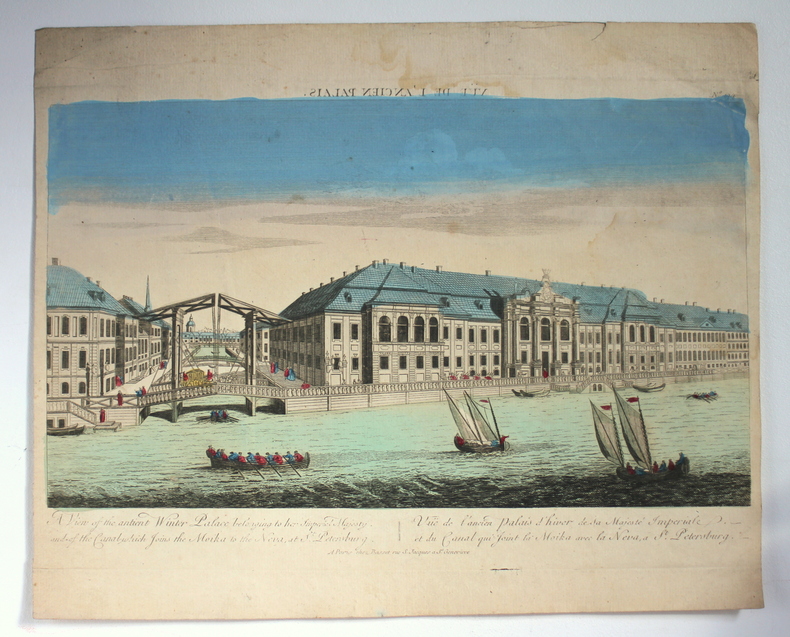
1790047Vue d'optique Estampe « Vue de l'ancien palais d'hiver de sa majesté impériale et du canal qui joint la moika avec la Neva a St Petersburg »,Chez Basset XVIIIème, la Feuille mesure 33 x 40 cm, le dessin mesure 27 x 40 cm et pèse 0.300 kg. Très Bon état général, trace de mouillure claire en haut a droite.
1790048Vue d'optique « Vue perspective du château Rle. de Marly » Marly N°39, Sur papier, encadré, Gravure rehaussée en couleurs à l'aquarelle XVIIIe. l'Encadrement mesure 35 x 45 cm, le dessin mesure 29 x 38,5 cm et pèse 1,300 kg (c). Très Bon état général.