Loder, J. Ch. vonAntiquariat.de

440 résultats
18312684BBKönigsberg, J.H. Bon's Buchhandlung, 1831. 8°. 60 S., 48 S. (Zusätze). Halblederband aus der Zeit. + Wichtig: Für unsere Kunden in der EU erfolgt der Versand alle 14 Tage verzollt ab Deutschland / Postbank-Konto in Deutschland vorhanden +, A|B [2 Warenabbildungen]
MED654M1834, Imprimerie Royale, Paris. In-4, reliure d'attente, plats cartonnés, 205pp suivies de tableaux statistiques et de cartes concernant chaque arrondissement et chaque commune rural. Exemplaire bien complet de toutes ses planches (51 cartes). Intérieur bon. Carte 49 brunie, sûrement une planche provenant d'un autre exemplaire puis montée sur onglet (trace de découpe sur ce qui devait être la planche 49 initiale). Cachet humide ex-libris sur page de titre. Charmant exemplaire de ce rare et éminent ouvrage.
brossura "Non si possiedono dati certi sulla popolazione esistente in Biccari nel periodo da noi preso ad esame anche se un calcolo lo si potrebbe azzardare mediante l'utilizzo dei registri dei morti e quelli delle nascite, utilizzando sia quelli della Chiesa sia quelli del Comune. Ma a nostro avviso ci inoltreremmo in un terreno paludoso. Intanto la prima avvisaglia si mostrò nell'ultimo quadrimestre del 1835 con un abnorme numero di decessi anche se l'evento non venne riportato in nessun documento ufficiale. Sembra quasi che quei decessi furono addebitati ad altre cause. Ma nel 1836 venne issata la lapide commemorativa della costruzione della Fontana e alla fine di quella descrizione leggiamo che: "... nell'anno della recuperata salute. Milleottocentotrentasei" è del tutto evidente che ci si riferisce al 1835, cioè all'ultimo quadrimestre di quell'anno e al manifestarsi, per la prima volta, della micidiale pandemia nella nostra cittadina. Questo è l'unico e "sparuto" indizio a nostra disposizione. La domanda che ci siamo posti è semplice: Perché nel 1836 si è recuperata la "salute"? Cose è mai successo nei mesi precedente o nell'anno precedente? Un qualcosa che ha attinenza con quanto succederà nell'estate del 1837? Crediamo proprio di sì!"
186297750HBLübeck:, v. Rohden, 1862. 132 Seiten, eingebundener OU., goldgeprägter HLnbd., marmorierte Decke21,5 x 17,5 cm. [2 Warenabbildungen]
19901524327613101HASP-393, Grupo Anaya, Madrid 1990
19911605546072932GLN-595, Ediciones Anaya, 1991
First edition, 34pp., title-page a little dusty, disbound.
(Colera) MANTEGAZZA P. Codice igienico popolare contro il colera. Con note scientifiche. Firenze, 1884. 16°, pp. 110.
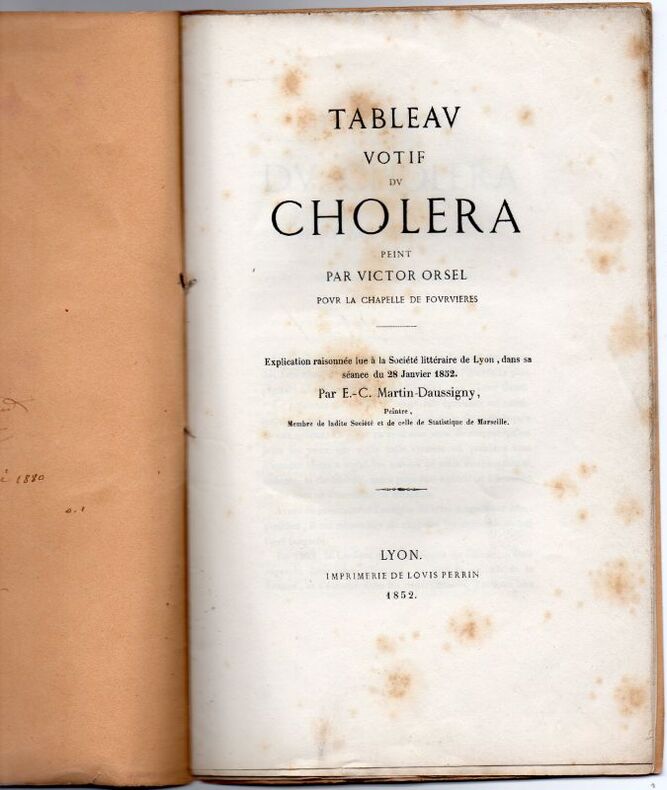
14995Lyon, Imprimerie Louis Perrin, 1852 In-8, monographie en feuillets cousus de 21 pages, l'emsemble de la pagination comporte des piqûres sans profondeur.
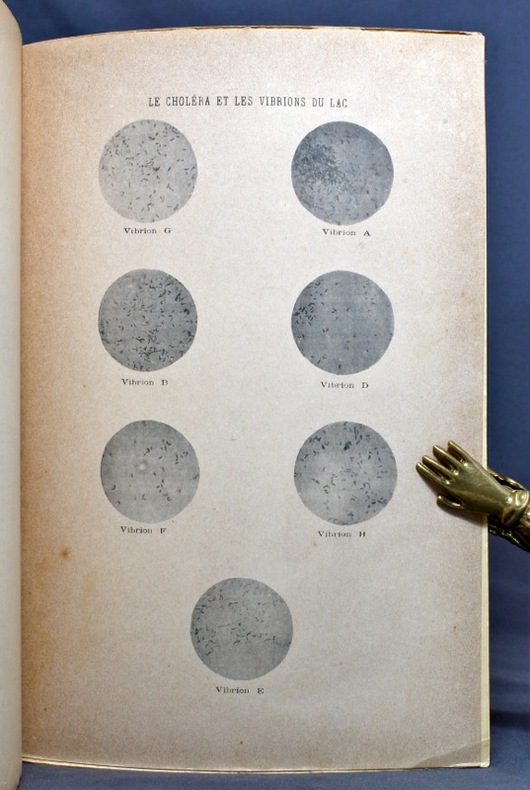
189413791Genève, Laboratoire de bactériologie de la salubrité / Imprimerie Aubert-Schuchaurdt, 1894. In-8 broché de [4]-194-[2] pages, couverture imprimée.
Firenze, Tip. di G. Barbèra, 1885, in-8, br. editoriale, pp. 20.
1920104263Couverture souple. Broché. 8 pages.
In 16, pp. 71 + (1). Gora al margine inferiore del piatto anteriore. Br. ed. Interessante e poco comune operetta, traduzione italiana di quella apparsa sulla rivista tedesca 'Archiv fur Hygiene' che testimonia la differente teoria circa la trasmissione del colera (come di altre patologie) del chimico Pettenkorfer, docente di chimica clinica nell'universita' di Monaco, quindi d'igiene nella stessa universita'. Nel 1873 fu membro della commissione per gli studi sul colera e nel 1889 presidente dell'Accademia bavarese delle scienze. Pettenkorfer fu sempre contrario alla teoria del 'contagio', che divenne dominante nel Novecento, in base alla quale i germi sono causa diretta delle malattie. Per quanto riguarda il colera, riteneva che l'esistenza del bacillo, del vibrione del colera, non potesse da solo giustificare l'insorgere della malattia ma che si trattasse si una combinazione tra il germe e la natura. Quando il germe entrava in contatto con suoli asciutti dava origine ai fattori scatenanti dell'epidemia escludendo quindi che si trasmettesse tra individui o per ingestione di sostanze infette. In questo modo si escludeva l'acqua come veicolo primo di trasmissione della malattia. Quando l'ambiente, invece, sviluppava naturalmente delle condizioni particolari, il germe aveva la possibilita' di diventare pericoloso. Da qui discendeva che piu' che lo sviluppo di vaccini e di farmaci, bisognasse migliorare le condizioni della rete idrica e l'uomo dovesse, tramite un'alimentazione corretta e una vita equilibrata, sviluppare delle forme di resistenza proprie agli agenti esterni.
19734519Deutscher Bücherbund Stuttgart, o.J. (ca. 1973). 342 S., OLn., 8°. Zustand: Schnitt fleckig, sonst gut. aus dem Russ. von Axel Jollas
189921897Leipzig, Johann Ambrosius Barth, 1899-1903. Gr.-8°. Mit einigen Textabbildungen, Diagrammen und insgesamt 6 Karten. XVIII, 434; VIII, 407; VIII, 394; XIV, 406; XXI, 588 S. Halbleinenbände der Zeit mit marmor. Deckelbezugspapier und goldgepr. Rückentiteln. - Mit ausführlichem Sachregister. Mit je 2 Bibliotheksstempeln auf den Titelblättern, davon je 1 Ausscheidestempel.
19184147Leipzig, Barth, 1913/1914/1918. 200 s/w Textabbildungen, 12 Tafeln davon 2 in Farbe; 126 s/w Textabbildungen, 20 Tafeln davon 6 in Farbe; 118 s/w Textabbildungen, 9 Farbtafeln; 141 s/w Textabbildungen, 7 Farbtafeln, XIII, 295 S.; XV, 747 S., 2 Bl. Verlagsanz.; XIV, 679 S.; IXX, 602 S., 4 v. 5 Bänden. 2. Auflage. Original-Leinenband mit marmoriertem Schnitt. Zustand 3, hintere Deckel v. Bd. 2 u. 3 u. 5 kleine Kratzer bzw. Abschürfungen u. minimal fleckig, Bd. 2 minimal lichtschattig.
1605633594453Unos (pocos) ejercicios hachos con un lapiz ; Eusk-84, Anaya Haritza
In 4° piccolo, pp. 243. Brossura un po' sciolta.
9743aafRoma, coi tipi del Boulzaler, 1831, gr. in-8°, VI, dont le titre avec marque de l'imprimeur + 230 p. + 2 ff. (titres des chapitres), non rogné, avec notice manuscrite de 1836 sur la garde. brochure originale illustrée, dos avec manque
(30); 629, (68) + Four plates. Foxed. 8vo. Original full cloth binding, broken. Complete in itself, this is essentially the first volume of a two volume work. It includes individual title pages from earlier editions. Morison's Hygiest System consisted of Universal Vegetable Medical Cures; as well as various warm baths. The "British College of Health" was an institution mostly of Morison's own invention. Though his systems and remedies were popular, Morison's Pills were frequently ridiculed by intellectuals such as Carlyle. Vol. I only. **PRICE JUST REDUCED! MED 10
679o.J. S. 648-669. - II. Gesammelte Nachrichten in Beziehung auf die jetzt in Russland herrschende Epidemie; vom Dr. Hildebrand. Mit gefalt. Landkarte. Seiten 669-690. - III. Ueber die Cholera im Königreiche Polen. Aus einem Sendschreiben des Dr. Scipion Pinel, der Zeit zu Warschau an C. F. v. Gräfe. Seiten 691-695. Zusammen in mod. Pappband. Berlin, G. Reimer, 1831.
9276Circa 1849. 4to 36 pp and a manuscript title-page. All texts clear and complete. Disbound from a commonplace book and apparently complete. Fair on aged brittle gilt-edged paper with a few closed tears in particular to the last couple of leaves. The book is presumably in Mrs Macdonald's hand and the only indication to her identity is the final note see below signed 'F. M. M.' which shows her to have been an educated member of the middle classes. Divided into three parts. The first part is 'Useful Remarks for the Mistress of a House' 25 pp paginated from 1 to 23. The first page carrying remarks on Tea Loaf Sugar Moist Sugar Eggs and Spices with the last two annotated 'Experientia docet!' The first entry reads: 'Tea should be kept in a dry place and any store should be in Tin Canisters wrapt in flannel. Two spoonful is the quantity given to work-women for breakfast or Tea.' Extensive sections on Pickles and Preserves. Also Raspberry Vinegar Candles Soap 'Lay in also an annual stock' and Coals the latter annotated 'Since the above was written Coals are sold by the Ton'. Long sections on 'Poultry yard' 'Pidgeons' 'Rabbits' 'If the Doe is weak during her accouchement give her beer caudle or warm fresh grains' 'Ornamental Supper dishes' 'Flummery' including 'Green Melon in Flummery' The second part comprising 6 pp of French recipes: 'Soupe a la Bonne-Femme' 'Roux Blanc white Thickening' 'Roux brun brown thickening' 'Sauce Tournee' Sauce a l'Allemande German sauce' 'Sauce au Maitre d'Hotel' 'Sauce du Maitre d'Hotel au maigre' 'To boil Artichokes the French way' 'French melted butter only good with Artichokes in my opinion'. The third part 6 pp containing miscellaneous recipes beginning with a long 'Anti-Cholera diet' and ending with 'Lord Ponsonby's Cure for Cholera. 1849.' 'It is asserted by Lord Ponsonby's Agent that the patient is immediately cured before a Medical Man arrives.' This is dated 'June 24: 1849' and is followed by a note signed 'F. M. M.' reading 'The above receipt was given to me by a Man of the name of Poole a Poulterer at Alston near Cheltenham who saw it tried in his House by his Brother in Law who was seized with all the symptoms of Cholera and had the Medicine made up to be ready at a moment and was quite well and able to return to his home some miles distant perfectly recovered the next Morning.' [Circa 1849.] unknown
Features: Cholera; a Byzantine trading venture (a 7th century shipwreck off the coast of Turkey tells a remarkably full story); high-lysine corn; symbiosis and evolution; the magnetism of the moon; flight orientation in locusts; the control of short-term memory; new models of the real-number line. Average wear. Sound copy. Magazine
60 pages. Features: Arthur Erickson and Canada's mirror-sheathed pavilion at Expo '70; Clarence Eckert and his Rolls-Royce; Angela Davis; Black Panther Lonnie McLucas and the New Haven Eight; Who's Come a Long Way, Baby? - Feature article on women's rights; The Liberation of Kate Millett; What it Would Be Like if Women Win; Middle East - Toward the Start of Talks; Watch on the Suez - Intelligence Gaps - air photos purport to show Egypt installing SAM-2 missiles in cease-fire zone; Maps of possible Israel/Egypt border; Lovely one-page color photo of Senegalese Dancer Issa Teuw Niang with friends in Dakar; Three additional pages of nice color photos of prominent black women in Africa; The Spetsopoula Incident; Urban Trend in Vietnam - with photo of horrific canal-side squatter structures; Joseph Rhodes Jr. and the Kent State investigation; Musical group "The Band" - photo and article; Cholera epidemic in Lebanon; Film producers Christopher Dewey and Dennis Friedland; Reuben Maury; Aquaculture - article with photo of streetcar being lowered into the Sea of Japan to provide 'apartments' for fish; Golfer Dave Stockton; Sculptor Alberto Sanchez; Passing of Leo Ciceri, Beniamino Fubano, Eugene Barnett, General Archimede Mischi and William Hamm Jr.; The Energy Shortage Worsens; Blighted corn in the U.S. South; Financial challenges for U.S. airlines as the upgrade to the 747; Interesting one-page color Hitachi ad illustrates "Floating Train of the Future"; and more. Moderate wear. Unmarked. A sound copy. Magazine