Ferdinand HochstetterAntiquariat.de

5 846 résultats
194553778Wien, Urban & Schwarzenberg, 1945. 19. Auflage.
1940102540Berlin, Urban & Schwarzenberg, 1940. 343 S. 4° Quart, Halbleinen
195743063Berlin, Wien: Urban & Schwarzenberg, 1957. VII, 409 S. (26 cm) Leinen / gebundene Ausgabe
194074082Berlin, Wien: Urban & Schwarzenberg, 1940. 1: Knochen - Bänder - Muskeln / 2: VIII, 410 / S. (26 cm) Leinen / gebundene Ausgabe
Cleverly constructed book designed to introduce the functions of the human body to children using pull up flaps and stickers and other entertaining puzzles to explore. Greek version based on the Larousse edition translated by Effi Markozane 22p. illus [NO copies found in Worldcat COPIES FOUND Book
Fine English Paperback., Very good., 24 x 16 cm., [4], 523 p., "Tip terimlerinin olusmasi ile ilgili genel bilgiler ve fonksiyonel anatomi terimleri sözlügü.", Yasar Kuyucu, Atatürk Üniversitesi Yayinlari, Erzurum, 1988.
195897504Heidelberg, Quelle & Meyer, 1958. 354 S. Gr.-8° Groß-Oktav, Halbleinen
1910102804BBLeipzig u. Berlin, Teubner, 1910 u. 1914. 4°. XVII, 789 S.; XV, 960 S. mit zus. 1220 Abb. u. 35 teils farb. Tafeln. OLn. mit goldgepr. Rücken- u. Deckeltiteln u. goldgepr. Rücken- u. Deckelvignetten. 2 Bände.
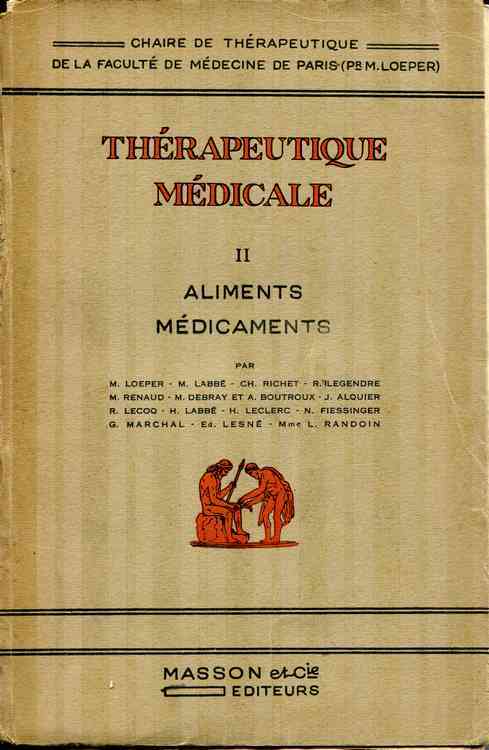
15303,Paris, Masson et Cie 1930, 329 pp., 1 vol. in 8 br. dos fragilisé, tableaux et figures in texte-
qv1474Etablissements Fumouze Cartonné In-8 (14,2 x 22,2 cm), cartonné, 235 pages, sans date ; frottements aux coiffes et coupes, mors fendus en queue, bord inférieur du premier plat un peu enfoncé, rousseurs aux gardes, par ailleurs assez bon état général. Livraison a domicile (La Poste) ou en Mondial Relay sur simple demande.
193513569Paris Hermann & Cie 1935 In-8 70+81+51 pp, Actualités scientifiques et industrielles 311, 372 et 456. Intérieurs frais, figures in-texte et planches hors-texte, ex-libris au tampon. On y joint : Remarques sur l'évolution des dents molaires chez les mammifères, par Etienne Patte ; Actuatlités Scientifiques et Industrielles n°176, Hermann & Cie, 1934.
198887848Orlando, Grune & Stratton Inc., 1988. XII + 306 S. Gr.-8° Groß-Oktav, Hardcover/Pappeinband
[212]-215, 156-160pp., one lithographic plate, disbound. Formerly in the library of the Birmingham Medical Institute.
Quindicesima Edizione, brossura editoriale di collana con la copertina in cartoncino ben conservata, normali e lievi tracce da lettura, piegoline da scaffalatura agli angoli presenti anche in alcune pagine a inizio volume, i tagli sono bruniti da polvere e manipolazione, molto buono lo stato delle pagine corredate da più di 310 figure in nero e a colori nel testo. N. pag. 298. USATO
244103 April 1941. On letterhead of The Loaning Peebles Scotland. Considering his achievements and range of activities it is curious that Bryce should not have been accorded an entry in the Oxford DNB. Waterston was Bute Professor of Anatomy at the University of St Andrews from 1914 to 1942. In 1913 while Professor of Anatomy at King's College London he was the first authority to debunk the Piltdown Man hoax. 2pp 4to. 49 lines of closely-written text. Addressed to ‘My dear Waterston’ and signed ‘James H. Bryce’. In fair condition somewhat creased and aged. He explains the ill health and circumstances that forced him to miss Waterston’s ‘paper & exhibit’ at the Society of Antiquaries the previous Saturday and complains of the bad weather and its effect on his injury. Waterston is ‘lucky in having three able sons’. He himself had his only son ‘called back to the colours from the Emergency Reserve and is on Instruction at the R. A. Camp at Shrivenham in Wilts’. He has worried over the safety of Waterston’s department ‘when the Bute buildings were injured’ but is pleased to hear ‘that none of the contents of the anatomical department were injured’. He regrets not being able to take up Waterston’s invitation to visit St Andrews: ‘a train journey is impossible - and my self-driven motoring is also over’. He describes how his brother and his family have come to live with him as ‘evacuees from Edinburgh’. He ends in the hope of one day being able to see Waterston’s ‘ivory buckle’ with a comment on the ‘high’ artistry of the bronze age both in Scotland and Ireland. 3 April 1941. On letterhead of The Loaning, Peebles [Scotland]. unknown
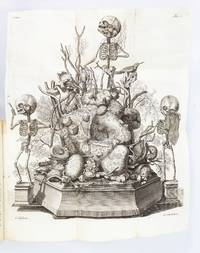
1417ST20185Amsterdam: Joannes Wolters then Jansson-Waesberg 1701-14; 1715-16. FIRST EDITIONS. 224 x 168 mm. 8 3/4 x 6 1/2". 4 p.l. 62 pp. 1 leaf errata; 2 p.l. 98 pp.; 2 p.l. 70 pp.; 1 p.l. 55 pp.; 1 p.l. 54 pp. 2 p.l. 30 pp. 1 leaf 92 pp. 2 leaves 44 pp. 4 leaves 68 pp. 8 leaves 72 pp. 1 leaf errata 12 leaves 78 pp. 10 parts in one volume. <br/> Contemporary stiff vellum smooth spine with ink titling yapp edges. WITH 42 ENGRAVED PLATES as called for by Norman six of these folding. Text in Latin and Dutch. Blake 395; Garrison-Morton 389; Heirs of Hippocrates 627; Jeremy Norman's HistoryofMedicine.com 623; Norman 1875. Vellum lightly soiled front pastedown slightly defective but the original unsophisticated binding in perfect order. Final plate with small hole due to adhesion to facing page minor damage done to image a few other trivial imperfections a couple of negligible marginal tears a faint ink stain across the top inch of text a tiny burn hole but AN UNUSUALLY BRIGHT CLEAN COPY INTERNALLY with all the important plates in exceptionally fine condition.<br/> <br/> Scarce when seen bound from its original 10 parts as here this work describes the memorable "Anatomical Treasure" of Dutch physician and anatomist Frederick Ruysch being illustrated by surrealistic charmingly macabre engravings depicting "fantastic dream-like concoctions constructed of human anatomical parts." History of Medicine Described by Norman as "probably the most original artist in the history of anatomical preparations" Ruysch 1638-1731 "enjoyed making up elaborate three-dimensional emblems of mortality from his specimens" which included fetal skeletons and preserved organs. Heirs to Hippocrates says that "the engraved illustrations deserve special mention for their whimsical almost surrealistic quality: quaintly posed skeletons surrounded by stuffed monsters strange reptiles dried plants and sea creatures." According to Norman "Ruysch's methods allowed him to prepare organs such as the liver and kidneys and keep entire corpses for years. He used a mixture of talc white wax and cinnabar for injecting vessels and an embalming fluid of alcohol made from wine or corn with black pepper added. Using his injection methods Ruysch was the first to demonstrate the occurrence of blood vessels in almost all tissues of the human body thereby destroying the Galenic belief that certain areas of the body had no vascular supply. He was also the first to show that blood vessels display diverse organ-specific patterns." Ruysch's dioramas were displayed in his home museum in Amsterdam which was open to the public; visitors included Tsar Peter the Great of Russia who purchased the collection in 1717 for the foundation of Russia's first public museum the St. Petersburg Kunstkammer. Unfortunately the Russian climate was not kind to the fragile constructions and all deteriorated over time; the dramatic plates here are the best record we have of this unique collection. Joannes Wolters, then Jansson-Waesberg unknown
171735024ABGenève, Cramer & Perachon, 1717. Folio. (10) Bl., 434 S.; (2) Bl., 452 S., (6) Bl., XVI, 34 S., (5) Bl. (Index). Mit 3 gestochenen Titelvignetten und 136 Kupfertafeln (davon 1 mehrfach gefaltet). Halblederbände aus der Zeit. + Wichtig: Für unsere Kunden in der EU erfolgt der Versand alle 14 Tage verzollt ab Deutschland / Postbank-Konto in Deutschland vorhanden +, A 3 in 2 Bänden + 1 Atlasband.
171735024AB3 in 2 Bänden + 1 Atlasband. Genève, Cramer & Perachon, 1717. Folio. (10) Bl., 434 S.; (2) Bl., 452 S., (6) Bl., XVI, 34 S., (5) Bl. (Index). Mit 3 gestochenen Titelvignetten und 136 Kupfertafeln (davon 1 mehrfach gefaltet). Halblederbände aus der Zeit.
19971344DBKöln., Salon-Verlag., 1997. 24 x 17 cm. 102 S., 1 Blatt. Illustrierter OPappband., 1344D Erste Auflage. Ausgemustertes Bibliotheksexemplar mit "Ausgeschieden"-Stempel. Sonst sehr gutes Exemplar.
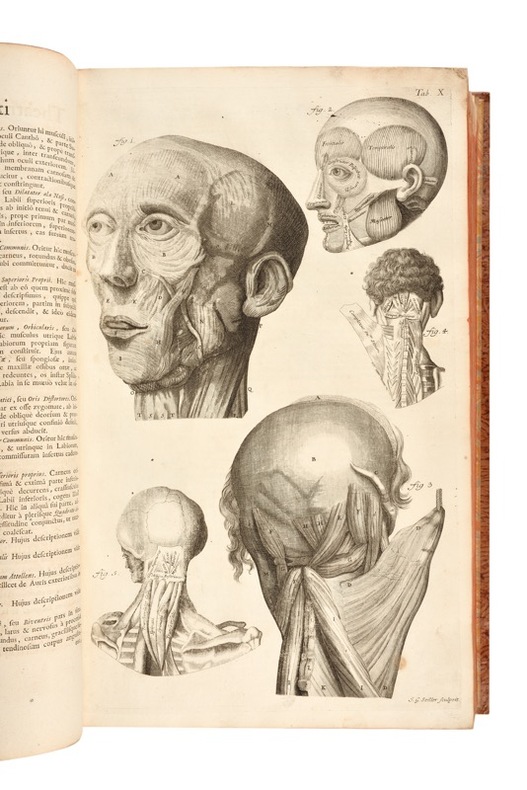
171721598Genevae, Cramer et Perachon, 1717 ; 2 tomes in-folio (428 mm), demi-veau fauve du temps, dos à nerfs décoré de filets dorés, titre doré, pièce de tomaison foncée (plats refaits, gardes renouvelées) ; [20], 434 pp., [1 bl.] f. ; [4], 452 ; [12], XVI, 34, [10] pp. et en tout: portrait de Jean Jacques Manget gravé par Seiller, d’après B. Guillibaud, en frontispice, grande vignette répétée aux 3 titres, figurant une scène de dissection, gravée par Seiller et 136 planches anatomiques hors-texte ( 110 + 5 extra-ordinaires + 21 Eustache) gravées par Seiller, Gottfried Pfauntz, J.d. Hartman, Andréas Geyer et Augusta Vind.
171745024ABGenève, Cramer & Perachon, 1717. Folio. 10 n.n. Bl., 434 S.; 2 n.n. Bl., 452 S., 6 n.n. Bl., XVI, 34 S., 5 n.n. Bl. (Index). Mit 3 gestochenen Titelvignetten und 136 Kupfertafeln (davon 1 mehrfach gefaltet). Halblederbände. 3 in 2 Bänden 1 Atlasband.
171745024AB3 in 2 Bänden 1 Atlasband. Genève, Cramer & Perachon, 1717. Folio. 10 n.n. Bl., 434 S.; 2 n.n. Bl., 452 S., 6 n.n. Bl., XVI, 34 S., 5 n.n. Bl. (Index). Mit 3 gestochenen Titelvignetten und 136 Kupfertafeln (davon 1 mehrfach gefaltet). Halblederbände.
1720360BG(wohl Genf, Cramer & Perachon, ca. 1720). Kupferstich von J. G. Seiler. Bildgrösse: 25 x 40 cm. Blattgrösse: 44,5 x 28 cm + Wichtig: Für unsere Kunden in der EU erfolgt der Versand alle 14 Tage verzollt ab Deutschland / Postbank-Konto in Deutschland vorhanden +, 360BG (leicht angestaubt).
1720360BG(wohl Genf, Cramer & Perachon, ca. 1720). Kupferstich von J. G. Seiler. Bildgrösse: 25 x 40 cm. Blattgrösse: 44,5 x 28 cm (leicht angestaubt).
0332672328.Ghardcover. Good. Access codes and supplements are not guaranteed with used items. May be an ex-library book. hardcover