Convention, Mississippi River ImprovemenBiblio.com
4 242 résultats
0656234008.Ghardcover. Good. Access codes and supplements are not guaranteed with used items. May be an ex-library book. hardcover
1397317930.Ghardcover. Good. Access codes and supplements are not guaranteed with used items. May be an ex-library book. hardcover
1397317671.Gpaperback. Good. Access codes and supplements are not guaranteed with used items. May be an ex-library book. paperback
1970500047247Cornwall River Authority 1970. Soft cover. Good. 4to 106 pp many folded maps <br/> <br/> Cornwall River Authority paperback
1973500047251Cornwall River Authority 1973. Soft cover. Good. 4to <br/> <br/> Cornwall River Authority paperback
1356175953.Ghardcover. Good. Access codes and supplements are not guaranteed with used items. May be an ex-library book. hardcover
1968734283PN. New. 1968. Soft Cover. Date is original print. This is a reprint edition. . PN paperback
1971742070PN. New. 1971. Soft Cover. Date is original print. This is a reprint edition. . PN paperback
1977755738PN. New. 1977. Soft Cover. Date is original print. This is a reprint edition. . PN paperback
1982766858PN. New. 1982. Soft Cover. Date is original print. This is a reprint edition. . PN paperback
1984772801PN. New. 1984. Soft Cover. Date is original print. This is a reprint edition. . PN paperback
1971742866PN. New. 1971. Soft Cover. Date is original print. This is a reprint edition. . PN paperback
1972743376PN. New. 1972. Soft Cover. Date is original print. This is a reprint edition. . PN paperback
1984772799PN. New. 1984. Soft Cover. Date is original print. This is a reprint edition. . PN paperback
1978757101PN. New. 1978. Soft Cover. Date is original print. This is a reprint edition. . PN paperback
20121354803PN. New. 2012. Soft Cover. Date is original print. This is a reprint edition. . PN paperback
1969736883PN. New. 1969. Soft Cover. Date is original print. This is a reprint edition. . PN paperback
2021__178906063XIwa Pub 2021. Paperback. New. 9.00x6.00x0.50 inches. Iwa Pub paperback
05208Oxford: The Clarendon Press 1925. The True Art of Memory is the Art of Attention" Samuel Johnson<br /> A Superb Cosway Binding with a Remarkable Portrait by Miss C.B. Currie of Dr. Samuel Johnson<br /> <br /> COSWAY BINDING. RIVIÈRE & SON binders. MISS C.B. CURRIE miniaturist. A Bibliography of Samuel Johnson by William Prideaux Courtney and David Nichol Smith. A Reissue of the Edition of 1915 Illustrated with Facsimiles. Oxford at the Clarendon Press 1925. <br /> <br /> Limited to 350 copies. Octavo 8 3/4 x 5 1/2 inches; 223 x 140 mm. i-viii 1-186 pp. Thirty-seven facsimile plates.<br /> <br /> Limitation statement at front "This is No. 926 of the Cosway Bindings invented by J. H. Stonehouse with Miniatures on Ivory by Miss Currie. Signed in black ink 'J.H. Stonehouse' Inventor. 'C.B. Currie' Artist."<br /> <br /> Bound by Rivière & Son in full dark green crushed levant morocco. Covers with gilt double-rule border the front cover set with superb and very large rectangular portrait miniature set under beveled glass measuring 4 7/8 x 3 7/8 inches; 123 x 98 mm. of a mature Dr. Samuel Johnson after Sir Joshua Reynolds by Miss C.B. Currie within an elaborate gilt foliate frame. Rear cover with gilt double-rule border and large decorative gilt foliate corner pieces. Spine with five raised bands elaborately tooled and lettered in gilt in compartments. Double gilt-ruled board edges decorative gilt turn-ins green moiré silk liners and endleaves top edge gilt others uncut. Stamp-signed by the binders on front turn-in: "Bound by Rivière & Son London." Stamped-signed by the artist on rear liner: Miniatures by C.B. Currie." Additionally signed on the upper and lower board edges: "Cosway Binding" and "Invented by J.H. Stonehouse."<br /> <br /> A wonderful and absolutely fine example of a real Cosway binding with a superb and large portrait miniature of Dr. Samuel Johnson. Housed in a felt-lined green cloth clamshell case spine with leather label lettered in gilt. <br /> <br /> Cosway Bindings: In the first decade of the twentieth century the London bookselling firm of Henry Sotheran & Co. introduced a type of binding that was decorative had historic associations and catered to the level of quality expected by connoisseurs at the time. Between 1902 and 1903 John Harrison Stonehouse 1864-1937 managing director of Sotheran's created what came to be referred to as "Cosway bindings." These were named after the celebrated eighteenth-century English portrait miniaturist Richard Cosway 1742-1821. Cosway bindings are distinguished by their attractive finely painted miniatures that are protected by glass and inset into the covers or doublures inside covers of elegantly tooled books. Stonehouse's success with the bindings was due in part to his employment of skilled miniaturist Miss C. B. Currie. It has been estimated that Miss Currie painted several thousand miniatures recognized for their delicate rendering and precision for over nine hundred bindings before her death circa 1940. For many of the more lavish Cosway bindings Currie painted multiple portraits. Occasionally landscapes and other subjects adorn the covers or doublures. To enhance Currie's miniatures Stonehouse arranged for the London firm of Rivière & Son to produce a variety of high-quality single-volume bindings. One of the best large-scale binderies active in the first quarter of the twentieth century Rivière & Son integrated the miniatures into bindings for both previously published editions and new works. Stonehouse marketed Sotheran's finished Cosway-bound volumes primarily to booksellers in the United States or to American agents. Before Sotheran's 1911 catalogue in which they identified the miniature artist as Miss Currie the miniatures are attributable only by their recognizable style. By 1913 many of the bindings were distinguished by a limitation statement on a colophon leaf where a publisher's emblem or trademark is placed which provides the number of the Cosway binding with facsimile signatures of Stonehouse and Miss Currie. The customary gilt-stamped signature on the turn-in is generally lettered: "Bound by Rivière & Son from Designs by J. H. Stonehouse" and "Miniatures by C. B. Currie." <br /> <br /> "Miss C.B. Currie" December 12 1849 - April 2 1940 was the miniaturist artist of all the genuine Cosway bindings. Born in Cornwall England Caroline Billin Curry was also one of the most prominent fore-edge artists in the twentieth-century. A master of the art of miniature painting she excelled as a copyist working for Henry Sotheran Booksellers London. She became famous for her miniature paintings applied to two art forms. First mounted on Rivière bindings and named by her employer as "Cosway" bindings. Later she expanded her work into the art of painting on the fanned edge of a book - called a fore-edge painting. Oxford: The Clarendon Press, 1925 unknown
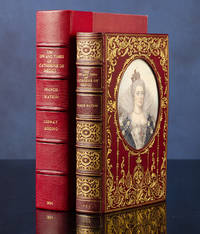
05209London: Hutchinson & Co 1934. Happiness is the one Thing we Queens can never have." Catherine de' Medici<br /> A Superb Cosway Binding with a Fine Portrait by Miss C.B. Currie of Catherine de' Medici<br /> <br /> COSWAY BINDING. RIVIÈRE & SON binders. MISS C.B. CURRIE miniaturist. WATSON Francis. The Life and Times of Catherine de' Medici. With 16 Illustrations. London: Hutchinson & Co 1934. <br /> <br /> First edition. Octavo 8 7/8 x 5 3/4 inches; 226 x 146 mm. 1-287 1 blank pp. Photogravure frontispiece with original tissue guard and fifteen photogravure plates.<br /> <br /> Limitation statement at front "This is No. 912 of the Cosway Bindings invented by J. H. Stonehouse with Miniatures on Ivory by Miss Currie. Signed in blue & black ink 'J.H. Stonehouse' Inventor. 'C.B. Currie' Artist."<br /> <br /> Bound by Rivière & Son in full maroon crushed levant morocco. Covers with gilt double-rule border the front cover set with superb large oval portrait miniature set under glass measuring 4 3/4 x 3 3/4 inches; 121 x 95 mm. of Catherine de' Medici by Miss C.B. Currie within an elaborate gilt scroll design. Rear cover with double-rule borders and broken gilt fillet border with gilt rococo corner ornaments. Spine with five raised bands elaborately tooled and lettered in gilt in compartments. Double gilt-ruled board edges decorative gilt turn-ins light blue moiré silk liners and endleaves All edges gilt. Stamp-signed by the binders on front turn-in: "Bound by Rivière & Son." Stamped-signed by the artist on rear liner: Miniatures by C.B. Currie." Additionally signed on the upper and lower board edges: "Cosway Binding" and "Invented by J.H. Stonehouse." Housed in a felt-lined quarter red morocco over red cloth boards clamshell case by Zaehnsdorf spine with five raised bands lettered in gilt in compartments. A very fine example of a real Cosway Binding from the library of Paul Edward Chevalier with his circular red leather bookplate on front blank. <br /> <br /> This book appeared in the Chevalier Collection of English Twentieth-Century Bookbindings. Christie's New York Friday November 9th 1990 lot #72.<br /> <br /> Cosway Bindings: In the first decade of the twentieth century the London bookselling firm of Henry Sotheran & Co. introduced a type of binding that was decorative had historic associations and catered to the level of quality expected by connoisseurs at the time. Between 1902 and 1903 John Harrison Stonehouse 1864-1937 managing director of Sotheran's created what came to be referred to as "Cosway bindings." These were named after the celebrated eighteenth-century English portrait miniaturist Richard Cosway 1742-1821. Cosway bindings are distinguished by their attractive finely painted miniatures that are protected by glass and inset into the covers or doublures inside covers of elegantly tooled books. Stonehouse's success with the bindings was due in part to his employment of skilled miniaturist Miss C. B. Currie. It has been estimated that Miss Currie painted several thousand miniatures recognized for their delicate rendering and precision for over nine hundred bindings before her death circa 1940. For many of the more lavish Cosway bindings Currie painted multiple portraits. Occasionally landscapes and other subjects adorn the covers or doublures. To enhance Currie's miniatures Stonehouse arranged for the London firm of Rivière & Son to produce a variety of high-quality single-volume bindings. One of the best large-scale binderies active in the first quarter of the twentieth century Rivière & Son integrated the miniatures into bindings for both previously published editions and new works. Stonehouse marketed Sotheran's finished Cosway-bound volumes primarily to booksellers in the United States or to American agents. Before Sotheran's 1911 catalogue in which they identified the miniature artist as Miss Currie the miniatures are attributable only by their recognizable style. By 1913 many of the bindings were distinguished by a limitation statement on a colophon leaf where a publisher's emblem or trademark is placed which provides the number of the Cosway binding with facsimile signatures of Stonehouse and Miss Currie. The customary gilt-stamped signature on the turn-in is generally lettered: "Bound by Rivière & Son from Designs by J. H. Stonehouse" and "Miniatures by C. B. Currie." <br /> <br /> "Miss C.B. Currie" December 12 1849 - April 2 1940 was the miniaturist artist of all the genuine Cosway bindings. Born in Cornwall England Caroline Billin Curry was also one of the most prominent fore-edge artists in the twentieth-century. A master of the art of miniature painting she excelled as a copyist working for Henry Sotheran Booksellers London. She became famous for her miniature paintings applied to two art forms. First mounted on Rivière bindings and named by her employer as "Cosway" bindings. Later she expanded her work into the art of painting on the fanned edge of a book - called a fore-edge painting. <br /> <br /> Catherine de' Medici 1519-1589 was an Italian noblewoman. She also was queen consort of France from 1547 until 1559 by marriage to King Henry II and mother of kings Francis II Charles IX and Henry III. The years during which her sons reigned have been called "the age of Catherine de' Medici" as she had extensive if at times varying influence in the political life of France. London: Hutchinson & Co, [1934] unknown
20152-229473405XElsevier Masson 2015. Paperback. New. 276 pages. French language. 8.27x5.35x0.55 inches. Elsevier Masson paperback
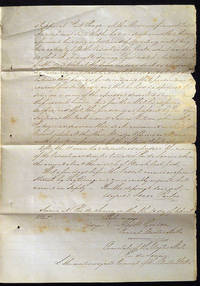
18450002564Good. 1845. On offer is a sensational remarkable group of 1845 manuscript depositions detailing the mutinous activity and desertions during a voyage of the whaling Bark Alto between 1844 - 1845. The eyewitness testimonies are comprised of 37 pages or so of handwritten fair copies; five 5 complete and one 1 incomplete deposition all by various crew members the five complete copies each personally attested and signed at the conclusion by George William Gordon American Consul at Rio de Janeiro May 20 1845. Blunt facts display the ferocity of emotions and simmering violence provide snippets like 'Palmer said to deponent that . . . he would put one of those dirk knives into him' abound throughout the testimonies. The depositions paint a picture of unbridled upset on the ship: lawlessless violence suspicions of poisoning desertion and a final critical comment from nature itself: a calamitous lightning strike makes for a final exclamation point to the awful whaling voyage. The vessel at the center of the events described herein the Alto was built in Tiverton Rhode Island we note that research indicates the Alto was in fact the only such vessel ever built at Tiverton in 1826 and was lost near the Falkland Islands in 1870. The National Maritime Digital Library date the events related in the documents occurred during the Alto's fourth voyage under the direction of Captain Nehemiah West whose deposition is included and which lasted from September 1844 to April 1847. A successful voyage commercially as the records further note that the Alto collected 339 barrels of sperm oil 304 barrels of baleen oil and 2700 lbs. of whale bone. As a group the depositions--from the Captain First Second and Third Mates and two boat helmsmen paint a vivid often harrowing picture of a voyage fraught with tension and danger. Researchers and historians will note that at least two of the depositions document an ominous shipboard discussion of the earlier well-documented mutiny aboard the vessel Globe out of Nantucket which took place in 1827. While the general outline of the events remains consistent throughout each of the deponents provides a unique personal perspective on what transpired often with the addition of unexpected or surprising details omitted by the others. Virtually all of the crew involved are identified by name multiple times throughout the documents two however are repeatedly described only as "Portuguese". In broad overview complaints from crew members that the vessel is leaky and unseaworthy leads to refusal to perform duties; the captain administers punishment including placing crew members in irons and striking them with a piece of "rattling" ratline; a small group of crew desert with one of the boats but are caught and jailed at St. Jago Cape Verde and shipped back to the U.S. on the U.S. Sloop of War Decatur; after a few months of relative calm unrest breaks out again this time with threats of violence to fellow crew members with clubs and "dirk knives"; in the most dramatic event eleven crew members desert with the remaining two boats taking with them a large store of the whaling equipment. The Alto its crew and equipment drastically reduced suffers the final indignity of a lightning strike "breaking and splitting" the mainmast but is able to hobble into Rio de Janeiro where these eyewitness accounts were given to the American Consul and preserved in the present documents. Here is a snippet from the deposition of helmsman William Williams approx. 8 pages on two pairs of conjugate leaves: "William Williams . . . deposed as follows. . . . That he was born in the County of Essex in England is 29 years of age and a naturalized citizen of the United States was naturalized at Boston Mass. in July 1842. That he shipped on board the Barque 'Alto'--Nehemiah West Master at New Bedford in August 1844 as Boat steerer to proceed on a Whaling Voyage. That the Vessel sailed on the 3rd September following. That 14 or 15 days after the Vessel went out to sea all the foremost hands refused duty--alleging that the Vessel was leaky. On their refusing duty Captain West interrogated each of them separately and three of them returned to duty and eleven still refused and were sent below where they were kept about 48 hours. While the eleven men were below as aforesaid they experienced two very heavy squalls but none of said men offered to return to duty--but on the other hand made sport of them that were at work. After they had been below deck 24 hours the Master went forward and requested four of the men to come on deck. They refused to come unless all were allowed to some on deck at a time--and after a good many threats on the part of the men the Master told them that if the men he had called did not come on deck that he would have the forecastle smoked to force them out. Soon after four came on deck as the Master had directed and still refusing to go to duty on being called upon the deck and refusing duty were put in Irons and the others one being called upon deck and refusing duty were seized in the rigging there being no Irons to put upon them. That at New Bedford before sailing one of the men named Spencer who had shipped deserted and another man named Charles Shane came on board in his place--but Shane's name was not put on the Papers. That when the men were called up as aforesaid said Shane took the ground that his name was not upon the Shipping Paper and therefore he would not go to duty and obey the Master--upon which the Master gave him four blows with a piece of Rattling i.e. part of the ratline. George Ritter also who was supposed to be the instigator in the men's refusing duty and who was insolent to the Master also receive three strokes with the Rattling. Another man the steward named James Wilson also got three blows with the Rattling for insolence to the Captain. He said that he never was flogged on board of a Blubber Hunter although he had been on board of a Man of War. No others were flogged or punished in any way and they all returned to duty." Scattered light soiling a bit of staining and handling wear creases; some tears tiny holes and small chips mostly confined to edges; no substantial losses; otherwise very good to fine overall the writing dark and distinct. Overall G.; Manuscript; 4to - over 9¾" - 12" tall; KEYWORDS: HISTORY OF WHALING SHIP MUTINY BARK ALTO NEW BEDFORD MASSACHUSETTS WHALERS MUTINEERS DESERTERS BARQUE MARINE NAUTICAL NAVAL GEORGE WILLIAM GORDON AMERICAN CONSUL AT RIO DE JANEIRO CAPTAIN NEHEMIAH WEST TIVERTON RHODE ISLAND MUTINY ABOARD THE VESSEL GLOBE NANTUCKET AMERICANAHANDWRITTEN MANUSCRIPT DOCUMENT LETTER AUTOGRAPH WRITER HAND WRITTEN DOCUMENTS SIGNED LETTERS MANUSCRIPTS HISTORICAL HOLOGRAPH WRITERS AUTOGRAPHS PERSONAL MEMOIR MEMORIAL AMERICANA ANTIQUITÉ CONTRAT VÉLIN DOCUMENT MANUSCRIT PAPIER ANTIKE BRIEF PERGAMENT DOKUMENT MANUSKRIPT PAPIER OGGETTO D'ANTIQUARIATO ATTO VELINA DOCUMENTO MANOSCRITTO CARTA ANTIGÜEDAD HECHO VITELA DOCUMENTO MANUSCRITO PAPEL . unknown
19992111902153102181Bunkasha 1999. Soft Cover. Fine. Volume: 1 Bunkasha paperback
3366112like new. unknown
3366112-nnew. unknown