White River ProductionsBiblio.com
4 242 résultats
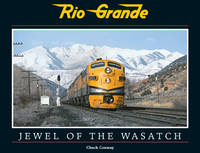
44449881129136New. This volume continues the series of high-quality titles about the Denver & Rio Grande Western published by White River Productions. High-quality in the photograph reproduction the selection of images and the thick glossy paper used in a large-format hardbound book. Many pages have one large photograph some 2 to 3 images. Most photographs give a good view of the spectacular scenery along with the trains and the reason for the trains the industries served. The captions are extensive and there are a number of color maps. There are a few nice steam-powered train photographs from 1941 that are included here. Colorado is a beautiful state but so is Utah which may have been under-photographed on the Rio Grande vs. Colorado.Expect more great photography of the Denver & Rio Grande Western as it traverses the barren but beautiful in its own way expanse of the American West. This route had the famous grade over Soldier Summit which was one of the many obstacles for this relatively smaller main-line railroad. That the Rio Grande could compete with the Union Pacific with a more direct route to Salt Lake City was amazing.This third volume covering the Denver & Rio Grande Western in the era of color photography examines the origins and ultimate demise of the D&RGW's Utah Division between Grand Junction Colorado and Ogden Utah. Built by the same General Palmer who had contributed so much to the early Denver & Rio Grande in Colorado the line across the eastern Utah desert to the Wasatch Front never had large precious mineral deposits as the siren song attraction for railroad construction. This road would rely on the more mundane carloads of coal iron ore and copper as its early mainstay.Following the merger of the Utah and Colorado lines in 1908 the company began focusing on upgrading its property and soliciting traffic from far beyond the borders of its two home states. This transcontinental traffic along with the burgeoning coal business developed after World War II would make the D&RGW a successful and profitable property despite being surrounded by much larger often unfriendly carriers. A portion of the Utah Division's history is noted in the coverage of the remnants of D&RGW's far-flung narrow-gauge empire in Colorado. But the real story lies west of Grand Junction where merchandise lumber products perishables and piggyback shipments were added to the area's considerable mineral traffic and the few remaining passenger trains operated during the latter years of D&RGW ownership.As with many enterprises circumstances are always changing and despite its own good management and customer-oriented operations the D&RGW was not always in control of its own fate. One by one the needed connections were eliminated until the D&RGW was forced to cast its lot with a weakened Southern Pacific. This would prove to be a short-lived partnership and as the 20th century drew to a close new owner Union Pacific finally got its wish of killing off the D&RGW once and for all. Today some of the lines covered in this volume see no UP trains at all on a regular basis but the pictures and stories herein provide a look back to better days when the Rio Grande was indeed the Jewel of the Wasatch. Contents:. Great Salt Lake Route pp. 6–7. Grand Junction pp. 8–15. Colorado Branches pp. 16–37. The Desert pp. 38–79. Soldier Summit pp. 80–119. The Wasatch Front pp. 120–155. Utah Branches pp. 156–207. Bibliography and Index of Photographers pg. 208. White River Productions hardcover with jacket 208 pages larger landscape format book 12 x 9. Color photography and maps extensive captions and text. Features: New Hardcover Chuck Conway White River Productions Travel hardcover
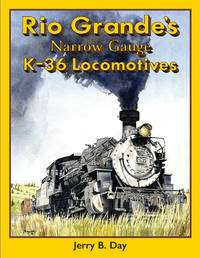
44449881227440New. White River Productions hardcover 224 pages 300 photographs maps drawings and diagrams. The Complete History of the Denver & Rio Grande Western K-36 Locomotives. By the 1920s the legendary narrow-gauge system of the Denver & Rio Grande Western had shrunk to a third of the railroad's total trackage and most of its locomotives were worn out. Yet traffic was heavy on some parts of the line and growing and standard gauging the lines made little economic sense. And so the long-time Baldwin customer turned to the Philadelphia firm for 10 new narrow gauge outside-frame Mikados. Designated K-36 Mikado 36200 lbs. of tractive effort these beefy Baldwins were soon hauling freight over the four percent grades of Cumbres and Marshall passes and indeed system-wide. Fast forward almost a century later and nine of the locomotives still exist and eight are in service on the Durango & Silverton and Cumbres & Toltec Scenic railroads. Truly a remarkable record of service and why the K-36 is beloved by railfans and the crewmen who ran them. Author Jerry Day spent over 40 years compiling information and over 300 photographs maps track folios drawings and diagrams including a three-page foldout drawing by Mike McKenzie for this volume. In addition this 224-page hardcover book includes the D&RGW purchase of the K-36s and changes made to the lines to accommodate them the operational history on the lines they ran and accounts of K-36 snow fighting operations special passenger runs wrecks movie trains locomotive modifications and changes and a section on the K-36s as they operate today on the C&TS and D&S railroads. This title includes an appendix with the complete D&RGW/Baldwin specs for the locomotives. Contents:. New. Hardcover. Jerry B. Day. White River Productions History hardcover
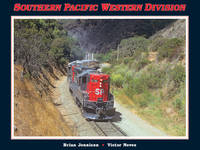
44449883619504New. By Brian Jennison and Victor Neves White River Productions. White River Productions hardcover with jacket Color photography. Southern Pacific Western Division is an all-color pictorial covering the operations of the Southern Pacific Railroad in northern and central California from Sacramento to the San Francisco Bay Area and beyond north to Eureka and south to San Luis Obispo. Seven chapters present stunning color photography of the diverse geography of this part of the Golden State from redwood forests to open farmland to scenic bay side and ocean vistas to busy urban centers. While emphasis is on operations in the 1960 through 1990-time frame Southern Pacific Western Division includes many historic photos from the 1940s and '50s as well some of which have not previously been published. It's all here: The multitude of fabulous paint schemes that SP used in the steam-diesel transition era including Daylight Black Widow Tiger Stripes and Scarlet and Gray plus several experimental and special patriotic paint schemes. Many of the named passenger trains such as the Lark the Owl the Cascades the Coast Noon San Joaquin and Shasta Daylights the Redwood the Senator and even the maid-of-all-work Tehachapi are covered as well as the coast mail trains the Peninsula commutes and early Amtrak. SP's diverse steam motive power is presented with Consolidations Mountains GS-Class and of course the big Cab Ahead Articulated Consolidations featured. Diesels from EMD GE Alco Fairbanks Morse and the German builder Krauss-Maffei are shown in a variety of first second and third generation cab and hood configurations. Salient aspects of the histories of the Central Pacific and Southern Pacific are discussed in the chapter introductions and many informative photo captions and day-to-day freight operations are presented in detail referencing employee timetables as appropriate. The work has been reviewed by career Southern Pacific employees whose contributions are gratefully acknowledged. Although the Southern Pacific is gone having been merged into the giant Union Pacific the railroad lives on through these photographs and the reader will come away with an appreciation for this once mightiest of western roads. History Travel hardcover
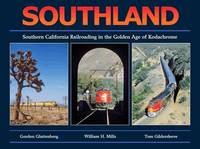
44849757454512New. This is my favorite era of American railroading. First-Generation diesels in their as delivered and later day paint schemes. Passenger trains carrying the mail Alco PAs and EMD F-units. Depots still well-maintained including those made out of wood. Unusual diesels now long-gone such as Southern Pacific's U50s and various Baldwin-made locomotives. There are a handful of Southern Pacific steam photographs such as a head-on shot of 4445 starting to leave Bakersfield with the depot in the background. The Kaiser Steel ore-trains Trona Railway Plaster City narrow gauge Pacific Electric Santa Fe red-and-silver 40-foot billboard boxcars clean diesels and no graffiti. I personally missed this era and saw the remains later on. I need a time machine to go back and experience it all. What a glorious railroad era! The photographs count approximates each railroad's presence in southern California. First is Southern Pacific with Santa Fe as a close second. Union Pacific is a distant third place. Most pages have one large photograph with captions. Other pages have two and a few pages three photographs. Some railfans wish they lived in southern California. Others were fortunate enough to have been born there. Tom Gildersleeve Gordon Glattenberg and the late William H. "Hank" Mills are among the latter. The photographic trio began their exploration of the Southland in the early 1950s when profound societal and technological change began to sweep the Golden State. Beyond the Technicolor dreams Hollywood was sending around the world citrus groves were steadily giving way to industrialization and suburban sprawl. An expanding web of freeways was turning trolleys into antiques while colorful new diesel locomotives steadily took the reins from steam's iron horse. Transition was in full flower providing the authors with intriguing subject matter cast against a wide array of dramatic settings. At a time when most photographers documented the industry in black and white Gildersleeve Glattenberg and Mills made Kodachrome their film of choice opting for a medium that could realistically capture the full palette of their surroundings. Popular publishing was predominantly a monochrome enterprise providing few opportunities for color shooters beyond slide shows at private homes and railroad club meetings. It would be the mid-1970s before new technology allowed all three of the authors to reach a wider audience. The decision to concentrate on color photography might be construed as an act of faith with little reward beyond the satisfaction of a job well done. As this volume will attest that faith has been rewarded on a grand scale. Some 345 color images invite inspection the majority of them being published for the first time. Focusing on the years between the mid-1950s and late 1960s Southland takes the reader on a wide-ranging tour of the region between Bakersfield and the Mexican border. Six chapters and eight detailed maps with comprehensive captions by award-winning photojournalist Ted Benson convey the excitement of Southern California railroading in the golden age of Kodachrome. Over 250 action-packed pages depict the full sweep of activity from Santa Fe Alco PAs and Union Pacific gas-turbine electrics battling Cajon Pass to Southern Pacific 4449 in the days when the famed steam locomotive was just another Daylight 4-8-4. Red and yellow trolley cars thread the bustling streets of Los Angeles contrasting with trios of GP9s roaming the wilds of Carrizo Gorge. From busy double-track mountain main lines to thrice-weekly locals in the Mojave Desert there's something for every reader in the pages of Southland. Contents:. Tehachapi and Beyond pp. 6–51. Owenyo Branch pp. 52–59. Saugus Line pp. 60–79. Los Angeles Basin pp. 80–123. The Surf Line pp. 124–149. Imperial Gateway pp. 150–151. San Diego & Arizona Eastern pp. 152–164. Kaiser Steel pp. 164–173. Sunset Route pp. 174–191. Cajon Pass pp. 192–231. Mojave Crossings pp. 232–255. Afterword p. 256. White River Productions 256 pages 12 x 9 x.5 in. Color photographs with captions maps. Arts Travel History unknown
2016090168Acclaim Press 2016. 1st Edition 1st Printing. Hardcover. Very Good. Very good clean tight condition. Blue hardcover. Text free of marks. Professional book dealer since 1999. All orders are processed promptly and carefully packaged. <br/> <br/> Acclaim Press hardcover
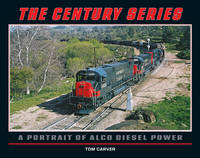
44449883881648New. Hardcover with dust jacket 256 pages 9 x 11 in. color photographs and roster information. The American Locomotive Company Alco had a long history of manufacturing steam and diesel locomotives in America Canada and around the globe through subsidiaries or licensees. Alco had developed a strong reputation in the 1940s and 1950s with its successful road switchers but as railroads competed to carry more tonnage at faster speeds the market demanded more horsepower. The "Century" series was introduced in 1963 remaining in production until Alco closed its famed Schenectady N.Y. plant to domestic production in 1969. The Century name celebrated the corporate history of Alco and its predecessors manufacturing locomotives for 100-plus years. The product of decades of research by Tom Carver and edited and designed by Dale Sanders this new book contains more than 300 beautifully reproduced color images representing some of the best selections from a number of railroad photographers and historical archives. An informative text paired with detailed photo captions supports photos and diagrams of each of the ten Century series models. Presented together for the first time in our premium 256-page railroad book format these images will surely delight aficionados of the second generation of Alco's diesel locomotives on the railways of the United States Canada Mexico and Australia. Showcased in their elements from gritty industrial scenes to beautiful vistas along the rails of their owners all models from the Century 415 to the Hydraulic 643 are thoughtfully portrayed for each of the 43 original purchasing railroads. Contents:. Chapter 1: Introduction Chapter 2: Alco 251 Progression Chapter 3: Century 415 Chapter 4: Century 420 Chapter 5: Century 424 Chapter 6: Century 425 Chapter 7: Century 430 Chapter 8: Century 628 Chapter 9: Century 630 Chapter 10: Century 636 Chapter 11: Century 855 Chapter 12: Hydraulic 643H As-Delivered Roster Dedication/Bibliography History Hobbies & interests hardcover
44449879457968New. This book tells the story of the narrow-gauge Eureka & Palisade and its successor the Eureka Nevada. Persevering through floods fires and the ebb and flow of the mining industry it served the E&P was born in the bonanza era of Nevada mining and ran until the Great Depression and declining metal prices shut it down. Before that end it hauled millions of dollars in gold silver and lead through the sagebrush covered hills of Nevada cementing its place in the annals of great narrow-gauge railroads. The E&P used everything from brand new ornately-painted Victorian era locomotives and cars to a motley collection of second-hand third-hand and home-built equipment to soldier on in the 1920s and '30s.The saga of the E&P is told in exquisite detail in 10 chapters of comprehensive text 450 photos and illustrations 41 maps and 18 equipment drawings. Also included is a complete and detailed equipment roster extensively illustrated. Contents:. Part One: The Eureka & Palisade Pittsburgh of the West 1864-1873. A Magnificent Enterprise 1873-1876. The "Three by Three" 1876-1881. Hard Times and Mixed Trains 1882-1902. High Water 1902-1910. Part Two: The Eureka Nevada Railway. The John Sexton Years 1912-1925. As Rich as Old Croesus The Rise and Fall of the Eureka Smelting Company 1917-1927. The Last Go Around 1927-1938. Timetables Operations on the Narrow Gauge 1874-1938. Mileposts a Gazetteer of the Eureka & Palisade. Appendices:I: Locomotives. II: Motorcars. III: Passenger Cars. IV: Freight Cars. V: Work & Company Cars. VI: Equipment Drawings. VII: Employees. Map Index. Index Bibliography. White River Productions hardcover with jacket. by Gregory J. Maxwell History hardcover
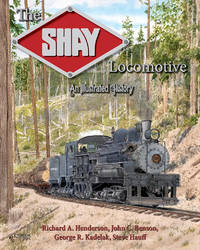
44449883422896New. Hardcover 600 pages mostly B&W photographs and illustrations with Color photographs of more recent times. This book has been reprinted and is available again. The Shay Locomotive - An Illustrated History is the most complete thorough and accurate book ever produced on this unique and storied locomotive. The authors have spent decades researching collecting photographs and organizing the information in this all-new volume. The book. Features:. More than 600 pages. more than 1000 photographs. illustrations. and drawings. Complete listing of every Shay built by shop number. by owner/operator. and by location. Lima's involvement in the Shay from the first locomotive by Ephraim Shay in 1881 to the last Shay built in 1945. Photographs of every single surviving Shay. 3 Appendices of Patents. Drawings. and Specifications. Wrecks and mishaps. Mechanical evolution. and so much more! No fan of steam will want to miss this instant classic. By Richard A. Henderson. John C. Benson. George R. Kadelak. Steve Hauff History hardcover
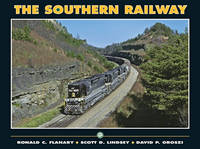
44449883717808New. White River Productions hardcover with dust jacket 256 pages 12 x 9 x.75 in. 380 color photographs 12 detailed maps index. By Ronald C. Flanary Scott D. Lindsey David P. Oroszi. Beautiful Southern Green and Cream cab units high-hood second-generation diesel units lush green scenery bright red cabooses well-maintained track massive bridges and trestles and division maps - the Southern Railway is well illustrated in this White River Productions title. There was a time particularly during the 1970s when virtually every railroad enthusiast was in some manner a Southern Railway fan. The cause for such notoriety was the Southern's long-running steam excursions a program that began in 1966 and was eventually discontinued by successor Norfolk Southern in 1994. As spectacular and successful as the steam program was it did not adequately touch on the extraordinary success of the Southern as a railroad system. The company that gave a "Green Light to Innovations" was always at the forefront of the US railroad industry by virtually any metric one could use. Rather than being remembered for its grand green and gold-striped Ps-4 Pacific types Saluda Grade or the streamlined Southerner of 1941 it was the "modern" Southern that commanded respect. Southern was an early convert to diesel-electric traction. The company's management led the way into the 1960s with remote mid-train helper locomotives mechanized track gangs welded rail and a fleet of specialized freight cars to handle all types of commodities and finished goods. There was also one of the earliest computer-driven car location systems a virtually spotless safety record and ground-breaking regulatory accomplishments that proved to be precursors to today's largely unregulated industry. Today's railroad industry is now largely free from the archaic constraints that kept it from being fully competitive with other forms of transportation thanks in large part to Southern's innovations. This book the combined efforts of 75 photographers plus input from some of the leading historians of the railroad that "Served the South" is a division-by-division visual tour of the work-a-day Southern. This 256-page volume with 380 outstanding color images and 12 detailed maps is the most comprehensive visual history of the modern Southern ever published. Chapter introductions provide context to better understand each geographic region's traffic base its lines and terminals and of course its trains. It's all here as well from first class freights with nearly 200 cars and mid-train power plus the Southern Crescent on down to the most lowly of yard switchers local freights and mine runs. And of note is the foreword written by Wick Moorman who started his distinguished railroad career with the Southern Railway. Contents:. The Southern Railway pp. 6–7 Eastern Division pp. 8–47 Piedmont Division pp. 48–61 Carolina Division pp. 62–83 Georgia Division pp. 84–107 Coastal Division pp. 108–129 Crescent Division pp. 130–143 Alabama Division pp. 144–157 Appalachia Division pp. 158–175 Tennessee Division pp. 176–203 Kentucky Division pp. 204–243 Western Division pp. 244–255 Index pp. 256. History Travel Hobbies & interests hardcover
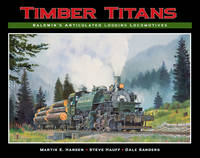
44449883979952New. Hardcover with jacket 256 pages standard horizontal format B&W and Color photographs and illustrations. Roster data. Thirty years in the making this new hardcover publication tells the complete story of these fascinating logging locomotives. Presented in construction number order the articulated engines are covered individually in great detail with statistics and full histories that document each locomotive from the day it left Baldwin's sprawling Eddystone Pennsylvania factory to its ultimate disposition. Between 1909 and 1937 the Baldwin Locomotive Works of Philadelphia Pennsylvania produced 44 specialized locomotives that were either built for or later transitioned to the rigors of hauling raw logs on railroads where the grades were steep and the curves many. While all of these locomotives were built as articulated they varied greatly in design and appearance. Most were built as compound articulateds Mallets but two companies Weyerhaeuser Timber Company and the Uintah Railway received simple articulateds. Water carrying methods were also wide-ranging. While most were built as tank locomotives others were equipped with a separate tender. Furthering the variations from as-built configurations several of the tank locomotives were later converted by removing the side or semi-saddle tanks and adding a conventional tender. While most of the logging articulateds toiled away in relative obscurity several gained acclaim for their well-traveled longevity. Remarkably ten of the locomotives have survived and several of those remain active over a century after their construction. Beyond the exhaustively researched text Timber Titans: Baldwin's Articulated Logging Locomotives features 455 Black and White and Color photographs that have been painstakingly restored to their original appearance. All have been reproduced in high resolution with many presented full-page. Additionally two full-color drawings four three-dimensional renderings and an original oil painting for the cover were all commissioned specifically for this 256-page volume. Table of Contents: A Titan Tale page 6 Marketing Department page 14 The Competition page 16 Exported Cousins page 18 The Timber Titans page 20 Mechanical Minutia page 240 Paint and Style page 248 Titan Tabulation page 250 Titan Territory page 256. Contents:. New. Hardcover. Martin E. Hansen Steve Hauff and Dale Sanders. White River Productions hardcover
1572042164Taylor Publishing Company. Hardcover. Acceptable. Missing dust jacket; Readable copy. Pages may have considerable notes/highlighting. ~ ThriftBooks: Read More Spend Less.Aesthetic fraying at the top of the spine but the binding remains structurally sound. Gift inscription on front endpaper; interior pages unmarked. This book is in acceptable condition and is a reading copy. No dust jacket included with this book. Secure packaging for safe delivery.Dust jacket quality is not guaranteed. Taylor Publishing Company hardcover
1528421744.Gpaperback. Good. Access codes and supplements are not guaranteed with used items. May be an ex-library book. paperback
1995Q-0521476437Cambridge University Press 1995-04-28. Paperback. New. New. In shrink wrap. Looks like an interesting title! Cambridge University Press paperback
1995Q-0521470560Cambridge University Press 1995-04-28. Hardcover. New. New. In shrink wrap. Looks like an interesting title! Cambridge University Press hardcover
1995x-0521476437Cambridge Univ Pr 1995. Paperback. New. 264 pages. 9.25x6.25x0.75 inches. Cambridge Univ Pr paperback
0428037291.Gpaperback. Good. Access codes and supplements are not guaranteed with used items. May be an ex-library book. paperback
0428477925.Ghardcover. Good. Access codes and supplements are not guaranteed with used items. May be an ex-library book. hardcover
ria9781119405214_inpHardback. New. New Book; Fast Shipping from UK; Not signed; Not First Edition; N/A hardcover
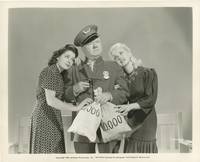
1940164648Universal City: Universal Pictures 1940. Vintage publicity photograph of W.C. Fields with Una Merkel and Evelyn Del Rio from the 1940 film. <br /> <br /> From the archive of noted Hollywood still photographer Ray Jones. Born in Wisconsin on January 1 1901 Jones worked for Paramount Pictures in the early 1930s and went on to be the head of the still photography department at Universal Pictures in 1935 where he worked well into the 1950s.<br /> <br /> An American comedy classic wherein W.C. Fields stars as a drunk who accidentally thwarts a bank robbery and becomes the bank security as the result. <br /> <br /> Shot on location in Lompoc California. <br /> <br /> 10 x 8 inches. Near Fine. <br /> <br /> National Film Registry. Criterion Collection 78. Ebert II. Universal Pictures unknown
187526463Fall River Mass: Fiske & Munroe Steam Book and Job Printers 1875. First Edition. Cloth. Very Good. First Edition. 76 pages. Publisher's green cloth gilt. 8vo. Blank spine title "Water Works City of Fall River." in gilt on front board. Frontis is illustration of the Engine House. Fall River binder's ticket on front pastedown endpaper. Cloth. The first annual report of the works. Contains 1. The history of the works and operations of the water commissioners and of the Watuppa Water Board previous to Jan. 1 1875 -- 2. The report of the water registrar -- 3. The report of the engineer and superintendent giving a description of the works. Fiske & Munroe, Steam Book and Job Printers unknown
2023x-1647284805Willford Pr 2023. Hardcover. New. 329 pages. 10.25x7.25x0.75 inches. Willford Pr hardcover
46443665-nnew. unknown
46443665like new. unknown
200778371Aiken SC: Washington Savannah River Company 2007. Presumed First Edition First printing. CD-ROM. As new. To view the Automatic tour double click on the file titled !1Auto.ips. The tour looks best when the window is maximized to fit the monitor. 1. There are two different types of images in this tour: Flat image files are used for the floor plan and special detail images. Some of the flat images are vertical images in a horizontal window. You will have to navigate up and down to see the full image. These images zoom in on fine detail with more resolution than the normal iPIX files. The 360 degree images are full spherical images that can be navigated with your mouse and a few simple menu commands. You will have a full view of the area as if you were standing in the camera position. The view includes the ceiling and the floor with the tripod in the image. The tripod has a piece of yellow tape on one of the legs. That marked leg is pointing to "Building North" in all of the images. You will be able to be able to navigate the images with ease. 2. Right click on the open image and select the command "show hotspot targets". Each target on the floor plan will take you to the corresponding iPIX image for viewing. 3. Hot spots in the images are color coded as follows: Magenta spots link to iPIX 360 Degree images. Red spots link to the flat detail images. Green spots link to the floor plan. 4. Navigate the image by moving your cursor in the direction you want to go and holding down the left mouse button. You will notice that near the center of the image the cursor becomes a magnifying glass. Just above center of the image the glass has a for zooming in on the image. Just below center of the image the glass will have a - for zooming out of the image. Left click to zoom in or out as needed. Washington Savannah River Company unknown
fy-RR1Unknown Binding. Very Good. Very good condition. No highlighting writing or marks of any kind. Clean covers and tight binding. Only slight wear to corners and spine-ends. Edges good no scuffs dings or tears. 1947 HB. unknown