KERMAINGANT, Mathurin François.Livre Rare Book
649 résultats
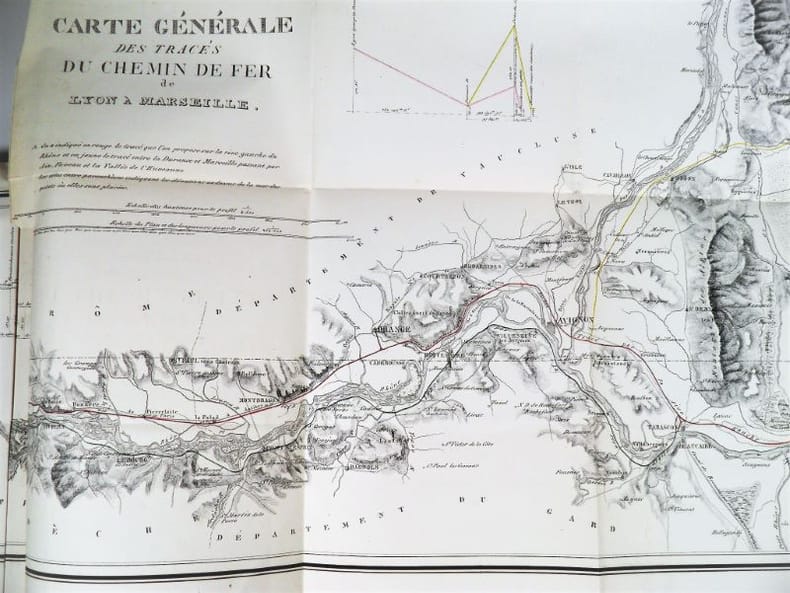
18372321Paris, Imprimerie Royale, 1837. In-4 – 22,5 x 29 cm. Broché. 172 pages, 1 carte dépliante en 2 parties. Edition originale. Ouvrage complet de sa grande « Carte Générale des tracés du Chemin de Fer de Lyon à Marseille » très détaillée (150 x 57cm). On découvre le tracé proposé sur la rive droite du Rhône, rehaussé en vert, et celui sur la rive gauche du Rhône, rehaussé en rouge, les deux se rejoignant à Tarascon puis poursuivant par Arles et les Martigues. Un tracé alternatif de la rive gauche, rehaussé en jaune, entre la Durance et Marseille, envisage une bifurcation à partir d’Avignon en passant par Orgon, Salon, Aix, Fuveau, Aubagne et la vallée de l’Huveaune. Mathurin François Kermaingant (1779-1856) est un ingénieur originaire du Nord de la France. Il intègre l'école des Ponts et Chaussées en 1800. Quatre ans plus tard, il est affecté au service de route de la Drôme. Il quitte ce département pour celui du Rhône en 1810, puis y revient en 1821, pour 3 années. C'est dans la Sarthe qu'il poursuit sa carrière à partir de 1824. A la demande du gouvernement, il pilote la commission d'étude sur un futur chemin de fer dans la vallée du Rhône en 1833. Il suggère de nombreuses variantes de tracés. En 1836, il est nommé ingénieur en chef. Il quitte le sud de la France puis s'occupe du chemin de fer de Paris à Versailles.
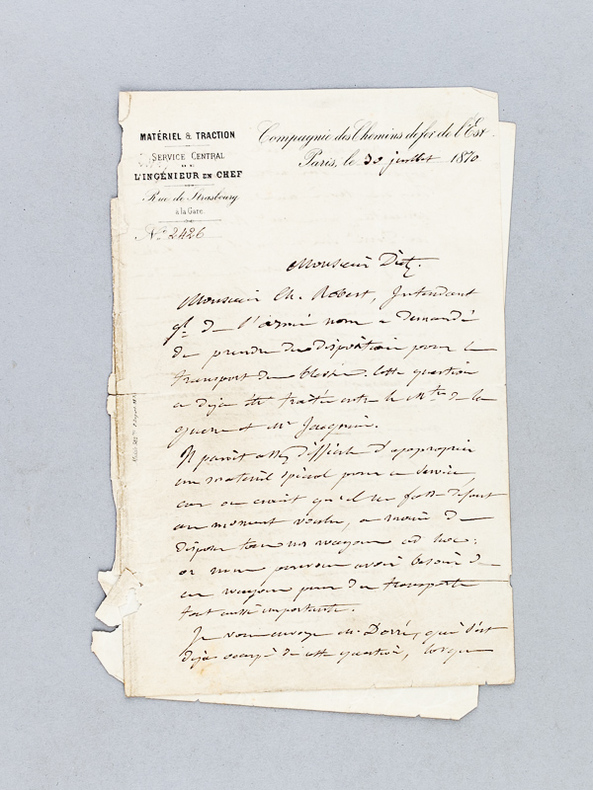
187056071Lot de 14 courriers dont 11 adressés à David Dietz, chef d'atelier à la Compagnie des Chemins de Fer de l'Est aux débuts de la Guerre franco-allemande de 1870, du 20 juillet 1870 au 5 août 1870 (en général 1 ou 2 pages par lettres) : I : Lettre signés de l'Ingénieur en Chef de la Compagnie Vuillemin, du 20 juillet 1870, précisant le rôle de leurs services et l'organisation des Corps Francs des Chemins de fer. M. Dietz est nommé dans ce cadre chef du matériel roulant, 2 pp. ; II : Lettre de nomination à ce poste signée du Directeur de la Compagnie M. Sauvage, 1 p. ; III : Lettre signés de l'Ingénieur en Chef de la Compagnie Vuillemin, du 30 juillet 1870 ; IV : Copie manuscrite de la décision de nomination d'un second, M. Doré ; IV : Lettre signés de l'Ingénieur en Chef de la Compagnie Vuillemin, du 30 juillet 1870 à M. Dietz, précisant les "divers travaux ou fournitures qu'exigent les transports militaires" qui sont de deux sortes, "les uns qui restent à la charge de la Compagnie, tels que confections de strapontins... les autres directement demandés par l'autorité militaire et restant à la charge de l'Etat" ; V : Lettre signés de l'Ingénieur en Chef de la Compagnie Vuillemin, du 2 août 1870 à M. Dietz, approuvant notamment les hamacs installés par Dietz [ pour le confort des blessés ] ; VI : Copie conforme signée par Vuillemin d'une réquisition de l'Armée du Rhin ; VII : Lettre du service central de l'Ingénieur en Chef à M. Dietz, datée du 3 août 1870, évoquant la livraison de bidons, d'urinoirs et de deux modèles de hamacs ; VIII : Lettre à en-tête de l'Exploitation de la Compagnie, datée du 4 août 1870 "J'ai immédiatement adressé à Messieurs les médecins de la Cie de l'Est une circulaire pour les inviter à prêter leur concours tant pour le transport que pour la visite des blessés de l'armée" ; IX : Lettre du service central de l'Ingénieur en Chef à M. Dietz, datée du 4 août 1870, relative à l'envoi d'un troisième modèle de hamac, de 30000 pitons, etc. ; X : Lettre du service central de l'Ingénieur en Chef à M. Dietz, datée du 5 août 1870 ; XI : Lettre du service central de l'Ingénieur en Chef signé de Vuillemin à M. Dietz, datée du 5 août 1870 : "J'ai remarqué que pour les transports des blessés militaires, sur vos hamacs dans les wagons N ou autres, il faut un temps assez long pour amener les blessés aux wagons et pour les placer sur les hamacs. En supposant que les gares dans lesquelles doit s'effectuer l'embarquement soient pourvues de hamacs avec les cordes et leurs pitons, nos hommes seraient en mesure de tout disposer dans le premier wagon venu, pour peu qu'ils soient prévenus quelques heures d'avance. Il ne serait donc pas nécessaire de garnir tous nos wagons de pitons, mais il faudrait toujours avoir aux gares d'embarquement des pitons que nos ouvriers placeraient dans les wagons..." ; XII : on joint 3 autres pièces
186810706S.l. (Paris), s.n. (gravé par Pouzadou, lithographié par Lanoue), 1868 ; grand in-folio en feuilles sous portefeuille muet ; (6) pp. de Titre, noms des Chemins de fer et table des planches imprimées en rouge et noir, 65 planches doubles, triples ou quadruples, ouvrage entièrement lithographié.
18662092902144201629Not Available 1866. Soft Cover. Fine. The book is in fine condition. Not Available paperback
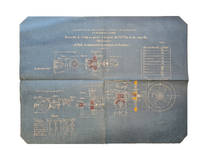
189159258(Loire, Saint-Chamond, 1891). Folio. 45 technical drawings, most printed and hand-coloured on blue paper. All plates depicts the ""Tourelle à éclipse pour canon 1 Canon de 75 m/m á tir rapide"". Sizes vary from 75x36 cm to 101x73 cm. All housed in contemporary portfolio, front board detached. All plates with stamp and nubering in contemporary hand. Plates fine and clean.
189159258Loire Saint-Chamond 1891. Folio. 45 technical drawings most printed and hand-coloured on blue paper. All plates depicts the "Tourelle à éclipse pour canon 1 Canon de 75 m/m á tir rapide". Sizes vary from 75x36 cm to 101x73 cm. All housed in contemporary portfolio front board detached. All plates with stamp and nubering in contemporary hand. Plates fine and clean. <br/><br/><em>Collection of techincal drawings of Saint-Chamond's fast 75 mm canon. The Compagnie des forges et aciéries de la marine et d'Homécourt FAMH Company of marine forges and steelworks and of Homécourt was a French industrial enterprise that made iron and steel products for the French navy army and railroads. It is often known as Saint-Chamond from its main location in Saint-Chamond Loire. </em> unknown
186278773New York:: Francis Hart & Co. 1862. First edition. publisher's gilt-lettered and blind-embossed cloth. Small marginal chip to one map; cloth a little sunned; a beautiful clean tight and sound copy. . Folio. Decorative half-title page; engraved illustrations throughout; one double-page and one folding double-page map; engraved decorative borders throughout. . Francis Hart & Co., hardcover
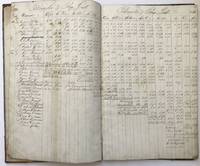
1841754Pittsburgh 1841. About very good. 48pp. Large folio. Contemporary half reverse-calf and blue paper boards. Wear to corners and spine ends boards soiled. Leaves reinforced at gutter margin with tape some light soiling. In a clear and legible hand. This ledger records the register and pay information for approximately thirty-five men who worked at the Birmingham Iron Works from 1836 to 1841. The "Register of Hands That Work by the Ton" records each man's name his wage days worked how much tonnage and his job description. The Iron Works supported an engineer a blacksmith a watchman refiners heaters carters rollers puddlers bricklayers and some men simply described as laborers. The number of employees varies from year to year ranging from thirty to forty-five or so with many men listed as steady employees year after year. Also tucked in the front of the volume is a slim gathering of sheets labeled in manuscript as "Balance of Property Debts Goods & Chattels of the firm of Hoge & Hartman Iron Manufacturers Pittsburgh Jany. 2nd 1840." This lists receivables and debts for that company which was one of several iron works in the area by 1840. Located south of the Allegheny near 16th Street the Birmingham Iron Works was founded in 1836. It had twenty single puddling furnaces five heating furnaces and produced bar iron rounds hoops bands and other forms of iron. There works were active from 1836 to 1871 and averaged 9000 tons of production per year. This ledger therefore encompasses the first years of its operation and is an early record not only for the company but for the region in terms of iron production which would eventually lead to the steel boom that made Pittsburgh prosperous -- and Andrew Carnegie insanely wealthy. An excellent source for the labor history of the steel industry in Pittsburgh. unknown books
1868173873Lille: Imprimerie de L. Danel 1868. Limited to 25 copies. Good overall the silk endpaper has lifted from the corner. 3/4/ black leather with 6 raised bands and gilt title second compartment. Purple silk endpapers and pastedowns. T.e.g. Title-page with large gilt-decorated emblem device above imprint. 3 preliminary leaves 7-97 2 pages mounted portrait. Preliminary states "Recueil des Discours Pronounces sur la Tombe du Baron James De Rothschild et des principaux articles de journaux publiées à l'occasion de sa mort et de ses funéreailles Ce Recuei tire vingt-cinq exemplaires est offert A Madame La Baronne James De Rothschild et a sa famille par le personnel du Chemin de fer du Nord." Includes funeral sermons and obituaries published in Le Temps Journal des debats L'Epoque and other perodicals. The photograph shows the Baron as he appeared in 1864. Worthy of restoration and exceedingly scarce. Worldcat locates 4 copies including 1 in the United States. Imprimerie de L. Danel hardcover
187820520Paris Administration Des Chemins De Fer 1878 Grand In-folio ( 62,5 X 46,5 ) 15 doubles feuillets représentant 15 cartes de chemins de fer y compris une carte des chemins de fer des deux Amériques et une carte des chemins de fer de l'Algérie, soit 16 Cartes en tout Galeries de vers en marge et atteinte à la carte de l'amérique du sud , ) Très Nombreuses publicités entre les cartes. Les cartes sont consacrées essentiellement au chemins de fers Français et Européen, Etonnante carte des chemins de fer tucs et russes; Format spectaculaire, très grand intérêt de cet atlas désormais restauré
185461648Wien, Carl Gerold & Sohn, 1854. Qu.-Gr.-4°. Mit einer lithogr. Karte, einem lithogr. Längenprofil, 5 getönt. lithogr. Ansichten sowie einem mehrf. gefalt. Leporello-Panorama in Tonlithographie. 2 Bll., 19 S., (Text; in mod. Umschlag m. bedrucktem Deckeltitel) u. die 8 Tafeln, lose in mod. HLdr.-Kassette m. goldgepr. Ldr.-Deckelschild.
186810705S.l. (Paris), s.n. (gravé par Pouzadou, lithographié par Lanoue), 1868 ; grand in-folio en feuilles sous portefeuille muet ; (6) pp. de Titre, noms des Chemins de fer et table de planches imprimées en rouge et noir, 118 planches doubles, triples ou quadruples ou plus, certaines en couleurs. Ouvrage entièrement lithographié.
18933806Die Konstruktion von Geldkassetten und Geldschränken durch Querschnitte dargestellt für Geldschrankfabrikanten, Schlossermeister, Banken u.s.w. sowie als Vorlageblätter zum Gebrauche an Fach- und Werkmeister-, Handwerker- und Gewerbeschulen, sowie an gewerblichen Fortbildungsschulen. Mit einem Vorworte des Vorstandes des Verbandes deutscher Schlosser-Innungen. Mit 23 doppelblattgr. farbig lithogr. Tafeln. Dresden, G. Kühtmann, 1893. Folio (45,3 x 26,7 cm). 2 Bl. u. Tafeln lose in Orig.-Halbleinwandmappe.
18704120(Kunstwerken. Lijn H. Sectie 1.) Brug over de Lek bij Kuilenburg [heute: Culemborg]. Mit 30 doppelblattgr. lithogr. Tafeln aus der Lith. Druckerei der Brückenbau-Anstalt von Johann Caspar Harkort (22) u. vom Königl. Hof-Lith. Louis Veit, Berlin (8). [Duisburg u. Berlin, 1870]. Groß-Folio (60,0 x 50,0 cm). Halbleinwandband d. Zt. mit montiertem Titelschild auf dem Vorderdeckel. [8 Warenabbildungen]
181216509Paris, Firmin-Didot, 1812 ; 4 tomes in-4 ; veau raciné, dos lisse à faux nerfs dorés, fleurons et croisillons dorés, pièces de titre et de tomaison vert-empire, roulette d’encadrement des plats, double filet doré sur les coupes, tranches marbrées (reliure de l’époque) ; I : (4), XIX, (1), 304 pp., 23 planches dépliantes (22 + 18bis) ; II : XXIII, (1) errata, 371 pp., pl. 24 à 38 ; III: XXVI, (2) errata, 381 pp., pl. 39 à 58 et 47bis ; IV : XXII, (2) errata, 411 pp., pl. 59 à 65, soit en tout 66 planches gravées dépliantes (la planche 23 n’existe pas et il y a les planches 18bis et 47bis).
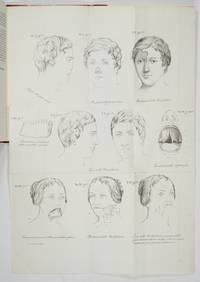
1846680171846. Rome Tipografia Contedini 1846 4° 4 16 pp. mit 1 lith. Folio-Falttafel feiner Halbledereinband. Exceedingly rare first and apparently only edition of "Alcune Operazione di Autoplastica del Dottore Augusto Ferro di Milano / Patrizio della Pergola / Membro corrispondente dell' Accademia Anatómica-Chirurgica di Perugia". With two additions in the author's own hand of several lines each with his own signature: 1 Chapter 'Risecazione parziale della mandibola inferiore' Tavola III figura 1a e 2a - p. 12 : Three lines & signature. 2 Chapter 'Restauratoredal sua lato destro' Tavola IVa figura 2a - p.15 : 6 lines & signature "Augusto Ferro was a prominent 19th-century Italian surgeon. In this rare book Ferro describes his techniques in facial plastic surgery. He describes his technique for nasal reconstruction and mandible jaw reduction. His operations on men and women are beautifully illustrated with detailed drawings." Douglas Monasebian Ferro's is a relatively early contribution to this procedure and at a time when Italian plastic surgery became to rank with the French and German. The History of Plastic Surgery Grolier Club No. 32 unknown
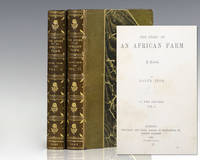
1883118143London: Chapman and Hall 1883. First edition of this highspot <span class="match">of</span> Afric<span class="match">an</span> literature. Octavo 2 volumes bound in three quarters contemporary morocco over marbled boards with gilt titles and tooling to the spine in six compartments within raised gilt bands top edge gilt marbled endpapers. Published under <span class="match">the</span> pseudonym 'Ralph Iron' t<span class="match">he</span> entire printing <span class="match">of</span> this first edition has been estimated to be about 300 copies and most were destined to libraries. From the library of British-born South African financier mining magnate and politician Sir Lionel Phillips with his bookplates to the pastedowns. Lionel and Florence Phillips left South Africa a major legacy through their art collections. Florence campaigned for the founding of the Johannesburg Art Gallery and arranged its first collections including her lace collection while Lionel donated seven oils and a Rodin sculpture. Rare and with desirable provenance. The Story of an African Farm published in 1883 under the pseudonym Ralph Iron was South African author Olive Schreiner's first published novel. It was an immediate success and has become recognized as one of the first feminist novels. In writing the first great South African novel Schreiner drew on childhood memories of life on the isolated African veld to fashion a powerful indictment of the rigid Boer and English social conventions of her day. It was greeted by both praise and condemnation for its feminist views on women's status and on marriage and for its unorthodox critique of dishonesty and hypocrisy in the doctrines and practices of "respectable" Christian church people. Chapman and Hall hardcover books
1883118143London: Chapman and Hall 1883. First edition of this highspot of African literature. Octavo 2 volumes bound in three quarters contemporary morocco over marbled boards with gilt titles and tooling to the spine in six compartments within raised gilt bands top edge gilt marbled endpapers. Published under the pseudonym 'Ralph Iron' the entire printing of this first edition has been estimated to be about 300 copies and most were destined to libraries. From the library of British-born South African financier mining magnate and politician Sir Lionel Phillips with his bookplates to the pastedowns. Lionel and Florence Phillips left South Africa a major legacy through their art collections. Florence campaigned for the founding of the Johannesburg Art Gallery and arranged its first collections including her lace collection while Lionel donated seven oils and a Rodin sculpture. Rare and with desirable provenance. The Story of an African Farm published in 1883 under the pseudonym Ralph Iron was South African author Olive Schreiner's first published novel. It was an immediate success and has become recognized as one of the first feminist novels. In writing the first great South African novel Schreiner drew on childhood memories of life on the isolated African veld to fashion a powerful indictment of the rigid Boer and English social conventions of her day. It was greeted by both praise and condemnation for its feminist views on women's status and on marriage and for its unorthodox critique of dishonesty and hypocrisy in the doctrines and practices of "respectable" Christian church people. Chapman and Hall hardcover
1883140940359London: Chapman and Hall 1883. First Edition. Near Fine. First edition first printing of what is widely recognized as one of the first feminist novels. Near Fine with light rubbing to binding pages toned and with occasional instances of light spotting. Finely bound in full black ostrich skin by Sangorski and Sutcliffe mirroring the book's setting on an ostrich farm. At the time of publication the South African ostrich farming industry was rapidly developing to meet a craze for the high demand of ostrich feathers with their weight-price approaching that of gold's. The industry's rise brought about much cruelty and suffering for ostriches and the novel highlights the crossover among the contemporary leading activists of women's rights movement and the champions of animal rights. Published under a male pseudonym of Ralph Iron this was Scheiner's first novel and was met with immediate success. A complex narrative woven around themes of cruelty and restriction set against a colonial backdrop. It's notable for the main female character's handling of themes of love marriage and motherhood while subverting the traditional gender roles female sexuality and intellectual power. Published under a male pseudonym of Ralph Iron this was Scheiner's first novel and was met with immediate success. A complex narrative woven around themes of cruelty and restriction set against a colonial backdrop. It's notable for the main female character's handling of themes of love marriage and motherhood while subverting the traditional gender roles female sexuality and intellectual power. Chapman and Hall unknown books
1883140940359London: Chapman and Hall 1883. First Edition. Near Fine. First edition first printing of what is widely recognized as one of the first feminist novels. Near Fine with light rubbing to binding pages toned and with occasional instances of light spotting. Finely bound in full black ostrich skin by Sangorski and Sutcliffe mirroring the book's setting on an ostrich farm. At the time of publication the South African ostrich farming industry was rapidly developing to meet a craze for the high demand of ostrich feathers with their weight-price approaching that of gold's. The industry's rise brought about much cruelty and suffering for ostriches and the novel highlights the crossover among the contemporary leading activists of women's rights movement and the champions of animal rights.<p><br /> <br /> Published under a male pseudonym of Ralph Iron this was Scheiner's first novel and was met with immediate success. A complex narrative woven around themes of cruelty and restriction set against a colonial backdrop. It's notable for the main female character's handling of themes of love marriage and motherhood while subverting the traditional gender roles female sexuality and intellectual power. <br /> <br /> Published under a male pseudonym of Ralph Iron this was Scheiner's first novel and was met with immediate success. A complex narrative woven around themes of cruelty and restriction set against a colonial backdrop. It's notable for the main female character's handling of themes of love marriage and motherhood while subverting the traditional gender roles female sexuality and intellectual power. Chapman and Hall unknown
1868173873Lille: Imprimerie de L. Danel 1868. Limited to 25 copies. Good overall the silk endpaper has lifted from the corner. 3/4/ black leather with 6 raised bands and gilt title second compartment. Purple silk endpapers and pastedowns. T.e.g. Title-page with large gilt-decorated emblem device above imprint. 3 preliminary leaves 7-97 2 pages mounted portrait. Preliminary states "Recueil des Discours Pronounces sur la Tombe du Baron James De Rothschild et des principaux articles de journaux publiées à l'occasion de sa mort et de ses funéreailles Ce Recuei tire vingt-cinq exemplaires est offert A Madame La Baronne James De Rothschild et a sa famille par le personnel du Chemin de fer du Nord." Includes funeral sermons and obituaries published in Le Temps Journal des debats L'Epoque and other perodicals. The photograph shows the Baron as he appeared in 1864. Worthy of restoration and exceedingly scarce. Worldcat locates 4 copies including 1 in the United States. Imprimerie de L. Danel hardcover books
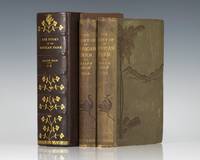
188330040London: Chapman and Hall 1883. First edition of this highspot <span class="match">of</span> Afric<span class="match">an</span> literature. Octavo original olive cloth 2 volumes. Published under <span class="match">the</span> pseudonym 'Ralph Iron'. <span class="match">The</span> entire printing <span class="match">of</span> this first edition has been estimated to be about 300 copies. and most were destined to libraries. Housed in a custom half morocco clamshell box. Rare especially in the original cloth. The Story of an African Farm published in 1883 under the pseudonym Ralph Iron was South African author Olive Schreiner's first published novel. It was an immediate success and has become recognized as one of the first feminist novels. In writing the first great South African novel Schreiner drew on childhood memories of life on the isolated African veld to fashion a powerful indictment of the rigid Boer and English social conventions of her day. It was greeted by both praise and condemnation for its feminist views on women's status and on marriage and for its unorthodox critique of dishonesty and hypocrisy in the doctrines and practices of "respectable" Christian church people. Chapman and Hall hardcover books
188330040London: Chapman and Hall 1883. First edition of this highspot of African literature. Octavo original olive cloth 2 volumes. Published under the pseudonym 'Ralph Iron'. The entire printing of this first edition has been estimated to be about 300 copies. and most were destined to libraries. Housed in a custom half morocco clamshell box. Rare especially in the original cloth. The Story of an African Farm published in 1883 under the pseudonym Ralph Iron was South African author Olive Schreiner's first published novel. It was an immediate success and has become recognized as one of the first feminist novels. In writing the first great South African novel Schreiner drew on childhood memories of life on the isolated African veld to fashion a powerful indictment of the rigid Boer and English social conventions of her day. It was greeted by both praise and condemnation for its feminist views on women's status and on marriage and for its unorthodox critique of dishonesty and hypocrisy in the doctrines and practices of "respectable" Christian church people. Chapman and Hall hardcover