10 703 résultats
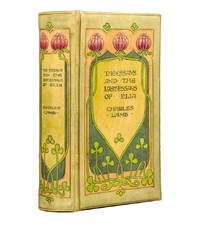
19006329London: J.M. Dent & Co 1900. Second edition. Fine. Two volumes bound in one small octavo 6 15/16 x 4 1/16 inches; 177 x 103 mm. xxii 294 1 imprint 1 blank; xii 254 1 imprint 1 blank pp. Two engraved frontispieces and one hundred and sixty-two black & white illustrations including decorative head and tailpieces all by Charles E. Brock. Bound ca. 1906 in a fine pastel "vellucent" binding by Cedric Chivers stamp-signed in gilt on rear lower turn-in with a delicately hand-painted 'Art Nouveau' floral design. This binding is No. LXXXV on page 34 of the Cedric Chivers catalog "Books in Beautiful Bindings." The front cover with three red flowers and a green vine design enclosing the title "The Essays And The Last Essays of Elia. Charles Lamb". Lower cover with a similar design but with just one red flower. Smooth spine similarly decorated and lettered in watercolor and gilt gilt ruled turn-ins mottled pale-green liners and end-papers all edges gilt. Neat ink inscription dated "Xmas 1906" on front blank. A very fine example housed in the original fleece-lined green cloth slipcase missing the movable spine panel.<br /> <br /> Patented in 1898 Chivers's "vellucent" bindings departed from traditional methods of creating hand-painted vellum bindings. The usual approach was to merely bind a book in vellum and then paint on a design but this is prone to rubbing and flaking and such examples are often now found chipped and deteriorated. In the 18th century Chivers's great predecessor Edwards of Halifax painted in reverse on the underside of translucent vellum thereby providing a layer of protection for the design. His technique was not widely copied and almost vanished with his death and it was not until the 1890s that Chivers developed his own similar method for protecting the design underneath the vellum itself - the backing sheet of the vellum was painted which was then covered in vellum which had been shaved to transparency. The vellum was then tooled in gilt on occasion incorporating additional mother-of-pearl and onlays. The books which Chivers thus bound have always been a favorite of collectors and usually still present well the vellum having served its purpose of protecting the design for many decades as Chivers intended. Chivers was also known to have employed a great many craftswomen at his bindery in Portway: "forty women for folding sewing mending and collating work and in addition five more women worked in a separate department to design illuminate and colour vellum for book decoration and to work on embossed leather. These five were Dorothy Carleton Smyth Alice Shepherd Miss J.D. Dunn Muriel Taylor and Agatha Gales" Tidcombe.<br /> <br /> This book brings together Charles Lamb's Essays of Elia first published in 1823 with the subsequent volume Last Essays of Elia issues in 1833. The accessible and conversational essays were published under the pseudonym Elia inspired by an Italian man that Lamb had known at the South Sea House and had appeared serially in The London Magazine between 1820 and 1825. Despite his struggles with mental illness Charles Lamb 1775-1834 would be celebrated for his literary contributions producing a range of material from essays to poems. Lamb belonged to an active literary circle which included Percy Bysshe Shelley and Lord Byron. Fine. J.M. Dent & Co unknown
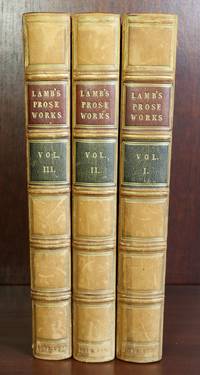
18355756London: Edward Moxon 1835. Bound in Full Calf by Charles Lewis. These three volumes are George Daniel's custom bound copies of Lamb's prose works. George Daniel was a famous collector of Elizabethan books including Shakespeare folios. These volumes measure approximately 7.75" x 5" with 356 340 and 295 numbered pages respectively.<br /> <br /> Finely bound in full calf by Charles Lewis the renowned London bookbinder. Leather bookplate of famous Samuel Johnson collector R. B. Adam. All edges gilt. With marbled endsheets.<br /> <br /> The volumes are in very good condition. Minor wear and staining to the leather bindings. Vol I has a cracked front hinge. Interior pages are bright and clean. Volume I likely signed by George Daniel - Esquire of Canonbury. Newspaper clippings affixed to front endpapers. Volume II with a signed letter from the poet Bernard Barton who was a close friend of Charles Lamb. Each volume has a bookplate from R. B. Adam on the front pastedown who was a famous Buffalo rare book collector. <br /> <br /> Please view the many other rare titles available for purchase at our store. We are always interested in purchasing individual or collections of fine books. Edward Moxon unknown
04448London: J.M. Dent & Co 1900. A Fine Cedric Chivers Vellucent Binding<br/><br/>CHIVERS Cedric binder. LAMB Charles. BROCK Charles E. illustrator. The Essays of Elia. and The Last Essays of Elia. With an Introduction by Augustine Birrell and Illustrations by Charles E. Brock. London: J.M. Dent & Co. 1900. <br/><br/>Two volumes bound in one. Small octavo 6 15/16 x 4 1/16 inches; 177 x 103 mm. xxii 294 1 imprint 1 blank; xii 254 1 imprint 1 blank pp. Two engraved frontispieces and one hundred and sixty-two black & white illustrations including decorative head and tailpieces all by Charles E. Brock.<br/><br/>Bound ca. 1906 in a fine pastel "vellucent" binding by Cedric Chivers stamp-signed in gilt on rear lower turn-in with a delicately hand-painted 'Art Nouveau' floral design. The front cover with three red flowers and a green vine design enclosing the title "The Essays And The Last Essays of Elia. Charles Lamb". Lower cover with a similar design but with just one red flower. Smooth spine similarly decorated and lettered in watercolor and gilt gilt ruled turn-ins mottled pale-green liners and end-papers all edges gilt. Neat ink inscription dated "Xmas 1906" on front blank. A very fine example housed in the original fleece-lined green cloth slipcase missing the movable spine panel.<br/><br/>This binding is No. LXXXV on page 34 of the Cedric Chivers catalog "Books in Beautiful Bindings"<br/><br/>"In his large bindery at Portway Bath Chivers employed about forty women for folding sewing mending and collating work and in addition five more women worked in a separate department to design illuminate and colour vellum for book decoration and to work on embossed leather. These five were Dorothy Carleton Smyth Alice Shepherd Miss J.D. Dunn Muriel Taylor and Agatha Gales. Most Vellucent bindings were designed by H. Granville Fell but the woman most frequently employed for this kind of work was probably Dorothy Carleton Smyth" Marianne Tidcombe Women Bookbinders 1880-1920 p. 86. <br/><br/>According to Bernard Middleton the first vellucent binding dates to 1903. In these bindings the painting is on paper under the vellum rather than on the underside of the vellum as in Edwards of Halifax bindings History of English Craft Bookbinding Technique pp. 146-147.<br/><br/>Essays of Elia is a collection of essays written by Charles Lamb; it was first published in book form in 1823 with a second volume Last Essays of Elia issued in 1833 by the publisher Edward Moxon. The essays in the collection first began appearing in The London Magazine in 1820 and continued to 1825. Lamb's essays were very popular and were printed in many subsequent editions throughout the nineteenth century. The personal and conversational tone of the essays has charmed many readers; the essays "established Lamb in the title he now holds that of the most delightful of English essayists." Lamb himself is the Elia of the collection and his sister Mary is "Cousin Bridget." Charles first used the pseudonym Elia for an essay on the South Sea House where he had worked decades earlier; Elia was the last name of an Italian man who worked there at the same time as Charles and after that essay the name stuck. Critics have traced the influence of earlier writers in Lamb's style notably Sir Thomas Browne and Robert Burton - writers who also influenced Lamb's contemporary and acquaintance Thomas De Quincey. Some of Lamb's later pieces in the same style and spirit were collected into a body called Eliana.<br/><br/>Charles Lamb 1775-1834 was born in London in 1775. He studied at Christ's Hospital where he formed a lifelong friendship with Samuel Taylor Coleridge. When Lamb was twenty years old he suffered a period of insanity and was confined to a psychiatric hospital. His sister Mary Ann Lamb had similar issues and in 1796 murdered her mother in a fit of madness. Mary was confined to an asylum but was eventually released into the care of her brother. Lamb became friends in London with a group of young writers who favored political reform including Percy Bysshe Shelley William Hazlitt Henry Brougham Lord Byron Thomas Barnes and Leigh Hunt. In 1796 Lamb contributed four sonnets to Coleridge's Poems on Various Subjects 1796. This was followed by Blank Verse 1798 and Pride's Cure 1802. Lamb worked for the East India Company in London but managed to contribute articles to several journals and newspapers including London Magazine The Morning Chronicle Morning Post and the The Quarterly Review. He is best known for his pseudonymous essays for London Magazine collected and published as Essays of Elia 1823 and for the popular evergreen Tales From Shakespeare 1807 his collaboration with his sister. London: J.M. Dent & Co, 1900 unknown books
1816D16976London: Henry Colburn 1816. Hardcover. Good. Three volumes. First Edition; a rare set in the original boards spines quite worn with pages uncut. Housed in a modern slipcase. Complete with the half-titles as called for. Lambs notorious fictionalized account of her affair with Byron was published anonymously with Byron intended as Glenarvon Lord Ruthven and Lamb as Calantha Lady Avondale. <br/><br/> Henry Colburn hardcover books
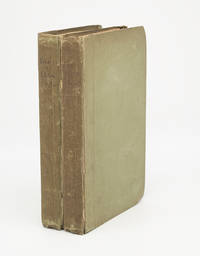
182894790Philadelphia: Carey Lea and Carey 1828. Hardcover. Very Good. First American editions and the true first complete edition of the second series of essays the second series wasn't published in England until 1833 as The Last Essays of Elia. Two volumes. 12mos. Linen and original printed glazed papercovered boards with paper spine labels. Each volume bears on the front pastedown the bookplate of James Fenimore Cooper Jr. grandson of the American author. Laid in are an old bookseller's description and a letter dated 1916 to Mrs. James Fenimore Cooper Jr. sending the books along and discussing some of the bibliographical niceties. Front joint professionally and neatly repaired and the spine label partly perished on First Series small stains on the boards chip on the unprinted front fly in Second Series. Still a nice set in the uncommon original boards in better condition than one might reasonably expect of these famous autobiographical essays and with an interesting association. In 1820 Lamb invented the pseudonym Elia for his first essay about the work place of his brother by taking the name of a clerk no longer employed there. The pseudonym stuck however and it allowed Lamb to develop a persona with which he examined a variety of subjects with his celebrated humor and style. Probably Lamb's best work though he is also remembered for his children's versions of Shakespeare and Homer which he wrote with his sister Mary who became his charge after her bout with insanity in 1796 when she killed their mother. Carey, Lea, and Carey hardcover
1802100380London: Printed by T. Plummer for G. and J. Robinson 1802. First edition. 8vo. Uncut in publisher's pink boards; fine in a custom green cloth chemise Fine first edition in boards of Lambs first play a presentation copy from Fanny Holcroft to fellow author Catherine Hutton. Holcroft 1780-1844 a translator and novelist and friend of Charles and Mary Lamb was the author of the anti-slavery poem The Negro and such novels as Fortitude and Frailty and The Wife and the Lover. Her father was the dramatist and radical Thomas Holcroft 1745-1809 who published several of her translations in his Theatrical Recorder. Catherine Hutton 17561846 was a novelist The Miser Married The Welsh Mountaineer Oakwood Hall and prolific letter-writer.A letter from T. Harral editor of the periodical La Belle Assemblée to Catherine Hutton May 20 1827 records a gift of a Lamb title presumably the present volume: "Miss Holcroft has given me a little volume for you the production of a particular friend of hers Mr. Charles Lamb whom you will probably recollect as the author of some admirable paper signed 'Elia' in the London Magazine " Reminiscences of a Gentlewoman of the Last Century: Letters of Catherine Hutton 1891 pp. 194-5.Following the blank-verse tragedy John Woodvil which was rejected by Drury Lane and never performed are several short works and the poem Helen Mary Lambs first appearance in print.PROVENANCE: Catherine Hutton contemporary presentation inscription from Fanny Holcroft on title-page; Robert S Pirie book-plateREFERENCE: Roff pp. 47-52 Printed by T. Plummer for G. and J. Robinson hardcover
1830ST15812London: Edward Moxon 1830. FIRST EDITION. 188 x 118 mm. 7 3/8 x 4 5/8". vii 1 150 pp. 1 leaf ads. <br/> SUPERB NAVY BLUE CRUSHED MOROCCO GILT AND INLAID BY DE SAMBLANX-WECKESSER stamp-signed on front turn-in covers with intricate gilt frame of trumpet vines bearing 36 inlaid scarlet flowers and buds raised bands spine gilt in compartments with inlaid trumpet flower at center gilt titling turn-ins framed with gilt vine navy blue moiré silk endleaves marbled flyleaves all edges gilt. In a slightly worn marbled paper slipcase. Title page with engraving of a putto composing verses. Front flyleaves with bookplates of Edwin Holden dated 1894 and John Whipple Frothingham. Wise Ashley Cat. III 52; Thomson p. 76. A hint of rubbing to front joint occasional mild browning due to paper quality but A FINE COPY clean and fresh internally and in a lustrous binding.<br/> <br/> In a lovely Art Nouveau binding by a Belle Époque master this is a collection of poems assembled by essayist Charles Lamb 1775-1834 to launch the publishing career of his friend and future son-in-law Edward Moxon 1801-58 to whom he dedicated the work. Composed of rather slight verses composed for the amusement of Lamb's friends and of more substantial works previously printed in periodicals this first book bearing Moxon's imprint did well enough to attract the business of other prestigious poets many of them friends of Lamb. Moxon who married Lamb's adopted daughter Emma Isola in 1833 went on to print the works of Wordsworth Shelley Tennyson and other luminaries of the Victorian era. The graceful binding is by Belgian master craftsman Charles de Samblancx or Samblanx 1855-1943 who began his binding career at age 11 as an apprentice to Coppens. He eventually established his own firm though from 1889-1909 his gilder Jacques Weckesser was in partnership with him. His binding career extended over several decades and he worked in a variety of period styles sensitively reproducing the bindings of previous centuries. His work often involving great complexity of design is invariably executed with the highest degree of skill. Our copy was once owned by American bibliophile and Grolier Club president Edwin Holden 1861-1906. Edward Moxon unknown
185658090New York: Derby & Jackson 1856. Signed on the first free end page in pencil with his ownership signature "J. A. Garfield Hiram Ohio Sept. 1856." Garfield's personal bookplate "Inter Folia Fructus Library of James A. Garfield" is affixed to the front pastedown. Housed in a custom half morocco chemise case. Rare and desirable from the library of the 20th President of the United States. At Geauga Academy which he attended from 1848 to 1850 Garfield learned academic subjects he had not previously had time for. He shone as a student and was especially interested in languages and elocution. Later Garfield graduated from Williams College in August 1856 as salutatorian giving an address at the commencement. Garfield biographer Ira Rutkow pointed out that the future president's years at Williams gave Garfield the opportunity to know and respect those of different social backgrounds and despite his origin as an unsophisticated Westerner he was liked and respected by socially conscious New Englanders. "In short" as Rutkow later wrote "Garfield had an extensive and positive first experience with the world outside the Western Reserve of Ohio." On his return to Ohio the degree from a prestigious Eastern school made Garfield a man of distinction. He returned to Hiram to teach at the Institute and in 1857 was made its president. He did not see education as a field that would realize his full potential. At Williams he had become more politically aware in the intensely anti-slavery atmosphere of the Massachusetts school and began to consider politics as a career. Derby & Jackson unknown books
185658090New York: Derby & Jackson 1856. Signed on the first free end page in pencil with his ownership signature "J. A. Garfield Hiram Ohio Sept. 1856." Garfield's personal bookplate "Inter Folia Fructus Library of James A. Garfield" is affixed to the front pastedown. Housed in a custom half morocco chemise case. Rare and desirable from the library of the 20th President of the United States. At Geauga Academy which he attended from 1848 to 1850 Garfield learned academic subjects he had not previously had time for. He shone as a student and was especially interested in languages and elocution. Later Garfield graduated from Williams College in August 1856 as salutatorian giving an address at the commencement. Garfield biographer Ira Rutkow pointed out that the future president's years at Williams gave Garfield the opportunity to know and respect those of different social backgrounds and despite his origin as an unsophisticated Westerner he was liked and respected by socially conscious New Englanders. "In short" as Rutkow later wrote "Garfield had an extensive and positive first experience with the world outside the Western Reserve of Ohio." On his return to Ohio the degree from a prestigious Eastern school made Garfield a man of distinction. He returned to Hiram to teach at the Institute and in 1857 was made its president. He did not see education as a field that would realize his full potential. At Williams he had become more politically aware in the intensely anti-slavery atmosphere of the Massachusetts school and began to consider politics as a career. Derby & Jackson unknown
180755702London: Thomas Hodgkins At The Juvenile Press 1807. Two Volumes. 12mos beautiful gilt-worked red full-morocco leather bindings by Riviere & Sons. First edition earliest printing. These 20 tales are illustrated with 20 engraved illustrations by William Mulready. First edition first impression with the imprint of the printer T. Davison on the verso of p. 235 vol. I and with the Hanway Street address in the final advertisements. The "Tales" are the work of Lamb and his sister Mary who had severe bouts of mental illness. Charles wrote the tragedies and Mary wrote the comedies. The book is designed to make the stories of Shakespeare's plays familiar to the young. According to the Cambridge History of English Literature "the first book which appealing to a general audience and to a rising generation made Shakespeare a familiar and popular author." Originally the "Tales" were to be anonymous but Godwin the publisher persuaded an unreluctant Charles to have his name on the title page. Mary did not get her name on the title page until the seventh edition in 1838. "Tales from Shakespeare" has been republished many times in various editions and using various illustrators including Arthur Rackham. Very Good covers nice some scattered foxing; rubbing & abrasions to front pastedowns from bookplates formerly removed. <br/><br/> Thomas Hodgkins At The Juvenile Press hardcover books
135198hardcover. 10 volumes. Frontispiece. 8vo beautifully bound in 3/4 olive green morocco gilt- stamped spines with raised bands t.e.g. uncut edges. London: Macmillan 1900. Light foxing otherwise a near fine set.<br/><br/> unknown books
1798305354London: T. Bensley for John and Arthur Arch 1798. First edition. 95 1 pp. 12mo. Full tan morocco gilt a.e.g. by Riviere. Joints slightly rubbed title-page browned at margins. First edition. 95 1 pp. 12mo. First edition of this early publication of Lamb to that point his most substantial collection. Thirteen of the poems are by Lloyd and seven by Lamb including "The Old Familiar Faces" Ashley III pp. 38-39; Hayward 210; Roff pp 31ff. Provenance: Myrtle A. Crummer bookplate T. Bensley for John and Arthur Arch unknown books
1798305354London: T. Bensley for John and Arthur Arch 1798. First edition. 95 1 pp. 12mo. Full tan morocco gilt a.e.g. by Riviere. Joints slightly rubbed title-page browned at margins. First edition. 95 1 pp. 12mo. First edition of this early publication of Lamb to that point his most substantial collection. Thirteen of the poems are by Lloyd and seven by Lamb including "The Old Familiar Faces" Ashley III pp. 38-39; Hayward 210; Roff pp 31ff. Provenance: Myrtle A. Crummer bookplate T. Bensley for John and Arthur Arch unknown
1816D16976London: Henry Colburn 1816. Hardcover. Good. Three volumes. First Edition; a rare set in the original boards spines quite worn with pages uncut. Housed in a modern slipcase. Complete with the half-titles as called for. Lambs notorious fictionalized account of her affair with Byron was published anonymously with Byron intended as Glenarvon Lord Ruthven and Lamb as Calantha Lady Avondale. <br /> <br/><br/> Henry Colburn hardcover
171668226London: Printed for J. Nutt and A. Roper 1716. Second much expanded edition with "several new cuts and above five Hundred new receipts." Octavo 7 5/8 x 4 1/2 inches; 195 x 115 mm 8 302 10 pp. Five of the final leaves comprise 'A bill of fare for every season in the year.' Complete with forty engraved plates thirty-three of which are folding. Plates are not bound in numerical order but all are present. With the Coronation dinner plate which is often lacking. This edition is mentioned in Bitting but not in the collection.<br> <br> Contemporary paneled calf rebacked to style. Newer red morocco spine label. lettered in gilt. Board edges gilt. Previous owner's armorial bookplate on front pastedown. A bit of minor staining and a few very minor marginal wormholes. A paper flaw to plate " 9" and plate "11' trimmed close mildly affecting engraving. Overall text and plates generally very clean. A very good copy.<br> <br> "In August 1677 Lamb was appointed as master cook to the queen consort held in tandem with the office of sergeant of his majesty's pastry in ordinary to which he was elevated in November 1677. Finally in February 1683 Lamb attained the status of master cook to the monarch. He was reappointed to this post under the successive household regulations of James II William and Mary and Anne and was removed from it only by death. His services as a royal cook encompassed the provision of prepared dishes for daily and extraordinary consumption by the monarch and his guests at table.Lamb's culinary skills were most effectively demonstrated in extraordinary events and his claims for large expenditures on such occasions as the Westminster visit of the Venetian ambassadors in December 1685 testify to the splendour of these.These and other junkets are evoked in the text of Royal Cookery published posthumously in London under Lamb's name by John Morphew and Abel Roper in 1710 and subsequently reprinted in 1716 1726 and 1731. The text incorporated recipes for elaborate dishes alongside engravings of lavish table layouts for occasions such as royal suppers. Such details suggest that the text was drawn from Lamb's papers rather than being speculatively published under his name as some contemporaries contended." Oxford DNB.<br> <br> Bitting Pg.271. ESTC T91553.<br> <br> HBS 68226.<br> <br> $3000. Printed for J. Nutt and A. Roper unknown
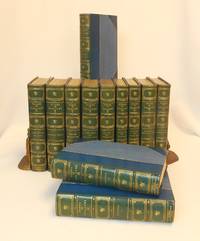
190333330901London and New York: J.M. Dent & Co. and E.P. Dutton & Co 1903. Hardcover. Near fine. Brock C.E. Twelve volumes complete in a half-leather Bayntun binding many illustrations hand-coloured extra-illustrated with 370 extra plates small octavo size approx. 4400 pp. Charles Lamb 1997-1834 is perhaps best remembered today for his "Essays of Elia" and "Tales from Shakespeare" which he co-authored with his sister Mary Lamb to introduce Shakespeare to children. His biographer claimed that Lamb was "the most lovable figure in English literature" n.b. per Wiki. <br /> <br /> Lamb's article in the "Oxford Dictionary of National Biography" is lengthy and sheds light into many corners of the man's mind. My favourite is the penultimate paragraph which sums up his talents and legacy thus: "Lamb's writings were held in highest esteem probably in the fifty years from about 1870 to 1920. The qualities in him that could be seen as whimsy and sentimentality meant that his reputation fared less well during the later professionalization of English literary studies. Later writers wishing to act as Lamb's advocates have looked to the more unsettling and darker notes of his writing detecting in him another artist of Romantic anxiety if not agony. On the other hand Lamb has never been short of readers who respond to the forgiving friendliness of his manner the novelistic vitality of his portraits and the odd combination of the colloquial and the erudite in his prose style." <br /> <br /> This set of Lamb's works is profusely illustrated by Charles Edmund Brock 1870-1938 who provided the artwork for many well-known authors including Jane Austen Oliver Goldsmith Daniel Defoe Jonathan Swift and George Eliot as well as contributing over 100 illustrations to "Punch". His style seems suited to Lamb's output and the many illustrations including chapter head- and tail-pieces bring the text to life with almost all of them being hand-coloured. In addition the set is extra-illustrated wtih 370 extra plates being mostly the various personages both historical and contemporary both real-life and fictional mentioned in the relevant passages. There is one plate by Rowlandson Volume 1 facing p. 232 and one coloured plate by George Cruikshank Volume 3 facing p. 73. <br /> <br /> ___DESCRIPTION: Bound by Bayntun in half-leather over cloth boards the spine compartments ruled in gilt and with gilt lettering "Extra Illustrated 1903" at the tail of the spines top edges gilt marbled endpapers in shades of light pink and blue vintage gift inscription on the flyleaf of the first volume dated Christmas 1916 tissue-guarded frontis in Volume I a hand-coloured bust portrait of Lamb each volume with a different fronti title pages in red and black according to a pencil notation on the verso of the front free endpaper in the first volume there are "350 Coloured / 330 Exra Illustrations"; however by our count there are 370 extra illustrations; bindings are small octavo size 7 5/8" by 4 7/8" the set contains approx. 407 preliminary pp. and 4066 text pp. <br /> <br /> ___CONDITION: Near fine the boards clean straight corners with minimal rubbing strong square text blocks with solid hinges the interiors mostly clean and bright a few pages with light soil and the sole prior owner marking being the Christmas gift inscription noted above; uniform light sunning to the spines a very few exceedingly minor defects to the leather a few extra plates have offsetting to the opposite pages we did note a few very short closed tears to several leaves margins only. Overall a lovely set. <br /> <br /> ___POSTAGE: Please note that this is an extremely large and heavy set and therefore additional postage will apply; please inquire for details. International customers please also note that any taxes duty or tariffs charged by your country will of necessity be your responsibility. <br /> <br /> ___Swan's Fine Books is pleased to be a member of the ABAA ILAB and IOBA and we stand behind every book we sell. Please contact us with any questions you may have we are here to help. J.M. Dent & Co. [and] E.P. Dutton & Co hardcover
2009__0754628426Ashgate Pub Co 2009. Hardcover. New. 3472 pages. 13.39x10.24x7.87 inches. Ashgate Pub Co hardcover
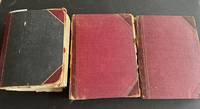
1358Three travel diaries written by Artist Aimee Lamb 2 and her sister Edith Duncan Lamb 1. The two by Aimee measure 8†x 10.5†and the one by Edith measures 7†x 8.5.†All three diaries have very descriptive writing and are filled with photos postcards drawings and ephemera. They talk about seeing the sights taking photographs and sketching.<br /> <br /> Aimee Lamb 1893-1910 was born and died in Boston. She studied art at the Winsor School 1905 - 1910 and the School of Fine Arts in Boston 1913 - 1917 . She also studied under artists Philip Hale and William James.<br /> <br /> Her biography on AskARt includes: <br /> <br /> In the early 1920´s she studied two summers in Dublin N H. with Alexander James and Richard Meryman and two more summers with the artist Charles Woodbury in Maine. In New York she studied under the Portrait painter artist Cecilia Beaux. Although she is better known for her philanthropic contribution to the arts community Lamb's paintings and drawings have been represented in exhibitions with the Boston Institute of Modern Art The Copley Society The Boston Athenaeum and the National Museum of Women in the Arts as well as in a number of private collections.<br /> <br /> Her work is in the MFA in Boston including a portrait of her sister Edith Duncan Lamb.<br /> Edith 1901-1928 was born in Massachusetts and died in Maine after a long illness.<br /> <br /> Diary #1 – Aimee Lamb 1911 – 153 handwritten pages 7 unused with approximately 115 photos 60 postcards and 18 drawings some on the page some tipped in. Other items inside include Grouse feathers playbills clippings etc. The diary starts on July 25th and ends on October 25th. On this trip she visited England and France. On the first day she wrote “My first trip abroad with Aunt Rose 1911.†They started from Boston and arrived in Liverpool on August 7th. The covers are detached and the spine is missing. Some items are detached from the page though it appears that nothing is missing.<br /> A few examples of her writing include:<br /> August 14th Monday Porlock: I got up quite early and went out and took some photographs and sketched a little before breakfast. The sun was rather fad for photographing……We went to the Castle Hotel where we found we could have a beautiful large double room overlooking the sea so we took it. I tad the most magnificent views of great high pinky cliffs. You could not see the horizon as there was a fog but it made the view so soft and lovely. I went sound asleep in the afternoon and Aunt Rose rested. When I woke up she read me from Lorna Doone. It is the most enchanting book I never appreciated it when I first read it but now I have seen the country and I am older and I think it is most charming. After dinner I wrote to Tom and then went to bed.<br /> September 27th: In the morning we took a carriage for the day and started at nine o’clock. We drove first to Tregastel where there were the most wonderful rocks I have ever seen. They looked like queer animals monsters. We stayed there an hour or so walking around on them. I wish we had had more time for it was enchanting. I picked up quantities of lovely yellow shells I found in the sand for Edith. I also took some photographs but they give no idea of the size of the rocks where were gigantic. They were all named but we didn’t know the names. <br /> <br /> Diary #2. Aimee Lamb undated as to year. Starts February 21st on board the SS Adriatic with her mother and they spent time in Italy. I believe the year is 1917 as she says that they leave on Ash Wednesday and that year it was February 21st. There are 9 larger souvenir type of photos over 30 postcards and four small watercolors. There are also some dried flowers in between the pages. <br /> Examples of her entries include:<br /> Friday March 8th Naples to Sorrento: The Hunnewells had accepted our invitation to join us in taking the trip around Sorrento Amalfi etc. We started out bright and early stopping at Parks on our way where we met the Hunnewells. We took the 10 O’clock train for Pompeii. I was perfectly delight with Pompeii. It was so picturesque and paintable. I had an idea that it had only one or two streets but I was much mistaken. It is a large city. We walked for two hours and a half steadily and then didn’t see it all. There were so many interesting houses that we walked until we nearly dropped. I took a good many photographs. We took a carriage on Cook’s ticket and drove to Sorrento. About a two-hour drive. We had brought our lunch with us expecting to eat it at Pompeii but hadn’t had time so we ate it in the carriage. Mana and Louisa sat forwards and Arnold and I sat backwards. We won the drivers heart by offering him a piece of cheese which had fallen at the bottom of the carriage. He was delighted and stuffed it under the seat of the box saying he had had three wives and fifteen children……. The drive to Sorrento was pretty. We found very good rooms in a delightful hotel Victoria over hanging the sea. <br /> Tuesday March 19th Rome: Passed morning in bed very tired. Harriet Post came to lunch but had to go early sorry to say. I read and painted all afternoon while Mama went out with Miss Pine to call on Mr. and Mrs. Millet. <br /> <br /> The third diary is written by Aimee Lamb’s sister Edith Duncan Lamb whose name is listed in a passenger list headed to Europe in June 1923 and headed back to New York that September. 243 pages used with 55 pages unused. It is chock full of about 160 postcards 75 photos one watercolor theatre programs ticket stubs and other assorted ephemera. She traveled around England and Scotland. Her handwriting takes a little more time to get used to but it is legible. Some examples include:<br /> Winchester July 22nd: In the morning I was told that Master woods would go with me the cathedral. So off we started. He is a most charming child of twelve. The music was lovely with beautiful soprano notes. We sat in the back as the choir was so full. It is hard to hear the service here but the singing was more lovely…… <br /> Edinburgh Sunday August 25th: This morning we went to the St. Giles to church. Edinburgh was very quiet indeed a change from the jostling mob of Saturday night. St. Giles was most impressive. The soft light and the stone pillars and wall that looks made of square stones rightly put together……The service was one of the most impressive I have ever been to. The first lesson was about the friendship of Saul & Jonathan the second chapter of St. John……In the afternoon I have been writing to catch up with my diary. unknown
17971896London: Printed by N. Biggs for J. Cottle Bristol and Messrs. Robinsons 1797. Second edition. Rare presentation copy of the 1797 second edition much revised by Coleridge and greatly expanded with new poems by both authors. Small octavo modern quarter red morocco raised bands marbled boards and end-papers top edge gilt. Early presentation note from Charles Lamb bound in before the title page: "To my dear friend William Hone Charles Lamb Oct. 1811." <br/><br/>Hone was a literary man and something of an early entrepreneur. One venture that ultimately ended in failure was his stint as an antiquarian bookseller. His friendship with Charles Lamb is well-documented.<br/><br/>The first edition and Coleridge's first book of poems published the previous year contained Lamb's first published verses. The second edition was published after Coleridge extensively revised his contribution and added a new Preface. Lamb added an additional 10 poems to the second edition including "Childhood" in addition to the four that were published in the first edition. <br/><br/>Two bookplates on the front paste-down front end-paper cracking. Inscription a bit faded but easily legible. A lovely copy with an excellent association. This copy previously sold by Bauman Rare Books. Printed by N. Biggs, for J. Cottle, Bristol, and Messrs. Robinsons unknown books
171668226Second Much Expanded Edition With Over 500 New Recipes and Forty Engraved Plates LAMB Patrick. Royal-cookery: or the Compleat Court-Cook. Containing the choicest receipts in all the several branches of cookery viz. for making of soops bisques olioÃs terrines surtouts puptons ragoos forcÃd-meats sauces pattys pies tarts tansies cakes puddings jellies &c. as likewise forty plates curiously engraven on copper of the magnificent entertainments at coronations and instalments; of balls weddings &c. at court; as likewise of city-feasts. To which are added bills of fare for every month in the year. By Patrick Lamb Esq; near fifty years master-cook to their late Majesties King Charles II. King James II. King William and Queen Mary and Queen Anne. The Second Edition with the Addition of several new cuts and above five hundred new receipts all disposed alphabetically. London: Printed for J. Nutt and A. Roper 1716. Second much expanded edition with "several new cuts and above five Hundred new receipts." Octavo 7 5/8 x 4 1/2 inches; 195 x 115 mm 8 302 10 pp. Five of the final leaves comprise ÃA bill of fare for every season in the year.Ã Complete with forty engraved plates thirty-three of which are folding. Plates are not bound in numerical order but all are present. This edition is mentioned in Bitting but not in the collection. Contemporary paneled calf rebacked preserving original spine. Board edges gilt. Newer red morocco spine label lettered in gilt. Some rubbing to boards and corners a bit bumped. Previous owner's armorial bookplate on front pastedown. Inner hinges cracked but firm. A bit of dampstaining and a few very minor marginal wormholes. Small tear to crease of plate "21" a paper flaw to plate " 9" and plate "11' trimmed close mildly affecting engraving. Overall text and plates generally very clean. A very good copy. "In August 1677 Lamb was appointed as master cook to the queen consort held in tandem with the office of sergeant of his majesty's pastry in ordinary to which he was elevated in November 1677. Finally in February 1683 Lamb attained the status of master cook to the monarch. He was reappointed to this post under the successive household regulations of James II William and Mary and Anne and was removed from it only by death. His services as a royal cook encompassed the provision of prepared dishes for daily and extraordinary consumption by the monarch and his guests at table.Lamb's culinary skills were most effectively demonstrated in extraordinary events and his claims for large expenditures on such occasions as the Westminster visit of the Venetian ambassadors in December 1685 testify to the splendour of these.These and other junkets are evoked in the text of Royal Cookery published posthumously in London under Lamb's name by John Morphew and Abel Roper in 1710 and subsequently reprinted in 1716 1726 and 1731. The text incorporated recipes for elaborate dishes alongside engravings of lavish table layouts for occasions such as royal suppers. Such details suggest that the text was drawn from Lamb's papers rather than being speculatively published under his name as some contemporaries contended." Oxford DNB. Bitting Pg.271. ESTC T91553. HBS 68226. $2500 Printed for J. Nutt and A. Roper hardcover books
1833100377London: Edward Moxon 1835; 1833. Elia: "a new edition"; Last Essays: first edition. 2 vols. 8vo. Paper-covered boards uncut hand-lettered on spines; corners bumped a few repairs to bindings in custom red morocco-backed clamshell box. These two volumes were owned by John Matthew Gutch 1776-1861 Lamb's contemporary schoolfellow and lifelong friend and proprietor of "Felix Farley's Bristol Journal" in which some Lamb writing appeared. In Elia Gutch has transcribed on the verso of the title-page two poems each titled "To Elia" in praise of Lamb by Bernard Barton 1784-1849 known as the Quaker Poet and chiefly remembered as Lamb's friend. In Last Essays Gutch has annotated the Preface and Contents in pencil; laid in are four pages of his penciled notes "Notices of Elia in London Magazine" consisting of volume and page references to various works "Christ Hospital" "The Two Races of Men" "A Character of the Late Elia" etc. A fine association.PROVENANCE: John Matthew Gutch his annotations; Robert S Pirie bookplateREFERENCES: Roff 185 Edward Moxon hardcover
1900ST14309Boston: R. H. Hinckley Company ca. 1900. Edmonton Edition. No. 56 OF 100 COPIES on Japanese vellum. 240 x 150 mm. 9 3/8 x 5 7/8". 12 volumes. <br/> HANDSOME DARK PURPLE CRUSHED MOROCCO GILT triple gilt-ruled border with sprays of flowers in each corner and along the sides raised bands compartments with gilt lettering and tooling top edge gilt RED MOROCCO DOUBLURES bordered in purple border featuring several gilt rules and scrolling gilt tools in panel corners red watered silk endpapers. With portrait frontispieces and numerous gravure plates. Limitation statement of first volume with the initials of the printer D. B. Updike of the Merrymount Press; flyleaf of each volume with morocco ex-libris of Francis Kettaneh. Extremities with the occasional tiny nick spines slightly sunned covers with a few negligible scratches a few pages with light thumbing in the margins but all of these blemishes trivial. A FINE SET INSIDE AND OUT.<br/> <br/> This finely bound finely printed and strictly limited set includes the biography prose letters essays and poetry of "the prince of English essayists." According to Day Charles Lamb contributed to the essay form by concentrating on feeling rather than thought by projecting a fuller sense of self into the work and by imbuing his text with a poetic or lyrical quality. Lamb was also an accomplished poet writing in both rhyming and blank verse as well as a friend to many of the leading literary figures of the Romantic period--his correspondents include Wordsworth Southey Hazlitt and Coleridge whom he had known since childhood. Lamb's letters by turns witty and meditative reveal a life of intense reading and writing at a time when British literature was undergoing a radical transformation. Charles Lamb 1775-1834 was educated at Christ's Hospital and at 17 joined the East India House where he worked from 1792-1825. In 1796 Lamb's sister Mary stabbed and killed their mother with scissors in a fit of insanity. Charles took on her care as well as serving as sole support for a dying aunt and a prematurely senile father. Nonetheless Lamb and his sister were devoted to one another and lived long and productive lives publishing together the wildly popular "Tales from Shakespeare" 1807 and "Mrs. Leicester's School" 1809 both of which are included here. Though unsigned the bindings are extremely attractive and fittingly luxurious for the limited-edition contents--the thick gilt tooling luxurious doublures and red silk endpapers housing tactilely pleasing Japanese vellum make this set a delight both to have and to hold. R. H. Hinckley Company unknown
196327791Modern Library. As New. 1963. Hardcover. FREE UPGRADE to Courier/Priority Shipping Upon Request - IN STOCK AND IMMEDIATELY AVAILABLE FOR SHIPMENT - Modern Library hardcover
1909194748London J.M. Dent & Company 1909. 1909. Thick 4to. 13 tipped-on color plates including frontispiece; 36 b/w vignettes and designs. 3/4 gilt stamped red morocco with gilt decorative devices on the spine t.e.g. uncut. Fine and fresh. #249/750 large paper copies signed by Rackham. With publisher’s slip stating that the limited edition contains an extra plate at page 16 that does not appear in the trade edition. Signed by Authors. Hardcover. London, J.M. Dent & Company, 1909. hardcover
1797317524Bristol: Printed by N. Biggs For J. Cottle . and Messrs. Robinson London 1797. Second edition expanded. xx 278 pp. lacking the rare errata slip. 1 vols. 12mo. Original grey boards untrimmed. Finely rebacked to style old wear and soiling to board edges. Red calf drop box with contrasting labels. Second edition expanded. xx 278 pp. lacking the rare errata slip. 1 vols. 12mo. IN BOARDS UNCUT. After the favorable reception of the first edition of 1796 the publisher Cottle requested a second to which Coleridge contributed several new pieces including "The Ode to the Departing Year" and a new Preface in which he defended himself from charges of obscurity. This edition also includes twelve new poems by Charles Lamb - whose name appears on the title-page for the first time - and a number of poems by Charles Lloyd.<br/><br/>Nice copy in boards with a later Coleridge family connection. ESTC N11843; Haney 8; Tinker 679; Wise Coleridge 11; Thomson VI. For binding cf. Bennett p. 117 fig. 4.40. Provenance:Â Robert Porter bookplate with blindstamp: Montpelier Cottage Beeston Notts; The Beeston Club ink inscription on front pastedown: "This book is given by the Beeston Club to Mr. Dominick Daly in exchange for a modern and complete edition of Coleridge's Works . 1891"; Dominick Daly inscription on front free endpaper "To S.D. Coleridge Esq. with compliments of D.D. 24/1/91"; William H. Painter book label on front pastedown Printed by N. Biggs, For J. Cottle ... and Messrs. Robinson, London unknown books