15 988 résultats
27297Couverture rigide. Bon/1867. in-18. Paris Lemer éditeur 1867 in-18 36 pages et 1 frontispice broché couverture blanche imprimée en couleurs Première édition. Le Parnassiculet est une parodie du Parnasse contemporain recueil de poèmes paru en trois livraisons. La première date de 1866. Le mouvement parnassien naquit officiellement lors de la parution de la première brochure. Il rassemblait les poètes qui s'opposaient à la poésie romantique et privilégiaient la beauté du texte et le lyrisme impersonnel. Sur le frontispice ""une très-étrange eau-forte"" qui représente une femme nue soûle d'opium on lit cette inscription doublement ironique écrite en grec : La Muse Ailouriki. Rousseurs. unknown
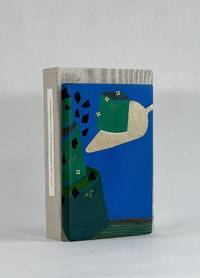
9573Monterey KY: Larkspur Press 2006. Full Leather. Fine binding. Octavo. 4 36 4 pp. Limited edition number 9 of 75 copies on Somerset Book paper there was also an edition of 500 regular copies. Signed by Wendell Berry at the colophon; additionally noted by Fox the year it was bound. In full goatskin binding with a series of leather onlays tooled in gold and blind all creating a fantastic pictorial binding. Accompanying the binding is a fine paper portfolio with publisher's prospectuses samples and associated material; additionally some templates related to Fox's binding. All housed a custom clamshell by Fox. <br /> <br /> The text offers a lens into the 19th century view of how a native of region assesses the value of the natural wonders. Berry's commentary at the end of Allen's text brings the troubling viewpoint into a modern context: "The chapter is built upon a division of mind which in our time has become terrifying but which Allen believed to be no more than a simple equation. On the one hand in a sentimentally romantic fashion he was sensitive to the natural life of the area which was then still intact. And on the other hand he seems eager for the destruction of this virgin bounty that so inspired him. I say 'the destruction' and not 'the use' for his language is patently that of an exploiter intent upon 'conquering' nature." A sobering volume that will most surely always remain relevant. Larkspur Press unknown
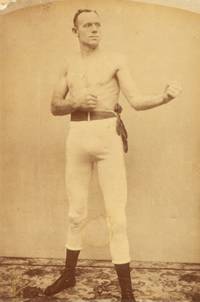
27343Albumen print photograph cabinet card format 162 x 106 mm mount; the print is embossed at lower left 'Copyright 1893 Richard K. Fox'; removed from an old frame the print and mount have suffered some surface loss around the edges particularly at the bottom margin where Fox's imprint with his Franklin Square New York address has been partially lost; peripheral damage notwithstanding the albumen print remains a strong image with excellent clarity and aside from a small pale water stain around the boxer's knees is in good condition; verso has remnants of old paper backing with early pencilled inscription 'B. Simmons' sic. A rare photograph of Bob Fitzsimmons 1863–1917 generally acknowledged as one of the greatest boxers in the history of the sport. Fitzsimmons was born in England but emigrated with his family to New Zealand as a young boy and spent his teenage years in Timaru. In 1883 at the age of 20 he moved to Sydney New South Wales where he learned his craft and fought his first 27 fights over seven years before heading to America in 1890. During his incredible 24-year career in the States Fitzsimmons enjoyed immense success: he knocked out Jack Dempsey to win the world middleweight championship and later won the world heavyweight title by knocking out Gentleman Jim Corbett. This cabinet card was published in New York in 1893 by Irish-born media magnate Richard Kyle Fox 1846-1922 owner of the sporting publication The Police Gazette. Fox was a boxing fanatic and generous patron of the sport. Trove locates only three photographs of Fitzsimmons all held in the National Library of Australia. From ADB: 'Robert Fitzsimmons 1863-1917 professional boxer and sometime actor was born on 26 May 1863 at Helston Cornwall England twelfth child of James Fitzsimmons policeman but formerly an Irish soldier and his wife Jane née Strongman of Truro. The Fitzsimmons family migrated to Timaru New Zealand in 1872 where James became a veterinary shoeing-smith. Robert and an older brother became blacksmiths. Bob Fitzsimmons was boxing with bare knuckles as an amateur at 15. He first drew attention by knocking out four opponents in one afternoon in an 1880 Timaru tournament staged by Jem Mace the visiting British ring hero. In 1883 he went to Sydney seeking the tutelage of Larry Foley. He enjoyed some success there as a pugilist but mainly supported himself as a blacksmith. On 14 October 1885 he married an English girl Louisa Johns; of their three children a son survived. In eight years in Sydney Fitzsimmons boxed 27 times for 16 wins 4 losses and 7 no-decision bouts. On 12 February 1890 he was knocked out in four rounds by Jim Hall contesting the Australian middleweight championship but had knocked out Hall in one round two days earlier. There is some suggestion that these two results were prearranged. Leaving Sydney for San Francisco United States of America on 16 April 1890 Fitzsimmons won three fights within two months. On 14 January next year at New Orleans he knocked out Jack Dempsey 'The Nonpareil' in fourteen rounds to win the world middleweight championship. His greatest success came on 17 March 1897 at Carson City Nevada when he knocked out James Gentleman Jim Corbett in the fourteenth round with his 'solar plexus punch' to gain the heavyweight championship of the world. Two bouts and two years later he lost this title by knockout to James J. Jeffries and lost a return bout in 1902. A twenty rounds points decision over George Gardner at San Francisco on 25 November 1903 won him the newly recognized world light heavyweight championship which he lost to Jack O'Brien at Philadelphia in 1905. His last championship contest was for the Australian heavyweight title on 27 December 1909 in Sydney where he was knocked out by Bill Lang. He had a further two no-decision bouts in Pennsylvania in 1914 aged 50. In a professional career extending from 1881 to 1914 Fitzsimmons had 81 bouts for 53 wins 11 losses 1 draw 12 no-decisions and 4 exhibitions. His feat winning world titles in three divisions has been equalled only once by Henry Armstrong some forty years later. While powerful in the shoulders and arms Fitzsimmons weighed only 160 lbs. 72 kg was spindly-legged pale and freckled and balding—he was sometimes known as 'Ruby Robert' or the 'Freckled Freak'. In 1893 Fitzsimmons was divorced from his wife and on 24 July at San Francisco married his manager's sister Rose Julian an Australian acrobat who bore him two sons and a daughter. On Rose's death in 1903 he married on 24 July a young actress Julia May Gifford also at San Francisco. They were divorced in 1915 and on 16 March at Newark New Jersey Fitzsimmons wed another actress Temo Ziller of Portland. Like most heavyweight champions of his time Fitzsimmons capitalized on his fame and appeared in several stage plays. His book Physical Culture and Self-Defence Philadelphia was first published in 1901. In the final months of his life he became an evangelist. He died of pneumonia at Chicago on 22 October 1917. Born in Cornwall raised in New Zealand but serving his boxing apprenticeship in Sydney Fitzsimmons is claimed as a British New Zealand or even Australian champion. However before winning a world title he became an American citizen.' unknown
185415934np 1854. Stitched caption title as issued. 13 3 blanks pp. Untrimmed and partly uncut foxed Good. <br /> <br /> The heirs of Caleb Lucas of Lincoln County claim that the executor of his estate Fielding Kenley looted the estate and deprived "his poor and needy relatives" of their inheritance. The brief demonstrates that Kenley forged and falsified documents that appeared to show Lucas's indebtedness to Kenley who then fraudulently distributed estate funds to himself. Not in the standard references. unknown
38404London: Printed for J. Debrett 1784. First edition 8vo 4 vii 1 160pp. with half-title disbound. London: Printed for J. Debrett, 1784 unknown
38381London: Printed for J. Debrett 1785. New edition 8vo 4 104pp. with half-title disbound. London: Printed for J. Debrett, 1785 unknown
38393London: Printed for S. Hooper and A. Morley 1758. Third edition 8vo 44pp. without half-title disbound. General Officers appointed to inquire into causes of failure of the Rochefort Expedition of 1757. London: Printed for S. Hooper and A. Morley, 1758 unknown
31763London: Sold by Rowland Hunter and David Eaton 1821. Second edition 26pp. title-page printed within a single line black mourning border disbound. London: Sold by Rowland Hunter and David Eaton, 1821 unknown
63-1771Hollywood CA: Fox Film Corporation 1932. Printed Signed 9" x 7" Black & White Photograph. Very Good with pin holes at corners. Marian Nixon was a silent film star most known for her role opposite Lon Chaney in the 1925 movie The Phantom Of The Opera. The autograph is printed not original. Hollywood, CA: [Fox Film Corporation], [1932]. unknown
68-8615London UK: Fox Photos 1965. B&W Photograph. 30.5 x 25 cm. Very Good with creases. Provenance: From the collection of British army veteran and noted Churchillian Major Alan Taylor-Smith 1928-2019 of Westerham Kent. [London, UK: Fox Photos, 1965?] unknown
68-8614London UK: Fox Photos 1942. B&W Photograph. 30.5 x 25 cm. Very Good. Provenance: From the collection of British army veteran and noted Churchillian Major Alan Taylor-Smith 1928-2019 of Westerham Kent. [London, UK: Fox Photos, 1942?] unknown
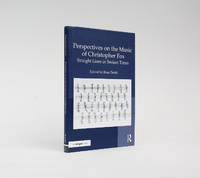
23254London: Routledge. 2017. First edition first printing. First edition first printing. Original illustrated paper covered boards. Issued without dustwrapper. A very near fine copy the binding square and firm the contents clean throughout. Bumped to the upper spine and with a small c. 1 cm scratch to the fore edge of the front panel. "Christopher Fox has emerged as one of the most fascinating composers of the post-war generation. His spirit of experimentalism pervades an oeuvre in which he has blithely created his own version of a range of contemporary musical practices. In his work many of the major expressions of European cultural activity - Darmstadt Fluxus spectralism postminimalism and more - are assimilated to produce a voice which is uniquely resonant and multifaceted. In this the first major study of his work musicologists composers thinkers and practitioners including Claudia Molitor Roger Heaton Philip Thomas and Fox himself scrutinize aspects of Christopher Fox's music each exploring elements that relate to their own distinct areas of practice tracing Fox's compositional trajectory and situating it within post-war contemporary European music practice. Above all this book addresses the question: How can one person dip his fingers into so many paint pots and yet retain a coherent compositional vision The range of Fox's musical concerns make his work of interest to anyone who wants to study the development of so-called new music spanning the latter twentieth century into the twenty first century" from the cover. Further details and images for any of the items listed are available on request. Lucius Books welcomes direct contact with our customers. London: Routledge. 2017 hardcover
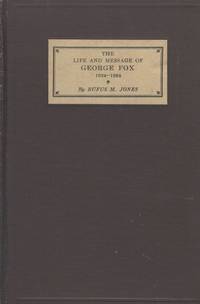
192423888AB1924. First edition. New York Macmillan 1924. 13 x 20 cm. 31 pages. Original Hardcover. Very good condition with only minor signs of usage on the cover. George Fox July 1624 13 January 1691 was an English Dissenter and a founder of the Religious Society of Friends commonly known as the Quakers or Friends. The son of a weaver from rural England Fox lived in a time of great social upheaval and war. He rebelled against the religious and political authorities by proposing an unusual and uncompromising approach to the Christian faith. He travelled throughout Britain as a dissenting preacher for which he was often persecuted by the authorities who disapproved of his beliefs. Fox married Margaret Fell the widow of one of his wealthier supporters; she was a leading Friend. His ministry expanded and he undertook tours of North America and the Low Countries between which he was imprisoned for over a year. He spent the final decade of his life working in London to organize the expanding Quaker movement. Though his movement attracted disdain from some others such as William Penn and Oliver Cromwell viewed Fox with respect. His journal first published after his death is known even among non-Quakers for its vivid account of his personal journey. Wikipedia hardcover
80491FOX William F. New York Monuments Commission for the Battlefields of Gettysburg and Chattanooga. Albany 1900-2. Large 4tos. Three vols. Profusely illus. with photographic views. five large folding maps. A very good set in pictorial cloth. unknown
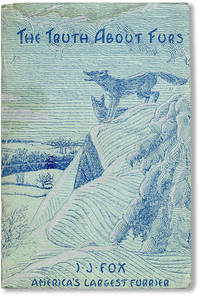
193442812Boston: I.J. Fox 1934. First Edition. 12mo 16cm.; publisher's blue pictorial card wrappers printed in blue and silver foil yapp edges; 84pp.; text illus. Some minor wear to wrapper extremities faint dampstain along top edge of upper cover not affecting textblock else Very Good and sound. An uncommon title on the fur trade full of illustrations of adorable fur-bearing animals issued by "America's Largest Furrier." FIT only in OCLC as of October 2018. I.J. Fox unknown
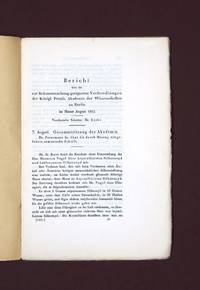
18623910337Berlin: Buchdruckerei der Königl. Akademie der Wissenschaften August 1862. Octavo 2 plates pp. numbered 545-577; an excellent copy in the original printed buff paper wrappers. <p><p>Uncommon copy of the "monthly journal" of the Prussian Academy of Sciences in Berlin for August 1862 with the first notice of the Australian Little Red Flying Fox Pteropus scapulatus Peters.</p> <p>The Academy was founded in 1700 but was revolutionised by Frederick the Great who helped establish it as one of the great centres for scientific research. Among the interesting and diverse articles printed here is one by H.W. Peters on the Little Red Flying Fox the smallest of its species and endemic from Shark Bay in Western Australia right around the top of Australia and down the east coast to Victoria. This article is the first scientific notice of the species based on a specimen gathered by Peters personally in Cape York. Peters did extensive fieldwork on the Australian mainland and any number of species are named after him.</p> <p>Despite its Australian content holdings of this journal in Australia are effectively non-existent.</p> </p> . Buchdruckerei der Königl. Akademie der Wissenschaften, August unknown
1860425071Boston: Henry Hoyt 1860. Hardcover. Very Good. First eidtion. 12mo. 167pp. Frontispiece illustration. Publisher's brown diced in blind spine titled and decorated in gilt. Contemporary ownership signature of Sidney Breese and later gift inscription from Breese slight erosion to the cloth on the spine else a sharp very good or better copy. A story for a juvenile audience. OCLC locates four copies. Henry Hoyt hardcover
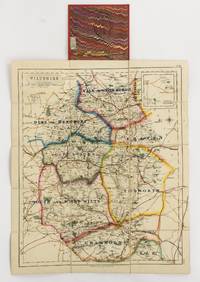
1850116393London: Longmans & Co 1850. First Edition. Hardcover. Very Good. London Longmans & Co. circa 1850s. A lithographed map approximately 400 × 340 mm extensively hand-coloured in outline dissected into 15 panels and mounted on linen as issued folded and mounted on the inside rear surface of cloth boards external dimensions 123 × 100 mm. Red pebble-grain cloth stamped in blind and lettered in gilt; marbled paper on the exposed pastedown and cloth panel of the folded map; ownership stamp on the pastedown and one cloth panel; in excellent condition. The first issue of this map appeared in 'Hobson's Fox-Hunting Atlas' which comprised county maps from the 'British Atlas' of J. & C. Walker first published in 1837. This version is a lithographic transfer taken from the original steel plate engraved by J. & C. Walker overprinted with 'Places of the meeting of foxhounds' and boundaries of the various hunts. These include the Vale of White Horse the Craven the Tiedworth and the Duke of Beaufort. 'J. & C. Walker' appears under the title and 'No. 38' is printed in two margins. Longmans & Co hardcover
1803D19589London: Darton and Harvey 1803. Hardcover. Near Fine. 12 mo. Revised and Augmented by Thomas Bradley M. D. Ownership stamps of another M.D. - one J. Unthank. Contemporary calf. A nice charming copy with modest wear only. <br/><br/> Darton and Harvey hardcover
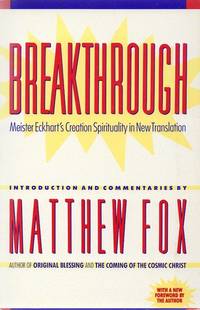
19912561BB1991. New York Doubleday Publishing 1991. 135 x 205 cm. XX 579 pages. Original Softcover. Good condition with minor signs of external wear. From the library of philosopher Graham Parkes. With his markings and annotations in text. Contains among others: Meister Eckhart's Influence; The Purpose and Nature of This Book; Eckhart's Times and Our Own; Eckhart's Life; Theological Influences on Eckhart's Spirituality; Principle Themes in Eckhart's Spirituality; How to Read This Book etc. paperback
193955010New York: E.P. Dutton & Co. Inc. 1939. Small 4to. 86 pp. Illustrated title in pink & black numerous plates and text illustrations throughout many printed in combination of pink & black. Brown publisher’s cloth black lettering front cover & spine illustrated endpapers w/ d.j. cover art by Downer very light age toning and dustsoiling 1 closed tear at spine NF/VG copy. First edition stated of this beloved and charming book based on the childhood of Michigan pioneer Amelia Kaden. The nicely illustrated story relates the tale of the Kadens arriving in Petoskey MI and then developing and claiming their homestead near what today is Chandler near Boyne Falls. E.P. Dutton & Co., Inc., hardcover
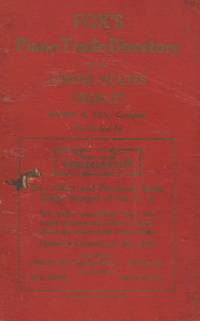
1916List1507Chicago and New York: Ralph E. Fox 1916. First Edition. 8vo wraps 360 pp. Some wear mark to front wrap bright contents very good overall. Very Good. Ralph E. Fox published this directory of the American music trade which gives a detailed overview of the American instrument trade in the early 20th century from roughly 1911-1929. The directory lists piano dealers in each state and gives precise information on all piano factories and their outputs financials and prices. This is a relatively early issue. In very good condition with very light wear. Ralph E. Fox unknown
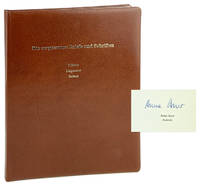
199729811Wien Vienna: PhGW / Photographische Gesellschaft gegrundet in Wien 1861 zusammengestellt aus dem Archiv der Hoheren Graphischen Bundes- Lehr- und Versuchsanstalt Wien XIV 1997. Near Fine. Wien Vienna: PhGW / Photographische Gesellschaft gegrundet in Wien 1861 zusammengestellt aus dem Archiv der Hoheren Graphischen Bundes- Lehr- und Versuchsanstalt Wien XIV 1997. Limited Edition of 400 copies signed by Auer Wunderer and Barylli-Fayer though this copy unnumbered. Octavo. 94 pp. Facsimile reproductions. Text in German. Bound in brown leatherette stamped in gilt; names of three subjects written in manuscript along spine; yellow ribbon. No dust jacket presumably as issued. Touch of rubbing to extremities. Binding sound and pages unmarked. A Near Fine copy of a scarce title with no copies in retail at time of this writing. PhGW / Photographische Gesellschaft gegrundet in Wien 1861 zusammengestellt aus dem Archiv der Hoheren Graphischen Bundes-, Lehr unknown
2391519 April 1951. On the green letterhead ‘The Mark of a Good Production’ of ‘ALWYN D. FOX PRODUCTION AND MANAGEMENT’ 38 Sutherland Street London SW1. See Michael Caine’s affectionate account of Fox in ‘The Elephant to Hollywood’ 2010 from which the anecdote at the end of this entry is taken. 1p 4to. Addressed to ‘Dear Mr. Hindin’ signed ‘Alwyn Fox’ and headed ‘Pantomime - “Dameâ€.’ While the twenty lines of text are clear and complete the item is not in the best of condition on aged and creased on discoloured paper with closed tears to edges. The letter begins: ‘I am at present free for Dame for coming season pants. and would be glad to negotiate with you. You contacted me last season but I had just fixed if you recall.’ He explains that the previous year he ‘did “Riding Hood†for Barrie Baldrick at New Cross Empire’ and gives details of four similar engagements in recent years including ‘ “Cinders Emp. Middlebro’ - Jimmie James’. He has a ‘very complete and elaborate wardrobe for any subject and all own props’ and ‘Can produce/manage if required. Terms £25.’ He is enclosing ‘last years folder and some photos’ not present. After becoming a movie star Caine lost touch with Fox ‘although years later when I was in Beverly Hills I got a letter from a social worker in Hammersmith London. He said he had an old man called Alwyn D. Fox lying destitute in one of his wards. Mr Fox he said was claiming he had discovered Michael Caine. In all likelihood it was fantasy but if there was any truth in it would I mind writing Mr Fox a letter and perhaps sending a small amount of money to make his last few weeks a bit easier I wrote at once to confirm Alwyn’s story and enclosed a cheque for five thousand dollars. Two weeks later I had another letter from the social worker returning the cheque. Alwyn had been delighted to get my letter he wrote and had spent the day he received it showing it to everyone on the ward. He had died later that night.’ 19 April 1951. On the green letterhead (‘The Mark of a Good Production’) of ‘ALWYN D. FOX | PRODUCTION AND MANAGEMENT’, unknown
17016399London: T. Ilive 1701. Early English editions. Bound together with:<br /> <br /> The Most Pleasant and Delightful History of Reynard the Fox. The Second Part. Containing Much Matter of Pleasure and Content. Written For the Delight of young Men Pleasure of the Aged and Profit of all. To which is added many Excellent Morals. London: Printed by A.M. and R.R. for Edward Brewster 1681.<br /> <br /> And:<br /> <br /> The Shifts of Reynardine The Son of Reynard the Fox Or a Pleasant History of His Life and Death. Full of Variety &c. And may fitly be applied to the Late Times. Now Published for the Reformation of Mens Manners. London: Printed by T.J. for Edward Brewster and Thomas Passenger 1684.<br /> <br /> Three parts in one small quarto volume 7 5/16 x 5 9/16 inches; 186 x 141 mm. 156 2 table of contents 2 publisher's advertisements; 111 1 publisher's advertisements; 8 160 pp. Mostly black letter with titles and side notes in roman letter. Sixty-two woodcuts in the first part printed from thirty-nine blocks and fifteen woodcuts in the second part five repeated all repeats from the first part. Most cuts signed "E.B." Edward Brewster. Woodcut on C1 recto Part I printed upside down. Some browning occasional light damp staining and soiling. Part I with tiny puncture marks in the lower blank margin through gathering I just touching one letter in the imprint on the title-page six small holes in I3 and one tiny hole in I4 causing loss of a couple of letters. Part III with paper flaw in the upper blank corner of A3 and A4 tiny tear 1/4 inch in the lower blank margin of F4 and paper flaw in the lower blank corner of I2 none affecting text. Contemporary sprinkled sheep. Covers ruled and decoratively tooled in blind spine decoratively tooled in gilt in compartments with two red morocco gilt lettering labels. Some expert restoration to joints and corners. Armorial bookplate of Gloucester on front free endpaper. Bookplate of Hugh Cecil Lowther 5th Earl of Lonsdale 1857-1944 on front pastedown his sale 12 July 1937 lot 445. An excellent copy. Housed in a felt-lined quarter brown morocco clamshell case spine with five raised bands decoratively tooled and lettered in gilt in compartments.<br /> <br /> Reynard the Fox "hero of several medieval European cycles of versified animal tales that satirize contemporary human society. Though Reynard is sly amoral cowardly and self-seeking he is still a sympathetic hero whose cunning is a necessity for survival. He symbolizes the triumph of craft over brute strength usually personified by Isengrim the greedy and dull-witted wolf. . The main literary tradition of Reynard the Fox descends from the extant French 'branches' of the Roman de Renart about 30 in number nearly 40000 lines of verse. The facetious portrayal of rustic life the camel as a papal legate speaking broken French the animals riding on horses and recounting elaborate dreams all suggest the atmosphere of 13th-century France" Merriam-Webster's Encyclopedia of Literature. There is some variation in chapter number within the early editions: From "Caxton's first edition 1481 to Thomas Gaultier's only edition 1550 the story is divided into 43 chapters" while the anonymous edition 1560-1585 has 58 chapters Varty. By the 17th century when the text is titled The Most Delectable History of Reynard the Fox it appears with only 25 chapters and maintains its image cycle. Early 17th century editions also maintained this "picture cycle" through Edward Brewster's 1662 edition but at this point the Wynkyn de Worde blocks were extremely worn and new set was created Varty. Forty images were used for his second edition 1671 and all contain his initials EB. "He published further illustrated editions in 1676 1681 1694 and 1701. in 1672 he grafted new life onto the old story with A Continuation Or Second Part of the Most Pleasant and Delightful History of Reynard the Fox" Varty for which he eventually created an additional 15 illustrations. In 1684 he would produce an additional sequel following the adventures of Reynard's son Reynardine. <br /> <br /> Brunet IV cols. 1228-1229. Lowndes p. 2076. Varty Appendix Three: "A Short-Title List of All Extant Illustrated Histories of Reynard the Fox from Wynkyn de Worde c. 1495 to A. Soulby c. 1800 which are kept in United Kingdom libraries based on H. Menke Bibliotheca Reinardiana" 24 18 and 21. Wing S3512 Part II and S3436 Part III. T. Ilive unknown