Par M le Comte de BuffonBiblio.com
338 résultats
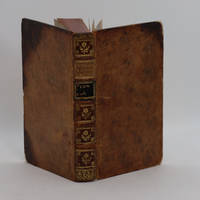
1774FB640 /6A<p>Full leather binding black title plate. Gilt floral design on the spine. The <strong><em>Histoire Naturelle générale et particulière avec la description du Cabinet du Roi</em></strong> English: <em>Natural History General and Particular with a Description of the King's Cabinet</em> is an encyclopaedic collection of 36 large quarto volumes written between 1749–1804 initially by the Comte de Buffon and continued in eight more volumes after his death by his colleagues led by Bernard Germain de Lacépède. The books cover what was known of the "natural sciences" at the time including what would now be called material science physics chemistry and technology as well as the natural history of animals. <strong>Georges-Louis Leclerc Comte de Buffon</strong> 7 September 1707 – 16 April 1788 was a French naturalist mathematician cosmologist and encyclopédiste. His works influenced the next two generations of naturalists including two prominent French scientists Jean-Baptiste Lamarck and Georges Cuvier. Buffon published thirty-six quarto volumes of his <em>Histoire Naturelle</em> during his lifetime with additional volumes based on his notes and further research being published in the two decades following his death. Ernst Mayr wrote that "Truly Buffon was the father of all thought in natural history in the second half of the 18th century". Credited with being one of the first naturalists to recognize ecological succession he was later forced by the theology committee at the University of Paris to recant his theories about geological history and animal evolution because they contradicted the Biblical narrative of Creation. Buffon held the position of <em>intendant</em> director at the Jardin du Roi now called the Jardin des Plantes. Buffon's <em>Histoire naturelle générale et particulière</em> 1749–1788: in 36 volumes; an additional volume based on his notes appeared in 1789 was originally intended to cover all three "kingdoms" of nature but the <em>Histoire naturelle</em> ended up being limited to the animal and mineral kingdoms and the animals covered were only the birds and quadrupeds. "Written in a brilliant style this work was read . by every educated person in Europe". Those who assisted him in the production of this great work included Louis-Jean-Marie Daubenton Philibert Guéneau de Montbeillard and Gabriel-Léopold Bexon along with numerous artists. Buffon's <em>Histoire naturelle</em> was translated into many different languages making him one of the most widely read authors of the day a rival to Montesquieu Rousseau and Voltaire. In the opening volumes of the <em>Histoire naturelle</em> Buffon questioned the usefulness of mathematics criticized Carl Linnaeus's taxonomical approach to natural history outlined a history of the Earth with little relation to the Biblical account and proposed a theory of reproduction that ran counter to the prevailing theory of pre-existence. The early volumes were condemned by the Faculty of Theology at the Sorbonne. Buffon published a retraction but he continued publishing the offending volumes without any change. In the course of his examination of the animal world Buffon noted that despite similar environments different regions have distinct plants and animals a concept later known as Buffon's Law. This is considered to be the first principle of biogeography. He made the suggestion that species may have both "improved" and "degenerated" after dispersing from a center of creation. In volume 14 he argued that all the world's quadrupeds had developed from an original set of just thirty-eight quadrupeds. On this basis he is sometimes considered a "transformist" and a precursor of Darwin. He also asserted that climate change may have facilitated the worldwide spread of species from their centres of origin. Still interpreting his ideas on the subject is not simple for he returned to topics many times in the course of his work. Buffon considered the similarities between humans and apes but ultimately rejected the possibility of a common descent. He debated with James Burnett Lord Monboddo on the relationship of the primates to man Monboddo insisting against Buffon on a close relationship. At one point Buffon propounded a theory that nature in the New World was inferior to that of Eurasia. He argued that the Americas were lacking in large and powerful creatures and that even the people were less virile than their European counterparts. He ascribed this inferiority to the marsh odours and dense forests of the American continent. These remarks so incensed Thomas Jefferson that he dispatched twenty soldiers to the New Hampshire woods to find a bull moose for Buffon as proof of the "stature and majesty of American quadrupeds". In <em>Les époques de la nature</em> 1778 Buffon discussed the origins of the solar system speculating that the planets had been created by a comet's collision with the sun. He also suggested that the Earth originated much earlier than 4004 BC the date determined by Archbishop James Ussher. Basing his figures on the cooling rate of iron tested at his Laboratory the Petit Fontenet at Montbard he calculated that the age of the earth was 75000 years. Once again his ideas were condemned by the Sorbonne and once again he issued a retraction to avoid further problems.</p> De L'Imprimerie Royal. Paris. hardcover
1772134151772 veau marbré, dos à n. in-8, (2ff.), XX-641pp., 56 planches d'oiseaux, P. Hôtel de Thou 1772
1783GG195941783-1785 (1st ed.) [4], 557, xl, [4], 602, xxvi, [5], 636, xix p., 4to, formerly hcalf (covers missing, spine much worn). Old library stamp (Middle Temple Library). The first three volumes (of 5) of the first edition.
1779R300124911De l'imp. Royale. 1779. In-4. Relié plein cuir. Etat d'usage, Coins frottés, Mors fendus, Quelques rousseurs. VIII + 615 pages - une gravure en noir et blanc en frontispice - 5 planches en noir et blanc hors texte (collationnées) et une carte dépliante en noir et blanc hors texte (collationnée). Quelques bandeaux et culs-de-lampe illustrés en noir. Contreplats et tranches jaspés. Signet conservé. Dos à 5 nerfs, frottés, 2 pièces de titre et tomaison bordeaux. Titre, tomaison, caissons et motifs dorés. Légers manques en coiffes, frottées. Mors fendus.. . . . Classification Dewey : 840.05-XVIII ème siècle
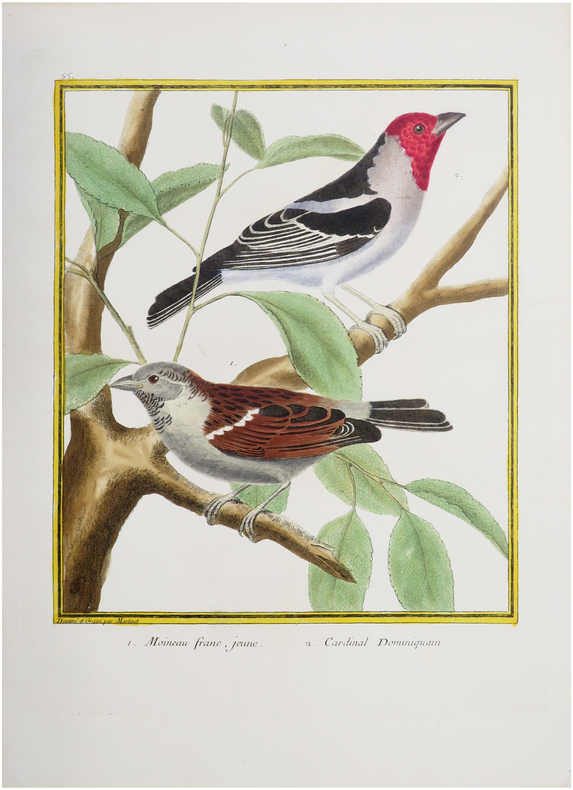
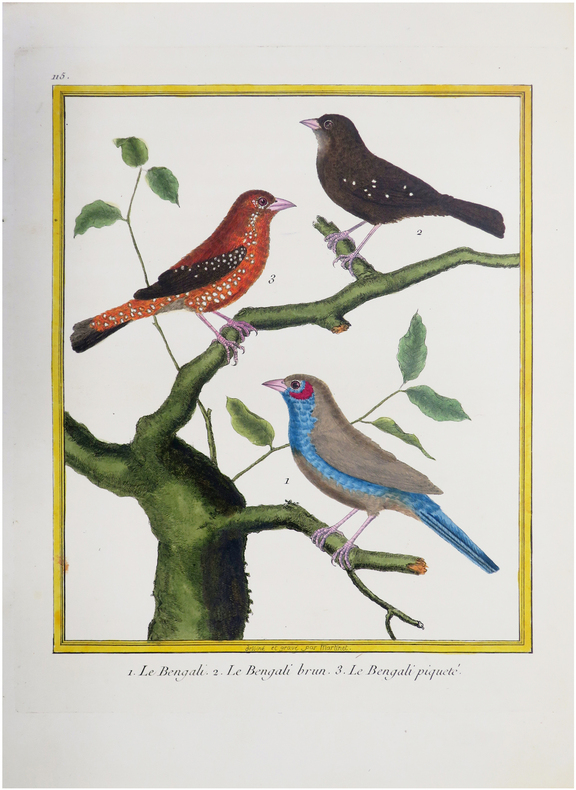
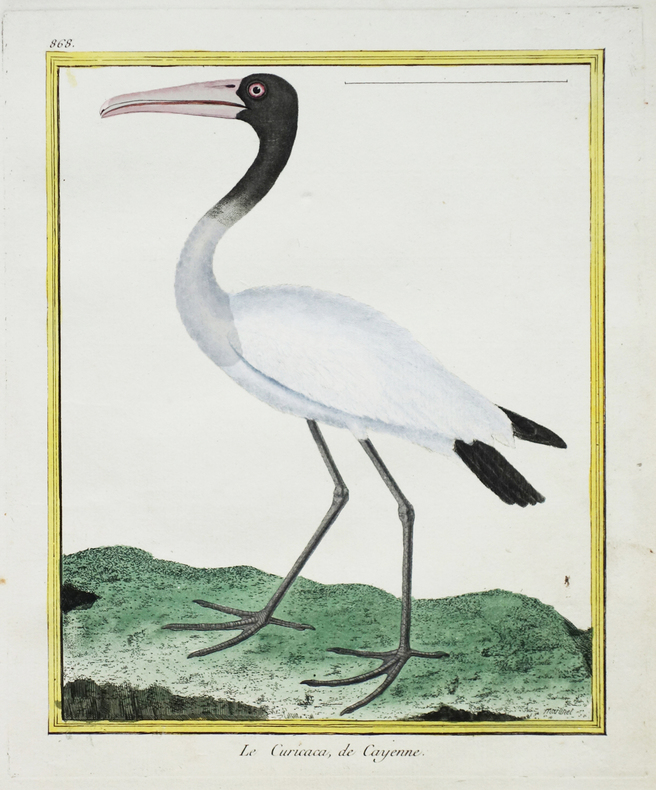
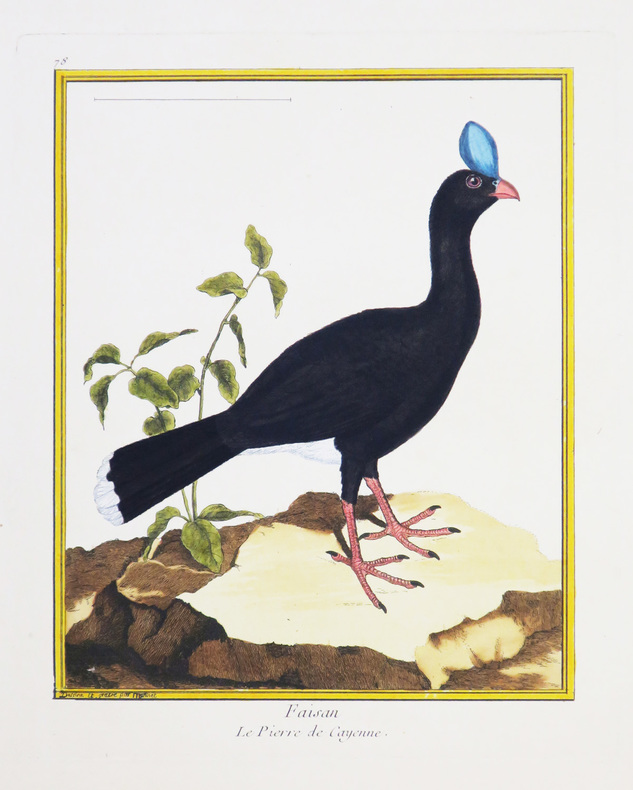
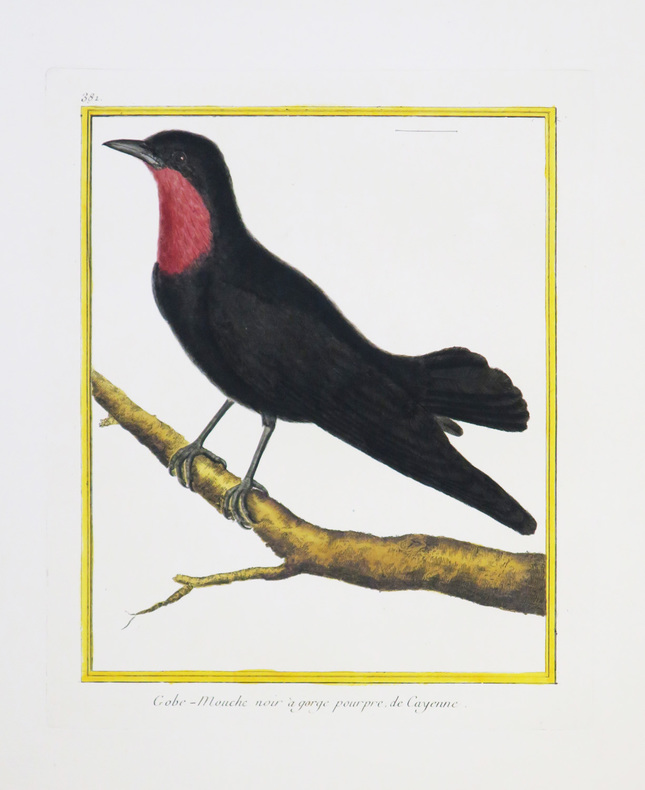
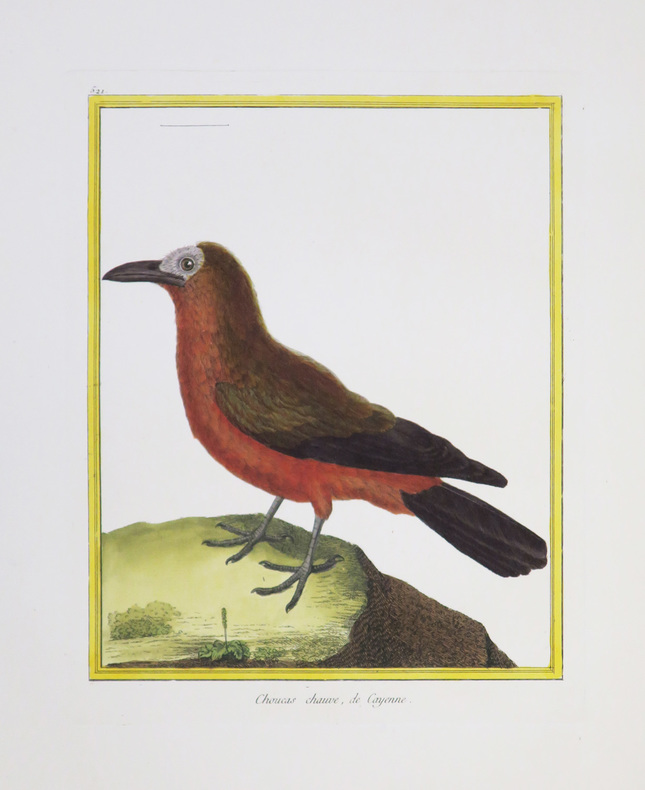
1771LBW-8273[Paris, 1771-1786]. 230 x 187 mm.
1771LBW-8277[Paris, 1771-1786]. 235 x 182 mm.
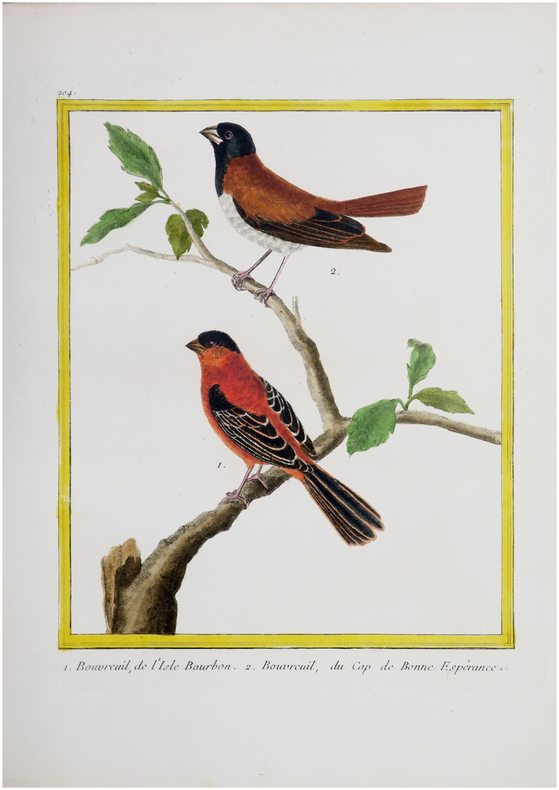
1771LBW-8278[Paris, 1771-1786]. 240 x 179 mm.
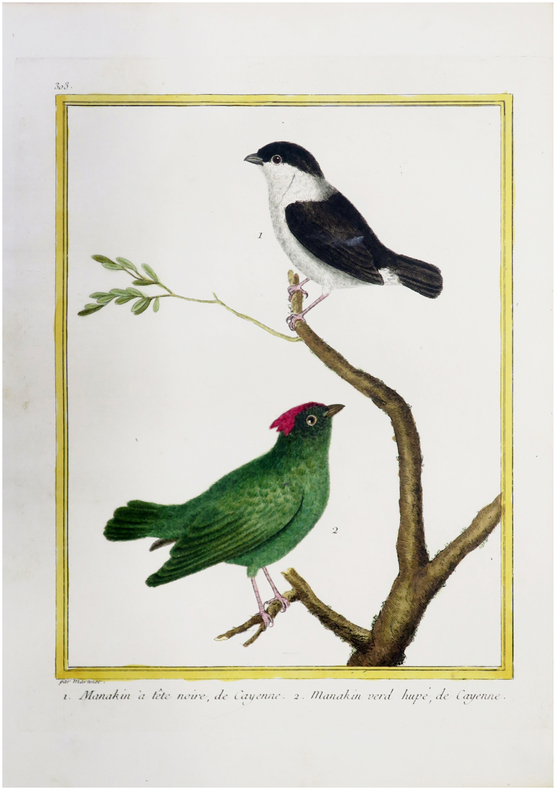
1771LBW-8280[Paris, 1771-1786]. 235 x 179 mm.
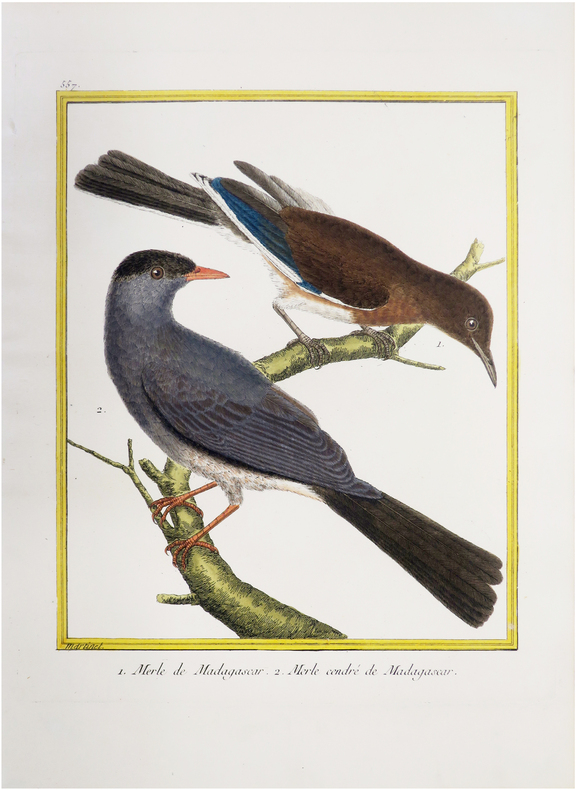
1771LBW-8284[Paris, 1771-1786]. 235 x 181 mm.
1771LBW-8291[Paris, 1771-1786]. 235 x 182 mm.
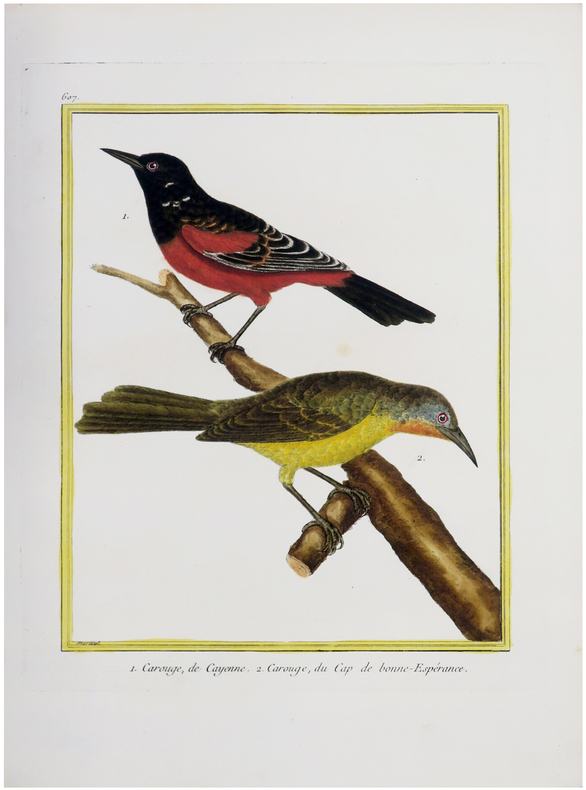
1771LBW-8276[Paris, 1771-1786]. 235 x 185 mm.
1771LBW-8279[Paris, 1771-1786]. 232 x 179 mm.
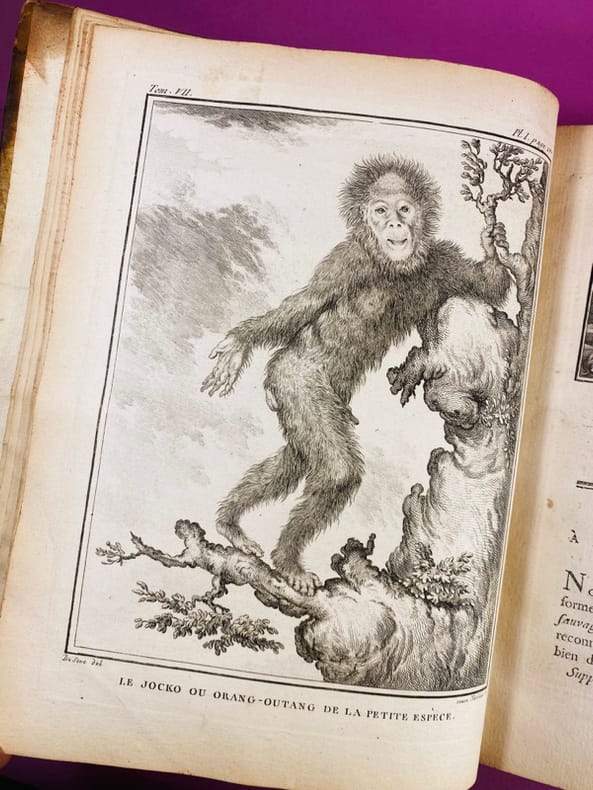
178918271789 Couverture rigide Paris, de l'imprimerie royale, 1789. Un volume in-4 (26 x 20,5 cm), cartonnage de l'éditeur, tranches rouges, pièces de titre et de tomaison grattés, caissons grattés (pour effacer toute trace de l'Ancien Régime), mors apparents, coins émoussés, premier plat partiellement détaché (tenu uniquement par le lacet inférieur). Xx, 364 pages, illustrées de 82 planches hors-texte dessinées par Jacques de Sève (numérotation inversée pour les planches 81 et 82), vignette gravée, petit manque à la page de garde (pour effacer le nom de l'ancien propriétaire), étiquettes blanches à la page de titre (pour dissimuler toute référence au Roi). Ex-libris contrecollé au 1er contreplat de Alexandre Brongniart, scientifique français connu principalement pour ses travaux de minéralogie. Avec Cuvier, il établit un principe de base de la cartographie géologique moderne. Ce supplément contient notamment l'étude détaillée de différents singes (orangs-outangs, sapajous, sagouins...), de chiens-mulets, de tigres... Certaines planches de squelette également présentes. On notera en particulier une planche étonnante, celle d'un foetus de gueunon (voir photo). Buffon est surtout célèbre pour son oeuvre majeure, "l'Histoire naturelle, générale et particulière, avec la description du Cabinet du Roi", en 36 volumes parus de 1749 à 1789, plus huit autres après sa mort, grâce à Lacépède. Il y a inclus tout le savoir de l'époque dans le domaine des sciences naturelles. Exemplaire du tome septième des suppléments bien complet. Bon état des planches et du texte, et malgré les défauts de la reliure, bon exemplaire de cette première édition.
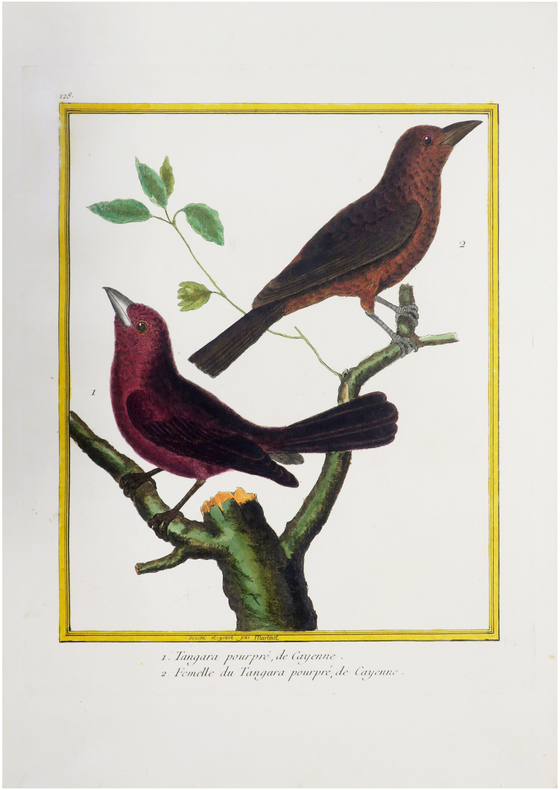
1771LBW-2676[Paris, 1771-1786]. 228 x 178 mm.
1771LBW-4334[Paris, 1771-1786]. 234 x 180 mm.
1771LBW-4335[Paris, 1771-1786]. 237 x 182 mm.
1771LBW-4347[Paris, 1771-1786]. 241 x 189 mm.
1771LBW-2772[Paris, 1771-1786]. 225 x 175 mm.
1771LBW-2766[Paris, 1771-1786]. 219 x 172 mm.
1771LBW-4331[Paris, 1771-1786]. 234 x 181 mm.
1771LBW-4329[Paris, 1771-1786]. 226 x 180 mm.
1799293186Paris.: Deterville. 1799. Later full brown calf gilt ruled bands gilt floret spine decorations red spine labels gilt ruled borders with floret corners all edges gilt. Very good boards moderately bowed. 12mo. 14x8.5 cm. French text. weight: 1.6 lb. 30 hand-colored etchings. Deterville. hardcover books
179936495Paris: A La Librairie Ste´re´otype De P. Didot L'Aine´ . Et Firmin Didot. Very Good with no dust jacket. 1799. Hardcover. B&W Illustrations; Aprox 3.5" x 5.5". This monumental 18th century work totaling 127 volumes and published in sections was highly regarded for it's scientific approach and description of many new species. 3/4 black calf over marbled boards. Here presented is the 4 volume section on ovipares including snakes turtles frogs etc. Nos 71-4 sections nos 1-4. Numerous illustrations. . A La Librairie Ste´re´otype De P. Didot L'Aine´ ... Et Firmin Didot hardcover
1799017345Paris: De F. Bufart 1799. Vol. 44 of a 127 Volume Set. Book is dated "A N X" The tenth year of the revolution 1799 at the bottom of the title page. Full mottled calf with red and black label on the spine gilt spine is chipped and worn and it has been expertly relaid original endpapers numerous black & white tissue guarded plates of birds. No previous owner's names not exlibrary. Overall in VERY GOOD condition. Photos available upon request. Georges-Louis Leclerc Comte de Buffon September 7 1707 April 16 1788 was a French naturalist mathematician biologist cosmologist and author. Buffon's views influenced the next two generations of naturalists including Jean-Baptiste Lamarck and Charles Darwin. Darwin himself in his foreword to the 6th edition of the Origin of Species credited Aristotle with foreshadowing the concept of natural selection but also stated that "the first author who in modern times has treated it in a scientific spirit was Buffon". The Lycée Buffon in Paris is named after him. Full Cloth. Very Good. 8vo - over 7¾" - 9¾" tall. Hardcover. De F. Bufart Hardcover
1799017342Paris: De F. Bufart 1799. Vol. 60 of a 127 Volume Set. Book is dated "A N X" The tenth year of the revolution 1799 at the bottom of the title page. Full mottled calf with red and black label on the spine gilt spine is chipped and worn and it has been expertly relaid original endpapers numerous black & white tissue guarded plates of birds. No previous owner's names not exlibrary. Overall in VERY GOOD condition. Photos available upon request. Georges-Louis Leclerc Comte de Buffon September 7 1707 April 16 1788 was a French naturalist mathematician biologist cosmologist and author. Buffon's views influenced the next two generations of naturalists including Jean-Baptiste Lamarck and Charles Darwin. Darwin himself in his foreword to the 6th edition of the Origin of Species credited Aristotle with foreshadowing the concept of natural selection but also stated that "the first author who in modern times has treated it in a scientific spirit was Buffon". The Lycée Buffon in Paris is named after him. Full Cloth. Very Good. 8vo - over 7¾" - 9¾" tall. Hardcover. De F. Bufart Hardcover