BuffonLivre Rare Book

338 résultats
1772AMO-3535Georges-Louis Leclerc, comte de Buffon (1707-1788) 1 page feuillet 20,5 x 16 cm Bon état. Légères traces de plis. Deux trous d’épingle en dehors du texte. Voir photos. Lettre signée à son ami le botaniste André Thouin (1747-1824) alors âgé de 25 ans. Goerges-Louis Leclerc, comte de Buffon est âgé de 65 ans au moment de la rédaction de ce courrier. Son immense ouvrage intitulé "L'Histoire naturelle" est encore en cours de publication (cette somme unique en son genre fut publiée entre 1749 et sa mort - avec de nombreux suppléments parus ensuite par Lacépède – en 1772 les Oiseaux sont en cours de publication depuis 1770. La publication des Oiseaux ne s’achèvera qu’en 1783). Dans le présent courrier Buffon écrit à son jeune ami et collaborateur resté à Paris. Buffon écrit depuis son cabinet de travail de Montbard. C’est précisément en 1772, peu de temps après la rédaction de ce courrier que seront achevées les forges situées près du village de Buffon. Buffon écrit à Thouin en ces termes : [Transcription de la lettre / orthographe respectée :] "Lucas a dû vous remettre, mon cher Thouin, les deux certificats dont vous avez besoin et c'est à lui à qui je vous prie de remettre la partie qui me revient lorsque vous aurez touchée. Je vous envoye ci joint un second mandat pour prendre vingt voyes de bois chez le Sr Vaslin ; s'il fait aussi froid à Paris qu'ici on doit commencer à en brûler beaucoup. Ma santé souffre de cette rigueur de froid qui dure ici depuis quatre à cinq jours, le termomètre étoit cette nuit à 6 degrés 1/2 au dessous de la glace. Je vous remercie, mon cher Thouin, de vos bons souhaits au renouvellement de cette année. Je vous prie de faire mes amitiés à votre bonne mère et à votre famille. à Montbard ce 6 janvier 1772 [signé] Buffon." Les relations entre André Thouin (1747-1824) et Buffon sont importantes. C'est Buffon, alors intendant du jardin du roi depuis 1739, qui offre à André Thouin la place de son pèreJean- André Thouin (jardinier en chef du jardin du roi) décédé en 1764. André Thouin n'a alors que 17 ans. Les deux hommes collaboreront étroitement jusqu’à la mort de Buffon en 1788. Buffon gère Paris le plus souvent depuis son cabinet de Montbard tandis que Thouin se révèle être un parfait collaborateur au plus près des nombreux travaux à réaliser et à gérer le Jardin du Roi. Thouin aura une importante carrière et sera toujours très apprécié de Buffon. De nombreuses lettres de Buffon à Thouin ont été publiées dans la Correspondance Générale de Buffon ainsi que dans les volumes de correspondance inédite publiés ultérieurement. La lettre que nous proposons ici ne se trouve pas dans ces volumes de correspondance. Elle est inédite. Par ailleurs nous avons constaté que les échanges publiés entre Buffon et Thouin datent du début des années 1780 et années suivantes. Un tel courrier entre les deux hommes à la date de janvier 1772 montre la teneur des échanges durant les premières années après la nomination de Thouin jeune au Jardin du Roi depuis 1764. Très beau document signé par le grand naturaliste.
17506103Hamburg and Leipzig: Georg Christian Grund and Adam Heinrich Holle 1750. Contemporary vellum not strictly matching. 4to. With engraved vignette on 16 title-pages engraved headpiece to the dedication engraved headpieces to each part 2 engraved maps folding engraved genealogical table 1 folding letterpress table and 575 engraved plates by J.C.G. Fritzsch J. Haas J.C. Sysang etc. 8 of 11 volumes divided into two parts each. Very rare first edition of the German translation of Buffon's famous Histoire naturelle. Buffon's work presents ''for the first time a complete survey of natural history in popular form'' PMM. The first volume contains Buffon's theoretical essays including his essay on the earth where "for the first time he outlines a satisfactory account of the history of our globe and of its development as a fitting home for living things. In his view the earth had been originally part of the sun which was broken off by the impact of a comet. It gradually condensed from its gaseous state and the forces shaping its continents and mountains are still active'' PMM. This view of the universe not in a steady state but evolving was a revolutionary idea at the time paving the way for Darwin in the following century. In his treatise on humans volume II.1 Buffon ''studied the human species by the same methods that he applied to animal species including the psychological moral and intellectual life of man. From his exhaustive research for the Histoire naturelle des quadrupèdes Buffon came to the conclusion that it was necessary to reintroduce the notion of family. Breaking with the spirit of his time Buffon attempted to separate science from metaphysical and religious ideas. As a disciple of Locke he denied idealistic metaphysics stating that mental abstractions can never become principles of either existence or real knowledge; these can come only as the results of sensation'' DSB. Volumes II-VIII deal with quadrupeds. The German edition was begun in 1750 but discontinued after the three volumes on ornithology in 1782 not included here while the original French which had started in 1749 continued till 1804 and comprised eventually 44 volumes.The first 8 volumes of the German Buffon with an owner's inscription on title-page of the first volume dated 1750. Only some occasional spot but otherwise in very good condition.l Nissen ZBI 709; cf. Anker 79 vols. IX-XI; DSB II pp. 576-582; PMM 198; Wood p. 267. Georg Christian Grund and Adam Heinrich Holle, hardcover
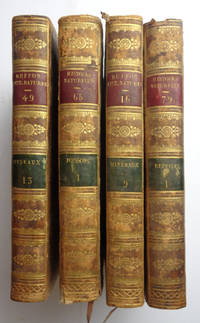
177064661770 Paris, Imp. Royale, Imp. Bâtiments du roi, Hôtel de Thou, Plassan, 1770-1804. Complet en 71 vol. in-12 reliés: 10.5 x 17 cm. Ensemble illustré de 871 planches gravées principalement d'après De Sève, la plupart à double avec ÉPREUVES AVANT LA LETTRE. 5e édition du texte, 1ère édition in-12. Ensemble complet sans le sup. anatomique (14 vol.) par Daubenton. Luxueuses reliures de l'époque en plein cuir de Russie Rouge. Dos lisse avec auteur, titre, tomaison et filets en doré. Doubles encadrements des plats. Filets sur les coupes. Roulettes intérieures. Tranches dorées. Très bel exemplaire
174922898P., Imprimerie Royale, 1749-1803 43 volumes in-4 veau marbré, dos lisses ornés à la grotesque de fers dorés, tranches rouges. (Quelques accidents aux coiffes, des tomaisons plus claires à cinq volumes,, des mouillures au tome X, dans le tome VI des Suppléments, les 49 planches concernent les quadrupèdes mais la numérotation est aléatoire).
17917169Madrid: viuda de JoaquÃn Ibarra 1791. Second edition. Hardcover — Tapa dura. 204x135mm. 8x5¼". Madrid viuda de Ibarra 1791-1805. En 4º menor 204 x 135mm. 21 volúmenes. 487 láminas coloreadas a mano de época. Encuadernación uniforme en piel de época lomera con adornos dorados y dos tejuelos en marroquén. Segunda edición impresa sobre buen papel de hilo ilustrada con 487 láminas grabadas y coloreadas a mano en la época. Se trata de una enciclopedia incluye todo el saber de la época concerniente a las ciencias naturales. La <em>Historia Natural</em> publicada en los albores de la Ilustración tuvo una profunda influencia en el pensamiento cientÃfico de la época y en el de las subsecuentes generaciones sobre todo en las ideas de otros grandes naturalistas como Charles Darwin o Jean-Baptiste Lamarck. viuda de Joaquín Ibarra hardcover
1798017909<p>Paris: Dufart VII-XIII 1798-1805. .nouvelle edition accompagnée de notes et dans laquelle les supplémens sont insérés dans le premier texte à la place qui leur convient. L'on y a ajouté l'histoire naturelle des quadrupèdes et des oiseaux découverts depuis la mort de Buffon celle des reptiles des poissons des insectes et des vers; enfin l'histoire des plantes dont se grand naturaliste n'a pas eu le tems de s'occuper. Ouvrage formant un cours complet d'Histoire naturelle redigé par C.S. Sonnini. 127 volumi 125x20 cm in bella legatura coeva in piena pelle marmorizzata cornice dorata ai piatti dorso liscio ornato e dorato con doppio tassello di titolo e tomagione. --Un volume con rilegatura rifatta a imitazione alcune cuffie mancanti o altri segni d'uso e del tempo ai margini e agli angoli. Risguardie marmorizzate testimoni. Set completo di questa famosa edizione con 1113 tavole quasi tutte colorate a mano e carte geografiche più circa 30 schemi di classificazione e tabelle. Qualche brunitura a macchia o fioriture ma bell'insieme di questa monumentale riedizione e aggiornamento dell'opera di Buffon. L'opera è così divisa: Théorie de la terre 3 tomes; Epoques de la Nature 1 tome; Histoire des Minéraux 12 tomes; Des Animaux 1 tome; De l'Homme 4 tomes; Quadrupèdes 13 tomes; des Singes 2 tomes;; des Oiseaux 28 tomes; Crustacés et Insectes 14 tomes; Mollusques 6 tomes; Reptiles 8 tomes; Plantes 18 tomes; Poissons 14 tomes; Tables analytiques 3 tomes. Non tutte le tavole sono numerate e a volte non sono in sequenza ma corrispondono al testo.Oltre al testo "classico" di Buffon sono assai importanti le integrazioni sulla base delle nuove scoperte scientifiche. Rettili e anfibi sono opera del Dudin con 100 tavole; i molluschi sono di Denis de Monfort con 72 tavole; uccelli e pesci sono sviluppati dal Sonnini; gli insetti da Latrelle. In sostanza i migliori studiosi degli anni a cavallo tra 7 e 8cento furono partecipi dell'opera rara da trovare così completa e in belle condizioni esterne.</p> Dufart
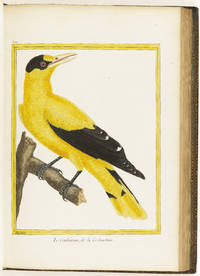
1765B7181Paris c.1765. One plate with small tear at gutter not affecting plate. Interior generally crisp and clean colours vivid. Binding: Half brown calf over marbled paper boards. Spine with 5 raised bands red morocco label in second compartment green morocco label in fourth compartment gilt rolls on bands. Notes: Edme-Louis Daubenton 12 August 1730 – 12 December 1785 was a French naturalist. Daubenton was the cousin of another French naturalist Louis Jean-Marie Daubenton. Georges-Louis Leclerc the Comte de Buffon engaged Edme-Louis Daubenton to supervise the coloured illustrations for the monumental Histoire Naturelle 1749–89. The Planches Enluminee started to appear in 1765 and finally accounted for 1008 plates all engraved by François-Nicolas Martinet 1731–1800 and all painted by hand. The Parisian publisher Panckoucke published a version without text between 1765 and 1783.<br>The Histoire Naturelle générale et particulière avec la description du Cabinet du Roi is an encyclopaedic collection of 36 large quarto volumes written between 1749 and 1789 by the Comte de Buffon. The books cover what was known of the "natural sciences" at the time including what would now be called material science physics chemistry and technology as well as the natural history of animals.<br>A de luxe edition of Histoire Naturelle des Oiseaux 1771–1786 was produced by the Imprimerie royale in 10 folio and quarto volumes with 1008 engraved and hand-coloured plates executed under Buffon's personal supervision by Edme-Louis Daubenton cousin and brother-in-law of Buffon's principal collaborator Louis Jean-Marie Daubenton. The plates were originally issued in 42 cahiers each containing 24 plates and no accompanying text or titles.<br> Size: Folio 460 x 315mm Illustration: A beautifully bound collection of 100 handcoloured plates produced by Daubenton for the Comte de Buffon’s Histoire Naturelle which was issued in multiple parts between 1765 and 1783 and came to encompass over 1000 plates. The numbered plates depict birds from many parts of the world including Africa Canada Mexico France Italy Brazil China and America. The present volume represents an impressive compilation of plates originally issued across different parts the numbering not always chronological. One plate with etched caption crossed and rewritten in contemporary hand. Category: Book Natural History; Book Plate Books Colour; hardcover
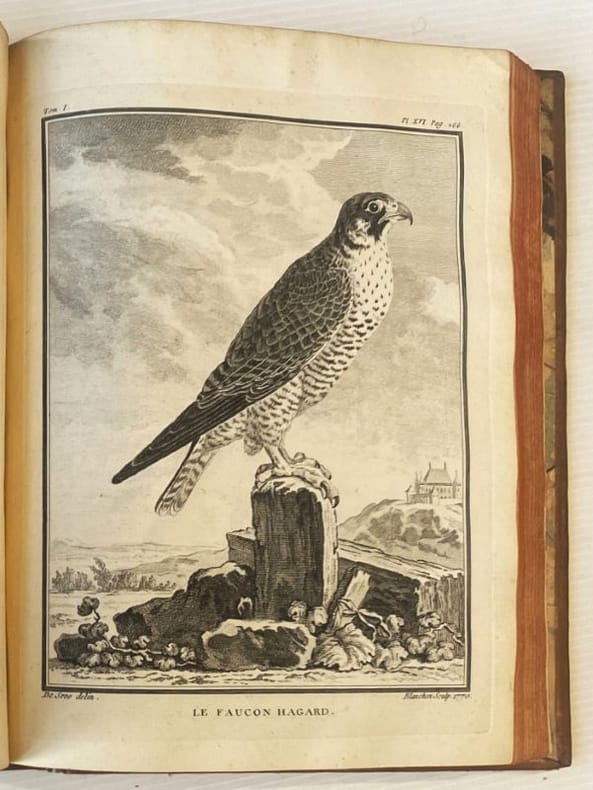
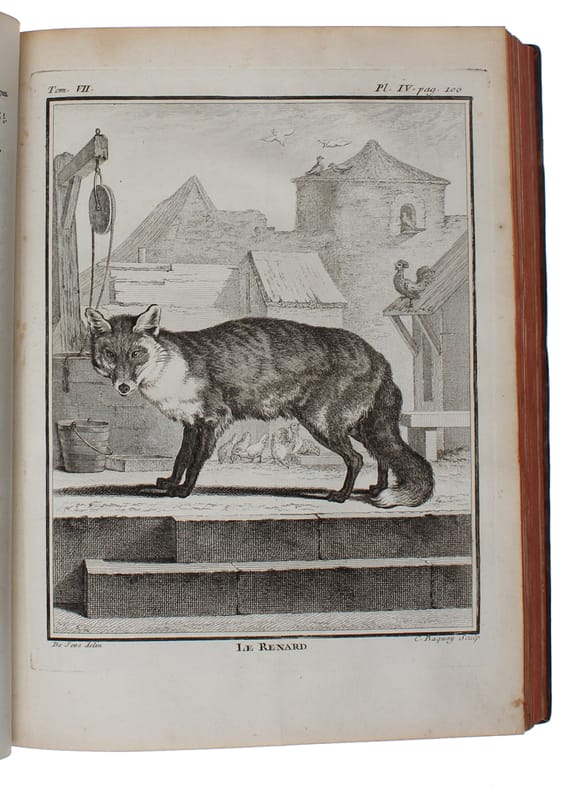
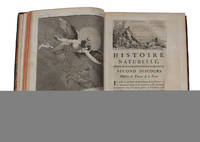
174982611749 Paris: De lImprimerie royale, [puis] Hotel de Thou, 1749-1789. Collection de 39 vol. in-4: 20.5 x 26.5 cm. Édition originale de la fameuse Histoire naturelle de Buffon complète en 36 volumes, parue entre 1749 et 1789, auxquels sajoutent 8 grandes cartes dép. rel. en un volume séparé, prévues pour ill. Le Traité de laimant, le dernier ouvrage publié du vivant de Buffon, ainsi que les 2 vol. consacrés aux quadrupèdes ovipares et serpents par Lacépède (1788-1789). Exceptionnel et mythique ouvrage dhistoire naturelle illustré de plus dun millier de figures hors-texte exécutées par Jacques de Sève pour les quadrupèdes et François-Nicolas Martinet pour les oiseaux. La représentation des animaux est toujours faite avec un grand soucis esthétique et anatomique, dans des décors pittoresques oumythologiques. Lune des uvres les plus ambitieuses et les plus complètes de la littérature scientifique, commencée par Buffon (1707-1789), lHistoire naturelle fut composée avec la collaboration de Daubenton, Guéneau de Montbéliard et labbé Bexon, et terminée par Bernard-Germain de Lacépède. Reliures homogènes de lépoque en veau marbré. Dos à cinq nerfs avec pièces de titre et de tomaison en maroquin noir ou brun, caissons ornés aux petits fers. Trois filets en encadrement des plats ornés de lex-libris: «Bibliothèque de V. Perdonnet». Toutes tranches dorées. De Vincent Perdonnet (1768-1850), homme politique et patriote vaudois. Sa bibliothèque, dans sa villa du Parc de Mont-Repos de Lausanne, était particulièrement fameuse. Quelques traces dusage aux reliures, sinon collection en fort bel état de conservation. Les planches sont belles et propres. Lhistoire naturelle se divise en plusieurs séries: lHistoire naturelle, générale et particulière (1749-1767) en 15 vol. qui présente trois vol. dintroduction De la manière détudier lhistoire naturelle, Théorie de la Terre, Histoire générale des animaux et Histoire naturelle de lhomme suivis de 12 vol. consacrés aux quadrupèdes; lHistoire naturelle des Oiseaux (1770-1783) en 9 vol., le Supplément (1774-1789), en 7 vol., et enfin lHistoire naturelle des Minéraux (1783-1788) en 5 vol. Paraîtront après la mort de Buffon, les trois suppléments de Lacépède dont nous avons celui portant sur les ovipares.
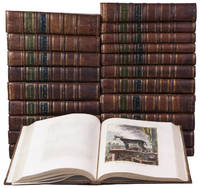
178960389Paris, l' Imprimerie Royale, Plassan, 1749 - 1789. 4to (262 x 205 mm). Uniformly bound in 32 contemporary full sprinkled calf bindings with five raised bands and richly gilt spines. Leather tome- and title-labels to all volumes. Edges of boards gilt. Light wear to extremities primarily affecting head and foot of spines, corners bumped. Internally with light occassional, marginal brownspotting, but generally fine. With ""J. Collin"" (Danish zoologist Jonas Collin) to top margin of most front free end-papers. An overall nice set comprising the following:Histoire Naturelle, Générale et Particulière (15 vols) - 578 plates and 2 maps.Supplément à l'Histoire naturelle (6 vols) - 141 plates and 2 maps.Histoire naturelle des Oiseaux (9 vols) - 257 plates.Quadrupedes Ovipares et des Serpens (2 vols) - 66 plates. A total of 1042 plates and 4 maps. Wanting the portrait. The complex collation of this work has not been accurately described by bibliographers. Nissen and Heilbrun differ in the listing of number of plates and misname the descriptions of the plates.
178960389Paris l' Imprimerie Royale Plassan 1749 - 1789. 4to 262 x 205 mm. Uniformly bound in 32 contemporary full sprinkled calf bindings with five raised bands and richly gilt spines. Leather tome- and title-labels to all volumes. Edges of boards gilt. Light wear to extremities primarily affecting head and foot of spines corners bumped. Internally with light occassional marginal brownspotting but generally fine. With "J. Collin" Danish zoologist Jonas Collin to top margin of most front free end-papers. An overall nice set comprising the following:Histoire Naturelle Générale et Particulière 15 vols - 578 plates and 2 maps.Supplément à l'Histoire naturelle 6 vols - 141 plates and 2 maps.Histoire naturelle des Oiseaux 9 vols - 257 plates.Quadrupedes Ovipares et des Serpens 2 vols - 66 plates. A total of 1042 plates and 4 maps. Wanting the portrait. The complex collation of this work has not been accurately described by bibliographers. Nissen and Heilbrun differ in the listing of number of plates and misname the descriptions of the plates. <br/><br/><em>First edition of this extensive landmark work in natural science. After his death several other volumes were published making the total number of volumes 44. Together with Diderot's Encyclopaedia this work represents the peak of book printing of the French enlightenment. Buffon was the first to sum up an entire natural history based on science instead of theology; It constitutes one of the first attempts to provide a comprehensive account of the natural world aiming at describing the entire known natural world - including plants animals and minerals - in a single work. Buffon based his work on first-hand observations and scientific analysis rather than on second-hand accounts or mythological beliefs making it a seminal work in the development of modern science. "Buffon's "Natural History General and Particular" presented for the first time a complete survey of natural history in a popular form . he was the first to present the universe as one complete whole and to find no phenomenon calling for any but a purely scientific explanation. In 1739 he was appointed Director of the Jardin du Roi now Jardin des Plantes. It would appear that the 'Natural History germinated in the preparation of a catalogue of the royal collection. Buffon then enlarged its scope to Aristotelian or Plinian proportions and finally transformed it into a conspectus of nature of a breadth and depth previously unknown". … he was the first to present the universe as one complete whole and to find no phenomenon calling for any but a purely scientific explanation." PMM. Buffon's work had a significant impact upon the field of natural history and influenced many other scientists including Charles Darwin; In a part of the work "Des Epoqeus de la Nature" Supplement vol. V 1778 present here Buffon attacked several Christian doctrines on natural science. He saw man as a part of the animal world he objected to earth being only 6000 years old and he dismissed a rigid classification system thus paving the way for Darwin's thoughts a century later:"Georges Buffon set forth his general views on species classification in the first volume of his Histoire Naturelle. Buffon objected to the so-called "artificial" classifications of Andrea Cesalpino and Carolus Linnaeus stating that in nature the chain of life has small gradations from one type to another and that the discontinuous categories are all artificially constructed by mankind. Buffon suggested that all organic species may have descended form a small number of primordial types; this is an evolution predominantly from more perfect to less perfect forms." Parkinson Breakthroughs. "Buffon's work is of exceptional importance because of its diversity richness originality and influence. Buffon was among the first to create an autonomous science free of any theological influence. He emphasized the importance of natural history and the great length of geological time. He envisioned the nature of science and understood the roles of paleontology zoological geography and animal psychology. He realised both the necessity of transformism and its difficulties. Although his cosmogony was inadequate and his theory of animal reproduction was weak and although he did not understand the problem of classification he did establish the intellectual framework within which most naturalists up to Darwin worked." DSB From the library of Danish zoologist Jonas Collin 1840-1905 who issued a new edition of Kjærbølling's "The Birds of Scandinavia" in 1875-1877 See Anker 251 - a work most likely inspired by his knowledge from his i.e. the present copy of Buffon's "Histoire Naturelle".The 'Histoire Générale' was widely reprinted and translated. Sometimes only individual sections were produced other times the complete work appeared. PMM 198.Nissen 672.Brunet I 376.Dibner 193.Sparrow p. 23.Anker 6. </em> hardcover
17656479Paris: Hôtel de Thou 1765. First Edition — Primera edición. Hardcover — Tapa dura. 247x186mm. 9¾x7¼". Paris Hôtel de Thou n.d. 1765. En 4º 247 x 186mm. 2 volúmenes. -I: 7 h. 182 láminas. -II: 1 h. 160 láminas. En total 362 láminas grabadas y coloreadas a mano en la época con la representación de animales. Encuadernación de la épocas en piel lomera cuajada de adornos dorados. Primera edición de una de las obras más raras y apreciadas de Buffon dedicada a los animales cuadrúpedos desconocida a Nissen y otra bibliografÃa especializada. Muy rara publicación separada de los grabados creados para los <em>Animaux quadrupèdes</em> de Buffon y organizados según el sistema linneano. Todas las 362 placas han sido delicadamente coloreadas a mano en el momento de la publicación. La publicación de la monumental <em>Histoire Naturelle</em> de Buffon iniciada en 1749 y continuada por Lacépède abarcó un lapso de más de 50 años. Su éxito fue inmediato y Buffon menciona en su correspondencia que los primeros 3 volúmenes se agotaron después de solo 6 semanas. Al año siguiente vio la luz una edición de menor formato. Sus ilustraciones se basaban en los mismos dibujos pero grabados sobre planchas en formato reducido. El pintor y excelente dibujante Jacques de Sève es el artista que ha realizado la práctica totalidad de las imágenes de esta <em>Histoire naturelle</em>. La mayorÃa de los dibujos originales están dispersos hoy; en 1791 se vendió una colección de 152 dibujos originales que habÃan pertenecido a la colección del conde Mirabeau. La calidad de las ilustraciones contribuyó enormemente al éxito universal y la popularidad de la obra prueba de lo cual esta suite publicada por separado. Los cuadrúpedos están aquà clasificados por orden y género en el sistema animal de Linné. Esta colección es de gran rareza y no se menciona en ninguna bibliografÃa especializada. Para Francia el Catalogue Collectif de France indica dos copias institucionales Bibliothèque nationale de France y Troyes; la base de datos KVK localiza una copia completa en Torino y un solo volumen en la Biblioteca Estatal de Rusia. Hôtel de Thou hardcover
1771122<p>Buffon's <i>Histoire Naturelle</i> " <i>One of the most important of all birds books f</i><i>rom the collector's point of view </i>" Stillwell 63.</p><p>A magnificent copy complete with its 1 008 beautiful plates in contemporary coloring preserved in its contemporary binding.</p><p>Contemporary painted calf gilt fillets on covers ribbed spine decorated with gilt fillets and gilt fleurons red yellow and green morocco lettering piece double gilt filet on leading edges inner gilt dentelle gilt edges.</p><p><b>The most beautiful and most famous Buffon illustrated books.</b></p><p><b>A very rare and magnificent copy printed on large paper and complete with its 1 008 handcouloured plates.</b></p><p>Cohen 194 ; Nissen IV B 158 ; Brunet I 1379-1380 ; Ronsil 76.</p><p>The 1 008 plates drawn by François-Nicolas Martinet 1731-1800 under Edmée-Louis Daubenton's supervision are dedicated to birds butterflies flying insects and to a few reptiles and mammals.</p><p>All the plates were drawn and handcoloured at the time.</p><p>Buffon decided to dedicate this separate beautiful edition to birds and ha dit printed in 4° and folio format.</p><p>" <i>One of the most important of all birds books from the collector's point of view </i>" Stillwell 63.</p><p>"<i>In 1739 Buffon was appointed Director of the Jardin du Roi. It would appear that the "Natural History" germinated in the preparation of a catalogue of the royal collection. Buffon then enlarged its scope to Aristotelian or Plinian proportions and finally transformed it into a conspectus of nature of a breadth and depth previously unknown. The Natural History was a great popular success</i>" PMM.</p><p>A lot of copies are missing the insects supplement of 35 plates and only contain 973 plates. </p><p><b>A magnificent copy belonging to the luxuous folio edition complete with its 1008 plates handcouloured at the time preserved in its contemporary binding. </b></p><p>Copies' value depend on its number of plates and on its bindings. </p> (Imprimerie Royale) hardcover
1766ABC_47564Dordrecht: Abraham Blussé 1766. Contemporary uniform half tanned sheepskin sewn on 5 supports gold-tooled spines each volume with author subject and part number on 2 green spine labels in the 2nd and 3rd of 6 compartments paste-paper sides. Large 4to. With more than 1100 hand-coloured engraved plates 10 maps 1 folding engraved table and an engraved portrait of Buffon by Houbraken with an extra-added plain portrait pasted on the verso. 38 parts in 21 volumes. Including:Volume 1: tome 1: Théorie de la Terre 2 plates tome 2: Histoire générale des animaux 8 plates tome 3: Histoire naturelle de l'homme 18 plates. Volume 2: tomes 4 & 5: Les Quadrupèdes 23 and 60 plates and an engraved table of dogs. Volume 3: tomes 6 & 7: Les Quadrupèdes 49 and 48 plates Volume 4: tomes 8 & 9: Les Quadrupèdes 54 and 41 plates.Volume 5: tomes 10 & 11: Les Quadrupèdes 57 and 45 plates.Volume 6: tomes 12 & 13: Les Quadrupèdes 60 and 62 plates.Volume 7: tomes 14 & 15: Les Quadrupèdes 60 and 16 plates.Volume 8: Supplément tomes I - II 17 plates.Volume 9: Supplément à l'histoire de l'homme et aux animaux quadrupèdes - tomes III-IV 6 and 67 plates.Volume 10: Supplément les époques de la natures - tomes V-VI 46 and 6 plates 10 maps.Volume 11: Supplément tome VII 74 plates Volume 12: Histoire Naturelle des Oiseaux nouvelle édition tome 1: 29 platesVolume 13: Oiseaux: tomes 2 & 3: 27 & 31 platesVolume 14: Oiseaux: tomes 4 & 5: 28 & 22 platesVolume 15: Oiseaux: tomes 6 & 7: 25 & 31 platesVolume 16: Oiseaux: tomes 8 & 9: 39 & 31 plates. Volume 17: Histoire Naturelle des Minéraux nouvelle édition tomes 1 & 2; Volume 18: Minéraux: tomes 3 & 4; Volume 19: Minéraux: tome 5 traité de l'aimant et de ses usages.Volume 20: Histoire Naturelle des Quadrupèdes ovipares et des serpens nouvelle édition tome 1: 41 platesVolume 21: Quadrupèdes ovipares et des serpens: tome 2: 22 plates Finely hand-coloured copy of the 1766-1799 Netherlands edition in French of Buffon's justly famous Histoire naturelle the complete first series covering the formation of the earth humans mammalian quadrupeds and apes reptiles and amphibians birds fishes and even minerals also describing the royal collection of Louis XV. Buffon's work presents ''for the first time a complete survey of natural history in popular form'' PMM. The present set in the works rarest and most expensive form is exquisite. The subscription notices periodically mention copies printed on fine paper but they do not mention hand-coloured copies. Landwehr discussing the first Dutch-language edition no. 46 by the same publisher cites contemporary sources referring to four forms of publication: on regular paper on large paper with hand-coloured plates and most expensive of all with hand-coloured plates and vignettes.Buffon opens the first volume with an essay called "Théorie de la terre" where "for the first time he outlines a satisfactory account of the history of our globe and of its development as a fitting home for living things. In his view the earth had been originally part of the sun which was broken off by the impact of a comet. It gradually condensed from its gaseous state and the forces shaping its continents and mountains are still active'' PMM. From his exhaustive research for the Histoire naturelle des quadrupèdes Buffon came to the conclusion that it was necessary to reintroduce the notion of family. Breaking with the spirit of his time Buffon attempted to separate science from metaphysical and religious ideas. As a disciple of Locke he denied idealistic metaphysics stating that mental abstractions can never become principles of either existence or real knowledge; these can come only as the results of sensation'' DSB.Buffon did not believe in the fixity of species but proposed that nature is constantly changing. For instance in the case of quadrupeds he stated that there were 38 basic types that degenerated over the centuries. According to Buffon the monkey is a degenerated man the ass a degenerated horse. His interest in the precise connection between groups of animals that are obviously related prompted Buffon to devote much attention to comparative anatomy in the Histoire naturelle. He also stressed the importance of the study of earth sciences for botany and zoology. "Life and animation instead of being a metaphysical point in being is a physical property of matter" DSB. Buffon's views on the origin and development of species and the history of the earth show how he tried to describe natural phenomena by means of science discarding metaphysical and religious explanations. "He was the first to create an autonomous science free of any theological influence . and established the intellectual framework within which most naturalists up to Darwin worked" DSB.Buffon was assisted by the anatomist Louis Daubenton and others and the final volumes were completed after his death under the direction of Comte de Lacépède.With the owners name Sir George. Murray 1772-1846 on the half-title of most volumes. He was a Scottish soldier from a noble family who served in Flanders the West Indies Egypt and elsewhere eventually becoming quarter master general of Wellingtons staff in Spain and Portugal and reaching the rank of General. He was Knighted in 1813 held governorships of several colonies and the military college at Sandhurst along with leading posts at the Colonial Office where he helped establish the colony of Western Australia and served from 1823 as a member of the British parliament. With the bookplate of the German entrepreneur and bibliophile Hans Dedi 1918-2016. Lacking a few half-titles for example in the bird volumes 1 and 2 but otherwise in very good condition most of the plates fine with occasional stains and spots a few tears and repairs the binding also with some minor wear and repairs. A splendid copy of a seminal monument of natural history.l Landwehr Coloured plates 45 and 46 Dutch ed.; Nissen ZBI 678. Abraham Blussé, unknown