ALPHAND ; HUET ; BECHMANN ; DIET ; JOURNET ; DUTOIT ; VILLE DE PARIS ; LAZIES ; MATHELIN et GARNIER.Livre Rare Book
179 résultats
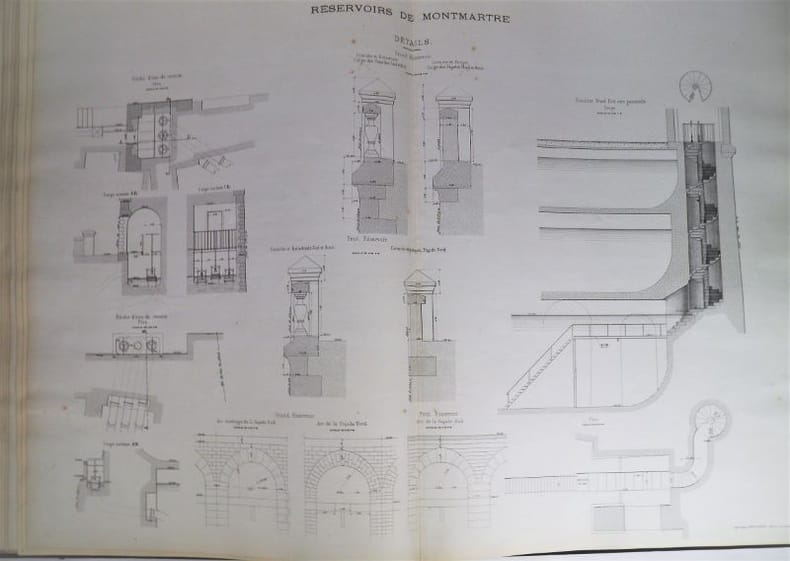
18892356Paris, Imprimerie Autog. Aost & Gentil, sans date [1889]. In-Plano – 49 x 65 cm. Reliure de l’époque en demi-chagrin bleu marine à coins, triples filets à froid en encadrement des plats de toile, titre, dates et blason parisien dorés sur le premier plat. Exemplaire entièrement monté sur onglets. 1 f. bl. ; 2 planches doubles + 4 planches (6 photographies originales), 1 p. (titre), 3 p. (texte autographié imprimé), 19 planches doubles (plans, coupes, façades et détails). ALPHAND ; HUET ; BECHMANN ; DIET ; JOURNET ; DUTOIT ; VILLE DE PARIS (auteurs). Entrepreneurs : LAZIES (maçonnerie). MATHELIN et GARNIER (Fontainerie). Rare et important ouvrage illustré de 6 photographies originales, dont 2 sur double page, et de 19 planches doubles, techniques et architecturales, témoignant de l’ampleur des travaux effectués à Montmartre à la fin du XIXe siècle, afin d’améliorer l’alimentation en eau d’un quartier en pleine croissance démographique. En effet, les sources naturelles présentes sur les flancs de la butte qui alimentèrent longtemps de nombreuses fontaines ne suffisaient plus : il fallait donc aller capter de l’eau de rivières (ce que permet dès 1834 une machine hydraulique édifiée à Saint-Ouen), la monter au sommet – au moyen d’une pompe à vapeur -, et enfin la stocker, d’où la construction en 1835 d’un château d’eau qui fonctionnera jusqu’en 1927. A partir de 1887, sous la houlette d’Adolphe Alphand, Directeur des Travaux de la Ville de Paris, sont entrepris deux chantiers de grande envergure. Le premier est la construction de deux réservoirs (un « grand » et un « petit »), dotés d’une capacité totale de 11 000 m3, dont la conception est confiée aux ingénieurs Bechmann et Journet et les plans sont dressés par l’architecte Diet (photographies 4 et 5). L’ouvrage occupe l’emplacement de l’ancien pressoir à raisins de l’abbaye des Dames de Montmartre, rue Azaïs, sur une colline sableuse à environ 128 m d’altitude. La nature du sol complexifie énormément les travaux, d'autant que l'usage du béton pour les fondations, d'un coût prohibitif, est exclu. Les deux concepteurs ont donc misé sur la pression de l'eau contenue dans les réservoirs pour stabiliser le banc de sable présent à cet endroit. Néanmoins, une partie de ce sable (avec les gravats) fut évacuée par des wagonnets tirés par une locomotive à vapeur (photographie 3), tandis que l'on imaginait d'ingénieux systèmes pour garantir l'étanchéité de l'édifice. Le sous-sol, les murs et le sol sont donc réalisés en meulière, les voûtes de la couverture en briquettes, et les piliers intérieurs en maçonnerie de brique de Bourgogne. Autre contrainte : la proximité du Sacré-Cœur (édifié à partir de 1886), qui requiert une harmonisation du style décoratif du bâtiment avec l’architecture néo-byzantine de la basilique (photographie 6), et là intervient le calcaire blanc des carrières de Souppes-sur-Loing et Château-Landon. Le second chantier de cette même année 1887 est celui de la nouvelle usine de relevage (ou élévatoire) Saint-Pierre, qui alimente à la fois le château d’eau et le réservoir. Ce dernier, définitivement opérationnel en 1889, pourvu de respectivement deux et trois étages, distribue l’eau dans les quartiers bas de Montmartre encore de nos jours. Les deux premières photographies, sur doubles pages, prises en 1886 et 1889, attestent de la transformation du paysage de la butte lorsque les réservoirs sont achevés.
188014974Shanghai 1880. 880 by 960mm. 34.75 by 37.75 inches. Lithographed map dissected and laid down on linen in 24 sections with contemporary hand-colour in full; preserved in original publisher's green cloth slipcase. Compiled by Thomas Waters 1842-1898 "expressly for Sportsmen" slipcase label. Waters was an Irish civil engineer and architect who carved out a successful early career in Japan designing the Imperial Mint in Osaka and the headquarters for the Imperial Japanese Army. He worked briefly in Shanghai in the 1880s before going out to Colorado to join his brothers in silver and gold mining. This map also appeared in cyanotype probably originally drawn up as part of Waters' bid for the commission to construct a new waterworks in Shanghai. Waters was a strong contender in the competition as he had experience in the field: he was partially responsible for the construction of Japan's first sewer system. Rare: OCLC locates only two institutional examples those in the BnF and University of Chicago. hardcover
1890List2833Shasta County and Siskiyou County 1890. Fifteen photographs approximately 4 ½ x 7 ½ inches. Each mounted on heavy cardboard backing approximately 5 ½ x 8 ½ inches which is mounted on heavy cardboard of approximately 8 x 10 ½ inches. Unknown if photographs are stamped verso due to mounting. Some with recent captions on the largest mount; some captions likely incorrect see description. Fine contrast overall fine condition. Raper James Waters 1856–1937 was a professional photographer from Sacramento California. He was first active as a photographer in Gold Hill Nevada in the 1880s. Following this he returned to California and had studios in Berkeley and San Francisco between the late 1880s and mid-1920s. Offered here is a collection of fifteen of Waters’ photographs from around Mount Shasta likely from the late 1880s or 1890s.<br /> <br /> The photographs are mainly from places in Siskiyou County where Mount Shasta is located including shots of the towns of Sisson now Mount Shasta and Dunsmuir Sisson and Dunsmuir are on the Siskiyou Trail an ancient Native American footpath running from the San Francisco area to Portland Oregon. The Central Pacific Railroad Company completed a train line along the Siskiyou Trail in 1887; one shot from an unknown location shows railroad tracks rounding a curve among felled trees. Just outside of Dunsmuir is the Shasta Springs resort mislabeled here as Shasta Bottling Works famous for its springwater – the fountains of water in the photograph are from pressurized pipes coming from the springs.<br /> <br /> Other captioned photographs show Castle Crags hikers summiting Mount Shasta Mossbrae Falls and Castle Lake mislabeled as Crystal Lake. Photographs also show campers with their tent small houses a canoe on a lake and snowy winter scenes. Overall a striking set of photographs. unknown
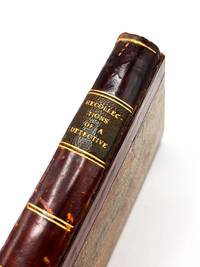
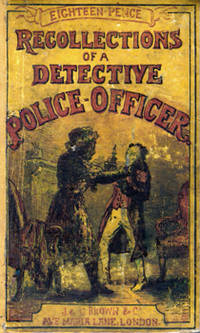
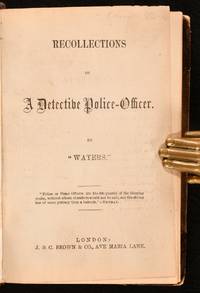
185641598London: J & C. Brown & Co. 1856. 1856. First edition. First edition of this Queen’s Quorum title #2 preceded only by Poe’s Tales in the history of the detective short story. A rare book to find in the original yellowback format; original covers laid down lacking the spine former owner's small name stamp on front pastedown sheet and a small inked number on the front fly leaf else a very good copy with interior clean. "Waters" is identified as a detective in the Metropolitan police and many of his cases are reported in this book which is quite readable. This book is a result of the publicity and public relations of the new Metropolitan Police which had been established in the 1820s. An interesting and early historical book in the early days of crime and mystery fiction. Also an early Haycraft/Queen Cornerstone mystery title and a rare book. Housed in a cloth clamshell case with titles stamped in red on the spine and front cover of the book reproduced on the front of the case. J & C. Brown & Co., [1856]. hardcover
18561476811856-1937. Collection of approximately 393 photographic prints of ships in the San Francisco Harbor taken at the turn of the twentieth century. Photographs of full rigged sailing ships clipper ships whaling barks tramp steamers steam trawlers and a torpedo boat are in the collection many stamped Waters Company or R.J. Waters & Co. San Francisco. Ships from all around the world are represented including Scotland the United Kingdom Australia Germany Sweden and the United States. Many show San Francisco docks skyline and headlands as the setting one depicting Alcatraz in the background. In very good condition. The photographs measure approximately 8 inches by 10 inches. Collected in four large folios. R.J. Waters a lesser-known figure in the realm of early photography made notable contributions to documenting maritime life and industrial advancements in the late nineteenth century. His collection of photographs captured the transition from sail to steam power showcasing ships harbors and coastal communities with remarkable detail. These images not only served as a visual record of the maritime industry during a transformative era but also highlighted the socio-economic impact of technological progress on seafaring communities. Waters' work bridged art and historical documentation providing valuable insights into the aesthetics of industrial photography and the role of visual media in preserving maritime heritage. Today his photographs are regarded as important artifacts for studying the intersection of maritime history technology and visual culture. unknown
188416161Paris, A. Quantin, 1884, deux volumes in-8 ; demi-maroquin à coins orange, dos lisse décoré en long d’une succession de sept rectangles dorés entrecoupés au tiers supérieur d’une grande pièce de titre bleu foncé, le tout dans un encadrement de filet doré, filet à froid sur les plats, couverture illustrée conservée, tête dorée, tranches non rognées ("reliure exécutée pour la Librairie Louis Conard") ; XXXII, 382 pp. ; XIX-410 pp. ; en tout, 26 gravures dont le portrait de Poe, dessiné et gravé par Chifflart ; eau-forte de Abot d’après Vierge ; 2 héliogravures d’après les dessins de Férat et Herpin ; 9 dessins et eaux-fortes de Wögel ; pour le tome II : frontispice dessiné et gravé par Chifflart ; 4 héliogravures d’après les dessins de Meyer, Férat, F. Méaulle et J.P. Laurens ; 8 eaux-fortes d’après Wögel.
18503448Great Britain 1850. Comprised of 88 manuscript pages of mathematical definitions tables methods and exercises in a single hand with the ownership signature of "Caroline Waters Age 16 yrs" to the front endpaper. Marbled paper vernacular binding measuring 8 x 12 inches and stitched at spine. Caroline's metric measurements and English currency reveal her to be a student somewhere in the UK. Though the commonness of her name and the absence of a specific date prevents us from locating her in genealogy records the manuscript she left behind reveals much about how and why girls of her age and class were being taught arithmetic.<br /> <br /> Caroline's elegant practiced hand suggests that she is a member of the rising middle class and the opening of the book suggests that she is a beginning to intermediate mathematician. At the top of the first page she defines Arithmetic as "the art of computing by numbers" which "has five principal sic rules for this purpose viz. Numeration Subtraction Addition Multiplication and Division." Using this definition she divides her notebook into a section for each providing a definition for that principle plus clear-cut examples of its use in both Simple and Compound formats. Numeration Subtraction and Addition are grouped together at the front; and after these sections conclude Caroline enters in Practical Questions in Compound Addition and Subtraction. These involve word problems involving the exchange of money and the calculation of wet and dry weights cloth measurements and time. She then mirrors this with Multiplication and Division before adding sections on Decimal Fractions more Practical Questions and sections on Federal Money and Simple Interest.<br /> <br /> The organization of the manuscript suggests that Caroline copied it out for continued reference where sections are easy to locate and problems clearly illustrate each of the principles. And the emphasis in sample problems on currency conversion monetary exchange and banking implies that her family in some way wanted her to be aware of these concepts.<br /> <br /> An exceptional and rich document Caroline's notebook is a rich resource for study including but not limited to the history of women's education middle class education women's domestic use of mathematics women in business paleography genealogy gender studies. unknown
185653813London: J. & C. Brown & Co 1856. First edition. Very good. First authorized edition in book form of these collected police detective stories the first ever of their kind to feature an investigator from Scotland Yard. Originally published in CHAMBERS'S EDINBURGH JOURNAL the thirteen stories of the First Series plus an eight additional episodes gathered three years later in the Second Series mark the first appearance in fiction of a Scotland Yard detective. Russell in the persona of "Waters" presented his narratives as first-person recollections in line with the conventions of the mid-Victorian police memoir then enjoying great popularity while offering to the reading public a new kind of hero: a policeman with intelligence curiosity and integrity. <br /> <br /> Detective fiction has always pressed up against the porous borders of that much-derided segment of popular literature now known as "true crime": just as the latter is frequently embellished and distorted for the sake of a better story crime and detective fiction in its earliest forms borrowed the shock of the real insisting as a matter of genre convention that the events depicted were only lightly fictionalized that the reader was given entrée into the "marginalized social space between 'respectable' and 'criminal'" Saunders occupied by the real-life police detective; that they were being told a true story by an insider. Verisimilitude was the point: "The genre was designed to take the private spaces operations and methodologies of the police force and publicize them for the reader and Russell himself explained that his memoir writing was designed to present an inside view into policing for readers" Saunders. Given the bedrock importance of this interplay between the real and the unreal at the dawn of detective fiction it is perhaps unsurprising that Sherlock Holmes the most famous fictional private detective of later Victorian decades would inspire a legion of devotees to insist on his factual reality perfectly well aware that this was not true and sublimely indifferent to it. <br /> <br /> A handsome copy of this scarce and vital Queen's Quorum and Haycraft-Queen title - especially uncommon complete in one volume. Two octavo volumes bound in one 6.25'' x 4''. Contemporary half calf marbled boards. Gilt-ruled spine with spine label. Lacking frontispiece as sometimes seen. 8 310 pages. In custom cloth slipcase. Sympathetically rebacked with reinforcement to hinges. Some rubbing chipping rear joint. Overall clean and sound. J. & C. Brown & Co unknown
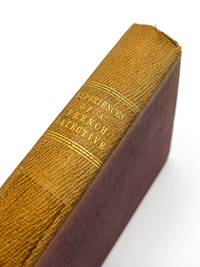
186154625London: Charles H. Clarke 1861. Very good plus. First edition of this classic Victorian detective novel ostensibly written in the form of a memoir by an expat detective who fled his home country to avoid political persecution. After his RECOLLECTIONS OF A DETECTIVE POLICE-OFFICER 1856 the first novel of its kind to feature an investigator from Scotland Yard Russell followed-up with this first-person series of eight short stories featuring Detective Duhamel "who escaped his native France to avoid imprisonment for political reasons" Dever 234. <br /> <br /> Detective fiction has always pressed up against the porous borders of that much-derided segment of popular literature now known as "true crime": just as the latter is frequently embellished and distorted for the sake of a better story crime and detective fiction in its earliest forms borrowed the shock of the real insisting as a matter of genre convention that the events depicted were only lightly fictionalized that the reader was given entrée into the "marginalized social space between 'respectable' and 'criminal'" Saunders occupied by the real-life police detective; that they were being told a true story by an insider. Verisimilitude was the point: "The genre was designed to take the private spaces operations and methodologies of the police force and publicize them for the reader and Russell himself explained that his memoir writing was designed to present an inside view into policing for readers" Saunders. <br /> <br /> To this end Russell / Duhamel begin the book with an "essay" "The Difference Between English and French Detectives" writing: "It is true they are alike agents of the public force and that their common mission is to frustrate or detect offenses against the person and against property. But there the resemblance ends . Yes multifarious all-embracing are the duties of the French Secret Police." Rare; OCLC locates just eight copies. 6.25'' x 4''. Original full purple textured cloth with gilt spine titles. 2 13-317 1 publisher's ad pages complete. Spine sunned with faint perished label shadow. Minor shelfwear. Overall clean and sound. Charles H. Clarke unknown
1868252925New York: Moorhead Simpson & Bond 1868. First. hardcover. very good-. By an Officer of the U. S. Army. 4 plates. xv 219pp. 3pp. of publiisher's ads. 12mo modern black cloth small light dampstain to some top margins a few pages with light foxing to margins upper right corner margin chipped on last page of publisher's ads. New York: Moorhead Simpson & Bond 1868. First Edition<br/> <br/> Presentation copy from the author William E. Waters. The inscription is on the front flyleaf which was dampstained but the inscription is not smudged and is legible. William E. Waters was an assistant Army surgeon who kept a diary while traveling from St. Louis to Camp Douglas near Salt Lake City and while being stationed at Camp Douglas in 1867. This book is based on that diary and a series of letters he wrote while in the Utah territory. Pages 106 to 202 are his impressions of the Mormons their Church doctrines and polygamy. The first half of the text is a narrative ".of an Overland Expedition which crossed the plains from Leavenworth via the Black Hills and Bridger's Pass to the Salt Lake Valley." Eberstadt 106:323. Howes W-157.<br/> <br/> Moorhead, Simpson & Bond unknown
18525759New York: Cornish Lamport & Co 1852. First Edition/Pirate Edition. Hardcover. Good Textblock Very Good. No DJ. First Edition/Pirate Edition. Hardcover. Unusual little tome of early crime fiction and one of only 5 or 6 known copies bound in red boards typically found in brown boards. "Waters" was the pseudonym for William Russell one of the earliest crafters of detective fiction in the UK. The first "official" printing was in London under a slightly different name in 1856 and then in the US later that year. This printing was apparently a pirate edition preceding the official by an inexplicable 4 years Waters Recollections of a Detective Police-Officer. London J&C Brown 1856. Queen's Quorum 2. Hubin 1994 p. 843. Noted flaws notwithstanding a rather handsome copy of this very scarce title rare in red boards. Moderate shelf/edge wear fraying at head and tail tips through light toning at spine minor soiling to boards corners gently bumped light foxing at preliminaries minor cutting error at 181/2 edge only else tight bright and unmarred. Red cloth boards gilt lettering in blind decorative elements decorative/advert endpages blue ink decorative borders and ads for various Cornish titles. Small 8vo. 238pp. Cornish, Lamport & Co hardcover
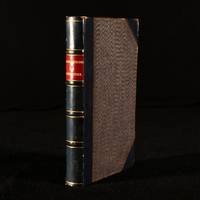
1856781P33London: J. & C. Brown & Co. 1856. First edition. Leather. Very Good Indeed. 6.5" by 4". Not Stated. The first edition of this influential short story collection by William Russell named by Ellery Queen as one of the most important detective pieces of the nineteenth century. The first edition of this collection.Illustrated with a frontispiece.Thirteen popular detective short stories which was been previously published in 'Chambers' Edinburgh Journal'.Including 'One Night in a Gaming-House' 'Guilty or Not Guilty' 'Legal Metamorphoses' 'Mary Kingsford' and more.This story collection was named in 'Queen's Quorum' Ellery Queen's conclusive list of the best detective short stories to have been written over the course of a century.An interesting and early example of crime and mystery fiction.By William Russell under the penname 'Waters'. A notable Victorian detective writer he was one of the most prolific author of 'police memoirs'.One page of publisher's adverts to the rear. Rebound in a half calf binding with cloth to the boards. Externally smart with some rubbing to the boards and spine. Front hinge is starting but firm. Internally firmly bound. Pages are bright and clean with just a couple of light spots. Prior owner's ink inscription to the head of the first leaf of text. Very Good Indeed J. & C. Brown & Co. hardcover
185641005<p>London : J. & C. Brown & Co. 1856. First edition : with the variant undated title-page. "I returned to Scotland Yard to report ." - the very first appearance in fiction of a Scotland Yard detective - indeed the first English detective stories. "Waters" of the Yard was the invention of journalist William Russell - the stories originally published in Chambers' Edinburgh Journal between 1849 and 1852 with some of the stories appearing in book form in New York in 1852. The present publication is the first appearance of all eleven with a final twelfth tale not previously published. Foolscap 8vo 18cm. 310pp. Wood-engraved frontispiece engraved by George Measom 1818-1901 later knighted for his charitable work. Original pictorial boards a dramatic yellowback design in red and black; rebacked with a neat paper spine replacing the fragile lost original; some rubbing and wear; internally a few small marks spots and slight creases but overall an attractive copy of a cornerstone of the genre.</p> London : J. & C. Brown & Co., (1856). hardcover
186020678Paris, Hachette, 1860 ; in-8, demi-maroquin à coins brun, dos à nerfs, titre et date dorés, non rogné, couvertures vertes et dos conservés (Louis Guétant) , VI, 554, [2] pp. et 341 dessins de Gustave Doré ; la page 554 est chiffrée par erreur 354.
185623900London: J. & C. Brown & Co 1856. First edition. Hardcover. Near fine. 12mo. 309pp. Engraved frontispiece. Previous ownership name on title page dated 1858. Contemporary half-leather spine in four compartments tooled in blind with raised bands tooled in gilt black leather lettering label gilt. Marbled paper sides. Bookseller label on the front pastedown. Light wear to the edges large ownership name on the title else a near fine copy. <br /> <p><br /> Thirteen popular detective short stories which were previously published in 'Chambers' Edinburgh Journal' including 'One Night in a Gaming-House' 'Guilty or Not Guilty' 'Legal Metamorphoses' 'Mary Kingsford' and more. This is their first collected edition. <br /> <p><br /> Important early example of detective fiction. Queen's Quorum 2.<br /> <p>. J. & C. Brown & Co hardcover
185244206New York: Cornish Lamport & Co. Publishers 1852. 1852. First edition. This is the true first American edition that was first issued as a pirated edition by Cornish Lamport & Co. in 1852 with the text lifted from CHAMBER'S EDINBURGH JOURNAL and "some of our American Magazines." The first U. K. edition was published in 1856 as RECOLLECTIONS OF A DETECTIVE POLICE-OFFICER. The first authorized American edition was published in 1857 in Boston by Wentworth and Company. Thomas Waters was the pseudonym of William Russell. 8vo. Original burgandy cloth decorated in blind on front and rear covers titles stamped in gold gilt on the spine 238 pp. preface. Queen 's Quorum 2 says this book is "the most important criminological yellow-back of its time." The first collection of British Detective stories and preceded only by Edgar Allan Poe's TALES in 1845 according to Queen's Quorum. Cloth lightly worn at spine ends corners and extremities cloth is lightly rubbed former owner's name on front pastedown sheet else a very good copy of a rare book. Cornish, Lamport & Co., Publishers, 1852. hardcover
1857818P4London: W. Kent & Co; J. & C. Brown & Co c1857-60. First edition. Leather. Good. 6.5" by 4.5". None. A lovely set of the first and second series of William Russell's collection of short stories about detectives in Victorian England a gripping series. The first and second series of 'Recollections of a Detective Police-Officer'.The second series is a first edition of 1859. The first series is an undated early reprint not the first edition as it does not have a date to the title page but is c1856-7 as there are four Captain Mayne Reid titles listed to the adverts all of which were published before 1857 the final title in this list being 'The Quadroon' which was published in 1856.One page of adverts to the rear of the first series. This work was named second in 'Queen's Quorum' Ellery Queen's conclusive list of the best detective short stories to have been written over the course of a century named only after the 'Tales' of Edgar Allan Poe.An interesting and early example of crime and mystery fiction.Twenty-one popular detective short stories which was been previously published in 'Chambers' Edinburgh Journal'.Including 'One Night in a Gaming-House' 'Guilty or Not Guilty' 'Legal Metamorphoses' 'Mary Kingsford' 'The Dramatic Author' 'Mark Stretton' 'The Two Widows' and more.By William Russell under the pen-name 'Waters'. A notable Victorian detective writer he was one of the most prolific author of 'police memoirs'. He was a mysterious figure with little known about his life.Collated the first series is bound without the frontispiece. In a half calf binding first series with cloth to the boards second series with marbled paper to the boards. First series is rebacked. Externally with some rubbing heavier to the boards of the second series. A little loss of leather to the extremities of the first series and to the raised bands. Some bumping to the extremities and to the head and tail of the spine of the second series with a little loss. Tidemark to the front board of the first series. Hinges of the first series are reinforced with cloth. Front hinge of the second series is starting but firm. Internally firmly bound. Pages are bright with the occasional spot mostly to the first and last few pages. Good W. Kent & Co; J. & C. Brown & Co hardcover
1895364London: Lawrence & Bullen 1895. Limited Edition #39 of 1000 copies. Hardcover. Near Fine. E. R. Hughes. THIS COMPLETE TWO VOLUME SET IS IN NEAR FINE CONDITION BEAUTIFULLY BOUND IN 3/4 CRUSHED MOROCCO WITH MARBLED BOARDS SIX COMPARTMENTS AND FIVE RAISED BANDS TO SPINE WITH BRIGHT GILT FLORAL DETAILS AND TITLE. BINDING AND HINGES ARE VERY GOOD MARBLED END PAPERS AND PASTE DOWNS. NO LOOSE OR MISSING PAGES PAGES ARE BRIGHT AND CLEAN WITHOUT MARKS OR FOXING. NICELY ILLUSTRATED WITH COLOR PLATES LIMITED EDITION. BOOKS MEASURE 11"x7.5". 126 YEARS OLD. A STUNNING SET IN REMARKABLE CONDITION. Lawrence & Bullen hardcover
1898002392The Society of Bibliophiles 1898 7 Volumes 8vo. Privately printed for members of the Society of Bibliophiles London 1898. Sold together are two sets. The Percorone of Ser Giovanni limitation no. 2/500 a 3 volume set. Facetious Nights of Straparola limitation no. 129/500 a 4 volume set. Illustrations by Jules Garner and E.R. Hughes. First English translation from Italian by W.G. Waters. Green publisher's cloth hard covers gilt title and ornamentation on spine covers and front boards leaves are gilt atop with remainder of deckled edges frontispiece guarded by tissue illustrated text pages. Dimensions: 9.75 W x 6.25 D x 9 H inches. Condition: Near fine; faintly sunned spine covers some gently bumped spine crowns extremities effected by light edge wear strong square spines light age-toned text pages ink ownership inscription atop title page otherwise fine. Limited Edition. Hardcover. Near Fine. The Society of Bibliophiles hardcover
1896306962New York: G.F. Diehl 1896. 20pp. 12mo. Stapled self wrappers. Slight finger soiling. In half blue morocco and cloth drop box with red leather label. 20pp. 12mo. Pro-capitalist pamphlet by someone claiming to "work in a machine shop in a little New England town. G.F. Diehl] unknown
187916678Paris, Plon et Cie, 1879 ; in-4, demi chagrin à coin rouge, dos à nerfs très décoré et dorés, tête dorée, double filet doré sur les plats, non rogné (reliure de l'époque) ; (8), XIV, (2), 398, (2) pp. et 25 planches hors texte, dont le frontispice.
18040017921804 Paris, de l'Imprimerie Impériale, An XII-1804. Grand in-quarto (240 X 312 mm) reliure à la Bradel de papier mauve marbré, dos lisse orné de filet doré en place des nerfs, pièce de titre maroquin havane (reliure fin XIXe) ; (1) f. de titre, XXXII-130 pages, (1) f. d'errata, 2 planches gravées et 7 tableaux dépliants. Rousseurs en marge du feuillet de titre.
1873182351873 [Imprimerie De Jules Claye, Paris,1873 - IN FOLIO demi basane noire ,manques au haut du dos.Cet ouvrage expose la magnifique collection d'oeuvres d'art du collectionneur belge John W. Wilson. Sa collection classée par écoles et peintres anciens et modernes regroupe des oeuvres des plus grands maîtres tels que Watteau, Rubens, Delacroix, Géricault, Turner, Millet (dont l'Angélus du soir est aujourd'hui exposé au musée d'Orsay) etc. Cet ensemble expose le goût certain et les connaissances pointues en Histoire de l'Art de John W. Wilson.Text pristine & unmarked, crisp, tight to the spine - LIMITED EDITION, NUMBERED COPY. Text in French. Pages and plates not numbered. 68 plates (incl. Ports. ) , facsimile signatures of the artists whose works are represented ; 51 cm. Among the artists represented: F. Bol, N. Maas, Molenaar, Diaz, Rousseau, Milet, Plassan, and others. Decorated endpapers and edges.
185282443New York: Cornish Lamport & Co 1852. First American Edition. Octavo. 19cm. Publisher's original dark blue embossed cloth titled in gilt to spine with elaborate blindstamping to boards. 238pp. Wear rubbing and scuffing to extremities with book board showing through the cloth at corners and edges fraying and loss to spine ends not interfering with the title in addition there is a cosmetic split to the cloth of the front spine hinge. A good serviceable copy with some conspicuous wear. Internally clean rear inner hinge split two previous ownerships in pencil to the prelims with an additional pencil name to page 22. Some thumbing to prelims and with a pale damp stain to the lower front corner of the first 20pp or so. <br /> <br /> Perhaps not the most beautiful example of this scarce and sought after title to surface but a legitimate rarity nonetheless. This first US edition although of dubious legality predates the official first edition of this work by 4 years having been collected from US magazine publications syndicating from the Edinburgh Review and bolted together into book form. One of the very earliest fictional police procedurals and an early contributor to the enduring mystique of Scotland Yard. Cornish, Lamport & Co unknown
18981808London: The Society of Bibliophiles 1898. Limited Edition. Hardcover. Very Good . 8vo. The Facetious Nights of Straparola 4 Volume set. The Pecorone 3 Volume set. Sold together 7 volumes. Limited set of 1000 numbered copies both of these sets are 838. Now first translated into English from the Italian by W. G. Waters. Illustrated by Jules Garnier and E. R. Hughes. Grey coloured cloth with gilt image to front boards with gilt lettered and decorated spines. Spines faded otherwise an about fine 7 volumes. Boards cloth and interior very good. Clean and bright throughout. Bindings tight and square. Top edge gilt other edges untrimmed. Captioned tissue guarded plates. A very handsome set. Fairy tales folk tales. "Consists of an exquisite and delightful collection of humorous witty and mirthful conversations fables and enigmas including singing music and dancing during the thirteen nights of the carnival at Venice. The Society of Bibliophiles hardcover