204 résultats
1855GIT00f96Nîmes de l'Imprimerie Soustelle Gaude 1855. Plaquette in-4 brochée couverture imprimée 44pp. Bel exp.
1868GIT00f9aNîmes de l'Imprimerie Typographique Clavel-Ballivet et Cie 1868. plaquette in-4 brochée 12pp.
1866GIT00f99Nîmes de l'Imprimerie Clavel-Ballivet et Cie 1866. Plaquette in-4 brochée 11pp.
1865GIT00f9cNîmes Imprimerie de Clavel-Ballivet 1865. Plaquette in-4 brochée 19pp.
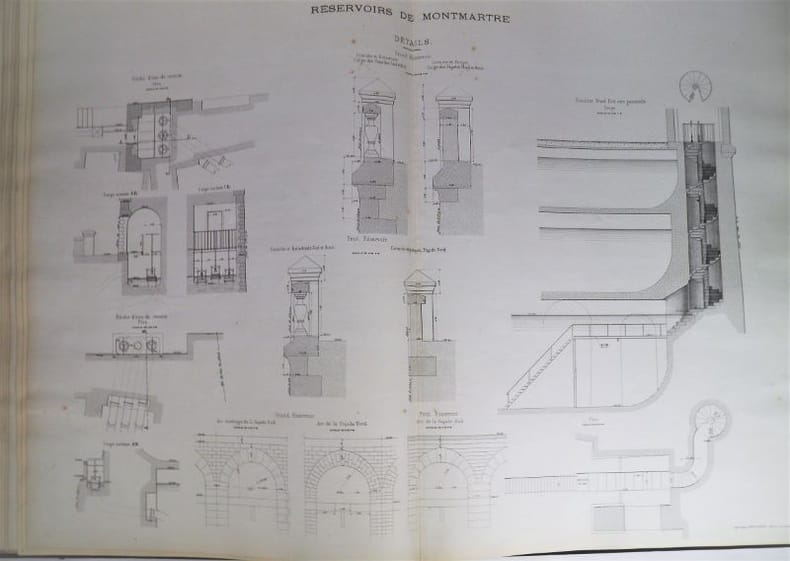
18892356Paris, Imprimerie Autog. Aost & Gentil, sans date [1889]. In-Plano – 49 x 65 cm. Reliure de l’époque en demi-chagrin bleu marine à coins, triples filets à froid en encadrement des plats de toile, titre, dates et blason parisien dorés sur le premier plat. Exemplaire entièrement monté sur onglets. 1 f. bl. ; 2 planches doubles + 4 planches (6 photographies originales), 1 p. (titre), 3 p. (texte autographié imprimé), 19 planches doubles (plans, coupes, façades et détails). ALPHAND ; HUET ; BECHMANN ; DIET ; JOURNET ; DUTOIT ; VILLE DE PARIS (auteurs). Entrepreneurs : LAZIES (maçonnerie). MATHELIN et GARNIER (Fontainerie). Rare et important ouvrage illustré de 6 photographies originales, dont 2 sur double page, et de 19 planches doubles, techniques et architecturales, témoignant de l’ampleur des travaux effectués à Montmartre à la fin du XIXe siècle, afin d’améliorer l’alimentation en eau d’un quartier en pleine croissance démographique. En effet, les sources naturelles présentes sur les flancs de la butte qui alimentèrent longtemps de nombreuses fontaines ne suffisaient plus : il fallait donc aller capter de l’eau de rivières (ce que permet dès 1834 une machine hydraulique édifiée à Saint-Ouen), la monter au sommet – au moyen d’une pompe à vapeur -, et enfin la stocker, d’où la construction en 1835 d’un château d’eau qui fonctionnera jusqu’en 1927. A partir de 1887, sous la houlette d’Adolphe Alphand, Directeur des Travaux de la Ville de Paris, sont entrepris deux chantiers de grande envergure. Le premier est la construction de deux réservoirs (un « grand » et un « petit »), dotés d’une capacité totale de 11 000 m3, dont la conception est confiée aux ingénieurs Bechmann et Journet et les plans sont dressés par l’architecte Diet (photographies 4 et 5). L’ouvrage occupe l’emplacement de l’ancien pressoir à raisins de l’abbaye des Dames de Montmartre, rue Azaïs, sur une colline sableuse à environ 128 m d’altitude. La nature du sol complexifie énormément les travaux, d'autant que l'usage du béton pour les fondations, d'un coût prohibitif, est exclu. Les deux concepteurs ont donc misé sur la pression de l'eau contenue dans les réservoirs pour stabiliser le banc de sable présent à cet endroit. Néanmoins, une partie de ce sable (avec les gravats) fut évacuée par des wagonnets tirés par une locomotive à vapeur (photographie 3), tandis que l'on imaginait d'ingénieux systèmes pour garantir l'étanchéité de l'édifice. Le sous-sol, les murs et le sol sont donc réalisés en meulière, les voûtes de la couverture en briquettes, et les piliers intérieurs en maçonnerie de brique de Bourgogne. Autre contrainte : la proximité du Sacré-Cœur (édifié à partir de 1886), qui requiert une harmonisation du style décoratif du bâtiment avec l’architecture néo-byzantine de la basilique (photographie 6), et là intervient le calcaire blanc des carrières de Souppes-sur-Loing et Château-Landon. Le second chantier de cette même année 1887 est celui de la nouvelle usine de relevage (ou élévatoire) Saint-Pierre, qui alimente à la fois le château d’eau et le réservoir. Ce dernier, définitivement opérationnel en 1889, pourvu de respectivement deux et trois étages, distribue l’eau dans les quartiers bas de Montmartre encore de nos jours. Les deux premières photographies, sur doubles pages, prises en 1886 et 1889, attestent de la transformation du paysage de la butte lorsque les réservoirs sont achevés.
18503448Great Britain 1850. Comprised of 88 manuscript pages of mathematical definitions tables methods and exercises in a single hand with the ownership signature of "Caroline Waters Age 16 yrs" to the front endpaper. Marbled paper vernacular binding measuring 8 x 12 inches and stitched at spine. Caroline's metric measurements and English currency reveal her to be a student somewhere in the UK. Though the commonness of her name and the absence of a specific date prevents us from locating her in genealogy records the manuscript she left behind reveals much about how and why girls of her age and class were being taught arithmetic.<br /> <br /> Caroline's elegant practiced hand suggests that she is a member of the rising middle class and the opening of the book suggests that she is a beginning to intermediate mathematician. At the top of the first page she defines Arithmetic as "the art of computing by numbers" which "has five principal sic rules for this purpose viz. Numeration Subtraction Addition Multiplication and Division." Using this definition she divides her notebook into a section for each providing a definition for that principle plus clear-cut examples of its use in both Simple and Compound formats. Numeration Subtraction and Addition are grouped together at the front; and after these sections conclude Caroline enters in Practical Questions in Compound Addition and Subtraction. These involve word problems involving the exchange of money and the calculation of wet and dry weights cloth measurements and time. She then mirrors this with Multiplication and Division before adding sections on Decimal Fractions more Practical Questions and sections on Federal Money and Simple Interest.<br /> <br /> The organization of the manuscript suggests that Caroline copied it out for continued reference where sections are easy to locate and problems clearly illustrate each of the principles. And the emphasis in sample problems on currency conversion monetary exchange and banking implies that her family in some way wanted her to be aware of these concepts.<br /> <br /> An exceptional and rich document Caroline's notebook is a rich resource for study including but not limited to the history of women's education middle class education women's domestic use of mathematics women in business paleography genealogy gender studies. unknown
1896306962New York: G.F. Diehl 1896. 20pp. 12mo. Stapled self wrappers. Slight finger soiling. In half blue morocco and cloth drop box with red leather label. 20pp. 12mo. Pro-capitalist pamphlet by someone claiming to "work in a machine shop in a little New England town. G.F. Diehl] unknown
1860734751860 Paris, Chaix, sans date (vers 1860), in 12 relié demi-basane vert bouteille, dos lisse orné, 291 pages ; des rousseurs, parfois fortes ; ex-libris sur la première garde ; petits frottis, ors fanés.
1873LFA-126721032Tome Quatorzième : 423 pages, format 145 x 220 mm, broché, illustré, publié en 1873, "Société Savoisienne d'Histoire et d'Archéologie", bon état
1862878791862 Chambéry, Imprimerie Puthod, 1862, in 8° broché, VIII-279 pages ; couverture défraîchie, réparation ancienne au dos.
183028445nantes 1830 une page, format : 15,6 x 15 cm, sur papier vergé bleuté ligné à en-tête pré-imprimé en noir avec Marque "CONTRIBUTIONS DIRECTES" AVEC BLASON COURONNÉ "AUX ARMES ROYALES" dans un ovale gravé en noir au centre à gauche, signature manuscrite Girault, QUITTANCE N°69 - DÉPARTEMENT DE LA LOIRE-INFÉRIEURE - DIRECTION DE NANTES - RECETTE PARTICULIÈRE DE NANTES :AMPLIATION DE DÉCLARATION ET LICENCE DE MARCHAND DE VIN EN GROS POUR EXERCER LA PROFESSION DANS SON DOMICILE, SITUÉ A NANTES , RUE DE CLISSON, PROMETTANT DE SE CONFORMER AUX LOIS ET RÈGLEMENTS EN VIGUEUR....IL A PAYÉ CE JOUR, LE 5 MARS 1830, LA SOMME DE CINQUANTE CINQ FRANCS TRENTE CENTIMES, POUR DROIT DE LICENCE, DONT QUITTANCE AU BUREAU DE NANTES,
188110034Paris, Quantin, 1881. In-4 de 363-[3] pages, demi-chagrin marron à coins, dos (un peu passé) à nerfs avec titre doré, tête dorée. Reliure frottée, rousseurs.
1880815921880 Paris, Imprimerie de la Publicité, 1880, in 8° broché, 88 pages ; couverture illustrée (effrangée avec petit manque angulaire).
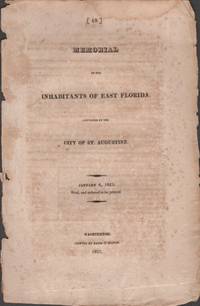
182332839Washington DC: Printed by Gales & Seaton 1823. First Edition. Wraps. Good. Disbound wraps. 5 pages 1 blank page. Printed name of Waters Smith at the bottom page 5 and attested by the Secretary F. J. Fatio. Scarce. 2 copies located in OCLC as of 4/2019 Jacksonville PL AAS. Florida became a territory of the United States in 1822 and obtained statehood in 1845. Printed by Gales & Seaton unknown
185020895Pau, E. Vignancour 1850 In-16, demi-basane marbrée, dos à nerfs, caissons ornés, filets et roulettes dorés, pièce de titre rouge, 3- 331 pp. Carte repliée. Coiffe sup. usée. Petits frottements. Bon exemplaire.
187520894Alex Coccoz, 1864, 1872. G. Masson 1875 In-12, demi-basane marbrée, dos à nerfs, caissons ornés, filets et roulettes dorés, pièce de titre rouge, 40 pp. - 36 pp. - 77 pp. - 23 pp. & tableau dépl. - 39 pp. Infimes frottements. Bel exemplaire.
186020893Slnd 1860 In-12, demi-basane marbrée, dos à nerfs, caissons ornés, filets et roulettes dorés, pièces d’auteur et de titre rouges. Mors fendillé en tête. Coiffes sup. usée.
185720892Div. 1857 In-12, demi-basane marbrée, dos à nerfs, caissons ornés, filets et roulettes dorés, pièces d’auteur et de titre rouges. Coiffes un peu usées. Bon exemplaire.
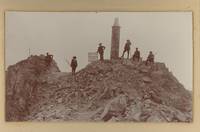
1890List2833Shasta County and Siskiyou County 1890. Fifteen photographs approximately 4 ½ x 7 ½ inches. Each mounted on heavy cardboard backing approximately 5 ½ x 8 ½ inches which is mounted on heavy cardboard of approximately 8 x 10 ½ inches. Unknown if photographs are stamped verso due to mounting. Some with recent captions on the largest mount; some captions likely incorrect see description. Fine contrast overall fine condition. Raper James Waters 1856–1937 was a professional photographer from Sacramento California. He was first active as a photographer in Gold Hill Nevada in the 1880s. Following this he returned to California and had studios in Berkeley and San Francisco between the late 1880s and mid-1920s. Offered here is a collection of fifteen of Waters’ photographs from around Mount Shasta likely from the late 1880s or 1890s.<br /> <br /> The photographs are mainly from places in Siskiyou County where Mount Shasta is located including shots of the towns of Sisson now Mount Shasta and Dunsmuir Sisson and Dunsmuir are on the Siskiyou Trail an ancient Native American footpath running from the San Francisco area to Portland Oregon. The Central Pacific Railroad Company completed a train line along the Siskiyou Trail in 1887; one shot from an unknown location shows railroad tracks rounding a curve among felled trees. Just outside of Dunsmuir is the Shasta Springs resort mislabeled here as Shasta Bottling Works famous for its springwater – the fountains of water in the photograph are from pressurized pipes coming from the springs.<br /> <br /> Other captioned photographs show Castle Crags hikers summiting Mount Shasta Mossbrae Falls and Castle Lake mislabeled as Crystal Lake. Photographs also show campers with their tent small houses a canoe on a lake and snowy winter scenes. Overall a striking set of photographs. unknown
188416161Paris, A. Quantin, 1884, deux volumes in-8 ; demi-maroquin à coins orange, dos lisse décoré en long d’une succession de sept rectangles dorés entrecoupés au tiers supérieur d’une grande pièce de titre bleu foncé, le tout dans un encadrement de filet doré, filet à froid sur les plats, couverture illustrée conservée, tête dorée, tranches non rognées ("reliure exécutée pour la Librairie Louis Conard") ; XXXII, 382 pp. ; XIX-410 pp. ; en tout, 26 gravures dont le portrait de Poe, dessiné et gravé par Chifflart ; eau-forte de Abot d’après Vierge ; 2 héliogravures d’après les dessins de Férat et Herpin ; 9 dessins et eaux-fortes de Wögel ; pour le tome II : frontispice dessiné et gravé par Chifflart ; 4 héliogravures d’après les dessins de Meyer, Férat, F. Méaulle et J.P. Laurens ; 8 eaux-fortes d’après Wögel.
1874819331874 Lyon, Imprimerie Louis Perrin et Martinet, 1874, in 8° broché, 158 pages ; couverture fanée.
1868252925New York: Moorhead Simpson & Bond 1868. First. hardcover. very good-. By an Officer of the U. S. Army. 4 plates. xv 219pp. 3pp. of publiisher's ads. 12mo modern black cloth small light dampstain to some top margins a few pages with light foxing to margins upper right corner margin chipped on last page of publisher's ads. New York: Moorhead Simpson & Bond 1868. First Edition<br/> <br/> Presentation copy from the author William E. Waters. The inscription is on the front flyleaf which was dampstained but the inscription is not smudged and is legible. William E. Waters was an assistant Army surgeon who kept a diary while traveling from St. Louis to Camp Douglas near Salt Lake City and while being stationed at Camp Douglas in 1867. This book is based on that diary and a series of letters he wrote while in the Utah territory. Pages 106 to 202 are his impressions of the Mormons their Church doctrines and polygamy. The first half of the text is a narrative ".of an Overland Expedition which crossed the plains from Leavenworth via the Black Hills and Bridger's Pass to the Salt Lake Valley." Eberstadt 106:323. Howes W-157.<br/> <br/> Moorhead, Simpson & Bond unknown
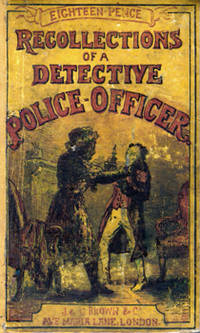
18564487London: J&C Brown & Co. n.d. 1856 1856. 8vo. 158x95mm. pp. pp. iv 2 9-309 1bl. Frontispiece some offsetting from frontispiece onto the title page opposite. This copy is undated but has the same title and imprint as the dated first edition of 1856 so we have assumed that it is from that year. Russell's works were often republished but with different titles which is not the case here. Bound with and after BELL Robert The Ladder of Gold. An English Story London:G. Routledge & Co. 1858. vi 7-440. Navy blue half calf marbled paper covered boards spine decorated in blind and with two tan morocco labels lettered in gilt. Rubbing to edges and slight bumping and creasing to corners. All edges marbled. Front pastedown has Ex Libris of C. Villiers Downes. Apsley House Beds. Robert Bell 1800-67 was a prolific man of letters best known for his journalism and his never completed annotated edition of the English poets. The Ladder of Gold was one of two novels. But of the two works bound together here it is the second which is of greater interest hence our cataloguing it as the principal work. William Russell 1806-1876 was one of the first writers to concentrate on detective stories in particular police memoirs. He began by contributing stories to magazines ten of which were published in pirated form in America in 1852 and 1853. These together with another two were then published legitimately in England in 1856. This is the present collection. The stories are short punchy realistic and would have seemed quite revolutionary at the time. Indeed he is sometimes cited as an influence on the grittier American twentieth century crime writers. London: J&C Brown & Co. n.d. [1856] hardcover
185641005<p>London : J. & C. Brown & Co. 1856. First edition : with the variant undated title-page. "I returned to Scotland Yard to report ." - the very first appearance in fiction of a Scotland Yard detective - indeed the first English detective stories. "Waters" of the Yard was the invention of journalist William Russell - the stories originally published in Chambers' Edinburgh Journal between 1849 and 1852 with some of the stories appearing in book form in New York in 1852. The present publication is the first appearance of all eleven with a final twelfth tale not previously published. Foolscap 8vo 18cm. 310pp. Wood-engraved frontispiece engraved by George Measom 1818-1901 later knighted for his charitable work. Original pictorial boards a dramatic yellowback design in red and black; rebacked with a neat paper spine replacing the fragile lost original; some rubbing and wear; internally a few small marks spots and slight creases but overall an attractive copy of a cornerstone of the genre.</p> London : J. & C. Brown & Co., (1856). hardcover
1882GITe403Sans lieu ni date vers 1882. Grand in-8 broché, titre imprimé sur le 1er plat 14 feuillets chiffrés imprimés sur le recto seulement d'après un support manuscrit. Pliure angulaire sur le 1er plat, 2 petites coupures sur le 2e, intérieur en bon état et bien complet. Rare.