7 255 résultats
54577Dawson Archon. London. 1978. pp. 309 iii. Portrait frontispiece 3 pedigrees sample of note-book signature in full and one text figure. Dust wrapper a very good copy. An immensely useful reference. Dawson Archon. London. 1978. unknown
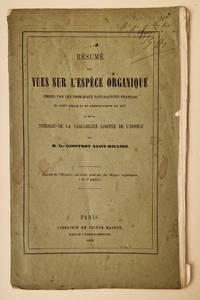
324<p>A very rare offprint from l'Histoire naturelle générale des règnes organiques published the same year as Darwin's Origin of Species in which Isidore traces the history of the notions of evolution and variability of the species developed by the French School of Zoology since Buffon.</p><p>An important work on the history of science in which the author also asserts in the light of the Darwinian revolution his evolutionary views inherited from his father's work. Isidore Geoffroy Saint-Hilaire's "important views on the persistence of infantile characteristics among primates and on 'parallel' evolution appear to be original . In 1859 he published 'Résumé des vues sur l'espece biologique' in which he quietly reminded Darwin of his predecessors in France: Buffon Lamarck and Étienne Geoffroy Saint-Hilaire." DSB<br />An interesting copy bearing a signed autograph dedication partially cut from the author to "Mons. Laugier offered by his very devoted colleague." This is certainly the surgeon Stanislas Laugier.<br />Foxing and stains but a copy in its original binding with full margins.</p><p>Darwin - Darwiniana GEOFFROY SAINT-HILAIRE Isidore Résumé des vues sur l'espèce organique émises par les principaux naturalistes français du XVIIIe siècle et du commencement du XIXe et de la théorie de la variabilité limitée de l'espèce Paris Victor Masson 1859.</p><p>8vo of 40 pages ; original printed wrappers.</p>
10320Lyon, Louis Perrin et Marinet, 1877. In-8, broché.
189232936Chicago: Open Court Publishing 1892. 12mo. xiv 2 460 pp. plus 4 pp. publ. ads. Engravd frntsp. numerous engravings text illusts. Blue cloth gilt lettrng mnr bmpng to crnrs shlfwr VG- w/ numerous contemporary clippings laid-in. First edition of this first volume in the author's exposition of evolutionary biology including sections on the major proponents of Darwin and their advances and discoveries in classification morphology embryology palaeontology natural selection and more. Open Court Publishing, hardcover
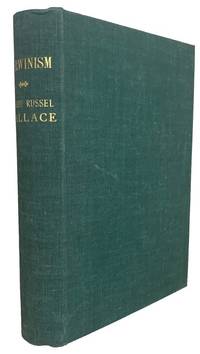
188943530London & New York: Macmillan and Co 1889. 12mo. 19.7cm The First Edition xvi4942p. ads for Wallace’s books; half title frontis portrait with 39 mainly text illustrations colour folding map expertly rebound in fine grain green book linen gilt spine titles in fine clean condition thus. Alfred Russell Wallace was a co-discoverer of the theory of evolution by natural selection with Charles Darwin. He became a staunch defender of the theory and wrote extensively on it including this book Darwinism 1889. His most significant fieldwork was in the Amazon and the Malay Archipelago. Macmillan and Co unknown
1961118London: The Botanical Society of the British Isles c/o The British Museum 1961. First Edition. blue boards. Very Good . 6 plates. 8vo blue boards edited by P. J. Wanstall illustrated with 6 plates 140 pages. Previous owner's stamp on ffe; slight mottling and rubbing to boards; internally clean and tight. Contains seven essays: one notably by Nora Barlow on "Darwin as Botanist." The Botanical Society of the British Isles c/o The British Museum hardcover
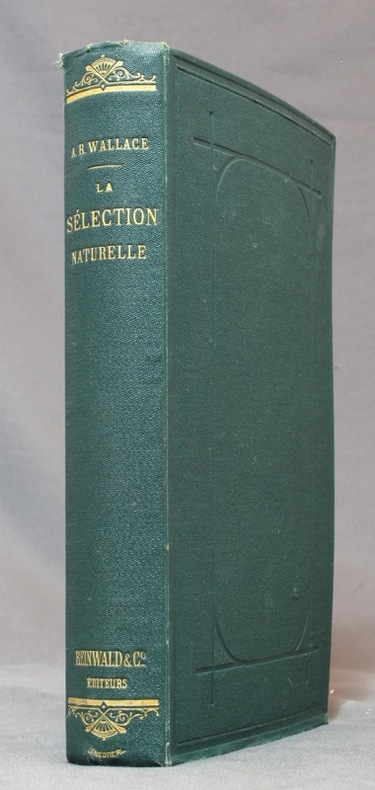
187215484Paris, C. Reinwald et Cie, 1872. In-8 de [4]-XIII-[3]-420 pages, pleine percaline verte de l'éditeur, dos lisse orné, filets à froid sur les plats, liste des ouvrages en vente à la librairie Reinwald (Darwin, Carl Vogt, Louis Buchner) proprement collée au contre-plat. Cartonnage d’éditeur signé Lenègre.
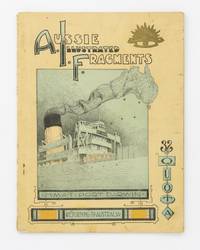
1919129553Sydney: Finn Brothers Printers 1919. First Edition. Paperback. Sydney Finn Brothers Printers 1919. Quarto 40 pages including a 6-page nominal roll of No. 32 Quota with numerous illustrations. Four-colour pictorial card covers a little marked creased and slightly worn along the spine; inner hinges pulled; some tears to the gutter of the first leaf where it has been pulled away from the staples; minor signs of age and use; a presentable copy. A souvenir of the repatriation voyage of the troopship 'Port Darwin' in June and July 1919. <p>Not in Dornbusch; not in Fielding and O'Neill. Finn Brothers, Printers paperback
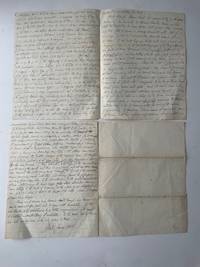
26916June 1865. Manuscript Initialled by Author 6pp. 4to two bifoliums good condition. SEE IMAGE FOR FULL TEXT. The essay commences with a reference to Charles Darwin "Origin" having been published a few years before; "I suppose that animal life - supplied and controlled by the spirit of God Genesis I.2 - took its upward course through the Ages developing possibly one from another as Mr Darwin supposes and including all the different forms that are or have been up to the 'man' of the Drift.See Note below re. Pleistocene. I suppose this creature's organism to have been similar to our own and his instinct & organic action and the degree of its development must depend on the nature of an animals organs. I do not suppose that this man was more than an animal - that he had reason or speech- Birds build their nests by instinct; For rest of text see images" Note: A. The talk or lecture is in a flimsy folder on which is an apparent ascription to an "H.Harris" BUT see photograph of the concluding initials not interpreted by me; B. "The image of one page of six is a handwritten letter or manuscript page from June 1865 containing a discussion of mythological and historical theories regarding ancient peoples and their origins. The author speculates on topics such as the origins of amber trade routes the identity of the Finns and other northern tribes as descendants of Tubal Cain and the potential characteristics of the descendants of Cain. The text concludes by acknowledging that these are merely theories subject to change with better information or understanding of 'revelation.'" AI; C."The Middle and Late Pleistocene is arguably the most interesting period in human evolution. This broad period witnessed the evolution of our own lineage as well as that of our sister taxon the Neanderthals and related Denisovans. It is exceptionally rich in both fossil and archaeological remains and uniquely benefits from insights gained through molecular approaches such as paleogenetics and paleoproteomics that are currently not widely applicable in earlier contexts. This wealth of information paints a highly complex picture often described as ‘the Muddle in the Middle’ defying the common adage that ‘more evidence is needed’ to resolve it." See Images total item. June 1865 unknown
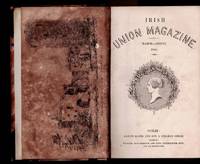
184532226AB1845. First Edition. Two Volumes bound in one. Dublin Martin Keene and Son 1845. Octavo. Frontispiece-Engraving "The ruins of Leix Castle Queens Co. - From a Sketch by Chidley Coote Esq." engraved titlepage 468 pages including Index / Followed by Volume II now titled "The Irish Monthly Magazine" - September - February Dublin 1846: 494 pages. Hardcover / Original half-leather with gilt lettering and original spinelabel. Very good condition with only minor signs of wear. An extraordinay Volume very rare with the Literary Notices on Charles Darwin's "Journal of Researches into the Natural History and Geology of the Countries visited during the Voyages of H.M.S.Beagle round the world second edition. With several interesting articles political poetic and literary. Among which is also "Mary Mansfield Or Ireland Ten Years Since". The Volume published at the outbreak of the Famine is the last reflection of an already shaken country which is entering a fate-altering few years. The Union Magazine - Volume I All published under this title Following articles are included in this very rare 1845-Volume: 1. The Position and Prospects of Ireland in 1845 2. Mesmerism - Miss Martineau's Letters 3. Memoir if Leix Castle Queens Country related to the Frontispiece 4. An Irish Queer Fellow - Peregrin Glass 5. Mary Mansfield Or Ireland Ten Years Since a continuation story through several issues of this Volume including chapters titled "The Ghost" "The Trial" etc. 6. Narrative of some Military Events in Scinde Beeloochistan and Afghanistan during the Years 1839 1840 1841 1842 and 1843 by John H.Hall Esq. H.M.'s 40th Regiment Nephew of the Late Captain Basil Hall continued through several issues 7. A Free and Easy Translation of the First Scene of the Andrian of P.Terentius 8. To L.E.L. in 1828 A fancy Sketch 9. The Irish Poor Law / Poor Laws Limerick Union 10. "Sketches of Character" - by the "Elderly Gentleman" 11. "The Country and the Town" 12. "A Pinch of Snuff from Dean Swift's Box" with a page of Illustration of Jonathan Swift's Snuff Box 13. 'Tis a Hundred Years Since" 14. "The Difficulties of a Young Clergyman in Times of Division" - London 1844 15. "A Report to the Lord Bishop of Meath on the State of Elementary Schools in the Diocese and the Opinions of the Clergy respecting the question of National Education" By the Rev. Edward A. Stopford Archdeacon of Meath; with a Correspondence between the Lord Bishop of Meath and the Home Secretary on the Subject of the Report Grant and Bolton Dublin 1845 16. "On National Schools - A Tract for the Times in Ireland - By an Ulster Clergyman" - W.Curry Jun. and Co. Dublin 1845" 17. "The Irish Art Union" 18. "Luna by Day" by Jean Paul Fr.Richter 19. An Anglo-Latin Account of a Steam Journey from Dublin to London in 1845 A short Poem in Latin 20. Foreign Travellers and many more articles hardcover
2006LFA-126723955Revue trimestrielle de 59 pages, format 145 x 205 mm, brochée couverture couleurs, Editions Saint Rémi, bon état
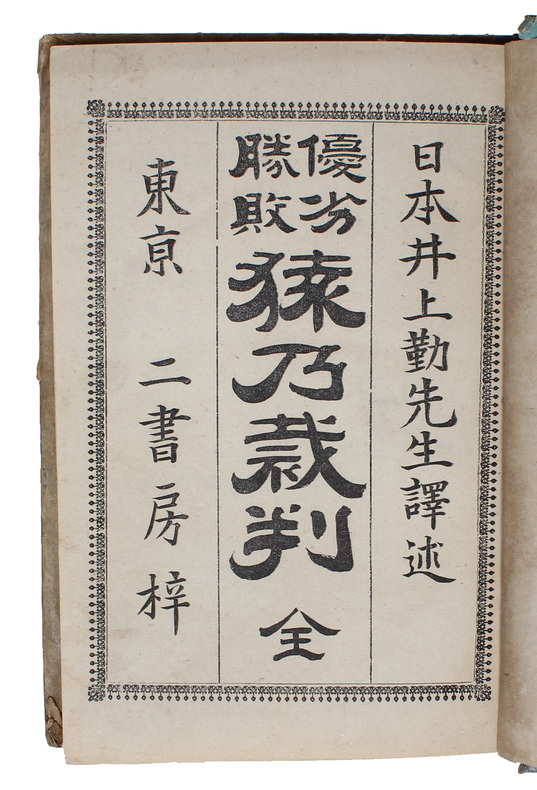
188157971Tokyo Nishimura Tomijiro Fukuda Eizo Meiji 21 1881. 8vo. In the original cloth binding with printed front board depicting a monkey reading a newspaper. Light wear and soiling to extremities and end papers soiled otherwise in fine condition. 285 pp. 3 plates. <br/><br/><em>The rare first Japanese translation of W. P. Lyon's anti-evolutionary text ' Homo versus Darwin'. It constitutes the very first publication in Japanese to reject Darwin's theory. A year after the publication the book was banned for 'corrupting public morals'.The present work is Lyon's reply to the publication of Darwin's The Descent of Man. Here he sees Darwin being charged by Homo of denying him from being a creature made by a God and declaring man to be merely some kind of animal. The author is recorded as being 'Eisa Gurei' Asa Gray but in 1986 a study confirmed the text to be a translation of Lyon's work.'Saru no Saiban' is an important work in the history of the reception of Darwinism in Japan. Darwin's theories had a profound influence on Japan and Japanese culture but in a slightly different way than in the West: Darwinism was marked as social and political principles primarily embraced by social thinkers philosophers and politicians to advocate the superiority of Japanese culture and society and military and not by biologists and zoologists. "It was as if Darwin's famous oceanic journey and the meticulous research into the animal and plant kingdoms that he spent his life undertaking had all been staged as an elaborate excuse for composing a theory whose true object was Victorian society and the fate of the world's modern nations." Golley Darwinism in Japan: The Birth of Ecology. </em> hardcover
188157971Tokyo, Nishimura Tomijiro, Fukuda Eizo, Meiji 21 [1881]. 8vo. In the original cloth binding with printed front board (depicting a monkey reading a newspaper). Light wear and soiling to extremities and end papers soiled, otherwise in fine condition. 285 pp. + 3 plates.
188127509AB1881. London and New York Macmillan and Co. 1881. 4°. XVI 624 pages including an original full page potrtrait-engraving of scottish mathematical physicist James Clerk Maxwell. Original Hardcover recently beautifully rebacked with gilt lettering on spine. Very good condition with only minor signs of wear. Pages 559 to 564 with central tear. Few small library stamps discarded. Also with a contribution by Darwin in the section "Letter to the editor" Darwin responds to an article "Leaves injured at Night by free radiation". James Clerk Maxwell FRS FRSE 13 June 1831 5 November 1879 was a Scottish scientist in the field of mathematical physics. His most notable achievement was to formulate the classical theory of electromagnetic radiation bringing together for the first time electricity magnetism and light as manifestations of the same phenomenon. Maxwell's equations for electromagnetism have been called the "second great unification in physics" after the first one realised by Isaac Newton. With the publication of "A Dynamical Theory of the Electromagnetic Field" in 1865 Maxwell demonstrated that electric and magnetic fields travel through space as waves moving at the speed of light. Maxwell proposed that light is an undulation in the same medium that is the cause of electric and magnetic phenomena. The unification of light and electrical phenomena led to the prediction of the existence of radio waves. Maxwell helped develop the MaxwellBoltzmann distribution a statistical means of describing aspects of the kinetic theory of gases. He is also known for presenting the first durable colour photograph in 1861 and for his foundational work on analysing the rigidity of rod-and-joint frameworks trusses like those in many bridges. His discoveries helped usher in the era of modern physics laying the foundation for such fields as special relativity and quantum mechanics. Many physicists regard Maxwell as the 19th-century scientist having the greatest influence on 20th-century physics. His contributions to the science are considered by many to be of the same magnitude as those of Isaac Newton and Albert Einstein. In the millennium poll a survey of the 100 most prominent physicists Maxwell was voted the third greatest physicist of all time behind only Newton and Einstein. On the centenary of Maxwell's birthday Einstein described Maxwell's work as the "most profound and the most fruitful that physics has experienced since the time of Newton". Wikipedia hardcover
201902388Paris, Etai auto portrait , 2019 ; in-4, 239 pp., cartonnage de l'éditeur. Avec jaquette.
107962London The Nonesuch Press 1925. . First edition first impression; oblong 4to; 22 full-page colour plates by Elinor Darwin light toning to leaves very occasional creasing; original brown pictorial boards printed in red red blindstamped roundel to front cover light wear to spine ends corners slightly rubbed some marks to boards otherwise a very good copy.<br /> First edition of the first Mr. Tootleoo book. Bernard Darwin 1876-1961 was the grandson of the naturalist Charles Darwin. He collaborated with his wife on their children's books with Bernard providing the text and Elinor the illustrations.<br /> Dreyfus 27. London, The Nonesuch Press, [1925]. hardcover
1997LFA-126739937N° 144 (Mai 1997) : 66 pages, format 220 x 295 mm, illustré, broché couverture couleurs, bon état
200600550Stuttgart, E. Schweizerbart'sche Verlagshandlung (E. Koch), 1890 ; in-8, 772 pp., cartonnage de l'éditeur. Aus dem elnglischen ubersetzt von J. Victor Carus - Mit achtundssiebenzig holzschnitten - Funfte durchgesehen auflage.
1878140London: The Graphic 1878. First Edition. Very Good . 4to full page circular engraving of Charles Darwin 1809 - 1882 shortly before his death with text summarizing many of his accomplishments published by the London magazine The Graphic in 1878. An Excellent profile of the great naturalist suitable for framing. The Graphic unknown
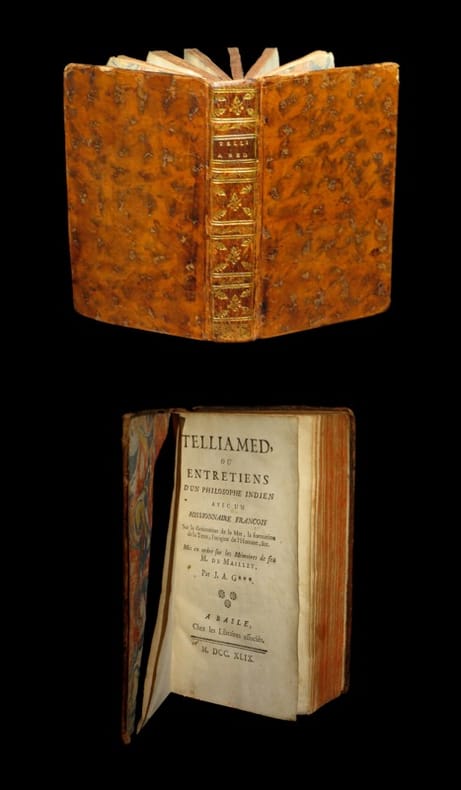
174924203A Basle [Bâle / Basel], chez les Libraires associés, 1749. Un vol. au format in-12 (168 x 103 mm) de 1 f. bl., 4 ff. n.fol., lxx pp., 2 ff. n.fol., 407 pp. et 1 f. bl. Reliure de l'époque de plein veau marbré et glacé havane, filet à froid encadrant les plats, dos lisse orné d'un double filet d'encadrement doré, doubles filets dorés, larges fleurons dorés, pièce de titre de maroquin brun, titre doré, palette dorée en tête et queue, tranches rouges.
201228605Paris, Gallimard, 1965 ; in-12, 250 pp., br. N°921.
191720309Melbourne: Austral Music Publishing Co 1917. Musical score to celebrate returning World War I soldiers the words written by Sergeant W. Darwin 7th Battalion 1st Australian Division and music by Ambrose G. Gregory. The printed subhead at the front wrapper of the score continues "Returned Soldiers' Song Dedicated to the brave Australian and New Zealanders who fell at Gallipoli and to those living victorious".<br /> <br /> William Darwin born in Bendigo in 1895 d 1981 was a drum major for highland pipe bands from an early age. He enlisted in 1914 as a member of the Bendigo Volunteers and joined the 7th Battalion which sailed for Egypt where he was nominated as stretcher bearer. He sailed on the Galeka from Alexandria to Lemnos in preparation for the landing in Gallipoli. He served at Achi Baba Cape Hellas was promoted to Acting Sergeant and was wounded in September 1915. Darwin was later transferred to hospitals in England and Scotland and was diagnosed as suffering from shell shock by the Australian Medical Board in 1916. In 1917 back in Australia he settled in Carlton became Chief of the Carlton Caledonian Society and wrote the words to this highly popular march. While continuing to compose Darwin began a career as a lecturer speaking on a variety of topics and earning himself the nickname in the British press of "the Australian Orator". Starting in the 1920s he began organizing domestic and international tours for the Australian Pipe Bands.<br /> <br /> The score includes additional songs: 'There's a Sunny Land Australia' written and composed by C. Vaude; and 'Lonesome Jes' Lonesome for You' by Hal L. Campbell. <br /> <br /> Small folio 7pp. With a b&w printed photographic portrait of Darwin at the front cover text printed in black. Some toning at front cover otherwise very good condition. Trove 6162165. OCLC: 154150497. Austral Music Publishing Co unknown
Mm 115x190 Brossura editoriale di pagine 128. Opera in buone condizioni. Spedizione in 24 ore dalla conferma dell'ordine.
Mm 210x305 RARO - Brossura originale di 426 pagine con numerose illustrazioni e disegni perlopiù in bianco e nero. Opera a cura del Museo Zoologico dell'Università di Firenze. In buono-ottimo stato. SPEDIZIONE IN 24 ORE DALLA CONFERMA DELL'ORDINE.
Mm 170x240 Brossura editoriale di 207 pagine. Copia in condizioni pari al nuovo. SPEDIZIONE IN 24 ORE DALLA CONFERMA DELL'ORDINE.